Kitchen Knives
Knife Sharpening Gadgets Tested: Pull-Through vs Fixed-Angle Systems
We tested a pull-through sharpener and a fixed-angle guided system against traditional whetstone sharpening. Here is how each one held up, and who they actually suit.
Introduction
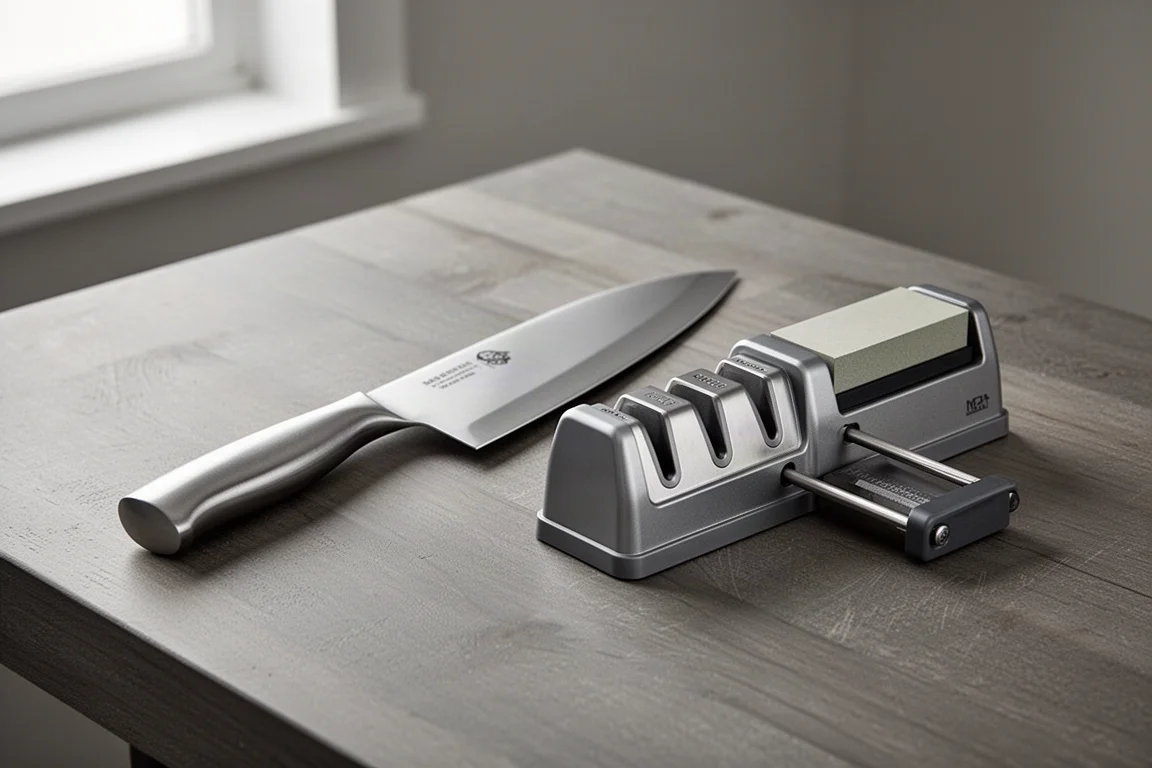
Sharpening gadgets promise the impossible: a properly sharp knife at home, without learning stones or paying a professional. We put two of the most common designs through a real round of testing, checking each one on paper, tomatoes, and carrots against a knife sharpened by hand on whetstones.
One tester was an experienced sharpener; the other was closer to the everyday home cook these products target. That split turned out to be revealing, because the gadgets behaved very differently depending on who was holding them.
The Pull-Through Sharpener: Quick, but Limited
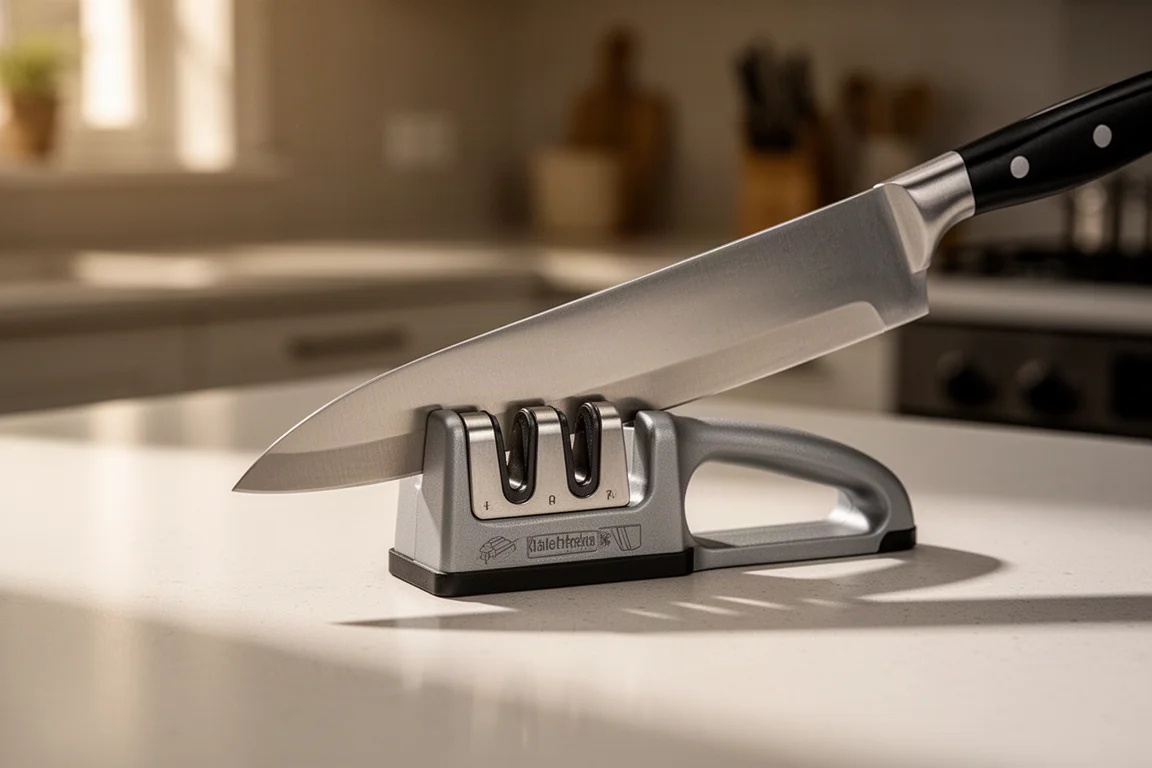
The first product was a standard pull-through sharpener, the type widely sold under various brand names, with separate slots for standard and Asian-style blades. It promises a quick edge reset with light pressure and a few strokes.
In practice, it took far more strokes than expected, somewhere in the range of 20 to 40, before the edge improved noticeably. Even then, the paper test showed tearing and grabbiness rather than a clean cut, and the result would not pass a professional checking standard. Two real problems emerged: keeping the blade at a consistent angle through the slots is harder than it looks, and the tool cannot reach the very heel or the very tip of the blade, which creates low spots at both ends.
More worrying, a light accidental increase in pressure chipped the edge during testing. The instructions warn against heavy pressure, but almost nobody reads them, and the coarse carbide slot effectively peels steel from both sides of the edge. On inexpensive soft knives it may be acceptable; on hard Japanese blades it is a genuine risk.
The Ruixin Pro: A Guided System With Real Trade-offs
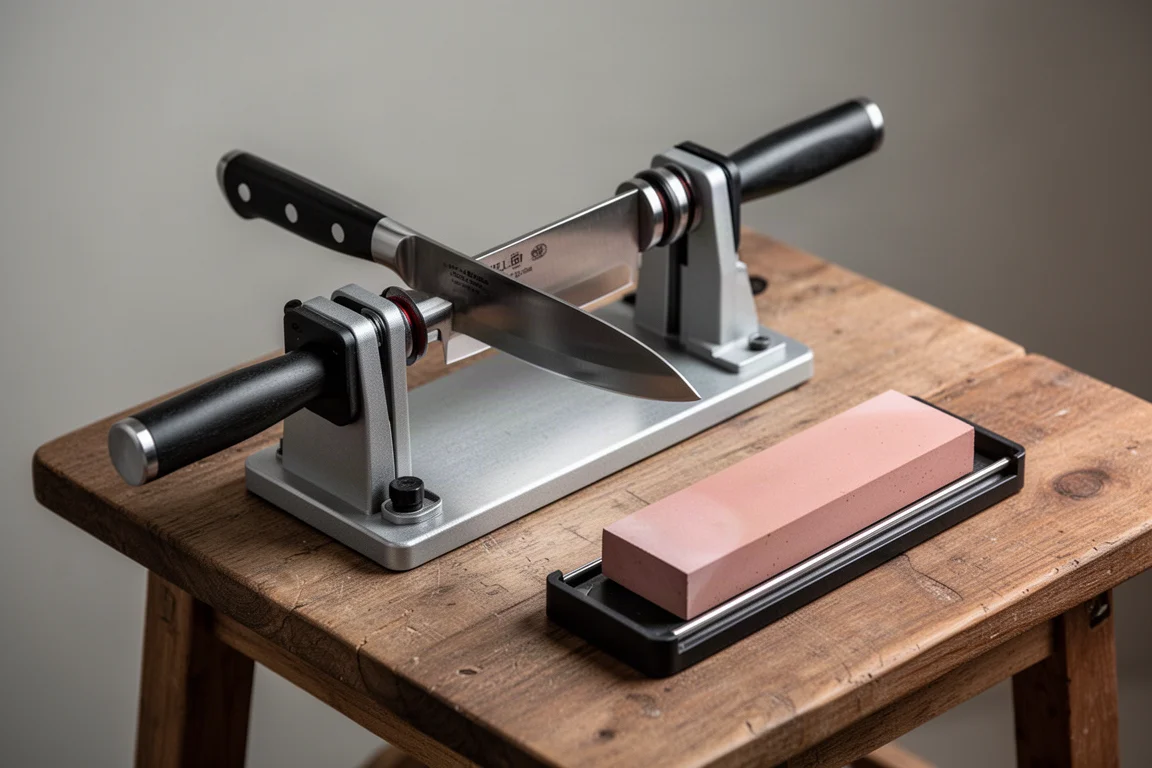
The second product was a fixed-angle guided sharpening system that clamps the knife and holds a stone at a set angle while you slide it back and forth. The idea mirrors whetstone sharpening while removing the hardest part, keeping the angle consistent.
Setup was the biggest hurdle. Finding and locking the correct angle took a phone app, a marker test on the bevel, and roughly 30 minutes before any sharpening started. Once running, the experience improved: switching between the 180, 800, and 3000 grit stones produced a visibly better edge than the pull-through, and the finished knife sliced cleanly from heel to tip with far less pressure.
It was not flawless, though. The clamp loosened slightly during sharpening, the spring action made smooth strokes harder, and the small stones wear unevenly, which can distort your angle over time. Longer knives also run out of stone quickly. The result landed close to, but clearly not at, whetstone quality.
The Food Test: Tomatoes, Carrots and Honest Results
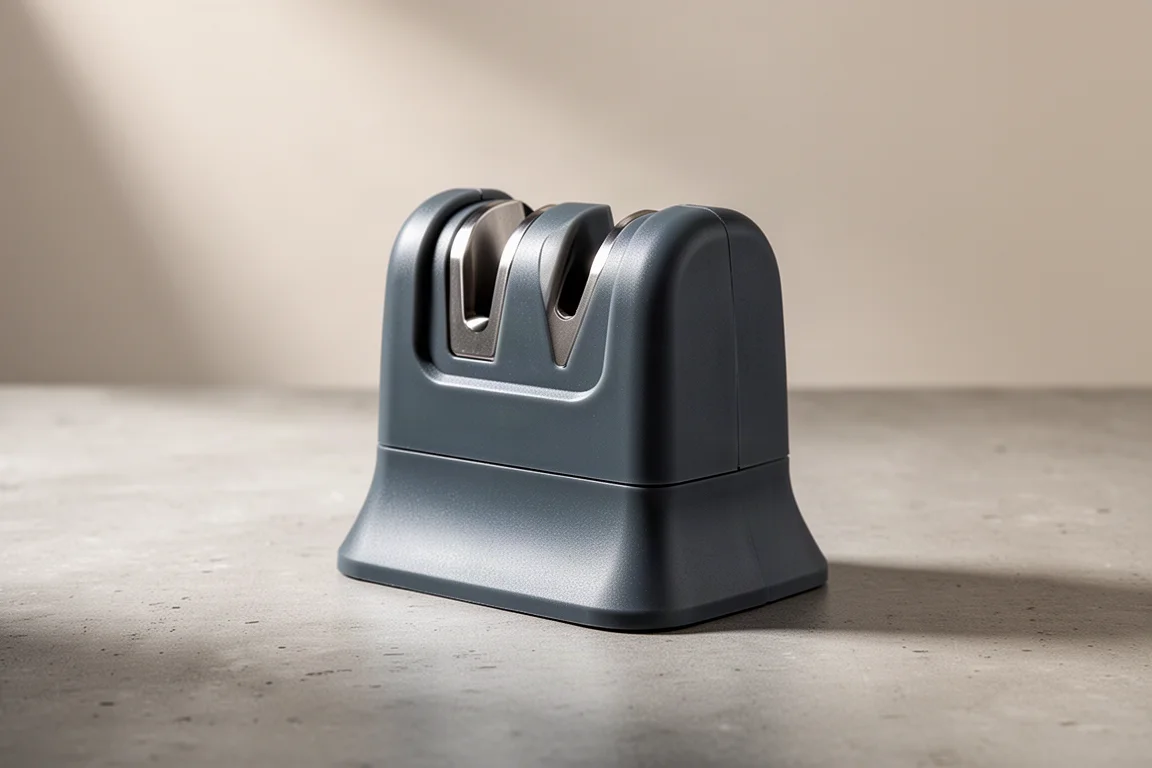
Side by side, the differences were easy to feel. The pull-through knife struggled with a tomato skin and cut the carrot with a rough, ax-like feel. The guided-system knife was noticeably quieter and smoother, cutting thin slices with only mild hesitation in dense carrot sections.
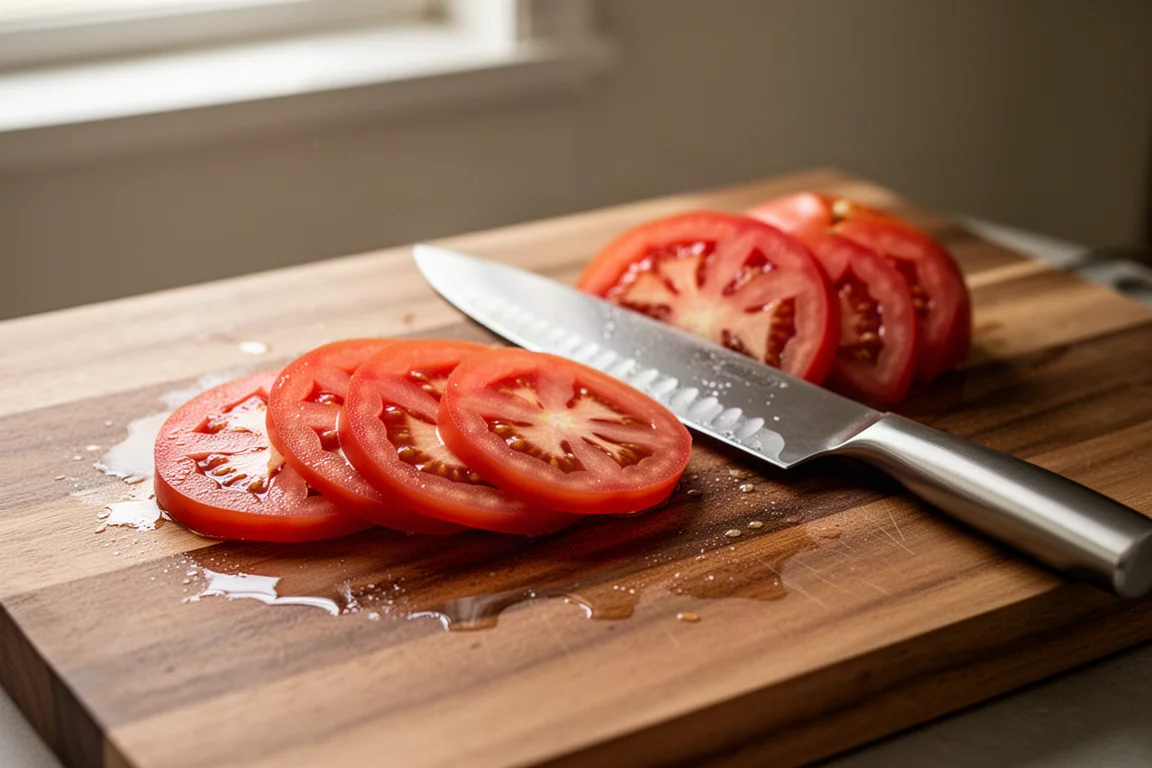
The hand-sharpened whetstone knife was on another level entirely: smooth, quiet, and biting cleanly through the thickest part of the carrot. That said, the guided-system edge had a pleasant toothy bite thanks to its slightly rougher finish, while the whetstone edge, polished to around 4000 grit, was smoother with less aggressive bite.
Where Gadgets Fall Short Compared to Whetstones
The biggest limitation applies to both gadgets: neither thins the knife. They only work on the final edge. As you keep sharpening and removing steel, the blade behind the edge stays thick, so dense foods like carrots split instead of slicing, and you compensate with hand pressure, which increases the risk of injury when the knife suddenly breaks through.
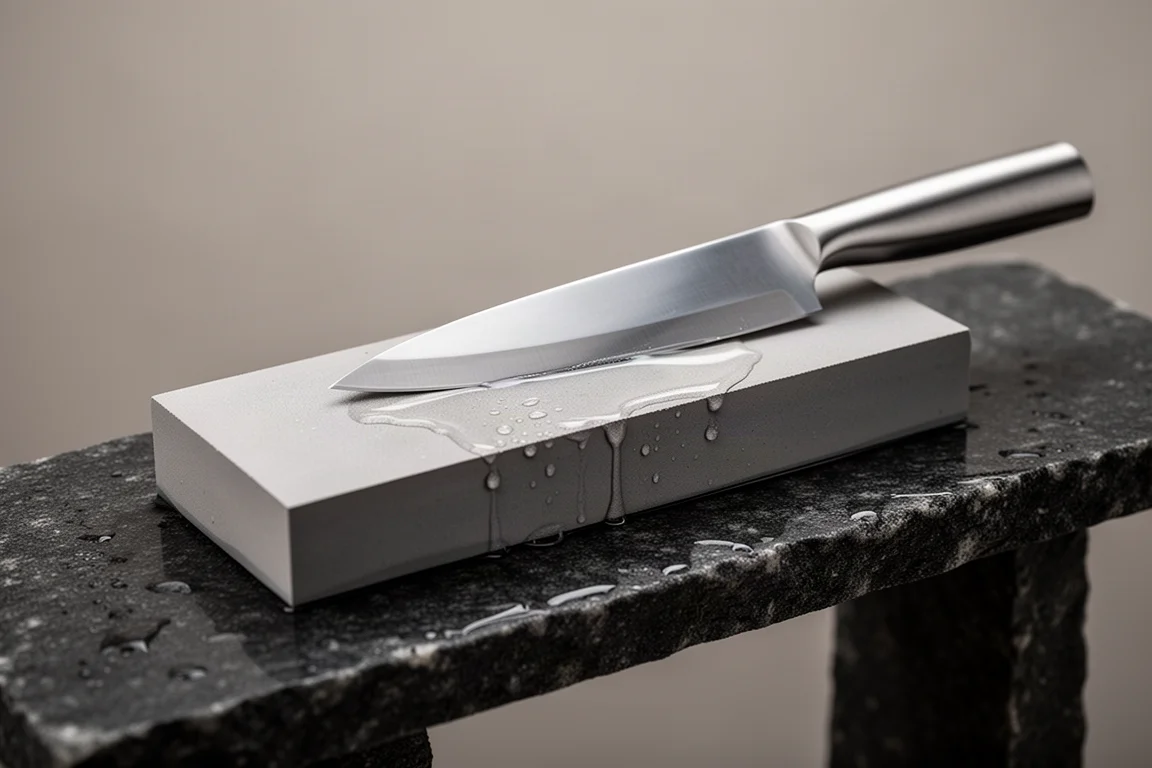
Whetstone sharpening lets you thin the primary bevel first, then set a fine edge, at whatever angle the knife needs. No tested gadget can do that. There is also a durability concern with the guided system: as the small stones wear unevenly, high spots form at the ends and your carefully set angle drifts.
Buying Advice
If you own inexpensive knives and want the cheapest possible quick fix, a pull-through sharpener used with very light pressure can temporarily improve a dull edge. We would still rather reach for a honing rod, and we would never use one on a fine or hard Japanese knife.
If you want to actually learn the mechanics of a sharp edge, the guided system is more interesting. It holds a consistent angle on both sides, offers multiple grits, and teaches you what a burr is. But weigh the setup time, the build quality, and the stone wear before buying.
And if you already own good knives, the honest answer is that a basic two-stone whetstone setup outperformed both gadgets, took less total time than the guided system’s setup alone, and is genuinely learnable with a little practice.
Conclusion
Neither gadget matched hand sharpening on whetstones. The pull-through sharpener is a last-resort tool with real risk of damage, while the guided system produces a serviceable edge once you survive the setup. For most people with knives worth caring about, learning basic whetstone technique remains the better investment.
Further reading
Related Reviews

Kitchen Knives
Best Chef's Knives 2026: 27 Popular Options Tested and Ranked
A comprehensive review of 27 chef's knives ranging from $18 to $380, with honest assessments of handle comfort, blade balance, and real-world performance.

Kitchen Knives
Best Chef's Knives Under $75: Two Tested Recommendations
Two practical 8-inch chef's knives that balance sharpness, comfort, and durability without premium pricing.

Kitchen Knives
Best Chef's Knives 2026: 27 Options Tested and Ranked
A comprehensive review of 27 chef's knives ranging from $18 to $380, with honest assessments of handle design, balance, blade profile, and real-world performance.