Kitchen Knives
Knife Arts Exclusive Indonesian 210mm Gyuto Review: A Hidden Gem That Punches Above Its Price
An exclusive 210mm gyuto sold by only one shop in the world, made by an undisclosed Indonesian smith. Here is how it performs and who it makes sense for.
Introduction
Some knives are easy to recommend because the maker, the steel, and the reputation are all documented. This one is the opposite: a 210mm gyuto sold exclusively by Knife Arts, a shop in Germany run by Lucas, made by an undisclosed blacksmith from Indonesia using spring steel of unknown origin. Only this one shop sells it anywhere in the world.
That combination would make most buyers hesitate, and understandably so. An undisclosed maker means no reputation to lean on, no history of edge retention to reference, and a genuine leap of faith at the register. This review exists to take that leap for you: the knife was bought into, tested, and used, so you can judge the performance without carrying the same risk. Spoiler up front: it punches well above its price class.
Unboxing and First Impressions
The knife arrives in packaging that immediately signals care. The envelope is sealed with wax, the inner box is straightforward but well finished, and included is a user maintenance letter printed on thick paper, itself sealed with a second wax seal. It is the kind of presentation that tells you the shop owner is paying attention to every detail of what he sells.

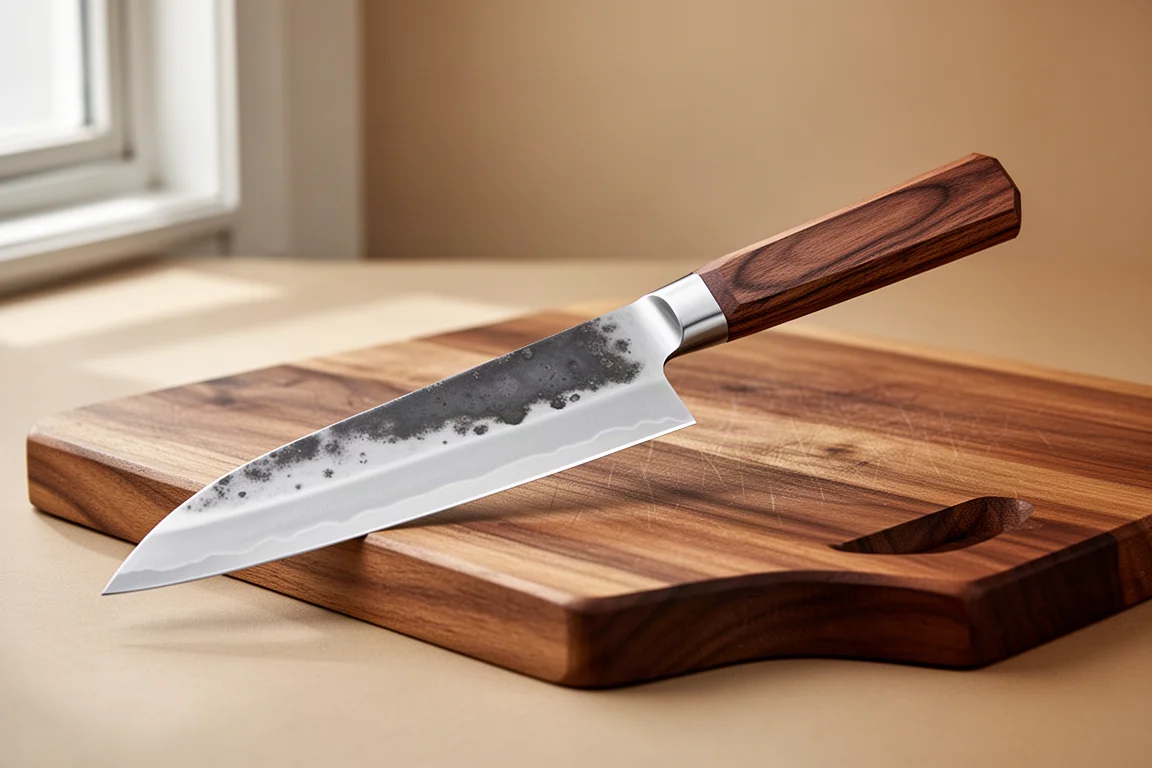
Out of the box, the knife looks intentionally unassuming. There is no maker mark, just a clean and simple polish, a nice kasumi finish, and a well-shaped mono handle. The first impression in hand is that this simply feels like a high performance knife rather than a decorated one.
Design and Build Quality
The 210mm gyuto is a great size for most home and professional kitchens, and the profile here is one of the strongest points of the design. The balance point feels natural, the knife is on the lighter side, and the rosewood handle is genuinely well crafted with clean fit and finish and attractive tapering.
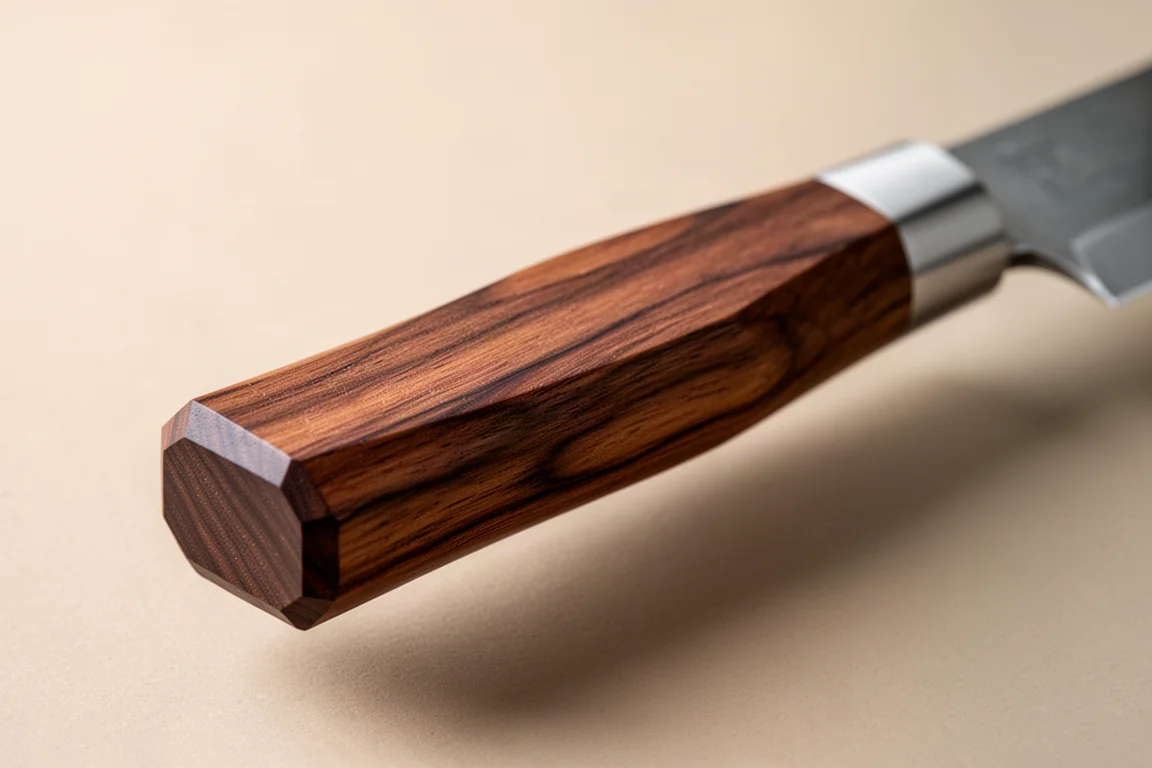
One detail worth knowing before buying: the handle ships untreated, and the shop’s own description flags that it may feel a little dry. This was sealed before use with beeswax and mineral oil, after which it feels much better in hand. If you are comfortable doing a five minute maintenance step, this is a non-issue; if you expect a fully finished handle out of the box, factor it in.
Blade finish is a highlight for the price. The kasumi finish is consistent, the high shinogi line is crisp, and the spine is well finished. There are no bells and whistles here, and that simplicity is part of how the price stays where it does, but nothing about the execution feels cheap.
Cutting Performance
The grind sits between a laser and a workhorse, and behind the edge it is impressively thin for a knife at this price. In testing, it sliced laterally through dense produce with very little friction, something few knives in this bracket manage.
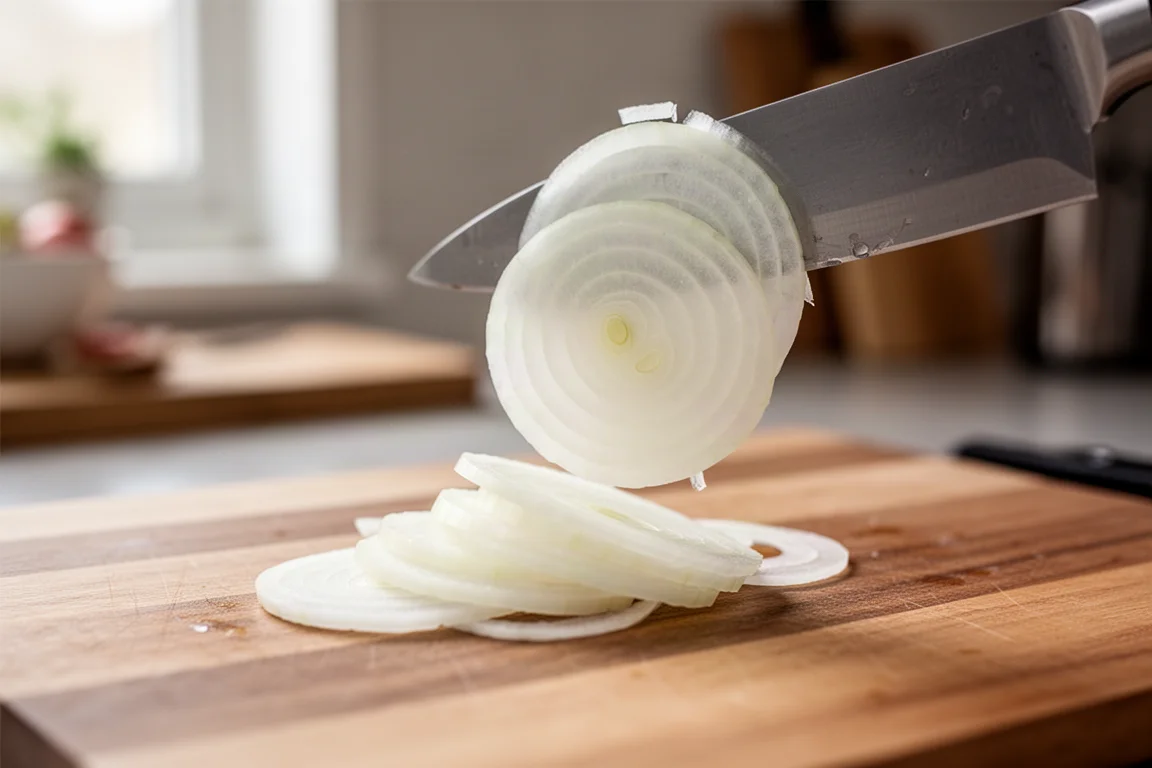
Onions cut cleanly into thin, even slices with almost no wedging. Soft produce was the real surprise: a strawberry sliced easily with a nice bite, and the edge was sharp and comfortable to push through delicate skins. The knife crushed pepper skin slightly, which is normal for a blade of this geometry, but overall the vegetable performance was excellent.
With meat, the picture is a bit more nuanced. The knife cut through pork fillet well, but as it ships, it has more bite for vegetables than for meat. That is not a flaw so much as a tuning characteristic, and buyers who prioritize protein work should know where the strengths currently sit.
Steel, Reactivity, and Edge Retention
This is a reactive carbon steel knife of undisclosed type. That alone will rule it out for some buyers, and anyone brand new to Japanese knives should think twice before starting with carbon steel, since it requires wiping, drying, and basic care after use.
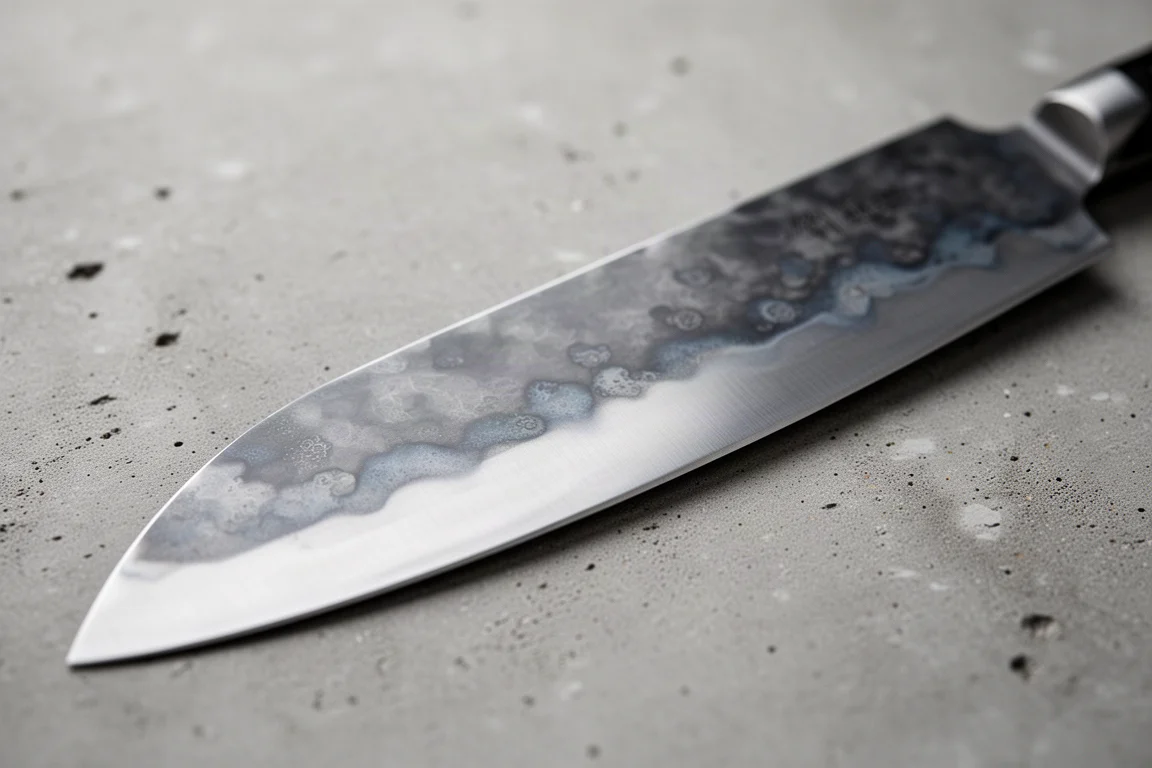
The good news is that the reactivity turned out to be mild. After roughly 30 minutes of cutting time, the blade developed a beautiful patina, but there was none of the aggressive corrosion smell that higher carbon content knives sometimes produce. Maintenance was easy and the finish still looks great after use.
Edge retention is the one genuinely open question. The steel type is unknown, so long term edge life cannot be promised. In initial performance testing the edge held up exceptionally well, but if absolute certainty about edge retention matters to you, the undisclosed steel is the main risk to weigh.
Buying Advice
This knife makes the most sense for a specific buyer: someone comfortable with reactive carbon steel, willing to treat an unfinished handle, and looking for genuinely high cutting performance at a modest price. Anyone entering the Japanese knife world for the first time will probably want to start with a stainless option and come back to this later.
The biggest psychological hurdle is the anonymous maker. Think of it this way: a maker’s name only matters because it carries reputation. Remove the name and the purchase feels riskier, but the knife itself is unchanged. Here, that risk was taken on your behalf, and the verdict is that the performance justifies the price. If you value how a knife cuts more than the name stamped on it, this is an easy one to like.
Conclusion
The Knife Arts exclusive Indonesian 210mm gyuto is a quietly excellent knife. The profile, thin grind, comfortable rosewood handle, consistent kasumi finish, and mild reactivity add up to performance well above its class, with only the undisclosed steel and maker standing between it and a straightforward recommendation. For buyers who accept those trade-offs, this is one of the more rewarding hidden gems available right now.
Product link
View more details for Knife Arts Exclusive Indonesian 210mm Gyuto
This product is mentioned in the review. Check the specifications, options, and compatibility before buying.
View more details for Knife Arts Exclusive Indonesian 210mm GyutoFurther reading
Related Reviews

Kitchen Knives
Best Chef's Knives 2026: 27 Popular Options Tested and Ranked
A comprehensive review of 27 chef's knives ranging from $18 to $380, with honest assessments of handle comfort, blade balance, and real-world performance.

Kitchen Knives
Best Chef's Knives Under $75: Two Tested Recommendations
Two practical 8-inch chef's knives that balance sharpness, comfort, and durability without premium pricing.

Kitchen Knives
Best Chef's Knives 2026: 27 Options Tested and Ranked
A comprehensive review of 27 chef's knives ranging from $18 to $380, with honest assessments of handle design, balance, blade profile, and real-world performance.