EDC Knives
Knafs Lander Review: Why It Might Be the Best Knife Around $50
We put the Knafs Lander through light use, hard use, and full abuse to see how a D2 folding knife holds up when you actually work it.
Introduction
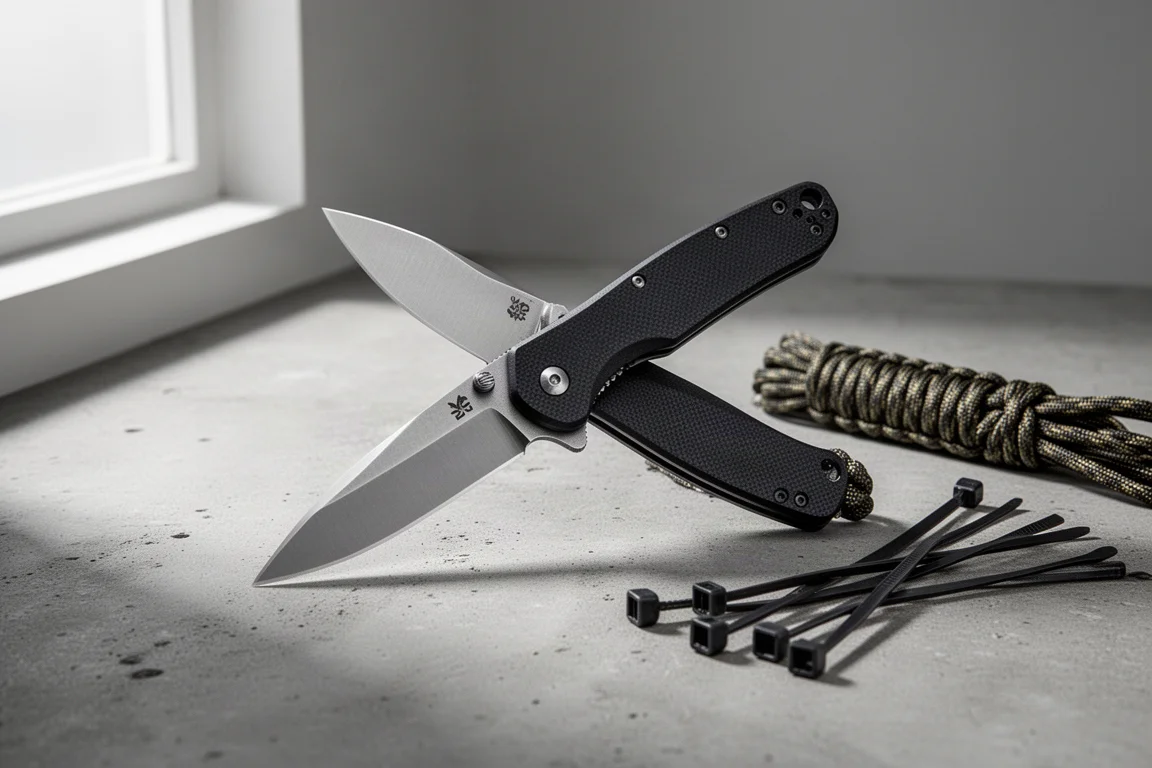
Most pocket knives never see real work. That is exactly why we wanted to flip the script and run the Knafs Lander through a full test program: light use, hard use, and outright abuse, with edge sharpness measured at every stage. Priced at $58, and closer to $52 with a code directly from Knafs, it lands squarely in the budget tier, which makes the question simple: is this the best knife around $50 you can buy right now?
Sharpness Out of the Box
We measured sharpness with an edge-on-up tester, which records the grams of force needed to cut a test wire. Lower numbers mean a sharper edge. Fresh out of the box, the Lander scored around 242 grams, which falls between a high-end cutlery edge (around 300) and a utility razor blade (around 200). In plain terms: it is genuinely sharp, not just “sharper than expected for the price.”
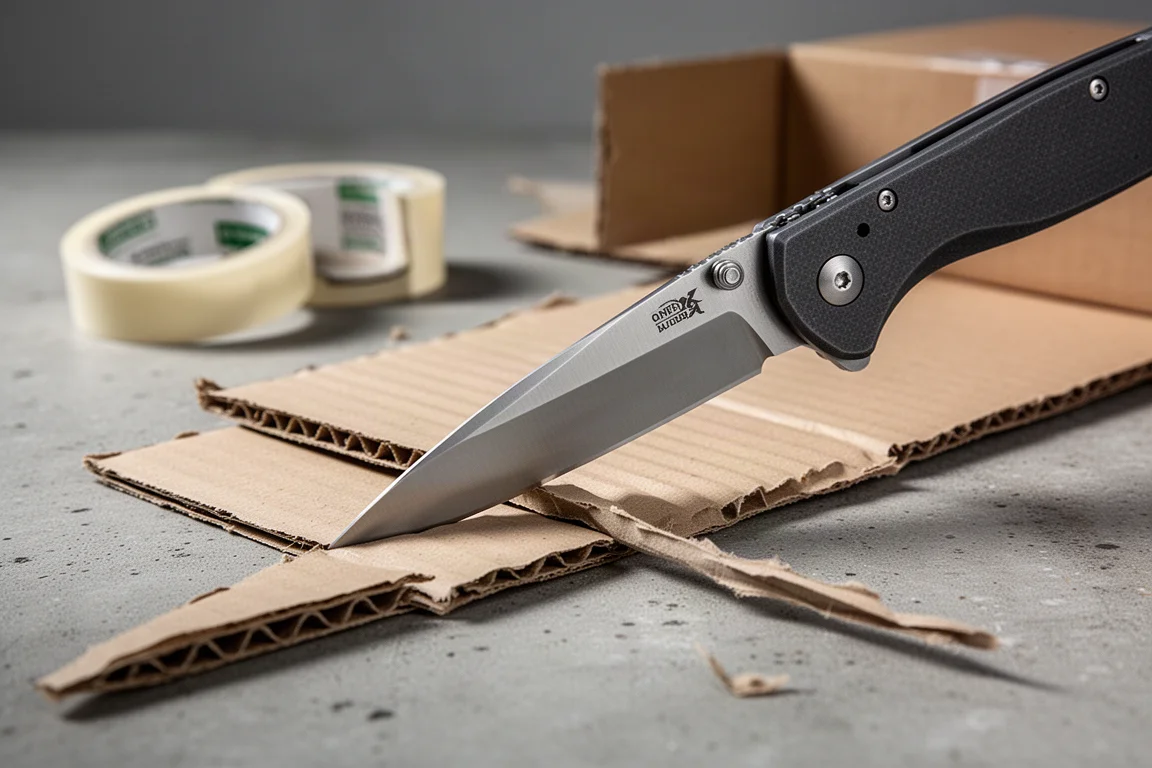
The paper test confirmed it, slicing cleanly and quickly rather than chopping through. Real-world tasks like opening packages and breaking down boxes are where most of us actually use a knife, and the Lander handled a simulated month’s worth of cuts, roughly 100 slices through cardboard and tape, without complaint.
Restoring the Edge After Light Use
After the package and box-breaking rounds, the reading drifted to about 402 grams, officially “in need of maintenance” territory but still fully usable. We chose not to sharpen at this point, only to hone and strop with a guided field sharpener.
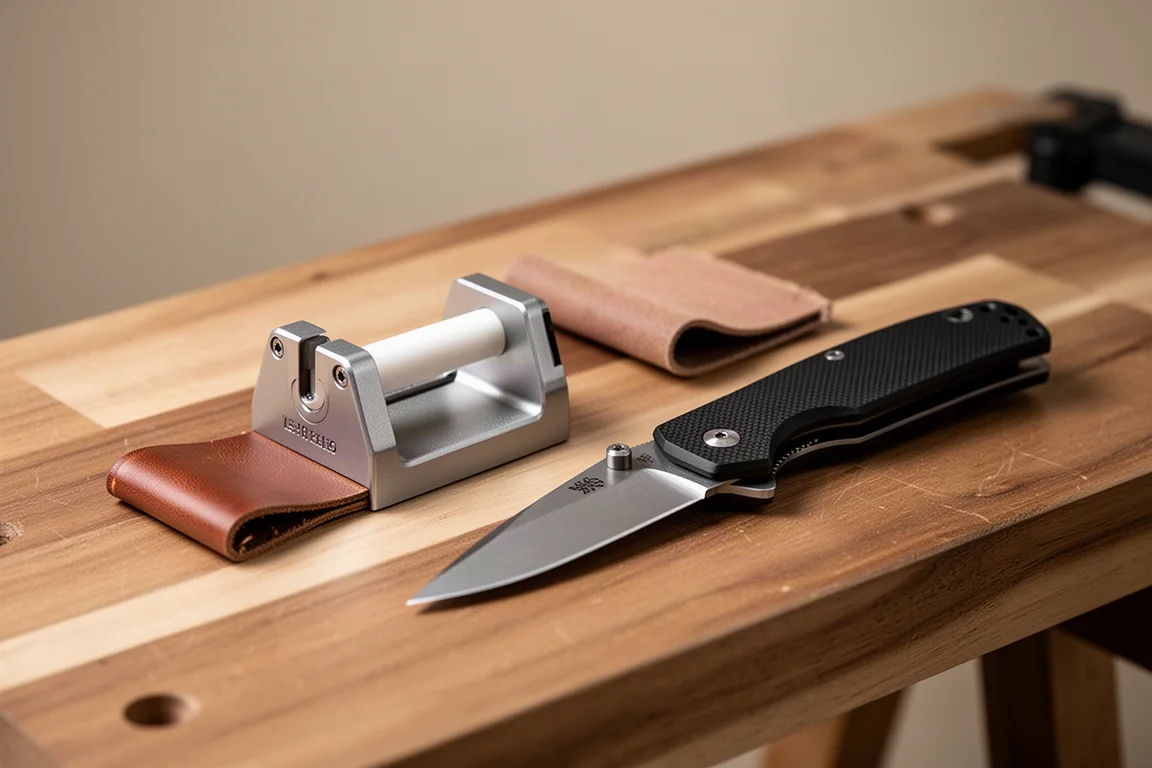
A few passes on the ceramic hone and the strop brought the reading back down to 223 grams, better than factory. That is the takeaway: this D2 blade responds well to simple maintenance, so you can keep it working for a long stretch between real sharpenings.
Hard Use: The Day-Job Test
Hard use means treating the knife like a tool for a day job: construction, landscaping, home renovation. The test list included deburring PVC pipe, scoring drywall, cutting a garden hose, slicing plastic bottles into funnels, paracord cuts on wood, and rope work.
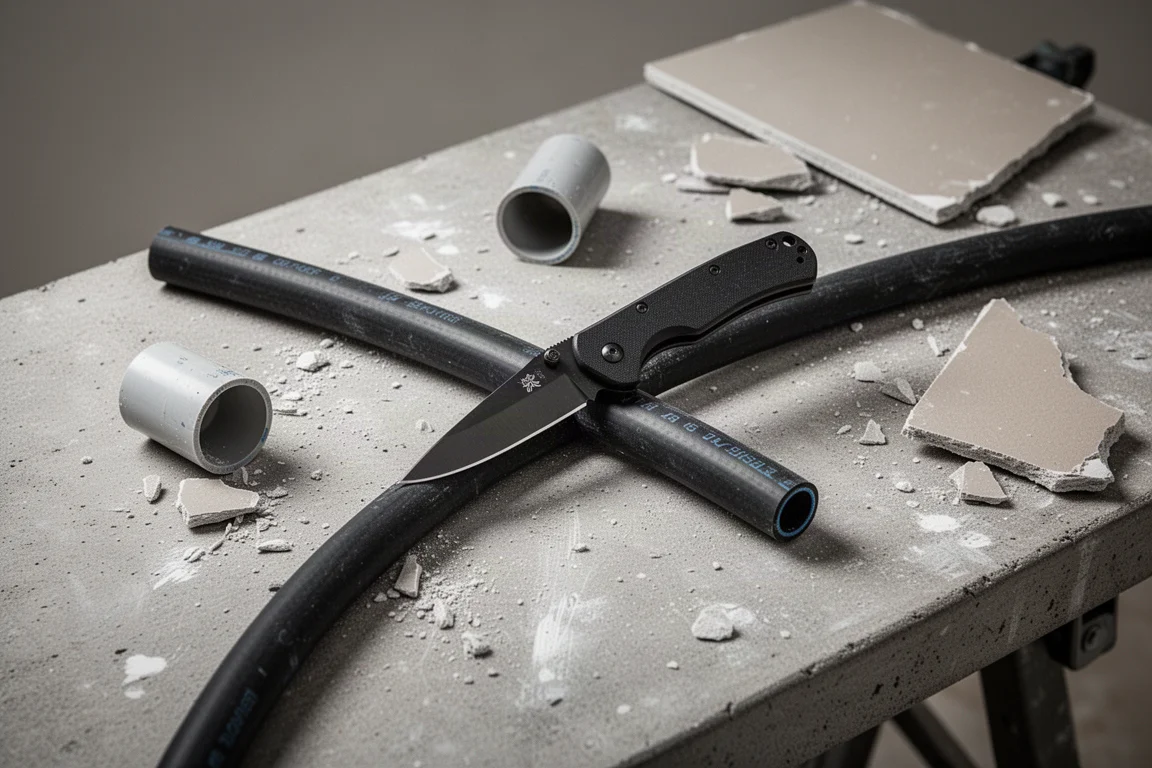
The pattern after all that was consistent. The belly of the blade dulled noticeably and parts of the edge rolled, especially after cutting clothesline with a steel cable core, but the knife kept cutting throughout. Sand bags and slicing a tire pushed it further, leaving the edge rolled in several spots, yet it could still grip a fingernail shave in places. Then came a genuinely practical test: opening a tin can with the blade tip when no can opener is around. It worked, and the blade survived.
By the end of hard use, the sharpness reading was 733 grams, which registers as a moderately rolled edge. Still cuttable, but clearly due for a proper sharpening.
Abuse: Things You Should Not Do With a Knife
Abuse means everything you are told not to do: throwing the knife, prying, and hammering it. Throwing bent the pocket clip and introduced some blade play, much of which was just a loose pivot. Batoning and a swing into a cinder block did the serious damage: the lock overextended, the edge took a visible chip, and the lock bar itself peened over and rounded, which is what allowed the lock rock to develop.
Running over the knife finished the job, splitting and delaminating the G10 scales. Even then, the frame told an honest story: the damage was from extreme misuse, not normal carry.
Can It Be Recovered?
Here is the encouraging part. After grinding back the damage and reprofiling, the edge was brought back to 183 grams, sharper than factory, with no chips left along the edge. The peened lock bar is the one thing that cannot be fixed without a new liner, but the scales are another story.
The Lander has a thriving aftermarket: replacement scales are available from several makers, so if you delaminate or damage the G10, a new set of scales can bring a beaten knife back to looking almost new without buying a whole new knife.
Buying Advice
If your knife use looks like the light-use portion of this test, packages, tape, the occasional zip tie, the Knafs Lander will handle it with ease and stay sharp through an impressive amount of work. If you use a knife hard at a day job, expect the D2 edge to roll and dull eventually, but know that it cuts long past the point where the sharpness tester calls it “in need of maintenance,” and it responds beautifully to simple honing.
What you should not do is throw it, pry with it, or hammer it into masonry. That is where the lock and the scales gave up. Treat it as a hard-working but sane tool, and it is genuinely hard to beat at this price.
Conclusion
The Knafs Lander survived light use with flying colors, came through hard use about as well as any folding knife could reasonably be expected to, and only folded (in both senses) under deliberate abuse. With a better-than-factory recoverable edge, affordable replacement scales, and a price hovering right at $50, it earns its place as one of the strongest value picks in the budget EDC space right now.
Product link
View more details for Knafs Lander
This product is mentioned in the review. Check the specifications, options, and compatibility before buying.
View more details for Knafs LanderFurther reading
Related Reviews
EDC Knives
Spyderco Techno 3 Review: A Beautiful Design Held Back by Factory Issues
The Spyderco Techno 3 is a stunningly designed titanium frame lock knife, but weak detent and quality control issues from the Italian factory make it a hard recommendation.
EDC Knives
Blade Show 2023 Picks: Three EDC Knives That Stood Out
From QSP's button lock Swordfish to Demko's MagnaCut fixed blade, these are the knives that made the strongest impression this year.
EDC Knives
Daily Carry Company Mag Blade Review: A Beautiful Knife I Struggle to Recommend
The Mag Blade pairs polished M390 steel with grade 5 titanium and an innovative magnetic butterfly hinge, but daily practicality falls short of the $199 price.