Tool Reviews
Klein Digital Angle Gauges: Which One Deserves a Spot in Your Tool Bag
A closer look at the Klein 935DAG and the alarm-equipped 935DAA, covering presets, audio feedback, magnets, and which one makes sense for your work.
Introduction
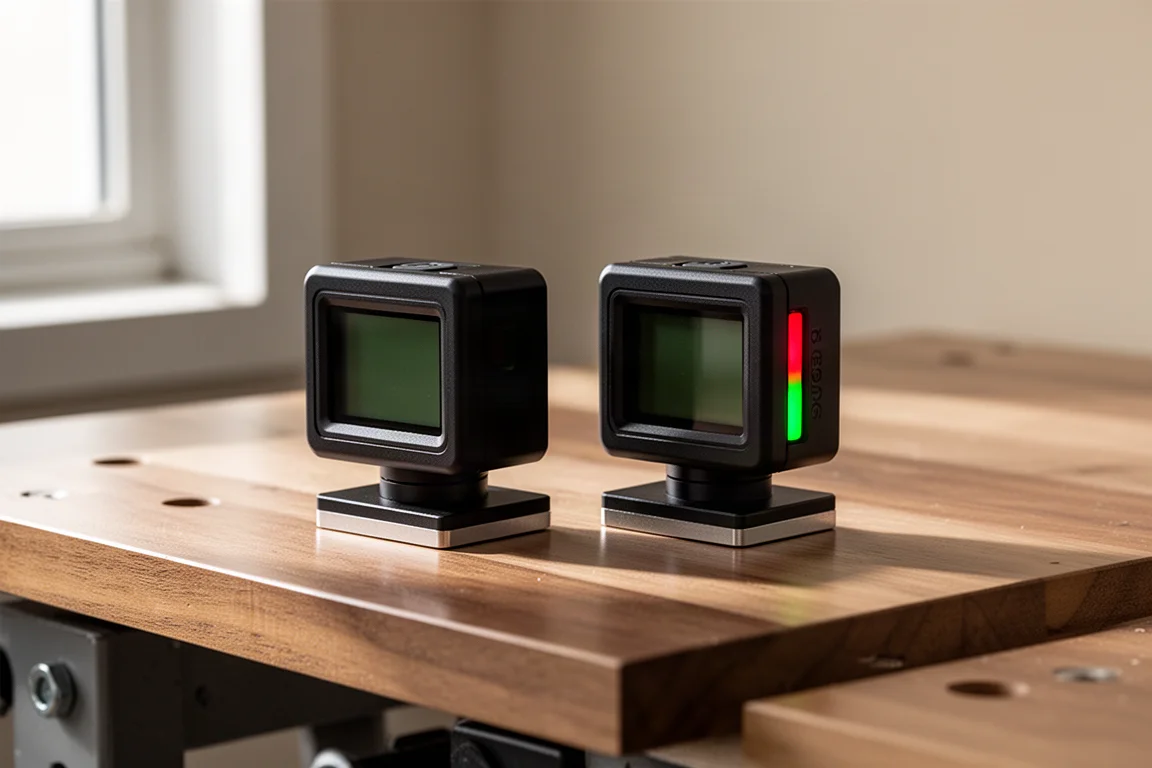
Small digital angle gauges have quietly become one of the handiest gadgets you can toss into a tool bag. Klein makes a couple of square, pocket-sized versions, and while they look nearly identical at a glance, there is one version in the lineup that adds a feature the others simply do not have: an alarm. This breakdown covers the standard 935DAG and the 935DAA Digital Angle Gauge Alarm, including where each one shines and where the extra money is genuinely worth it.
Why a Digital Angle Gauge Earns Its Place
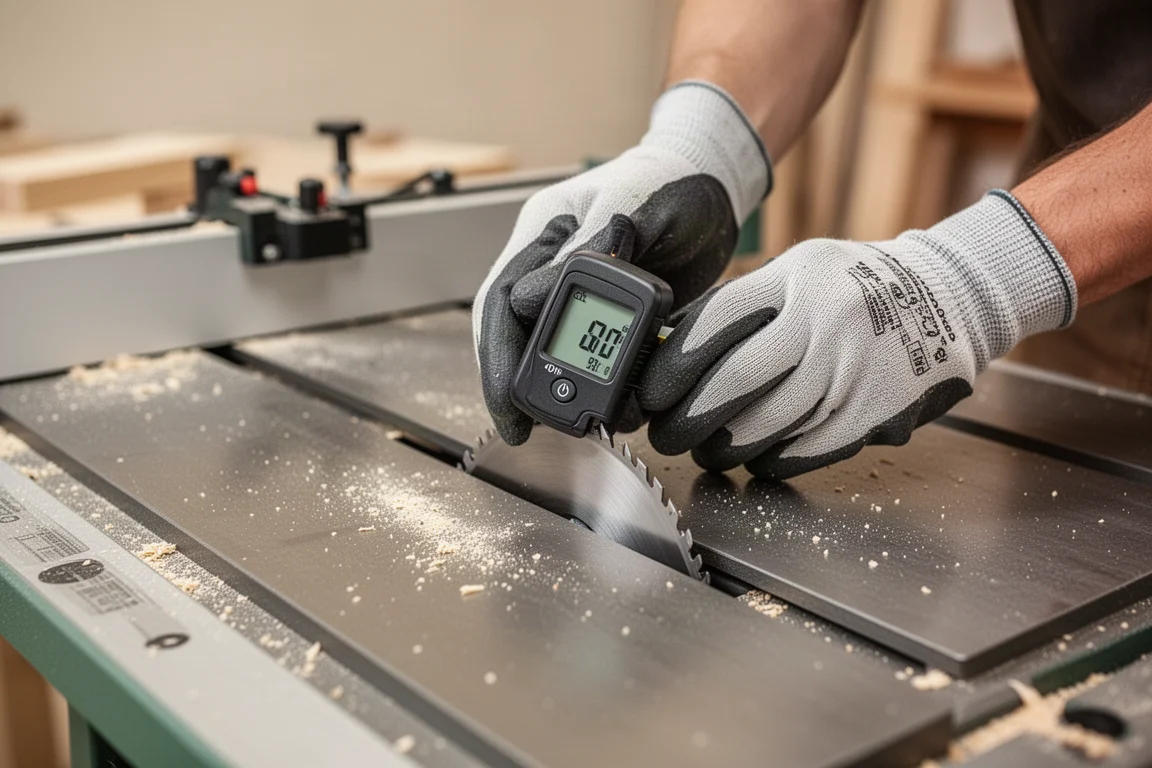
Compared with the old manual bevel gauges many of us grew up using, a digital angle gauge is lighter, faster, and far more precise. Set it on a saw blade, a machine table, or any tilted surface, and you get an instant readout. These Klein units are small square blocks with a strong magnet on the base, so they stick directly to blades and steel surfaces while you make adjustments.
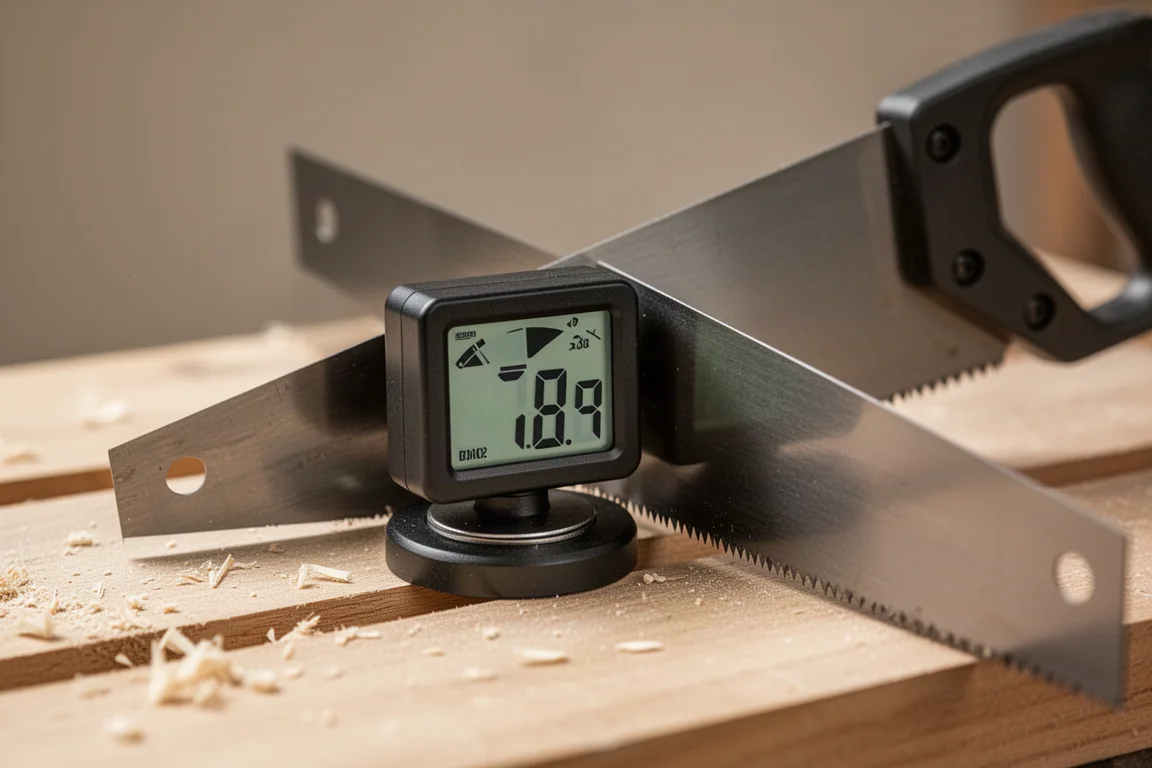
The category itself is clearly evolving. Milwaukee, Johnson, and several other brands all offer their own compact square versions with basic angle functions, and new features keep appearing within months to years of each other, which suggests manufacturers are actively listening to tradespeople about what they want embedded next.
Klein 935DAG Digital Angle Gauge
The 935DAG is the classic square Klein unit and the earlier of the two designs here. It covers the fundamentals well: angle readout, a hold feature, and a strong magnetic base. For roughly 30 dollars, it does the same core job as pricier competitors without fuss.
There is one long-term caveat worth knowing. This version can develop a parasitic battery drain over time, so batteries left in the unit for six months or so can end up dead. It also tends to show an error state when tilted at certain angles, and it can be sensitive about switching display orientation. Neither issue stops it from working, but they are worth knowing before you commit.
Klein 935DAA Digital Angle Gauge Alarm
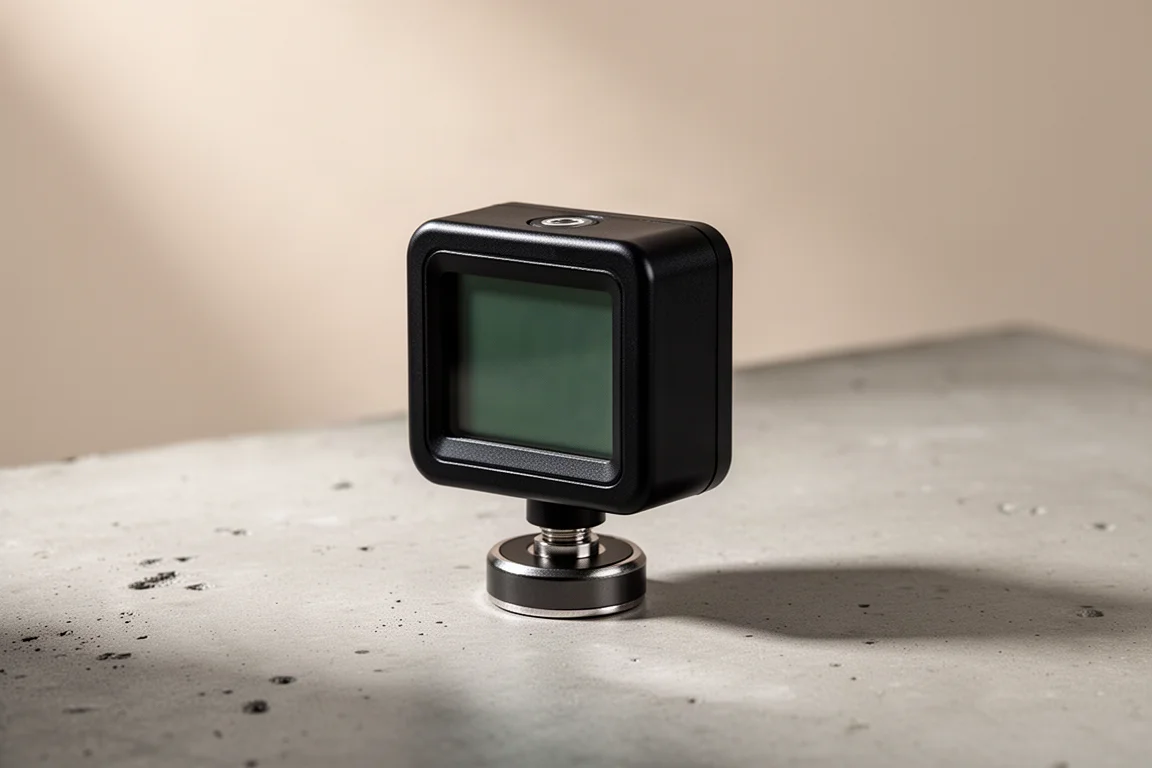
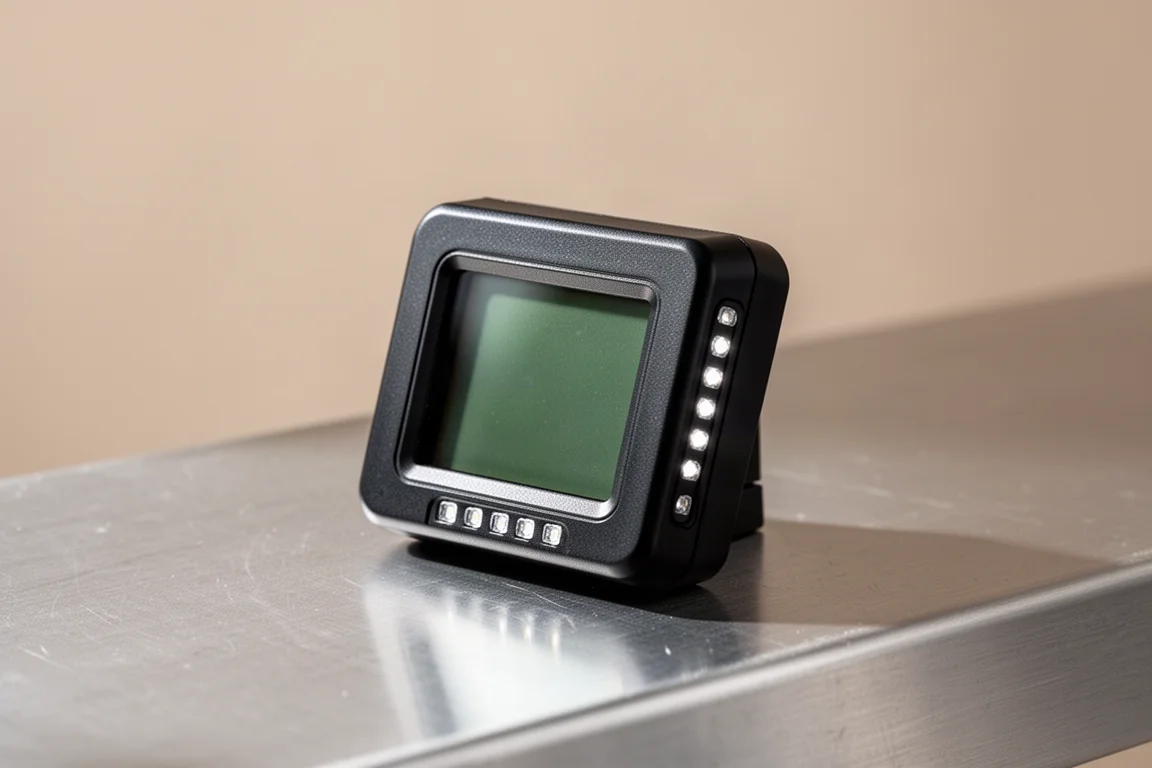
The 935DAA is where Klein added the trick the name gives away: an alarm. Hold the preset button to lock in a target angle, and as you tilt the gauge toward it, a blinking orange light signals you are getting close, roughly within 5 degrees. Hit the target and you get a solid tone plus green lights. The audible alert can be muted by pressing the on/off or zero button twice.
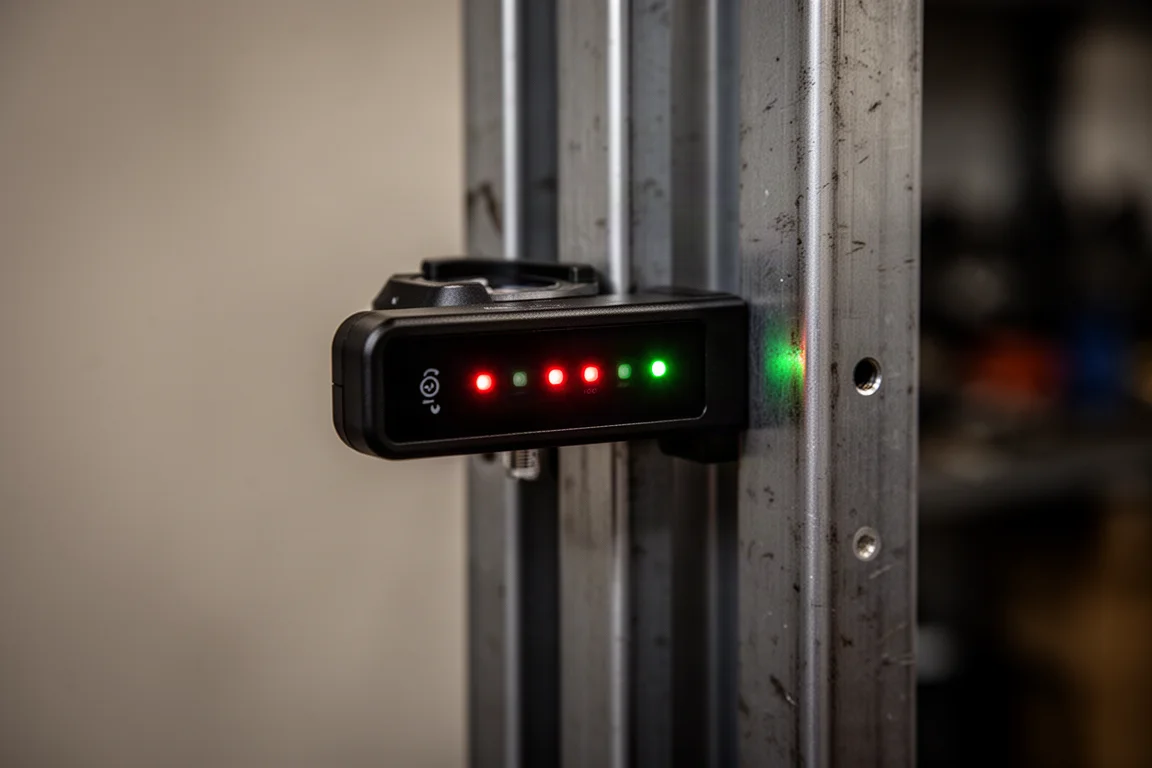
Beyond the alarm, the display handles tilted positions gracefully, switching to a new face rather than throwing an error the way the older unit does. It also lets you choose the counting direction, working from 1 to 90 degrees counting down or up to 180, which makes it flexible for different setups. It sells for about 40 dollars, and it runs on included AAA batteries.
Magnets, Batteries, and Long-Term Ownership
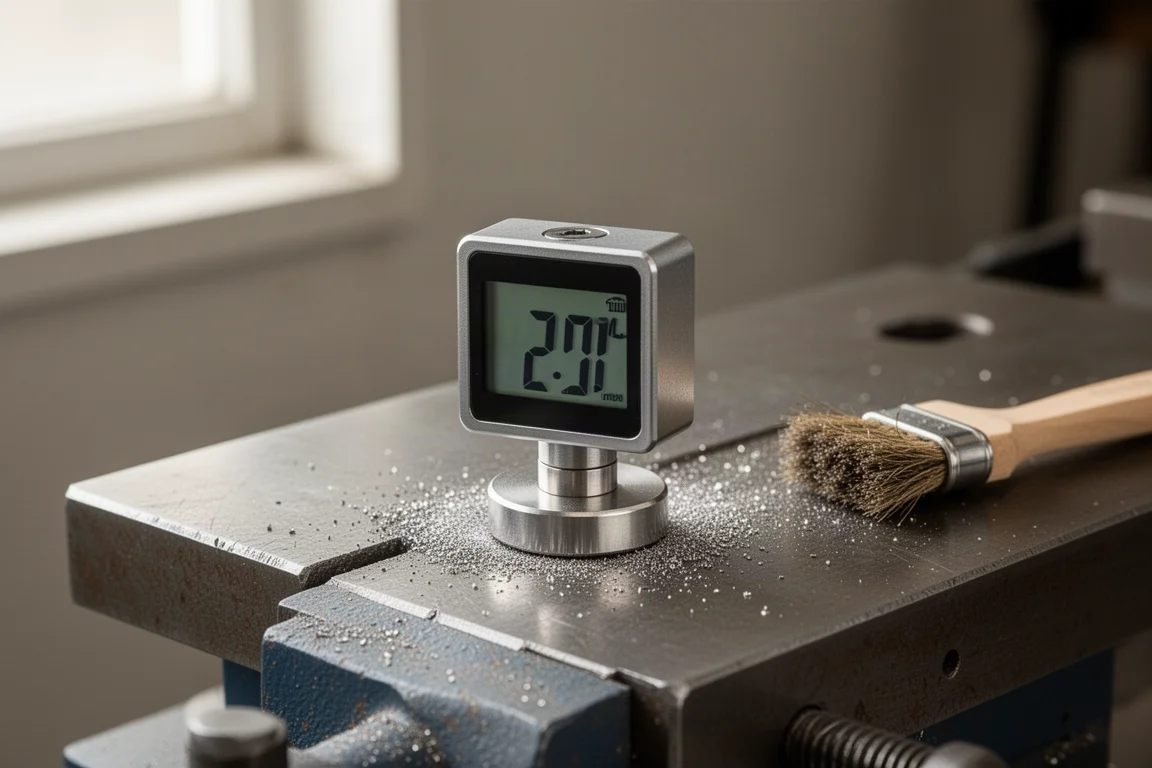
Both gauges use a strong magnet, but the designs differ. On the older 935DAG the magnet is exposed, which means it picks up filings and crud over time and needs regular cleaning. On the newer alarm version, Klein appears to have learned from that: the magnet is better protected.
On batteries, the standard gauge runs on AAA cells while another model in Klein’s wider lineup uses AA, so it is worth checking which cells your unit takes before stocking up. Either way, both designs are simple, light, and easy to live with day to day.
Which One Should You Buy
If you use an angle gauge only occasionally, the 935DAG at around 30 dollars covers the basics and keeps costs down. If you find yourself reaching for one constantly, the 935DAA at roughly 40 dollars is the better daily driver: the alarm presets, the friendlier display behavior, and the protected magnet all add up to a noticeably smoother experience.
And if you are a heavy user willing to spend more, Klein’s larger level-style unit at about 60 dollars rounds out the family for those who want even more capability.
Conclusion
Klein’s square digital angle gauges are simple, inexpensive, and genuinely useful, and the alarm-equipped 935DAA shows how quickly this category keeps improving. Pick the 935DAG for occasional use on a budget, step up to the 935DAA if the gauge is part of your daily workflow, and either way you get a compact tool that makes angle work faster and more accurate than the old bevel gauge ever was.
Further reading
Related Reviews

Tool Reviews
Best Mechanic Tool Sets 2026: Ten Sets Tested for Real Workshop Performance
Ten mechanic tool sets compared across wrench strength, ratchet efficiency, back drag, adapter durability, and overall value.

Tool Reviews
Best Tools of 2025: Top Performers Across Nine Categories
A roundup of the standout tools from a year of head-to-head testing, covering drills, saws, blowers, mowers, trimmers, and more.

Tool Reviews
Metmo Fractal Vise 32 and Dual M18 Battery Adapter: Two TikTok Finds Put to Work
We bought two tools that keep showing up in our feed: a fractal vise that clamps almost anything and a dual battery adapter that promises more power and runtime.