Kitchen Knives
Kitchen Knife Buying Guide: 7 Mistakes to Avoid Before You Buy
After testing over 100 knives, these are the mistakes that most often lead to a regretful purchase, plus two knives that get the fundamentals right.
Introduction
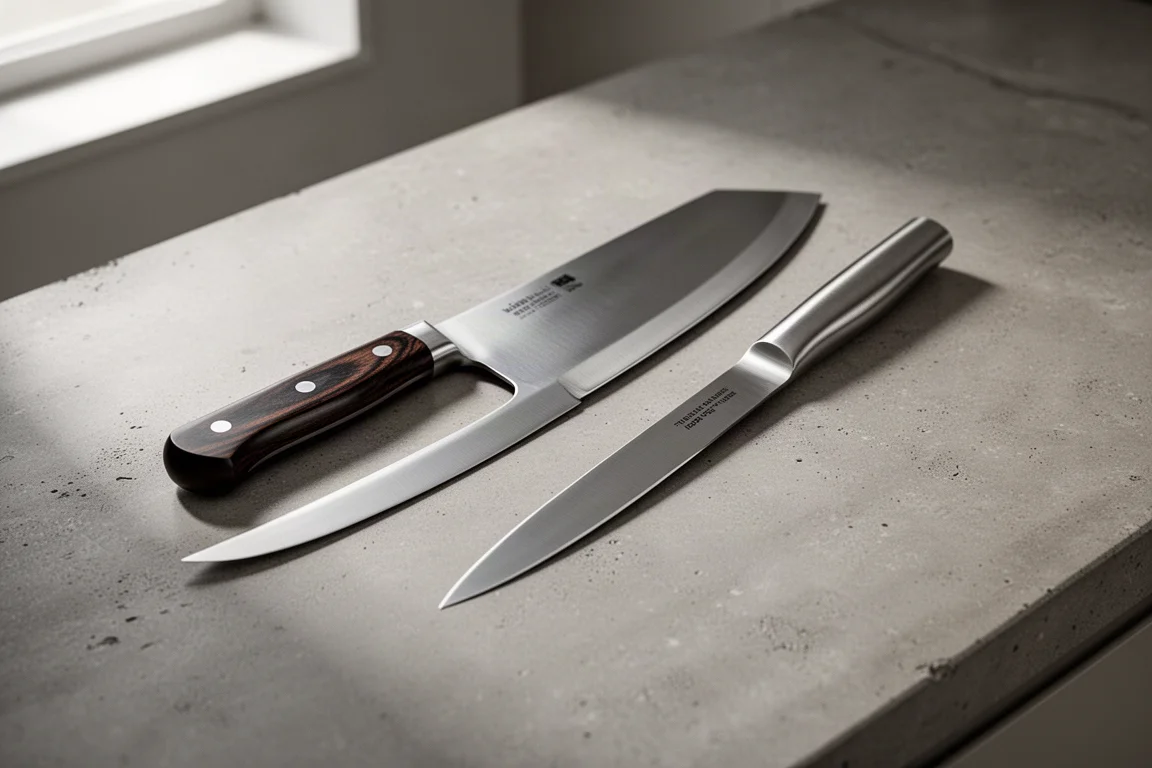
Kitchen knives are expensive, and you use them every day, which makes them one of the purchases you least want to get wrong. After testing and reviewing over a hundred knives, a clear pattern emerges: the factors that actually matter are handle comfort, weight and balance, blade shape, geometry, and steel, while a surprising amount of what brands advertise is closer to marketing hype than performance.
This guide breaks down the seven biggest mistakes people make when buying kitchen knives, how to avoid paying for gimmicks, and why a knife that feels perfect in someone else’s hand might feel completely wrong in yours.
Mistake 1: Ignoring How the Handle Feels
The biggest reason you will end up hating a knife is the handle. If the handle does not feel right in your hand, it does not matter how sharp the blade is or how well it holds an edge. There are dozens of handle shapes: classic Western styles with a curved butt end, Japanese Wa handles with eight sides, smooth rounded designs, and everything in between.
Rounded handles are more comfortable, but they are more prone to rotating when you chop, which may force you to grip harder. With Japanese knives, some D-shaped handles are not meant for right-handed use, so they can feel awkward if you are a lefty. Avoid handles that are too thick or too thin, and look for some texture or curve so the knife does not get slippery.
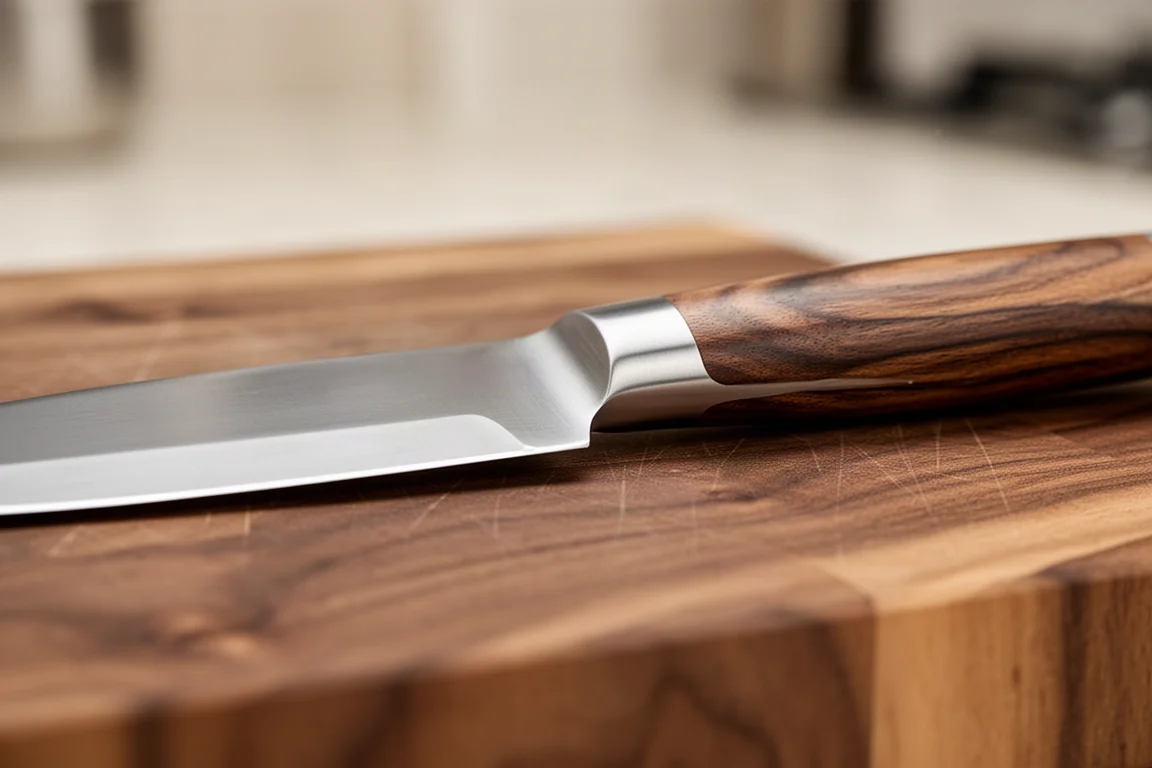
Also pay attention to two spots with sharp edges: the spine, the top edge of the blade, and the choil, the curved cutout where the blade meets the handle. With a pinch grip, your thumb and forefinger rest right on these areas, and if they are not rounded or smoothed, they will dig into your fingers.
The bolster, the metal piece where the blade meets the handle, is another factor. A thick full bolster adds heft and stops your hand from slipping onto the blade, but it can get in the way when pinching the blade and makes sharpening the entire edge difficult because the heel is too thick. A half bolster with a tapered or sloped design gives your fingers a resting place without blocking access to the heel, and some knives skip the bolster entirely. The best design comes down to what feels right to you.
It is hard to judge handles online, so the best approach is to hold a few knives in person. Some stores even let you test them. If that is not an option, buy a few knives, use them for a couple of days, and return the ones that do not feel right. Just check the return policy before you buy.
Mistake 2: Overlooking Weight and Balance
Weight and balance can completely change how a knife feels and performs. A heavier knife uses its own momentum to slice through food, so you are not pushing as hard, but if it is too heavy, your wrist will tire quickly. A lighter knife gives you more control and agility for detailed work, but if it is too light, it can feel flimsy and requires more effort to push through cuts.
For context, Western-style 8-inch chef’s knives usually sit on the heavier side, around 6 to 9 ounces, while lightweight Japanese chef’s knives typically come in around 5 to 7 ounces.
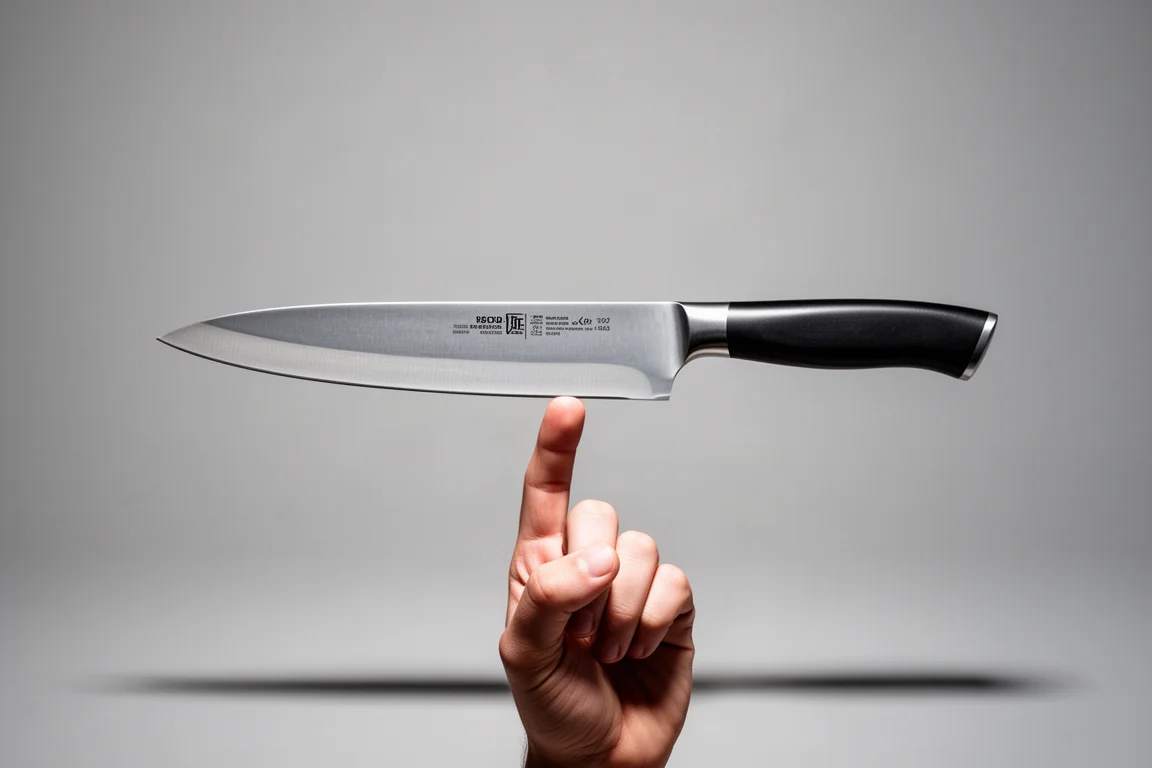
Balance matters just as much. If the blade is too heavy relative to the handle, the knife tips forward and you constantly fight to keep it stable. If the handle is heavier, the blade feels disconnected and harder to control. A well-balanced knife feels centered and steady right where the blade and handle meet.
A big contributor to balance is the tang, the piece of metal that extends from the blade into the handle. A full tang runs through the entire handle and adds weight and stability toward the back. A partial tang only goes partway in, keeping the handle lighter and shifting more weight toward the blade. Both work fine; they just create different balance points. Most brands list weight in their specs, which is a good starting point, but balance is something you really need to feel for yourself.
Mistake 3: Buying a Blade Shape That Doesn’t Match Your Cutting Style
The curve of the edge is the biggest factor here because it dictates how you cut. Western-style chef’s knives typically have a deeper belly, meaning the blade curves more from heel to tip. That design is made for a rocking motion where you keep the tip on the board and rock the blade back and forth.
The Gyuto, the Japanese version of a chef’s knife, has a flatter edge with less curve. Instead of rocking, you use an up-and-down motion, lifting the blade completely off the board between cuts. Neither style is better than the other, but if you prefer rocking, a knife with a rounded belly will feel more natural.
Blade height is another thing people overlook. A narrow blade might look sleek, but if it is too short, your knuckles will scrape the cutting board every time you chop. Taller blades are less nimble but give you more knuckle clearance.
The height of the tip matters too. Most knives have a gradual curve to both the belly and spine, but some, like the Zwilling Pro, have a straighter spine, which means the tip sits higher. You have to hold the handle much higher to use the tip, which is worth knowing before you commit.
Mistake 4: Not Paying Attention to Blade Geometry
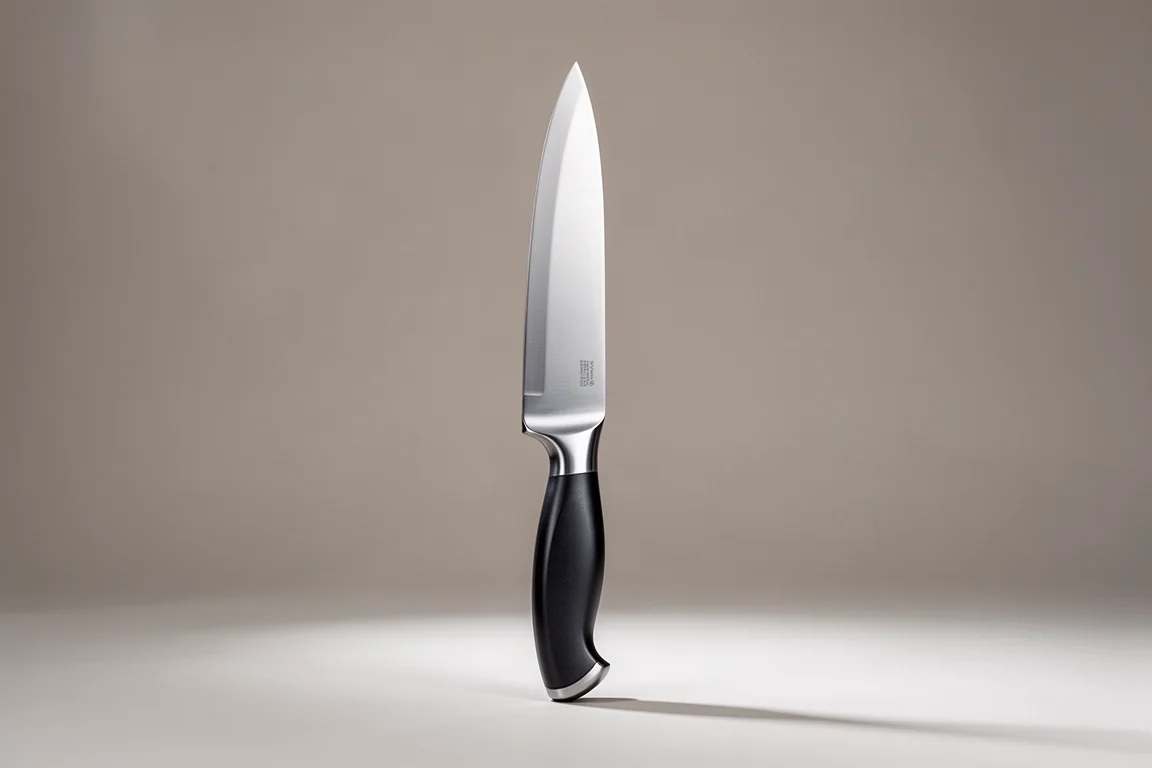
If the blade is too thick behind the cutting edge, the knife pushes food apart instead of slicing through it cleanly. The problem is that most brands do not mention geometry in their product descriptions, and you cannot really tell from photos.
The best check is to hold the knife in person. Gently pinch the blade about a quarter inch above the cutting edge. If it feels thick or blocky, the knife will drag through food instead of slicing cleanly. You will feel this right away when cutting through something dense like a potato or a carrot.
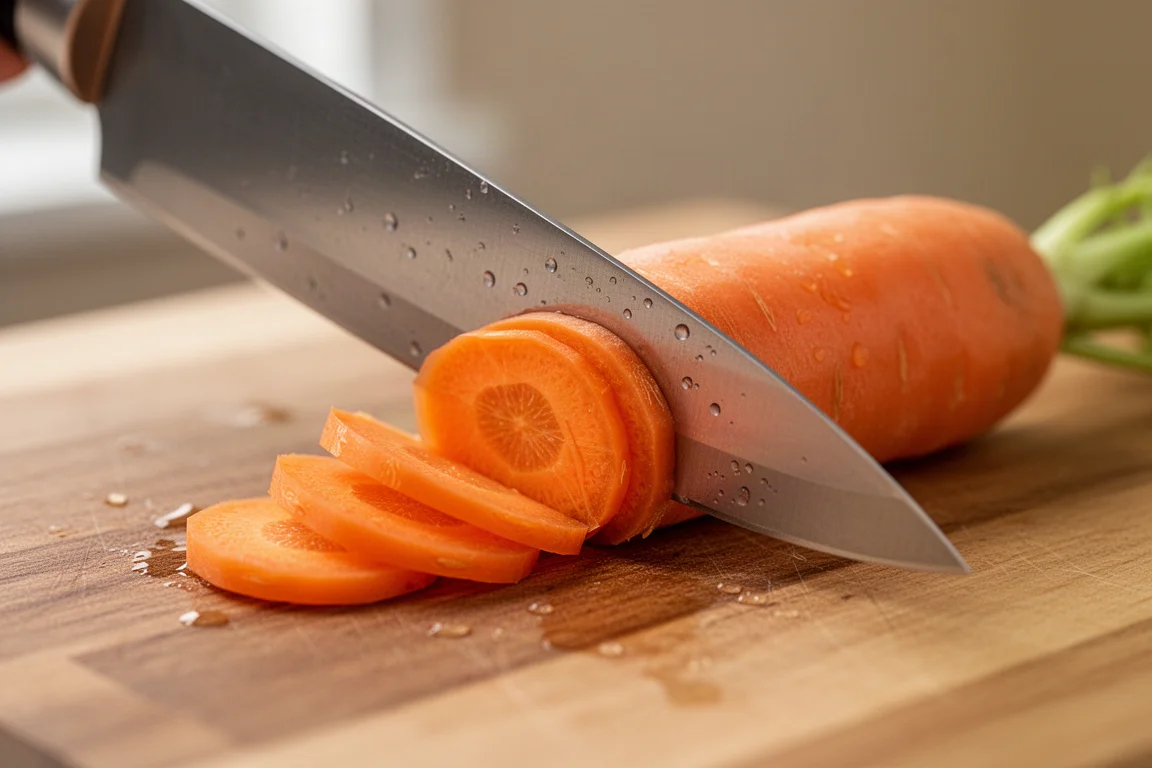
You should also check the spine. A blade that thins out toward the tip will be lighter and easier to control, while a spine that stays thick all the way through makes the knife feel clunky. This is hard to evaluate when shopping online, which is why testing a knife at home or asking detailed questions before buying is so valuable.
Mistake 5: Ignoring Steel Type, or Obsessing Over It
Ignoring the type of steel a blade is made from, or obsessing over it too much, will both steer you wrong. Some brands do not even disclose what steel they use in the product description, and that is a red flag. At minimum, you should know the name of the steel before you buy so you can look up what you are getting. On the flip side, some people overpay just because the steel name sounds impressive.
Steel is iron mixed with carbon and a few other elements. There are dozens of formulas, but they all try to balance three things: how long the edge stays sharp, how well it resists rust, and how durable it is.
The simplest and most useful thing for home cooks to focus on is hardness, measured on the Rockwell scale, which most brands actually disclose. Harder steel at 60 to 66 Rockwell stays sharp longer but is more likely to chip and harder to sharpen. Softer steel around 54 to 57 Rockwell dulls faster but resists chipping and is easier to resharpen.
An easy way to think about it: a blade made of Play-Doh would lose its edge right away but is easy to reshape, while a blade made of diamond would stay sharp much longer but be difficult to reshape once dulled. If you do not want to baby your knives and want quick resharpening, choose softer steel. If you want the longest-lasting edge and you are careful with your knives, go harder.
Mistake 6: Assuming Forged Knives Are Automatically Better
Forged knives are made by heating a bar of steel and hammering it into shape. Stamped knives are cut from a flat sheet of steel and then ground into shape. For years, brands have marketed forged knives as superior, so many people assume stamped blades are lower quality. In reality, the construction method does not impact performance as much as you would think. Factors like hardness and geometry play a bigger role in how well a knife cuts and how long it stays sharp. A well-designed stamped knife can outperform a poorly designed forged knife.
The MAC MTH-80 is a good example. It is stamped, yet it is one of the best knives tested in this category. MAC grinds the blade thin from spine to edge, so it cuts effortlessly, and it is light and well balanced. The fact that it is stamped does not really matter.
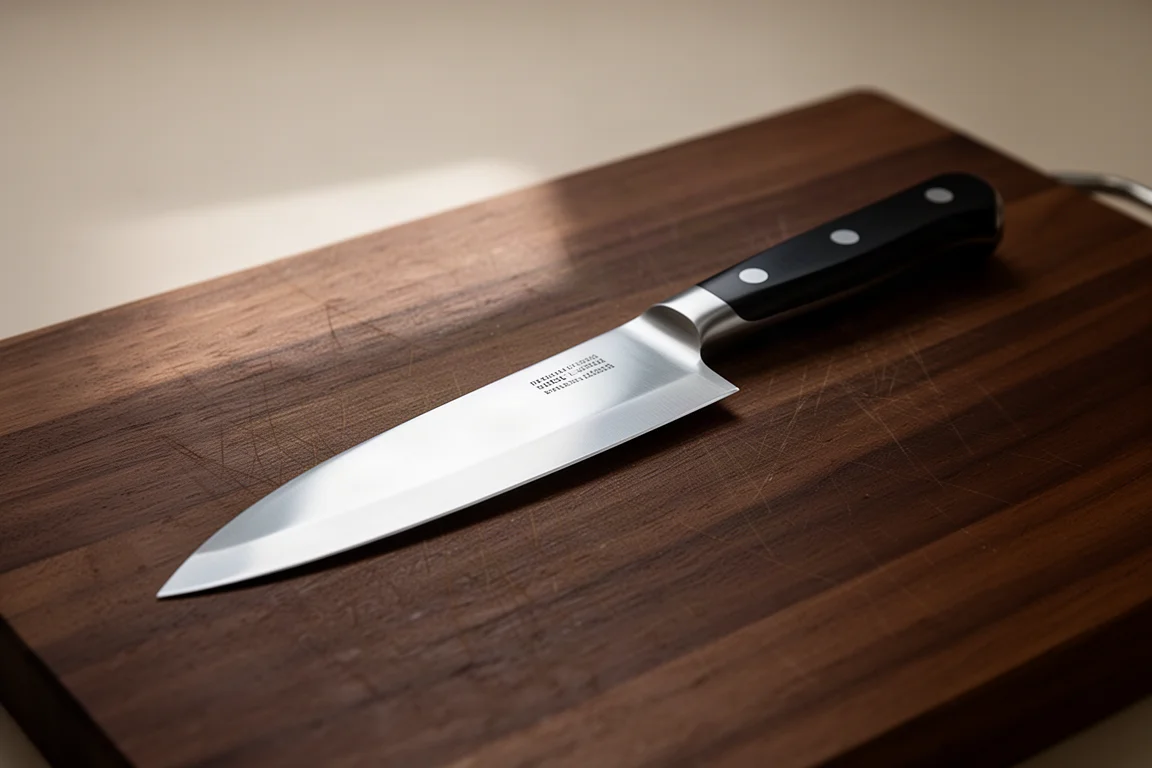
That said, some cheap stamped knives use steel so thin and soft that the blade flexes as you cut. A little flex is normal for specialty knives like fillet knives, but a chef’s knife should not bend easily.
Mistake 7: Buying a Big Knife Set
Those 14- or 16-piece blocks look like a good deal, but you will only use two or three of the knives, and the rest will just sit in the block. Most home cooks only need an 8-inch chef’s knife, a serrated bread knife, and a paring knife. A Nakiri or Santoku is a nice bonus, but you do not need much more than that.
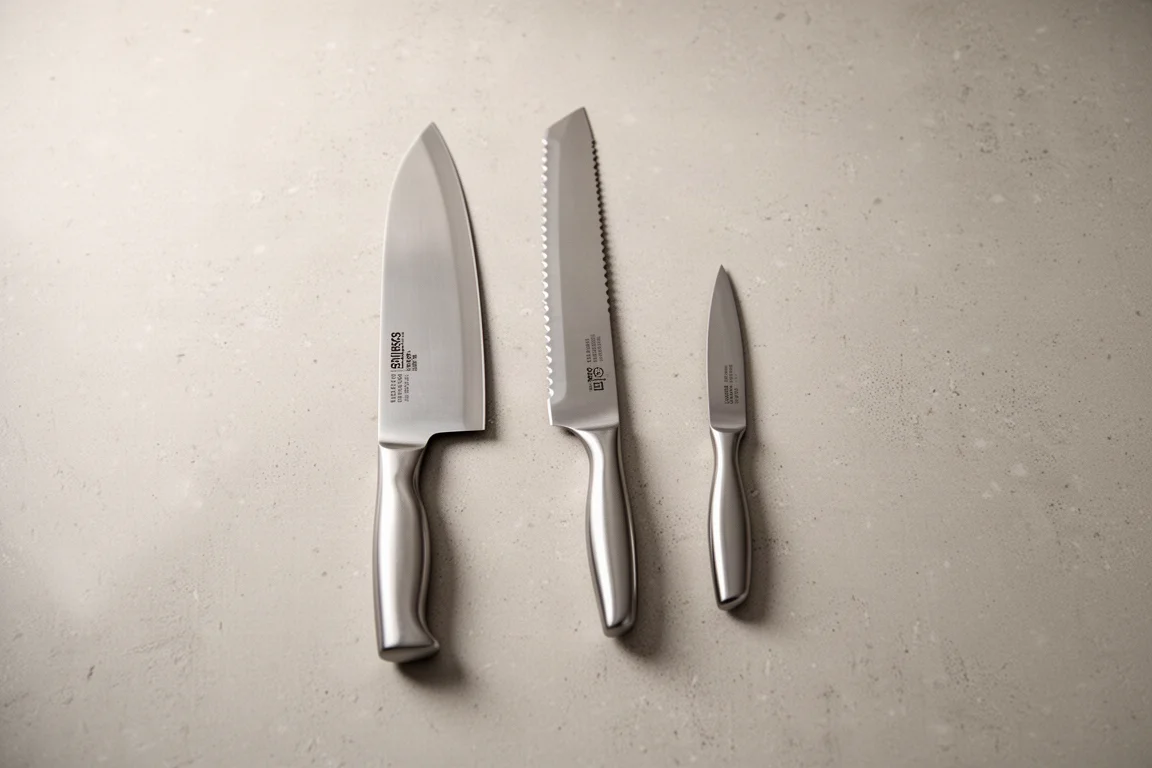
Instead of a huge set, you will get more value by buying the exact knives you need or a small three-piece starter set. And definitely avoid self-sharpening blocks, because the ceramic inserts grind your knives unevenly and wear them out faster.
Questions to Ask Before You Buy
Before buying any kitchen knife, ask the brand or the store a few direct questions: What steel is the blade made from, and what is its hardness on the Rockwell scale? How much does the knife weigh? Is the tang full or partial? Is the bolster full, sloped, or absent? How thick is the blade behind the edge, and does the spine taper toward the tip? These answers will tell you far more than any marketing page.
Conclusion
Most regretful knife purchases come down to a handful of avoidable mistakes: a handle that does not suit your hand, weight and balance that do not match your cutting style, a blade shape or geometry you never tested, steel you did not understand, assumptions about forged versus stamped construction, and bloated knife sets. Focus on the fundamentals, ask the right questions before buying, and if you want a shortcut, the MAC MTH-80 and Zwilling Pro both show how getting these details right leads to a knife that performs well for years.
Further reading
Related Reviews

Kitchen Knives
Best Chef's Knives 2026: 27 Popular Options Tested and Ranked
A comprehensive review of 27 chef's knives ranging from $18 to $380, with honest assessments of handle comfort, blade balance, and real-world performance.

Kitchen Knives
Best Chef's Knives Under $75: Two Tested Recommendations
Two practical 8-inch chef's knives that balance sharpness, comfort, and durability without premium pricing.

Kitchen Knives
Best Chef's Knives 2026: 27 Options Tested and Ranked
A comprehensive review of 27 chef's knives ranging from $18 to $380, with honest assessments of handle design, balance, blade profile, and real-world performance.