Skis
Kästle MX75 Review: A Frontside Ski With All-Mountain Roots
A narrow frontside ski with a poplar and beech core, a carbon inlay, and two sheets of metal, built for groomed terrain with a little all-mountain flexibility.
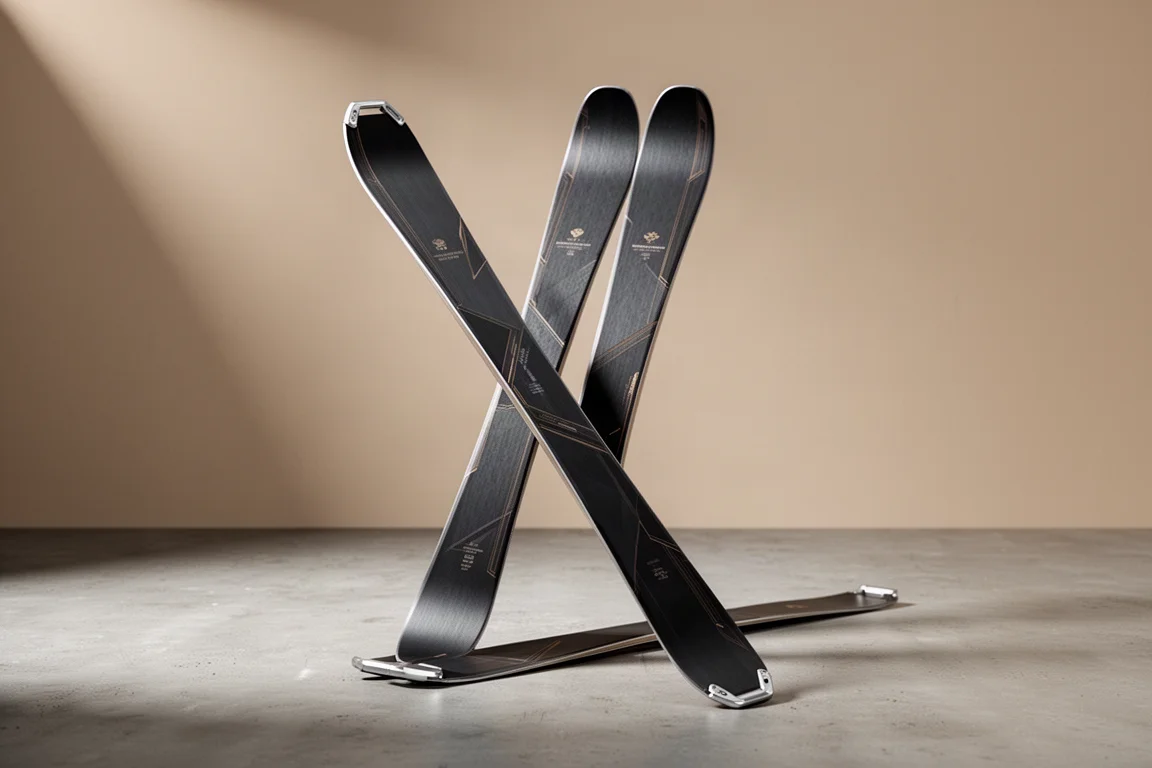
Introduction
Narrow frontside skis have quietly become one of the most useful categories in a quiver. A waist in the 75 to 76 millimeter range keeps the ski quick edge to edge on hardpack, yet the better examples borrow construction ideas from wider all-mountain models so they do not feel like one-trick groomer tools.
The Kästle MX75 sits squarely in that space. It is a frontside-first ski for intermediate through expert skiers, and because it is derived from the wider models in the MX series, it carries some of that all-mountain character into a slimmer package. The result is a ski with a calm, composed feel on groomed terrain and just enough versatility to handle an adventurous day.
Who the Kästle MX75 Is For
This is a ski for the person who spends most or all of their time on groomed runs and wants that time to feel precise and rewarding. Intermediate skiers will appreciate how manageable the MX75 is at moderate speeds, while advanced and expert skiers get a platform that stays composed when they push the edge angle and load the ski through the turn.
It is also a sensible choice for skiers who want frontside performance without giving up every trace of all-mountain ability. Because the design comes from the wider MX models, the MX75 keeps a bit of that pedigree for the occasional soft-snow detour or a day when conditions get variable. Skiers who already own a wider freeride ski and want a dedicated hardpack companion are the natural audience here.
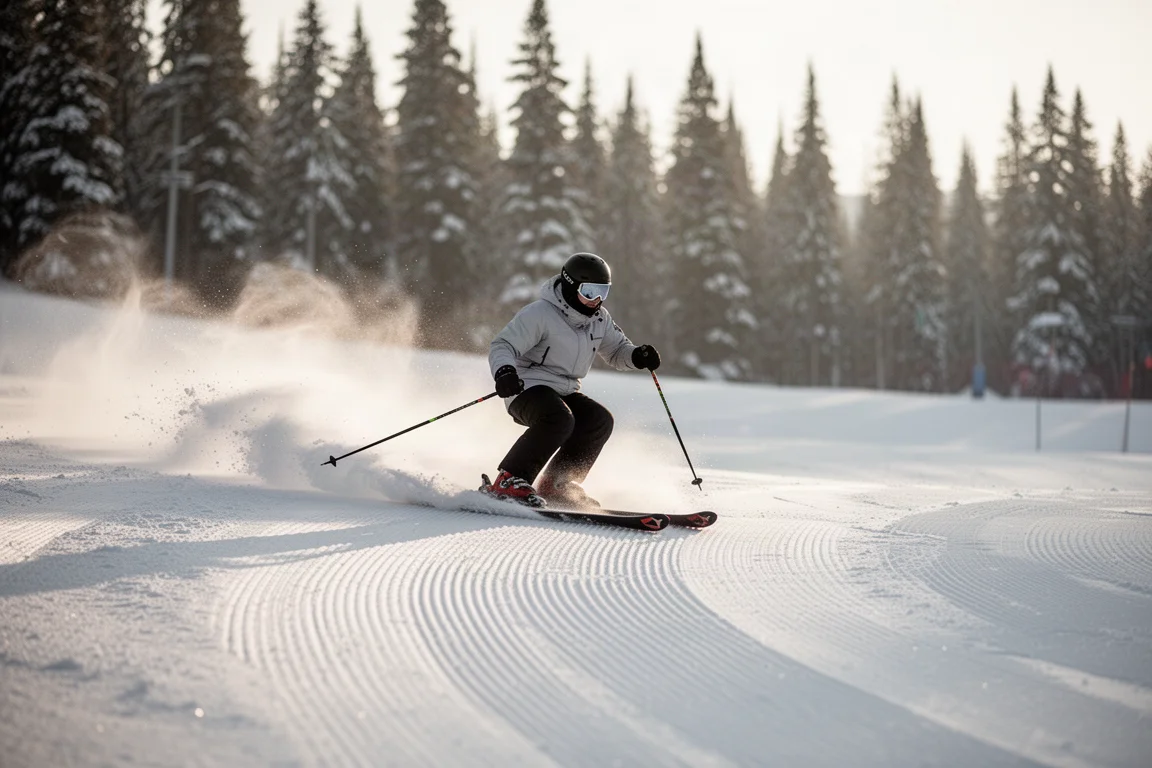
The MX75 is not aimed at the park, and it is not aimed at deep powder. It is aimed at the skier who wants clean, round turns on the terrain they actually ski most often.
Main Strengths
The first thing that stands out about the MX75 is balance. The ski has a tip to tail harmony that translates into clean, round turns rather than abrupt or twitchy ones. It holds a consistent feel through the arc, which makes it easy to trust on hard snow.
That balance is backed by a fairly serious build. There is a lot of material in this ski, and it shows in the way it absorbs vibration and stays planted underfoot. Despite the substance, it remains agile when rolled onto its edge, which is a difficult combination to get right in a narrow frontside model.
Construction and Materials
The core is where the MX75’s character starts. A central section of poplar and beech stringers runs down the middle of the ski, with beech providing stiffness and density for stability and damping. The outer portions use poplar stringers only, which keeps the edges of the ski lighter and a touch more playful. Mixing wood densities this way, and using thinner stringers, gives the ski the overall quality of build that Kästle skis are known for.
Above the core sits Holotech 3.0 with a carbon inlay. The carbon keeps the ski light, particularly toward the tips, and reduced swing weight at the extremities means less mass to chatter, so vibration smooths out more than it otherwise would. Two sheets of fiberglass work alongside two sheets of metal, and that combination is what makes the MX75 feel smooth, damp, and powerful without sacrificing agility.
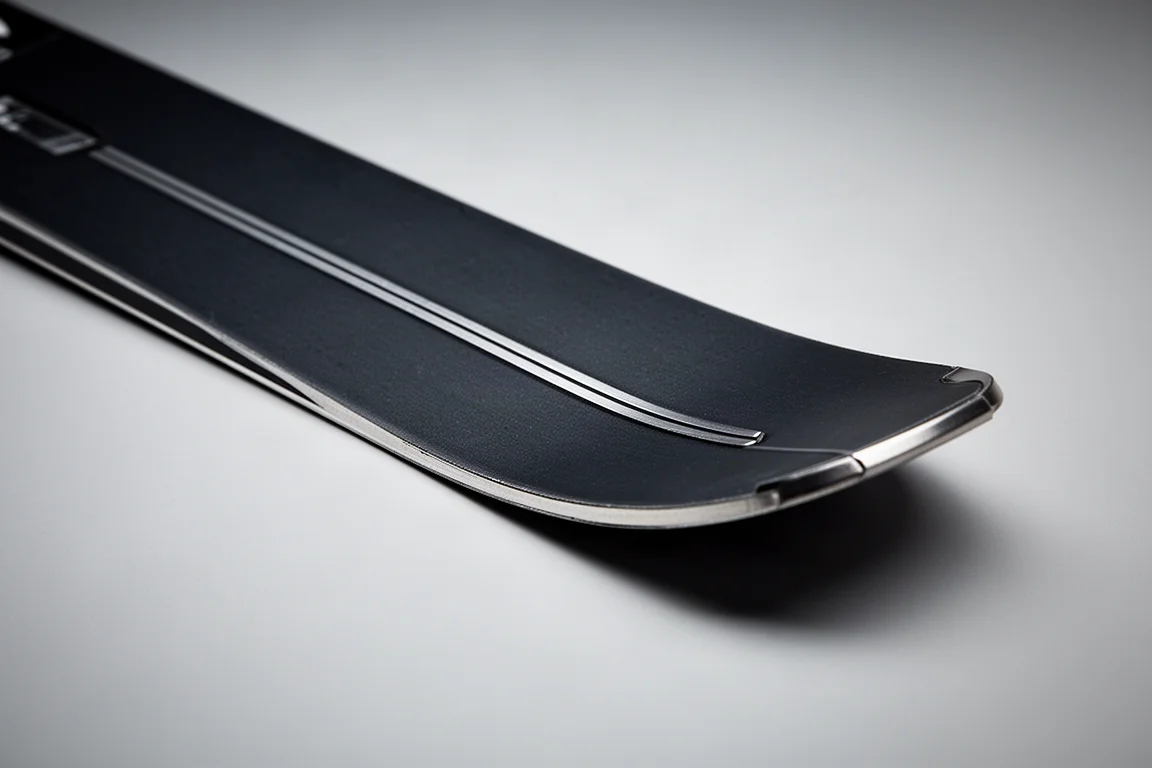
In practice, this is a construction that rewards a skier who is willing to work with it. There is enough metal in the build to deliver a quiet, planted ride, and enough carbon and poplar to keep the ski from feeling like a slab.
Turn Shape and Edge Hold
The shape tells you a lot about the intended use. The MX75 has a wider tip with almost no taper, so the edge runs essentially all the way to the end of the ski. Down at the tail there is a solid flat metal tip with only minimal taper to keep the ski user friendly. This is not a design with meaningful rocker; for all practical purposes it is a fully cambered ski, perhaps with a millimeter of rocker in the shovel and just enough splay to keep it manageable given how much metal runs through the length.
That profile produces excellent edge contact from tip to tail. In the 172 centimeter length, the ski carries a 15.4 meter turn radius, which suits a ski that likes to be on edge and to complete its turns. The shape and the radius line up neatly with the way the ski behaves on groomed snow: smooth, round, and consistent.
Things to Consider Before Buying
The MX75 has a substantial amount of material in it, and that weight is a genuine consideration. Stronger, more assertive skiers will find it stable and confidence inspiring. Lighter or more casual skiers may find that it asks for more input than a softer frontside ski would, particularly at lower speeds.
The narrow waist and minimal rocker are also worth thinking through honestly. This is a groomer-oriented ski first. It will handle variable conditions better than a pure race-derived carving ski because of its all-mountain construction, but it is not a soft-snow tool and it is not designed to float. Skiers who split their time evenly between groomers and off-piste terrain should treat the MX75 as one part of a quiver rather than a single-ski solution.

Finally, the edge-to-edge grip that makes the ski so satisfying on hardpack is the same trait that makes it feel demanding when you are tired or skiing defensively. It rewards a skier who commits to the turn.
Choosing the Right Length
The 172 centimeter version of the MX75 comes with a 15.4 meter turn radius, which sits in a versatile middle ground: short enough to feel lively in shorter arcs, long enough to stay composed when you open up the turn shape. Length choice should follow ability and intent more than anything else. Skiers who are still building confidence will get more out of a shorter option, while stronger skiers who like to drive a ski hard will want the extra platform underfoot.
Because the MX75 is fully cambered with minimal taper, the effective edge is long for its size. That is worth factoring in when deciding, since a cambered ski with edge contact tip to tail will feel longer on snow than a heavily rockered ski of the same nominal length.
Buying Advice
The MX75 makes the most sense for a skier who is honest about where they spend their days. If your season is built around groomed runs, and you want a ski that feels calm, damp, and precise while still carrying a hint of all-mountain pedigree, this is a well-resolved option. The poplar and beech core, the carbon inlay, and the two sheets of metal and fiberglass add up to a ski with real substance and a smooth, powerful personality.
If your priority is soft snow, freestyle terrain, or a forgiving ride at low speeds, look elsewhere in the category. If your priority is clean round turns on the terrain you ski most, the MX75 is built for exactly that.
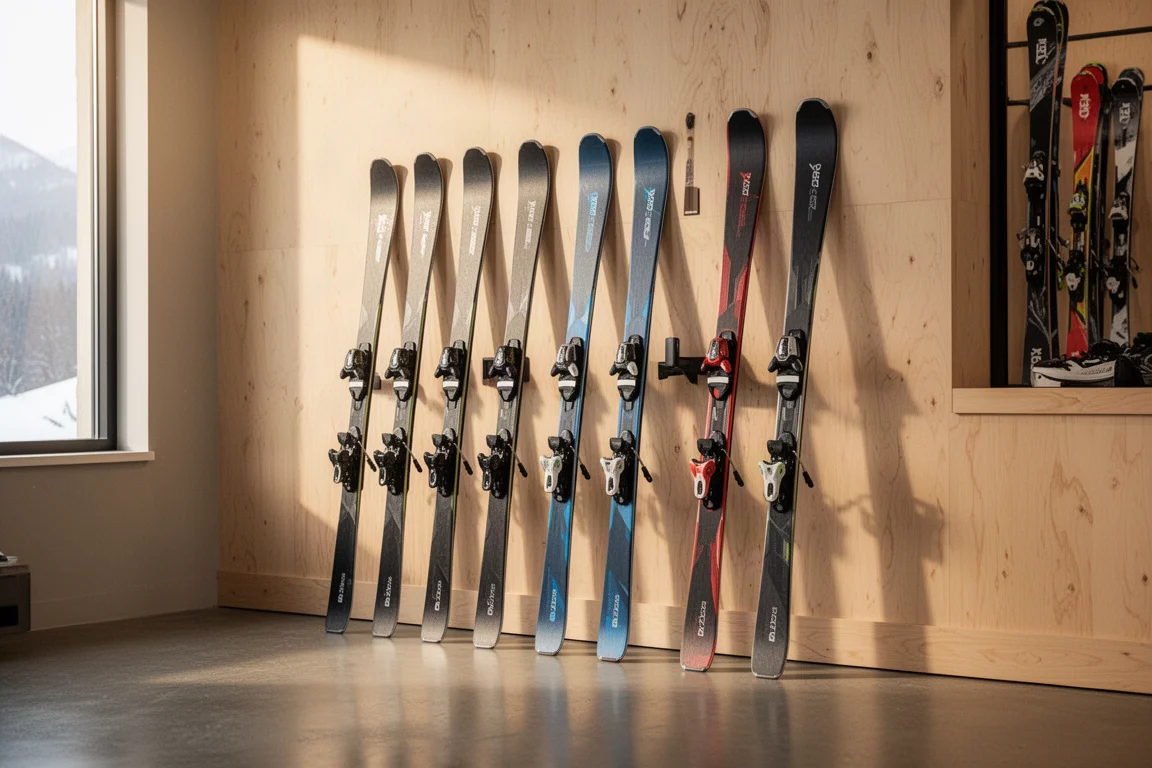
Pair it with a boot that matches your ability and a binding appropriate to your skiing style, and the MX75 should feel immediately familiar to anyone who has spent time on a quality frontside ski.
Conclusion
The Kästle MX75 is a narrow frontside ski that borrows enough from its wider MX siblings to feel more versatile than its waist width suggests. The mixed poplar and beech core, carbon inlay, and two sheets of metal deliver a smooth, damp, and powerful ride, while the shape and 15.4 meter radius in the 172 centimeter length keep turns clean and round.
For intermediate through expert skiers who ski groomed terrain most of the time and want an all-mountain flavor in a frontside package, it is a considered and capable choice. Just go in understanding what it is: a precise groomer ski with a bit of extra range, not a soft-snow specialist.
Product link
View more details for Kästle MX75
This product is mentioned in the review. Check the specifications, options, and compatibility before buying.
View more details for Kästle MX75Further reading
Related Reviews

Skis
Armada Anti Matter 82 W Review: A Light, Approachable All-Mountain Carver
Armada's Anti Matter 82 W pairs a lightweight Karuba and carbon build with an easygoing all-mountain shape, aimed at intermediates through lighter-footed advanced skiers.

Skis
Armada Anti Matter 88W Review: A Light, Playful 88mm All-Mountain Ski Plus Two Alternatives
The Armada Anti Matter 88W returns unchanged in spirit from its Reliance 88C days, and it remains one of the most versatile 88mm skis around. We also look at the Nordica Santa Ana 87 and Anti Matter 92 W as alternatives.

Skis
Armada ARV 100 vs Atomic Bent 100: Which 100mm Freestyle Ski Should You Buy?
Two of the best all-mountain freestyle skis of the season compared: one leans playful and park-ready, the other holds up better everywhere else.