Tool Reviews
Kaiweets KT301P Review: A Circuit Breaker Finder That Remembers What It Sees
A circuit breaker finder with a GFCI tester, non-contact voltage sensing, and a receiver/transmitter design that works even on faulty outlets.
Introduction
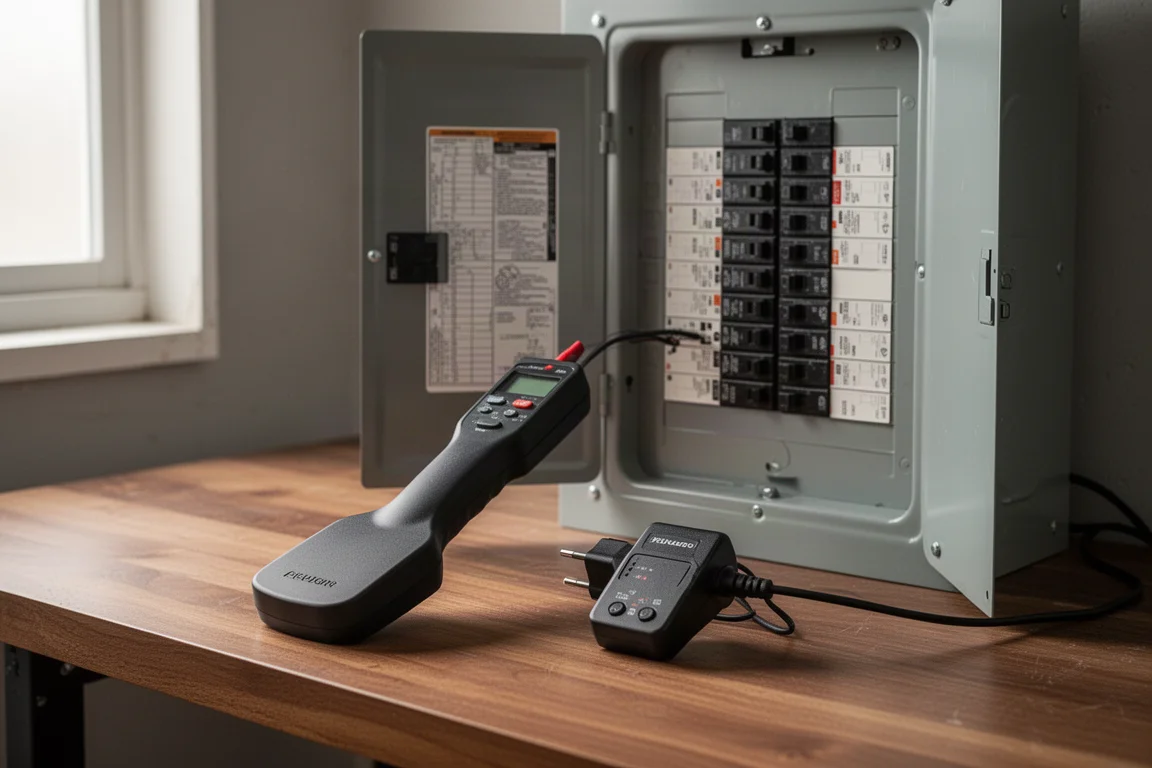
Anyone who has stood in front of a breaker box flipping switches one by one, hoping to find the right circuit, knows how tedious the process is. A circuit breaker finder removes the guesswork, and the Kaiweets KT301P is a well-rounded take on the category. The P in the name indicates that it ships with extra parts beyond the standard transmitter and receiver pairing, and those extras turn out to be genuinely useful rather than filler.
What the KT301P Actually Does
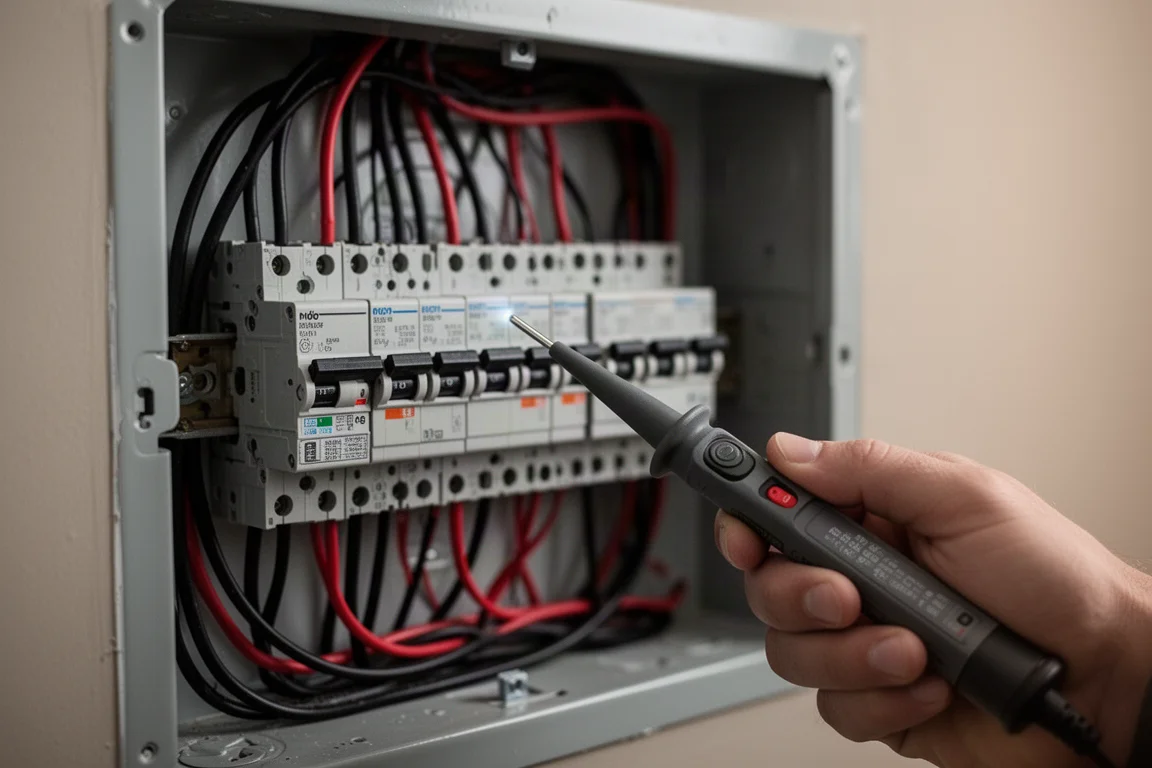
The kit is built around two pieces. The transmitter plugs into an outlet on the circuit you want to trace and sends a signal down the electrical line. The receiver is then swept along the breakers in the panel until it locks onto the one carrying that signal. When the correct breaker is found, the receiver reacts clearly with sound and light, so there is little ambiguity about which breaker controls the outlet in question.
The transmitter also doubles as an outlet tester. It reads voltage and can flag wiring faults such as an open line, and it includes a GFCI test function. That means the same tool that traces a circuit can also tell you whether the outlet it is plugged into is wired correctly in the first place.
The Memory Feature That Sets It Apart
The most practical detail is that the transmitter remembers its readings after you unplug it. Outlets tucked behind appliances, under furniture, or in tight corners are often impossible to read in place. The usual workarounds involve mirrors, extension cords, or awkwardly jamming a phone back there to photograph the display. With the KT301P, you plug it in, let it take its reading, pull it out, and walk over to see the results on the screen.
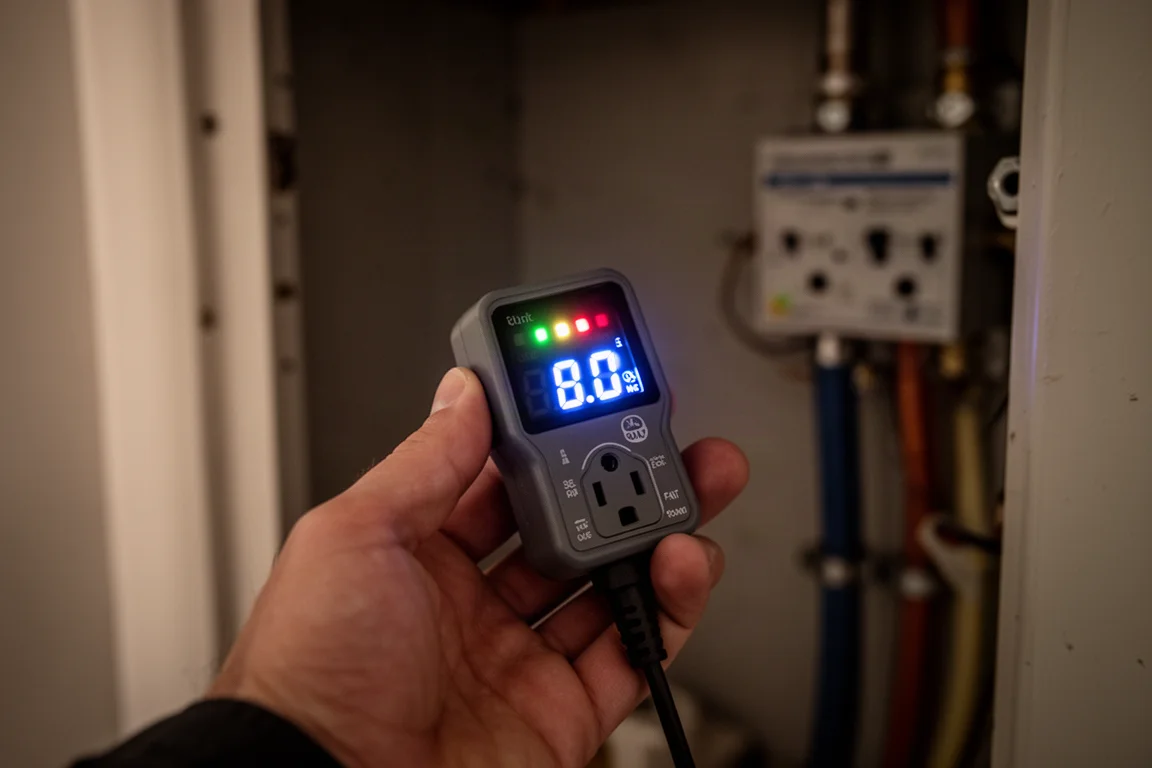
It retains the information until it shuts off, and it has an auto-off function plus a backlit display. On its own, this feature justifies the purchase for anyone who regularly works around hard-to-reach outlets.
Adapters for Non-Standard Outlets
Not every circuit starts at a standard grounded outlet, and this is where the extra parts earn their keep. The kit includes adapters that let you connect the transmitter directly to a line with a clamp, adapt down from a grounded outlet to an ungrounded one, and even step up to a light bulb socket so you can trace a circuit feeding an Edison fitting.
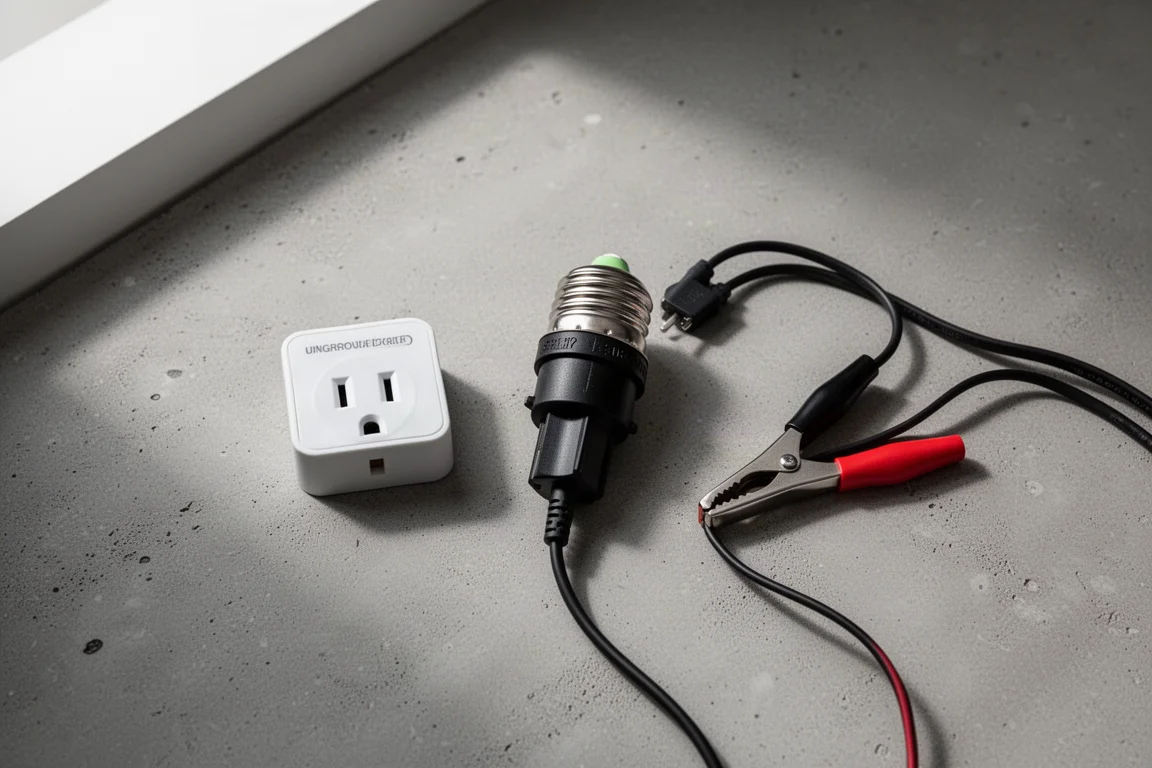
For comparison, some competing brands sell these accessory pieces separately, and the add-on kit can run around sixteen dollars. Having them included is a genuine value advantage.
Important Limitations to Know Before Buying
The transmitter is specified for roughly 30 to 120 volts, so it is not designed for 240-volt circuits, and low-voltage systems such as 12-volt or 24-volt services are out of scope as well. It also needs a live circuit to work: since the signal travels through the electrical line, a dead circuit cannot be traced. The onboard battery keeps the screen readable after unplugging, but that is not enough to push a signal back to the breaker panel.
The learning process also takes a little patience. When you first sweep the receiver along the breakers, it can pick up a lot of noise and seem like it is reacting to everything. Once it has learned the transmitted signal, it dials in sharply and identifies the live circuit with confidence. You can verify it by flipping the breaker on and off and watching the receiver respond in real time.
Non-Contact Voltage Sensing and Sensitivity
Beyond tracing, the receiver includes a non-contact voltage sensor and a built-in flashlight, both handy extras for electrical work. One nuance worth knowing: the voltage sensing is directional. In testing, the sensor responded to a nearby live wire from the front and from one side, but not equally from both sides. If you are used to waving a voltage wand sideways past a wire, this one rewards a front-facing approach, so orient the sensing end toward what you are checking.
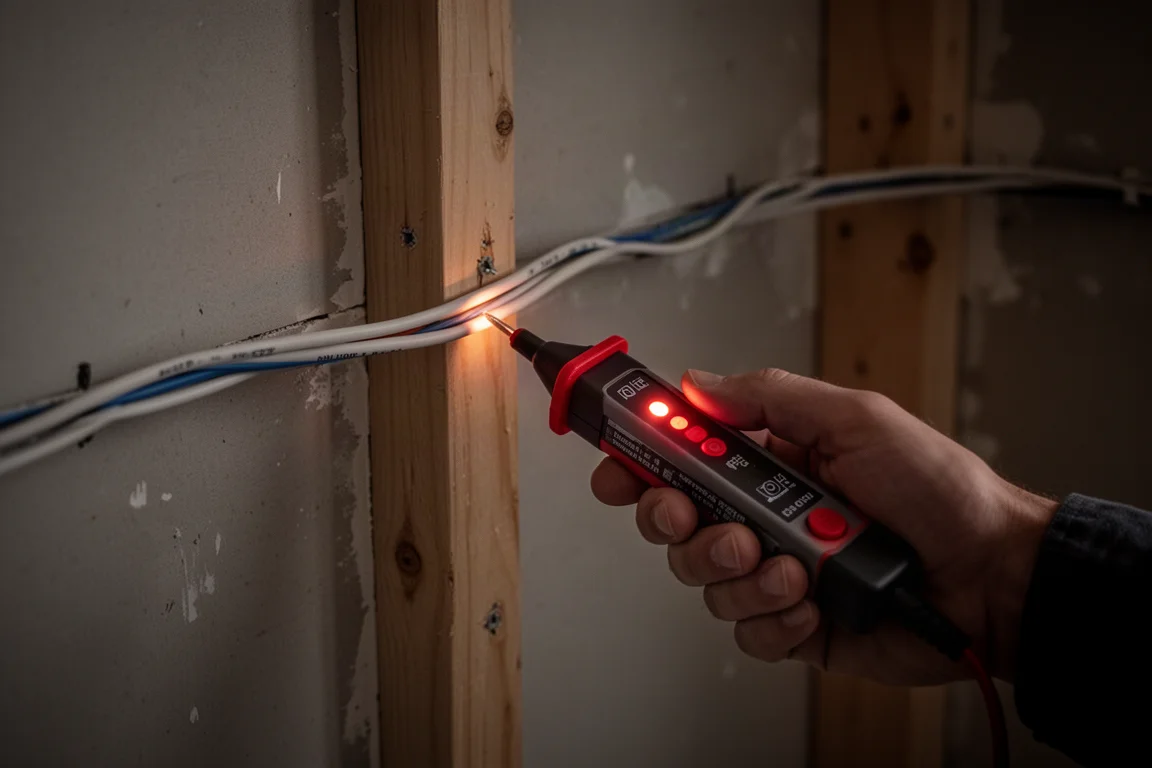
It also correctly detected a fault on an incorrectly wired outlet, confirming that the transmitter works on circuits that are live but not wired properly, which matters if you are diagnosing a rewiring job.
Buying Advice
The KT301P suits homeowners and DIYers who want to stop flipping breakers blindly, as well as electricians who want a capable secondary tracer with built-in outlet diagnostics. If your work regularly involves outlets hidden behind appliances or furniture, the memory feature alone makes it a strong pick. If you need to trace 240-volt circuits or dead circuits, look elsewhere, because this tool is not built for those jobs. The included adapters and GFCI testing round out a package that covers most everyday circuit-tracing needs in one purchase.
Conclusion
The Kaiweets KT301P combines a transmitter, receiver, GFCI tester, voltage reader, non-contact voltage sensor, and flashlight in a single kit, with a memory feature that solves a real, everyday annoyance. For anyone tired of the guesswork at the breaker panel, it is an easy tool to recommend.
Product link
View more details for Kaiweets KT301P
This product is mentioned in the review. Check the specifications, options, and compatibility before buying.
View more details for Kaiweets KT301PFurther reading
Related Reviews

Tool Reviews
Best Mechanic Tool Sets 2026: Ten Sets Tested for Real Workshop Performance
Ten mechanic tool sets compared across wrench strength, ratchet efficiency, back drag, adapter durability, and overall value.

Tool Reviews
Best Tools of 2025: Top Performers Across Nine Categories
A roundup of the standout tools from a year of head-to-head testing, covering drills, saws, blowers, mowers, trimmers, and more.

Tool Reviews
Metmo Fractal Vise 32 and Dual M18 Battery Adapter: Two TikTok Finds Put to Work
We bought two tools that keep showing up in our feed: a fractal vise that clamps almost anything and a dual battery adapter that promises more power and runtime.