Skis
K2 Mindbender 96C Review: The Mid-90s All-Mountain Ski Built for Most Skiers
A close look at the K2 Mindbender 96C, a carbon all-mountain ski with an aspen core, spectral braiding and unidirectional flax, and what it does well across groomers, moguls, trees and deep snow.
Introduction
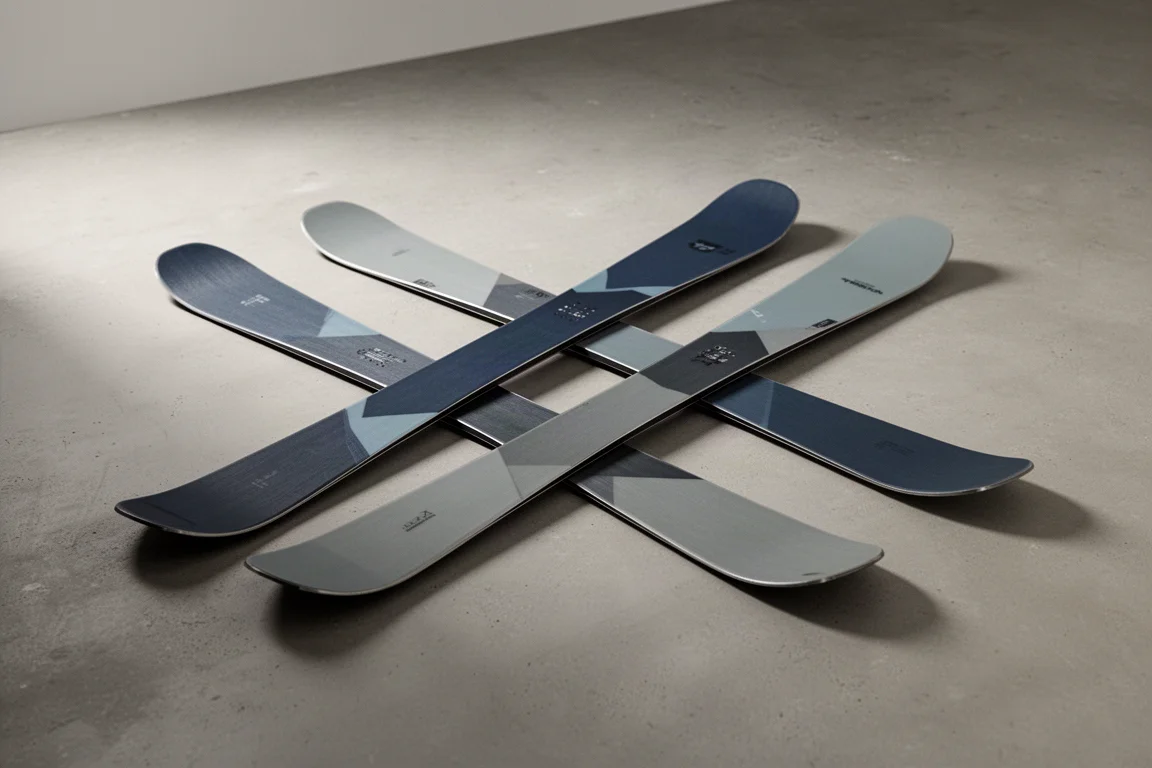
The K2 Mindbender 96C is the newest width in K2’s carbon Mindbender family, and it lands in the spot most all-mountain skiers actually shop: the mid-90s underfoot. For this generation, K2 broadened the carbon side of the line to four widths, at 90, 96, 106 and 116, which sit alongside the metal-reinforced Ti models at 89, 99 and 108. That makes the collection far more complete than it used to be, when the carbon options were limited to a 90 and a 116 with a very wide gap between them.
The 96C is aimed at the largest slice of that lineup. It uses a lighter, more forgiving build than the Ti skis, and it is designed to stay easy in soft snow, bumps and trees while still holding together on groomed runs at moderate speeds. The result is a ski that rarely feels like the strongest thing on the hill, but very often feels like the easiest one to get along with.
Who the K2 Mindbender 96C Is For
The 96C is best understood as a ski for the majority of skiers rather than the strongest ones. It flexes readily, initiates turns with very little input, and stays comfortable for a rider who skis upright and lets the ski do more of the work. On the same terrain, a heavier and more aggressive skier will eventually push through the shovel, which is exactly where the metal-equipped 99 Ti takes over.
That distinction matters when you are choosing between the two. The 96C is easier to bend and easier to access edge angle on, so a larger share of skiers will find themselves carving cleanly on it than they would on a stiffer ski with metal in it. It asks less of the person on top, and it gives back a predictable, low-effort feel.
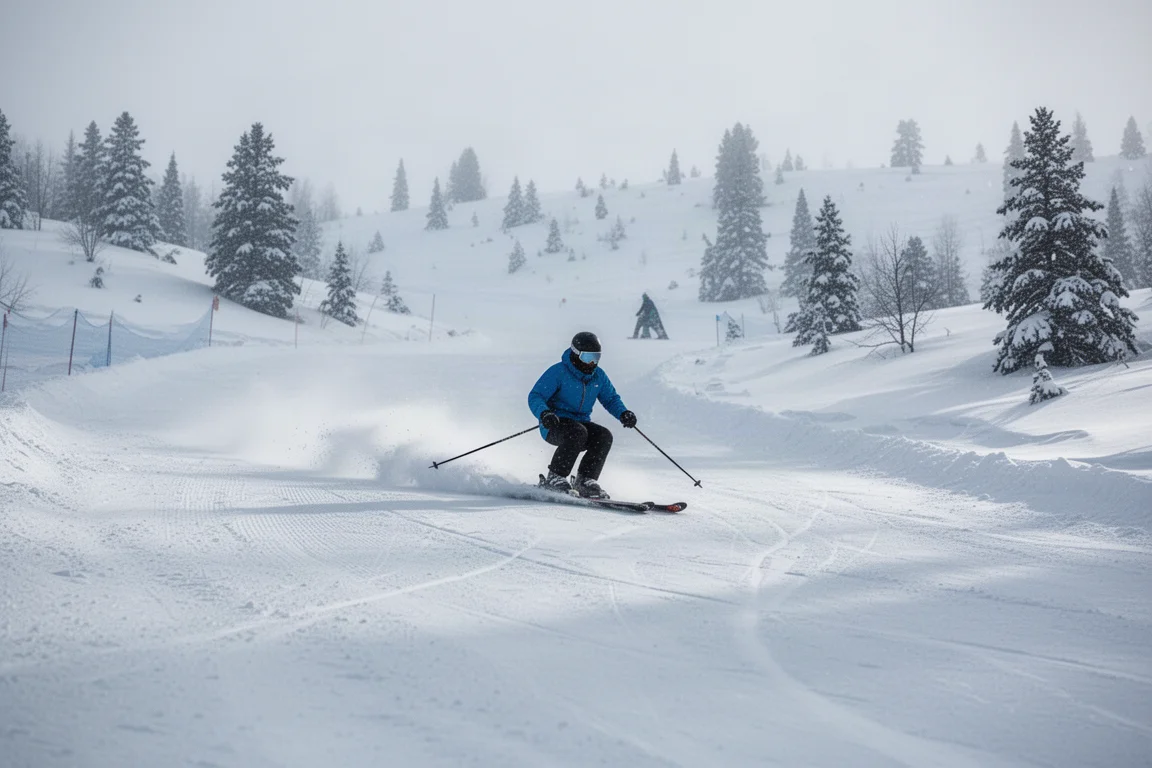
It also makes sense as part of a small quiver rather than the only ski in the garage. Skiers who already own a narrower, metal-laminate ski for firm days can treat the 96C as the soft-snow and off-piste half of the pair, where its forgiveness and maneuverability matter more than outright edge grip. For someone who wants one ski to cover everything without high carving demands, it works that way too.
What it is not is a direct substitute for the Ti versions. Skiers who generate high edge angles and drive the forebody of the ski hard will find more support, more top-end stability and a longer effective turn radius in the metal models.
Construction and Shape
The build follows the carbon Mindbender formula closely. There is an aspen wood core, K2’s Carbon Spectral Braiding, and a half cap, half sidewall construction that keeps the ski in a mid-range, approachable place. The Ti models moved to a full sidewall, which is one of the clearest ways K2 separates the two families.
The spectral braiding is the interesting part. The cross-hatch pattern is tighter in the shovel, which adds torsional and longitudinal response exactly where the ski needs it to come up on edge quickly. Through the tail, the cross-hatches shift from more horizontal in the tip to more vertical in the rear, which gives the ski a looser, more playful release and contributes to its drifty character without making it feel soft overall. The flex pattern lands squarely in medium territory and stays even along the length of the ski.
New for this model are unidirectional flax stringers, laid vertically to stiffen the ski and add precision. In practice the flax seems to quiet the ski down a little and give it slightly more pop, a trait that reads more strongly on the wider 106 where there is more material to work with. A bioresin is used in the layup as well, though it is not something you can feel as a distinct character on snow.
The shape has moved in the same direction as the Ti skis. Tip rocker stays close to the earlier carbon Mindbenders, but there is noticeably more tail rocker than before, and the tail runs fairly straight with a modest amount of taper. That combination keeps the ski from feeling catchy behind you and makes it easy to release out of a turn. Turn radius in the 184 cm length is 17.9 metres. The 184 also answers one of the main complaints about the older 90C, which topped out at 177 cm and left taller skiers without an option.
Groomer Performance
On groomed snow the 96C is at its best in medium-radius, medium-speed turns. It wants to bend, and it lets you access the sidecut by flexing the ski rather than by standing on a stiff platform. That is a genuinely enjoyable feel, and it makes a wide range of turn shapes available without much effort.
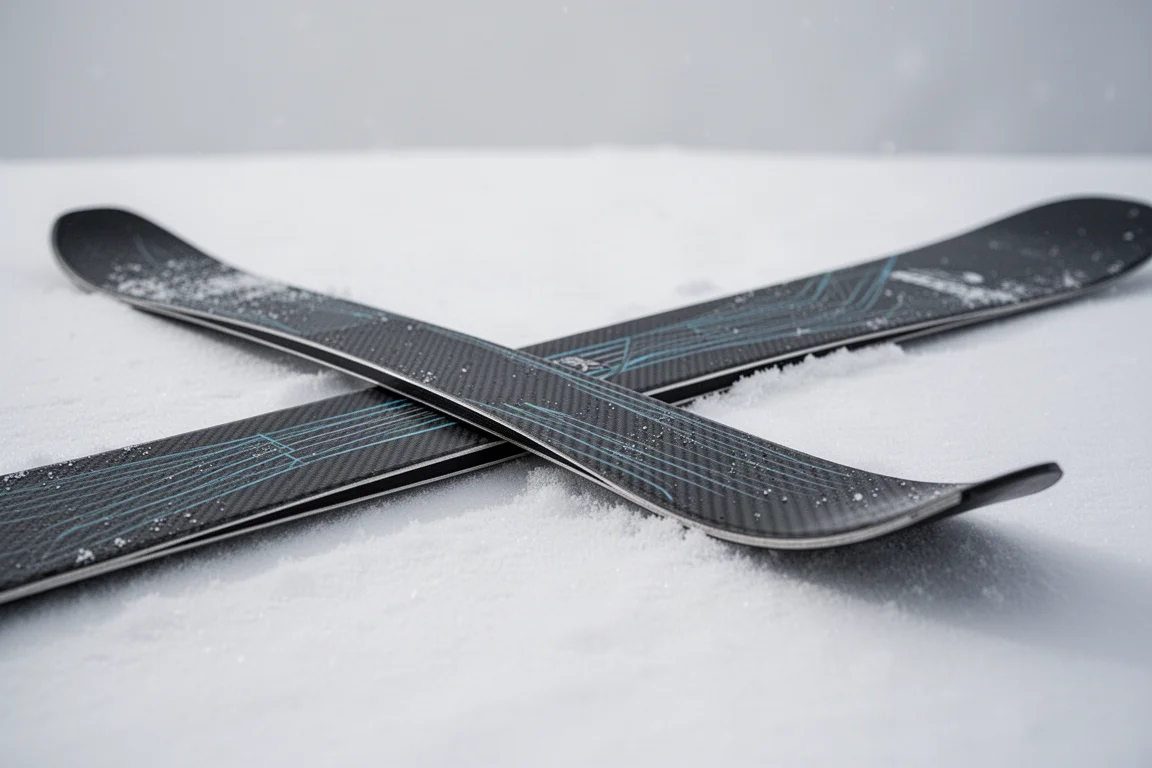
Push it harder and the limits show up. At higher speeds and longer radii, a heavier skier will drive through the shovel, and the ski does not deliver the same composure as a metal-laminate model. For lighter skiers, that ceiling is simply harder to reach, which means a larger portion of their time on the ski feels easy and fun rather than demanding.
Short, skidded turns are where the 96C shines brightest on piste. It pivots readily, holds a predictable line, and never asks for perfect technique to feel controlled. Skiers whose days are mostly about soft snow and off-trail exploring will find the groomer manners more than sufficient, particularly if they already own a dedicated carving ski for firm mornings.
Moguls and Trees
In moguls, the 96C is among the strongest options at this width. The even flex lets you push straight into a bump and trust the ski to support you on the back side, and the directional tail adds stability when the snow between bumps is not ideal. Compared with a softer, more freestyle-oriented ski of similar width, it keeps its composure when conditions firm up, which is a meaningful advantage in real-world bump fields.
It is quick and agile for a 96, and it puts a lot of the ski’s length on the snow, which translates into confidence. Nothing about it felt out of place in the bumps.
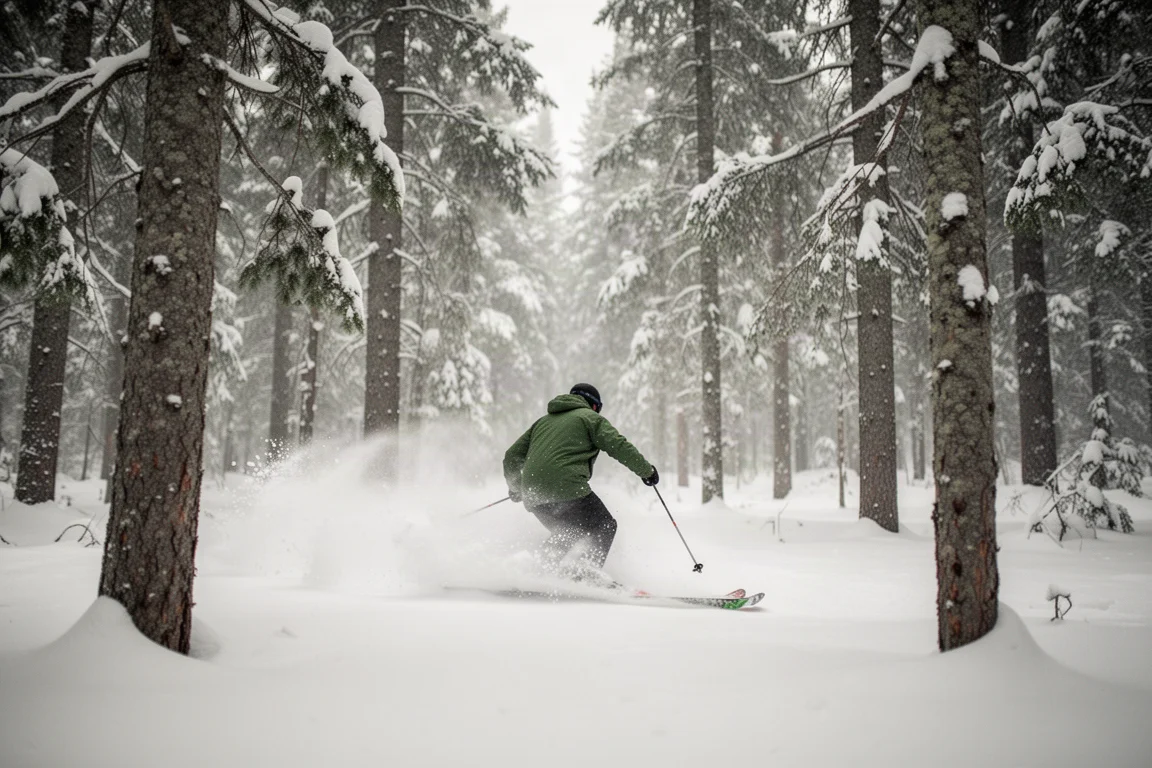
Trees follow the same story. The tighter braiding in the shovel gives precise, easy turn initiation, and the rocker and taper let the ski swish and drift through the spaces between turns. At roughly 1,930 grams in the 184, it is not the lightest ski on the scale, but it does not feel like that weight on snow, and the shape is largely responsible. In tight Eastern tree lines, that combination of quick initiation and loose rear end is exactly what makes a mid-90s ski usable.
Powder and Soft Snow
Deep snow is where the 96C surprised the most. In two to three feet of soft, wind-loaded snow in tight terrain, the tail swings around effortlessly even when it is buried, and the ski stays easy to steer rather than fighting the snow. That is a lot of capability for a 96 mm waist, and it says something that a ski this width can handle technical tree lines in that much fresh snow without feeling out of its depth.
It is still a 96, so flotation has a ceiling. On a genuinely deep day, a wider ski like the 106C in the same family follows a similar formula with more float and a more playful character, and that is the natural step up for soft-snow-focused skiers.
Off-piste performance is the highlight of this ski overall. Soft moguls, trees and fresh snow are the applications where it feels most at home, and it makes those conditions feel easier than the numbers suggest.
Things to Consider Before Buying
The 96C is deliberately not a superlative ski. It is not the strongest, not the lightest and not the most heavily rockered option at this width, and that middle position is the point. Buyers who want a firm, powerful platform for high-speed carving will be better served by the 99 Ti or another metal-laminate ski.
Weight is worth noting at around 1,930 grams in the 184 cm length. It does not ski like a heavy ski, but it is not a touring-oriented featherweight either.
There is also a limit to how much grip the shovel offers. In unusual conditions, such as cold, grabby, wind-loaded snow, a stuffed tip is possible, and a stiffer ski with more metal would be more likely to hold its line. That is an edge case rather than a pattern, but it is the kind of situation where the ski’s lighter, more flexible build shows through.
Finally, the half cap, half sidewall construction is a deliberate choice rather than a shortcoming, but it does mean the 96C trades some torsional and longitudinal strength for its easy, forgiving feel.
Buying Advice
For most skiers shopping in the mid-90s all-mountain category, the 96C is a sensible, low-risk choice. It is easy to bend, easy to release, and comfortable across groomers, moguls, trees and soft snow, which is more than most skis at this width manage. Its closest analogues in feel sit between a light, reactive freeride ski and a damp, precise all-mountain carver, and that middle ground is a genuinely useful place to be.
The decision usually comes down to how you ski. If you spend most of your time at moderate speeds, in mixed terrain, and you value a ski that flatters an upright, relaxed style, the 96C is the more appropriate pick in the Mindbender carbon range and a strong candidate as a second ski alongside a narrower carver. If you ski fast, load the front of the ski hard, and want maximum edge grip, the Ti versions are the better match. The 184 cm length is worth considering for taller skiers who were previously shut out of the carbon line.
Conclusion
The K2 Mindbender 96C earns its place by being well rounded rather than outstanding in any single measure. Its aspen core, spectral braiding, unidirectional flax and added tail rocker add up to a ski that is quick in the bumps, precise in the trees, surprisingly capable in deep snow, and pleasant on groomers at the speeds most people actually ski.
That makes it an easy recommendation for the broad middle of the market, and a clear signal of where the carbon Mindbender line now sits within K2’s wider collection.
Product link
View more details for K2 Mindbender 96C
This product is mentioned in the review. Check the specifications, options, and compatibility before buying.
View more details for K2 Mindbender 96CFurther reading
Related Reviews
Skis
Armada Anti Matter 82 W Review: A Light, Approachable All-Mountain Carver
Armada's Anti Matter 82 W pairs a lightweight Karuba and carbon build with an easygoing all-mountain shape, aimed at intermediates through lighter-footed advanced skiers.
Skis
Armada Anti Matter 88W Review: A Light, Playful 88mm All-Mountain Ski Plus Two Alternatives
The Armada Anti Matter 88W returns unchanged in spirit from its Reliance 88C days, and it remains one of the most versatile 88mm skis around. We also look at the Nordica Santa Ana 87 and Anti Matter 92 W as alternatives.
Skis
Armada ARV 100 vs Atomic Bent 100: Which 100mm Freestyle Ski Should You Buy?
Two of the best all-mountain freestyle skis of the season compared: one leans playful and park-ready, the other holds up better everywhere else.