Camping Stoves
Jetboil Trail Cook Series: 1.2L and 2L Camping Stove Systems Compared
How the Jetboil Trail Cook 1.2L and 2L compare, and which pot size makes sense for the way you cook outdoors.
Introduction
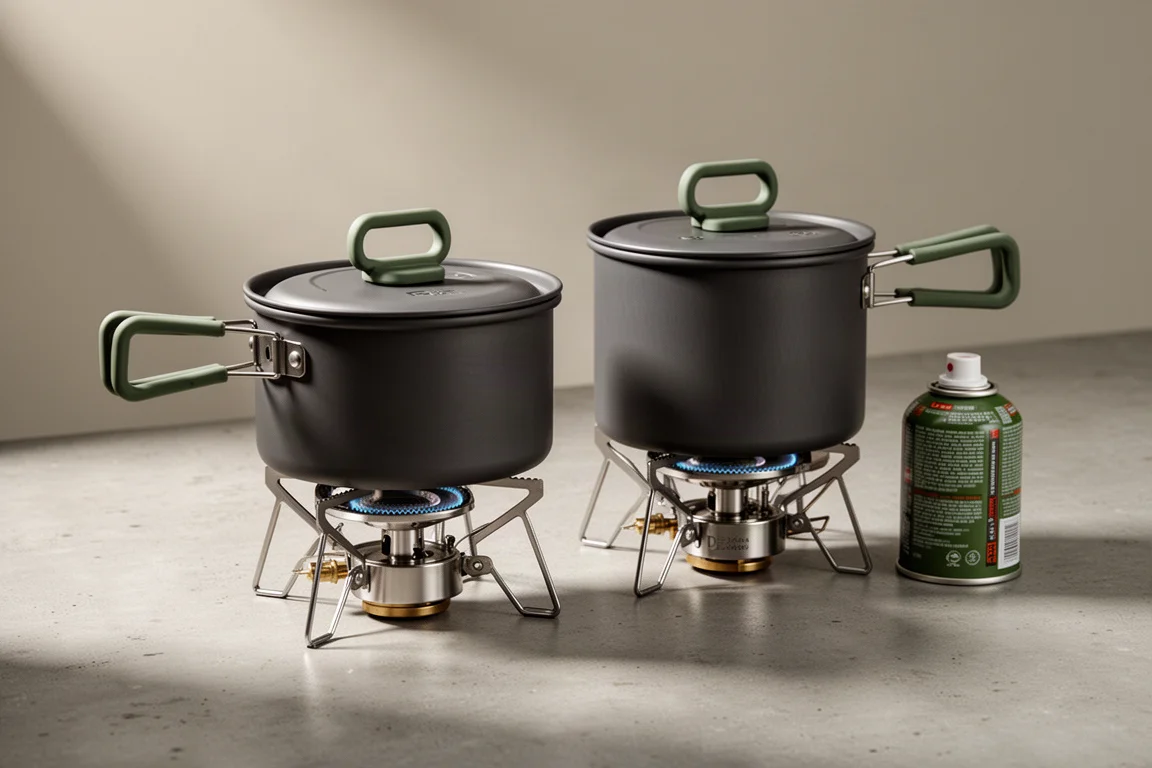
Jetboil’s range has always had a clear split. The compact Flash systems are built for boiling water quickly and rehydrating meals on fast and light trips, while the larger Genesis double burner is aimed squarely at car camping and elaborate camp cooking. The Trail Cook series fills the space in between.
Both Trail Cook models use the same burner, and the difference comes down to the pot you choose: a 1.2 litre version and a 2 litre version. Together they offer something much closer to real cooking in a package that is still light enough to carry.
What the Trail Cook Series Brings to the Table
The headline number is output. Both systems deliver 6,000 BTU, or 1.8 kW, which is enough to boil half a litre of water in roughly 2 minutes 10 seconds. That is quick for a stove of this size, and it means less time waiting around at camp.
Ignition is handled by a built-in Piezo clicker. You twist the control until it reaches the end of its travel, and the burner lights. It has fired on the first attempt every time, with no fiddling or repeated clicking.
Control is where these stoves separate themselves from simple water boilers. There is a wide usable range on the valve, so you can hold a gentle simmer instead of only blasting heat at the pot.
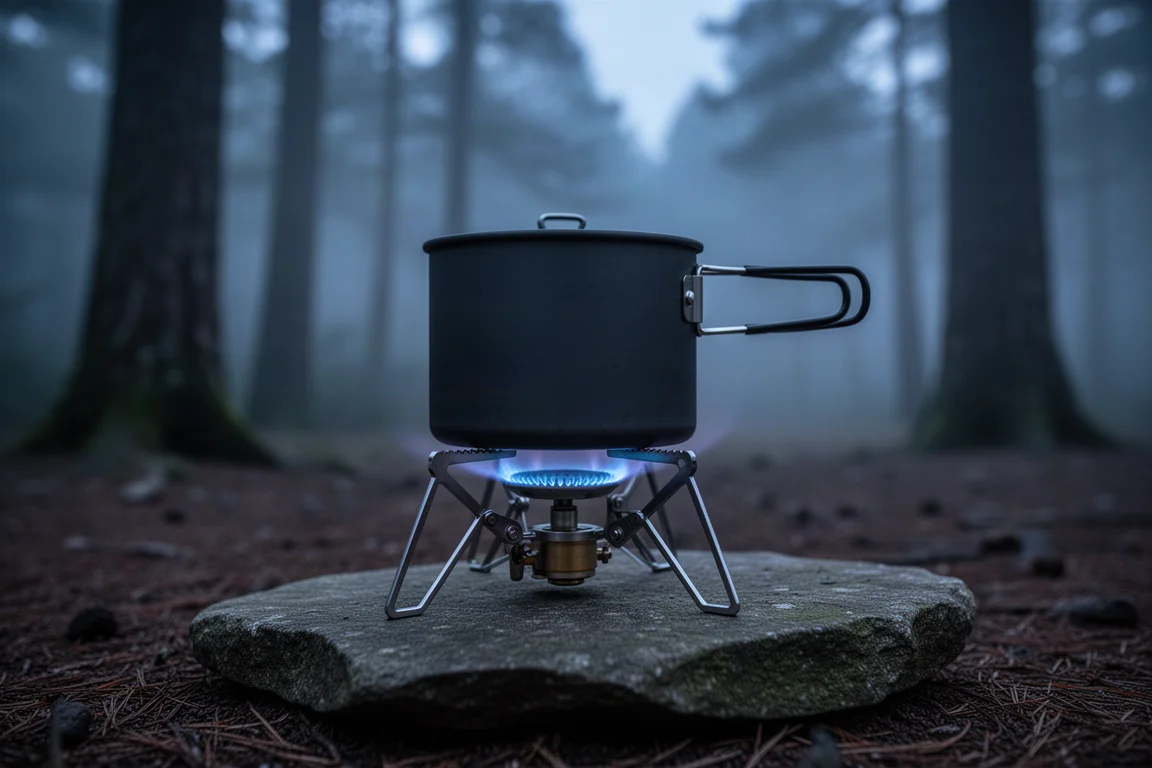
The pot mounting is different from the Flash as well. Instead of clicking the pot onto the burner, the Trail Cook uses folding stabiliser arms that the pot simply sits on. The result is a stable platform that suits a style of cooking where you lift the pot on and off regularly to stir, strain, or add ingredients at different stages.
Under the pot sits Jetboil’s flux ring, the heat transfer design that helps the system extract more from each gas canister. A canister support is included with both models to keep the fuel steady, and everything packs down with the gas canister stored inside the pot. A gas canister itself is not included with either system.
Jetboil Trail Cook 1.2L
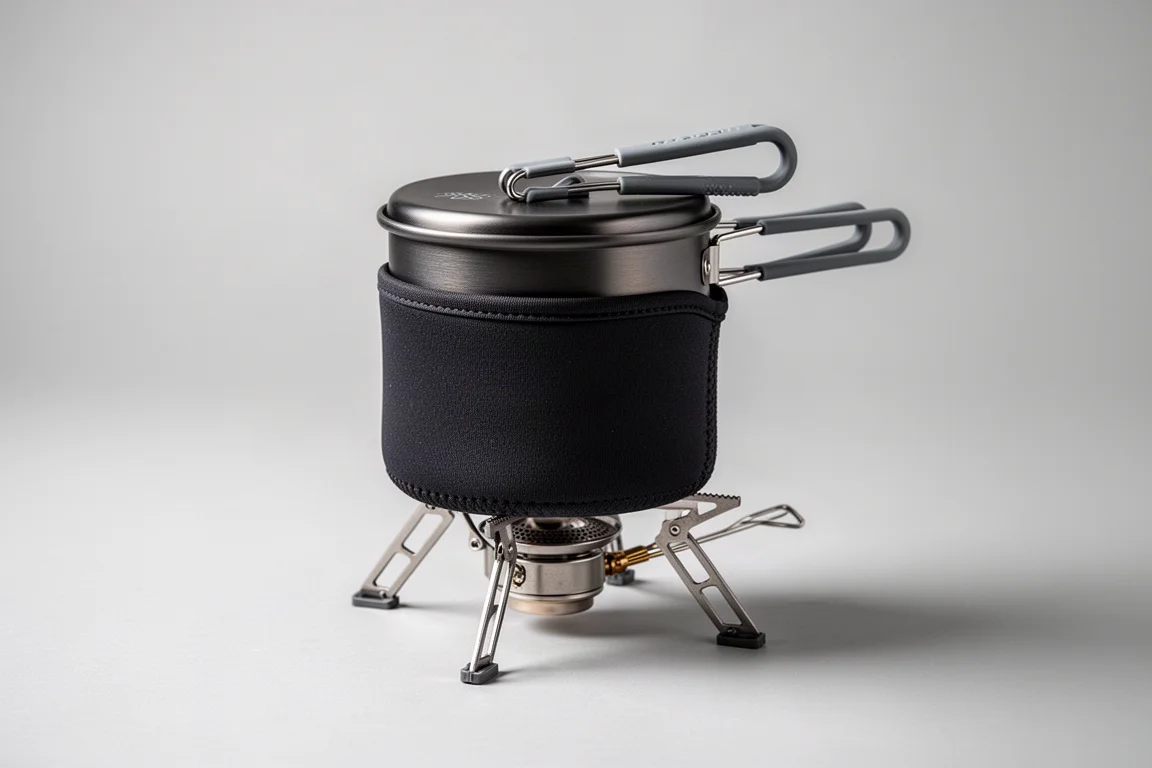
The 1.2 litre pot is the smaller of the two and the one to look at if you are cooking for one or two people. Inside, the pot has a ceramic non-stick coating that makes a genuine difference when you are cooking rather than just boiling. Food releases cleanly, and cleanup takes very little water, which matters when you are washing up away from a tap.
The handle is wrapped in silicone so you can pick the pot up while it is still warm, and it folds over the lid to hold everything together in transit. That silicone grip is also handy when you are unscrewing a canister. The lid clips on and includes a built-in strainer plus a small secondary hole at the opposite end, useful for pouring off water or drinking straight from the pot.
A solid little cup doubles as a bowl and clips onto the base to protect it, and it is a convenient place to rest a spoon while you cook. Around the outside, a neoprene cover adds insulation, keeps food warmer for longer, and gives the pot some protection inside a pack. The setup weighs around 550 g. If coffee matters to you, the 1.2 litre pot is also compatible with the Silicon Grande coffee press, which connects through the opening at the top.
Jetboil Trail Cook 2L
The 2 litre pot shares most of its features but is built for more food. The most visible change is the handle arrangement: two silicone-covered handles let you lift and carry a full pot with both hands, which is far more stable than one. A silicone grab handle sits on the lid as well, and when you pack up, the handles fold over and lock everything in place.
The lid keeps the same strainer and small vent hole, and the ceramic non-stick coating continues inside, so the cooking and cleaning experience is consistent across both sizes. The same neoprene cover wraps the pot. This version weighs around 630 g.
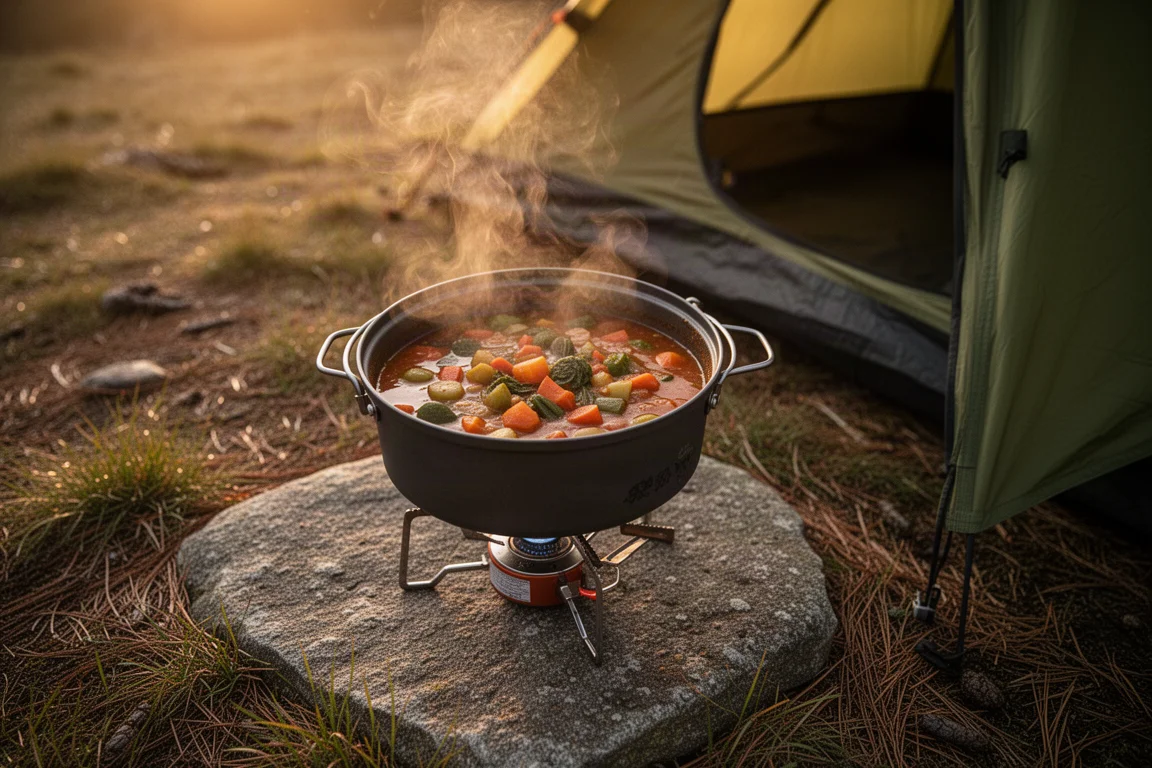
The extra capacity adds only a little weight over the smaller model, which makes the 2 litre version the more practical choice when meals are shared or when you want to cook a full pan of food in one go.
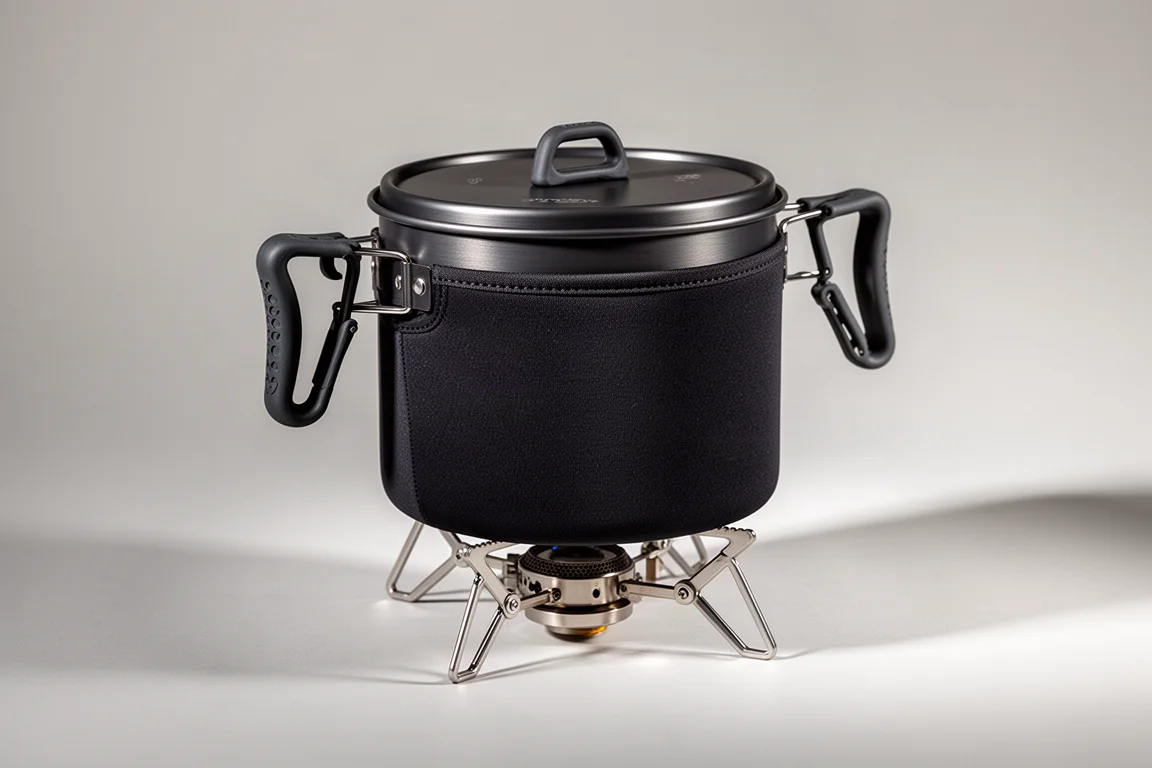
Skillets, Simmering, and Everyday Camp Cooking
Both burners also accept Jetboil’s standard skillet, so you can fry on the same system. The folding arms already lift a pan to the right height above the burner, whereas a Flash needs a separate pot support to avoid sitting a pan directly on the stove.
The combination of a controllable valve, the flux ring, and a non-stick ceramic interior is what makes these stoves feel like cookware rather than a water boiler. You can hold a sauce at a simmer, strain vegetables, or fry without fighting the stove for control.
Fuel Efficiency and Packing
Jetboil prints a useful figure on the side of its canisters: roughly 24 boils from a full 100 g gas canister. Real world results depend on temperature and conditions, but it gives you a sensible starting point for planning a trip.
Efficiency is where the flux ring earns its keep. Because half a litre boils in about two minutes and a meal cooks quickly, you burn less gas per outing, which means carrying fewer canisters for the same number of days out.
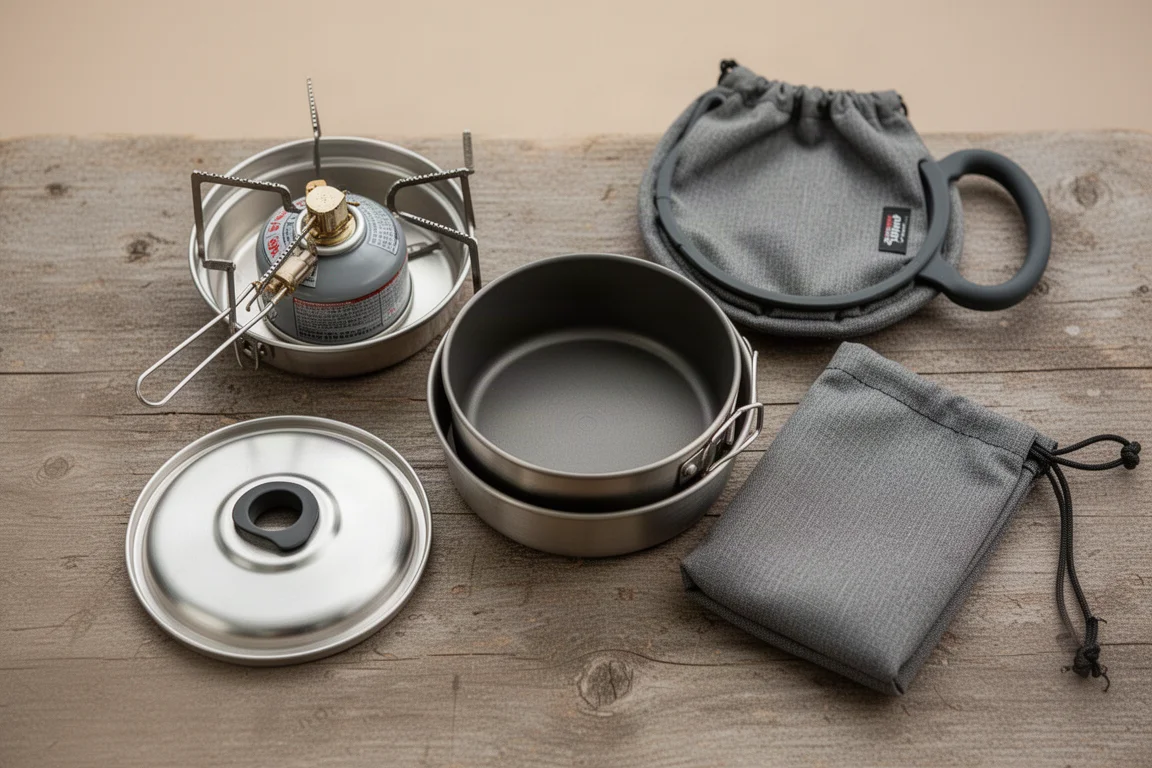
Packing is tidy. The stove and the gas canister fold down and fit inside the pot, and a small bag keeps the canister from scratching the interior. The whole system then travels as a single compact unit rather than a loose collection of parts.
Who the Trail Cook Series Suits
These stoves are not aimed at the fast and light crowd. If your priority is minimum weight and boiling water for a dehydrated meal, a Flash remains the lighter option. Equally, if you want two burners and serious cooking space at a car camp, the Genesis covers that ground.
The Trail Cook series is for the middle ground: trips where you carry your kit but still want to cook properly, with fresh ingredients, a real simmer, and something worth eating at the end of the day. Around 550 g and 630 g for the two setups is not featherweight, but that is the trade for cookware-grade pots and a genuinely controllable burner.
One practical note for anyone cooking outdoors: wildfires are a real concern, so think carefully about where you set up, what the ground beneath you is like, and what local rules apply before you light anything.
Choosing Between the 1.2L and the 2L
The decision comes down almost entirely to how many people you feed. The burner is identical, so performance, ignition, and fuel use are the same either way.
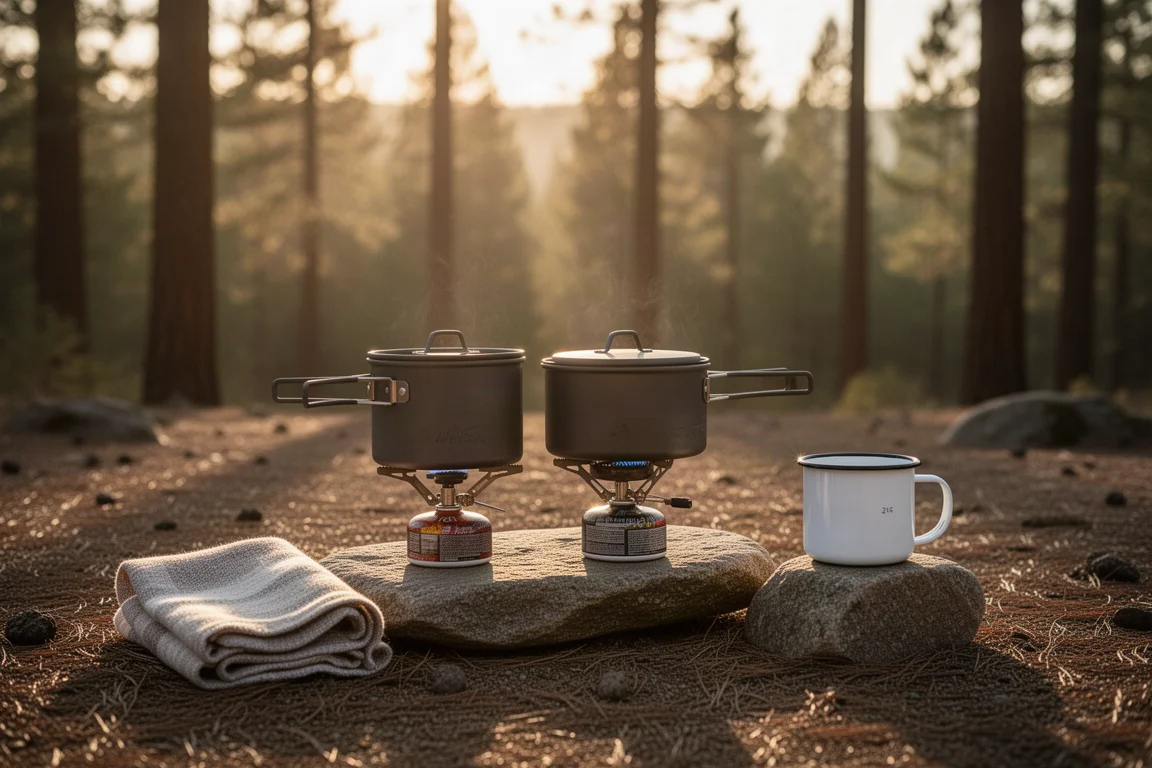
The 1.2 litre model suits solo trips and pairs of campers, and it is the one to pick if you want to add the Silicon Grande coffee press for a proper pot of coffee in the morning. It is also the easier of the two to carry on hill trips where you still want to cook something more ambitious than a dehydrated meal.
The 2 litre model makes more sense for groups, or for anyone who wants to cook a full meal in a single pot without working in batches. The twin handles make a loaded pot far easier to manage, and the extra volume is worth the modest weight penalty. If you are regularly cooking for more than two, the larger pot is the simpler answer.
Conclusion
The Trail Cook series is a sensible addition to Jetboil’s range because it solves a problem the existing lineup left open. It keeps the fast, efficient burner and the packable format, then adds pots that are genuinely pleasant to cook in, with non-stick interiors, strainer lids, and insulation that keeps food warm.
Choose the 1.2 litre if you are cooking for one or two, and the 2 litre if you need the capacity. Either way, you get the same quick ignition, the same simmer control, and the same compact, self-contained package.
Further reading
Related Reviews
Camping Stoves
BCB Fire Dragon Mini Cooker Review: A Tiny Folding Stove With Real Trade-Offs
A palm-sized, fuel-flexible folding stove that heats water well enough, but brings flame control, stability, and fuel cost questions worth understanding first.
Camping Stoves
Boundless Voyage Titanium Alcohol and Wood Stove Review: Ultralight Cooking, Two Ways
A titanium alcohol and wood burning stove kit that weighs 4.5 oz complete, boils two cups of water in about 10 minutes, and costs $36.
Camping Stoves
BRS 32 Dual Burner Stove Review: A Folding Two-Burner That Packs Down Flat
A detailed look at the BRS 32, a slim folding dual burner camping stove that expands into a stable cooking platform for around $60.