Camping Stoves
Jetboil Trail Cook 1.2 Review: A Ceramic-Coated Camp Stove Built for Real Cooking
A close look at the Jetboil Trail Cook 1.2, from its regulated burner and ceramic-coated pot to the weight and price that may give you pause.
Introduction
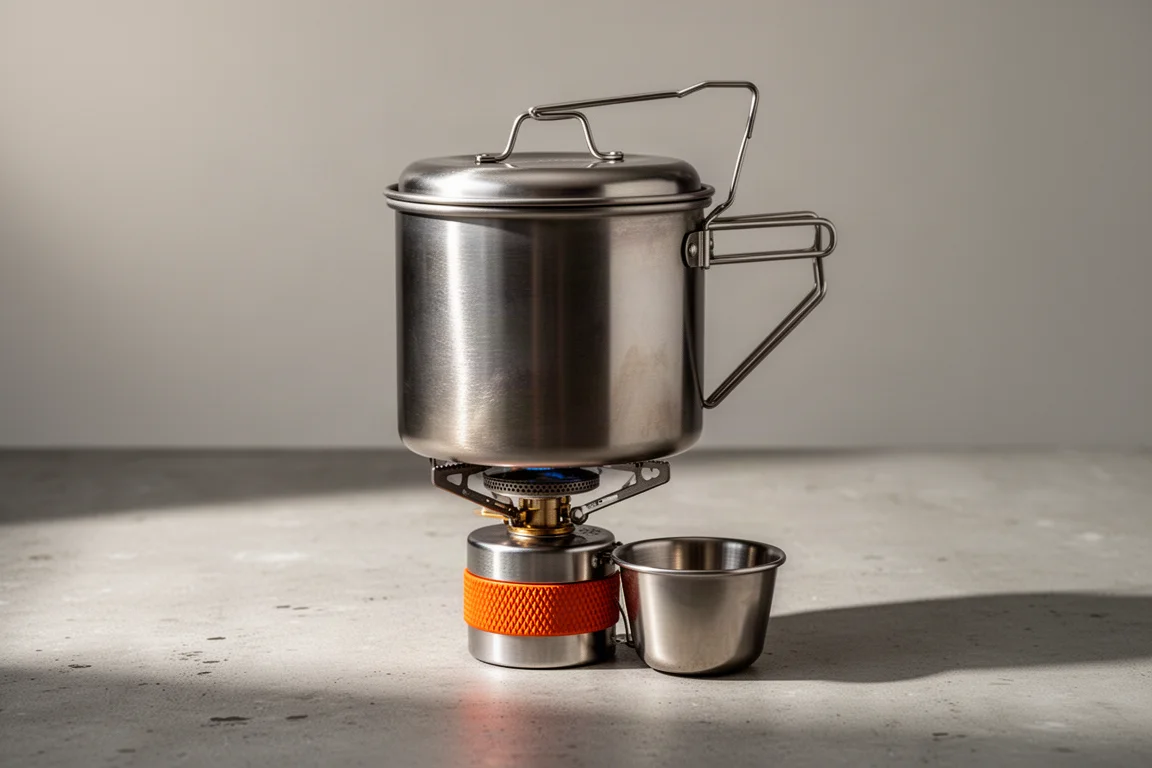
The Jetboil Trail Cook 1.2 does not arrive with a lot of ceremony, and it is not positioned as a direct replacement for anything in the range. Read the specification sheet, though, and the family resemblance to the long-serving Jetboil Minimo is obvious: the same all-in-one cooking system idea, a larger pot, and a set of updates aimed squarely at the parts owners handle every single day.
That is what makes this stove worth a closer look. It keeps the fast boiling and the packable, self-contained format the brand is known for, then adds a ceramic-coated cooking surface and a redesigned burner that changes the way the pot sits on the stove.

The practical result is a stove that is pleasant to cook on rather than simply quick, and that distinction matters far more than any single number once you are actually hungry at camp.
Who This Product Is For
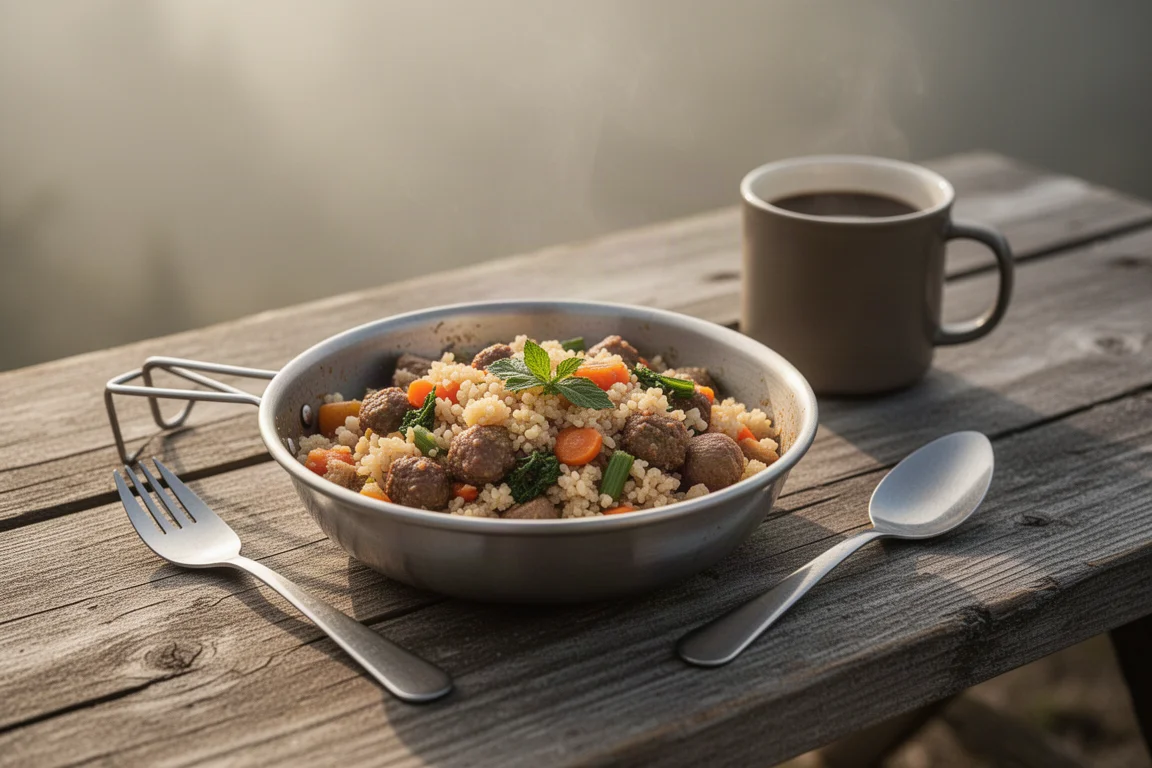
The Trail Cook 1.2 is built around a 1.2 litre pot, and a 2 litre version is also available for larger groups. That capacity, combined with a genuinely nonstick interior, makes it a natural fit for campers who want to cook real food rather than simply boil water. Scrambled eggs, porridge, and one-pot rice dishes are all realistic propositions rather than wishful thinking.
It is a strong match for anyone who values an integrated system, where the burner, pot, lid, cup, canister support, and gas canister all travel together as one unit. It is a weaker match for anyone counting grams on a long-distance hike, and a weaker match again for anyone shopping purely on price.
Main Strengths
Three things separate this stove from the model it effectively succeeds: a burner that is far easier to live with, a pot that cleans up without a fight, and a packing arrangement that keeps everything in one place.
A Regulated Burner With Push-Button Ignition
The burner is the biggest change. It uses a regulated design, which holds pressure steady as the canister empties, so output stays consistent even when there is less gas left inside. That same regulation is what helps performance in colder conditions, where an unregulated stove tends to fade.
Lighting is handled by a built-in piezo igniter: turn the control, it clicks, and the stove lights. A fine simmer control makes it possible to hold a gentle heat for delicate food as well as drive a fast boil.
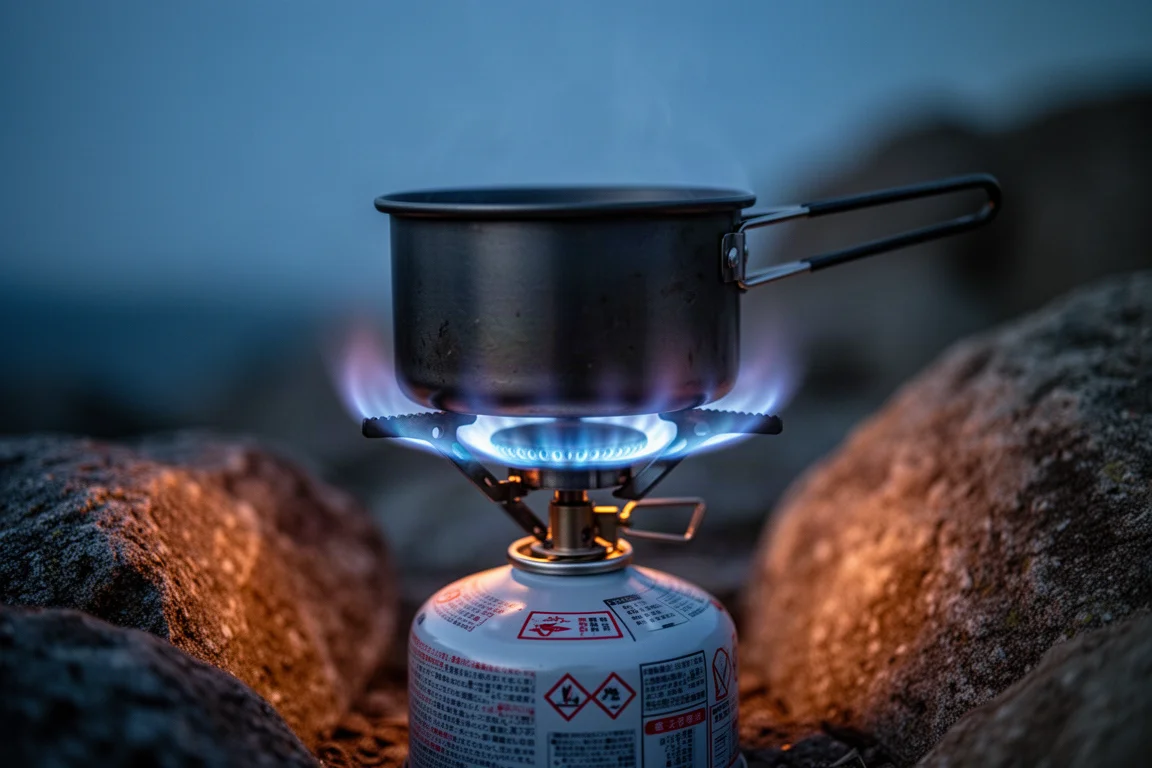
There is also a grippy orange section on the burner body, which lets you pick the stove up while it is still hot. The connection to the pot is different from older Jetboil stoves as well. Instead of seating the pot and twisting it to lock, the pot simply drops onto the burner arms, where a lip holds it in place. It stays put, lifts straight off, and can be moved on and off the heat while you cook.
A Ceramic-Coated Pot That Cleans Up Easily
The pot itself is ceramic coated, which gives it a genuinely effective nonstick surface. Rice, eggs, and fish have all come out of it cleanly, and a wipe with a cloth has been enough to bring the interior back to usable condition, with no scrubbing and no pot scrubber required.
Ceramic is also a coating some campers simply prefer to PTFE-based nonstick surfaces, for their own reasons. Volume markers are moulded into the wall, though they are finished in black and can be hard to read depending on the light. The trademark Jetboil flux ring sits on the base, spreading heat across the bottom of the pot.
Lid, Cup, and the Integrated Pack
The lid has straining areas cut into it for draining pasta, plus a small gripper that makes it far easier to lift off than the lid on the Minimo. The cup that fits onto the base is made from a more robust material than the earlier version and is substantial enough to eat from, which makes it useful as a bowl, a plate, or a small cutting surface. It has its own markers, which are similarly difficult to read in low light.
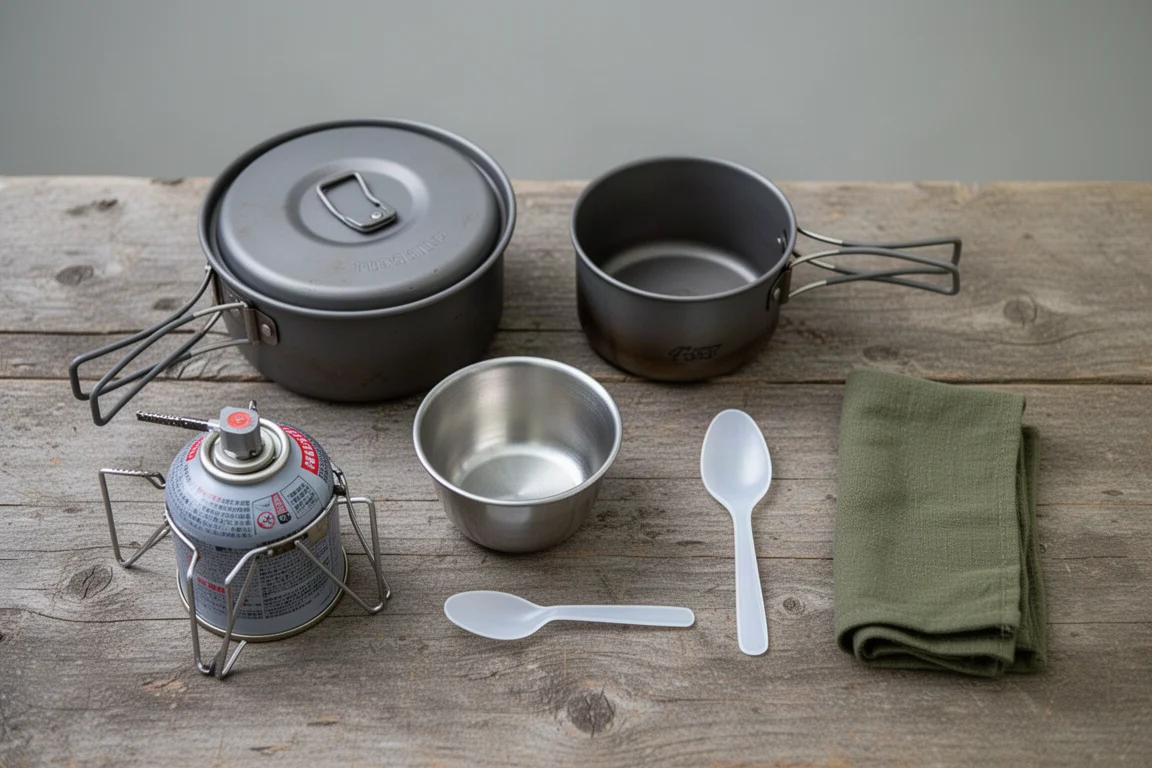
Packing is where the system earns its place. The canister support, a gas canister, and a plastic spoon all stow inside the pot, the burner arms fold down, and the whole assembly goes into a small bag as one compact unit.
Things To Consider Before Buying
The Trail Cook 1.2 asks for two real compromises, and both are worth weighing honestly before you commit to it.
Weight and Bulk
At 493 g, this is not a light stove, and it is not a small one either. For long-distance hiking, where every gram gets negotiated, that weight is difficult to justify. It is better understood as a cooking system you carry deliberately because of what it can do, rather than as the lightest possible way to boil water.
Price and Availability
The price is the harder pill to swallow. At around £180 it sits at the top of what most people would expect to pay for a camp stove, and it costs more than assembling a comparable setup from separate parts. A lightweight canister stove plus a decent pot can land well under £100, even with a ceramic-coated pot in the mix, though it will not be integrated in the same way.
Availability has been limited too, and at points the stove has been difficult to find in certain colours, which means importing one and paying import charges on top of the purchase price.
The Fill Limit and the Igniter
Jetboil advises keeping the fill level at or below 700 ml. That is a safety measure aimed at preventing a pot from boiling over when it is left unattended, and it is worth respecting even though the pot has handled a full litre of water without trouble.
It is also worth knowing that built-in piezo igniters tend to give up eventually, and it is not clear whether a repair kit is available for this one.
Buying Advice
Is it worth the money? That depends entirely on how you camp. If you want one self-contained unit that boils fast, simmers properly, and can cook a proper meal without food welding itself to the pot, the Trail Cook 1.2 delivers all of that. The ceramic interior is the single most useful upgrade over the Minimo, and the redesigned burner is the one you will notice every time you use it.
If your priority is the lowest possible pack weight or the lowest possible spend, there are lighter and cheaper routes that will still boil water reliably. A separate ceramic-coated pan, such as the Sea to Summit Frontier at around £55, can add frying capability to an existing setup for less money, though it will not be integrated into a single unit.
The honest summary is that this is a fantastic piece of kit with a price to match. Buy it because the cooking experience is what you want from a stove, not because it is the most economical way to eat outdoors.
Conclusion
The Jetboil Trail Cook 1.2 is a clear step forward from the Minimo: a better lid, a better cup, a burner that is far easier to live with, and a ceramic-coated pot that cleans up with a wipe. It is heavier than many alternatives and considerably more expensive, and those two facts will rule it out for plenty of sensible people.
For anyone who cooks rather than simply rehydrates, though, the trade is straightforward and easy to appreciate the first time you make a real meal outdoors. It is a stove that earns its place in the pack.
Product link
View more details for Jetboil Trail Cook 1.2
This product is mentioned in the review. Check the specifications, options, and compatibility before buying.
View more details for Jetboil Trail Cook 1.2Further reading
Related Reviews
Camping Stoves
BCB Fire Dragon Mini Cooker Review: A Tiny Folding Stove With Real Trade-Offs
A palm-sized, fuel-flexible folding stove that heats water well enough, but brings flame control, stability, and fuel cost questions worth understanding first.
Camping Stoves
Boundless Voyage Titanium Alcohol and Wood Stove Review: Ultralight Cooking, Two Ways
A titanium alcohol and wood burning stove kit that weighs 4.5 oz complete, boils two cups of water in about 10 minutes, and costs $36.
Camping Stoves
BRS 32 Dual Burner Stove Review: A Folding Two-Burner That Packs Down Flat
A detailed look at the BRS 32, a slim folding dual burner camping stove that expands into a stable cooking platform for around $60.