Camping Stoves
Jetboil Stoves and Cheaper Alternatives: What You Actually Pay For
Jetboil's heat-exchanger pots do the real work. Here is how the flagship models compare with lower-cost integrated stoves and build-your-own setups.
Introduction
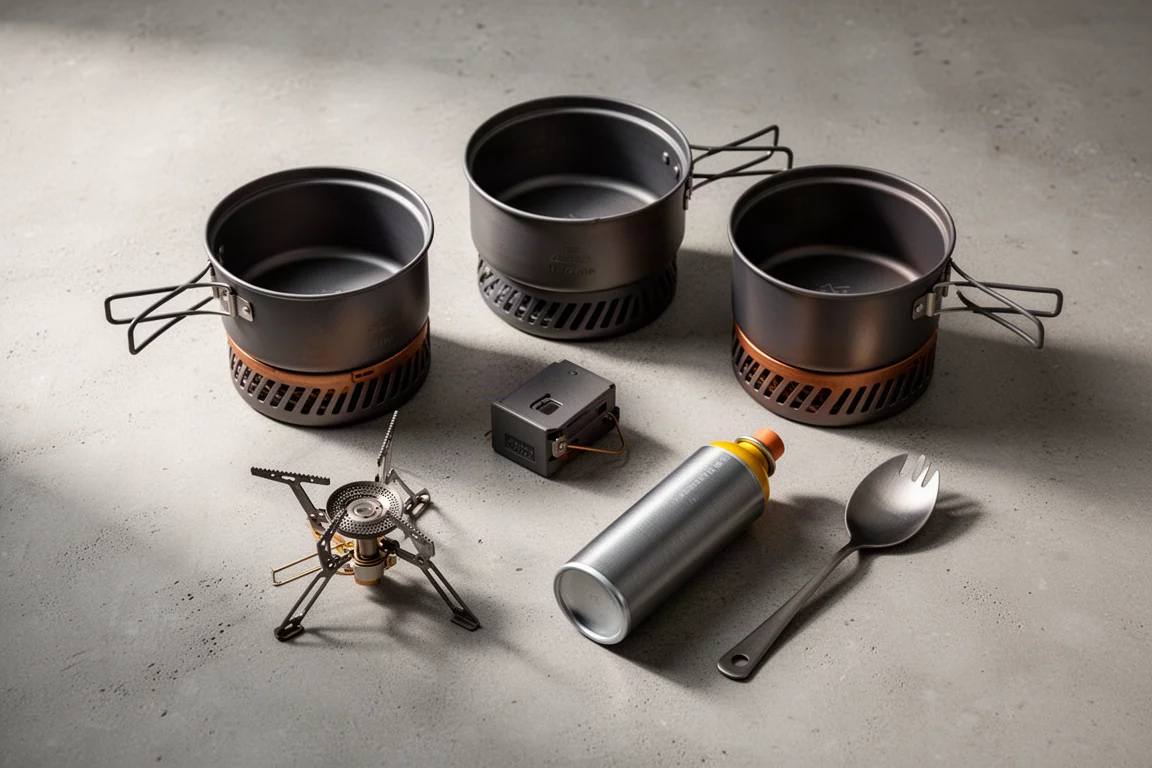
Jetboil has become shorthand for an entire category of camping stove. The design is easy to recognise: a pot with a finned ring bonded to its base, a small burner that screws onto a gas canister, and a package compact enough that the burner and canister disappear inside the pot when you pack up. Ask around a campsite and the brand name tends to come up before anyone mentions the technology behind it.
The question worth asking is whether the premium buys you a better stove or simply a better known badge. The honest answer is that the heat-exchanger pot does the real work, and the same idea now appears in stoves costing a fraction of the price. This guide looks at what the technology actually does, which models earn their price, and how to assemble a lighter, cheaper kit around a heat-exchanger pot if the fully integrated systems feel expensive.
What Makes a Jetboil-Style Stove Different
At the centre of every Jetboil-style stove is the pot. A ring of metal fins, often called a heat exchanger or flux ring, is bonded to the base. Instead of letting flames lick up the sides and lose heat into the air, the fins capture that energy and drive it into the base, so more of the gas you burn ends up heating water rather than the surrounding campsite.
The shape of the pot helps too. A wider base spreads the flame across more surface area, while a narrow pot takes noticeably longer to reach a boil. Combined with a lid, the design shortens boil times and cuts the gas used per litre of water. That efficiency is why a heat-exchanger pot earns its place on multi-day trips, where every gram of fuel carried matters.
Heat exchangers are not a new idea. The principle has been understood since the 1800s. The step that created this category was applying it to a camping stove in a compact cook system roughly two decades ago. Since then plenty of other brands have adopted the same approach, and the original name has become the generic term for the design, much as a vacuum cleaner is often called by the name of the company that popularised it.
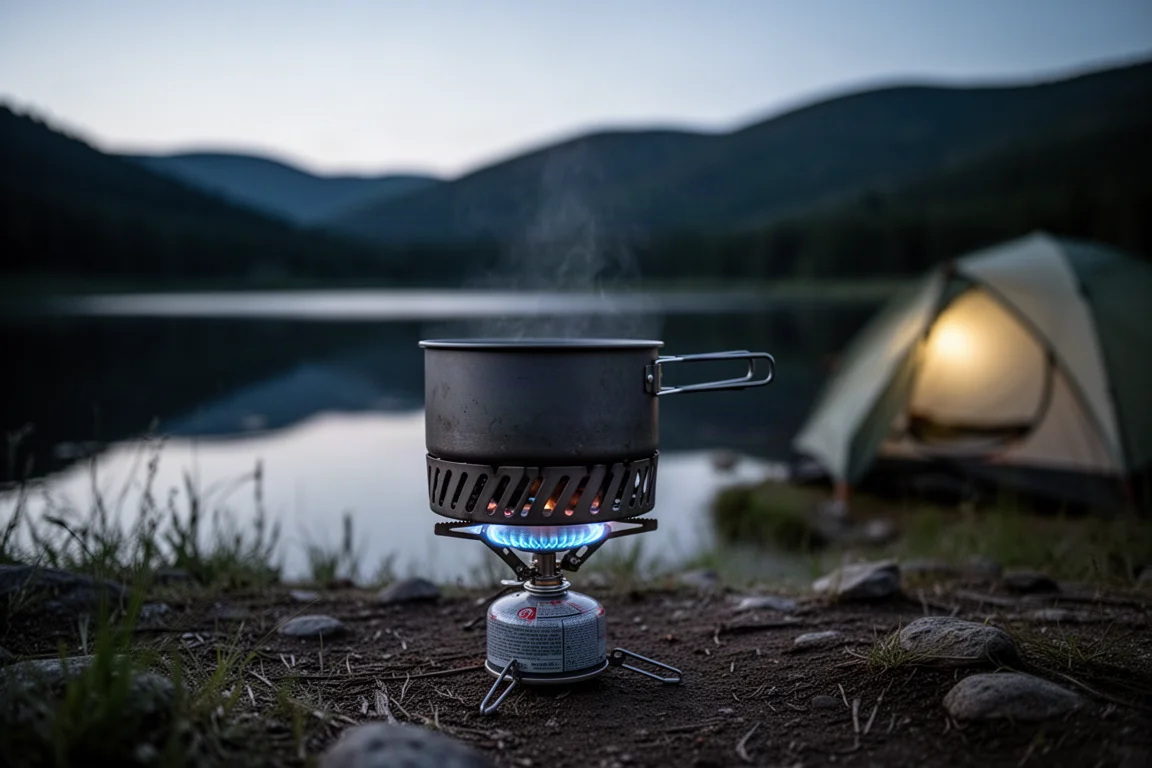
Packability matters as much as boil time for many buyers. Integrated systems are built so the burner, a small canister and a folding stand all nest inside the pot, with the lid holding everything in place. That single package is easier to live with than a loose collection of pots, burners and stands, and it is a large part of why the format is so popular.
How These Stoves Were Assessed
Four things separate a good heat-exchanger stove from an average one, and they matter more than the logo on the pot.
- Efficiency: how much of the flame’s heat reaches the water, and how much gas each meal costs.
- Wind resistance: whether the burner keeps working in exposed conditions or needs a sheltered pitch.
- Cold and low-fuel behaviour: stoves with a pressure regulator hold their output as the canister cools or empties. Stoves without one lose power.
- Control: a burner that can be turned down to a simmer is more useful if you cook rather than simply boil.
Price and packability follow from those four points, and the sections below apply them to each stove worth considering.
Jetboil Stash: The Lightest Integrated Option
The Stash is the lightest of the integrated Jetboil systems. The pot weighs around 200 g and the burner around 60 g, and the whole set packs into itself, with the gas canister sitting on the lid. The burner arms fold out, and an optional canister stand adds stability on uneven ground.
It is a deliberately simple stove. There is no built-in igniter and no pressure regulator, so output drops in cold weather or when the canister is running low. Wind protection is minimal: the pot sits on cutouts in the burner rather than locking into place, and nothing shields the flame. In calm conditions, or inside a tent porch, it works well, and the heat-exchanger base still delivers quick boils.
At around £120 it is priced as a premium ultralight system, and the efficiency of the pot is what you are paying for.
Jetboil MiniMo: The Integrated All-Rounder
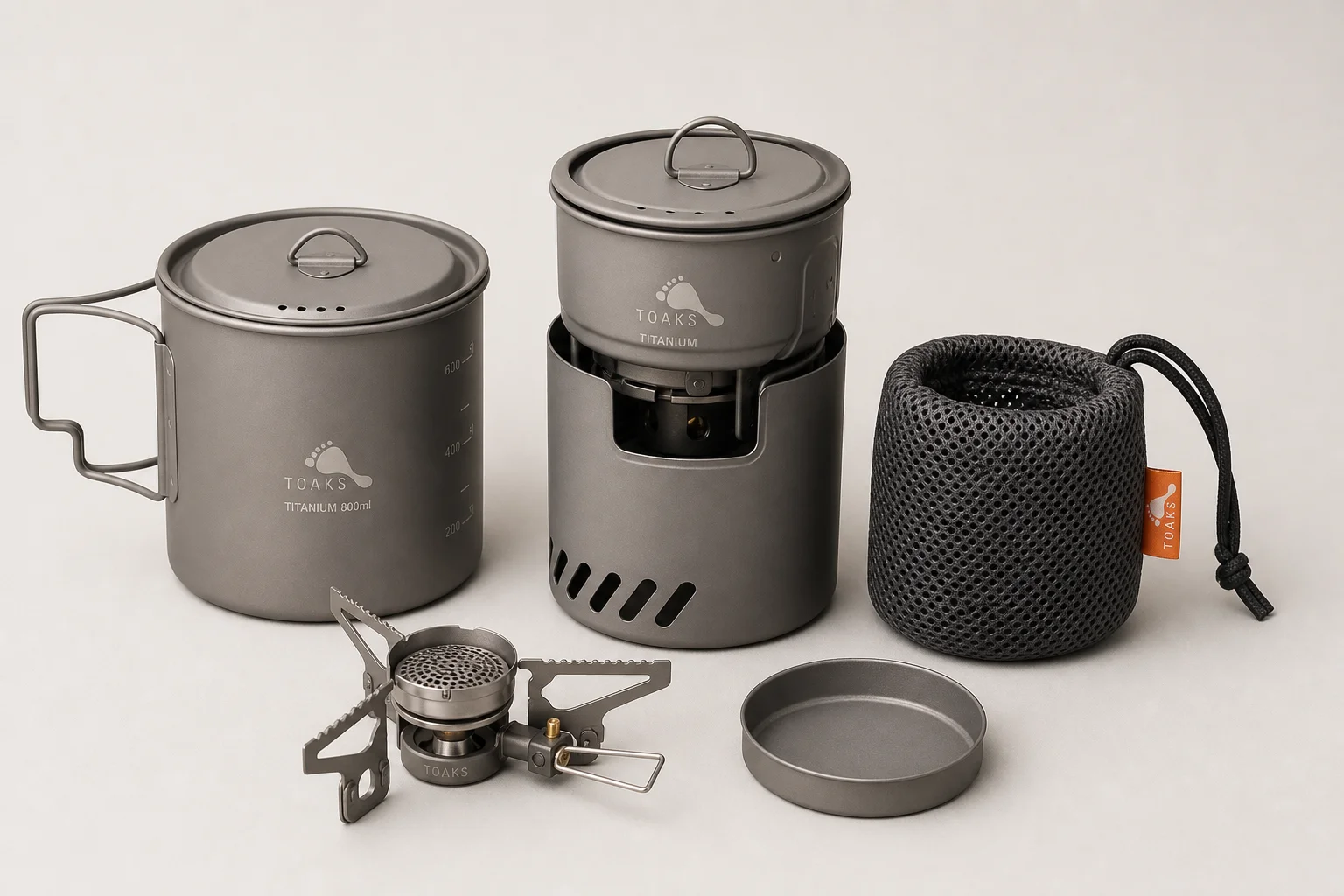
The MiniMo takes the same heat-exchanger pot and pairs it with a round burner that the pot clicks onto, so the assembly holds together as one unit and can be lifted in a single hand. That makes it a more stable and more integrated package than the Stash, and the wider pot spreads the flame across a larger base.
Boil performance is strong, which is exactly what the design is built for. Like the rest of the range, it is at its best heating water for a brew or a dehydrated meal rather than simmering a sauce. The flame is narrow and concentrated, so fine heat control is not its strength.
Expect to pay around £180 for the MiniMo, which places it in the same bracket as the fully enclosed alternatives.
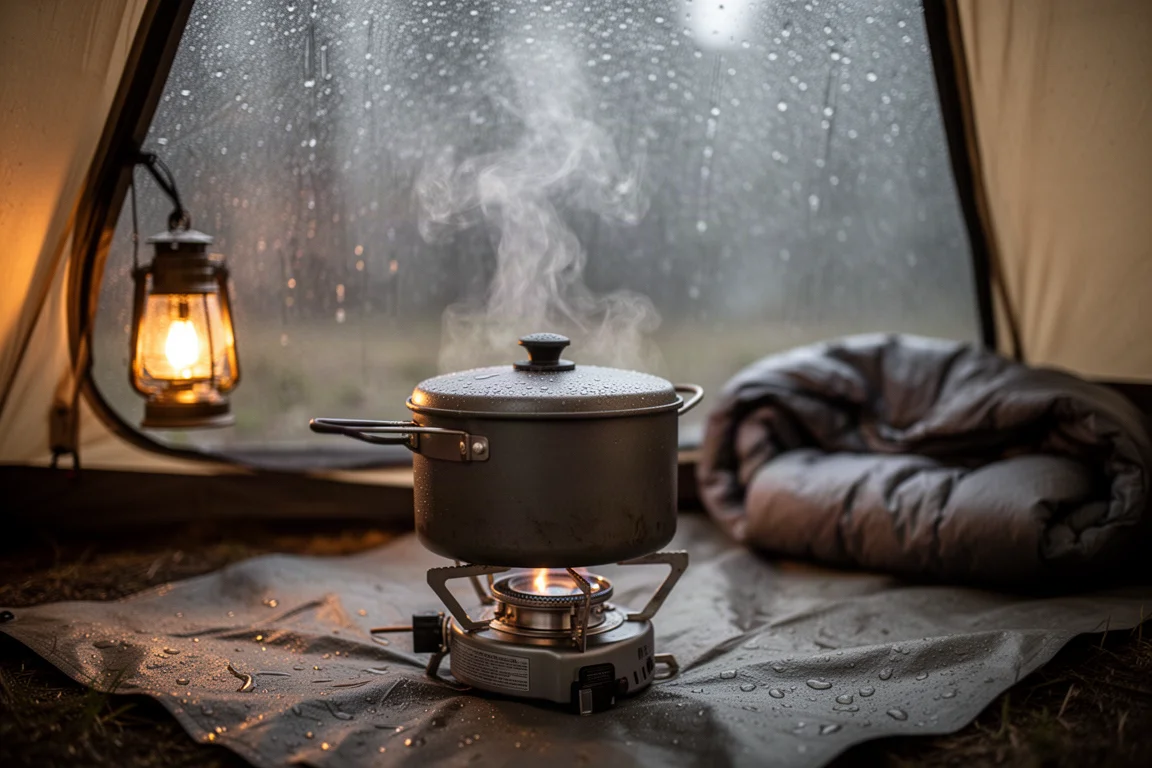
For anyone who wants one object to pull out of a pack, with the burner, canister and stand stored inside the pot, this is the format at its most refined. The trade-offs are price and weight rather than performance.
MSR WindBurner: Best Wind Protection
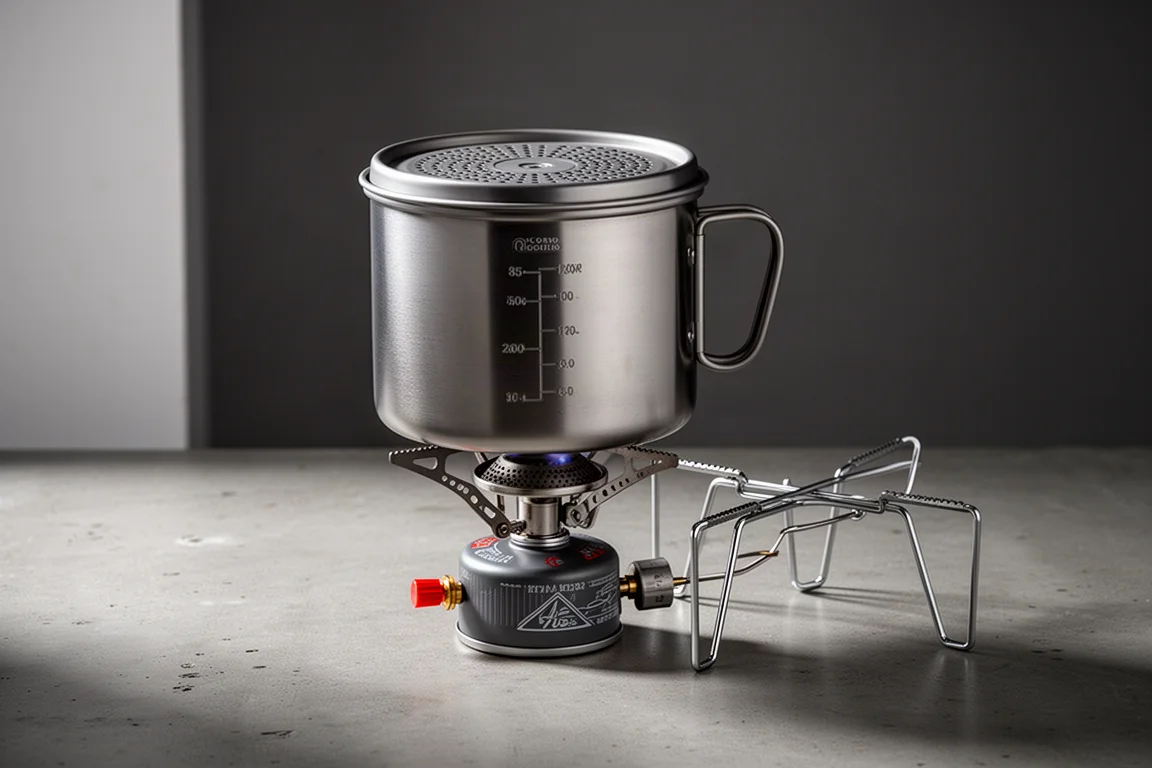
The WindBurner addresses the biggest weakness of an exposed burner: wind. Its burner is fully enclosed, so the flame is shielded from gusts and the stove keeps working in conditions that would slow an open design to a crawl.
That enclosure makes it the better choice for exposed pitches, ridgelines and windy coastal camps. The trade-off is familiar: this is a boiling machine first, and fine simmering is not the point. At around £180, wind protection comes at a premium.
Soto WindMaster: The Better Burner for a Heat-Exchanger Pot
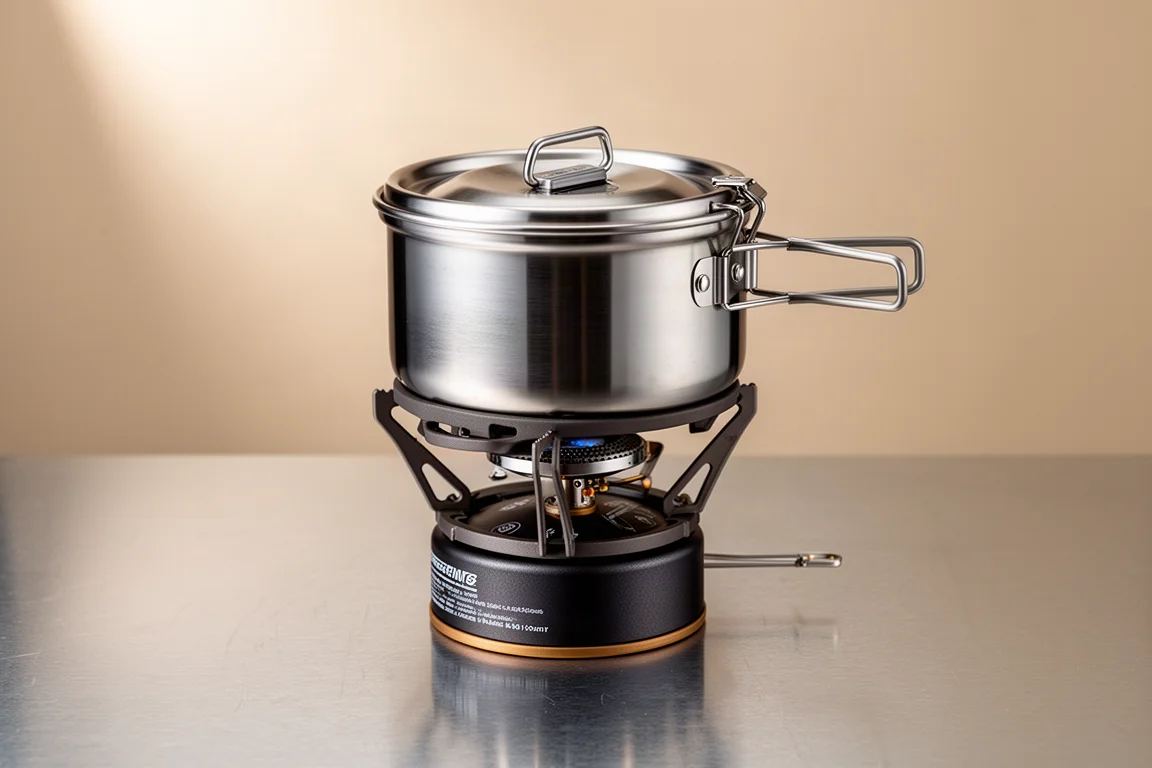
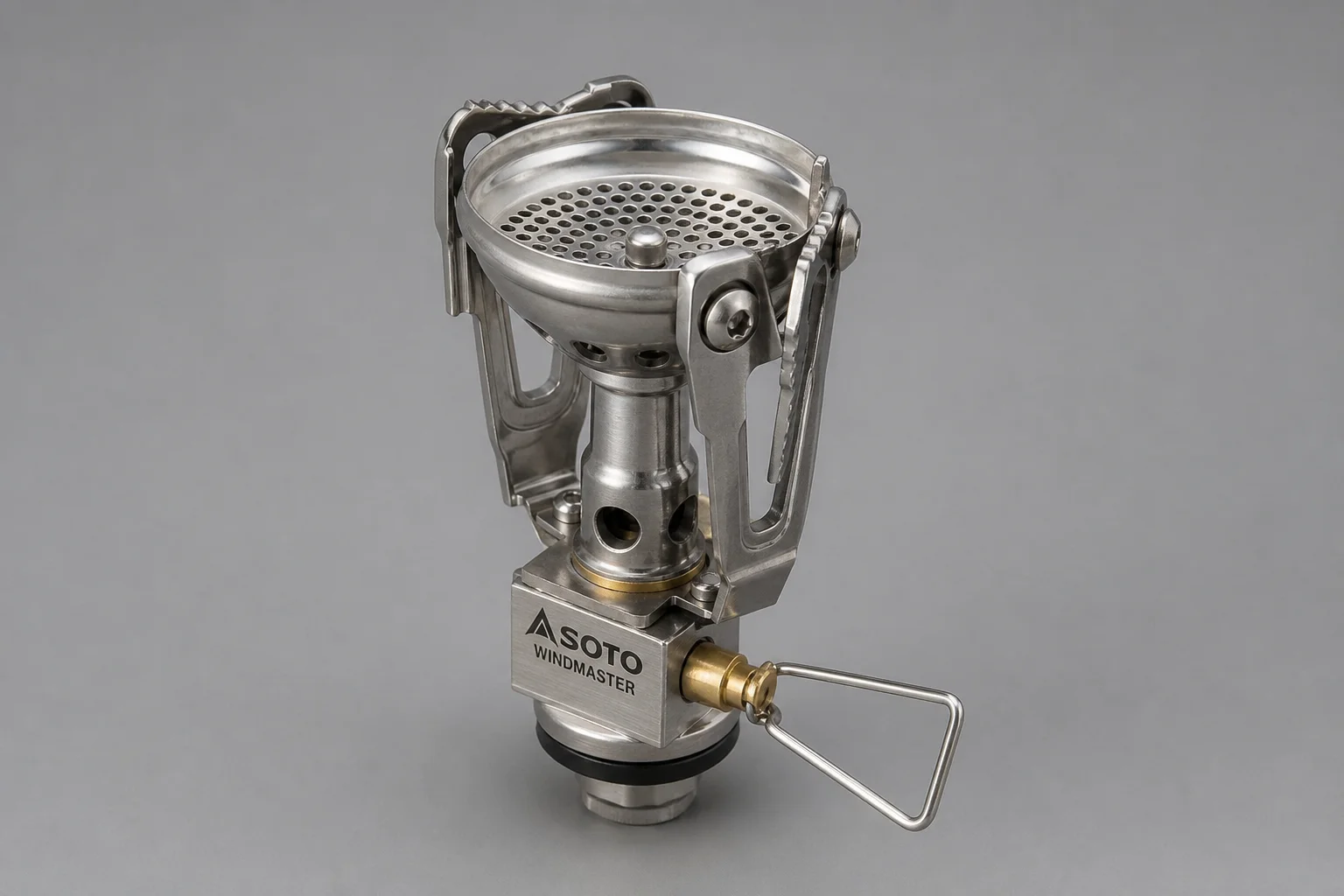
The WindMaster is a different proposition. It is a bare burner rather than a cook system, and it is the stronger performer of the two on several counts: more power, better resistance to wind, a micro regulator that keeps output steady in cold weather or when the canister is nearly empty, a simmer function and a built-in igniter.
Paired with a heat-exchanger pot it boils faster than the standard Jetboil burner and holds a controllable flame that can be turned down low. The compromises are weight and integration. It is a little heavier, and it does not nest inside the pot, so the kit is no longer a single locked unit.
At around £45 for the burner, it is the most cost-effective route to premium performance, provided you are happy to assemble the system yourself.
Alpkit Brew: Affordable Integrated Kit
The Brew kit follows the same recipe as the premium systems: a pot with a heat exchanger and a compact burner that packs away inside. It is usually around £50, which makes integrated cooking accessible without a premium outlay.
Value kits in this bracket do vary. Not all match the build quality or the efficiency of the top-end models, and some burn noticeably more gas. For occasional trips the difference is small. For long-distance use it is worth weighing against the fuel you will carry.
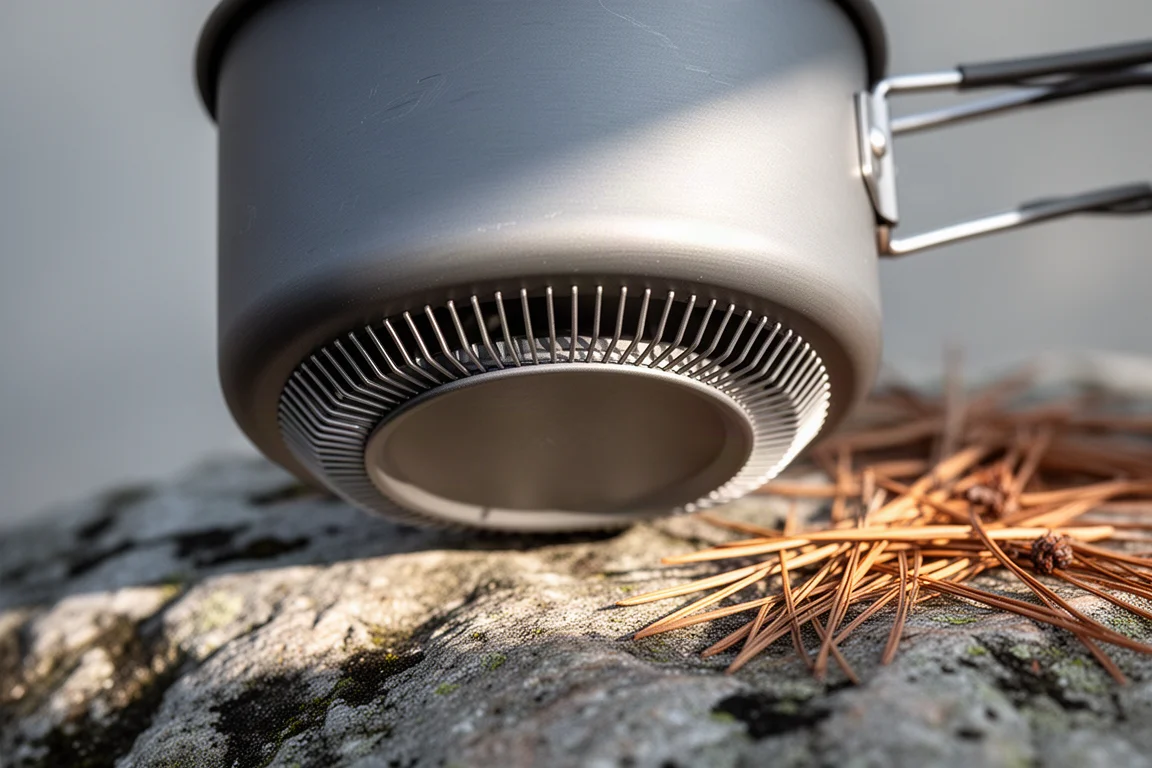
The heat-exchanger pot remains the important part, and it is the reason a lower-cost kit can still boil quickly. If the burner feels weak, it can be replaced later with a regulated model without changing the pot.
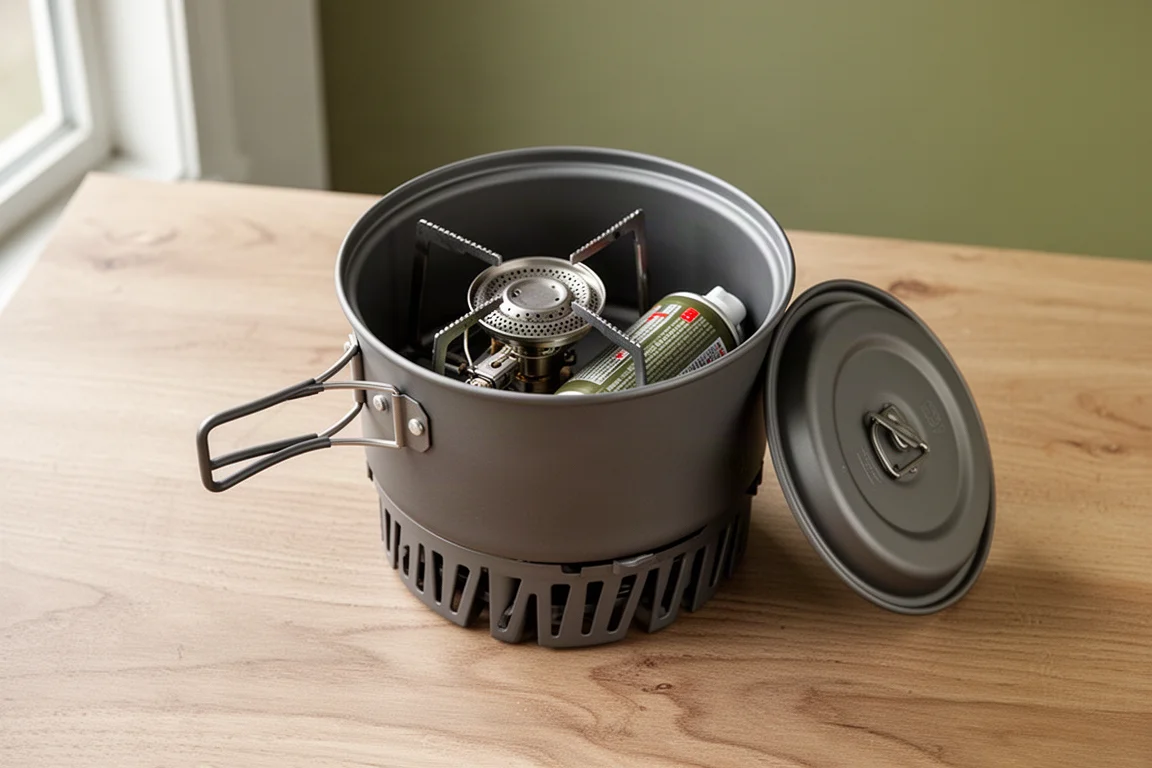
OEX Hero: Strong Value Against a Pricier Stove
The Hero is a reminder that price and performance do not always move together. In a direct comparison against a Jetboil model costing roughly twice as much, it performed far better than its price suggested, which makes it a sensible starting point for anyone testing the format before committing to a premium system.
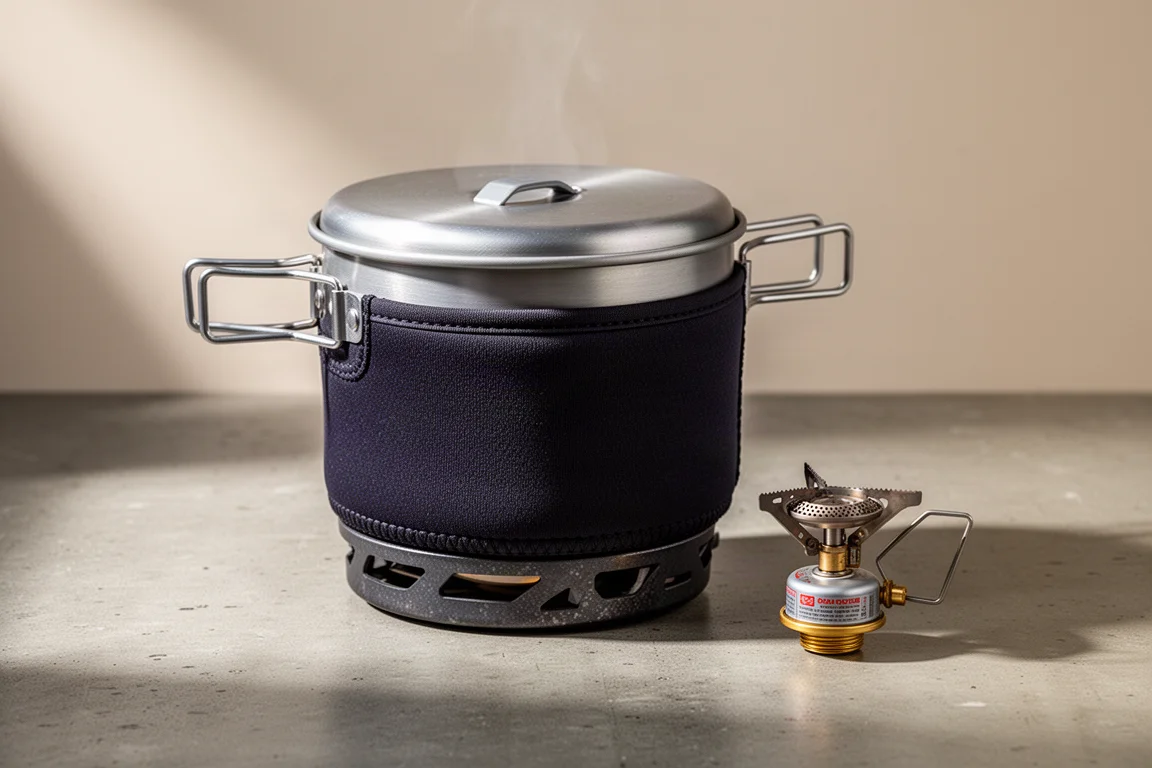
Fire Maple Petrel: Budget Heat-Exchanger Pot
The Petrel takes the opposite approach to the integrated systems. It is a pot rather than a kit, and it brings heat-exchanger technology in at around $23.95. The base is enclosed, which offers some protection from wind, and the cutout version is shaped to lock onto a compatible three-prong support or a matching burner.
That is the catch. You need a burner to go with it, and the support or stove that locks into the cutouts is bought separately, which adds a little to the total. Even so, pairing a pot like this with a regulated burner such as the WindMaster gets you the efficiency of the design for a fraction of the cost of an integrated system.
Heat-exchanger pots are available from other budget brands too, and the principle is identical: fins under the base, a wider footprint, and less gas for every boil.
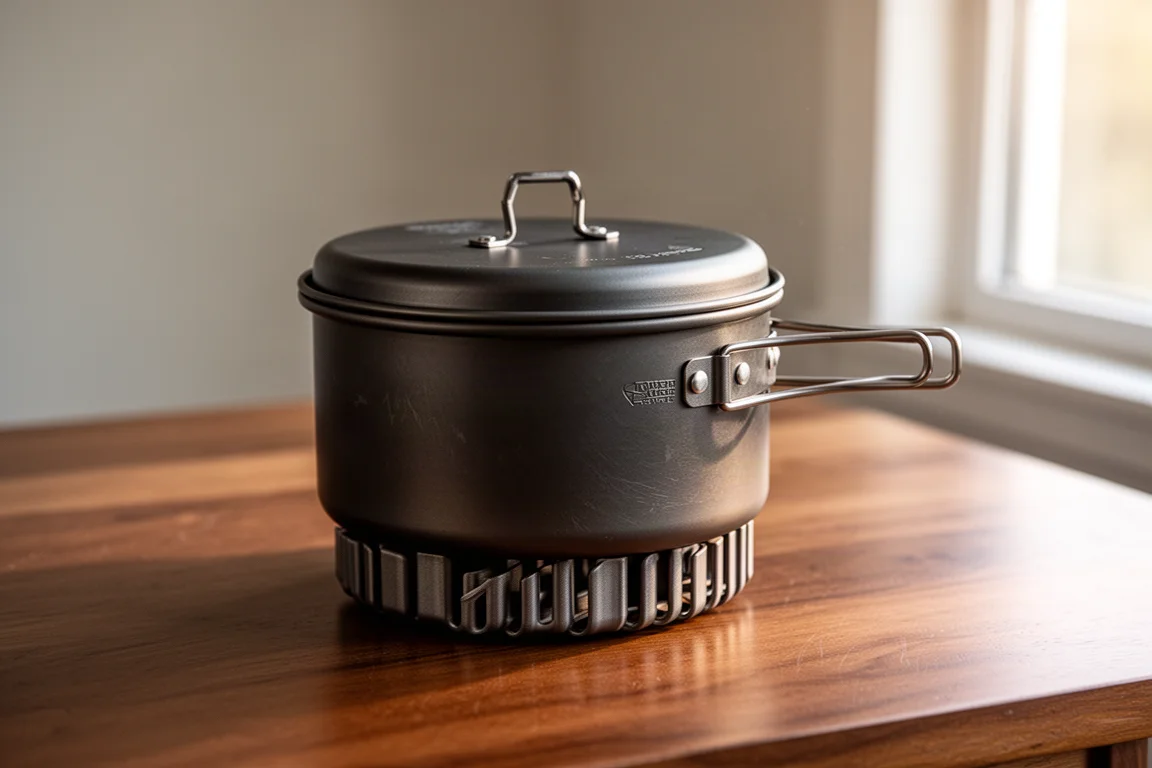
Buying Advice: Matching the Stove to the Trip
Start with how often you will use it. A cheaper stove that uses more gas can still be the smarter buy if you only boil water a few times a season, because the extra fuel is worth pennies. On multi-day trips the maths changes, and a heat-exchanger pot that saves gas on every meal is worth the money.
Then decide whether you want an integrated system or a kit you build yourself. Integrated stoves lock together, pack into a single object and are hard to beat for convenience. A bare burner paired with a heat-exchanger pot is often lighter, cheaper and more capable in wind and cold, but it will not nest as neatly.
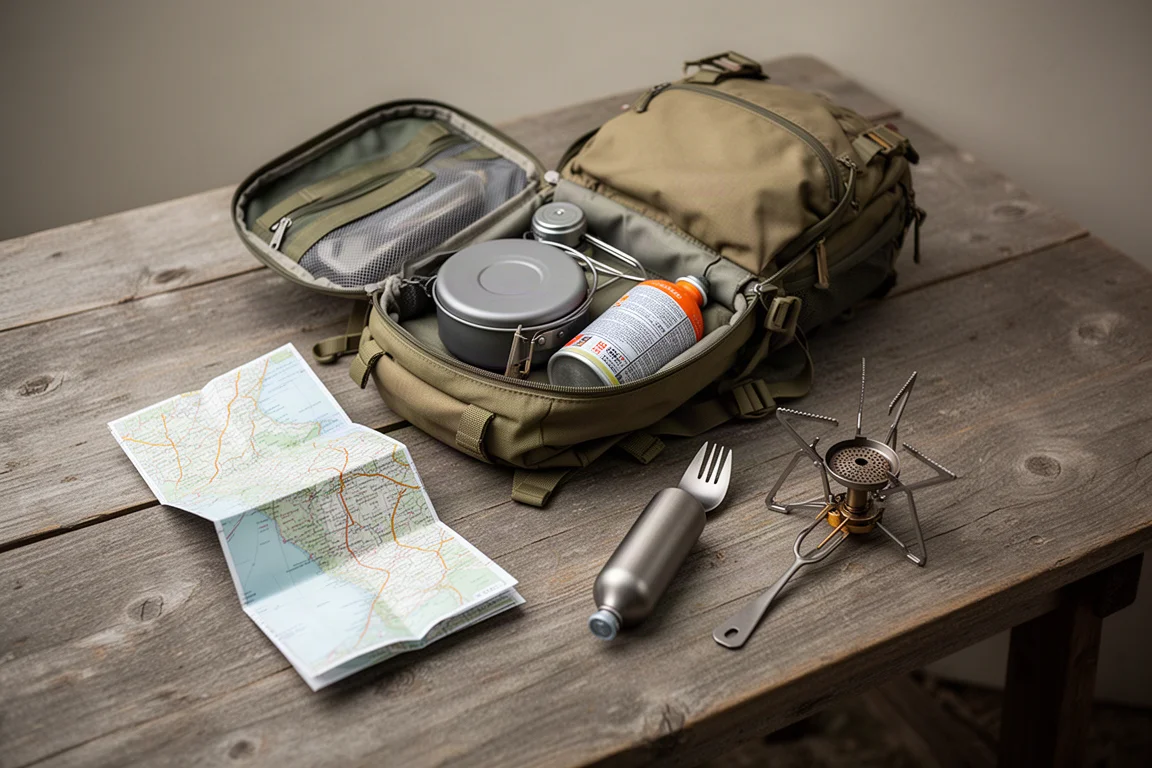
Two smaller points are worth weighing. First, wind: if you camp in exposed places, an enclosed burner earns its price. Second, origin: Jetboil is a US brand, and where a product is manufactured is a genuine consideration for many buyers.
Conclusion
The heat-exchanger pot is the part of a Jetboil system that does the work, and it is the reason these stoves boil so quickly and sip fuel. The burners are the weaker half of the equation: no regulator on the lighter models, limited wind protection, and fine control that was never designed for real cooking.
That opens up three sensible routes. Buy an integrated system if you want one object that packs into itself and you are comfortable with the premium. Buy a value kit if you want the same convenience for less. Or pair a heat-exchanger pot with a regulated, wind-resistant burner and get better performance for around £45 plus the cost of the pot.
Whichever route you take, judge the pot first. It is the component that determines how fast your water boils and how much gas your trip consumes.
Further reading
Related Reviews
Camping Stoves
BCB Fire Dragon Mini Cooker Review: A Tiny Folding Stove With Real Trade-Offs
A palm-sized, fuel-flexible folding stove that heats water well enough, but brings flame control, stability, and fuel cost questions worth understanding first.
Camping Stoves
Boundless Voyage Titanium Alcohol and Wood Stove Review: Ultralight Cooking, Two Ways
A titanium alcohol and wood burning stove kit that weighs 4.5 oz complete, boils two cups of water in about 10 minutes, and costs $36.
Camping Stoves
BRS 32 Dual Burner Stove Review: A Folding Two-Burner That Packs Down Flat
A detailed look at the BRS 32, a slim folding dual burner camping stove that expands into a stable cooking platform for around $60.