Camping Stoves
Jetboil Minimo vs MSR WindBurner: Which Integrated Canister Stove Fits Your Trip?
A practical side-by-side comparison of two integrated canister stove systems, covering boil times, wind behaviour, skillet cooking, and measured gas use.
Introduction
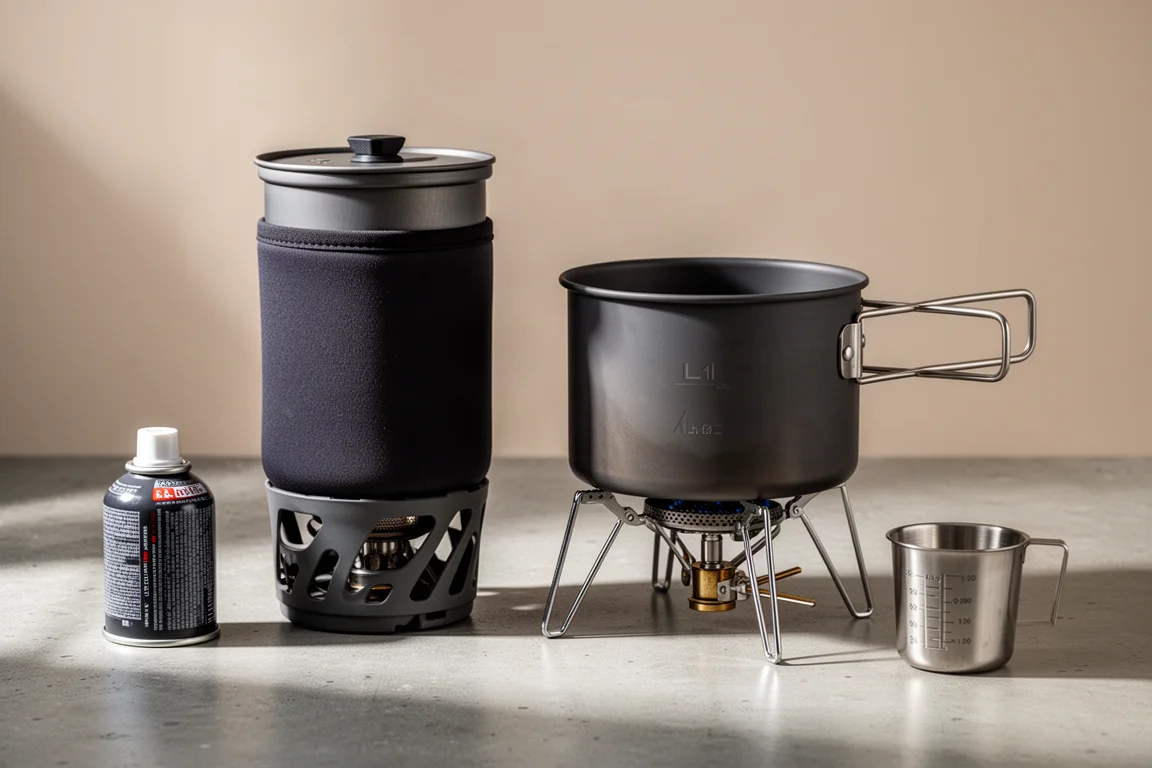
The Jetboil Minimo and the MSR WindBurner are two of the best known integrated canister stove systems, and on paper they look almost identical. Both pair a one litre pot with a screw-on burner, both run on standard gas canisters, and both are quick enough for dehydrated meals at the end of a long day.
The differences show up in the details: how each stove behaves in wind, how the burner works under a frying pan, how the parts pack down, and how much gas each one burns. This comparison walks through the stoves themselves, the skillets each brand sells for them, boil times, cooking performance, and measured fuel use.
MSR WindBurner: Wind Resistance and Radiant Heat
The WindBurner personal system includes a one litre pot with an insulated cosy, a burner unit, a lid with a strainer and a drinking mouthpiece, a canister support, and a measuring cup marked in millilitres and fluid ounces. Without the gas canister, the complete system weighs 465 g and costs around £150.
Setup is simple. The burner screws onto the canister, sits inside the stand for extra stability, and the pot goes on top. Everything, including a full gas canister, stores inside the pot when you break the system down, which keeps the whole kit compact.
The burner is the headline feature. MSR uses a radiant heat burner rather than an open flame, so heat is transferred by convection and the burner area is shielded from moving air. That design makes the WindBurner noticeably stronger than a conventional stove when the weather turns, and a pressure regulator keeps output consistent as the canister empties or temperatures drop.
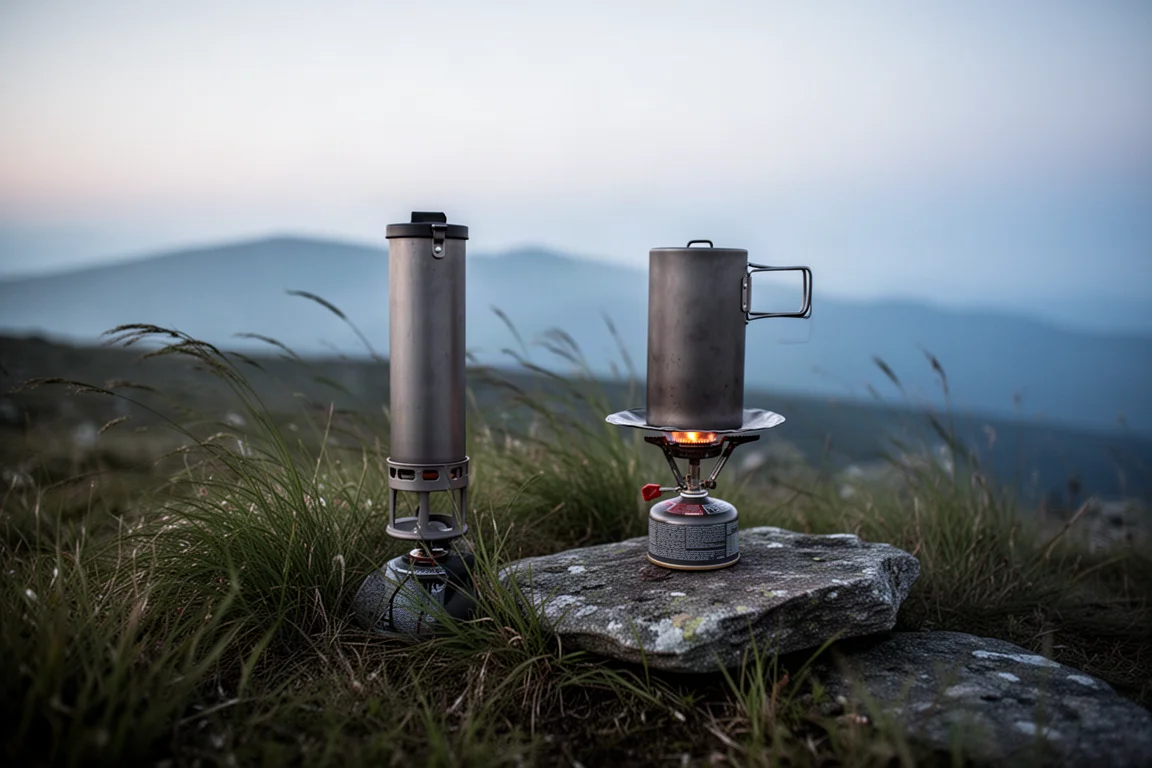
The trade-off is ignition: there is no built-in igniter, so you need to carry a lighter or a flint. The system is also taller and narrower than the Minimo, which feels solid in the hand but changes how it sits in a pack. Its fabric-style handle is quick to grab, with a plastic layer behind it to keep your fingers away from the hot pot.
Jetboil Minimo: Built-In Igniter and a Wider Pot
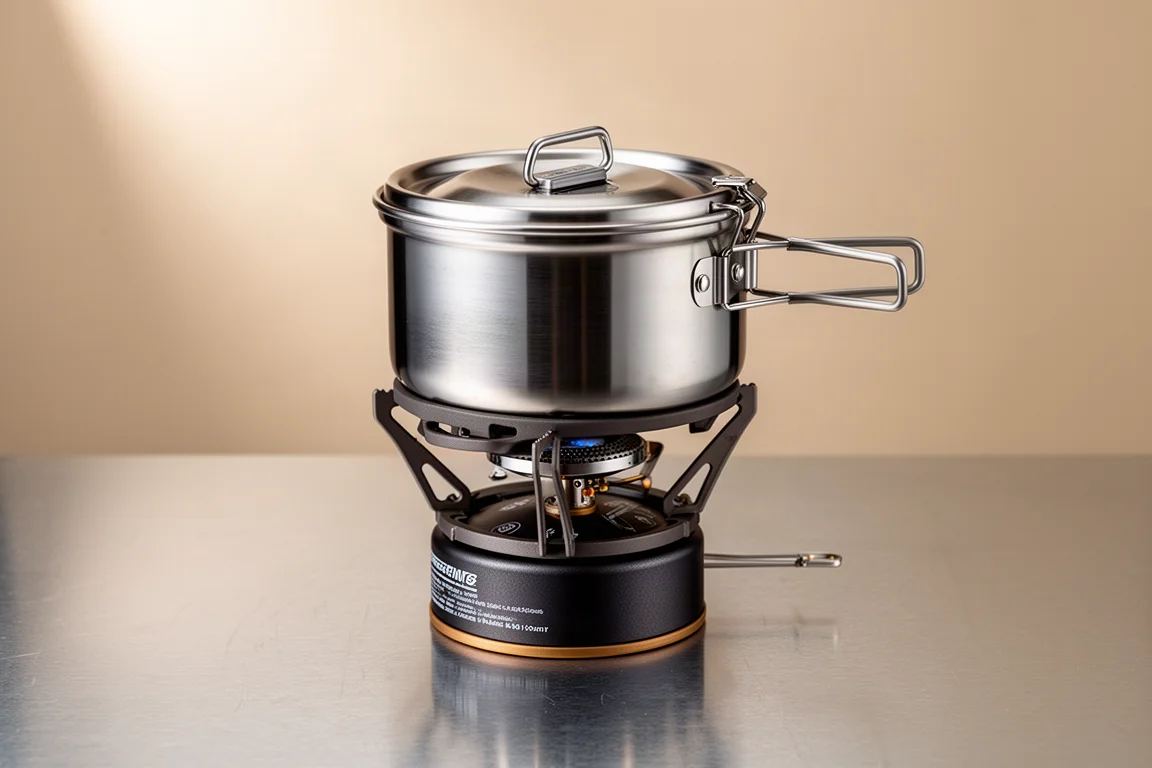
The Minimo follows the same formula: a one litre pot, a lid that houses the canister support, a strainer, a drinking mouthpiece, and a small bag for the canister and burner. Because the pot is wider and shallower than the WindBurner’s, the canister and burner have to be stowed sideways rather than stacked, but the usable volume is the same.
Weight is 415 g and the price is around £130, making the Minimo the lighter and more affordable of the two systems.
It also has an integrated piezo igniter, which means one less thing to remember at camp. Like the WindBurner, it uses a pressure regulator for consistent performance, and its metal handle with heat protection gives a firmer, more comfortable grip than the fabric handle on the MSR. If a secure hold on a hot pot matters to you, this is the better design of the two.
Boil Times and Temperature Control
Both stoves were filled with exactly 400 ml of water and lit with a separate lighter so the ignition method would not affect the result. The Minimo reached a rolling boil in 1 minute 38 seconds, while the WindBurner took 1 minute 54 seconds. Both are genuinely fast, and the gap between them is small.
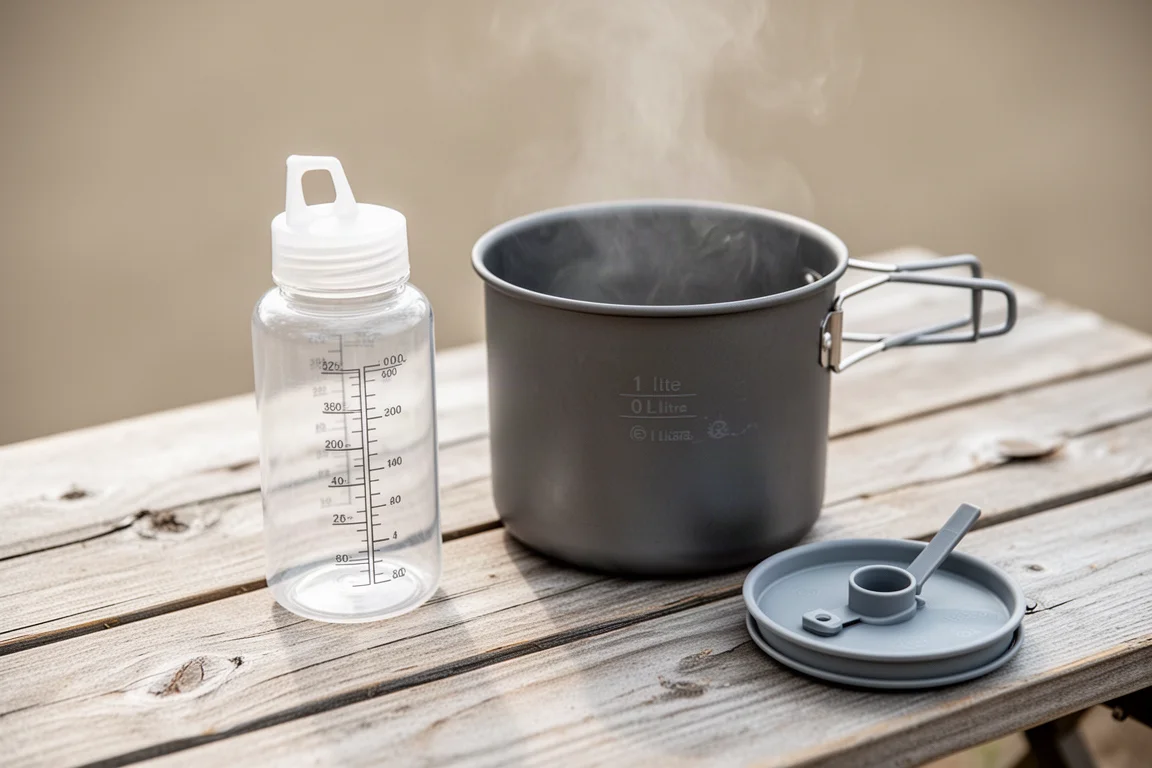
Markings inside both pots are faint, so measuring water with a bottle is more reliable than relying on the printed scale. Both pots twist and lock onto their burners, which means you can lift the whole system by the pot rather than holding the canister steady.
Both stoves also have fine regulators, which matters more than raw speed if you plan to cook rather than simply rehydrate. In side-by-side cooking, the Minimo offered the more precise flame control.
Pot Supports and Skillet Compatibility
You cannot simply stand a normal pan on either stove. A flat pan placed directly on the burner will snuff the flame, so some form of pot support is required.
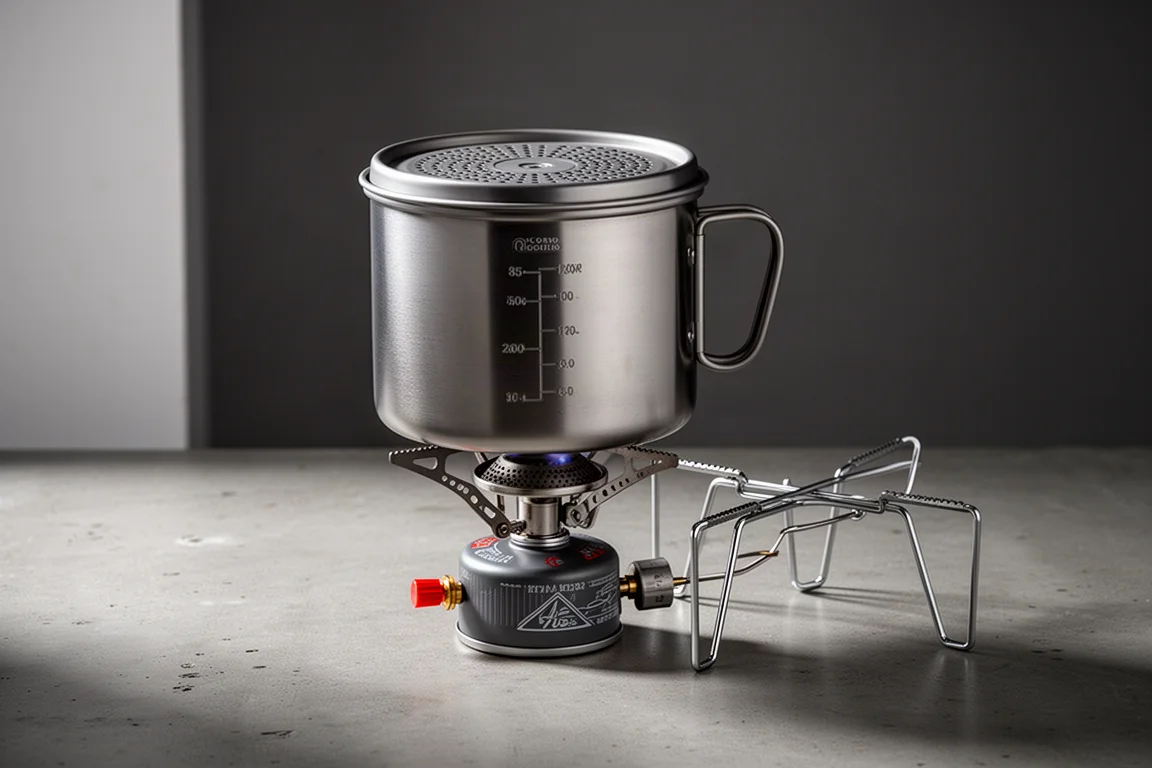
Jetboil includes folding support arms with the Minimo. They twist to lock in place and hold a pan clear of the flame. MSR does not sell an equivalent support for the WindBurner. The Jetboil arms will physically fit on top of the MSR burner, but they cover a large part of it, drastically reducing the effective burner diameter.
MSR’s answer is its own skillet, which drops straight onto the WindBurner. It does not lock into place, but it sits securely and is partly shielded from the wind. The Jetboil skillet has ridges underneath that seat onto the ridges of the support arms, which stops the pan from sliding around.
Jetboil 8-Inch Skillet: Fast, Even Heat Across the Pan
The Jetboil skillet is an 8-inch ceramic coated aluminium pan weighing 380 g and costing around £42. The handle folds away, and an integrated spatula stores inside it, so there is nothing loose to lose in your pack.
The pan is thicker at the centre than at the edges, a design intended to spread heat evenly across the cooking surface. In testing with bacon and eggs, heat reached the full diameter of the pan and the food cooked right to the edge. Non-stick performance was good: a few marks were left behind after cooking, but they wiped away with kitchen roll.
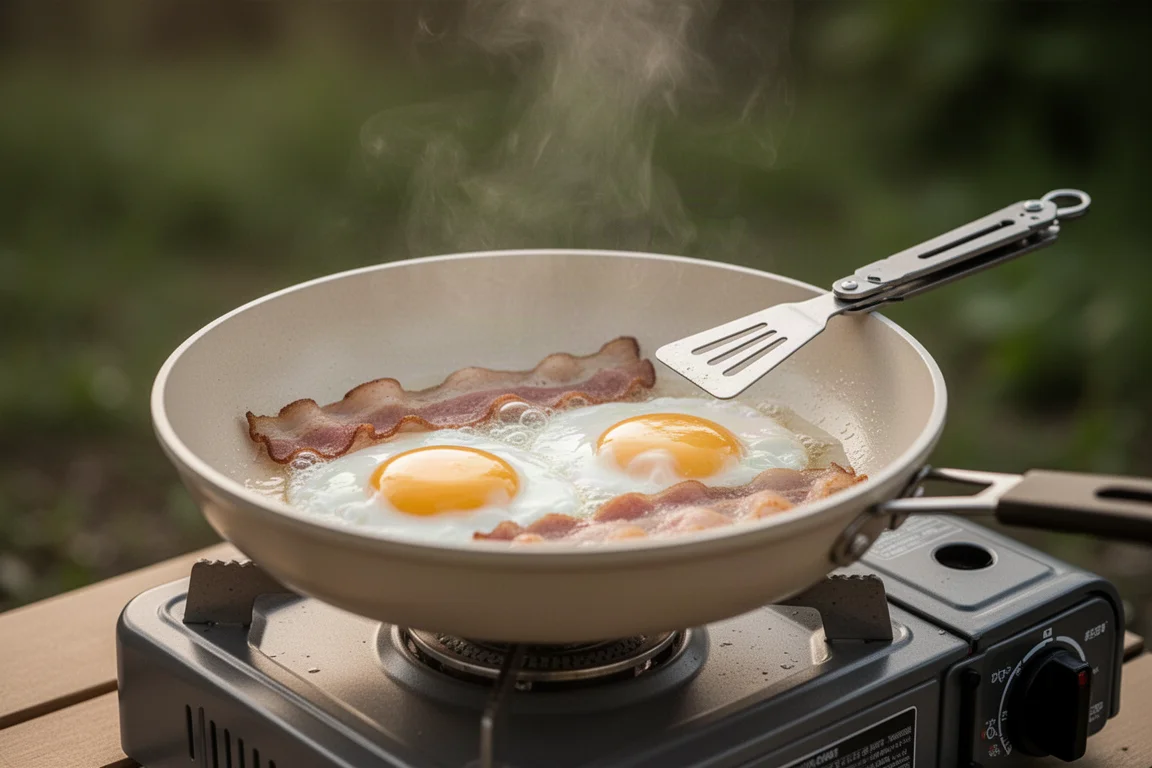
The Minimo’s control made the skillet easy to work with, and the egg cooked faster and looked better than the one in the MSR pan. The extra 160 g over the MSR skillet is worth noting if you count every gram in your pack.
MSR Skillet: Light, Deep, and Centre-Focused
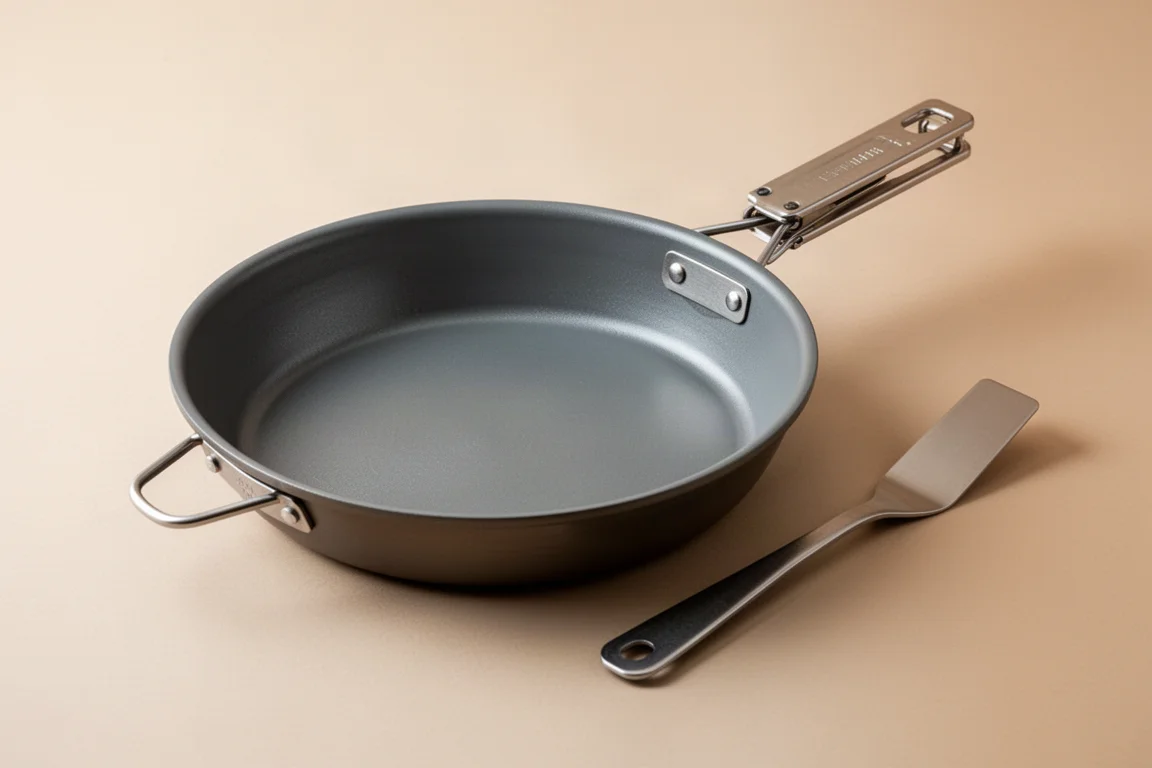
The MSR skillet is deeper, with a 1.2 litre capacity, yet it weighs only 220 g. It costs around £65 and uses the same ceramic coated aluminium construction with a folding handle.
Its non-stick coating was the stronger of the two in testing. Bacon released cleanly and the surface wiped down with almost nothing left behind. The trade-off is heat distribution: cooking stayed concentrated in the centre of the pan, the outer edge ran cooler, and the egg needed roughly another 30 seconds to finish. If you want the lightest pan and the easiest clean-up, this is the one to pick; if you want even browning across the whole surface, the Jetboil pan has the advantage.
Buying Advice: Which Stove Suits Which Trip
Gas use was measured by weighing each canister before and after the test. Both started at 200 g. The Minimo used 14 to 15 g of gas to boil 400 ml of water and cook a bacon and egg breakfast, while the WindBurner used 13 g for the same work, making it slightly the more efficient of the two. The test was run outdoors in a light breeze, and stronger wind would likely widen that gap in MSR’s favour.
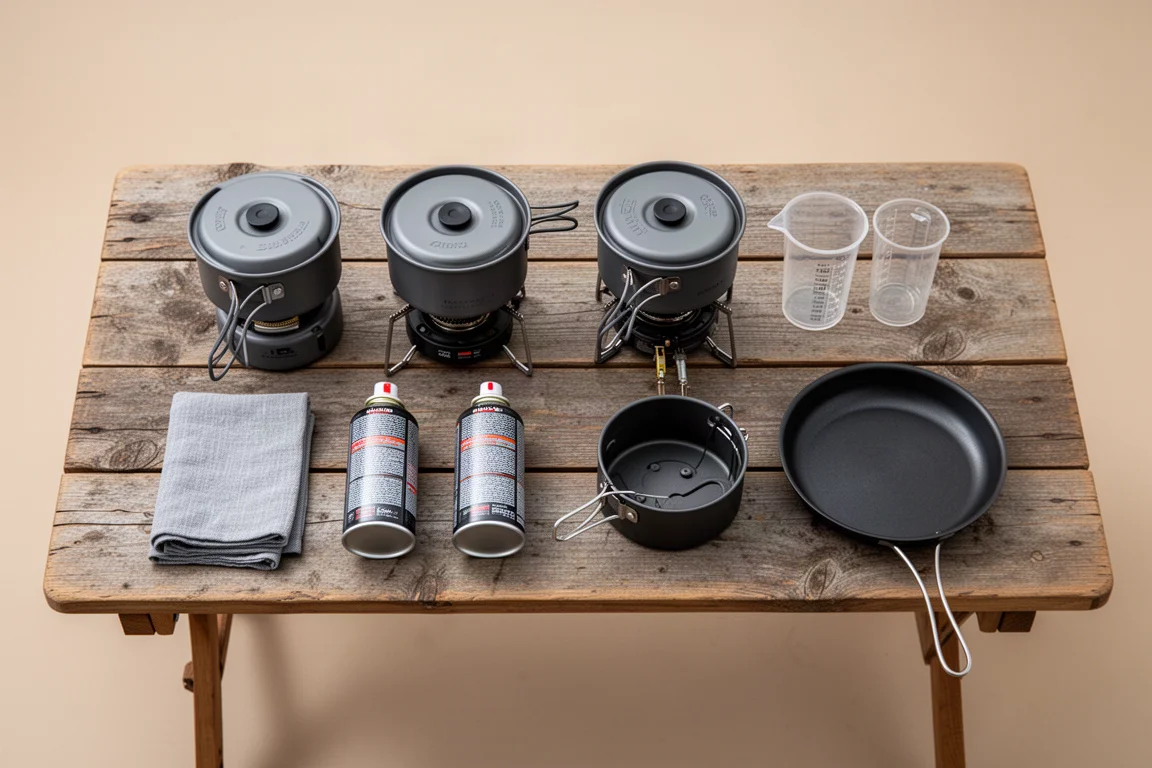
Both are one litre cook kits in a similar price region, around £130 for the Minimo and around £150 for the WindBurner, and the 50 g weight difference is not something you notice in the hand. If your priority is boiling water for dehydrated meals in exposed, windy conditions, the WindBurner is the more convincing choice. If you want to cook properly and add a skillet, the Minimo’s finer control and its included pot support give it the edge. Both stoves will handle both jobs well.
Conclusion
These two systems are close enough that the decision comes down to how you use a stove. The MSR WindBurner wins on wind resistance and fuel efficiency, with a shielded radiant burner that keeps working when the weather is against you. The Jetboil Minimo wins on control, convenience, and cooking, thanks to an integrated igniter, a sturdier handle, and a pot support that is included rather than missing.
Pick the WindBurner if your trips are mostly about fast water in exposed places. Pick the Minimo if the stove is also your kitchen and you want a skillet that heats evenly from edge to edge. Either way, you are buying a fast, well regulated system that packs into its own pot.
Further reading
Related Reviews
Camping Stoves
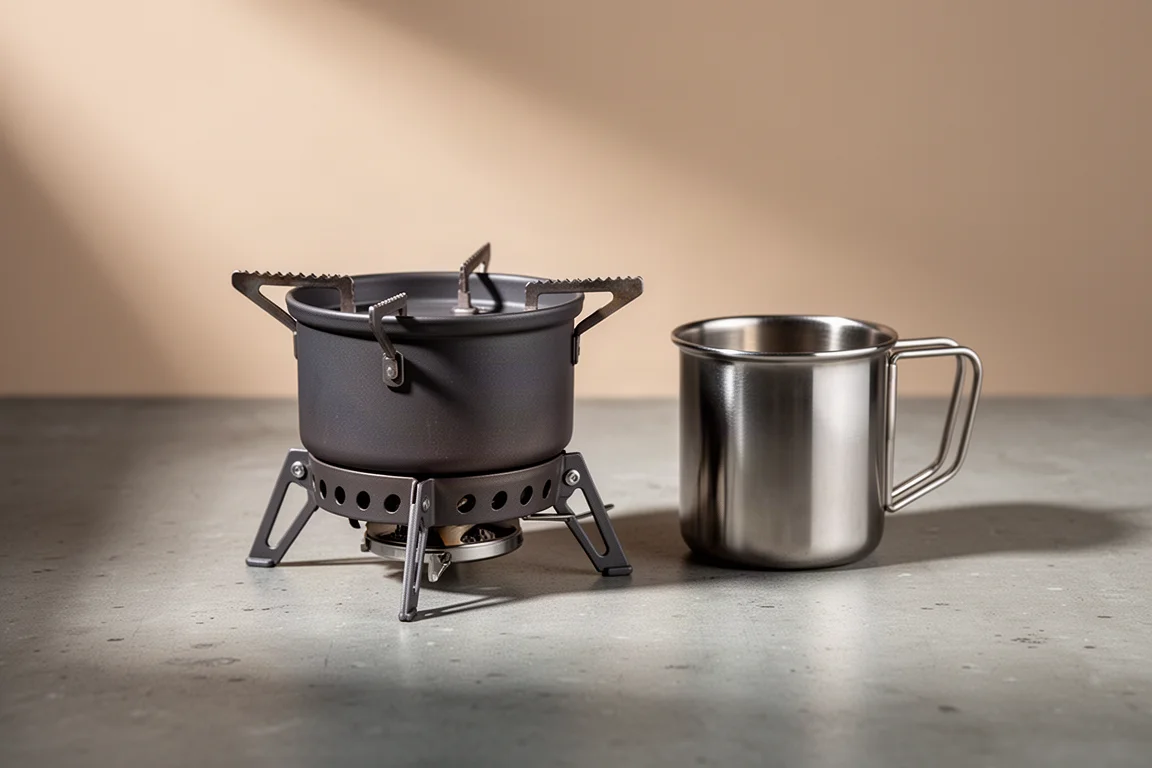
BCB Fire Dragon Mini Cooker Review: A Tiny Folding Stove With Real Trade-Offs
A palm-sized, fuel-flexible folding stove that heats water well enough, but brings flame control, stability, and fuel cost questions worth understanding first.
Camping Stoves
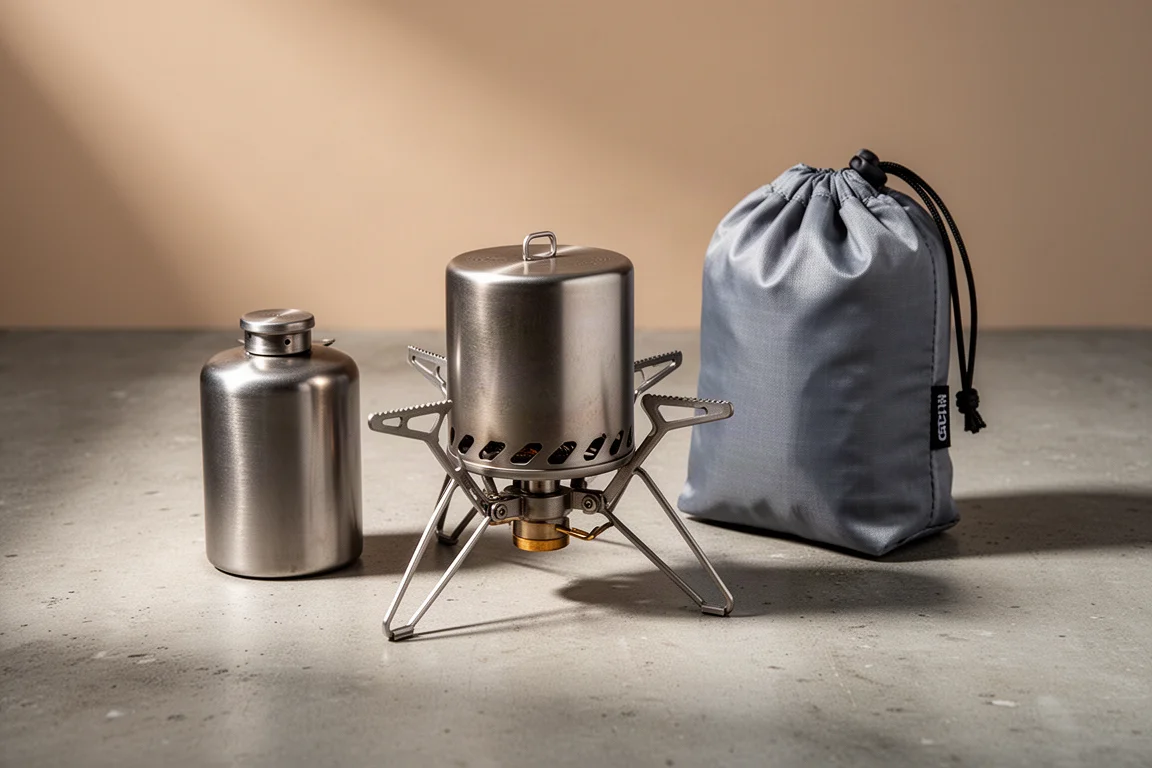
Boundless Voyage Titanium Alcohol and Wood Stove Review: Ultralight Cooking, Two Ways
A titanium alcohol and wood burning stove kit that weighs 4.5 oz complete, boils two cups of water in about 10 minutes, and costs $36.
Camping Stoves
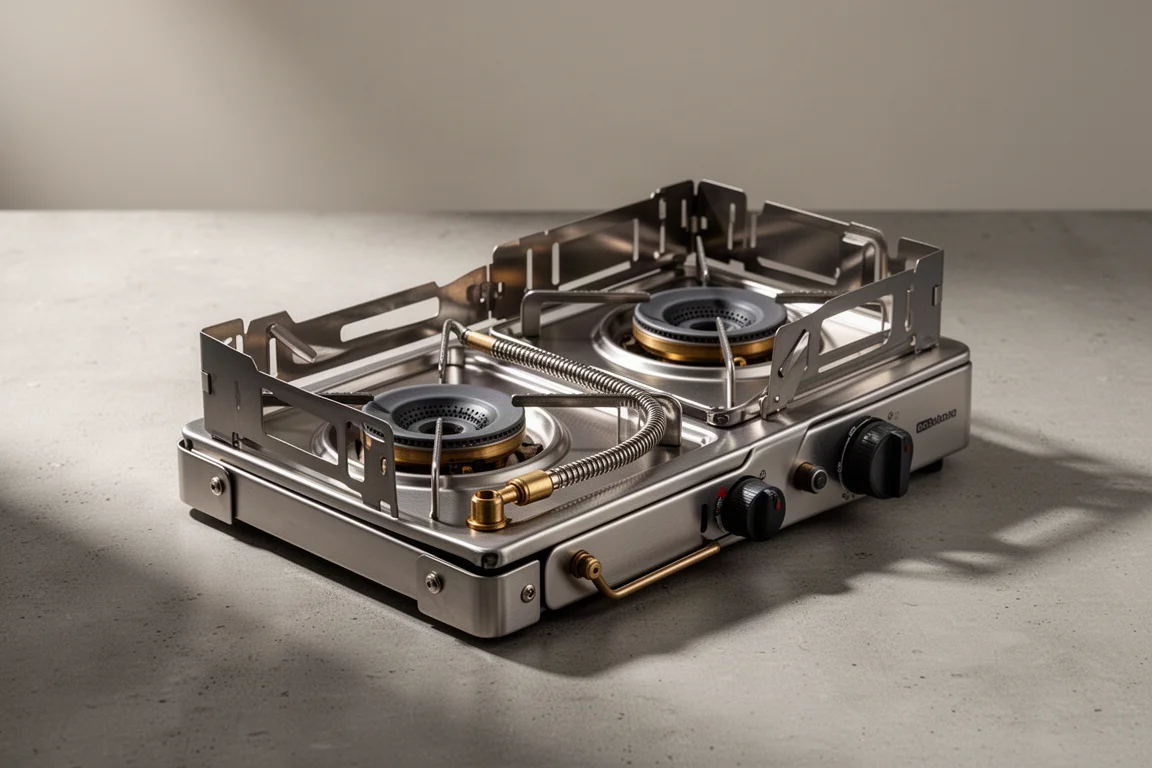
BRS 32 Dual Burner Stove Review: A Folding Two-Burner That Packs Down Flat
A detailed look at the BRS 32, a slim folding dual burner camping stove that expands into a stable cooking platform for around $60.