Camping Stoves
Jetboil Flash vs a Budget Stove System: Boil Time, Fuel Use, and Wind
A head-to-head test of the Jetboil Flash against a $47 pot and burner system, covering igniter reliability, boil times, fuel consumption, and behaviour in wind.
Introduction
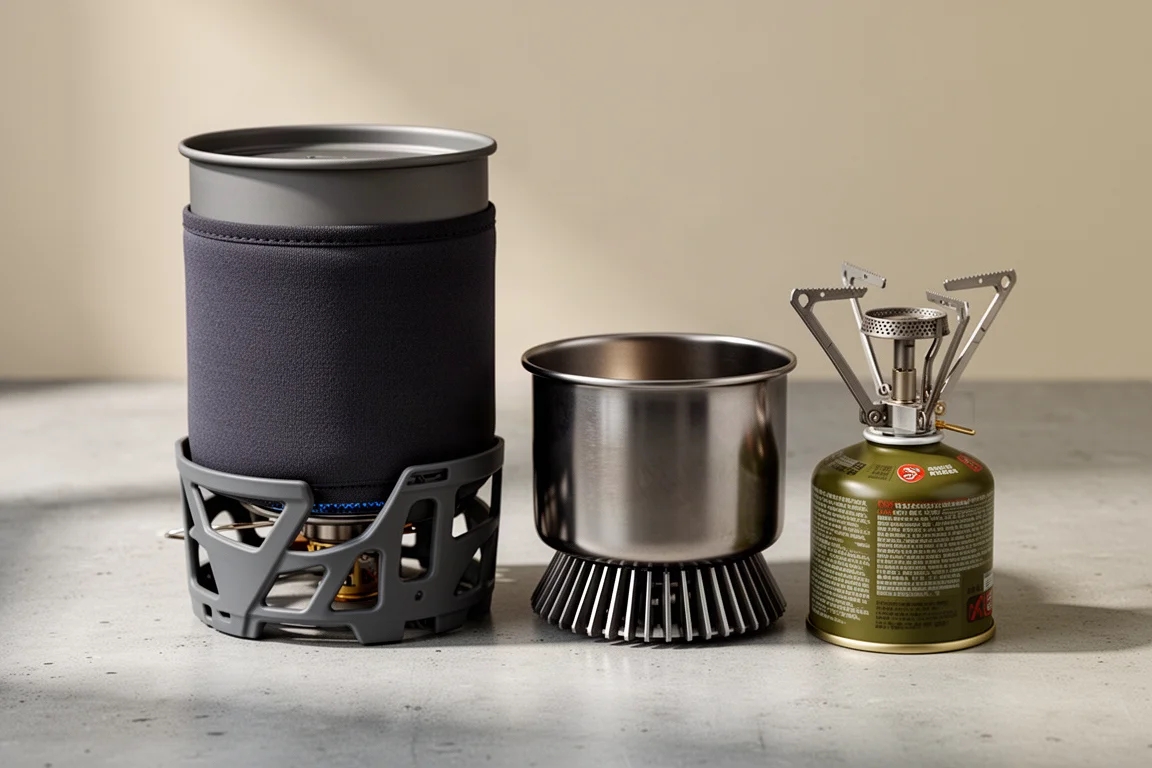
Jetboil stoves are some of the most frequently recommended stoves in outdoor shops, usually described as rugged, reliable, and efficient. They are also among the heavier and more expensive options, which is why we wanted to test those claims rather than simply accept them. We put the Jetboil Flash up against a complete alternative system that costs about a third as much, and ran the same repeatable experiments on both.
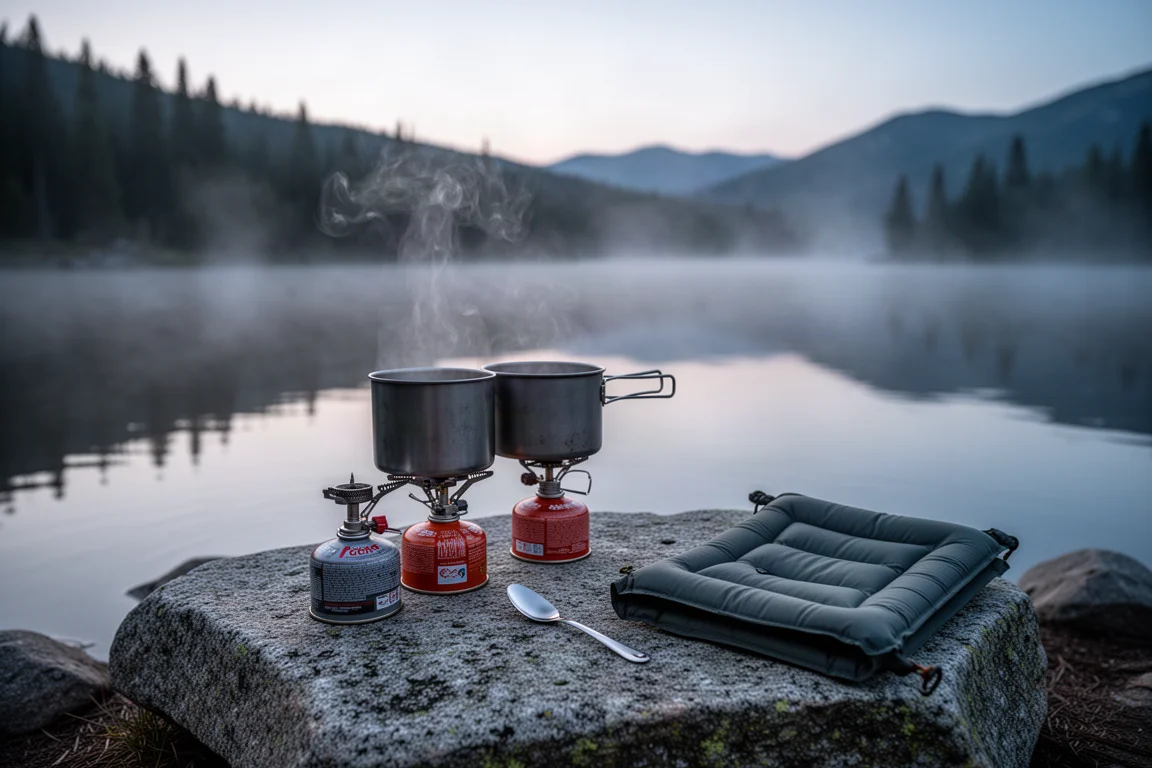
The two setups have a lot in common. Both are upright canister stoves, and both rely on pots with heat exchanger fins on the base to pull more heat into the water. The differences are in how tightly the parts are bound together and what you pay for them. The Jetboil Flash is listed at $130 and weighs 371 g. The alternative pairs a Fire Maple Petrol Pot with a Green Peak stove for $47 and weighs 247 g. Their rated outputs are close as well, at about 9,000 BTU for the Flash and about 9,500 BTU for the budget burner.
What We Tested and How
Our tests covered four areas: piezo igniter reliability, boil time, fuel consumption, and behaviour in wind. Every test was run the same way on both systems so the numbers could be compared directly.
Igniter testing was simple but repetitive. With the fuel valve opened a quarter turn, we pressed the igniter and recorded whether the burner lit, 100 times per stove in still indoor air. We then repeated the exercise in front of a fan, 50 presses per stove, and then 50 more with the pot in place to see whether the pot shielded the igniter from the airflow.
Boil testing was more involved. We used 500 ml of ice-cold water, measured close to freezing, and weighed each stove and canister assembly before and after every boil to work out exactly how much fuel was burned. Canisters were filled to 71 g, roughly 65 percent of capacity, a level at which performance stays consistent between runs. Lids stayed off, valves stayed fully open, and the clock stopped when the water reached 95°C, the boiling point in our test environment. Both stoves are unregulated, so flame output follows canister pressure rather than a control circuit.
Wind testing repeated the same boil procedure with a fan producing airflow of 10 km/h and then 15 km/h across the table, measured with a wind speed tester.
Jetboil Flash: Fastest Boil Times, Highest Price
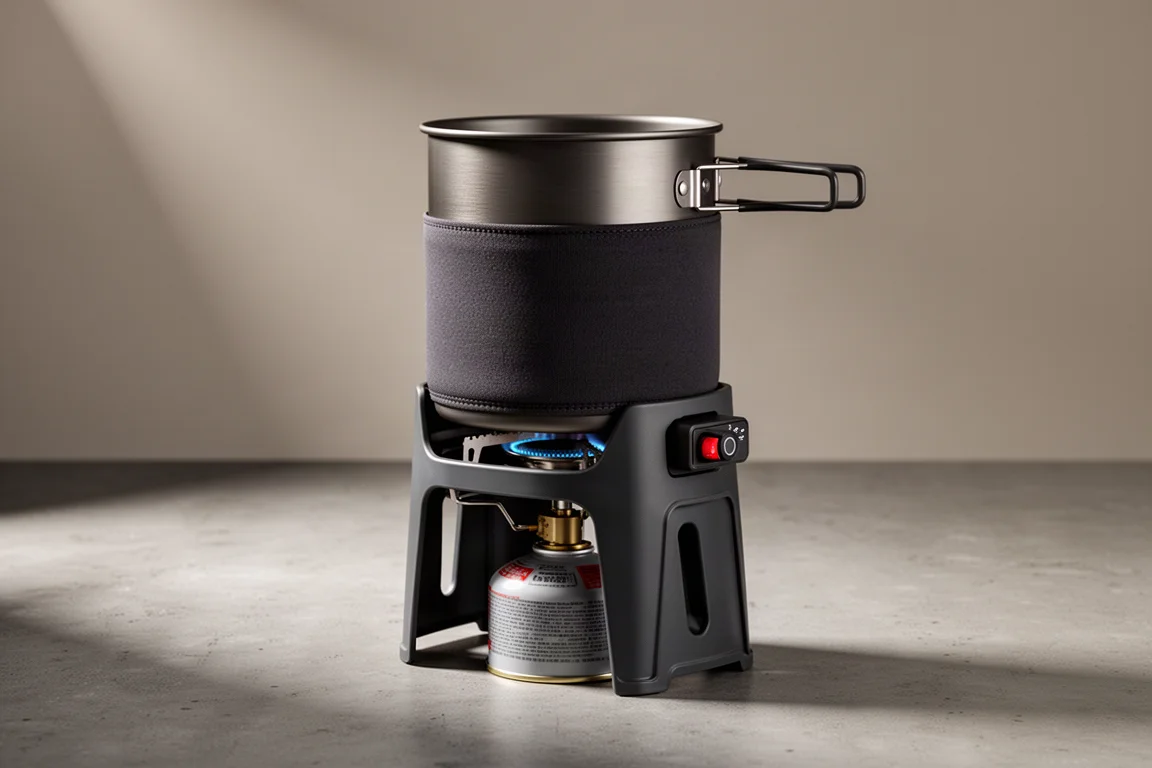
The Flash is an integrated system: the pot and the burner are designed to be used together, and the pot is not really intended to sit on anything else. It is rated at 9,000 BTU, and the advertised boil figure is 500 ml in 100 seconds.
Our ice-cold water test produced a boil in 1 minute 54 seconds. That is slower than the advertised number, though the advertised figure almost certainly assumes warmer starting water. Against the budget system the Flash was the clear winner on speed, beating it by roughly 20 seconds on average, and it used 6 g of fuel in every single boil run.
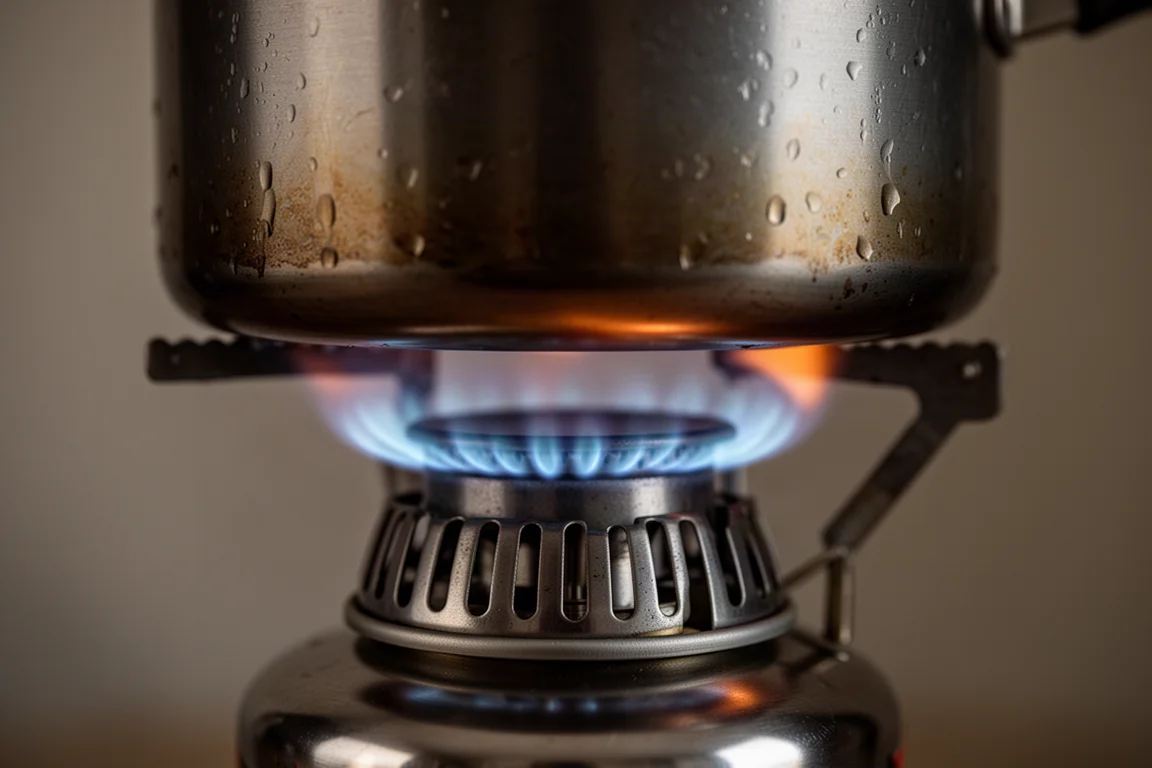
Fuel efficiency was the more interesting result. Both pots use a heat exchanger, a set of fins on the base that transfers heat from the flame into the pot, and the two fin designs look broadly similar. Even so, the Flash consistently used less fuel per boil than the cheaper system, which is a genuine strength of the integrated design.
Noise is a smaller factor but worth knowing. The Flash measured 79 dB at about a foot away and dropped to 68 dB at three to four feet. It is the quieter of the two systems, though neither is what anyone would call a quiet stove, and a quiet burner is easy to appreciate on a still evening at camp.
The igniter told a more complicated story. In still air the Flash failed just 2 times out of 100, an excellent result. In wind the failure rate climbed to about 60 percent across 50 presses, and fitting the pot made no difference at all. Worse, at 10 km/h the flame repeatedly blew out, and the boil test could not be completed.
Fire Maple Petrol Pot: Modular Design at a Third of the Price
The Fire Maple Petrol Pot is the cooking side of the budget system, which sells as a pot and burner pairing for $47 and weighs 247 g in total. Like the Jetboil pot, it carries heat exchanger fins on the base, so it is solving the same heat transfer problem at a fraction of the cost.
The pot is also far more modular. It can be used with almost any three-armed stove, and the burner it ships with can be used with basically any pot. That flexibility matters if you already own a stove, if you want to swap parts as your kit changes, or if you simply do not want a pot that only works with one burner.
Boil times were slower than the Flash but not by a wide margin. The first run took 2 minutes 29 seconds and used 10 g of fuel, and the two follow-up runs used 8 g each. Averaged out, the system sits about 20 seconds behind the Flash and burns roughly 2 g more fuel per boil in typical conditions.
It is also the louder of the two, measuring 82 dB at a foot and 70 dB at three to four feet.
Wind is where the budget system turned the tables. At 10 km/h it boiled in 3 minutes 30 seconds using 11 g of fuel, only 1 g more than its first calm-condition run. At 15 km/h it finished in 4 minutes 50 seconds using 12 g, roughly double the calm boil time but barely more fuel than the gentler wind run.
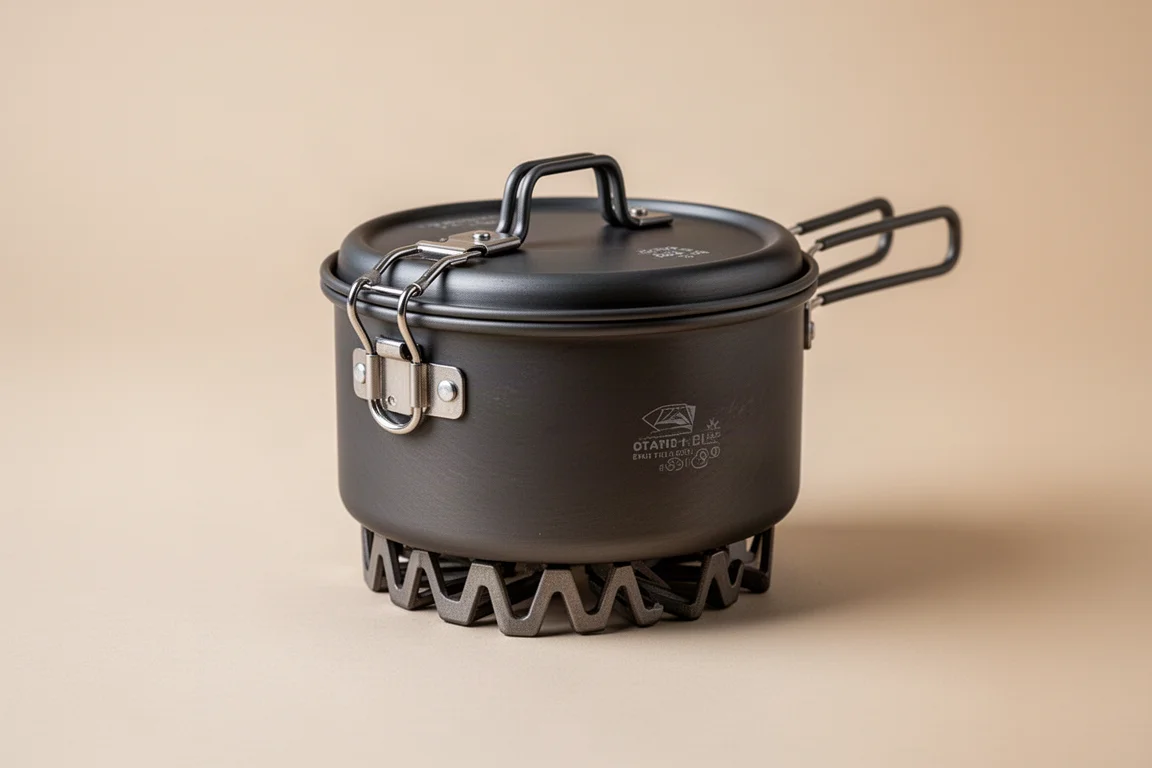
Green Peak Stove: The Burner Behind the Budget System
The Green Peak stove is the upright canister burner in that pairing, rated at about 9,500 BTU, a little above the Flash’s 9,000 BTU. It uses a wide burner with a raised lip around the edge to shield the flame, along with a push-button piezo igniter on the side.
Its igniter performed almost identically to the Flash in still air, with 3 failures out of 100. In wind the failure rate rose to about 50 percent, and once again fitting the pot made no difference. If you carry this burner, a spare lighter is sensible insurance.
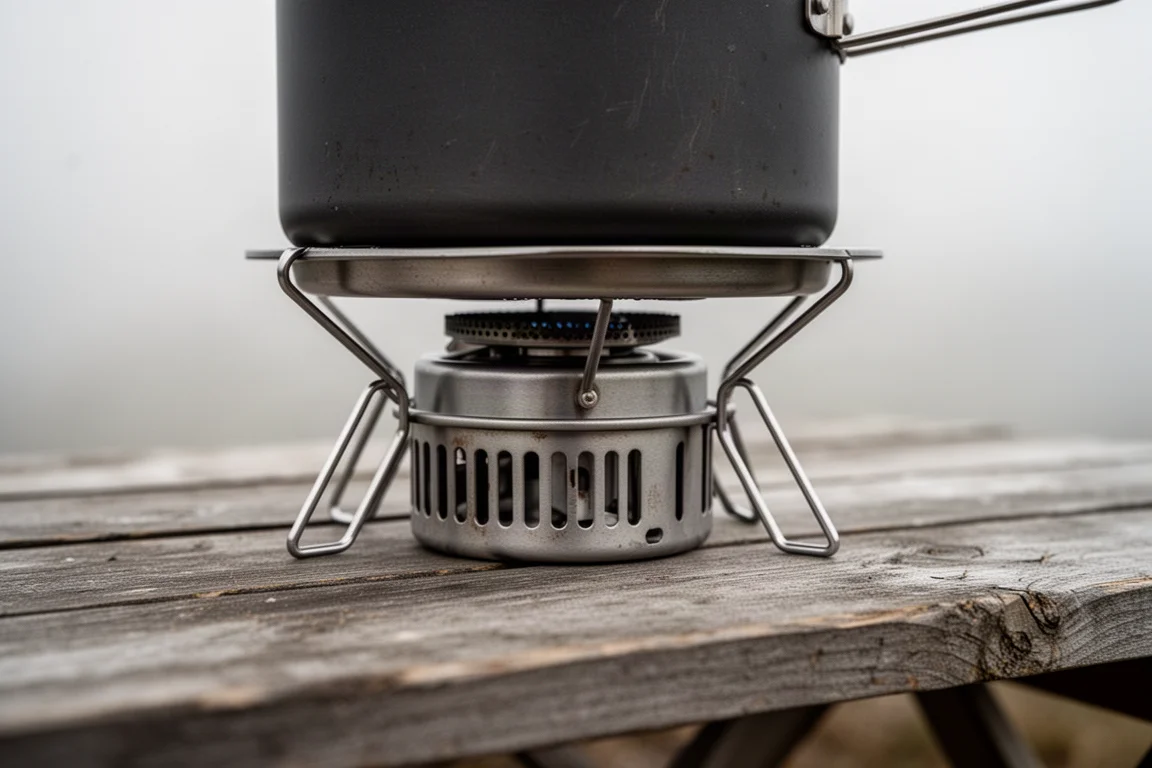
The reason this burner stays lit in wind comes down to geometry. The top of the stove sits almost level with the point where the pot’s fins begin, leaving very little gap for moving air to slip between the burner and the pot. On the Flash there is roughly a centimetre of space between the fins and the top of the stove, and wind finds its way through the openings in the shroud, into that gap, and straight into the flame.
Fuel use across the whole system stayed reasonable in every condition we tested: 8 g per boil in calm air, 11 g at 10 km/h, and 12 g at 15 km/h. That remains efficient for a canister stove, and it comes from the heat exchanger design rather than from any electronics.
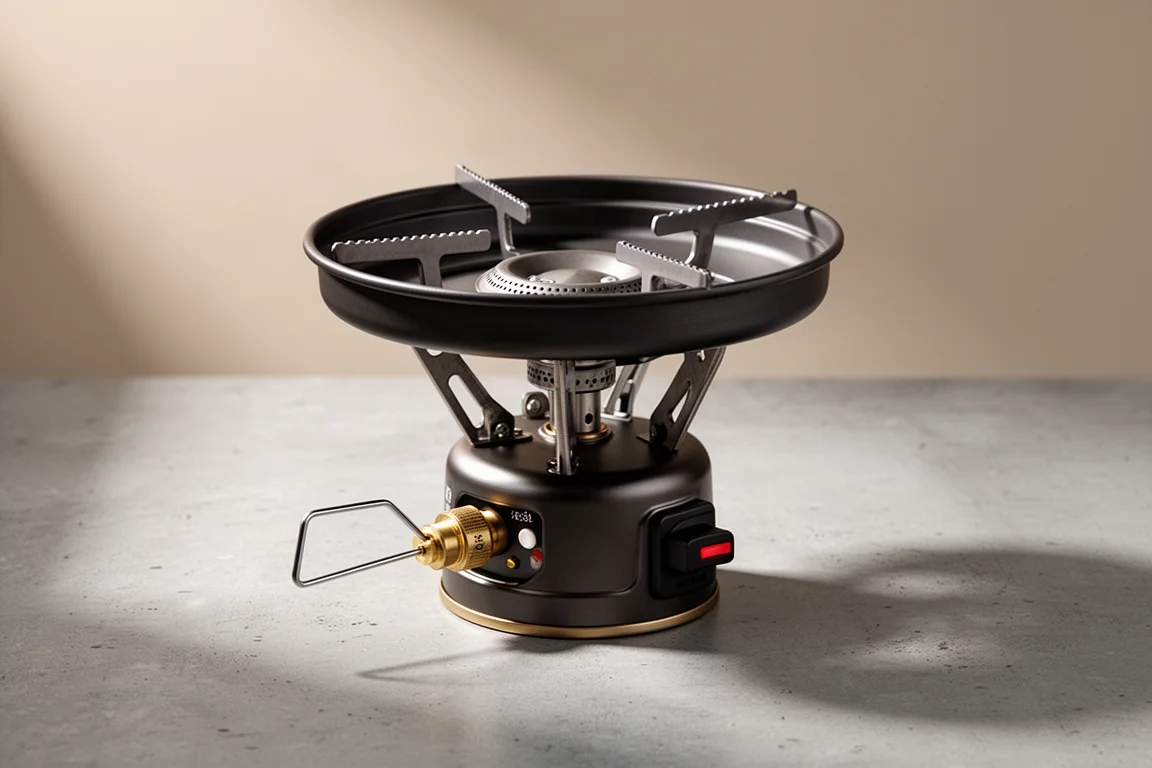
Wind Performance: Where the Systems Diverge
Wind changed the ranking more than any other variable. The Flash could not complete a boil at 10 km/h because the flame kept going out. The budget system finished the same test in 3 minutes 30 seconds with 11 g of fuel, then went on to complete a 15 km/h boil in 4 minutes 50 seconds with 12 g, holding a stable flame at both speeds.
The igniters on both stoves suffered in moving air, failing around 60 percent and 50 percent of the time respectively, so neither replaces a backup fire source when conditions are exposed.
The gap in the boil results points to a fixable design detail. Because the Flash leaves space between the pot fins and the top of the burner, air passing through the shroud openings can reach the flame. Bringing the fins closer to the stove, or closing that gap, would likely improve wind resistance and could plausibly help boil times and fuel use as well.
Overall Buying Advice
If most of your cooking happens in calm, sheltered spots and you care about speed and fuel economy above everything else, the Jetboil Flash does what it promises. It boiled fastest in our tests, used 6 g of fuel per boil, and was the quieter system. That combination is genuinely appealing for short trips and quick meals.
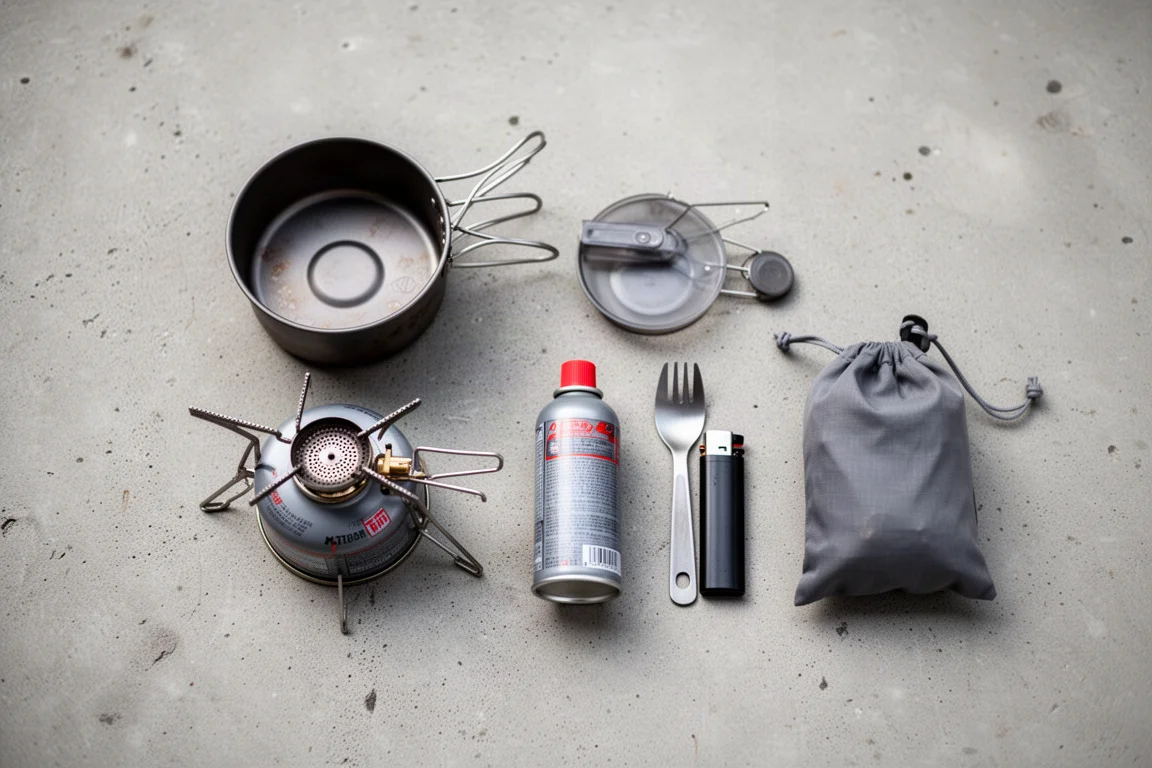
The case for the budget system is about conditions and cost. It runs $47 against $130, weighs 247 g against 371 g, and in typical calm-weather runs it used 8 g of fuel against 6 g, a difference that matters far less in practice than the boil time gap might suggest. It also keeps working in wind that stops the Flash outright.
For anyone whose trips involve exposed ridges, early alpine starts, or coastal campsites, that wind behaviour should carry more weight than a 20 second difference in boil time. A stove that cannot stay lit in a light breeze turns a hot meal into a cold one, and no amount of fuel efficiency makes up for that.
Modularity is the second consideration. The Fire Maple pot and Green Peak burner can be mixed with other three-arm stoves and other pots, so the system adapts as your kit changes. The Flash is designed to work as one unit, which is simpler to pack but less flexible.
Conclusion
Both systems boil water efficiently thanks to their heat exchanger pots, and both have piezo igniters that work well indoors and poorly in wind. The Flash wins on speed, fuel use, and noise. The $47 pot and burner system wins on weight, price, and wind resistance, and for most backpacking conditions that is the trade we would take.
Further reading
Related Reviews
Camping Stoves
BCB Fire Dragon Mini Cooker Review: A Tiny Folding Stove With Real Trade-Offs
A palm-sized, fuel-flexible folding stove that heats water well enough, but brings flame control, stability, and fuel cost questions worth understanding first.
Camping Stoves
Boundless Voyage Titanium Alcohol and Wood Stove Review: Ultralight Cooking, Two Ways
A titanium alcohol and wood burning stove kit that weighs 4.5 oz complete, boils two cups of water in about 10 minutes, and costs $36.
Camping Stoves
BRS 32 Dual Burner Stove Review: A Folding Two-Burner That Packs Down Flat
A detailed look at the BRS 32, a slim folding dual burner camping stove that expands into a stable cooking platform for around $60.