Power Tools
JCB-20DD-2X Review: Can the Cheapest Drill on Amazon Actually Do the Job?
A budget 20V cordless drill kit with a surprisingly low entry price, tested on basic drilling tasks and pushed well past its comfort zone.
Introduction
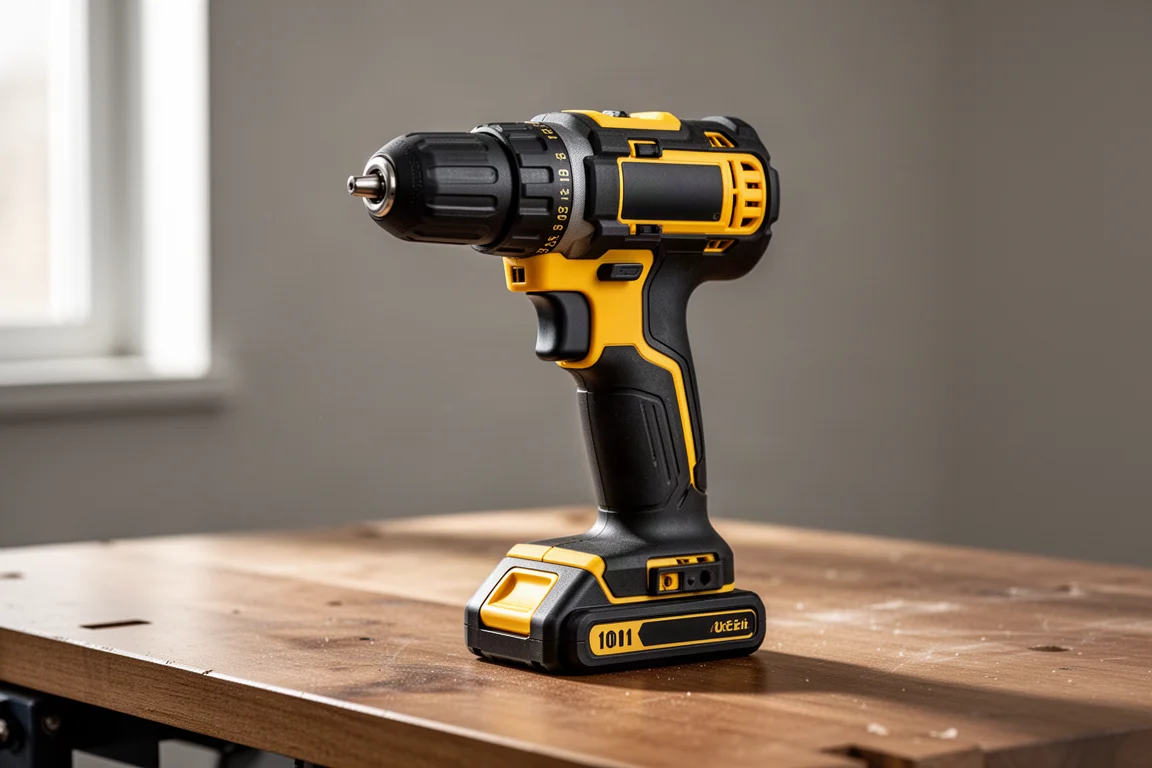
Sometimes the most useful review is not of the best tool you can buy, but of the cheapest one worth considering. This time the spotlight falls on a drill most shoppers have never heard of: the JCB-20DD-2X, a 20V cordless drill kit sold at a price that barely registers compared to professional-grade tools. The question is simple: does it do anything useful for the money, or is it just a tempting-looking trap?
First Impressions and Specifications
Out of the box, the kit is straightforward: the drill itself, a 20V 2Ah battery, a charger, and a soft case. On the Amazon listing, the tool-only price sits around $17, which is genuinely remarkable. Of course, the battery and charger are what push the real cost up, and that is where things get strange. Some sellers list the exact same kit for over $100, even $120, while others sell the full bundle for around $44. That kind of price spread across sellers makes it hard to know what you are actually paying for.
The listed specifications include 398 inch-pounds of torque, 16 torque settings, and two speed ranges. The stated weight is 2.17 kilograms, which works out to roughly 4.78 pounds. That is a hefty drill, and in hand it does feel solid and well built. One odd detail: the box artwork implies it is a hammer drill, but it is not. It is a standard drill driver only, so do not buy it expecting masonry capability.
Real-World Drilling Performance
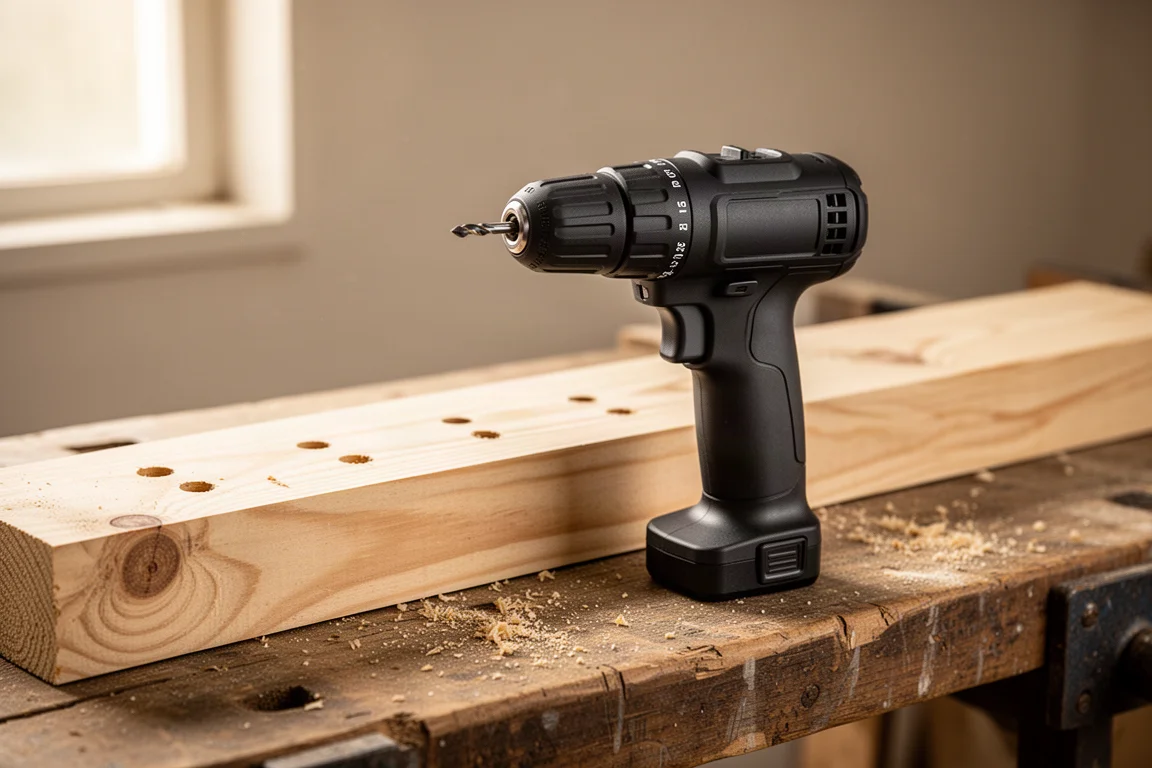
Starting with basic tasks, the JCB-20DD-2X handled simple holes in pine two-by-six lumber surprisingly well. In low gear the holes came out clean, and switching to high speed made quick work of the same material. For light-duty drilling, this drill is honestly not bad, and it performed better than many other budget drills tried in similar tests.
The next step up was a 1-1/8 inch Bosch paddle bit, which is where budget drills usually reveal themselves. On low speed, the bit went through the wood, twice in a row, without smoking or burning up. The power on tap is clearly far below what a professional drill delivers, but for occasional homeowner tasks, it managed.
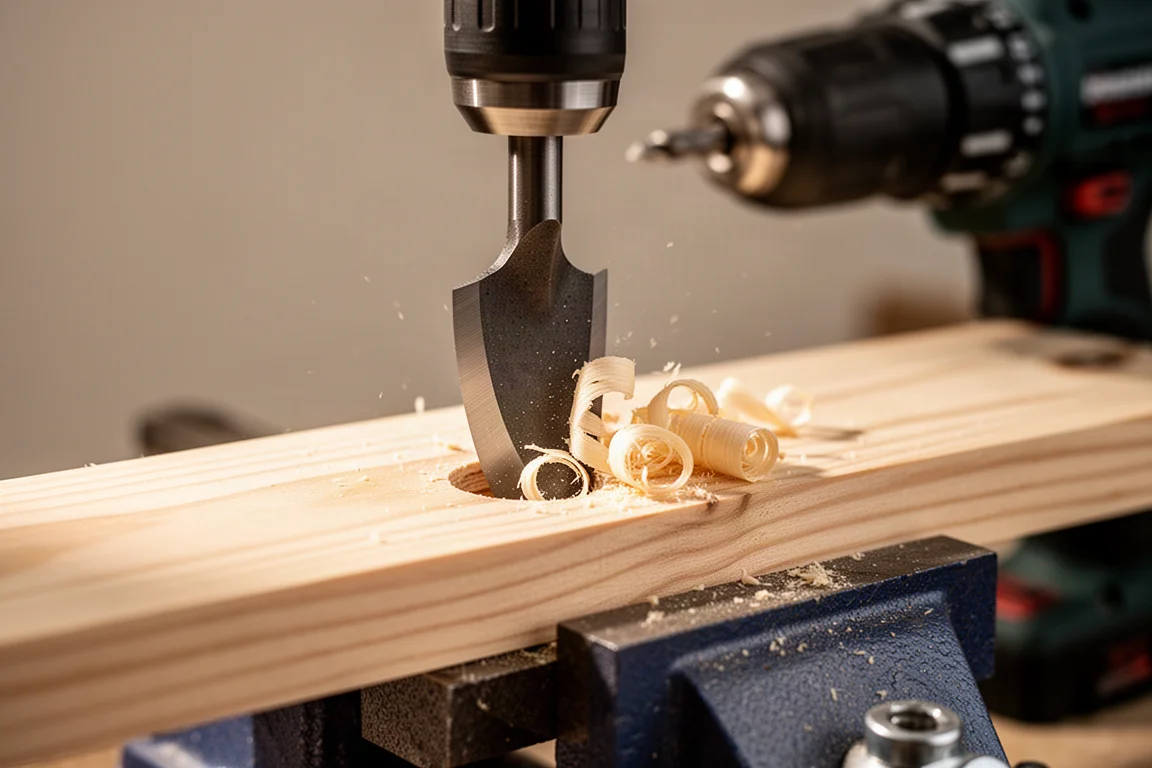
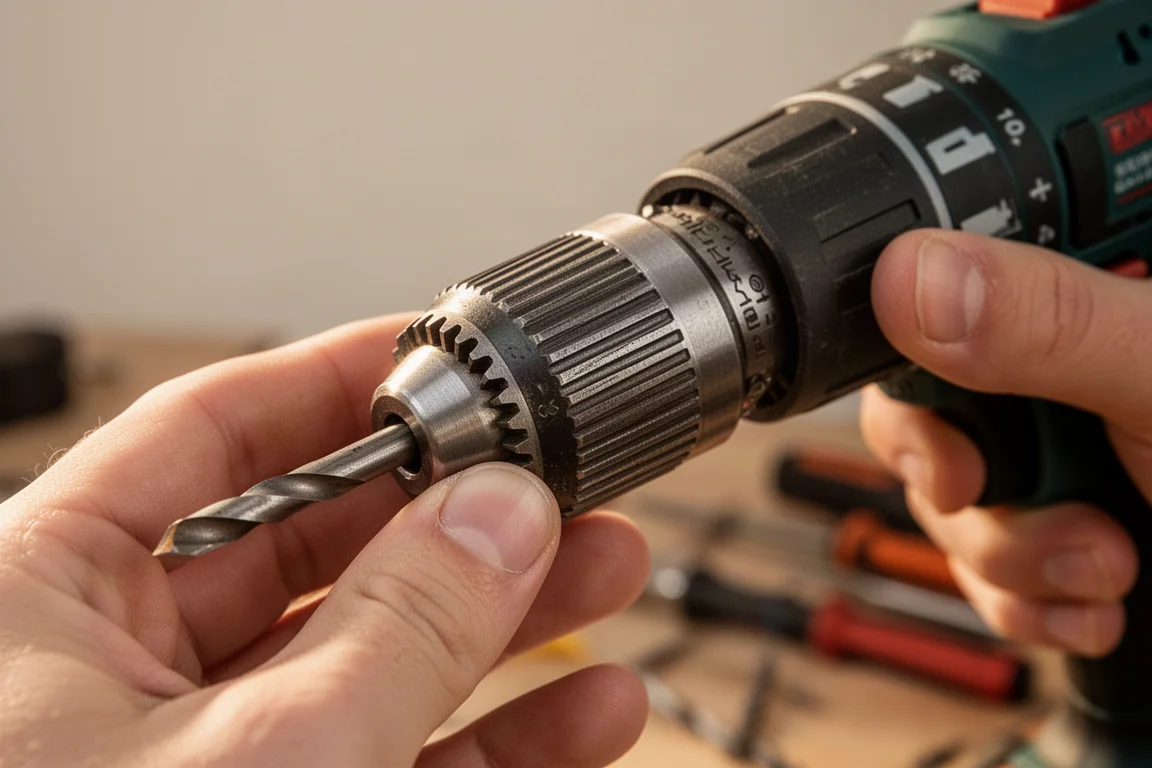
On high speed with the paddle bit, the story changed. The drill simply did not have the torque to power through, and the keyless chuck kept opening up under load, loosening the bit as it spun. That is a real annoyance: without a side handle or any grip assistance, and with a chuck that will not stay clamped, bigger bits become a fight.
Pushed Past Its Limits
To find the breaking point, this drill was pitted against a much more expensive benchmark: a Milwaukee Gen 3 hammer drill driver, one of the strongest drills in its class. Both were set to low speed and asked to drive large self-tapping screws into dense lumber. The Milwaukee threaded straight through with ease. The JCB-20DD-2X could not even hold the screw still; the chuck turned without the screw engaging, and the drill had no meaningful torque to fight back with.
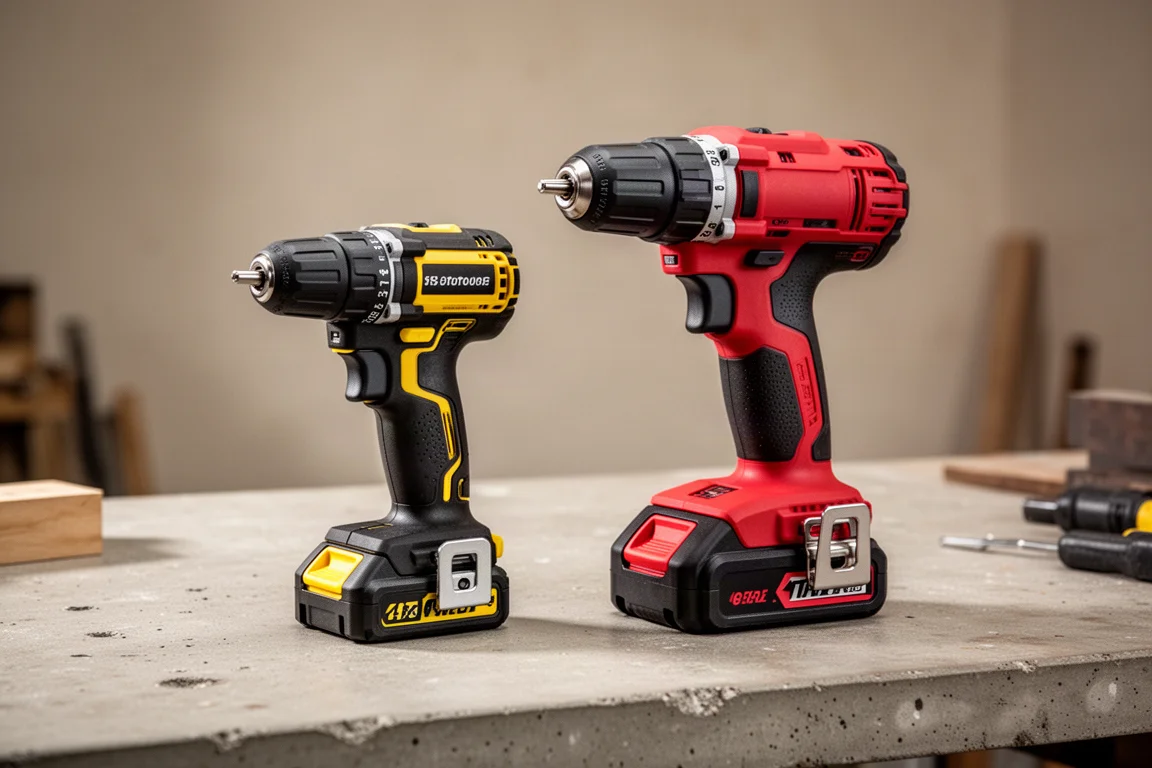
Under that sustained load, the budget drill quickly showed its ceiling. Heat poured from the rear vents, the smell of burnt wiring appeared, and smoke started coming from the back of the tool. The chuck never recovered its grip afterward. To be clear, no drill at this price should be expected to match a professional tool, and the comparison is deliberately unfair. But it does map out exactly where this drill stops being useful.
What Went Wrong Under Pressure
The recurring issues came down to two things. First, raw power: on high gear the drill genuinely struggles, and torque drops off sharply exactly when you need it most. Second, the chuck: under load with larger bits it repeatedly opened up, which is both frustrating and a safety concern when you are leaning into a heavy drill with no auxiliary handle.
There is also a deeper trust problem. Seller listings for this exact model vary wildly in price, and the published specifications are not always accurate or consistent. With minimal information on the box, it is genuinely unclear what version or quality of tool you might receive. At $17 for the bare tool that risk feels acceptable; at $50 or more for the kit, it does not.
Buying Advice
Who should buy this? Only one kind of shopper: someone who genuinely needs the cheapest possible cordless drill for very occasional light-duty use, drilling small holes in softwood, assembling furniture, hanging shelves, and can find the full kit near the lower end of the price range. The kit price fluctuates enormously between sellers, so check carefully before checkout.
For everyone else, better-established budget brands such as Ryobi or Craftsman offer far more capability and much better long-term support for not much more money. Also keep in mind that this drill uses its own battery platform, so there is no realistic option to share batteries from other brands, and any money spent on extra batteries locks you into this system.
Conclusion
The JCB-20DD-2X is better than its price suggests for simple drilling in wood, and worse than its size suggests the moment real torque is required. It survived basic paddle-bit drilling without burning up, but folded instantly against demanding loads and lost its chuck grip in the process. As an ultra-cheap backup or first drill for very light tasks, it can make sense at the right price. As anything more, it will limit you, and there are simply too many stronger alternatives for the same or slightly more money.
Product link
View more details for JCB-20DD-2X
This product is mentioned in the review. Check the specifications, options, and compatibility before buying.
View more details for JCB-20DD-2XFurther reading
Related Reviews
Power Tools
Best 1-Inch Pistol Impact Wrenches: Three Heavy-Duty Options Compared
We compare three 1-inch pistol impact wrenches, from a budget-friendly Harbor Freight model to a premium Caterpillar unit, to help you choose the right one.
Power Tools
Best 3/4-Inch Impact Wrenches 2026: Five Contenders Compared
We compare five 3/4-inch impact wrenches across price and performance, from a budget Amazon option to Snap-on's most powerful model yet.
Power Tools
Best Budget Cordless Tools 2026: Walmart Finds That Punch Above Their Price
We tested five cordless tools from Walmart, including a high-torque impact wrench that trades blows with Milwaukee and a $35 duster that outperforms its price class.