Kitchen Knives
Japanese vs German Kitchen Knives: Shun Classic vs Wüsthof Classic Santoku
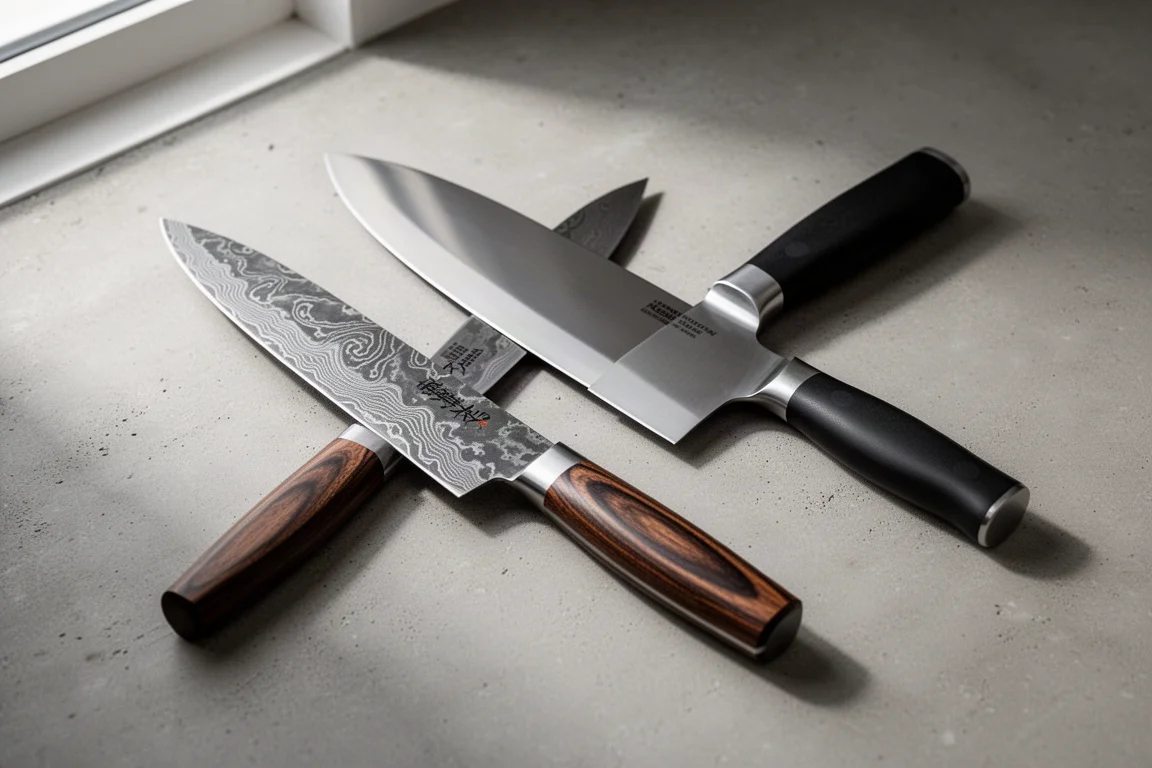
Two knives that show why blade steel, handle design, and edge geometry matter more than labels. Here is how the Shun Classic and Wüsthof Classic Santoku compare.
Introduction
Japanese and German kitchen knives look similar in a drawer, but they are built around different philosophies. Japanese knives favor hard steel, thin blades, and surgical sharpness. German knives favor softer steel, thicker blades, and toughness. The right choice depends almost entirely on what you cook.
To make the comparison practical, this guide looks at two knives that represent their camps well: the Shun Classic, a Japanese knife with a distinctive Damascus-patterned blade, and the Wüsthof Classic Santoku, a hybrid that pairs a traditional Japanese-style santoku blade with a German-style handle.
The Core Differences Between Japanese and German Knives
The biggest difference is the steel. Japanese blades are typically made with harder steel, which can take and hold an extremely sharp edge, but it is more brittle and prone to chipping. That is why Japanese knives are best suited to vegetables and fish rather than cutting through squash or hacking through bones.
German blades are softer and less likely to chip or break. Softer steel with less carbon content is also easier to sharpen and more resistant to corrosion and rust. The trade-off is that it loses its edge faster and needs more frequent sharpening.
Edge angles reinforce this divide. Most Japanese knives are sharpened to between 9 and 16 degrees per side, while most German knives sit between 14 and 20 degrees per side. The Japanese edge is finer and sharper, but it also demands more care because a thinner edge is more likely to chip.
Handles differ too. Traditional Japanese knives usually have wood or wood composite handles that are lightweight and attractive. Shun knives, for example, use comfortable, moisture-resistant PakkaWood handles. German knives typically use synthetic materials like polyoxymethylene (POM) or polypropylene, and the handles are usually larger and heavier. Japanese handles come in oval, octagonal, or D-shapes, while German handles are symmetrical and ergonomic with flat sides and a curve toward the butt end.
Balance, Bolster, and Blade Profile
A Japanese blade tapers inside the handle, making the front of the knife heavier than the handle. The result is a knife that is lighter and more nimble, but less balanced. German knives usually use full-tang construction, meaning the steel runs through the handle, which makes the knife more balanced and durable.
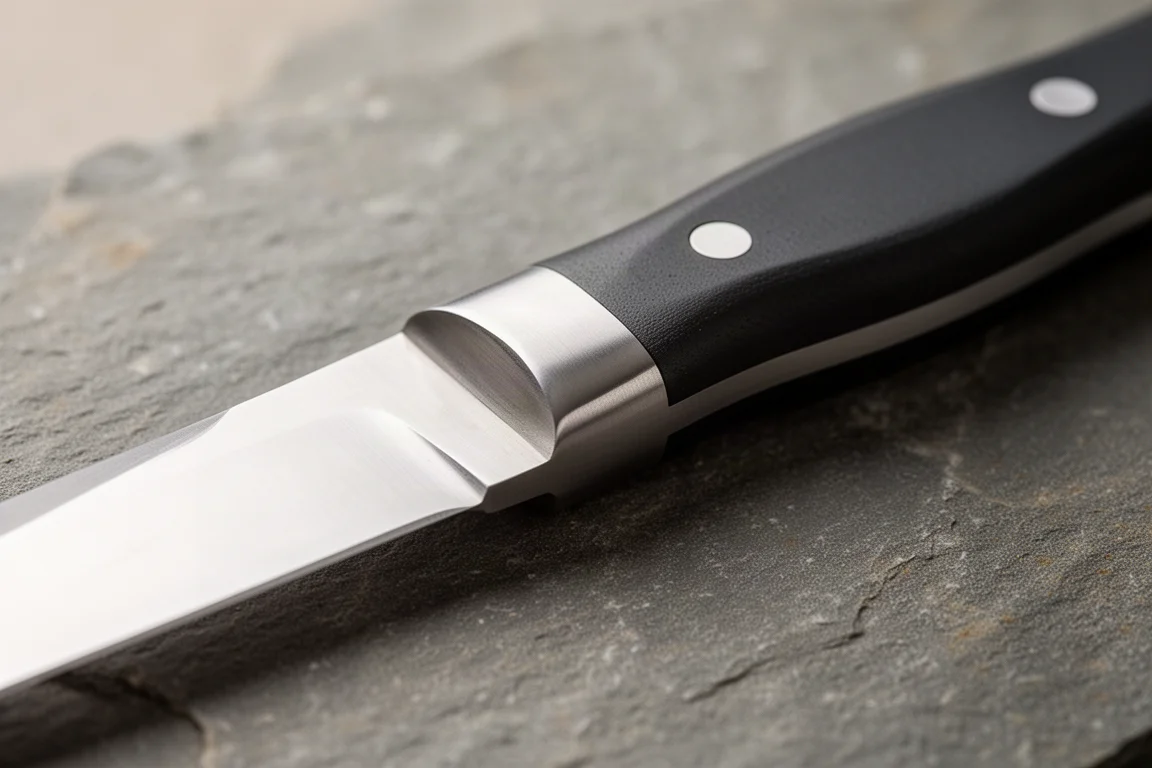
Most Japanese knives are bolster-free, so blade thickness stays consistent from heel to tip. German blades have a bolster where the blade meets the handle: the steel widens there, adding weight and balance and providing a smooth transition from handle to blade.
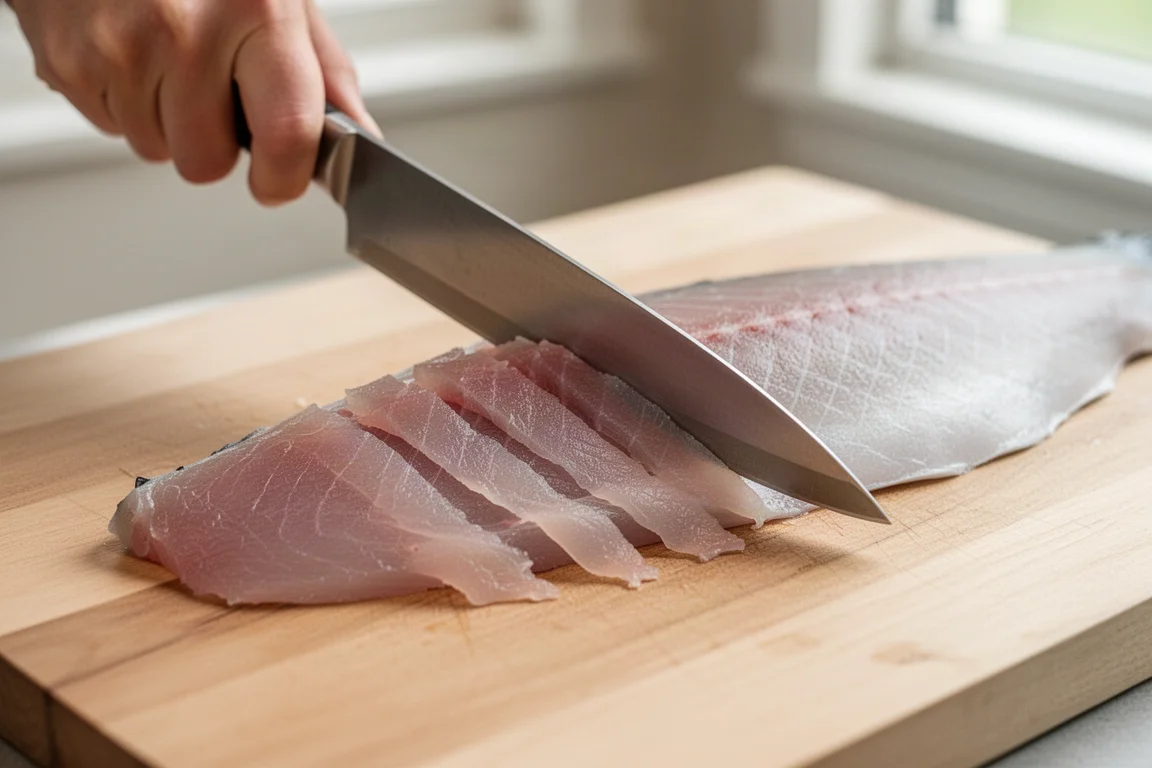
Blade profile changes technique. Japanese knives have a straighter edge that supports an up-and-down motion, ideal for straight, clean cuts and slices. German knives have a more rounded profile that enables a smoother rocking motion.
Finish and weight round out the picture. Japanese blades are thinner and often textured, such as the Shun Classic’s swirly Damascus pattern or a traditional hammered texture, which can reduce drag and prevent ingredients from sticking, though the impact is modest. German knives are heavier thanks to the thicker blade, full-tang construction, and bulkier handle. That weight helps when cutting dense food because you apply less pressure, while lighter Japanese knives are easier to control and less tiring on the wrist.
Weight and Price
Price depends heavily on brand, but Japanese knives generally cost more because the blade is often built in layers and more craftsmanship is involved. A quality German chef’s knife costs around $150, while many Japanese chef’s knives go for well over $200, sometimes over $300.
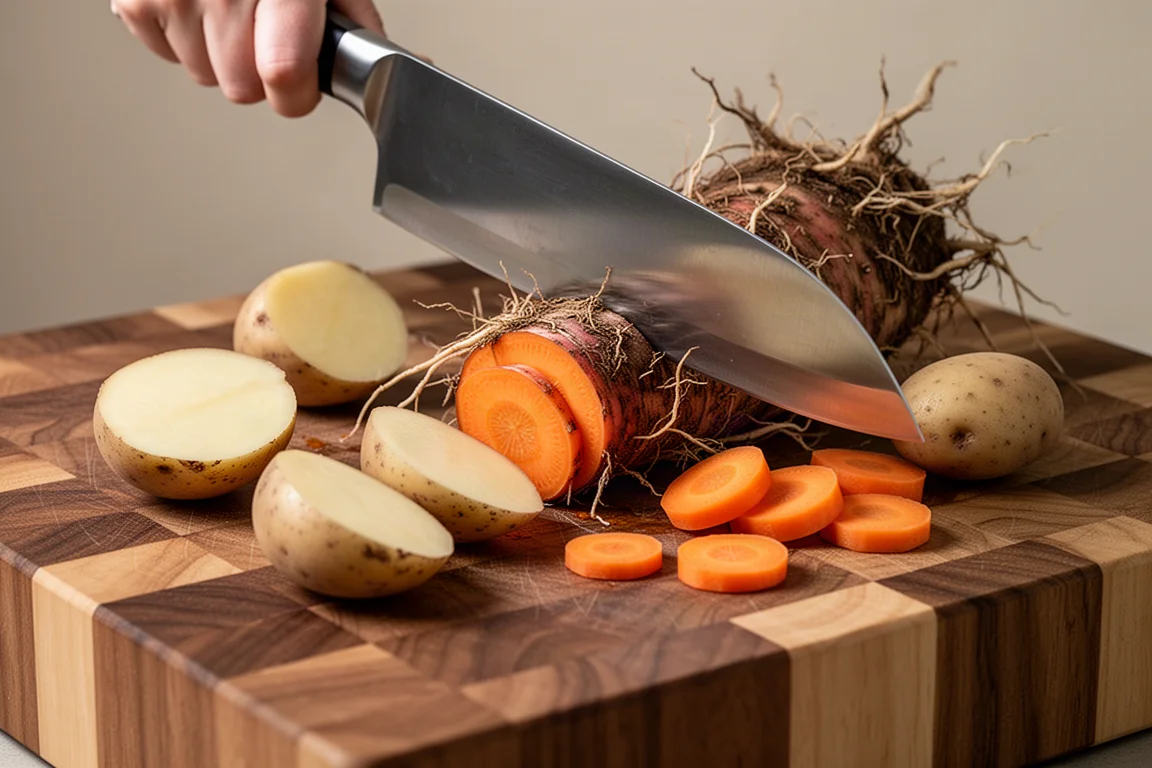
That price premium buys precision, but it also assumes you will use the knife on the right ingredients. A delicate Japanese blade asked to chop through dense food will not thank you.
Which Style Should You Buy?
Japanese knives are incredibly sharp and light. They are ideal for traditional Japanese meals that require precision, like sushi, sashimi, and thinly cut vegetables.
German knives are known for their toughness. They are bulkier and heavier, with blades made of softer steel, a design that aligns with denser ingredients like meat and potatoes used in traditional German cuisine.
If you cook with a lot of seafood or vegetables, a Japanese knife is the natural fit. If you eat a lot of meat, potatoes, and hearty foods, a German knife may serve you better.
It is worth noting that the gap is narrowing. As more people cook a varied diet, knife makers have started building hybrid-style knives. Wüsthof, one of the biggest German brands, makes Japanese-style knives like the Classic Santoku, which keeps the German handle but uses a traditional santoku blade. Meanwhile, MAC, a Japanese brand, makes a highly rated chef’s knife with a German-style handle and a thin, nimble, ultra-sharp Japanese-style blade.
Our Picks: Shun Classic vs Wüsthof Classic Santoku
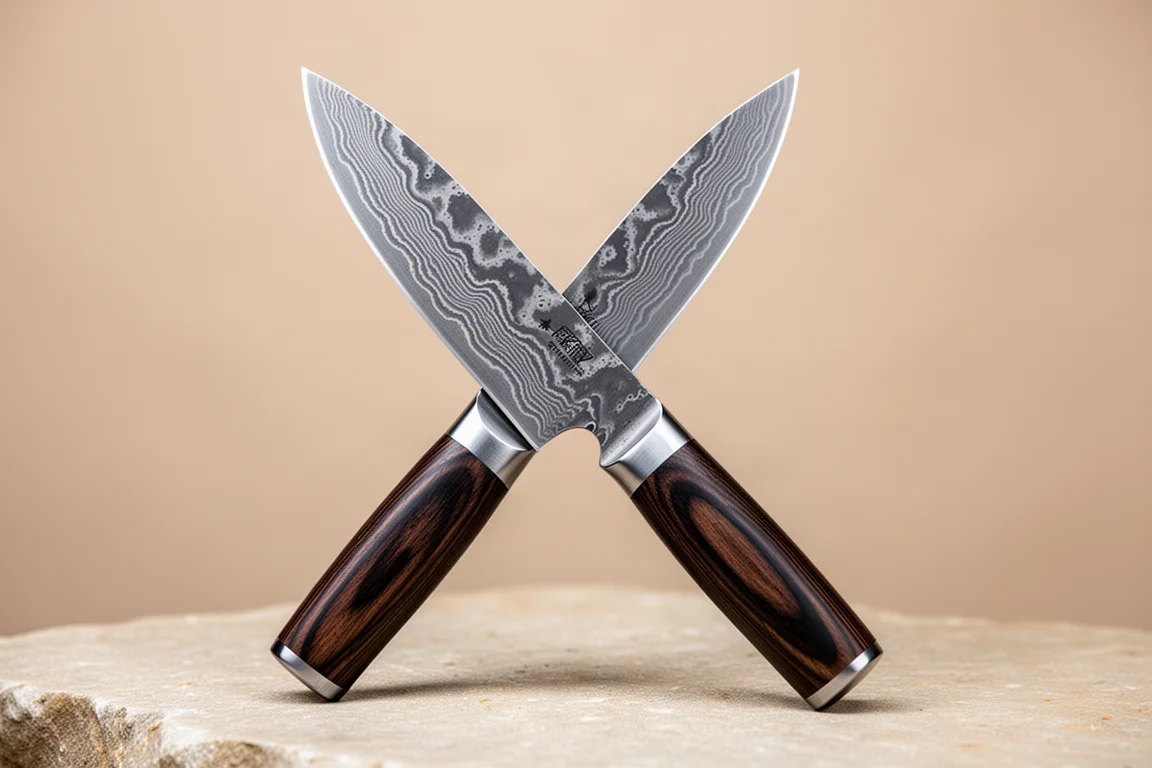
The Shun Classic represents the Japanese approach at its best. Its swirly Damascus-patterned blade is both attractive and practical, and its PakkaWood handle is comfortable and moisture-resistant. It is the pick for cooks who prioritize a razor-thin edge and precise slices of fish, vegetables, and other delicate ingredients. Just remember that harder steel needs gentler treatment: no bones, no squash, and a softer cutting board.
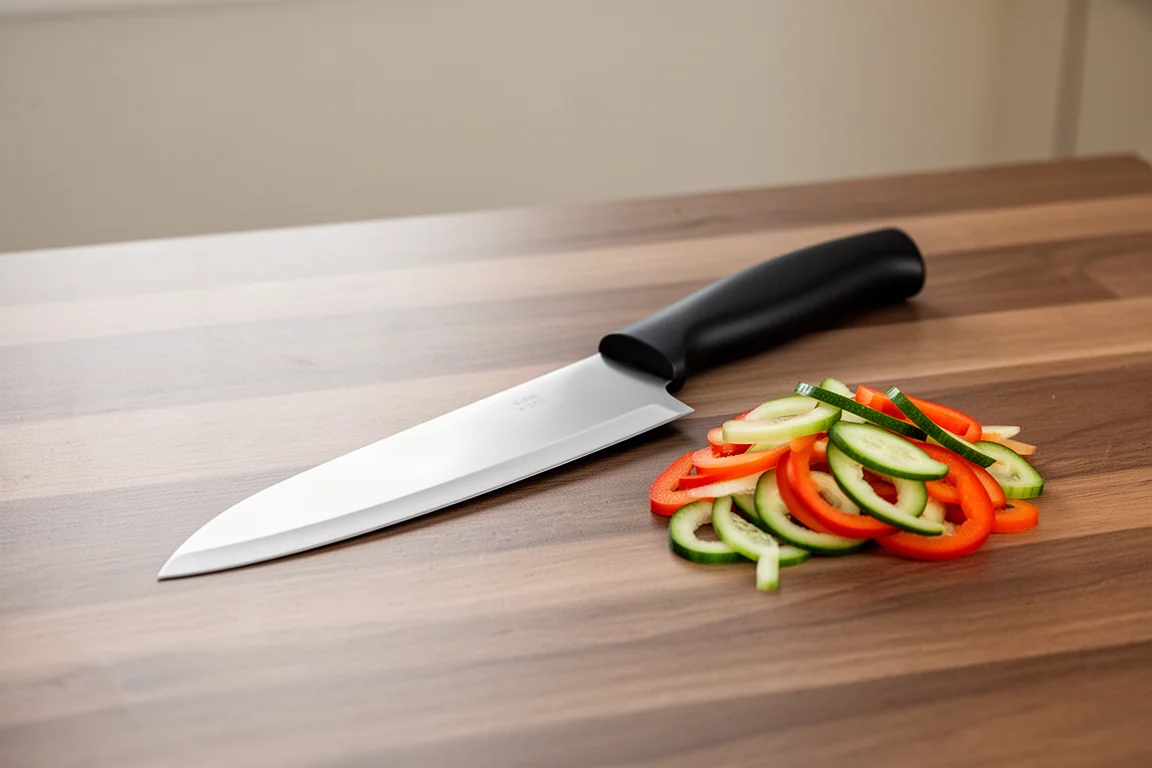
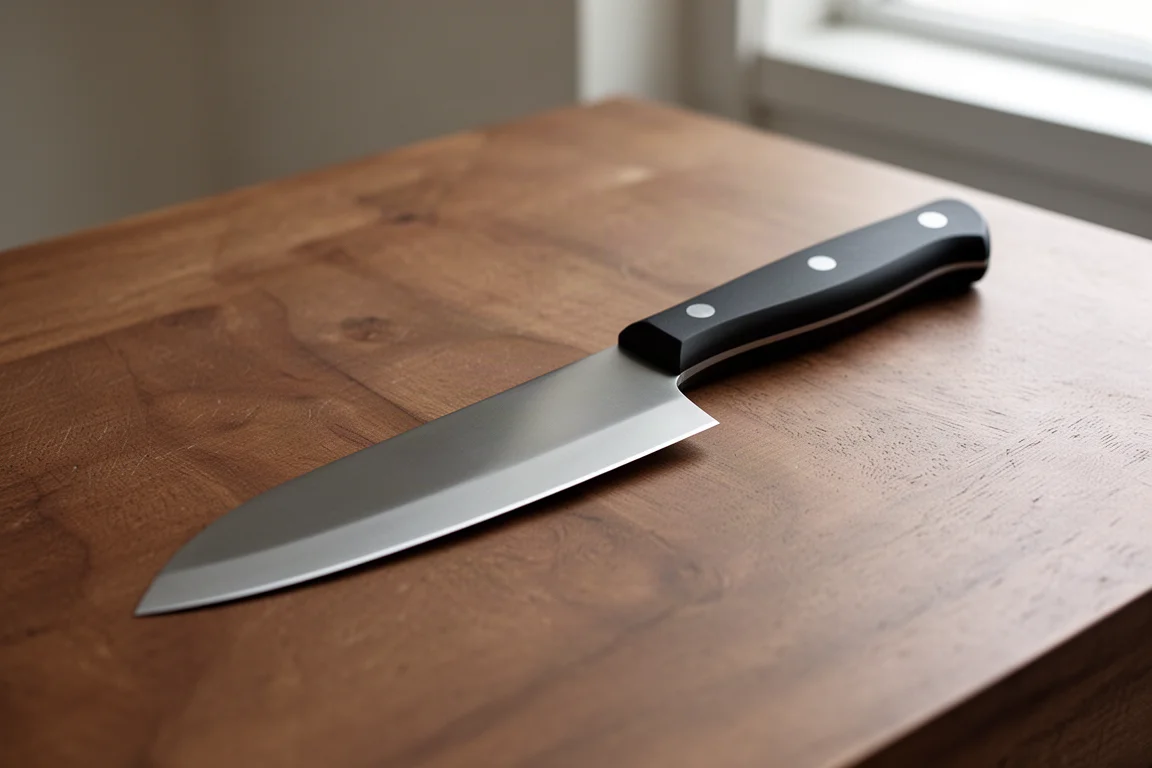
The Wüsthof Classic Santoku shows how well the hybrid approach can work. It maintains the classic German handle but adds a traditional santoku blade, giving you a broader, Japanese-style cutting shape while keeping the balance and toughness many cooks expect from Wüsthof. If you want a taste of the Japanese blade profile without giving up a familiar German-style handle, this is the easiest way to get it.
Conclusion
Neither style is objectively better. Japanese knives win on sharpness, lightness, and precision; German knives win on toughness, balance, and forgiveness. Pick the Shun Classic if seafood and vegetables dominate your cooking, and the Wüsthof Classic Santoku if you want Japanese-style cutting with a German feel. The best knife is simply the one that matches your kitchen.
Further reading
Related Reviews

Kitchen Knives
Best Chef's Knives 2026: 27 Popular Options Tested and Ranked
A comprehensive review of 27 chef's knives ranging from $18 to $380, with honest assessments of handle comfort, blade balance, and real-world performance.

Kitchen Knives
Best Chef's Knives Under $75: Two Tested Recommendations
Two practical 8-inch chef's knives that balance sharpness, comfort, and durability without premium pricing.

Kitchen Knives
Best Chef's Knives 2026: 27 Options Tested and Ranked
A comprehensive review of 27 chef's knives ranging from $18 to $380, with honest assessments of handle design, balance, blade profile, and real-world performance.