Kitchen Knives
Does Knife Finish Affect Food Release? Five Japanese Knives Put to the Test
We tested kurouchi, migaki, nashi, and Damascus finished Japanese knives on potatoes and carrots to see whether blade finish really changes food release.
Introduction
Food release is one of the most common talking points in the Japanese knife world. Scalloped blades, textured finishes, polished faces: all of them get credit for helping sticky ingredients slide off the blade. The theory we wanted to test was simple. Does the finish on a blade actually matter for food release, or is it all down to blade geometry?
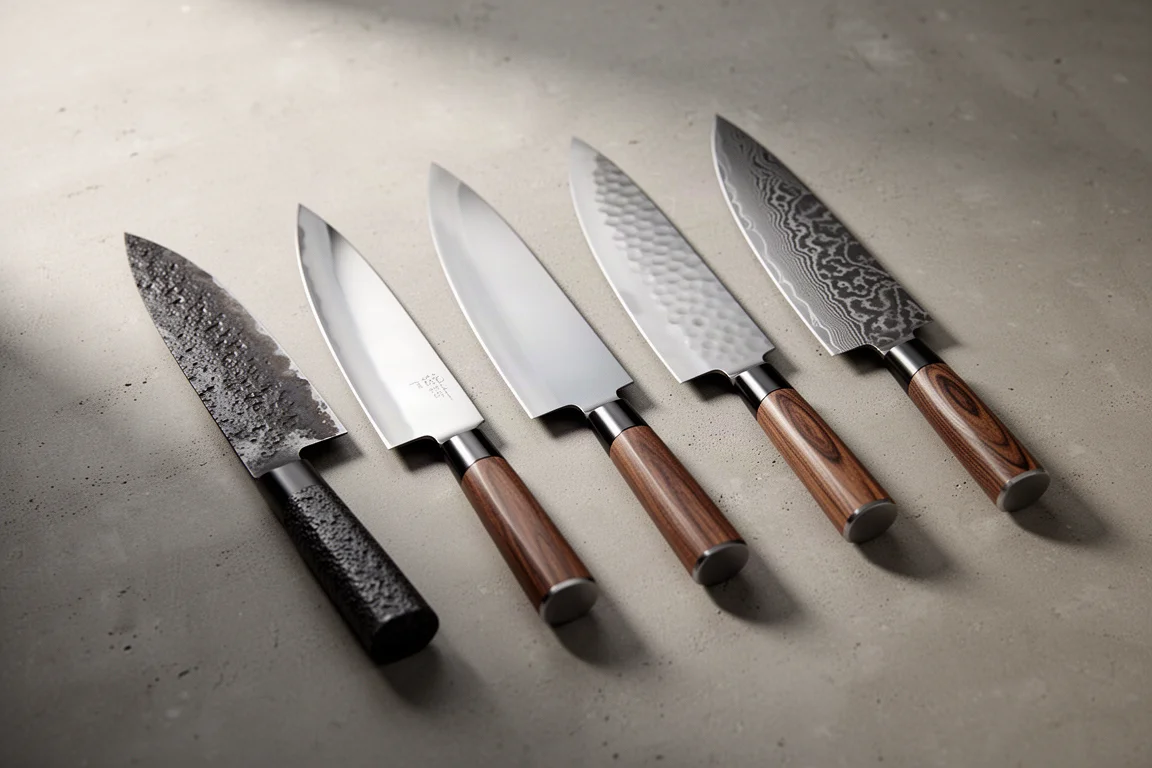
To find out, we lined up five knives covering the major finishes you will encounter: kurouchi, kasumi, migaki, nashi, and Damascus. Then we cut two of the stickiest ingredients in any kitchen, potatoes and carrots, using straight up-and-down cuts so that lateral motion could not mask the results. Each knife was rated out of 10 for food release.
The Test: Sticky Ingredients, Straight Cuts
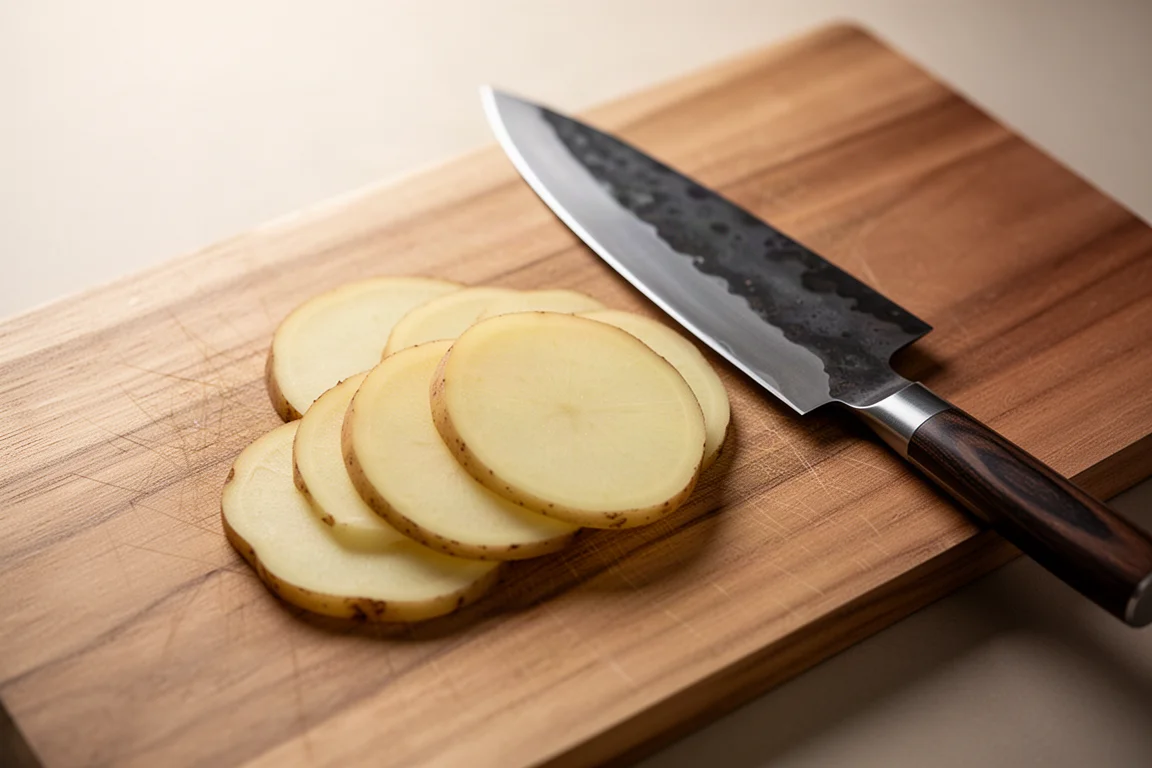
The method matters here. Straight vertical cuts tell you the most about food release, because any forward or lateral movement naturally helps ingredients slide off and hides differences between blades. Carrots were the true stress test: anyone who has cut them knows the feeling of a slice suctioned onto the blade so firmly you practically have to pry it off.
Planking a carrot proved to be the stickiest task across the board, while batonnets and rocking cuts were more forgiving. One of the five knives stood out for a surprising reason we will get to below, but for the most part, the results evened out in a way that says a lot about what actually drives food release.
Hatsukoro Kurakaze Kurouchi Gyuto
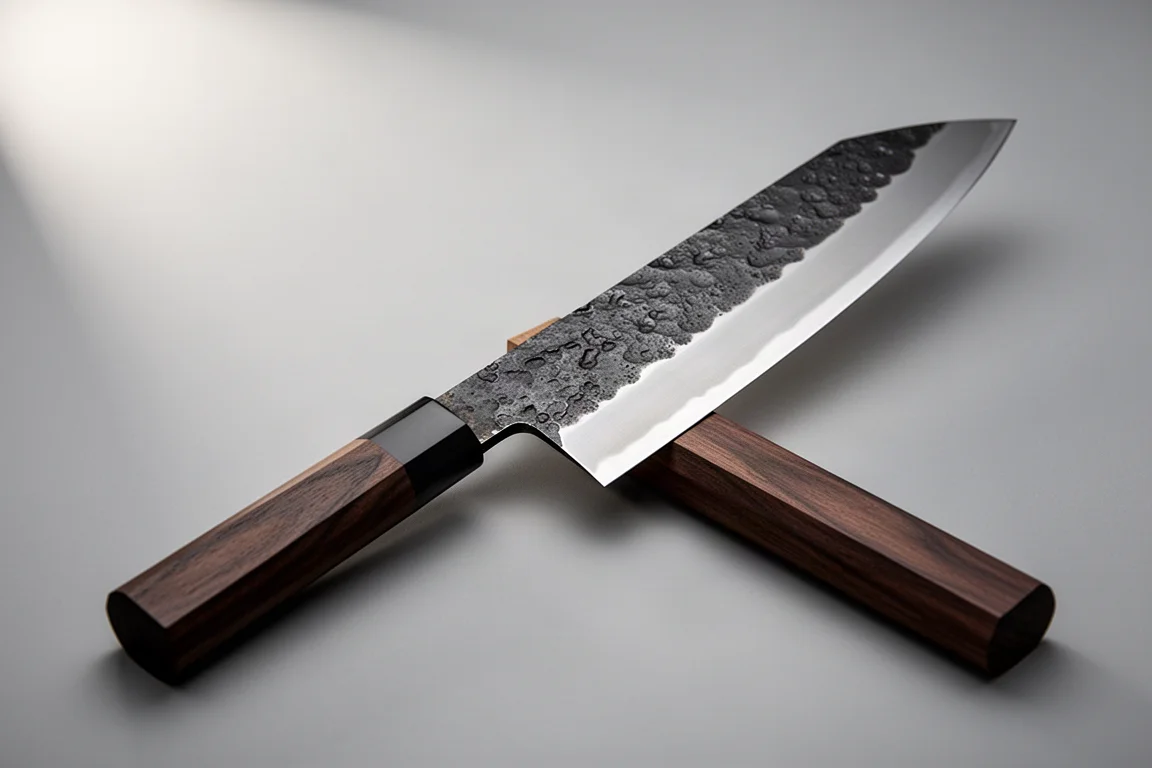
The kurouchi finish is the dark, textured forged coating you often hear praised for food release, and the Hatsukoro Kurakaze put that reputation to the test first. On the potato, things felt fine, with only a little stickage happening. On the carrot, it was slightly sticky but nothing crazy: pieces still fell off fairly easily and never got in the way of the next cut.
The key detail is that stuck pieces never hindered the cut itself. Fresh slices pushed previous ones out of the way without resistance, which is exactly the behavior you want. As a first impression, it felt pretty great, and it set a strong baseline for the knives that followed.
Hatsukoro Kasumi 180mm Gyuto
If the common wisdom holds, the kasumi finish should have felt the best of the bunch. In practice, the Hatsukoro Kasumi 180mm gyuto showed no difference whatsoever compared to the kurouchi knife. It went through potatoes and carrots feeling about as sticky, which is to say, only mildly.
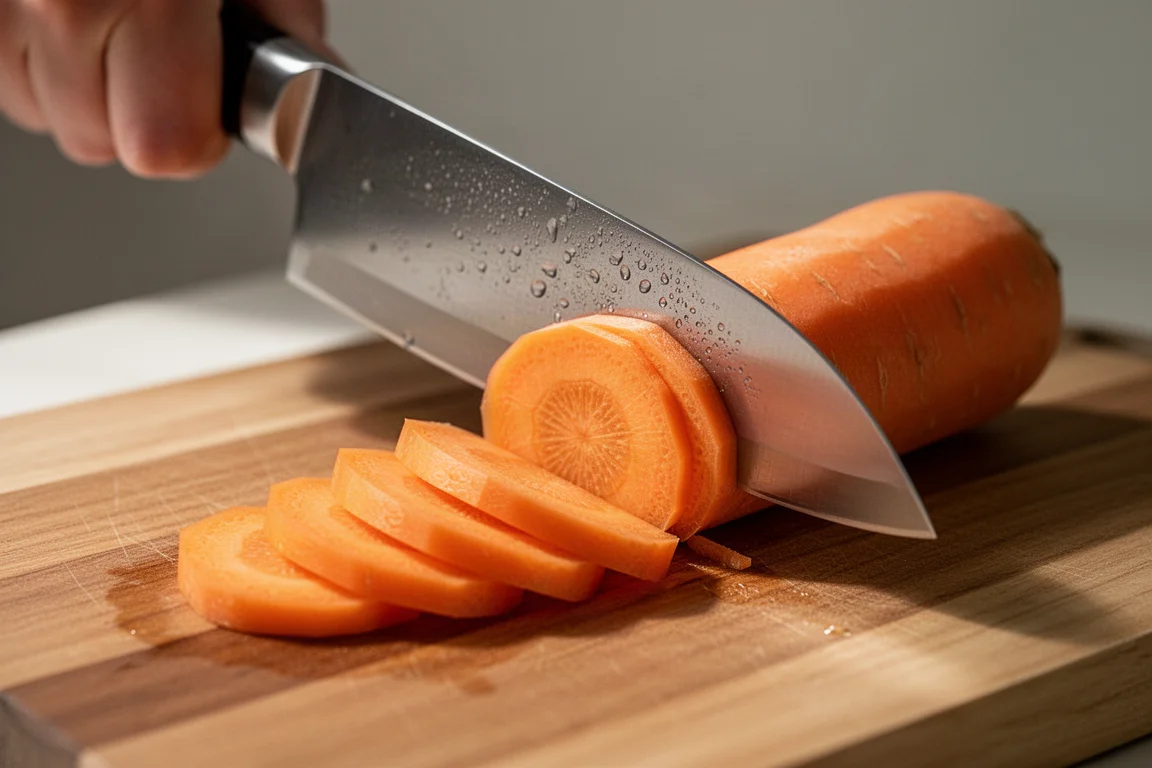
This result reinforced the broader takeaway: there are so many other factors that go into food release, and blade geometry matters far more than whether the blade is textured, dimpled, or polished. The finish only extends past the bevel, and by the time an ingredient makes it that far up the blade, it is about ready to come off anyway.
Hatsukoro Migaki Bunka
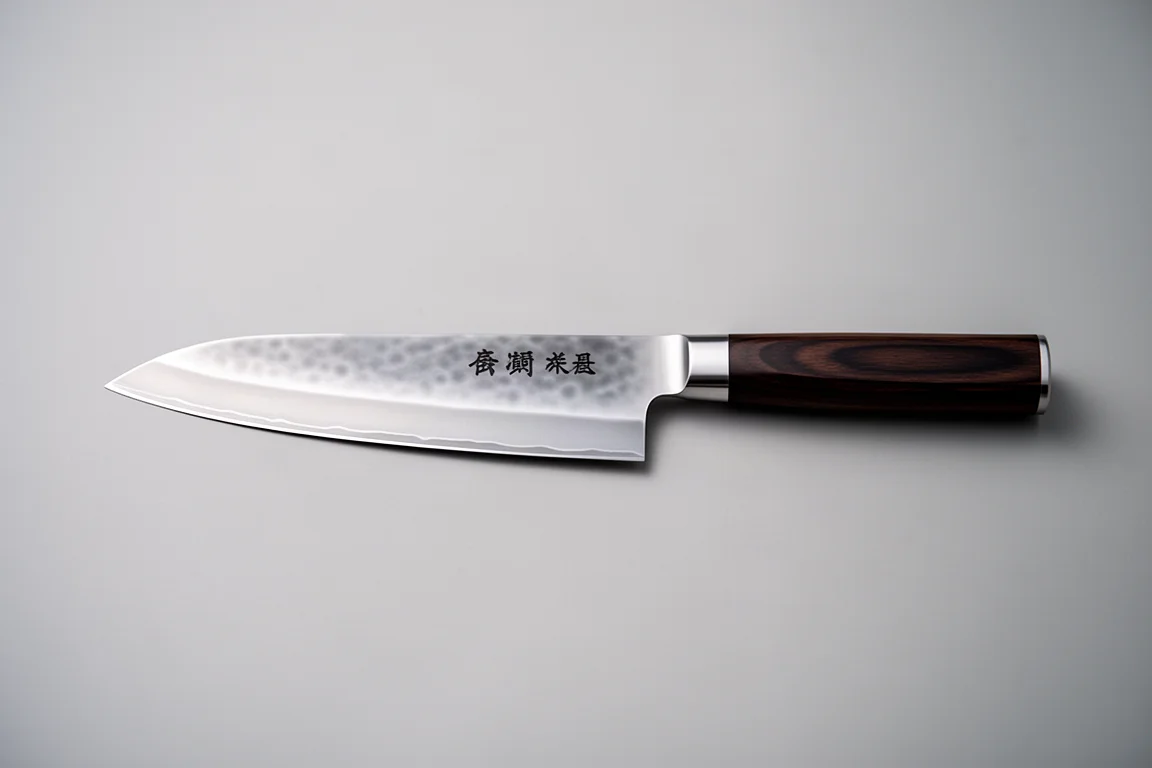
The migaki, or polished finish, was expected to be the worst performer. Reality was stranger. The Hatsukoro Migaki bunka was the only knife that got sticky during the lengthwise potato cut, but also the only one where no planks stuck to the blade at all. The likely culprit is the convex grind, which rounds into the cutting edge and helps push ingredients away.
That convex geometry is worth noting if food release is a priority for you. In our experience, knives with a more convex shape near the edge tend to be among the more non-stick options, regardless of what the surface finish looks like.
Yoshikane Nashi 210mm Gyuto
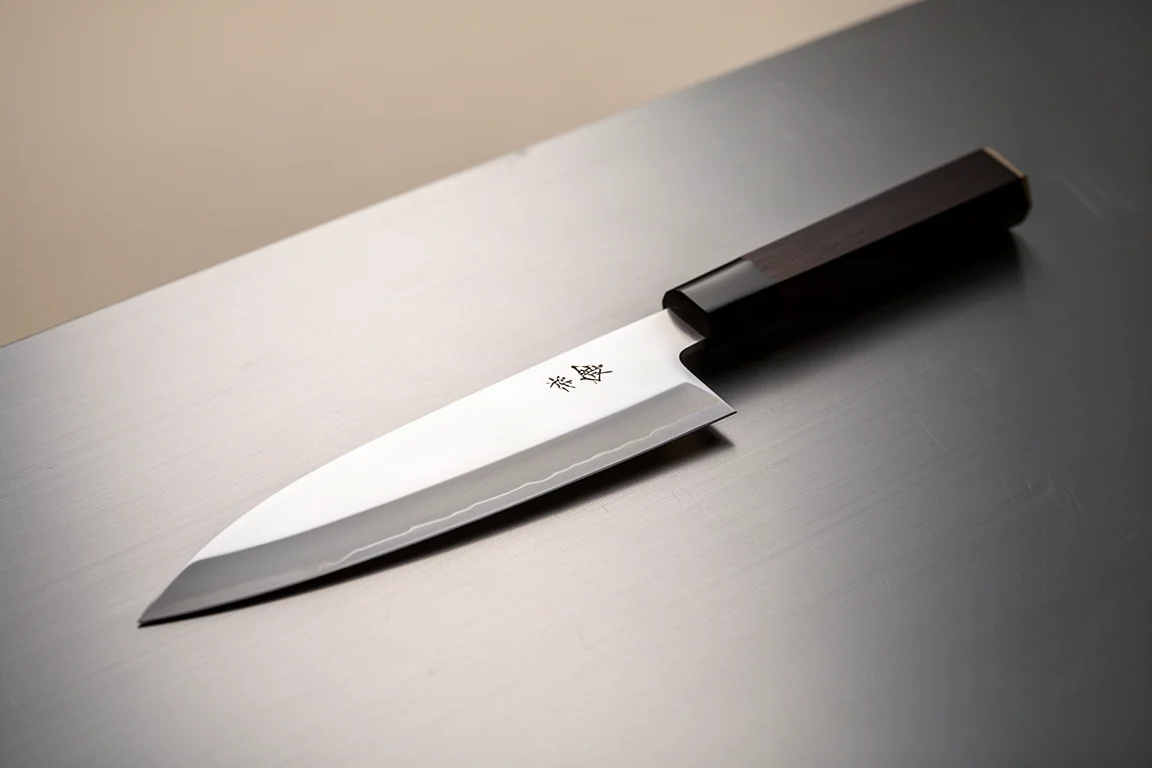
The Yoshikane nashi 210mm gyuto delivered the most surprising result of the test. On large potatoes, it was dramatically non-stick, with pieces seeming to fall off before they even climbed the blade. Then, on the carrot, it was the stickiest of the entire lineup.
The explanation is geometry, not finish. Sanjo-style knives like this one, along with makers such as the Hinoura family and Mazaki, have thick spines that taper to a very thin edge. That thick spine pushes larger ingredients apart, which is why it excelled on big potatoes. But the flatter grind behaves almost like a large scandi grind, and on dense, narrow items like carrots, it can be really sticky.
Ryusen Hono Damascus 210mm Gyuto
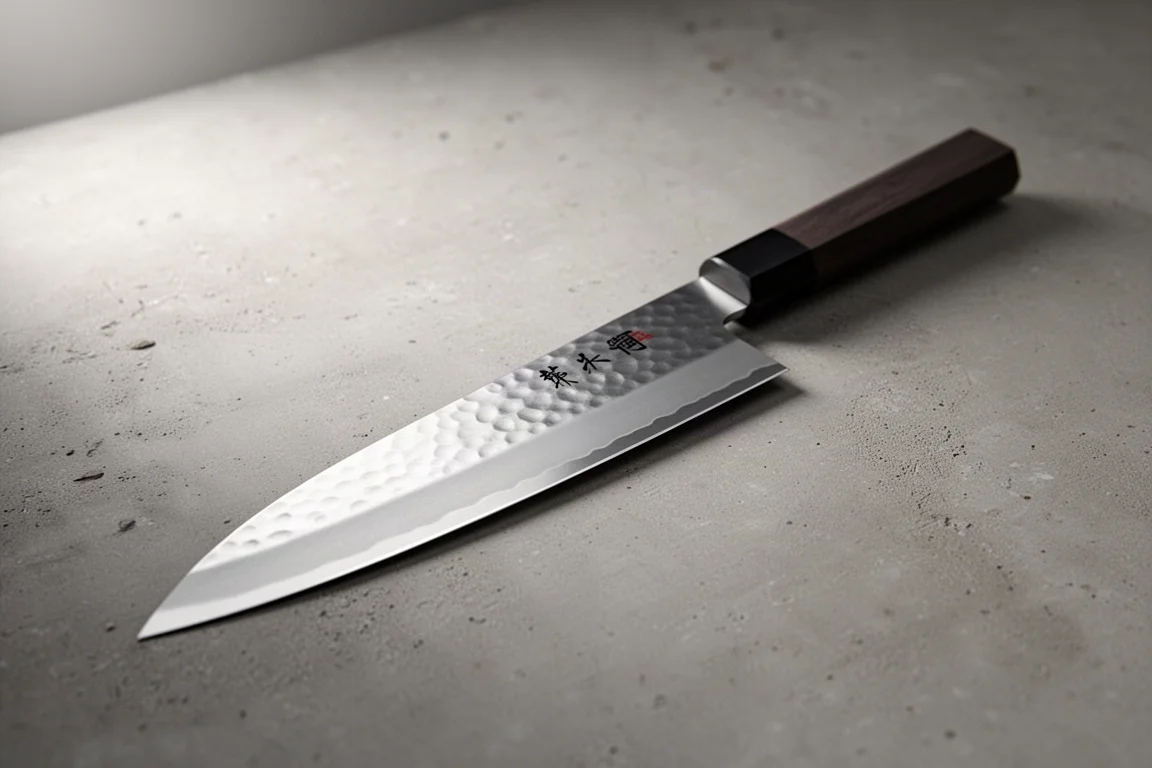
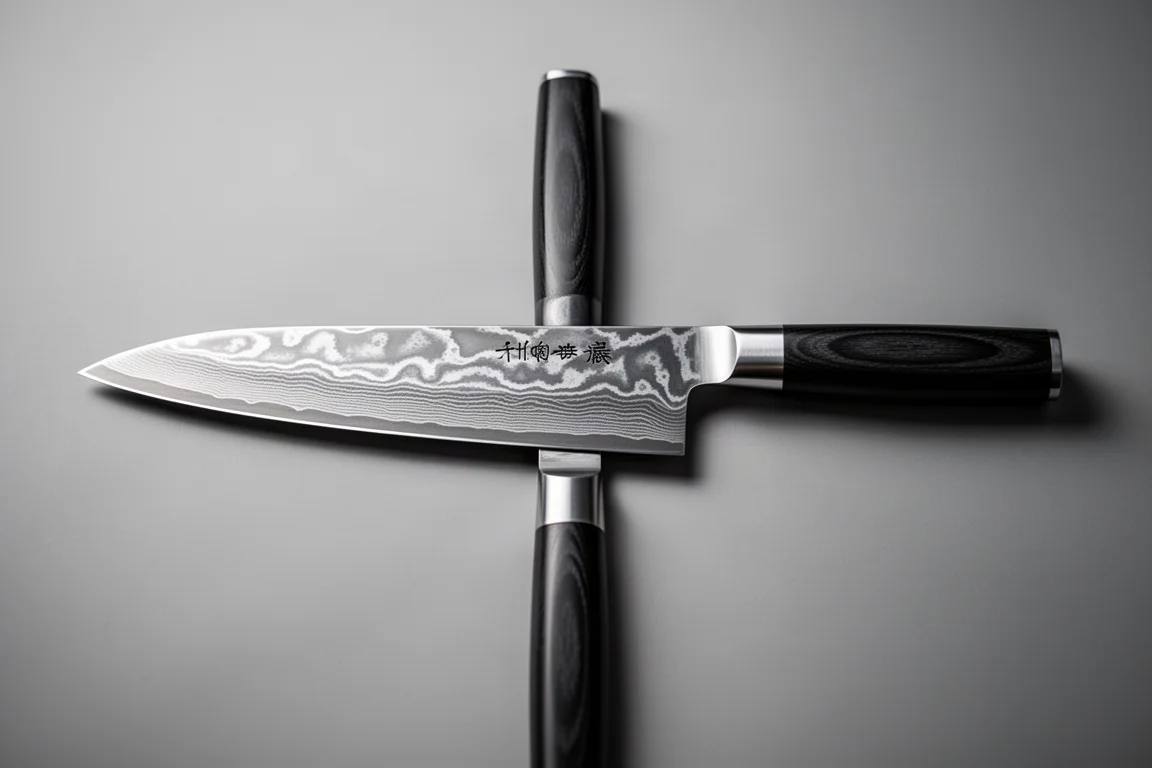
The final contender was the Ryusen Hono 210mm Damascus gyuto, and it closed things out strongly. There was no stickage at all on the initial cut, minimal sticking through the planks, and overall it felt on par with the earlier Hatsukoro knives, and slightly better than the Yoshikane on the carrot.
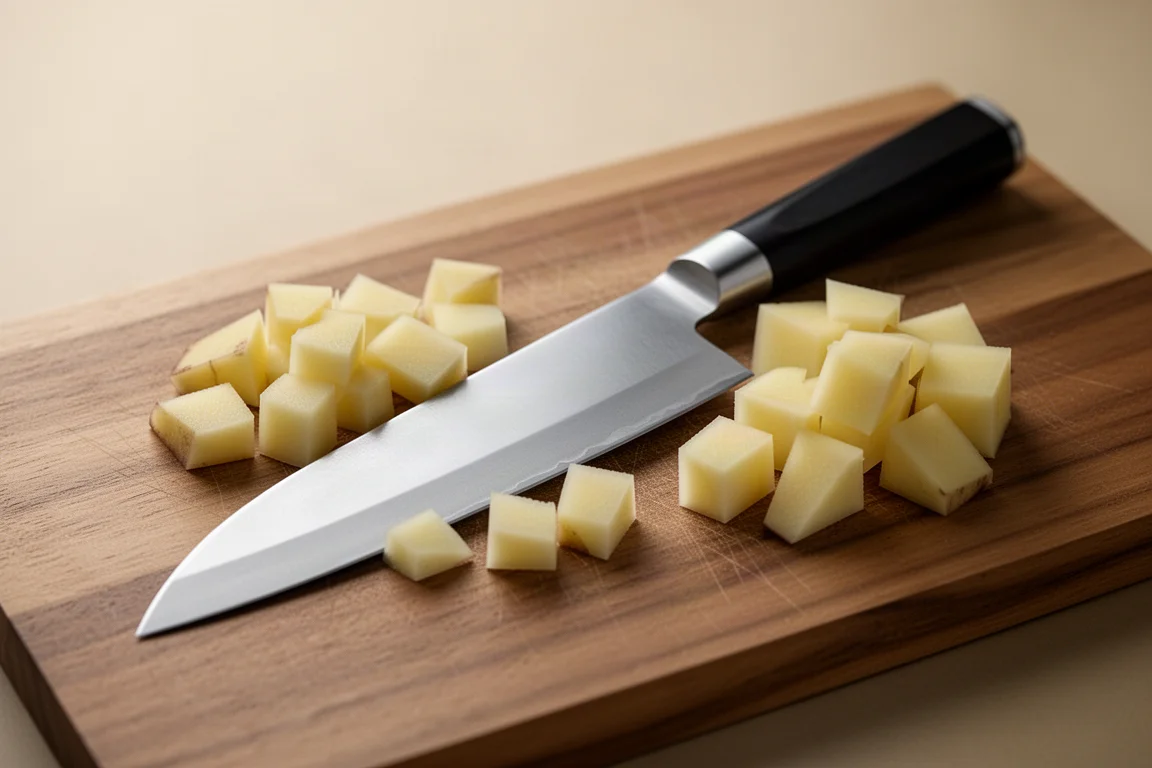
Like the others, the takeaway was consistent. There was no tremendous difference between this knife and any of the others we used. Performance came down to how each blade was ground, not the layered pattern on its face.
The Results: A Dead Heat, With One Surprise
The final food release ratings landed at a solid 7 out of 10 across the board, maybe 7.5 for some, with the Yoshikane standing out as the most contrasting performer: best on the potato, worst on the carrot. The rest performed basically exactly the same.
That is the real story. Thin laser-style knives are generally stickier than thicker workhorse knives, which is a direct consequence of edge geometry. If you prefer a laser, expect to deal with a bit more sticking and adapt your technique with draw strokes. If you want maximum food release, look for a convex-ish grind rather than a specific finish.
Buying Advice: Think Geometry, Not Finish
If you are shopping for a knife and thinking hard about food release, think less about the finish and more about the style of blade geometry. Convex-style grinds that round into the cutting edge, like those on the Hatsukoro Hayabusa series, tend to be pretty non-stick. Flatter grinds like the Yoshikane can be stickier on carrots but fine on larger potatoes, where the thicker spine pushes the ingredient apart.
It is also worth remembering that food release is rarely a dealbreaker in practice. Adjusting your technique, using more draw strokes, solves most sticking issues on any well-made knife. And a very sharp knife with slightly stickier behavior, like the Yoshikane, is still a joy to use for most cooks.
Conclusion
Five knives, five finishes, one clear conclusion: the finish on a blade has little to do with how well food releases from it. Blade geometry, especially grind shape and spine thickness, does the real work. Choose the finish you find beautiful, choose the grind that suits your cutting style, and you will be far happier with your knife than by chasing a finish that promises food release it cannot deliver.
Further reading
Related Reviews

Kitchen Knives
Best Chef's Knives 2026: 27 Popular Options Tested and Ranked
A comprehensive review of 27 chef's knives ranging from $18 to $380, with honest assessments of handle comfort, blade balance, and real-world performance.

Kitchen Knives
Best Chef's Knives Under $75: Two Tested Recommendations
Two practical 8-inch chef's knives that balance sharpness, comfort, and durability without premium pricing.

Kitchen Knives
Best Chef's Knives 2026: 27 Options Tested and Ranked
A comprehensive review of 27 chef's knives ranging from $18 to $380, with honest assessments of handle design, balance, blade profile, and real-world performance.