Kitchen Knives
Japanese Kitchen Knives at Three Price Points: What You Actually Get
From budget stainless to handmade SG2 and a hardened custom blade, a practical look at what separates entry-level, mid-range, and premium Japanese kitchen knives.
Introduction
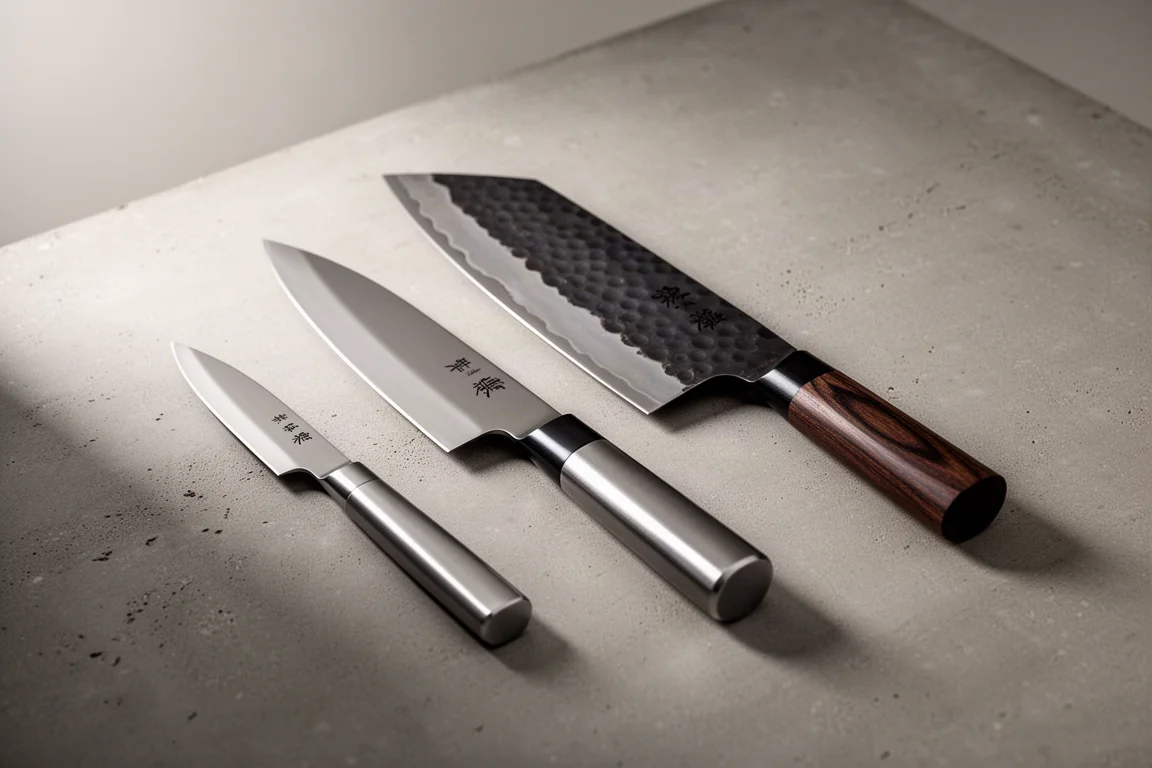
Kitchen knives span an enormous price range, and it is easy to assume a more expensive knife is simply a better version of the same thing. The reality is more interesting: at each price point you are paying for different materials, different levels of handwork, and a noticeably different cutting feel. This comparison looks at three very different Japanese kitchen knives, from a simple budget stainless blade to a hand-forged SG2 gyuto and a hardened custom knife, and explains what each tier actually delivers.
A useful way to think about it: all of these knives will get you from point A to point B, but the experience of using them differs the way low-quality video differs from crisp high resolution. Every cut feels smoother, cleaner, and more precise as you move up the range.
What Actually Separates the Price Points
Three factors drive most of the difference: materials, maker, and fit and finish. On materials, the budget tier uses good-quality cheap and cheerful Japanese stainless steel. It keeps an edge reasonably well, resists rust, and is a bit more durable than other Japanese steels. The mid-range tier typically uses VG10, a famous steel designed specifically for kitchen knives. It resists rust too, but it is harder, holds its edge longer, and can take a sharper edge.
At the top of the range, SG2 is a harder powder steel again. Makers love it because the hardness allows a very thin, laser-like edge that holds its geometry, so the knife seems to cut through air even when slicing a potato or tomato.
On the maker side, budget knives are stamped from a sheet of steel, bevelled by machine, coated, and fitted with a simple injection-moulded plastic handle. It is an affordable and effective way to make a knife, even if it is not the prettiest. Mid-range knives are usually machine forged: the blade is punched from sheet steel, but welding, handle fitting, shaping, sanding, polishing, and sharpening are all done by hand by trained craftspeople. That removes much of the cost and variability of forging while keeping real skill in the finishing.
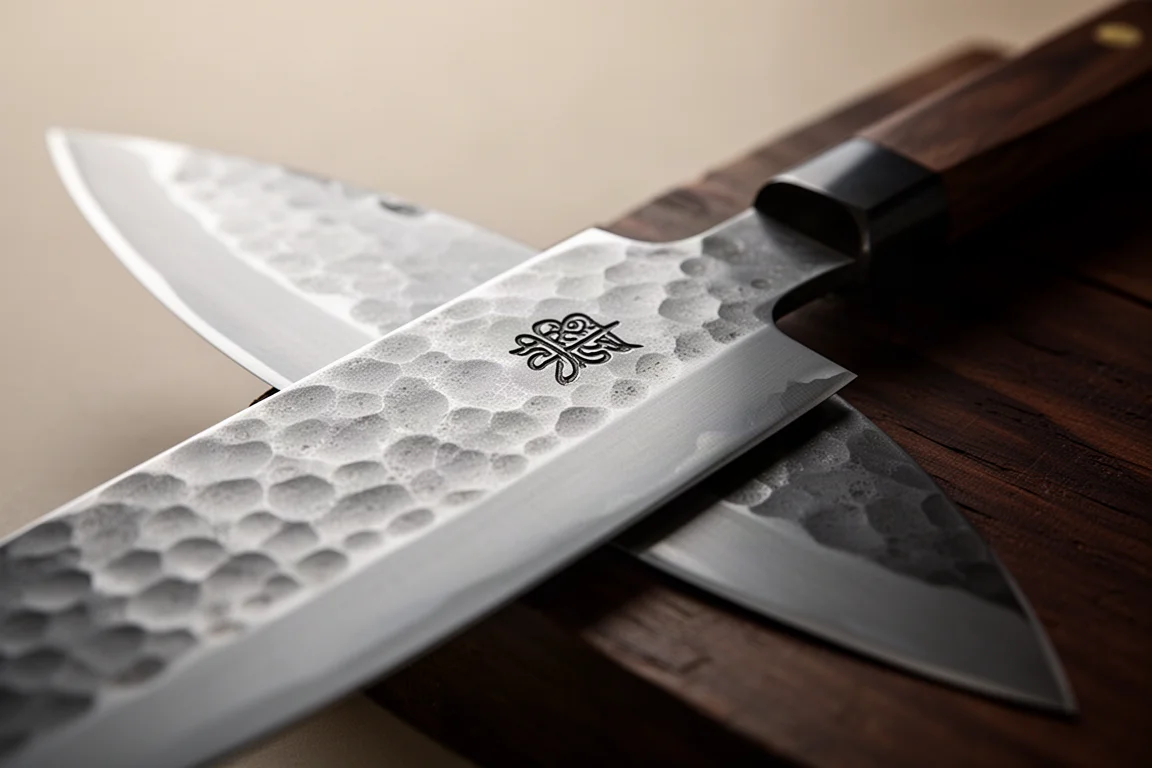
Fully handmade knives are another world. A blacksmith forges the blade with a hammer, does the heat treatment personally, then spends significant time finishing by hand: cutting out the blade shape, beveling, adding a distinctive hammer pattern, an etched signature, and a premium handle material such as ironwood, which is not easy to work with but elevates the whole knife.
The Tomato Test
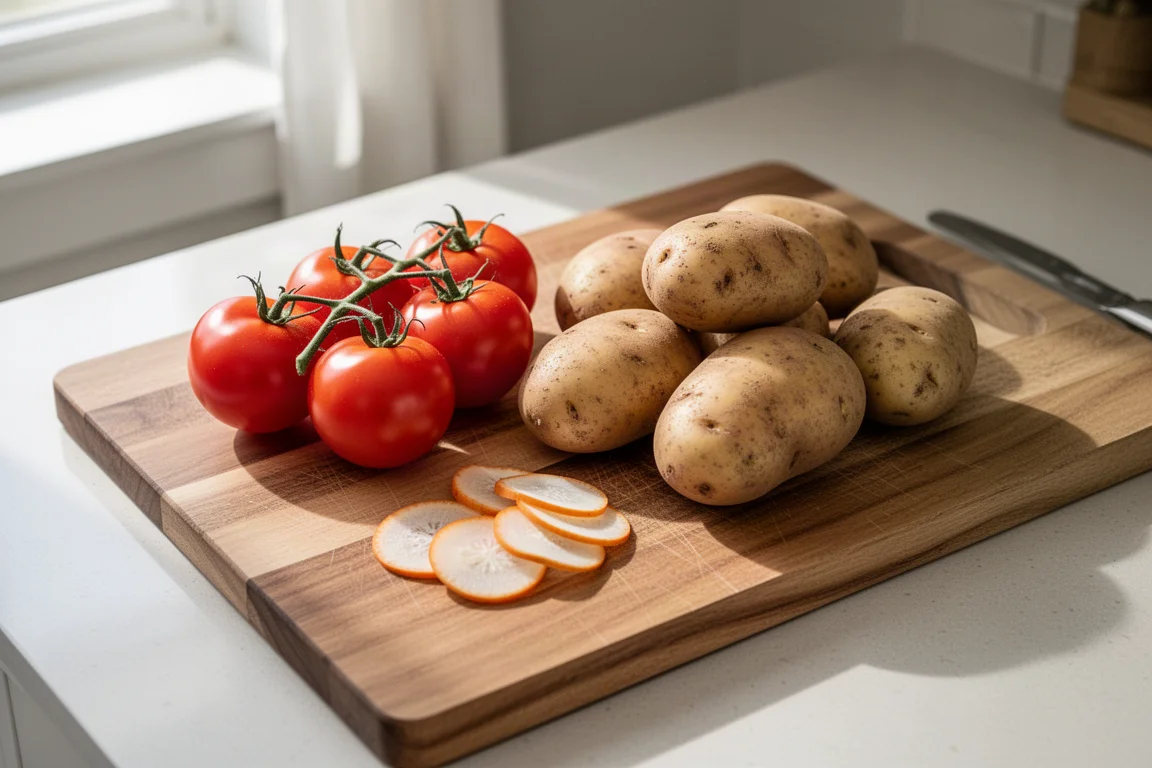
Tomatoes and potatoes are a classic way to evaluate a knife because they expose different weaknesses. Tomato skin defeats dull or thick blades, which is why many people resort to serrated knives. Potatoes are dense and reveal how thin the knife’s geometry is and how much it wedges through food.
Starting in the middle with the Tojiro DP: it glides through a tomato with no real resistance, and the experience is genuinely pleasant. If you have never used a Japanese kitchen knife, this is the moment the difference becomes obvious. It is also forgiving enough that you never have to worry much about it, which makes it a comfortable daily workhorse.
Stepping down to the budget knife, it is smaller, so it needs more sawing, and even slices are a bit harder to achieve. It still feels good and cuts cleanly, but the trade-off is edge life: that fresh sharp edge will not be the same in four to six months, when sharpening is likely needed again.
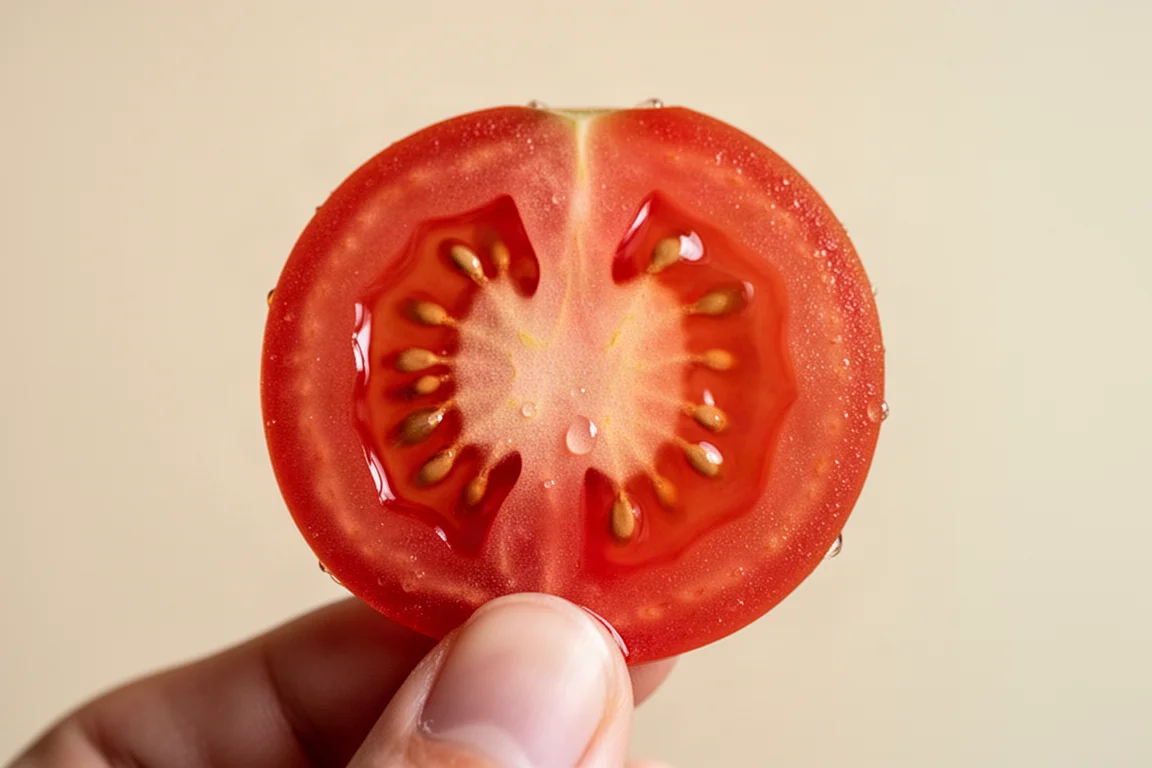
The SG2 gyuto is on another level. The initial sharpness may not feel dramatically different from the mid-range knife, but the weight and the thinness of the edge combine so the blade glides through the tomato almost by itself. The finished slice is smooth and glassy, and food cut with a knife this sharp has a distinctly smoother texture when you eat it, something you notice immediately with carrot sticks or a tomato slice. All three passed the tomato test, but the handmade knife and the mid-range knife were in their own league compared to the budget option.
The Potato Test
Potatoes expose geometry. Thicker knives wedge more and feel like they are breaking through food rather than slicing it.
The budget knife cuts reasonably smoothly, with a slightly matte finish on the potato, and is far better than a dull knife. But the thicker bevel means the blade wants to stick partway through and hang there. It remains an easy-care choice, though, especially as a small stainless knife for breakfast prep where you do not need to wash it right away.
The Tojiro DP has more taper down the blade, and the difference is immediate. The extra weight and the taper mean it does not stall; it moves through the potato smoothly and makes beautifully thin slices easy. If you are making scalloped potatoes or a rosti, the control and the smoother cut surface are a real step up.
The SG2 gyuto produces the most beautiful, precise slices with barely any effort, thanks to its sharpness, thinness, and weight. One trade-off of a blade this thin: food sticks to the side a little more, because the slice is not being pushed away from the blade. The cut surface, though, is mirror-smooth and noticeably shinier than the mid-range result.
Beyond Tomatoes and Potatoes
A large handmade gyuto also shines in bulk prep. Peppers are a vegetable many knives fight with, but a truly sharp blade cuts through the skin as if it were not there. For big cooking sessions, slicing five peppers and ten onions into a pile of vegetables, a large knife does not get lost in the food and makes the work genuinely enjoyable.
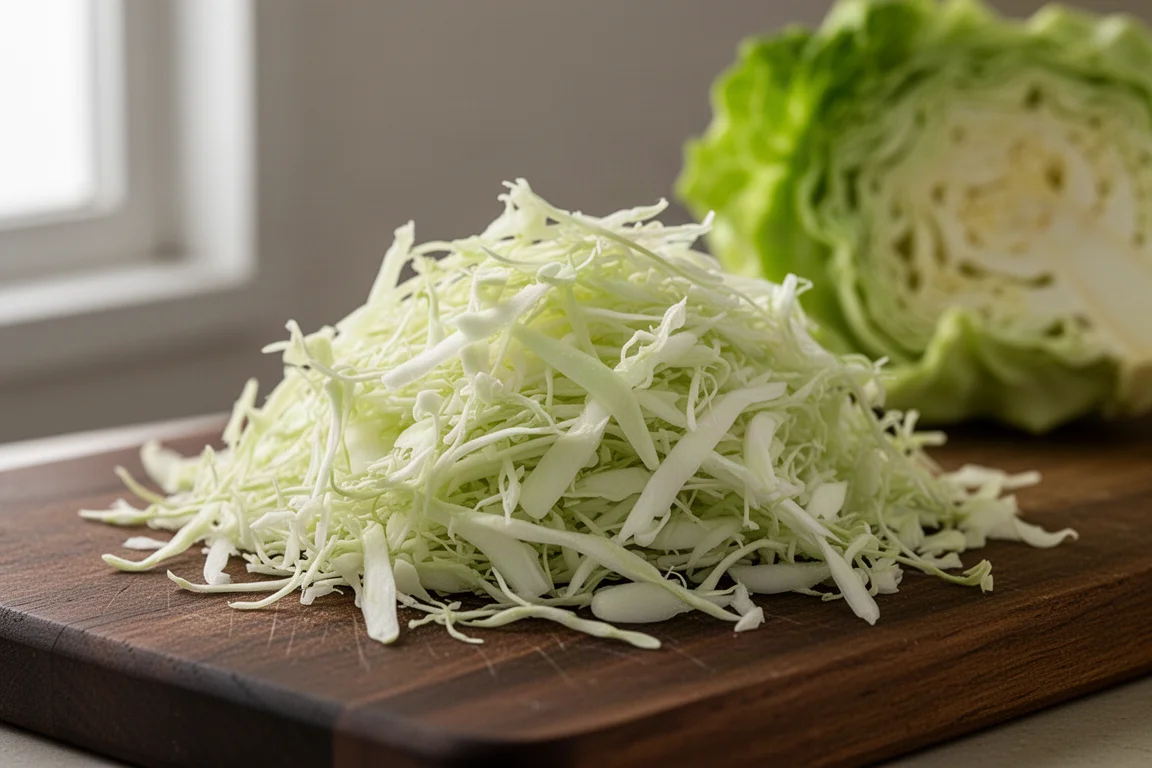
Cabbage is another good stress test. It is dense and big, stretching the knife’s capability. Thinly shaved for slaw, a well-balanced handmade knife feels easy, precise, and smooth, with a balance that keeps you working with the blade rather than against it. Part of that smoothness comes from the SG2 steel itself: it polishes beautifully and takes a laser edge that can be ground very thin.
Other Directions Worth Knowing About
If you decide to go premium, there are two other paths worth considering. One is the honyaki method, a very traditional way of making Japanese knives from a single solid piece of steel rather than layered construction. Because Japanese steel is hard and brittle, honyaki blades use a differential temper, softer at the spine and harder at the edge, which creates a beautiful visible line along the blade. They are a stunning, classical choice.
The other direction is maximum functional performance. Fujiwara’s Denka line is a good example: made by a fourth-generation swordmaker who hardens his steel beyond the threshold where most blacksmiths stop. The result stays sharp for an extraordinarily long time and takes a beautifully keen edge. Long-term owners report sharpening only occasionally, and often more out of desire than necessity.
Which One Should You Buy
If you are on a tight budget, a small stainless Japanese knife is a decent performer that keeps an edge and will not break the bank. If you are thinking about your first proper Japanese kitchen knife, the mid-range tier is the sweet spot: reliable, a joy to use, not too flashy, and inconspicuous enough in a professional kitchen that it will not walk away. There is also a wide middle territory, roughly the one to four hundred dollar range, spanning more basic to semi-handmade work, where most people will find something that suits them.
If you are already deep into the hobby or simply want to go all in from the start, a handmade knife is a genuinely special purchase. These knives inspire you to spend more time in the kitchen, make cooking feel exciting, and are beautiful enough to show off. They are the kind of object you find yourself thinking about during the workday, looking forward to dinner.
Conclusion
Three price points, three legitimately different products. The budget knife is a capable, easy-care performer. The mid-range knife is the sensible first Japanese knife and handles most daily work beautifully. The handmade SG2 gyuto is a luxury that transforms prep into something close to fun. Many cooks eventually end up with one of each tier in the kitchen, and figuring out which one to start with comes down to budget, patience for maintenance, and how much joy you want every cut to deliver.
Product link
View more details for Tojiro DP
This product is mentioned in the review. Check the specifications, options, and compatibility before buying.
View more details for Tojiro DPFurther reading
Related Reviews

Kitchen Knives
Best Chef's Knives 2026: 27 Popular Options Tested and Ranked
A comprehensive review of 27 chef's knives ranging from $18 to $380, with honest assessments of handle comfort, blade balance, and real-world performance.

Kitchen Knives
Best Chef's Knives Under $75: Two Tested Recommendations
Two practical 8-inch chef's knives that balance sharpness, comfort, and durability without premium pricing.

Kitchen Knives
Best Chef's Knives 2026: 27 Options Tested and Ranked
A comprehensive review of 27 chef's knives ranging from $18 to $380, with honest assessments of handle design, balance, blade profile, and real-world performance.