Kitchen Knives
Japanese Kitchen Knives Online: How to Spot Real Craft from Clever Marketing
A hands-on comparison of three chef knives, from heavily advertised online brands to knives hand forged in Japan, with practical red flags to check before you buy.
Introduction
Japanese kitchen knives have surged in popularity, and with that popularity comes a flood of online brands, aggressive discounts, and bold claims. If you have shopped online for a knife lately, you have probably seen ads promising “the world’s sharpest knife” or a five-piece Damascus set for a suspiciously low price.
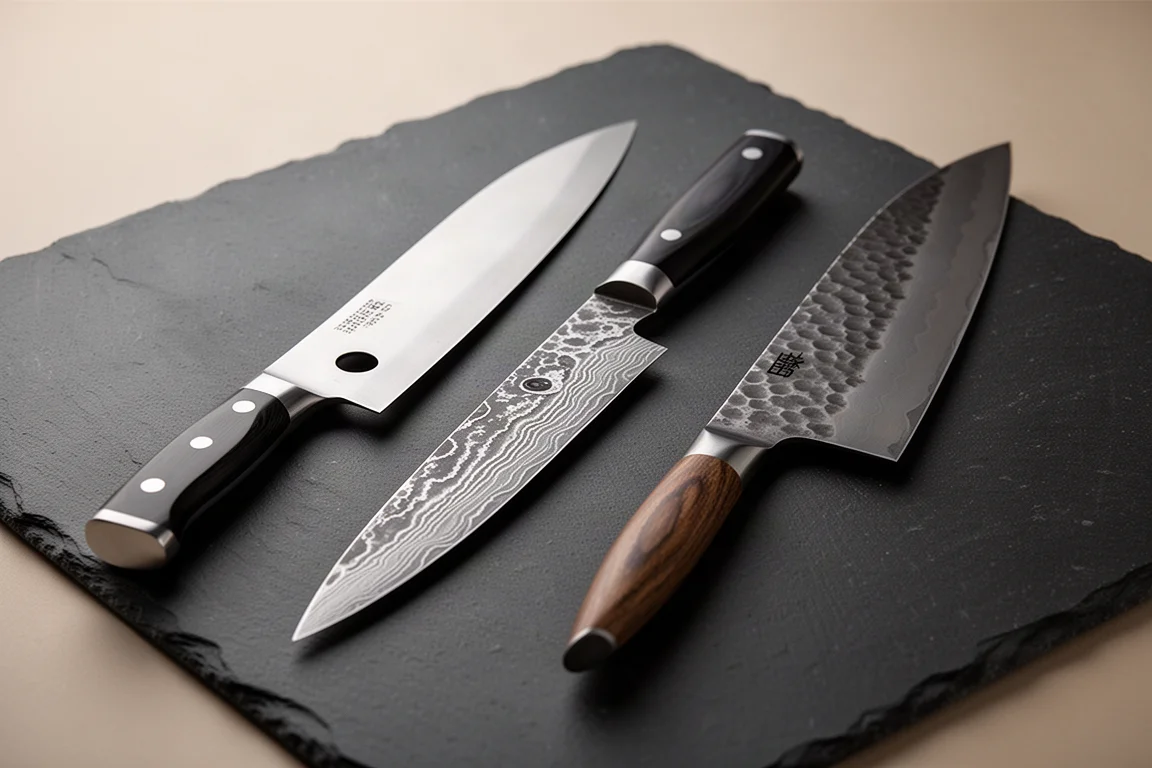
To cut through the noise, we compared three knives side by side: two that arrive through heavy online advertising, and one we know is hand forged in Japan because we have visited the workshop ourselves. Along the way, we noted the red flags that can help you judge whether a knife you are eyeing online actually lives up to its marketing.
A quick disclaimer: we are a Japanese knife retailer, so we are naturally biased toward knives we know are genuinely made in Japan. But the goal here is practical: help you spot the signals, both good and bad, before you spend your money.
First Impressions of the Husk Knife
This is a brand you have almost certainly seen if you have ever searched for knives online. The claims are bold: “sharpest knife in the world,” “the most exceptional kitchen knife the world has ever seen,” and even a story about being banned and brought back by popular demand. The knife arrived in a genuinely nice magnetic box, with packaging promising 138 steps over two months of production and rigorous testing.
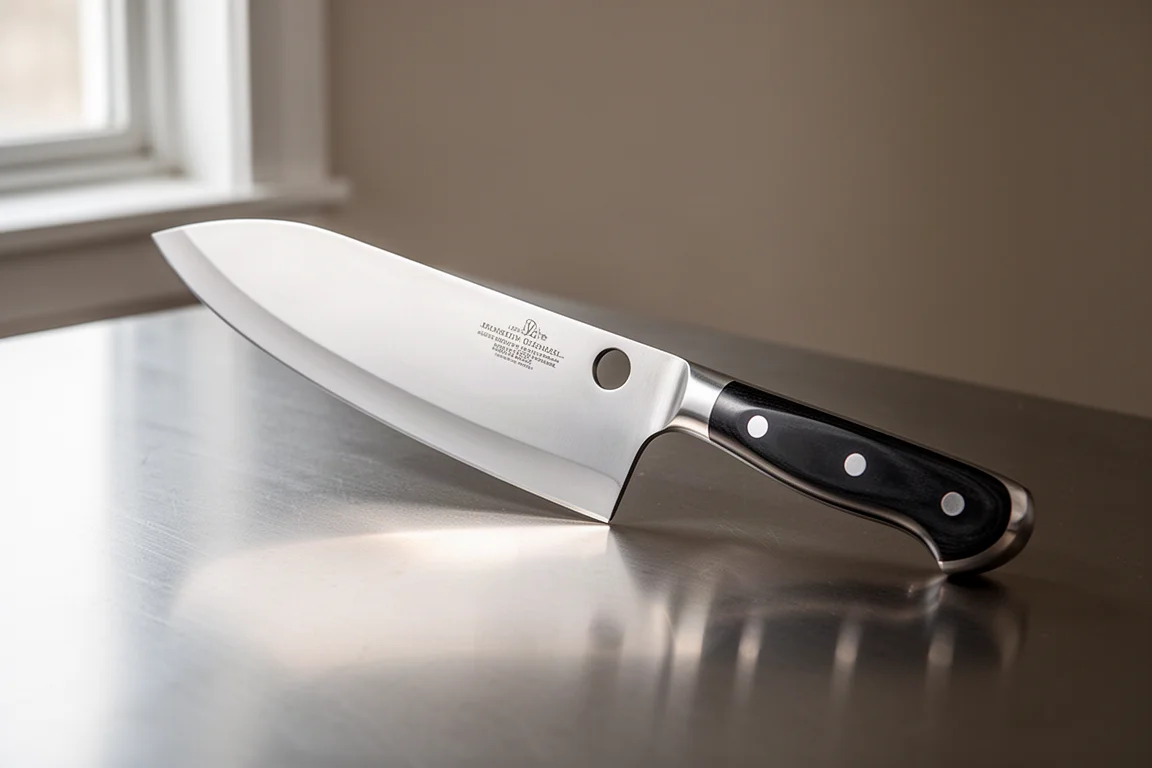
Physically, it is a knife with an edge, a bevel, a riveted handle, and a distinctive hole near the blade spine that is marketed as a balance point. In practice, the knife sits slightly handle-heavy, and the hole makes tip work awkward rather than comfortable. The bevel is notably hollow ground, which can make the edge feel sharper but also more delicate.
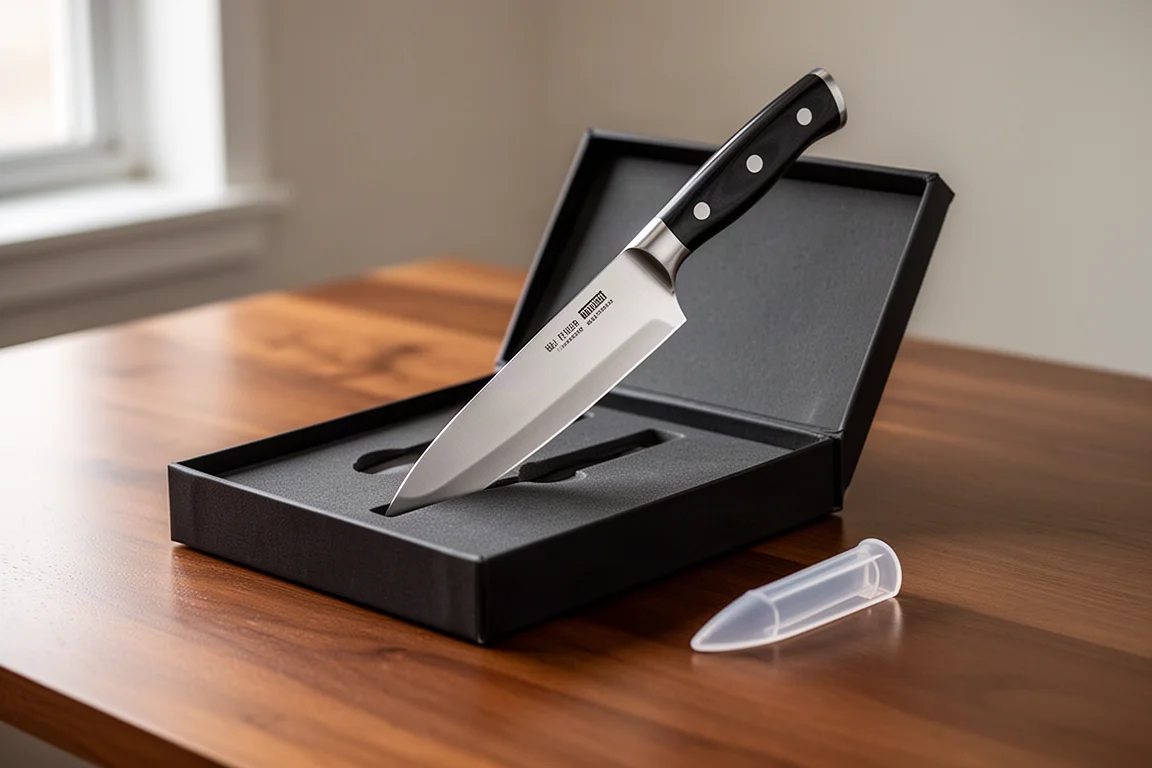
Digging into the details, the blade is 420J2 stainless steel. That steel is common in Japan, often used for scissors, and it is comparatively soft. It will be more durable in the sense that it resists bending, but it will not hold a super sharp edge the way harder Japanese knife steels do. There is no explicit claim that a blacksmith makes the knife, only heavy implication through photos of forging and a blacksmith who, it turns out, does not make these knives and does not sell anything under $100. The company’s order confirmation listed an office in Lithuania, and the checkout process involved seven surprise add-on offers, ending with a memory foam pillow.
The Second Contender: Bold Claims and Vague Terms
The second knife carries similar marketing energy: “Japanese master chef knife,” “the world’s sharpest chef knife ever made, 100% guaranteed,” and “perfectly well balanced.” That last phrase is essentially meaningless, since every knife balances somewhere and the claim never says where or why it matters.
To its credit, the brand is transparent about its steel: 7CR17 high carbon stainless with a 58 Rockwell hardness, which is on the softer side for Japanese-style knives. It also claims the knives are handcrafted by expert blacksmiths with a combined 100 years of experience, though no specific craftsman is ever named or shown.
The Etched Damascus Question
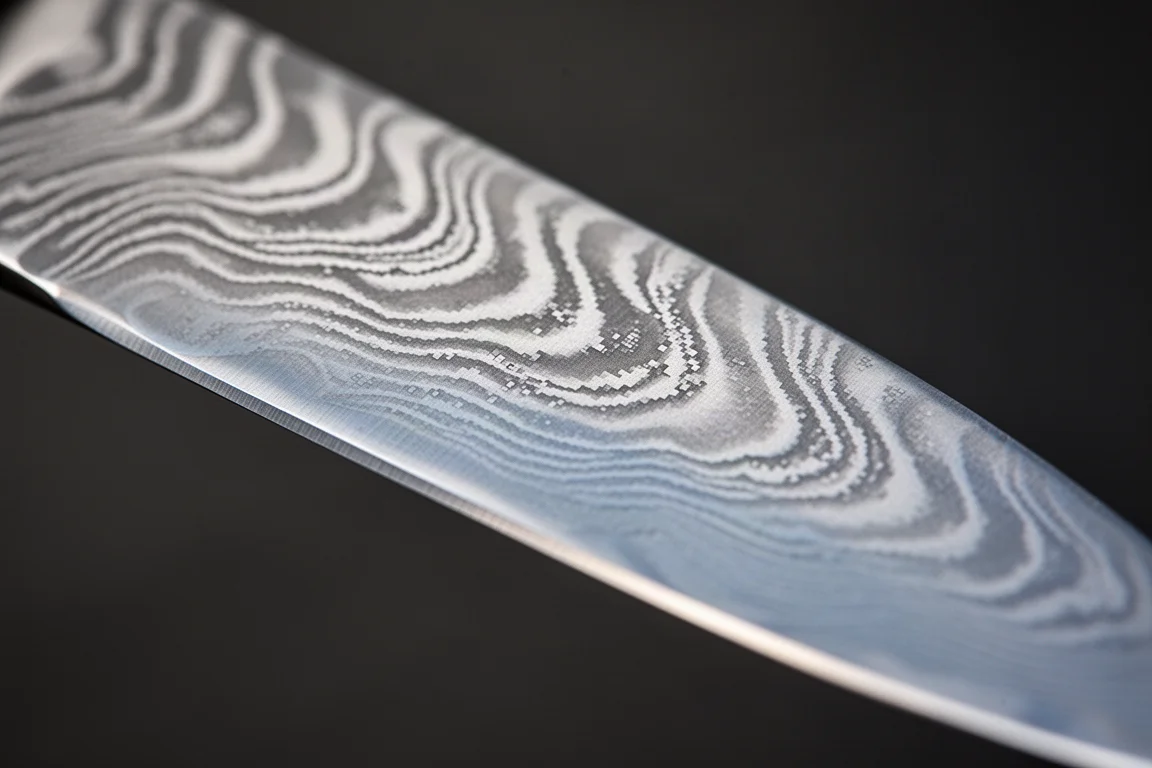
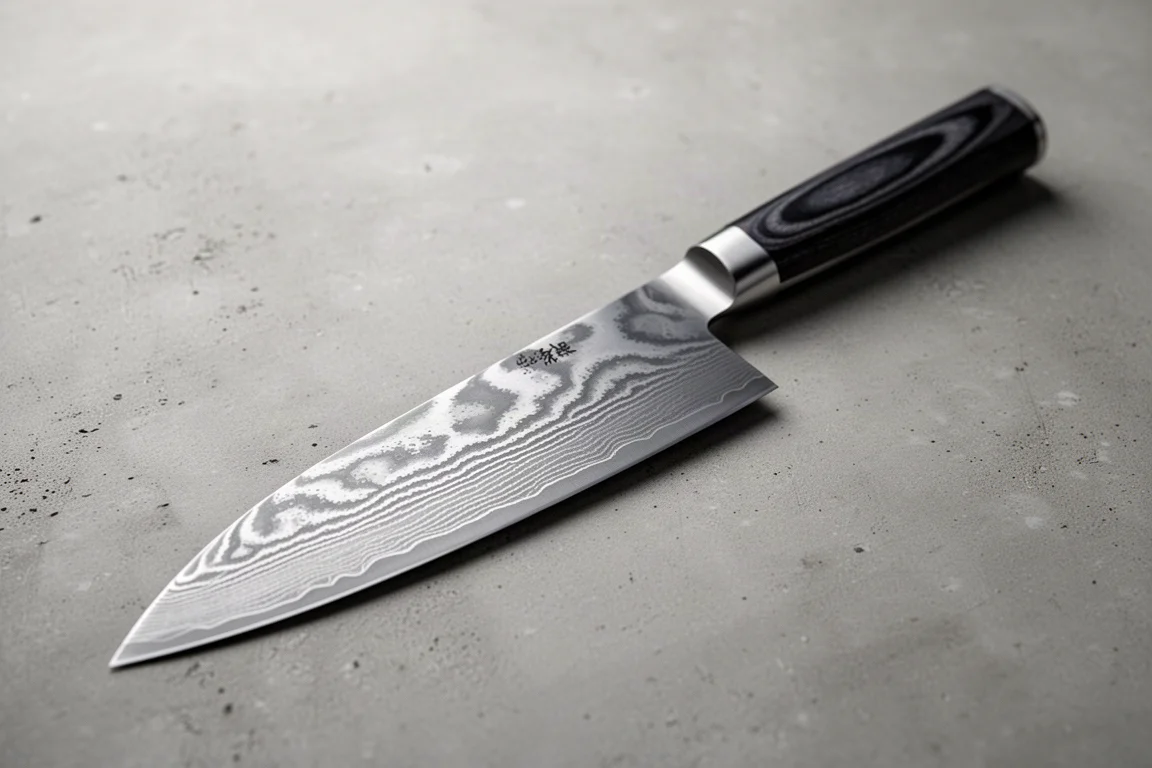
The blade is described as “Damascus distinctly etched.” That phrasing matters. Real Damascus refers to actual layers of steel forged together, which are then etched to bring the pattern out. On close inspection, this blade’s pattern looks pixelated and appears to have been drawn or engraved onto the surface, likely with a laser. There are no layers. “Engraved Damascus” would be a more honest description.
For a first-time buyer, this is one of the easiest things to misread. If a product page says “etched” rather than “layered,” it is worth asking the seller directly whether the pattern comes from real steel layers or from surface engraving. Layers are mostly aesthetic, but they do tell you something about how the knife was made.
What a Real Layered Japanese Knife Looks Like
Next to the advertised knives, we placed a knife we know is made in Japan: the Haruyuki GMA. It uses VG10 stainless steel in the core, wrapped in genuine layered Damascus cladding, with the layers visible as real depth in the steel rather than a flat surface pattern.
The most telling difference is at the edge. The GMA is ground very thin behind the edge, the area just above the cutting bevel. That thin geometry matters because the edge is not the only part of the knife doing the work. As the blade sinks into a dense vegetable, the steel behind the edge determines how smoothly it keeps moving. Most genuinely Japanese knives feel noticeably thinner in this area.
Cutting Test: Tomato and Carrot
On a tomato, both advertised knives performed reasonably well. Cuts looked fairly clean, though slightly bruised around the slice, and both struggled a little at the tip. Any knife cuts a tomato better by sliding than by pushing, so a casual user would probably call both of them sharp.
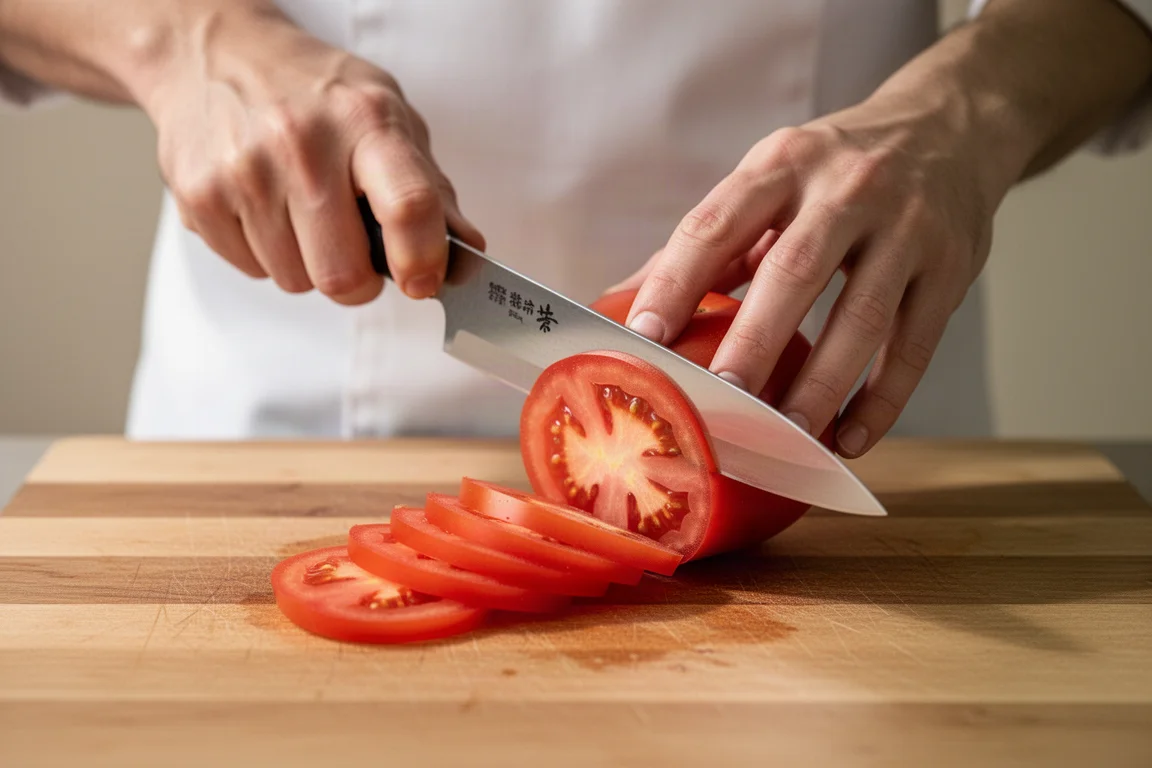
The carrot told a different story. Dense vegetables are where thin, hard knives excel and thick, soft knives struggle. The softer knives wedged and fought, cutting unevenly, and when the blade finally broke through it slammed into the cutting board with a loud smack. That hard landing dulls the edge faster and, for home cooks, can make the knife feel jerky and unsafe. The thinner Japanese blades sank in cleanly and cut straight through without the crack or the jolt.
This is the gap that tomato tests hide: a knife can feel sharp on soft produce and still fight badly on anything dense. Once cutting feels effortless rather than like a battle, cooking genuinely becomes more enjoyable, which is exactly why many customers find themselves cooking more after upgrading.
How the Moritaka Knife Is Made
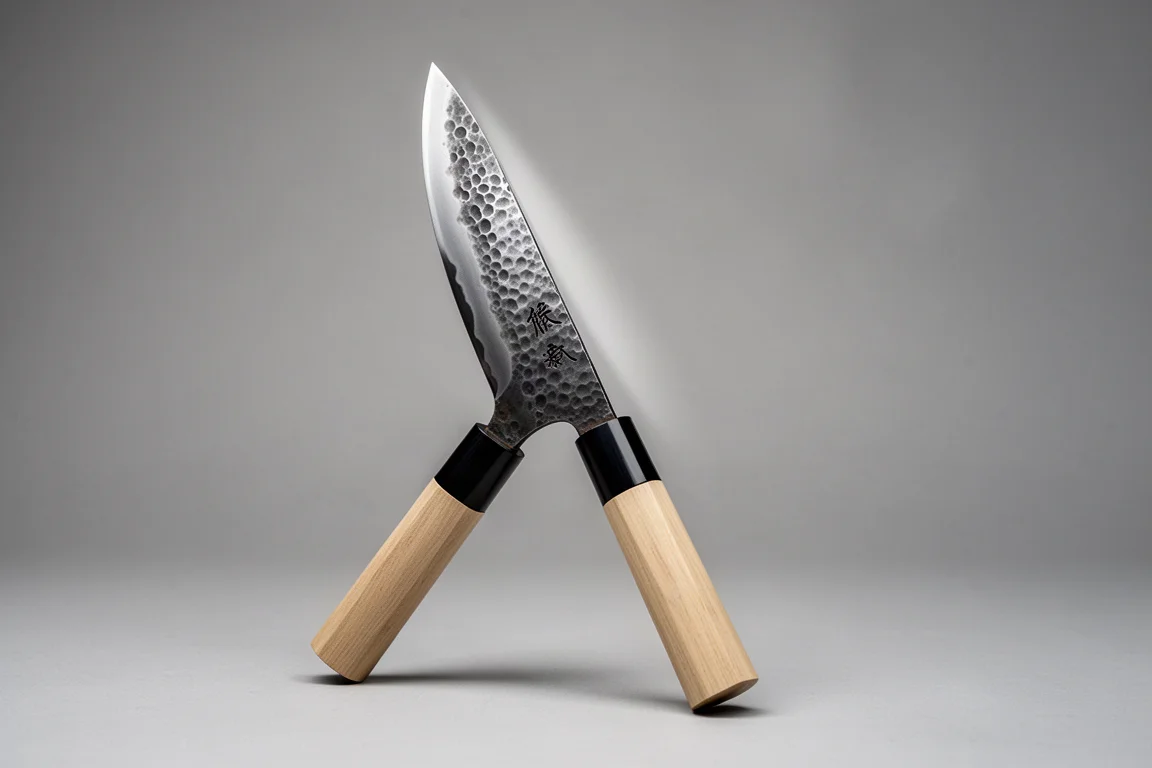
The third knife is the clearest contrast: a hand forged knife from Moritaka Hamono, a workshop with over 700 years of history, founded in 1293 and now celebrating its 730th anniversary. Three family members do nearly everything in-house in a small workshop beside their family home: forge welding, shaping, sharpening, even welding the stainless tang. Only the handles are sourced elsewhere.
One detail to look for in hand forged blades is a three-dimensional taper. Rather than hammering a flat sheet to uniform thickness, skilled smiths shape the blade so it is thicker at the heel, near the handle, and tapers thinner toward the tip. That puts strength at the heel and precision at the tip. You can check this by sighting down the spine.
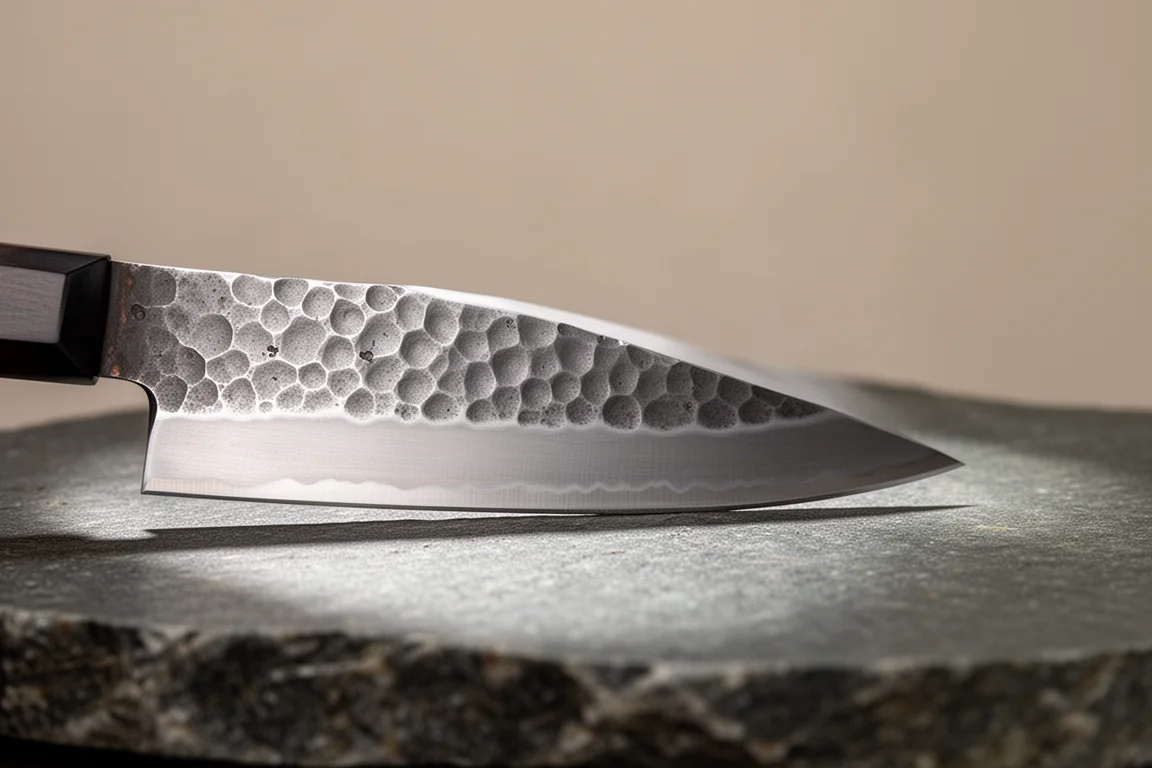
By comparison, the hammer-mark pattern on the mass-produced blades is pressed into a flat sheet of steel by a machine, and the blades stay essentially the same thickness from heel to tip. We cannot say for certain how the advertised knives were made without visiting their factories, but these are the kinds of indicators worth checking, especially when shopping in person.
Red Flags to Watch When Shopping Online
No single signal proves or disproves where a knife was made, but a pattern builds a picture. Here is what we would check before buying:
- Over-the-top claims. “World’s sharpest” or “best ever made” should require empirical proof. Vague superlatives are a classic warning sign.
- Implication instead of statement. A photo of a blacksmith on the homepage is not the same as saying who makes your knife. If the pictured craftsman does not actually produce the knives, that is a serious credibility problem.
- Vague terminology. “Etched Damascus,” “perfectly balanced,” and “Japanese inspired techniques” all sound impressive while committing to nothing specific.
- Missing names. Legitimate Japanese knife sellers almost always name the maker or blacksmith. If no craftsman is ever named, ask why.
- Pricing that does not add up. A genuine hand forged knife from the blacksmith pictured on one of these sites starts north of $300. Our least expensive hand forged knife runs around $140, and that is with a budget-friendly Japanese handle. A 70% off sale bringing a “hand forged” knife to roughly $50 should make you pause. If the deal seems too good to be true, it very likely is.
- No paper trail. Look for years of visible history: social media going back several years, real faces behind the brand, documented visits to workshops, and a company you can actually contact.
It is also worth remembering that not all good Japanese knives are expensive. There are machine-forged, made-in-Japan knives under $100 that are honest about how they are made and perform well. The issue is not the price, it is whether the story matches the product.
Conclusion
We cannot prove that the heavily advertised knives are not made in Japan. But the combination of unverifiable superlatives, implied craftsmanship, misleading Damascus wording, unnamed makers, and discount-driven pricing should give any buyer pause. Meanwhile, knives from makers like Moritaka Hamono offer a verifiable paper trail: named craftsmen, documented workshops, and cutting performance grounded in thinner geometry and harder steel. If you want a genuine Japanese knife, ask who made it, check whether the claims can be backed up, and be skeptical of deals that seem too generous.
Further reading
Related Reviews

Kitchen Knives
Best Chef's Knives 2026: 27 Popular Options Tested and Ranked
A comprehensive review of 27 chef's knives ranging from $18 to $380, with honest assessments of handle comfort, blade balance, and real-world performance.

Kitchen Knives
Best Chef's Knives Under $75: Two Tested Recommendations
Two practical 8-inch chef's knives that balance sharpness, comfort, and durability without premium pricing.

Kitchen Knives
Best Chef's Knives 2026: 27 Options Tested and Ranked
A comprehensive review of 27 chef's knives ranging from $18 to $380, with honest assessments of handle design, balance, blade profile, and real-world performance.