Everyday Carry
James Brand Ellis vs Victorinox Compact: Which Deserves Your Pocket?
The Victorinox Compact ruled everyday carry for years, but a new challenger changes the maths. Here is how the two compare for blade, scissors, slimness and pocket carry.
Introduction
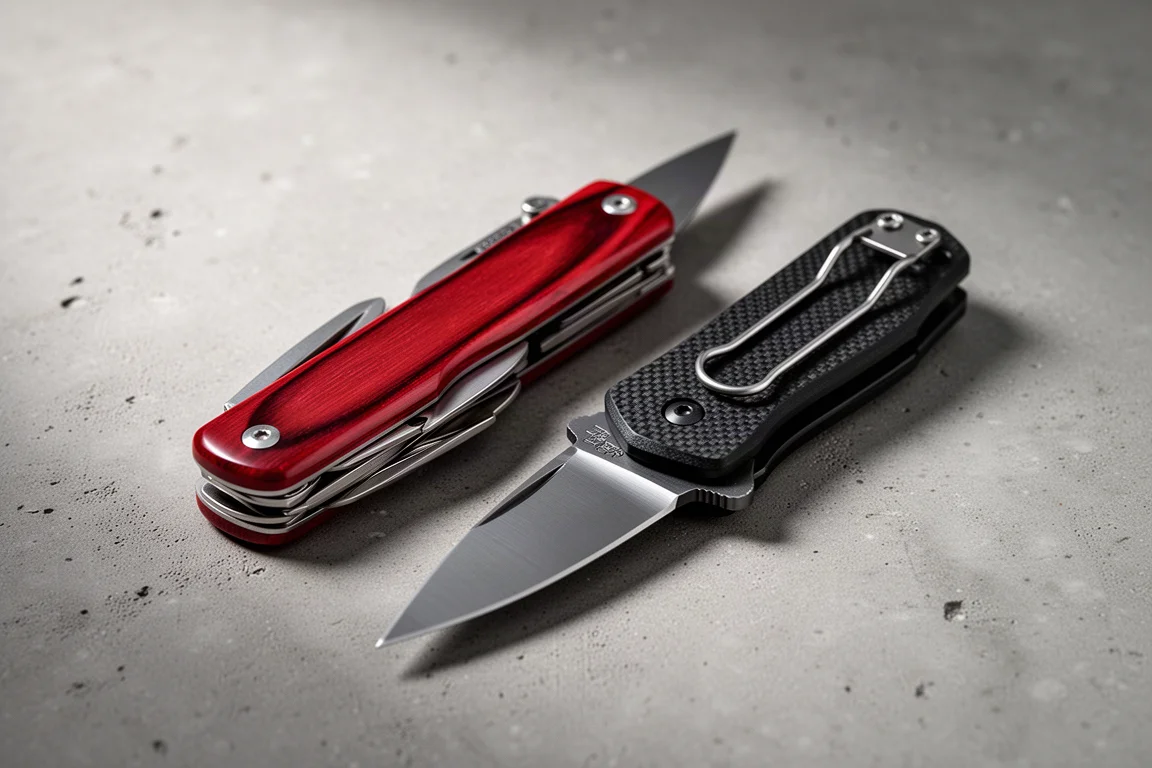
The Victorinox Compact has been a fixture in the everyday carry world for good reason, but it has never been perfect. Its biggest flaw has always been the lack of a pocket clip, and the newest wave of slim, clip-equipped knives is finally addressing that gap. One of the most interesting arrivals is the James Brand Ellis, a redesigned slip joint that swaps the original’s bottle opener combination tool for a proper pair of scissors. We compare the established favourite with the ambitious newcomer to see which one actually deserves a spot in your pocket.
What Makes a Great EDC Pocket Knife
A good everyday carry knife needs a short list of things done well rather than a long list done badly. The essentials here are a decent blade, good scissors, and a flathead screwdriver. On top of that, the knife should be slim and reasonably lightweight, big enough to be practical but small enough to stay legal. In the UK that means a non-locking blade under three inches, which immediately rules out most lockback folders.
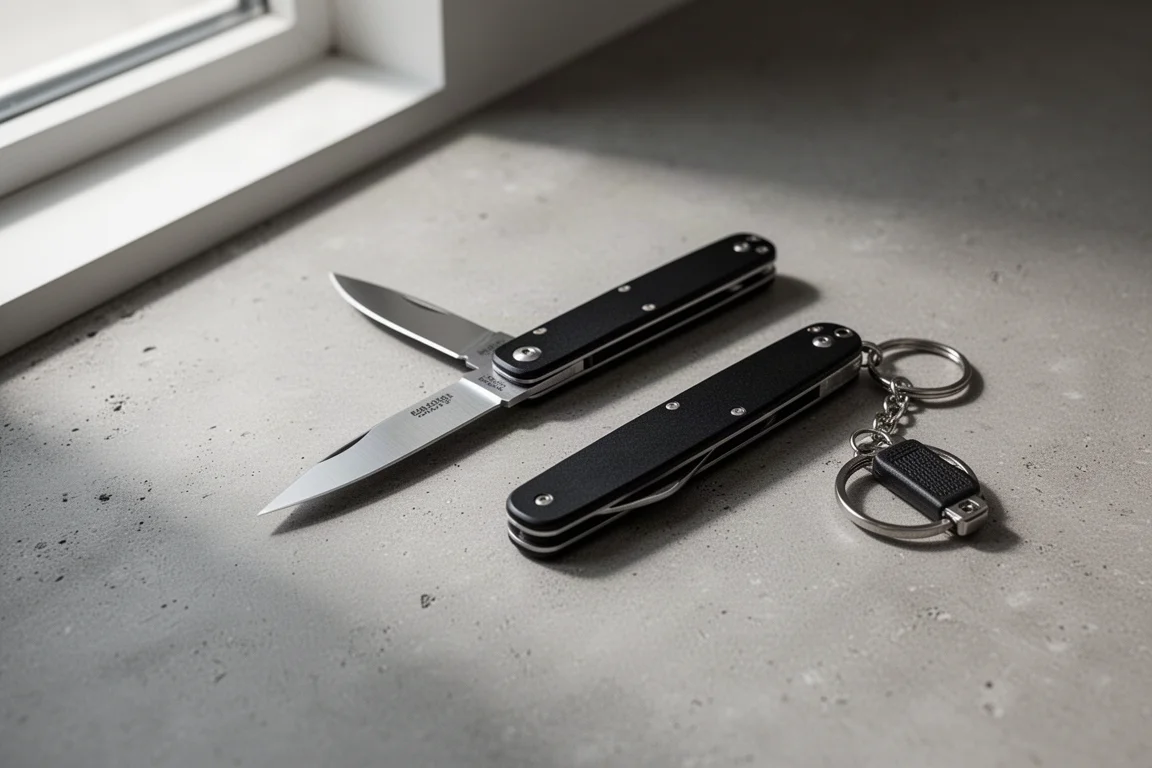
One more requirement matters more than most people realise: a pocket clip. It sounds minor, but it determines whether the knife disappears comfortably into a pocket or rattles around loose at the bottom of a bag.
The reigning champion: Victorinox Compact
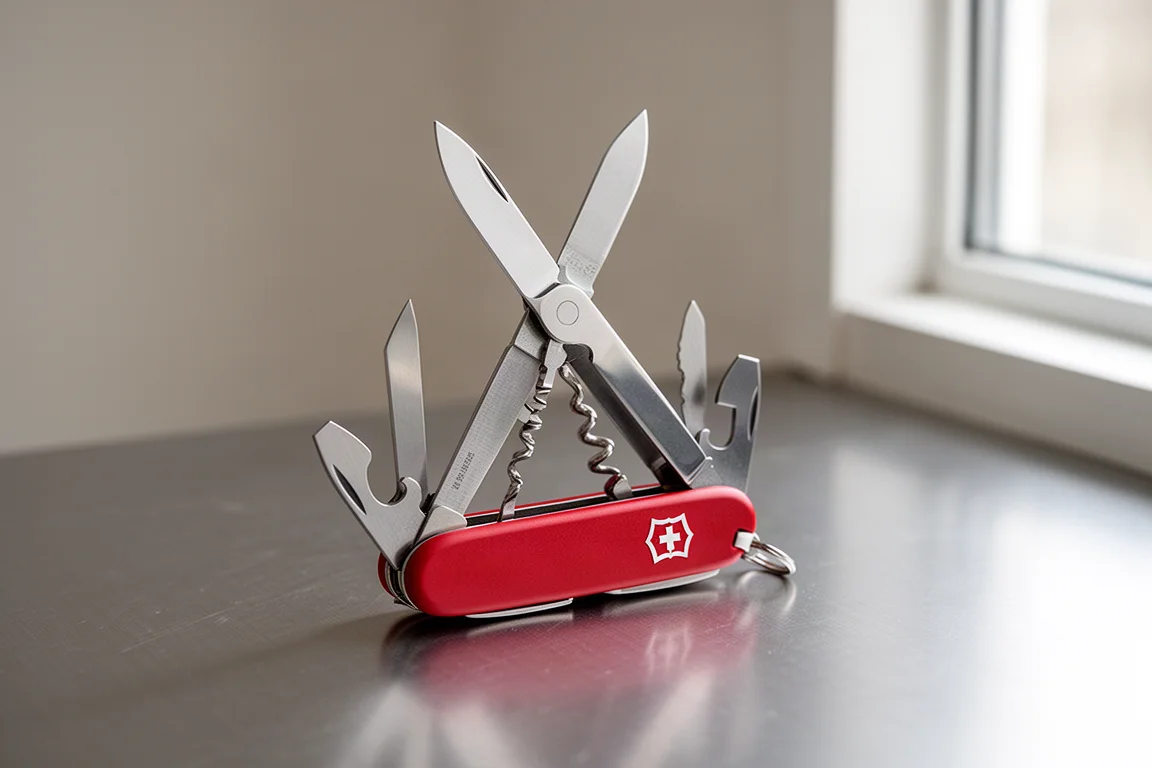
The Compact earns its reputation by packing the three essentials into the slimmest two-layer package Victorinox makes. The blade is sensibly sized for UK carry, the scissors are genuinely useful, and the combination tool includes a flathead screwdriver plus a bottle opener. It is the only knife in the Victorinox range that combines exactly that set of tools in this slim a format.
Victorinox also layers in the extras the brand is known for: a corkscrew, a hook, a small file, a concealed pin, a toothpick, a pen and tweezers. None of these are dealbreakers, and plenty of the functions can be covered by a separate micro kit, such as the Victorinox Manager, which includes its own pen, tweezers and file.
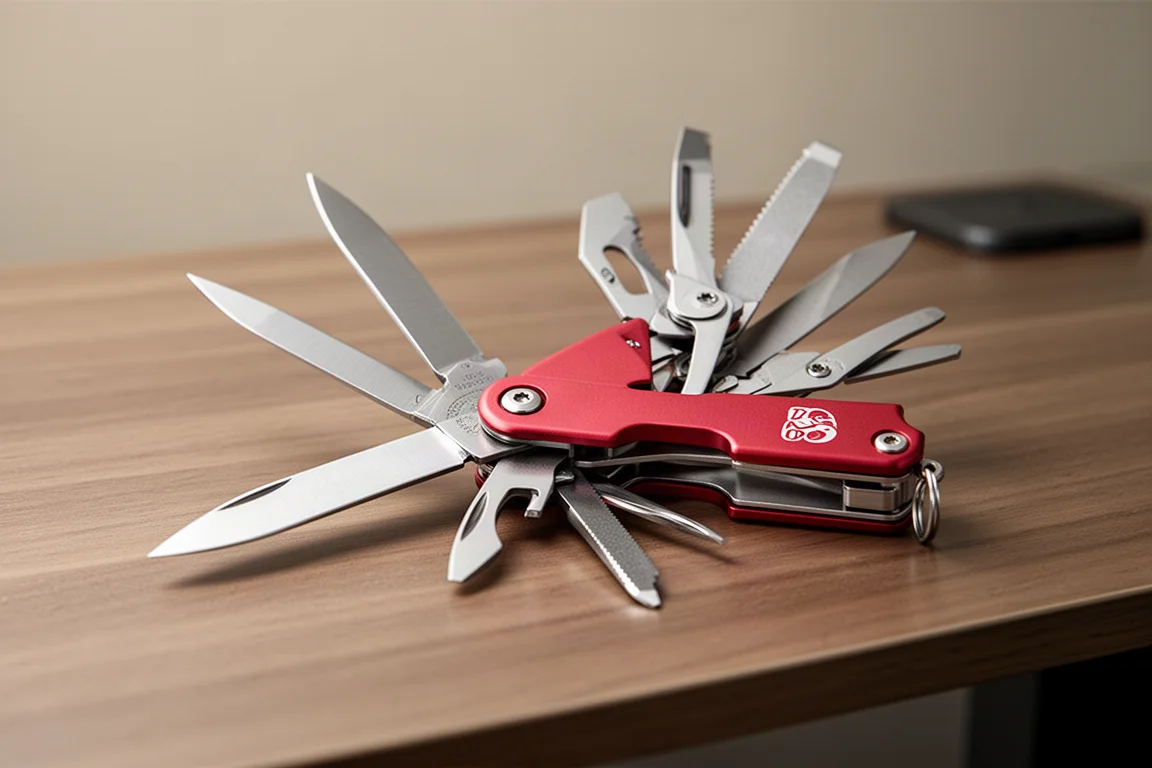
The real shortcoming is the missing pocket clip. No Victorinox knives ship with one, which is a shame for a knife designed around pocket carry. Two third-party fixes exist: the KeySmart pocket hanger, which attaches to the keyring loop and works well but is a bit rattly and can obstruct the screwdriver, and the Q-clip, which screws onto the keyring loop of most Victorinox models. The Q-clip does not fit the Compact at all, because the Compact uniquely places its keyring loop between two layers rather than on the first.
The new challenger: James Brand Ellis
The Ellis arrives looking like a direct answer to that wishlist. The all-black version with G10 scales is a genuinely handsome knife, with green-scale and plain-steel versions also available. The flathead screwdriver doubles as a scraper and a light pry tool, adding real-world functionality beyond turning screws.
The drop point blade is substantial, with a partial serrated edge. Serrations divide opinion, but they handle fibrous materials well, from cord to clothing, and potentially even a seat belt in an emergency. The slip joint mechanism has strong spring tension and a half-stop that adds a touch of safety.
The scissors deserve special mention. They borrow design cues from the brand that makes the best scissors in the pocket knife business, with strong spring tension, a wide thumb pad and fingernail holes on every tool for easy opening. They cut cleanly from both tip and fulcrum, which very few pocket knife scissors manage, and they may well be the best scissors fitted to a pocket knife.
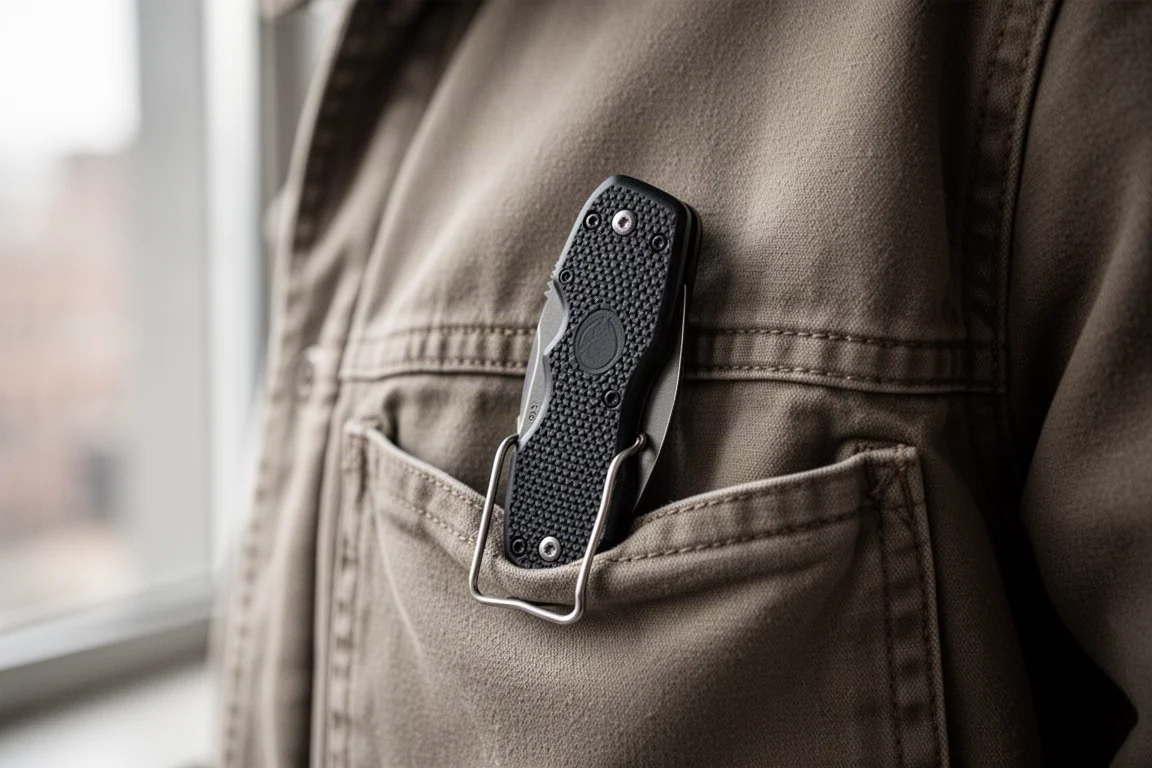
Engineering is another highlight: the G10 scales sit on a chassis with internal cut-outs that reduce weight while keeping the knife rock solid under compression. The deep-carry wireframe pocket clip holds the knife discreetly and securely, and the grippy scales make drawing it easy. Note that the steel is Swedish Sandvik 12C27 at 54-61 HRC, a touch harder than Victorinox’s 53, tough, corrosion resistant, and easy to sharpen even along the serrated section.
Head to Head: The Numbers
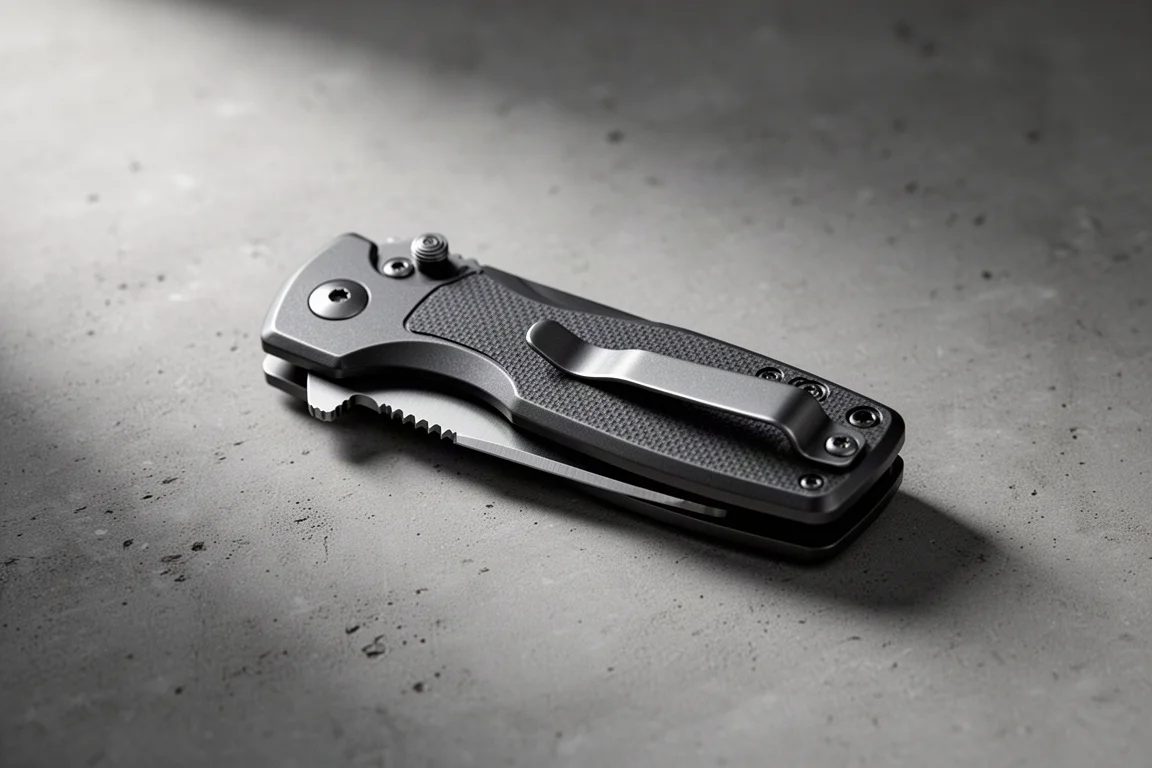
Side by side, the differences are small but meaningful. The Victorinox is just one millimetre wider at 25mm, but noticeably thicker at 14.8mm versus the Ellis at 11.8mm. Three millimetres is roughly four credit cards, and in a pocket it genuinely shows.
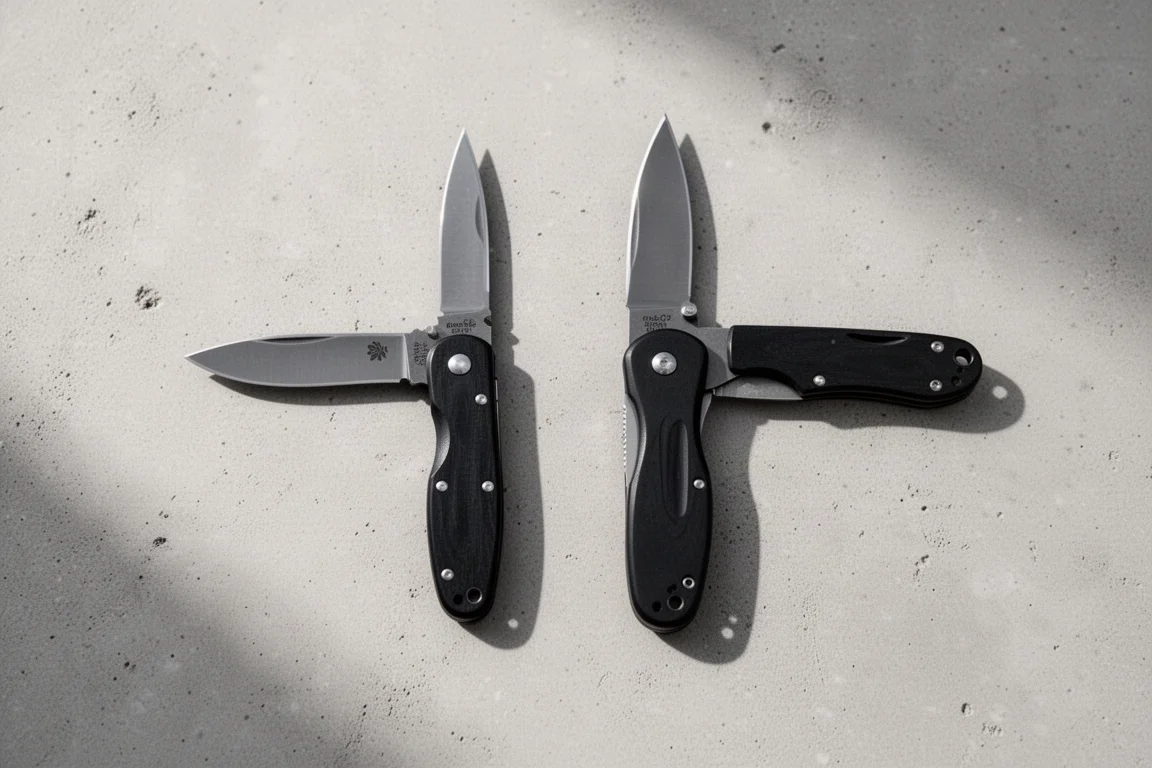
Lengths are nearly identical, with the Ellis about four millimetres longer including its screwdriver. The Ellis blade holds more metal and looks more substantial, while the Victorinox blade opens wider. Scissors are similar in size, but the Ellis’s stronger, more elaborate spring mechanism makes it faster and nicer to use. On weight, the Victorinox is 68g against the Ellis’s 79g, a 10g penalty likely explained by the Ellis’s more substantial tools. The G10 scales also grip better than the Compact’s classic cellidor.
Which One Should You Buy?
The Ellis has two clear drawbacks. The first is price: around £119 including tax in the UK, or $119 plus tax in the US, roughly three times the cost of the Compact. The second is the missing extras. If you genuinely value the corkscrew, hook or scale tools, the Compact still makes more sense. For daily carry over years, though, many will find the Ellis’s thinner profile, better blade, superior scissors and pocket clip well worth the premium.
Conclusion
The Victorinox Compact remains a great option, especially at its price, and it is still the value pick. But the James Brand Ellis offers a bigger, better blade, nicer steel, the best scissors we have seen on a pocket knife, a more capable screwdriver, a slimmer profile and that all-important pocket clip. For serious everyday carry, the Ellis takes the crown.
Further reading
Related Reviews

Everyday Carry
Everyday Gear That Deserved a Second Look
A roundup of solid everyday carry items: watches, pens, a pencil, a knife, and a smart ring that each earned a place on the table.

Everyday Carry
KORE Tactical Bifold Wallet Review: A Durable Everyday Carry Option
A close look at the KORE Tactical Bifold Wallet, a reinforced nylon wallet with magnetic closure and room for cards, cash, and IDs.

Everyday Carry
Krabby Wallet Review: A Slim, Simple Carry That Has Stood the Test of Time
A closer look at the Krabby Wallet, a slim canvas and elastic design with a loyal following and a simple, functional approach to everyday carry.