Kitchen Gadgets
4 Indian Kitchen Gadgets Put to the Test: From Tandoor Pans to a Roti Robot
A tandoor cooker, a traditional spice box, a stone grinding board and a flatbread robot, tested hands-on with honest verdicts and prices.
Introduction
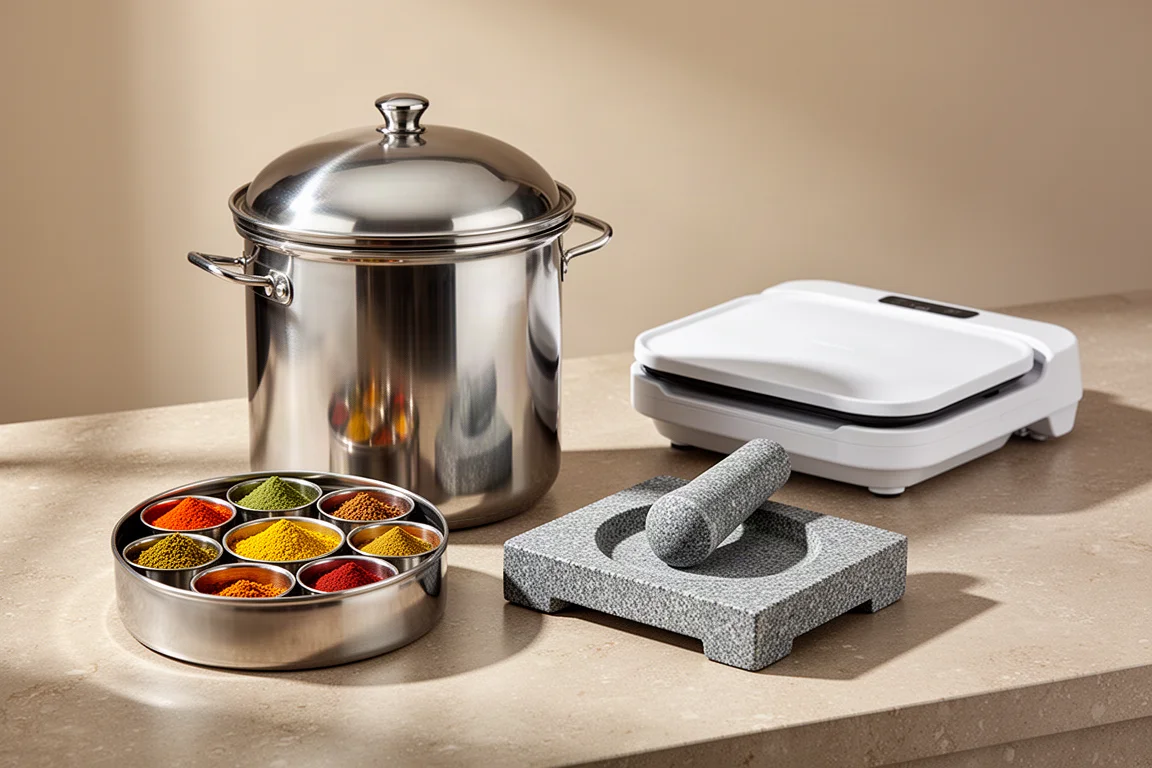
Indian cooking covers a huge range of techniques: clay tandoor ovens, deep frying, slow braises, and spice pastes ground by hand. We put four gadgets to the test with a professional chef and an enthusiastic home cook, cooking real dishes with each one and talking honestly about price, practicality, and whether each earns a place in a normal kitchen. Here is how they got on.
Bowry Tandoor Cooker
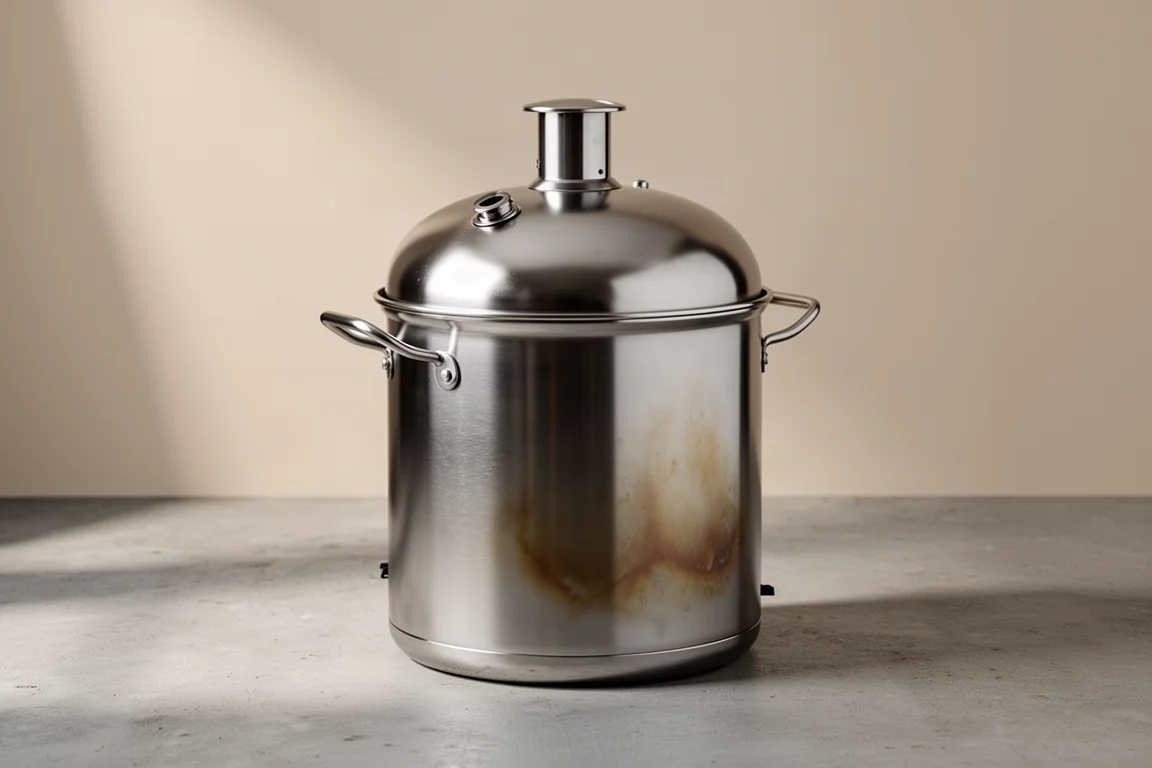
The Bowry tandoor cooker is conventional cookware with a claimed 3D heating system, promising the experience of traditional tandoor cooking on a regular gas hob. Traditional tandoors are made from clay, take time and attention to reach temperature, and cook with fierce direct heat. This sits on your stovetop, preheats in about five minutes, and funnels heat up through a central chimney piece before you add the lid, so the whole thing gets extremely hot. It is aimed at home use, promising more control than a clay tandoor.
The catch is water. The instructions call for water in the base, which means everything cooks in steam as well as heat. With the lid on, we watched steam pool inside the chamber, and the cooking times reflect that: 8 to 12 minutes for fish, 12 to 15 for chicken. We cooked tandoori chicken thighs and, after closer to 20 minutes, they were sizzling away and smelled incredible. Because of all that steam, the chicken never charred the way a true tandoor would, but it was wonderfully succulent, juicy, and not overcooked.
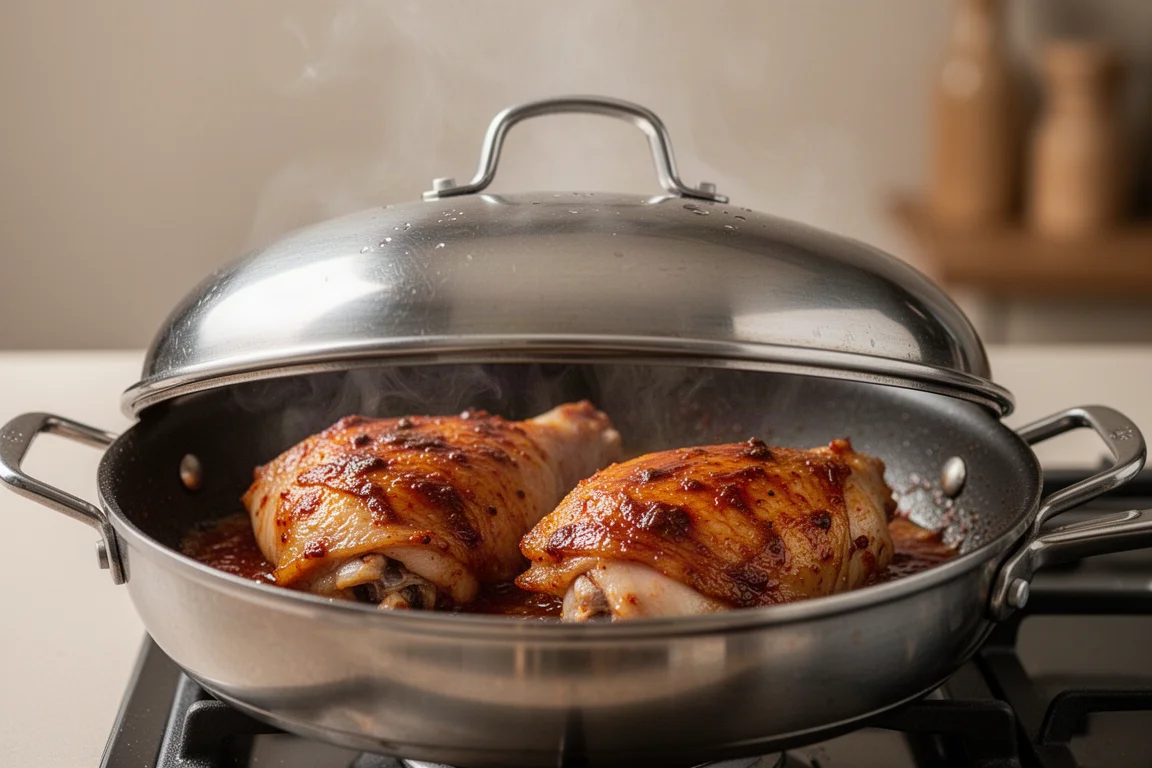
The verdict: this is not providing clay-tandoor heat, and it will not give you that smoky flavour. But convection ovens are less common in Indian home kitchens than elsewhere, so there is a fair argument that this gives people an oven-style device for tandoori-style recipes, even if the manual stretches the point by suggesting brownies, muffins, and pizza. We paid 113 pounds, which feels expensive for what it is, and most usage examples we found were based in India. Fun to cook with, but the price is hard to justify.
Masala Dabba
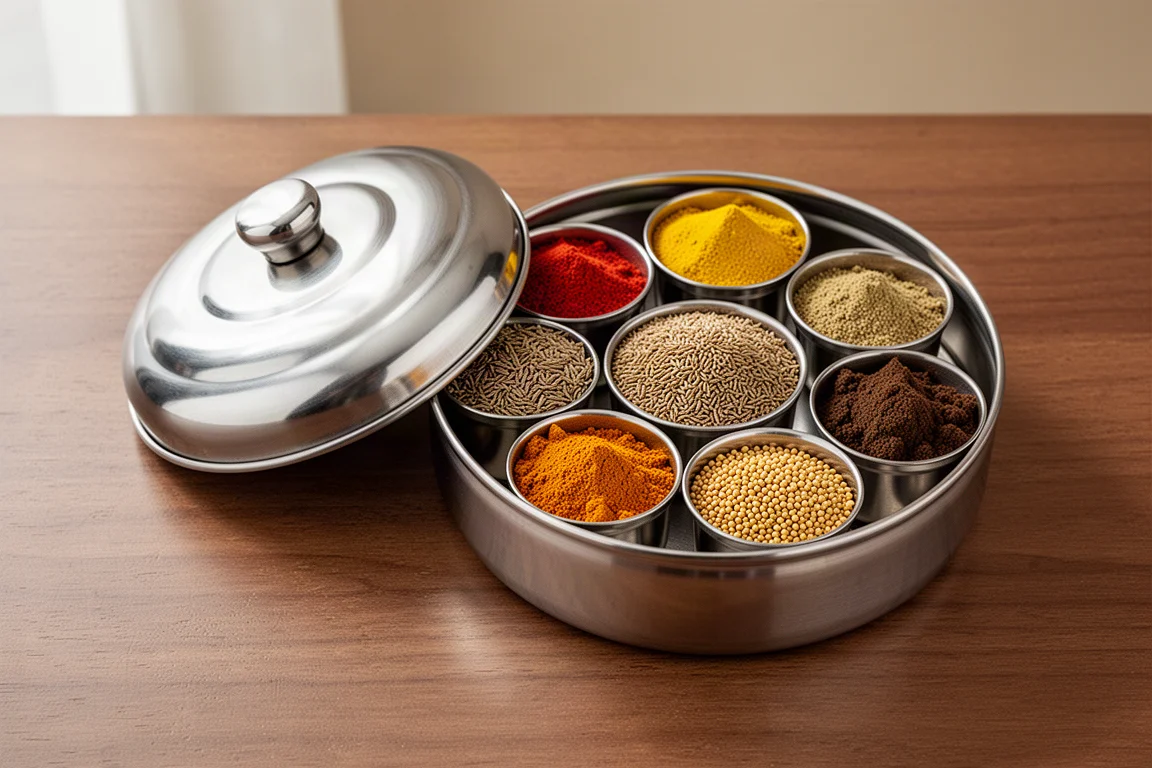
The masala dabba is a traditional Indian stainless steel spice box with individual cups for your core spices. The idea is simple and smart: countless recipes come from different ratios and combinations of the same handful of spices, so keeping cumin, coriander, mustard seed, turmeric, red chilli powder, and garam masala in one place means you can grab exactly what you need fast. Timing is key in Indian cookery, and having spices instantly accessible helps you nail it. The airtight lid has a genuinely good seal to keep everything fresh.
There is real cultural weight here too. These are traditionally given by a bride’s mother as a wedding gift, increasingly given as university presents, and passed down through generations as a symbol of the diversity and complexity of Indian cuisine. They also photograph beautifully, which is why they appear in so much Indian food styling: vibrant, colourful spices on display.
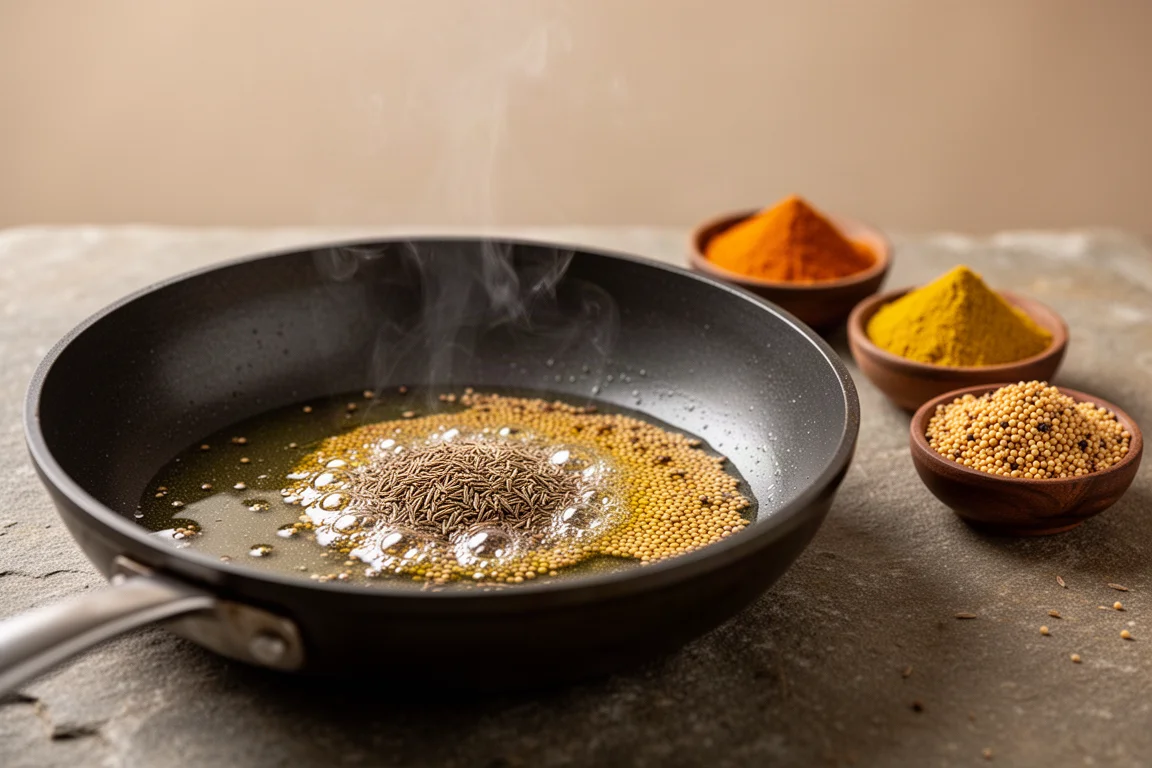
We used it to make masala aloo, tempering cumin and mustard seeds in ghee before building the dish, and it worked exactly as intended. Our one honest caveat: if you do not know your spices by sight, you will want labels, and a labelled jar rack does the same job. But at 16 pounds 99, this was the easiest win of the day. Both testers wanted to take it home.
Sil Batta
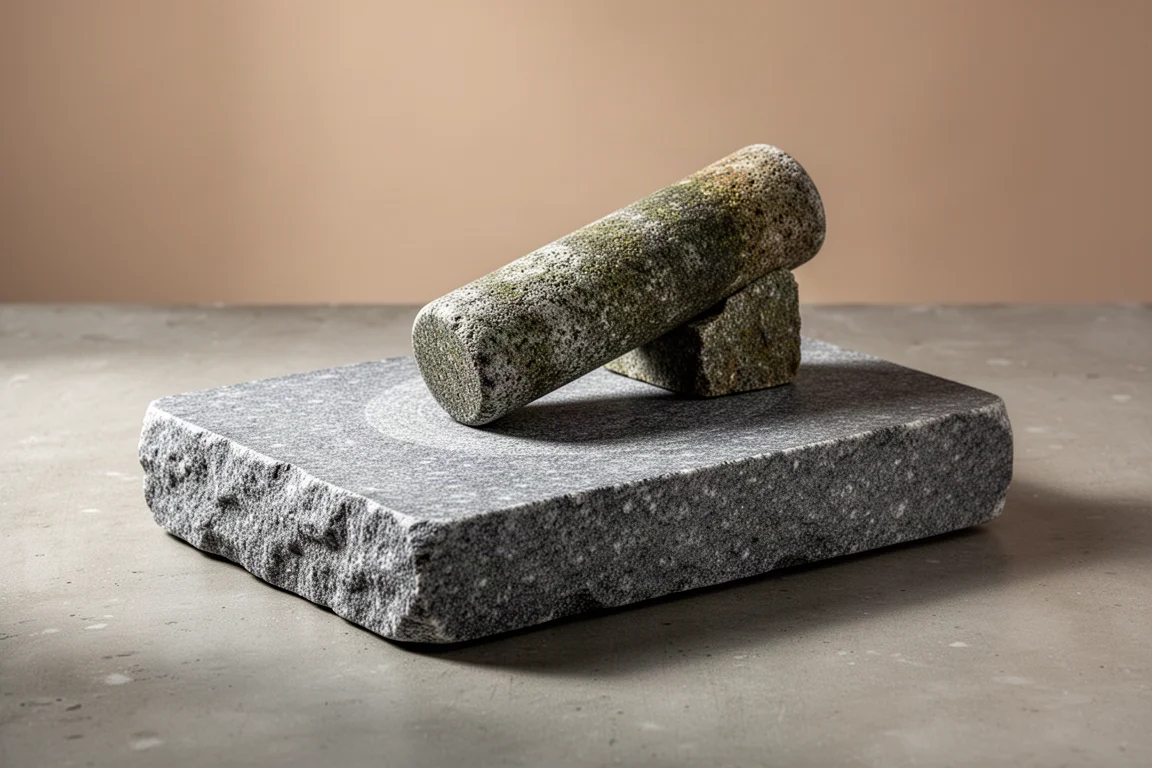
The sil batta, sometimes known as ammikallu, is an age-old flat stone tool used in Indian cooking to prepare spice pastes. Think of it as a pestle and mortar without the walls: a flat board with a rough side and a smooth side, and a heavy grinding stone you hold and scrape back and forth. The divots and rivets in the stone catch the ingredients and help crush them down, and over time the surface curves and slopes out, making it easier and more satisfying to use, much like a well-seasoned wok.
We used it to make a chilli and herb paste for a chutney, grinding coriander, garlic, ginger, chilli, curry leaves, and tamarind paste together with a little salt. The aromas release instantly, and the result was genuinely good paste with real texture. It is claimed that pastes made this way taste fresher than ones from electric blades, and while that may be partly psychological, there is a real romance to making something by hand. Versions of this tool exist across Southern Asia and in South America too.
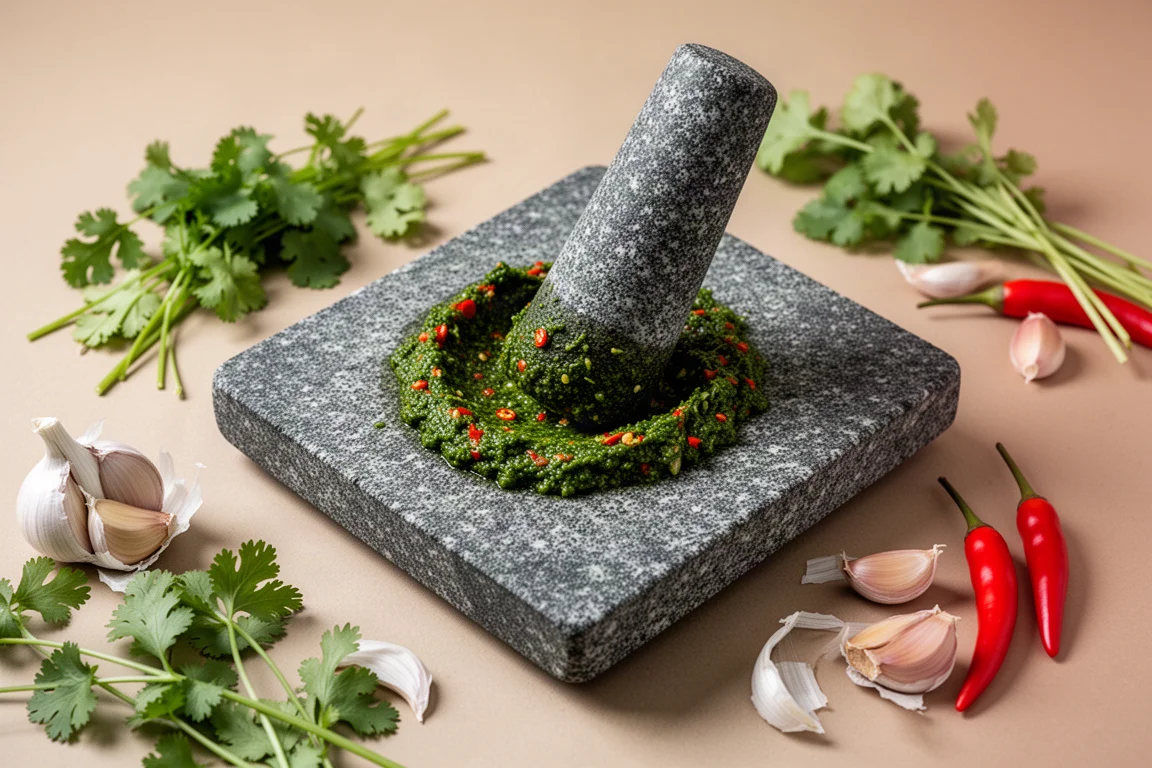
The honest note: it is a lot of effort. Prices vary massively, with examples we found ranging up to 300 pounds, but we paid 30 pounds for ours. As a hands-on tool that improves with age, it won everyone over.
Rotimatic
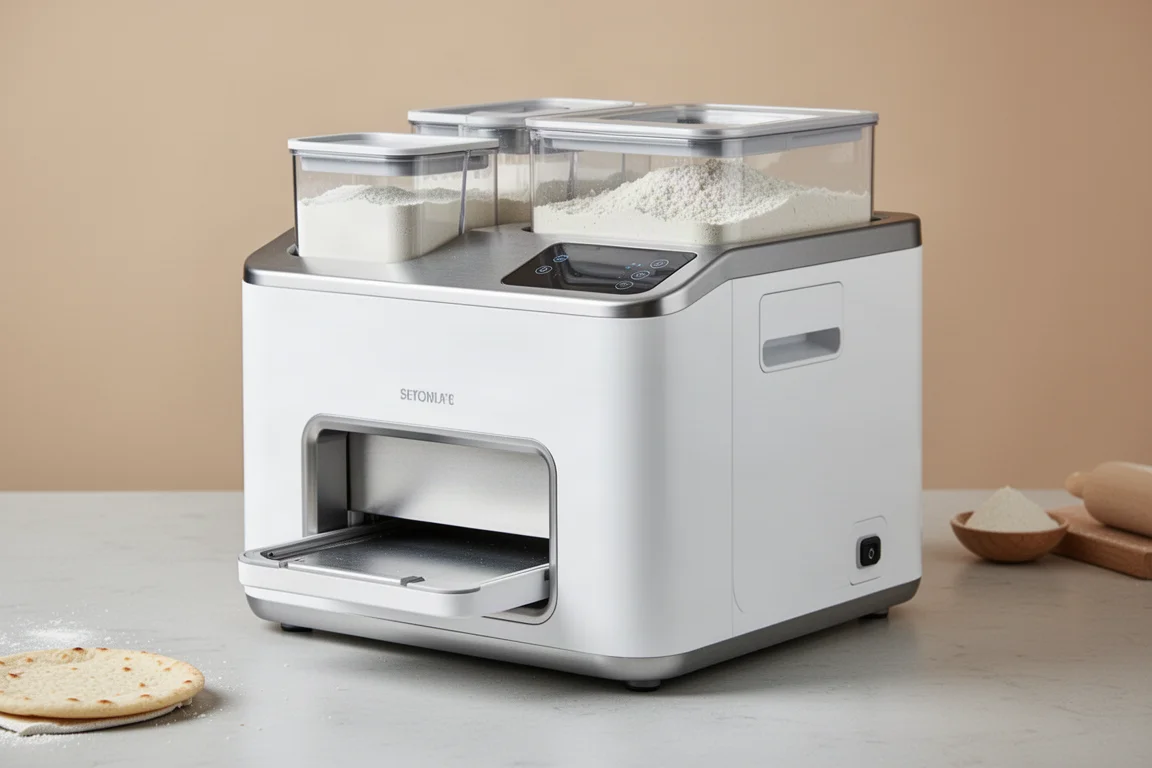
The Rotimatic bills itself as the world’s first flatbread-making robot, promising to transform dry flour into perfectly puffed hot rotis in just 90 seconds. You fill the tubs on top with flour, water, and oil, choose your settings, and tap play. Under the hood it runs on a 32-bit microprocessor with 10 motors, 15 sensors, and 300 parts working in parallel, measuring temperature, position, and, most importantly, dough consistency. Settings cover thickness (one to five), roast level (one to four), and oil (one or two).
In use, it is genuine theatre. You watch the machine pull in flour, mix the dough, assess the tackiness, kick a dough ball across the chamber, flatten it, and roast it, all while preparing the next one on the other side. The rotis came out puffed with pockets of steam and tasted great, with welcome control over crispness, oil, thinness, and roast level.
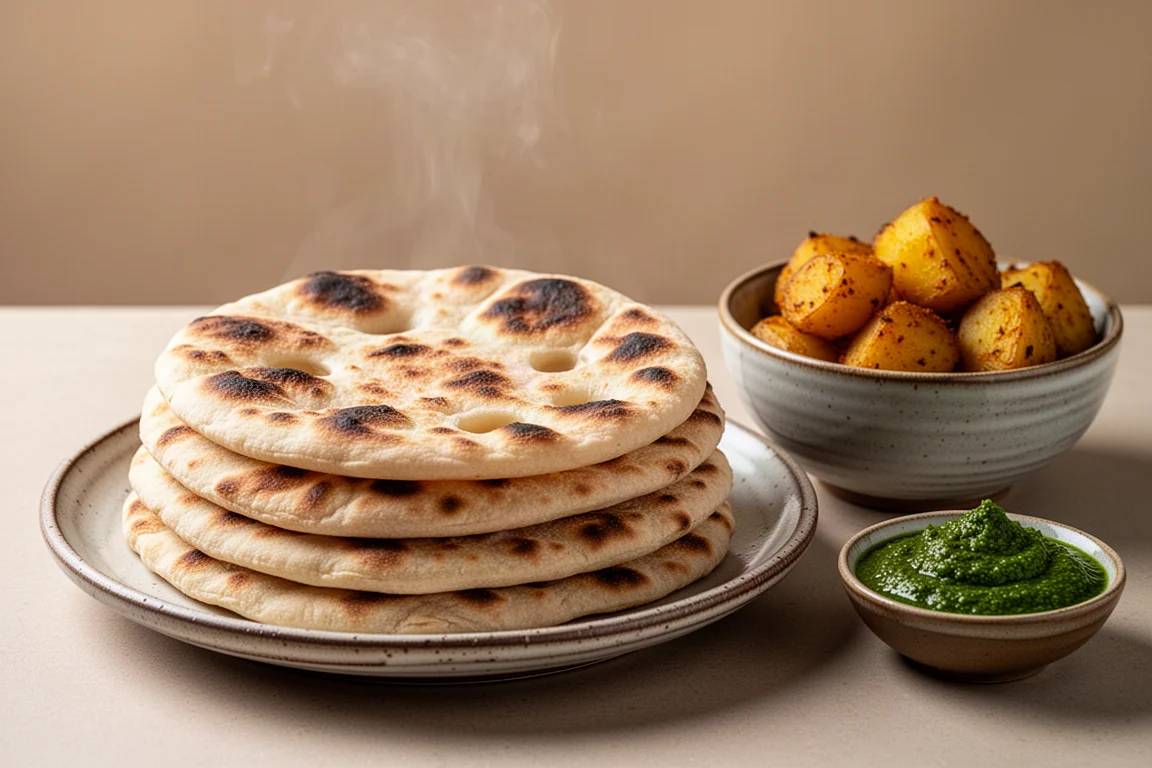
So is it worth it? We bought ours secondhand for 600 pounds, and the recommended retail price is 1,495 pounds new. Both testers loved using it and rated the rotis highly, but both also said they would never buy one at that price. Handmade rotis are perfectly achievable when the dough is done for you, but they do not keep coming out while you carry on eating, which is exactly the gap this machine fills. Brilliant to watch, delicious to eat, very hard to justify.
Buying Advice
If you want one gadget from this lineup, the masala dabba is the clear value pick: cheap, useful, beautiful, and genuinely practical every time you cook. The sil batta is a lovely buy for people who enjoy hands-on cooking and do not mind the effort. The Bowry tandoor cooker is fun and produces beautifully moist tandoori-style chicken, but at 113 pounds it needs to match how often you would actually use it. The Rotimatic is the most impressive thing here by a distance, and the least necessary: if you eat flatbreads daily and the budget is genuinely there, it delivers, but most kitchens will not miss it.
Conclusion
Four gadgets, four very different verdicts. The spice box earned universal love, the stone grinder earned respect, the tandoor pan earned a cautious maybe, and the roti robot earned pure admiration paired with a hard no on the price tag. Match the gadget to the habit you actually have, and you will not go far wrong.
Further reading
Related Reviews

Kitchen Gadgets
Kitchen Gadgets Tested 2026: Five Tools Worth Considering
A practical look at five kitchen gadgets, from egg shapers to peanut butter stirrers, with honest assessments of what works and what doesn't.
Kitchen Gadgets
Best Electric Wine Openers: Our Top Picks From Eight Tested Models
We tested eight electric wine openers priced from $20 to $110 on hundreds of bottles. The Secura came out on top, with a Peugeot and a Rabbit model also worth knowing about.
Kitchen Gadgets
Best Kitchen Gadgets Under $15: Eight Small Tools That Earn Their Keep
Eight kitchen tools that cost less than $15 but perform like far more expensive gear, from a razor-sharp peeler to a champagne saver that really works.