Hand Tools
Long Reach Pliers Compared: Igarashi HLS 300, HLB 300 and Milwaukee
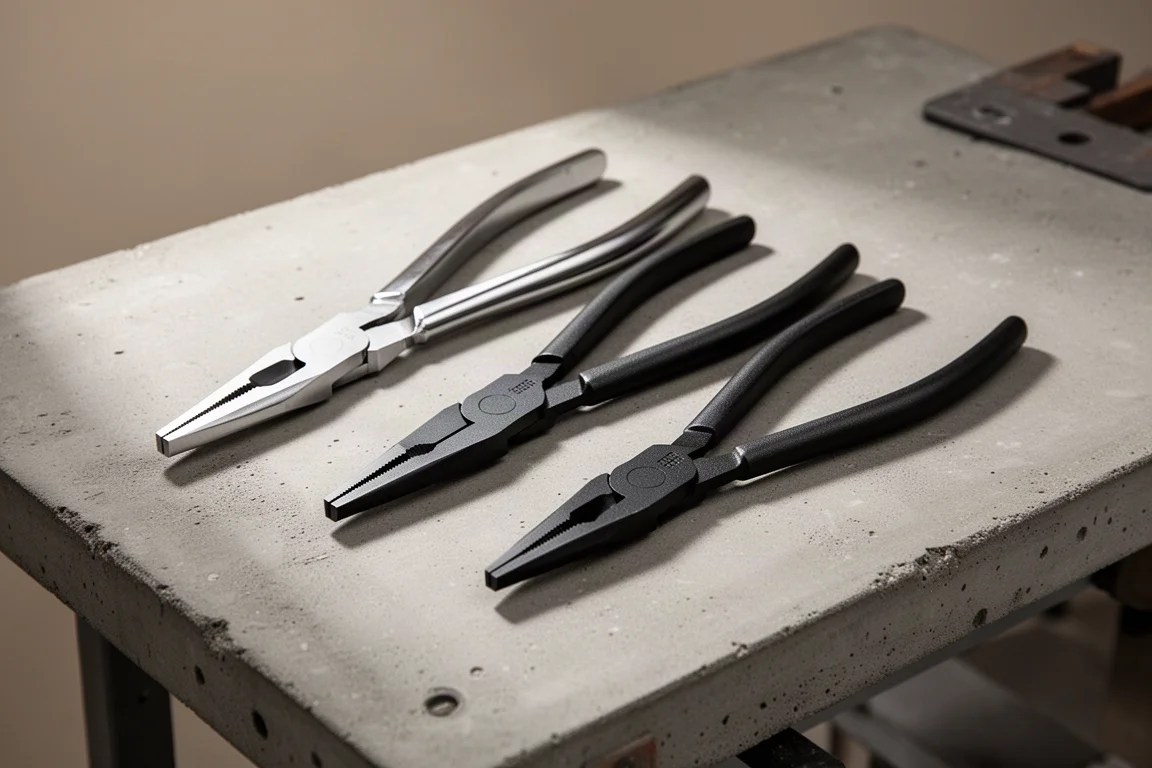
Three long reach pliers with overlapping crossover designs, compared on reach, slimness, stiffness, grip zones and price.
Introduction
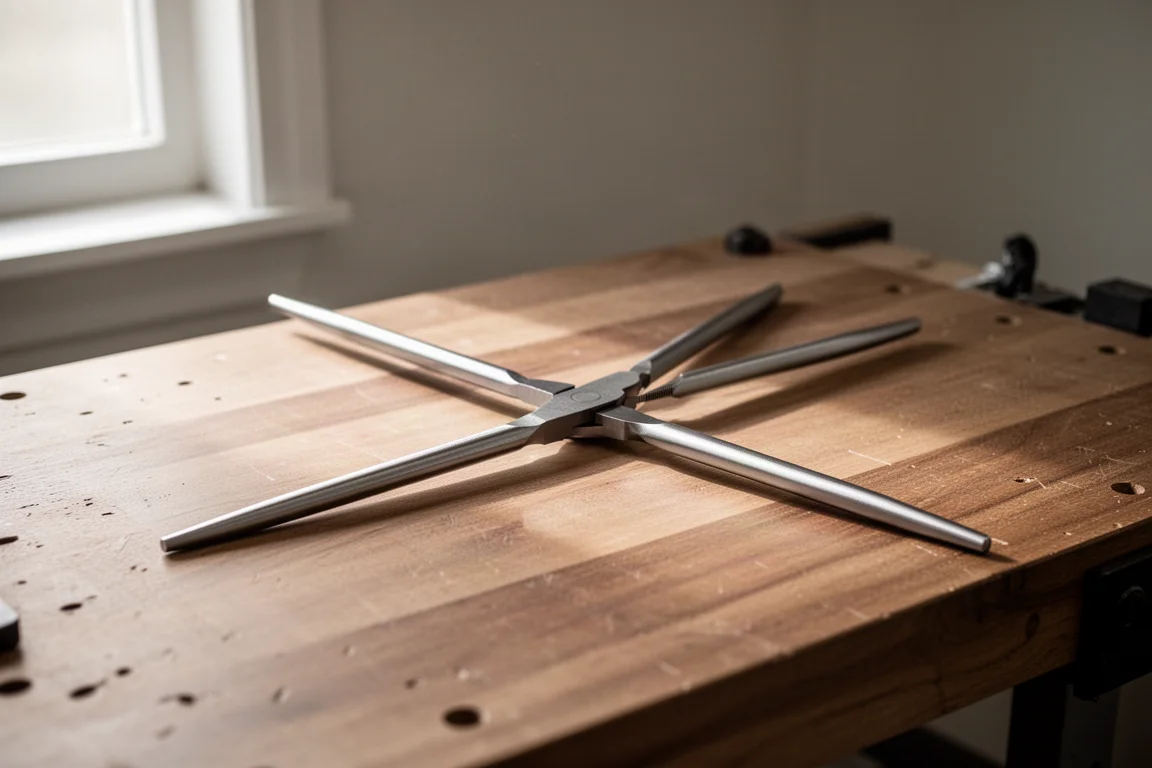
Long reach pliers occupy a niche that regular needle-nose pliers cannot fill: retrieving and grabbing parts deep inside engine bays, behind dashboards, or down narrow tubes. In this category, two designs have drawn a lot of attention. Milwaukee’s long reach pliers use a distinctive overlapping crossover design, and Igarashi makes a very close, but different, take on the same idea in two variants: the straight-jaw HLS 300 and the bent-snout HLB 300. Both are 300 mm long, and both are worth a closer look before you pick one.
Why Long Reach Pliers Exist
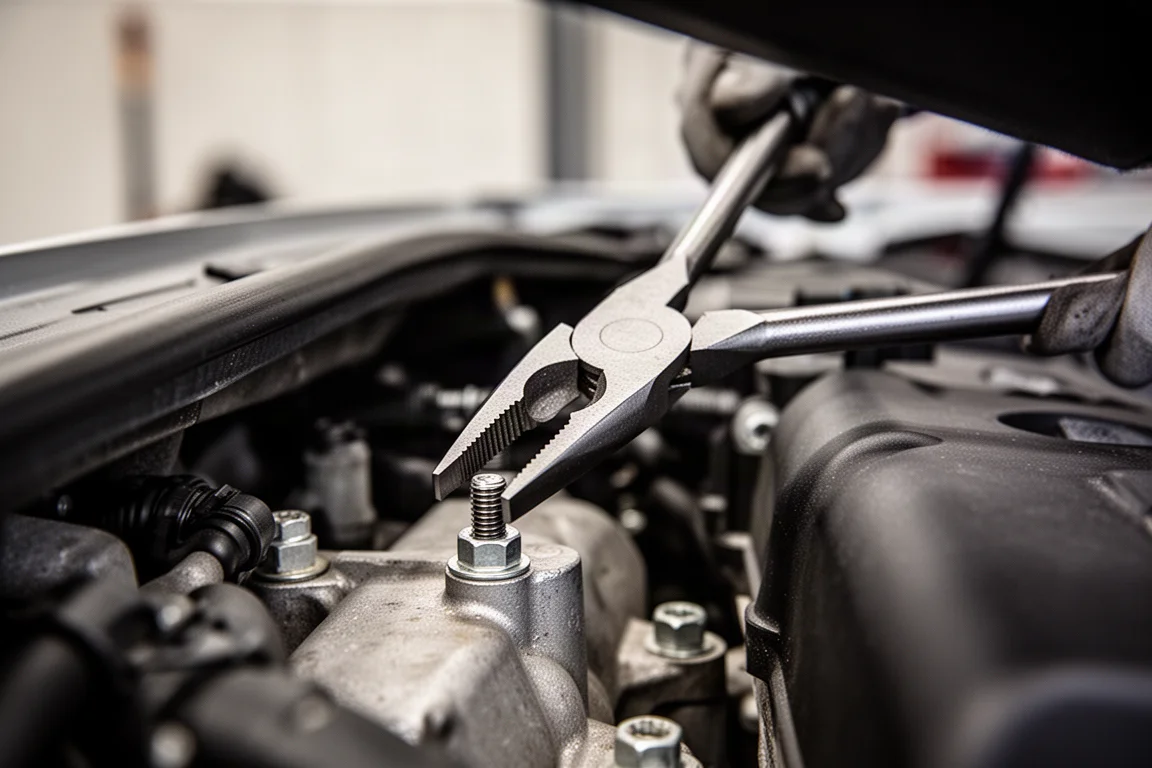
The whole point of this style of plier is a slim profile over a long reach. You want to go deep into a confined area, grab something small, and bring it back out. The usual problem with long pliers is that they get wide very quickly as you move back from the tips, which defeats the purpose in tight spaces.
The overlapping crossover design exists largely to fight that problem. It keeps the jaws and body slimmer for longer, which matters most when you are fishing a dropped fastener out of a tube or reaching past nearby components.
The Lineup: Igarashi HLS 300 and HLB 300
Igarashi makes both variants of the crossover design. The HLS 300 has straight jaws, while the HLB 300 has a bent snout for angled access. Both are 300 mm long. Both also include a slip joint, which is an interesting tangent into needle-nose plier territory, and one that Snap-on famously ran with when it introduced its own version of this design.
The slip joint essentially allows a more parallel grab further out on the jaws, or on slightly larger objects. That becomes relevant when grabbing round objects, which otherwise tend to swivel in the jaws.
Grip Zones and Jaw Design
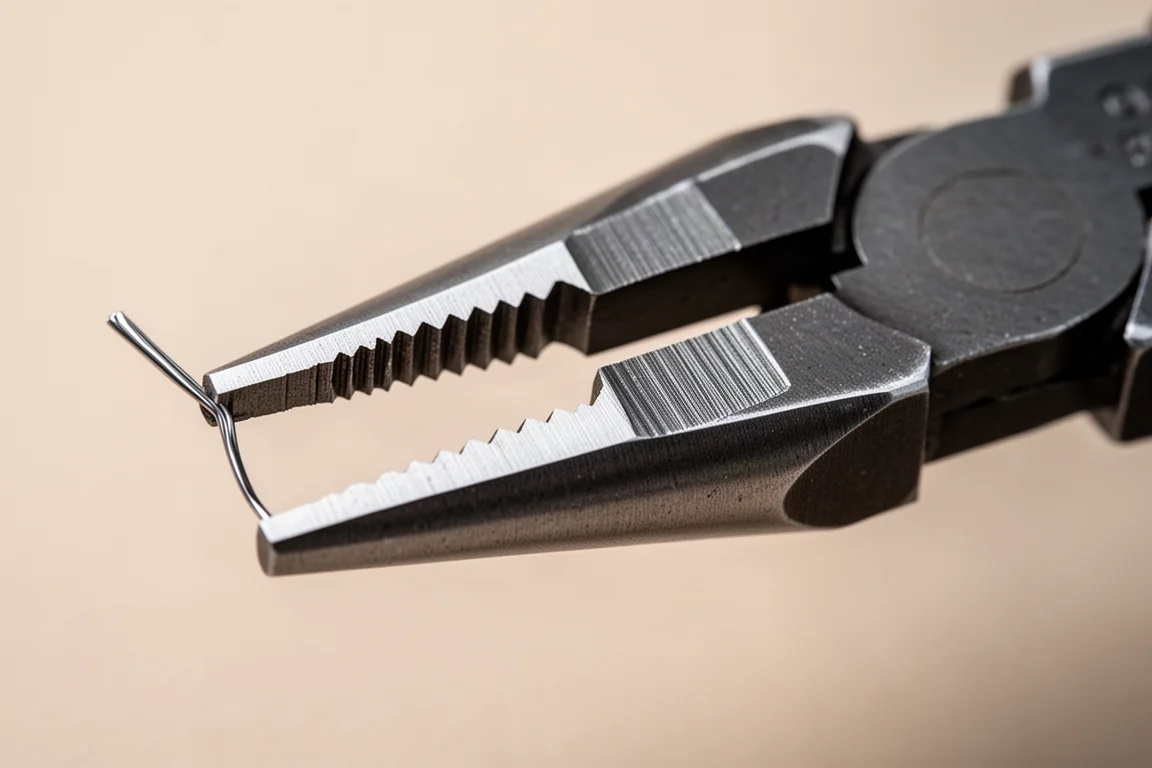
The two brands take different approaches to their grip zones. The Milwaukee pliers feature a small wire-grabbing section near the tips, similar to what Knipex often does, followed by a small flat, then a smaller hex groove, and a larger toothed hex section. Since hex fasteners are usually what you are grabbing, that layout is well ordered.
The Igarashi jaws have a smaller hex at the bottom, some tooth zones that feel a little out of place at the low end, then zones for square stock and round stock of various sizes, finishing with coarse and fine gripping flats at the tips.
Build Quality and Finish
There is a visible difference in finish quality here. The Igarashi pliers show unfinished spots right up near the joint that were not fully ground before chrome plating. The Milwaukee, which appears to use a black oxide finish that has been ground down, has a noticeably nicer finish overall.
The pivot construction also differs. The Igarashi uses a bolt-and-nut arrangement, so it can potentially be tightened if needed. The Milwaukee uses what appears to be a hot rivet, a more traditional approach.
Slimness and Confined-Space Access
This is where the comparison gets decisive. With a dropped part inside a narrow tube, the Igarashi pliers get stuck before reaching it. Because of the pivot position, opening and closing the jaws makes almost no difference to their width, so there is no way to squeeze through.
The Milwaukee behaves differently. It is very slim at the pivot, and the crossover section collapses the normal jaw expansion as soon as the pliers open. It slides into the same tube promptly, and thanks to jaws that actually get smaller as you close them, it can grab a part inside the tube and wiggle it back out. It can even retrieve a nut nearly the size of the tube’s inner diameter.
Stiffness and Flex
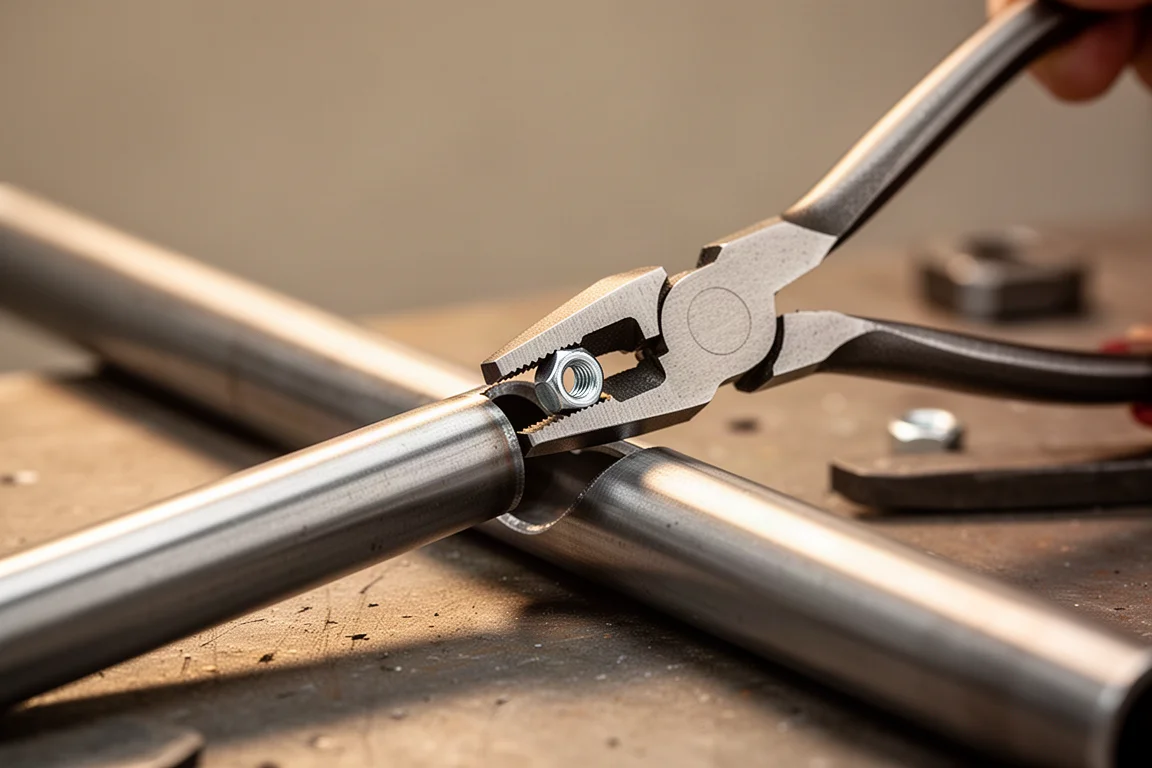
Stiffness separates these tools significantly. Squeezing a bolt in the Igarashi jaws produces a visible amount of flex. The Milwaukee is much stiffer, which suggests sturdier steel and potentially higher quality control on that front.
Stiffness matters with this design because if the jaws flex and bow out under load, you can lose your grip entirely. The crossover slimness is only useful if the jaws hold their shape when you actually squeeze something.
Comfort and Handle Design
One interesting quirk: the Igarashi handles are smaller than you would expect given the rest of the tool. The Milwaukee has a large, girthy handle area that largely disappears when the handles open, and the tool becomes much thinner overall. Closed, the Milwaukee looks slim compared to the Igarashi; open, it is a different story.
Pricing and Value
The Milwaukee is the more expensive plier, in some cases up to twice the price. The Igarashi sells for around 25 dollars on Amazon, with the Milwaukee hovering closer to 40 unless bought as part of a set. That price gap is significant given the performance difference, but it also reflects real differences in finish, stiffness, and slimness.
Overall Buying Advice
Both are genuinely good pliers, and either will serve well for retrieval work. The Igarashi has a few things going for it: the chrome finish could be a nice option in more corrosive environments, and the slip joint is a genuinely useful feature the Milwaukee does not offer. The bolted pivot is also serviceable in a way a rivet is not.
But the Milwaukee wins on the points that matter most for this category: it is longer at the snout, slimmer when open, stiffer under load, finished better, and it handles confined spaces better than anything else here. Overall, the Milwaukee still beats the Igarashi, though the big slip joint on the Igarashi leaves some room for future refinement in this design space.
Conclusion
If you want the best performing long reach plier of this style and can accept the higher price, the Milwaukee is the stronger choice. If budget matters more, or a chrome finish for corrosive environments appeals to you, the Igarashi HLS 300 and HLB 300 are solid alternatives that get most of the job done for less money.
Product link
View more details for Igarashi HLS 300 Long Reach Pliers
This product is mentioned in the review. Check the specifications, options, and compatibility before buying.
View more details for Igarashi HLS 300 Long Reach PliersFurther reading
Related Reviews
Hand Tools
Best Diagonal Cutters 2026: 16 Pliers Tested for Cutting Power and Durability
We put 16 diagonal cutters through nail, screw, drill bit, and hex key tests to find the best value picks for your toolbox.
Hand Tools
Best Hex L Key Sets 2026: Nine Sets Tested for Real-World Torque
Nine hex L key sets from budget to premium, tested for torque, fit, and durability. See which sets deliver real performance and which ones to skip.
Hand Tools
Best Locking Pliers 2026: Top Picks Tested for Grip and Durability
We tested 18 brands of 10-inch locking pliers for grip strength, jaw bite, build quality, and ease of release to find the best options for tough jobs.