Power Tools
Budget vs Pro: Hychika Hammer Drill Driver Compared to the DeWalt DCD791
An $80 hammer drill driver goes head to head with the DeWalt DCD791 to see how big the real performance gap is between budget and pro tools.
Introduction
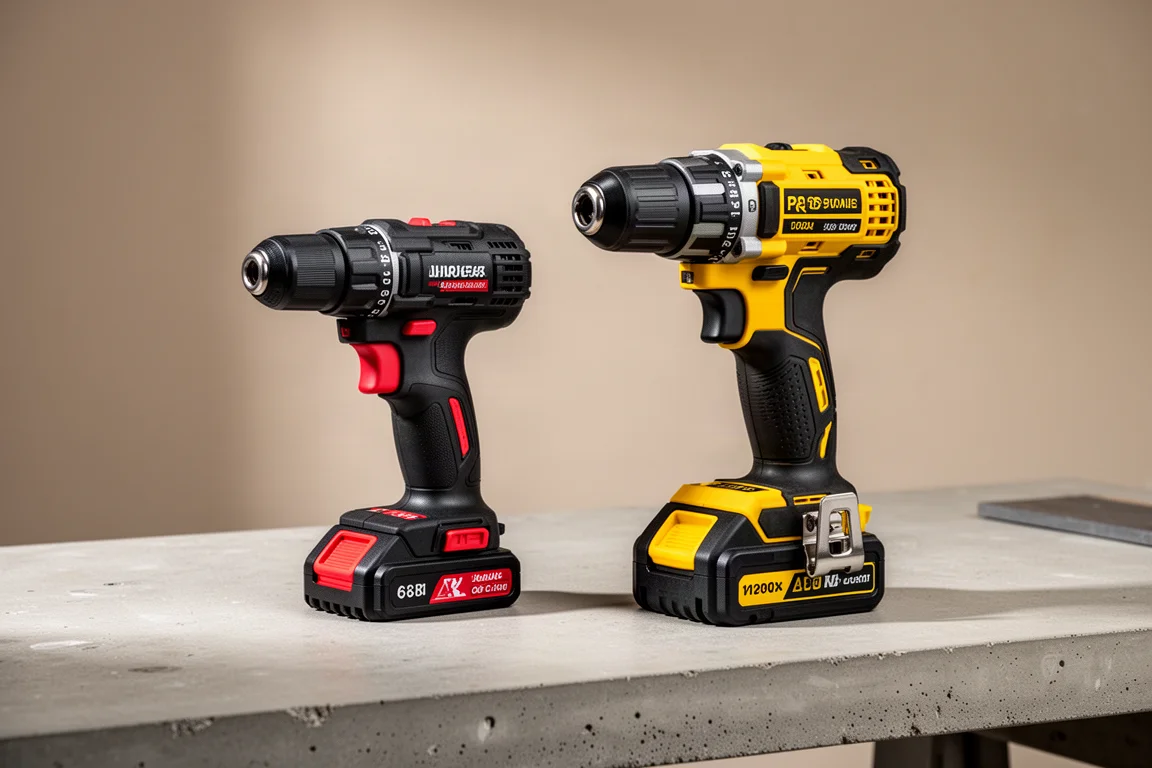
The gap between an $80 drill and a $230 drill is smaller than most people expect. We put the Hychika hammer drill driver, a budget DIY option sold on Amazon, up against the DeWalt DCD791, a well-known compact professional drill, using the same 2Ah battery class on both. Both tools drilled the same holes with the same bits in the same materials, and the results were revealing in both directions.
The Hychika is not a toy. It is a hammer drill driver with multiple modes and a full clutch ring, and in several tests it performed far closer to the pro tool than its price suggests. That said, there are quality differences you will feel every time you pick it up.
What the Hychika Offers
The Hychika is a two-speed hammer drill driver with speeds of 0 to 500 RPM and 0 to 2,000 RPM, plus a hammer rate of 0 to 32,000 BPM. The mode selector gives you hammer mode, screw mode, and drill mode, and the clutch settings come into play in screw mode. In practice, the variable speed trigger is genuinely good, which came as a surprise at this price. The wide trigger is another nice touch, easy to pull and comfortable to hold.
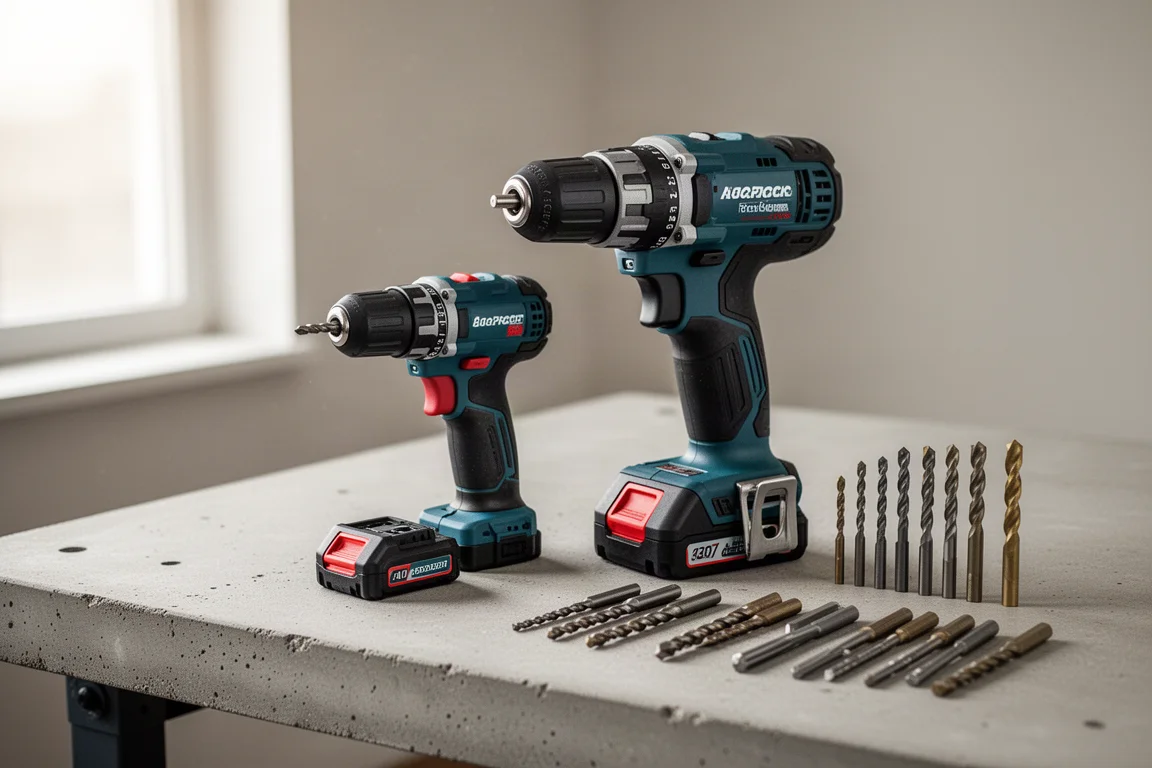
One thing worth knowing before buying: the Hychika ecosystem is limited. You will not find the larger battery options you might eventually want, and the overall range is thinner than what established brands offer. That matters more the longer you own the tool.
Chuck Runout and Bit Grip
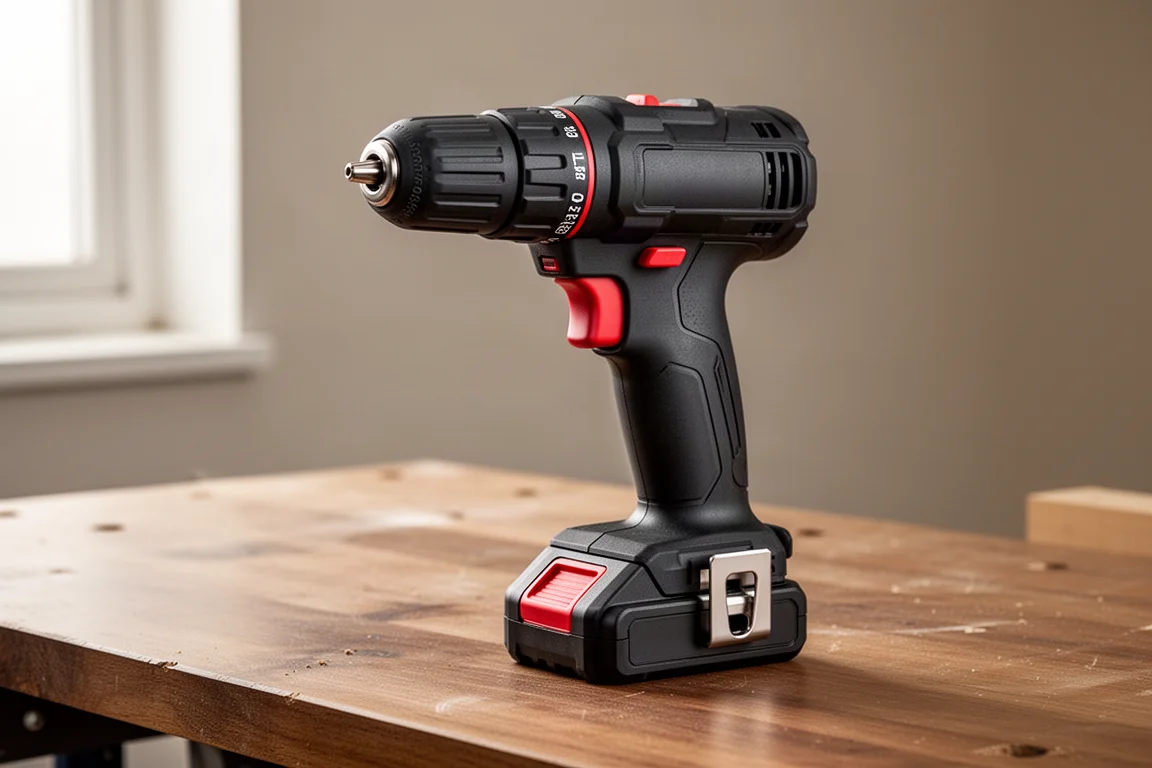
Chuck behavior is where the two tools diverge in unexpected ways. The Hychika’s ratcheting chuck looks like it wobbles a lot at first glance, but actual measured runout while drilling turned out surprisingly low. The DeWalt actually showed noticeably more chuck wobble, which is a known trait of that line, so on this metric the budget drill holds its own.
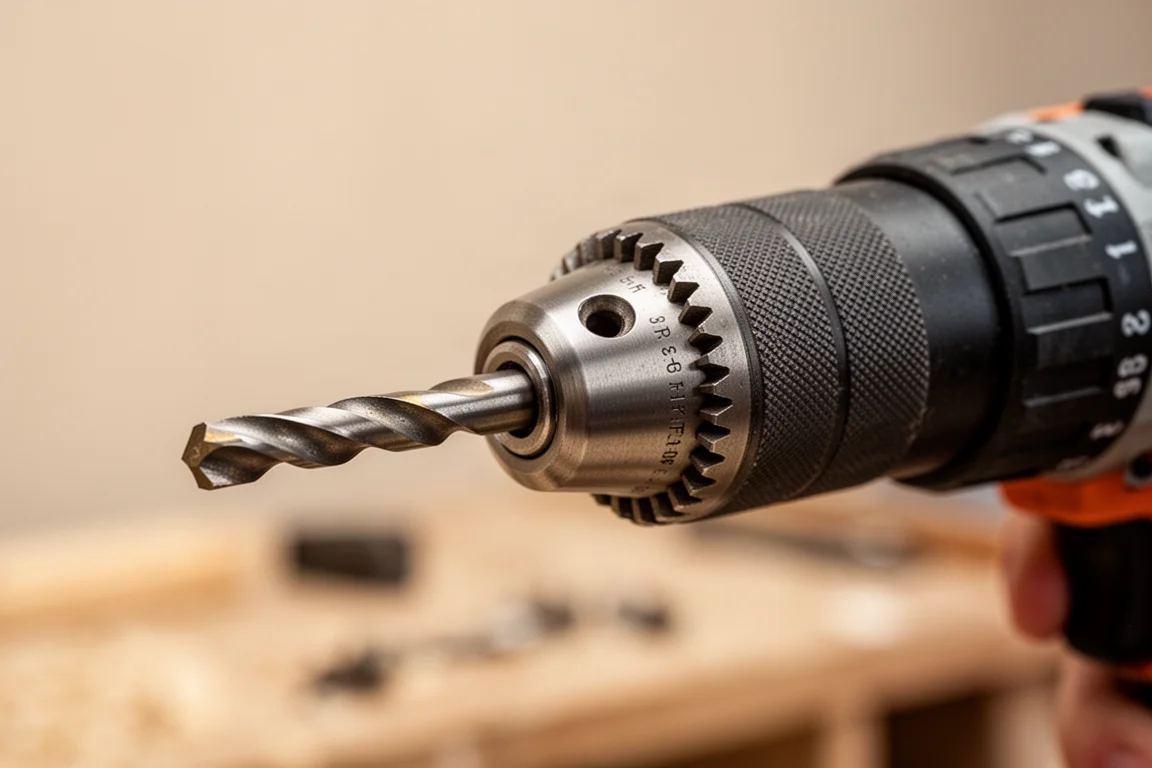
The bigger chuck issue is bit grip. Normally you tighten a chuck, give it a final ratchet, and the drill holds the bit. The Hychika will not hold that way; you have to keep the trigger engaged to get it tight. The DeWalt’s chuck is significantly better in feel and grip, holds bits the way you expect, and makes swapping bits noticeably smoother.
Drilling Power and Speed
Swapping the same bits between both tools made the power difference obvious. On smaller bits the Hychika bogged down in high speed where the DeWalt powered through. As the holes got larger, the pattern held: the DeWalt was significantly faster no matter what was being drilled, and had more power in reserve.
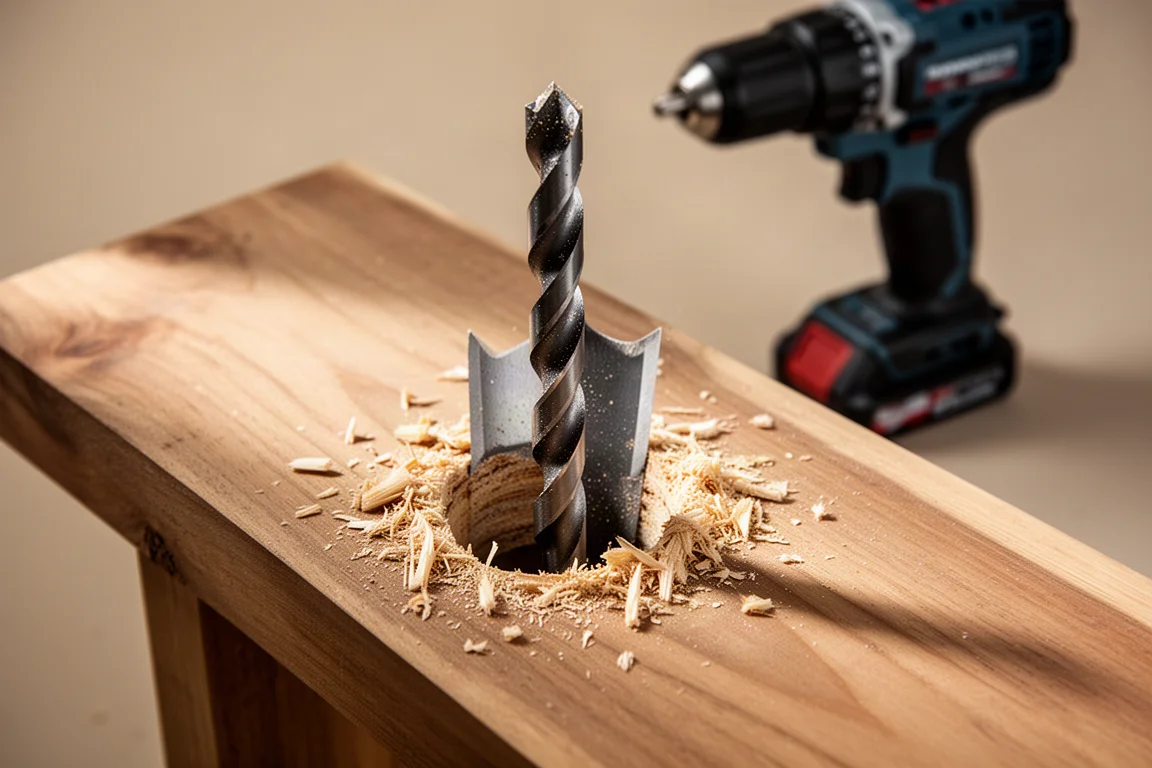
The Hychika was not helpless. Stepping down to low speed let it finish large holes that stalled in high speed, including holes that stopped it at the end of the bore in high range. A 1-inch bit that killed the budget drill in high speed was no issue in low range. It is slower, but it gets there.
Hammer Mode
Hammer mode on the Hychika was tested with a half-inch bit, which is honestly asking a lot of an $80 drill; a quarter-inch bit would be a more realistic ask. It did not get far in concrete, but the vibration and sound were not horrible, and for an occasional anchor hole it will do light duty work.
The DeWalt with the same 2Ah battery was much, much louder, went deeper in less time, and generally made the budget tool look respectable rather than embarrassing. If hammer mode is a rarely used feature for you, the Hychika covers the basics.
Clutch Performance for Screwing
Clutch behavior matters most for DIY users driving screws. The Hychika’s clutch works fine. Setting it halfway gave a sensible stopping point, and stepping up through the settings behaved as expected. There is some give in the mechanism, but no real issues.
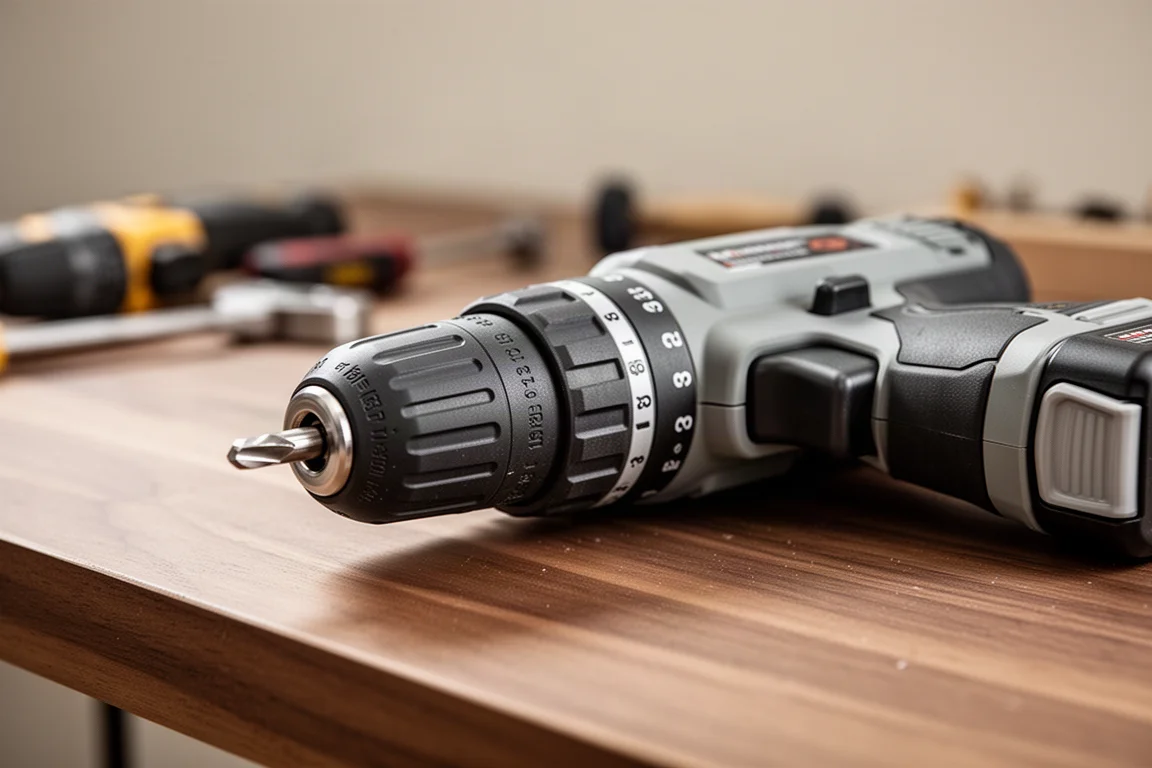
The DeWalt’s clutch is louder when it engages, and with the right setting it buries screws without slipping. On both tools, gear choice made the biggest difference. Neither clutch is going to frustrate a homeowner assembling furniture or building a deck, though the DeWalt feels more precise through the range.
What You Actually Get for the Extra Money
Here is the honest takeaway: the Hychika is slower, has less power, and shows quality differences in the chuck and grip, but the gap between an $80 tool and a $230 tool is not enormous. The DeWalt is faster and stronger by a long shot, with a much better chuck and smoother feel everywhere.
The bigger question is the ecosystem. Budget tool lines from major brands often cost nearly as much as their pro lines while giving up the battery options and support that justify the price. Walking into a store or calling a company to get a broken tool fixed or replaced is a real advantage, and that is where established brands still earn their premium. DeWalt’s newer compact battery technology is also pushing the whole market forward, which benefits buyers at every price point.
If your budget is tight, do not automatically discount Amazon budget tools; some of them genuinely work. The performance of mid-priced drills tends to track closer to the cheap end than to the premium end, so the real decision is between true budget and around $175 and up.
Conclusion
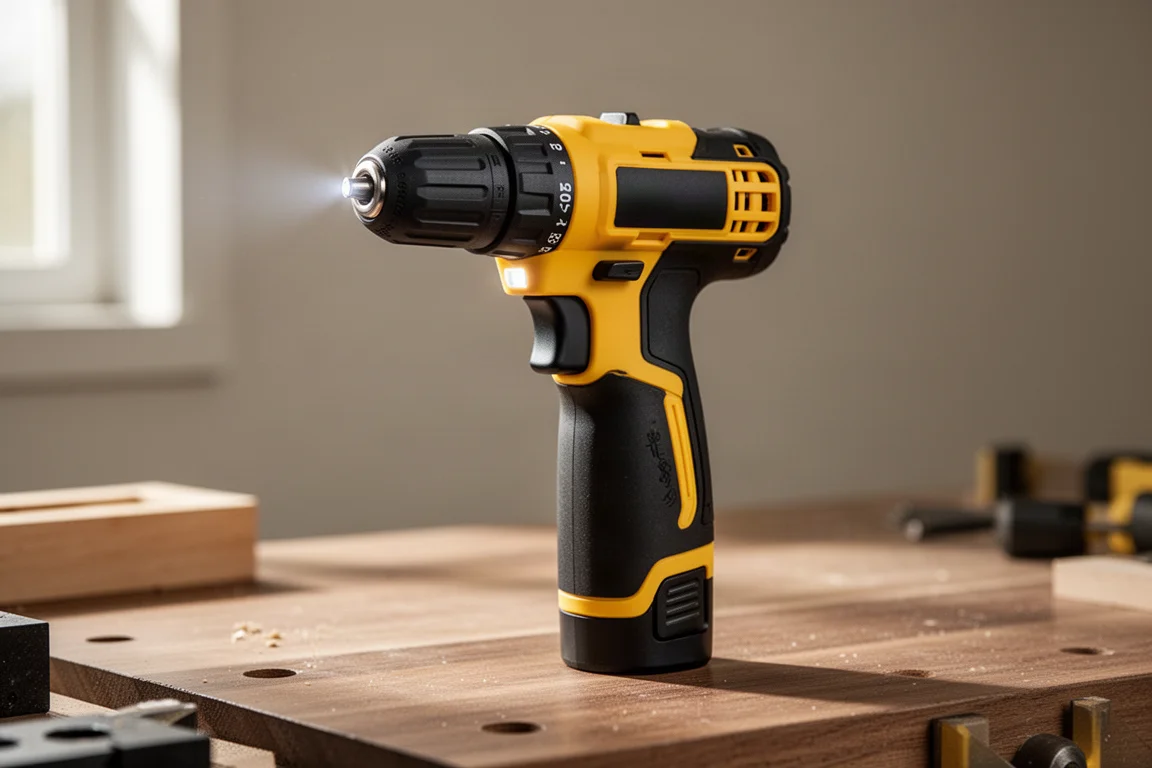
The Hychika hammer drill driver is a legitimately capable budget drill with good variable speed, low measured chuck runout, and a workable clutch, limited mainly by a chuck that will not hold bits without trigger pressure, modest power, and a thin battery ecosystem. The DeWalt DCD791 is faster, more powerful, and better built throughout, which is exactly what you would hope for at roughly three times the price.
If you drill occasionally and want the cheapest tool that still works properly, the Hychika makes sense. If you want speed, power, and a chuck that behaves every time, the DeWalt earns its price.
Further reading
Related Reviews
Power Tools
Best 1-Inch Pistol Impact Wrenches: Three Heavy-Duty Options Compared
We compare three 1-inch pistol impact wrenches, from a budget-friendly Harbor Freight model to a premium Caterpillar unit, to help you choose the right one.
Power Tools
Best 3/4-Inch Impact Wrenches 2026: Five Contenders Compared
We compare five 3/4-inch impact wrenches across price and performance, from a budget Amazon option to Snap-on's most powerful model yet.
Power Tools
Best Budget Cordless Tools 2026: Walmart Finds That Punch Above Their Price
We tested five cordless tools from Walmart, including a high-torque impact wrench that trades blows with Milwaukee and a $35 duster that outperforms its price class.