Pocket Knives
Husky vs Kobalt Folding Knives: Two Store-Brand Pocket Knives Compared
A hands-on look at the Husky assisted-opening knife and the Kobalt button-lock folder, covering locks, blade shapes, pocket clips, and where each one makes sense.
Introduction
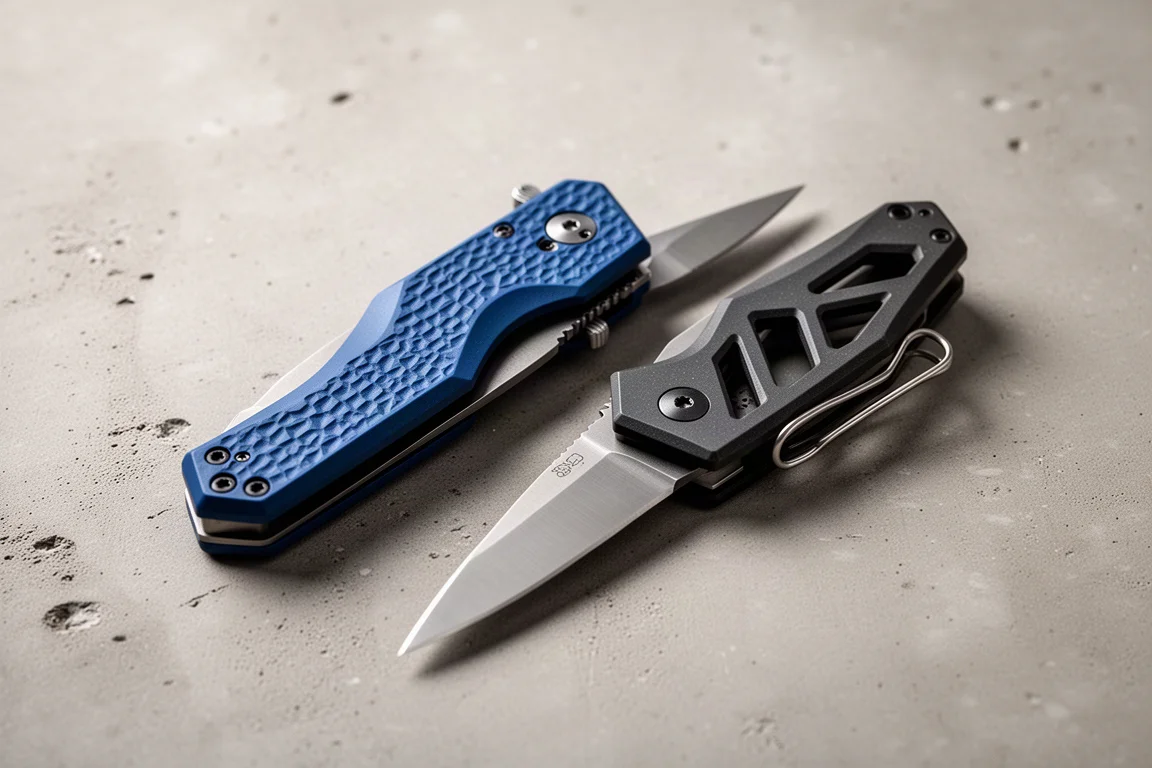
Store-brand knives from tool retailers are an interesting corner of the pocket knife market. They usually sell for not much more than a basic utility knife, yet they offer real locking blades, genuine steel, and designs with actual personality. The Husky and Kobalt folding knives are two of the more recent examples, and they take noticeably different approaches to locks, blade shapes, and everyday handling. One is a smooth assisted opener with a distinctive carved handle. The other is a tougher, no-nonsense folder with a lock system that fights itself.
What Makes Store-Brand Knives Different
Compared with a standard premium pocket knife, every one of these knives shares the same basic anatomy: handle scales, a pocket clip, a locking mechanism at the blade end, a specific blade shape and grind, a deployment method, blade coatings, and blade steel. Where store brands diverge is in how they interpret those elements, often with artistic flourishes you would never see from a traditional knife maker. The Husky and Kobalt sit in that space: inexpensive, genuinely useful, and each with quirks worth knowing before you buy.
Kobalt Folding Knife: Solid But Fussy
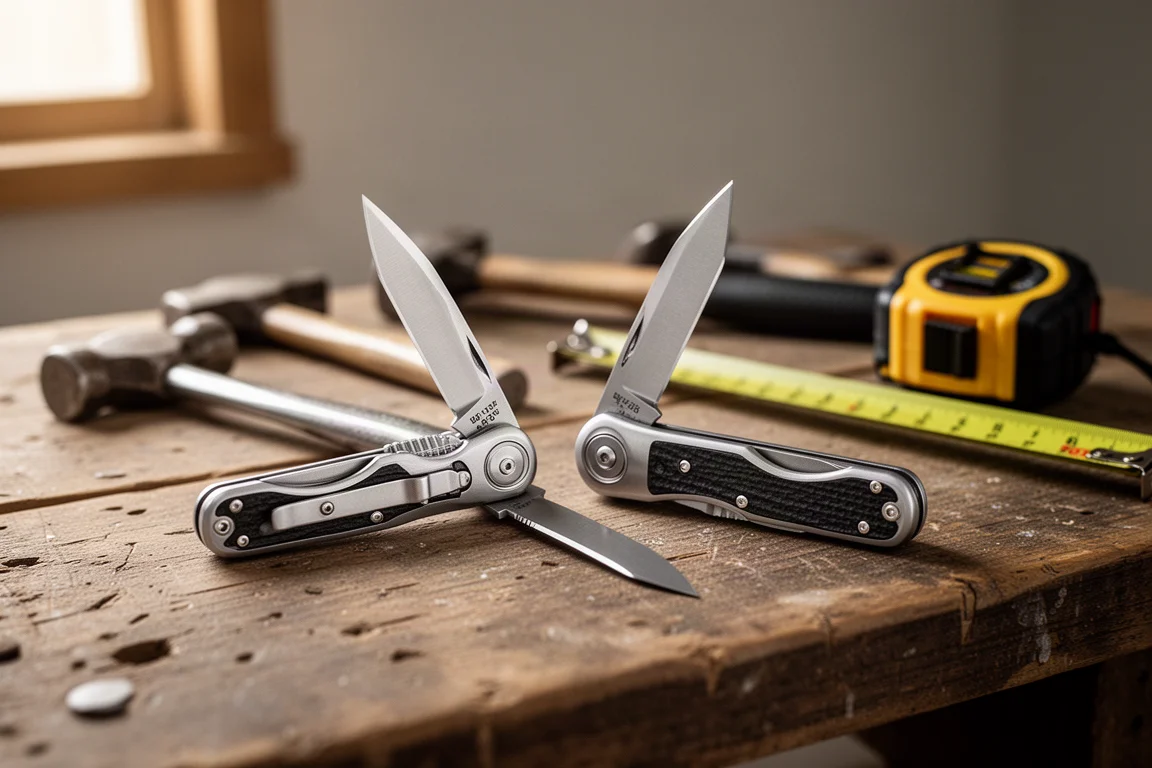
The Kobalt uses a push button lock to release the blade open, which can feel unnecessarily restrictive if you prefer to operate a sharp tool smoothly. The real annoyance is the closing side: Kobalt pairs the button lock with a separate liner lock for closing, so the two systems compete with each other. It is a design choice that adds friction to every cycle of the blade.
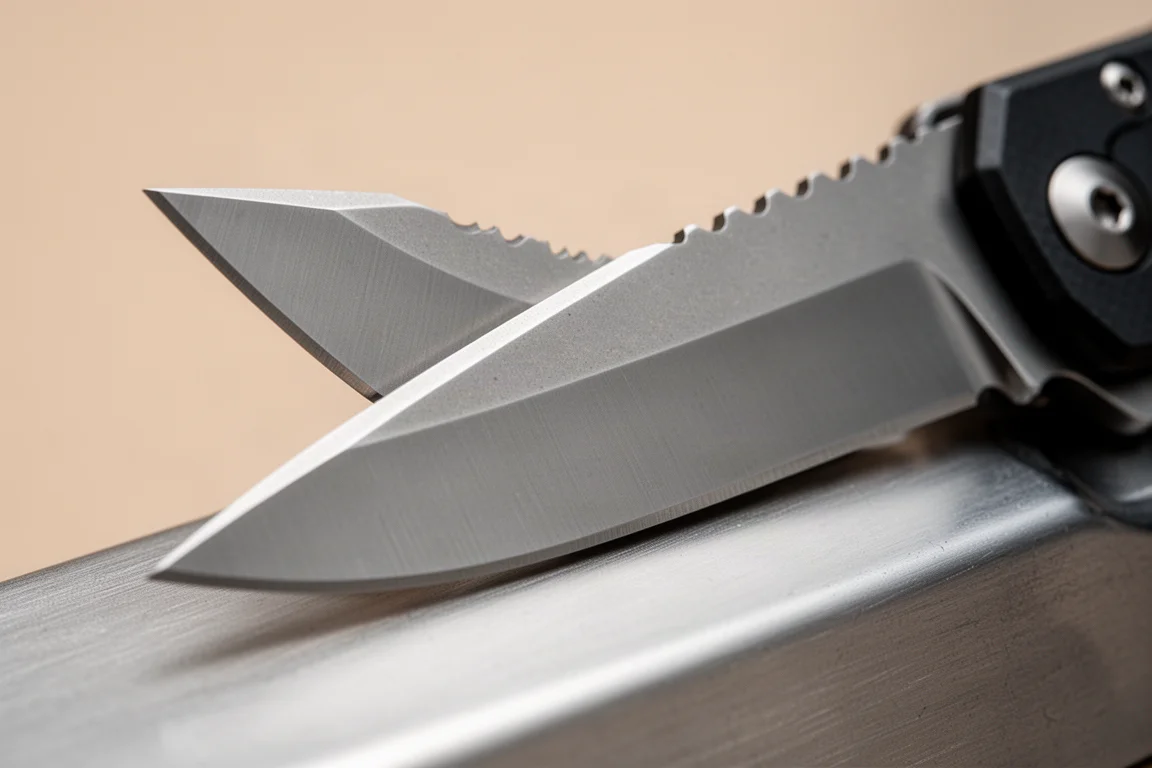
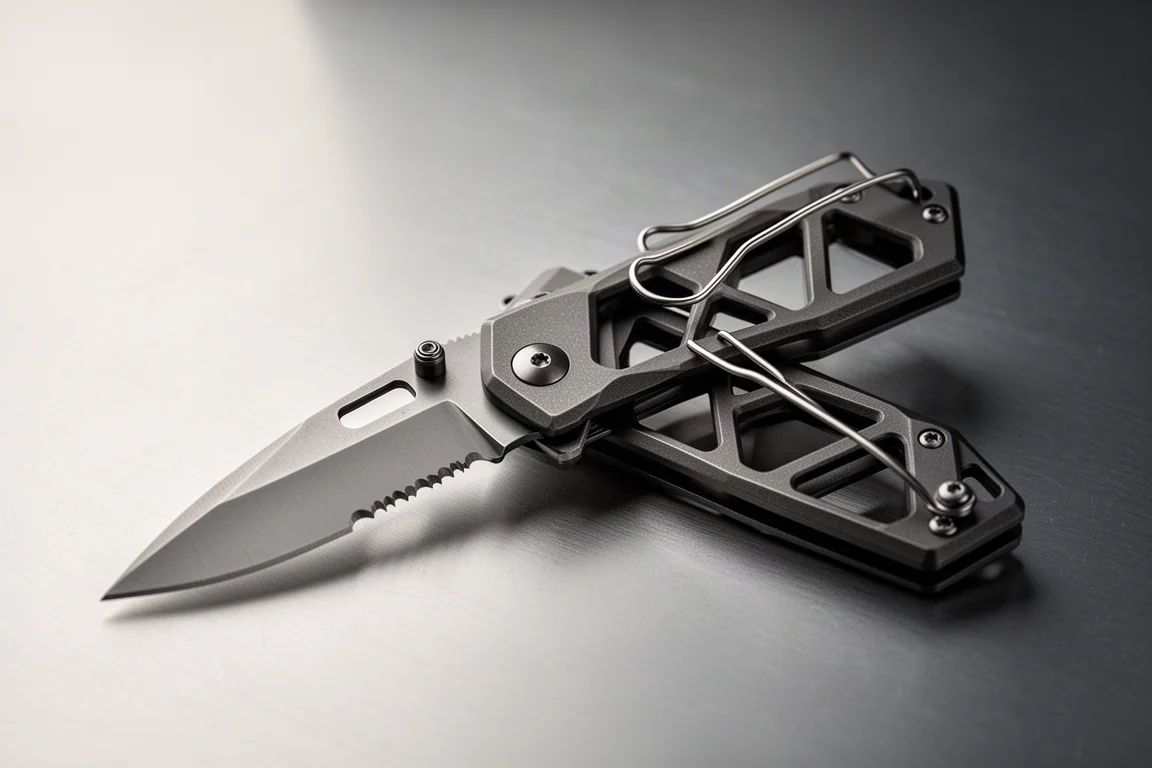
To its credit, it is a solid knife at roughly 15 to 19 dollars, and it feels built to be abused without worry. The handle is a little harsh in the hand, with big angular cutouts that give it a distinctive Kobalt look. The blade is a standard clip point with partial serrations. The wire pocket clip is the weakest hardware here, feeling flimsy compared with solid metal clips. If you want more knife than an interchangeable-blade utility knife and you do not mind the double lock arrangement, it holds up well.
Husky Assisted-Opening Folding Knife
The Husky takes a very different path. It is an assisted-opening knife with a spring load, meaning a partial manual launch sends the blade the rest of the way open. That is not the same as automatic opening, and there are no restrictions on deploying it, which makes for a satisfying, fast opening action. It also has a solid liner lock.
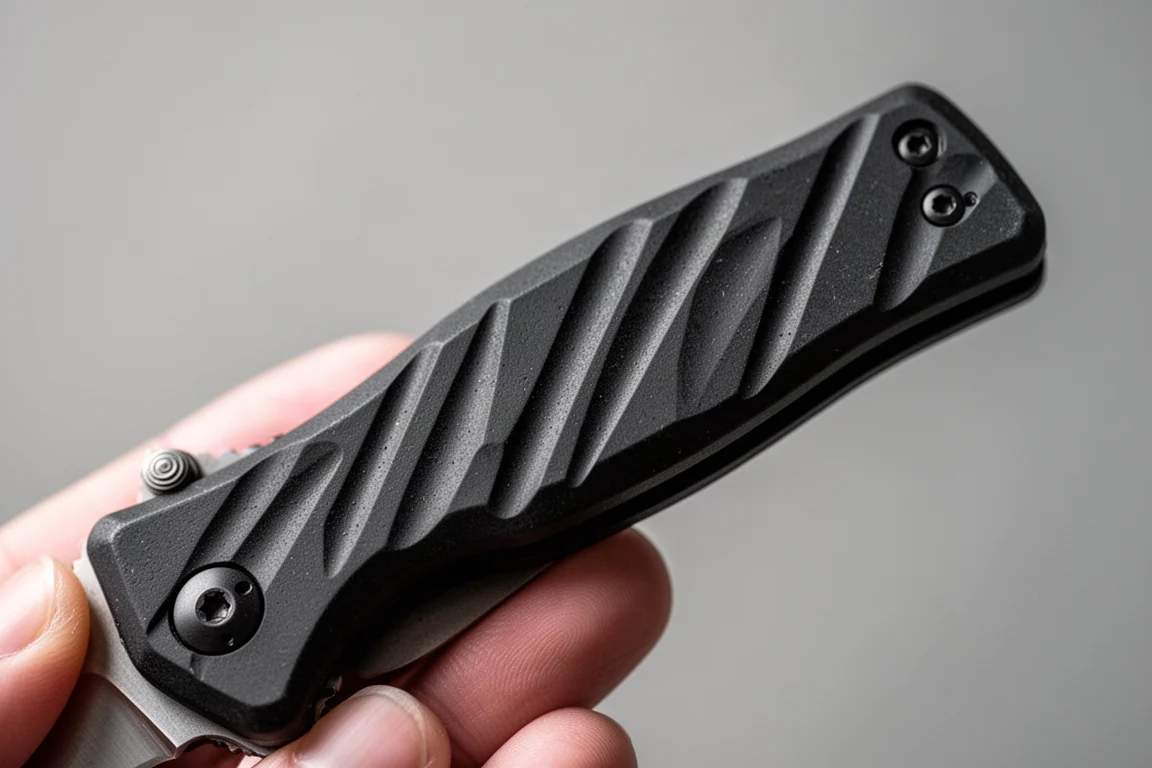
The handle is the standout feature: an asymmetrical, rubberized design with grooves that look almost chiseled or carved, more primordial than the repeated symmetric CNC cuts you see everywhere else. There is also an extra safety that can lock the blade closed so it cannot deploy at all, a useful option if you want to carry it locked down in a restrictive jurisdiction. The blade geometry is unusual too: a modified profile with a steep dive at the tip rather than a true clip point, with a smooth belly for slicing and angular flair along the spine.
The Pocket Clip Problem Both Share
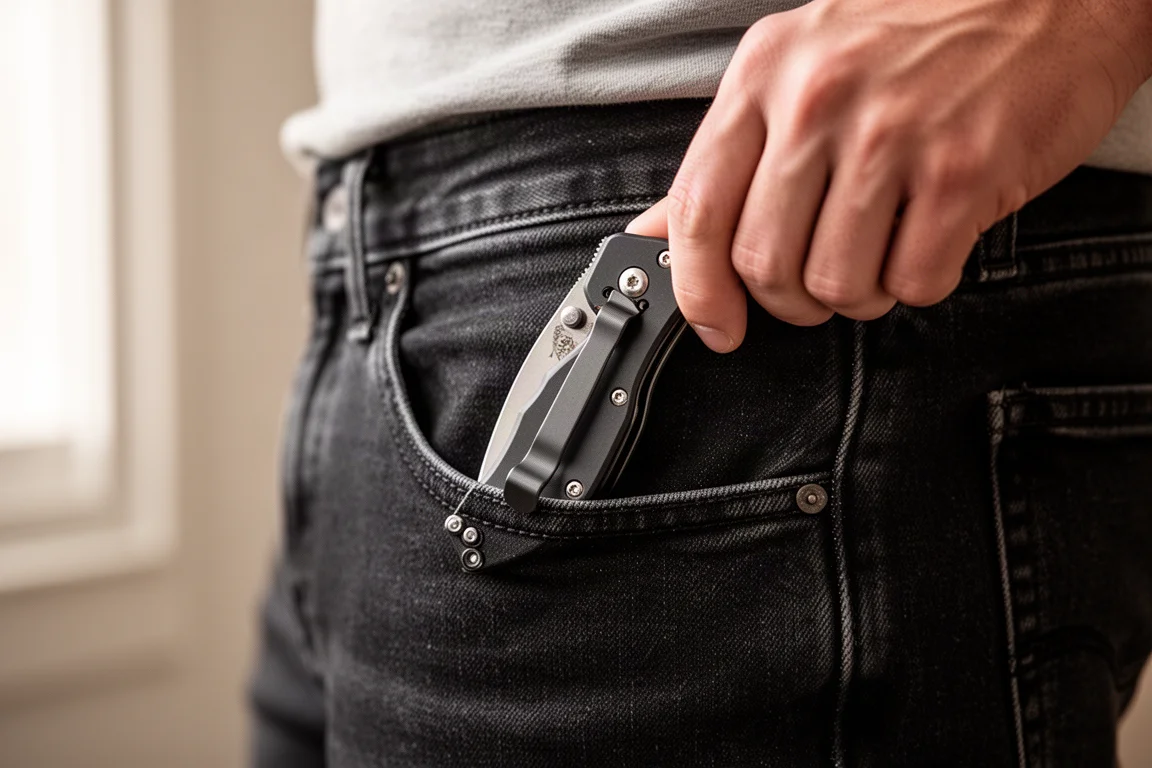
Both knives get deep-carry style clips, which is genuinely appreciated on the Husky, where the clip is long and the knife rides low in the pocket. But there is a shared flaw: both clips are mounted backwards for right-hand tip-up carry. When you slide the knife out of the pocket, the blade faces the wrong way, so you have to flip the knife around before you can deploy it. Nearly every comparable store-brand folder has the same orientation, which makes this a consistent miss across the category rather than a one-off mistake.
Which One Should You Buy
Choose the Husky if you value a fast, smooth opening action, a comfortable rubberized grip, and the option to lock the blade closed for safety or legal reasons. Choose the Kobalt if you want a cheap, tough workhorse you can beat up without concern, and you can live with the dual button-and-liner lock and a wire clip. Both are far more capable than a utility knife, and both cost only modestly more. If you live somewhere that restricts locking or assisted-opening blades, check local rules before choosing either.
Conclusion
The Husky is the more refined of the two, with a clever assist mechanism, an unusual chiseled handle, and a genuinely nice deep-carry clip, while the Kobalt wins on pure low-cost toughness. Neither is perfect, and both share the backwards pocket clip quirk, but each delivers real knife value at store-brand prices.
Further reading
Related Reviews
Pocket Knives
Best Budget Ganzo Knives Under $40: Three standouts Plus a Worthy Rival
Ganzo's Firebird lineup delivers near-premium fit and finish at ultra budget prices. We look at three models that show exactly why, plus the Ontario RAT Model 1 for comparison.
Pocket Knives
Two New Civivi Budget Knives Worth Watching: Sentinel Strike and the Snacks Lock Collaboration
Two fresh budget EDC knives from Civivi: an integral-handle Sentinel Strike in K110 steel, and a collab bringing an open-source lock design to a knife under $80.
Pocket Knives
Vosteed Ankylo Review: A Push-Button Pivot Lock That Actually Feels Different
The Vosteed Ankylo pairs a 3.18-inch Elmax reverse tanto blade with an innovative Vaner lock recessed into the pivot, multiple deployment options, and an overbuilt feel at a friendly price.