Hand Tools
Husky Auto-Retracting Utility Knife vs Stanley No. 99: Two Utility Knives Compared
A modern squeeze-grip auto-retracting utility knife from Husky and the classic Stanley No. 99 fixed-blade design, compared for cutting, blade changes, and jobsite safety.
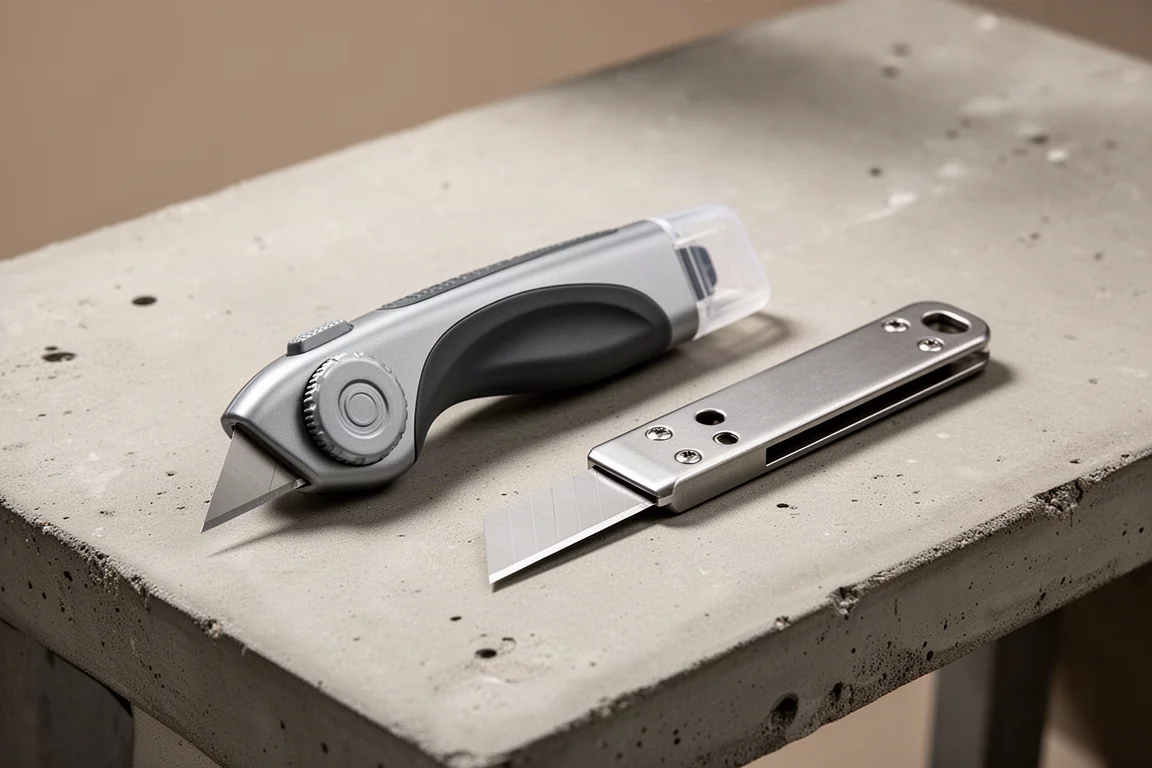
Introduction
Utility knives are one of those tools most people own several of, yet few think carefully about before buying. The original deliberate shop knife dates back to 1936, when Stanley introduced its classic No. 99, and since then the category has evolved through retractable blades, multi-position blade stops, folding handles, and self-retracting safety designs.
This comparison looks at two very different points in that evolution: a modern Husky auto-retracting utility knife that squeezes naturally in the hand, and the classic Stanley No. 99 that started it all. The goal is to help you figure out which approach fits your cutting habits and, for some readers, your workplace rules.
A Quick History of the Utility Knife
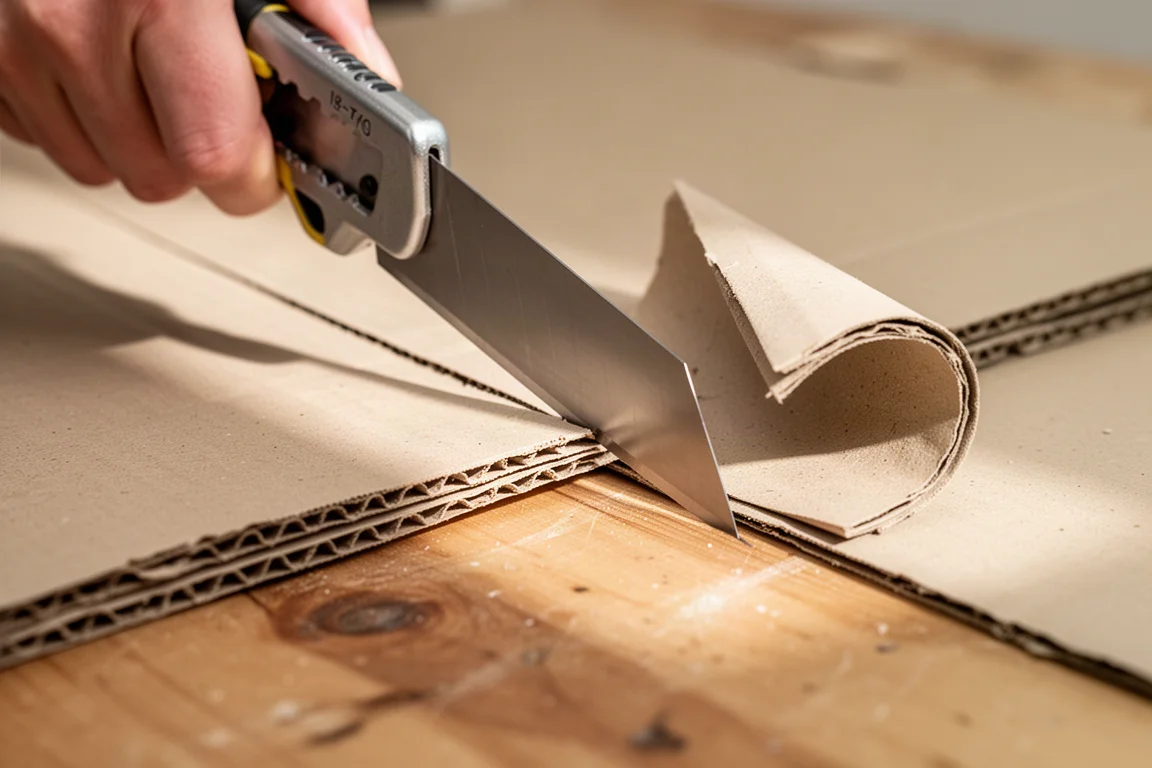
The Stanley Tool Company, founded in 1843 by Frederick Trent Stanley in Connecticut, was already about 90 years old when it released the No. 99 in 1936. That knife was a fixed blade on a utility handle, with blade storage inside the handle. The catch: you needed a slotted screwdriver to open it up and drop in a new blade.
Later designs across the industry moved to retractable blades, typically operated by a thumb switch on top, and eventually added multiple stop positions so the blade could sit at different lengths. Other manufacturers have since pushed the design further with folding utility knives, reshaped ergonomics, belt clips, and hybrids that keep a fixed handle but add hinged blade covers and tool-free access panels.
Why Auto-Retracting Matters
Some jobsites have a rule worth knowing about: certain work environments only permit utility knives that self-retract. In many of those designs, the blade only stays retracted if you hold a button in that position, which some find awkward and not particularly innovative. The blade change also requires opening the handle, so the safety intent is clear but the handling can be clunky.
The Husky knife takes a more natural approach: you squeeze the handle to hold the blade out, and when you let go, the blade snaps back automatically. It satisfies the self-retracting requirement without forcing your thumb into an uncomfortable position, and the retraction happens in the same motion as cutting.
How the Husky Auto-Retracting Knife Works
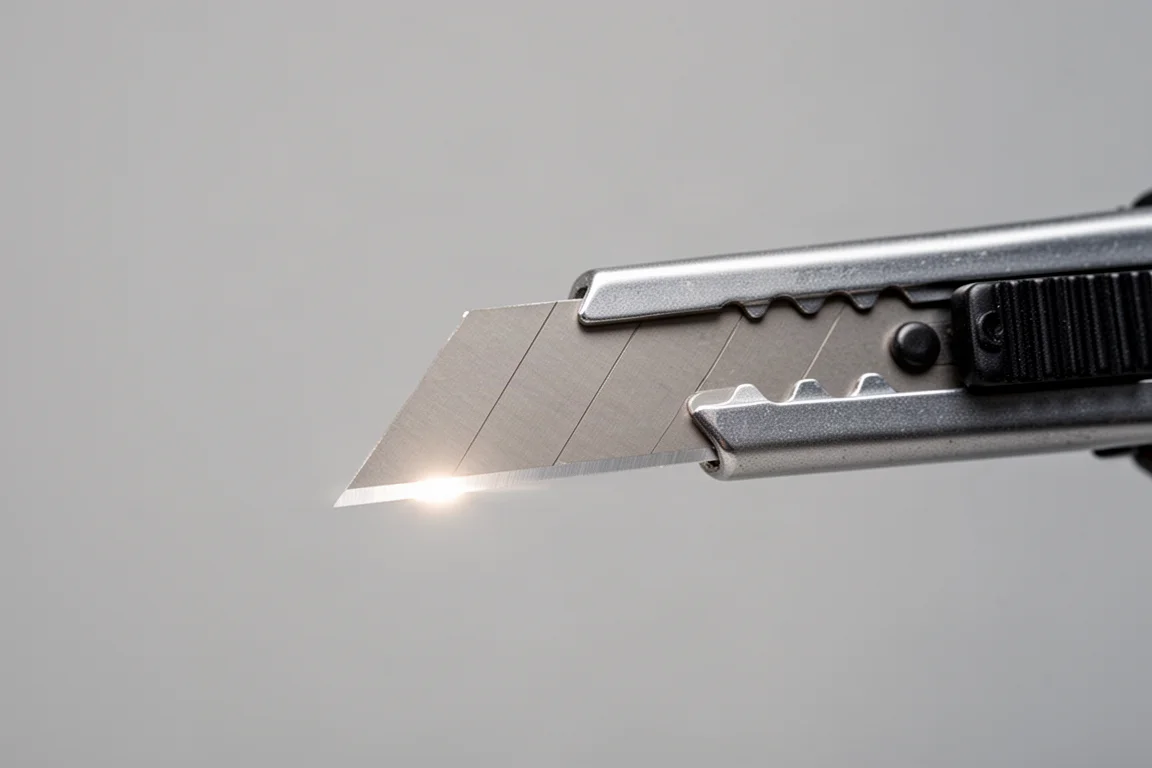
The Husky 832404 uses a squeeze-grip handle, so retracting the blade is built into the way you naturally hold the knife. Because it is fully self-retracting, the blade cannot stop partway out on its own. If you want just a little blade exposed, you control that with your thumb manually.
It also has multiple settings. You can lock it closed so it cannot open in a tool bag. From there, three positions progressively extend the blade: the first for shallow cuts like slicing open cardboard, the second a little further out, and the third for full blade length.
There is one button on the body that extends the blade-holding slider, and this is the weakest part of the design. It sticks out quite far and is easy to hit accidentally, and the slider can come out a little too readily. Blade insertion also takes some finesse: you need to hold the mechanism up, press the blade in, and press the button in just right, or the knife can throw a fit before it locks in.
Blade Storage and Build Quality
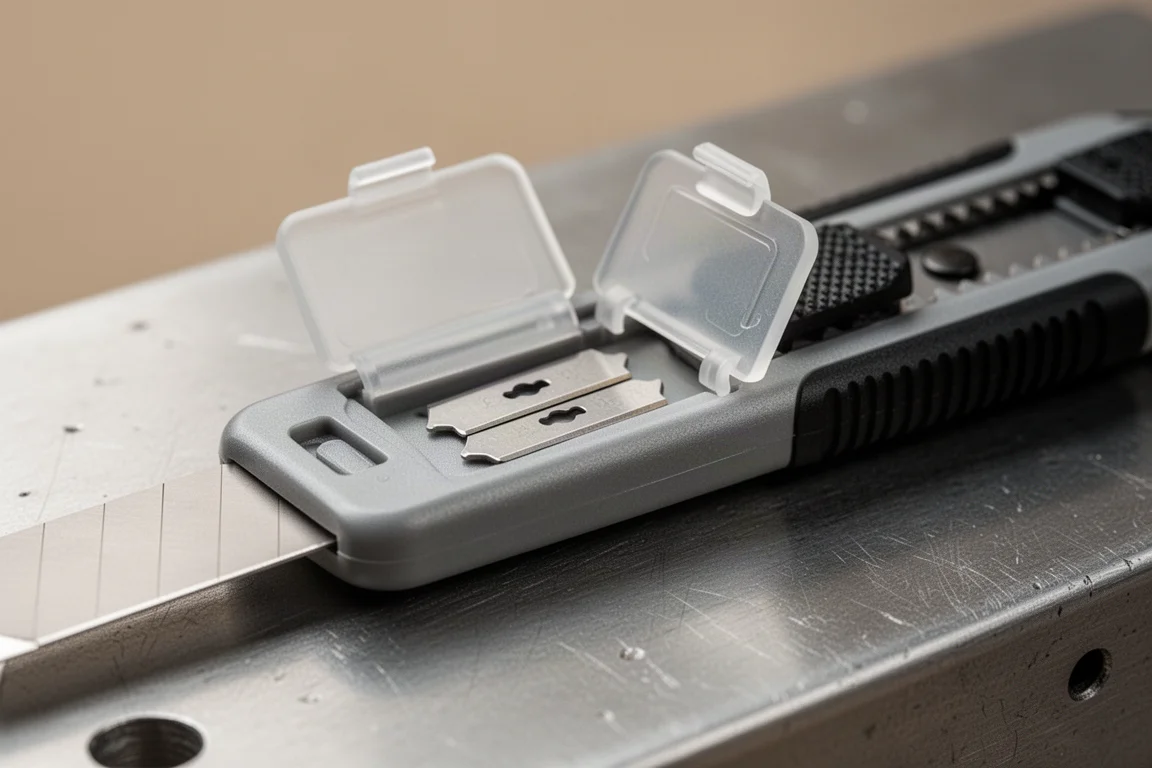
Blade storage lives in the back, behind a small snap-down plastic cover that holds a couple of spare blades. It works, but getting a blade seated correctly takes patience, and the fiddly mechanism is a recurring annoyance.
The body itself appears to be some kind of metal rather than plain plastic. Scratching through the coating with a pick revealed a metallic surface underneath, suggesting a magnesium-style construction. The exposed fasteners look like small hex or Torx-style heads, and the overall fit suggests the knife is fairly well made for what it is.
Given that it typically sells for under $8 and comes with three blades (one installed, two stored on board) plus a lanyard hole in the back, it offers a lot of function for a simple tool.
The Classic Fixed-Blade Alternative: Stanley No. 99
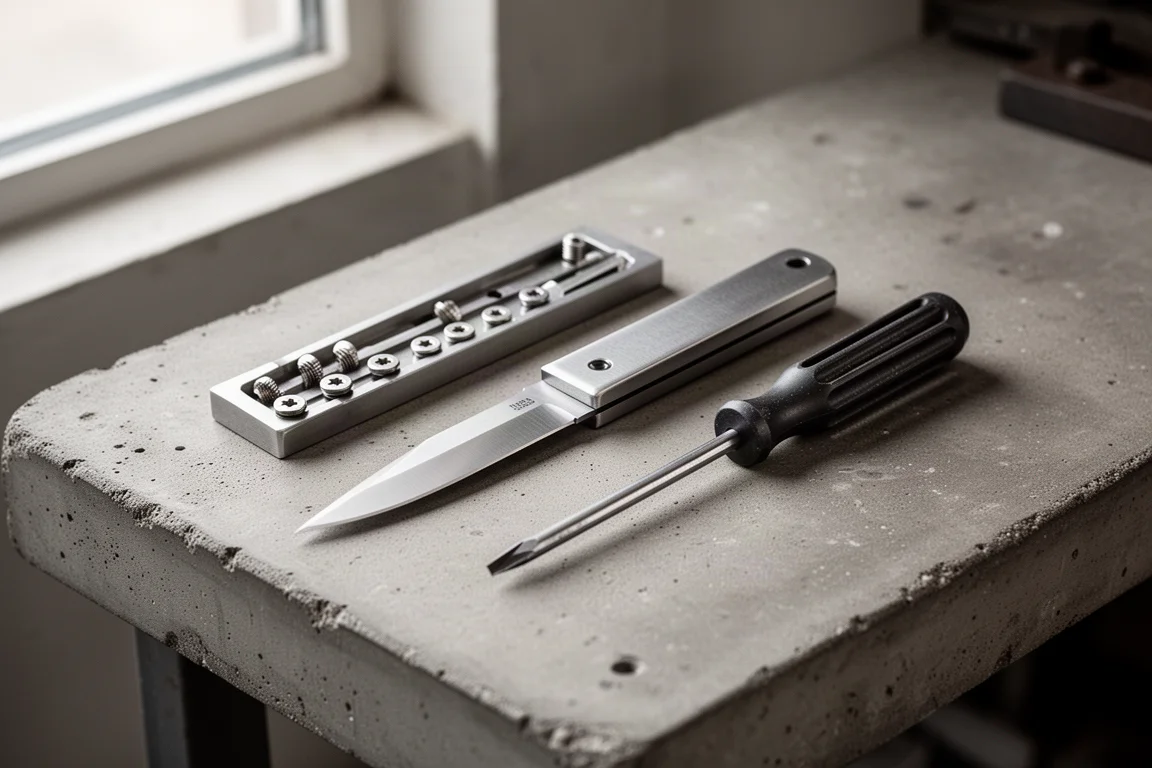
The Stanley No. 99 is where this category began in 1936. It is a fixed-blade knife on a utility handle, which means fewer moving parts. Anything that moves can become a weakness, so a solid fixed design has real durability appeal.
The trade-off is access. Blade changes require a slotted screwdriver to open the handle, where spare blades are stored. That is slower than any modern tool-free design, but for a shop knife that mostly stays put, it is hard to argue with the simplicity.
Buying Advice
If your workplace requires a self-retracting knife, or if you simply prefer a blade that snaps back the moment you release your grip, the Husky 832404 is a compelling choice at its price. Its main flaws are the protruding release button, the slightly loose slider, and fiddly blade storage, none of which are deal-breakers for an under-$8 tool.
If you value a simpler, fewer-moving-parts design and do not mind a screwdriver for blade changes, the classic fixed-blade approach still holds up. It is the choice for a workshop drawer knife rather than a jobsite safety-compliant one.
Conclusion
The Husky 832404 modernizes the self-retracting concept with a squeeze-grip action that feels more natural than thumb-held designs, and its low price makes it easy to try. The Stanley No. 99 remains a benchmark for fixed-blade simplicity. Choosing between them comes down to whether automatic retraction is a requirement or a preference for the way you cut.
Product link
View more details for Husky 832404 Utility Knife
This product is mentioned in the review. Check the specifications, options, and compatibility before buying.
View more details for Husky 832404 Utility KnifeFurther reading
Related Reviews
Hand Tools
Best Diagonal Cutters 2026: 16 Pliers Tested for Cutting Power and Durability
We put 16 diagonal cutters through nail, screw, drill bit, and hex key tests to find the best value picks for your toolbox.
Hand Tools
Best Hex L Key Sets 2026: Nine Sets Tested for Real-World Torque
Nine hex L key sets from budget to premium, tested for torque, fit, and durability. See which sets deliver real performance and which ones to skip.
Hand Tools
Best Locking Pliers 2026: Top Picks Tested for Grip and Durability
We tested 18 brands of 10-inch locking pliers for grip strength, jaw bite, build quality, and ease of release to find the best options for tough jobs.