Home Ventilation
How to Choose a Bathroom Extractor Fan: Beyond Specs and Price
Selecting the right extractor fan requires understanding fan curves, duct design, and real-world performance trade-offs. Learn what separates effective ventilation from disappointing installations.
Introduction
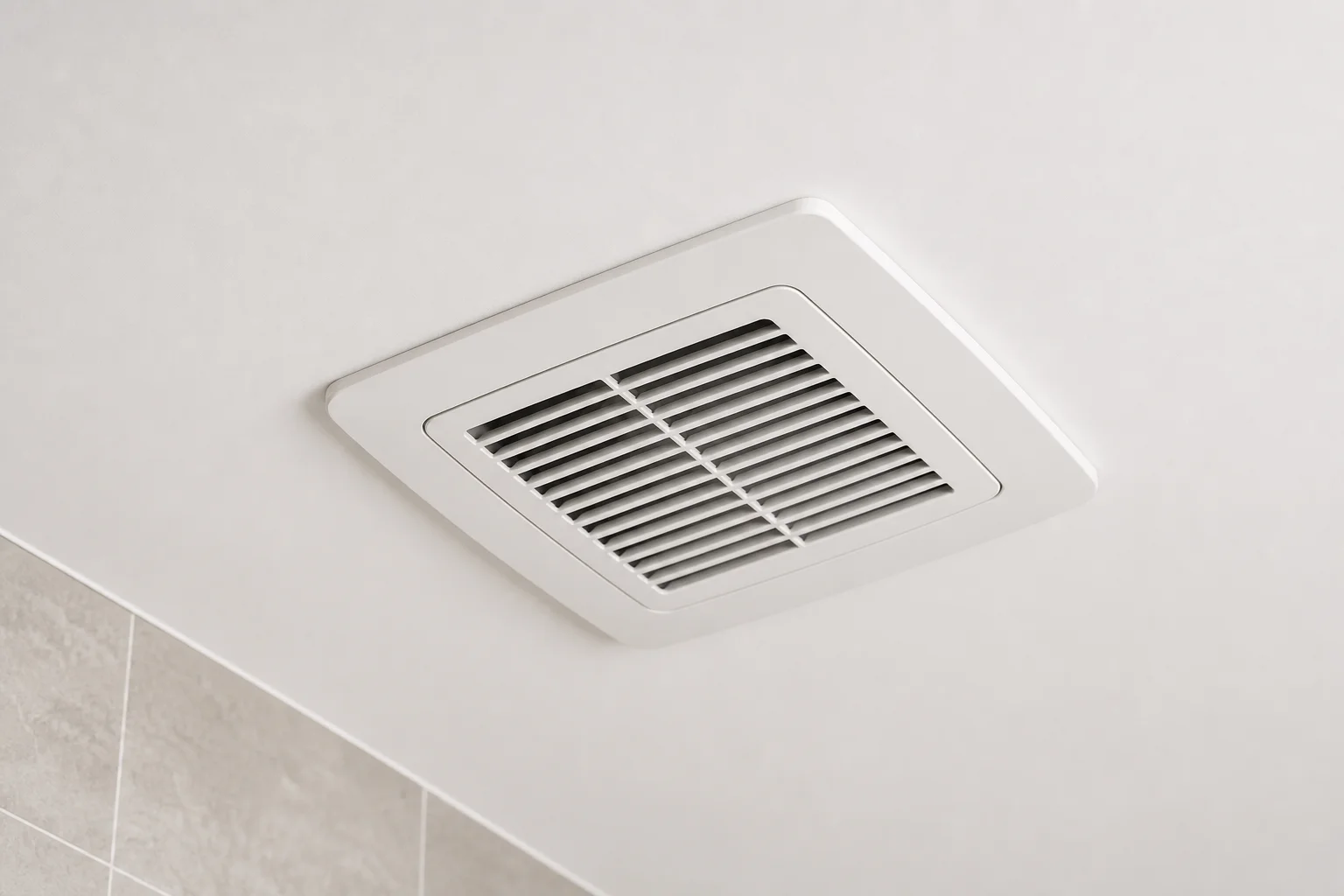
Choosing an extractor fan for a bathroom or toilet seems straightforward on paper. Most fans display similar performance specifications, yet real-world installations often deliver vastly different results. The difference lies not in the fan alone, but in how the entire ventilation system is designed and installed. Understanding these factors will help you avoid costly mistakes and ensure your bathroom stays dry and mould-free.
Understanding Real-World Ventilation Needs
Building regulations typically specify minimum extract rates in litres per second for bathrooms and toilets. However, compliance on paper does not guarantee effective ventilation in practice. Several factors determine whether a fan actually prevents moisture problems.
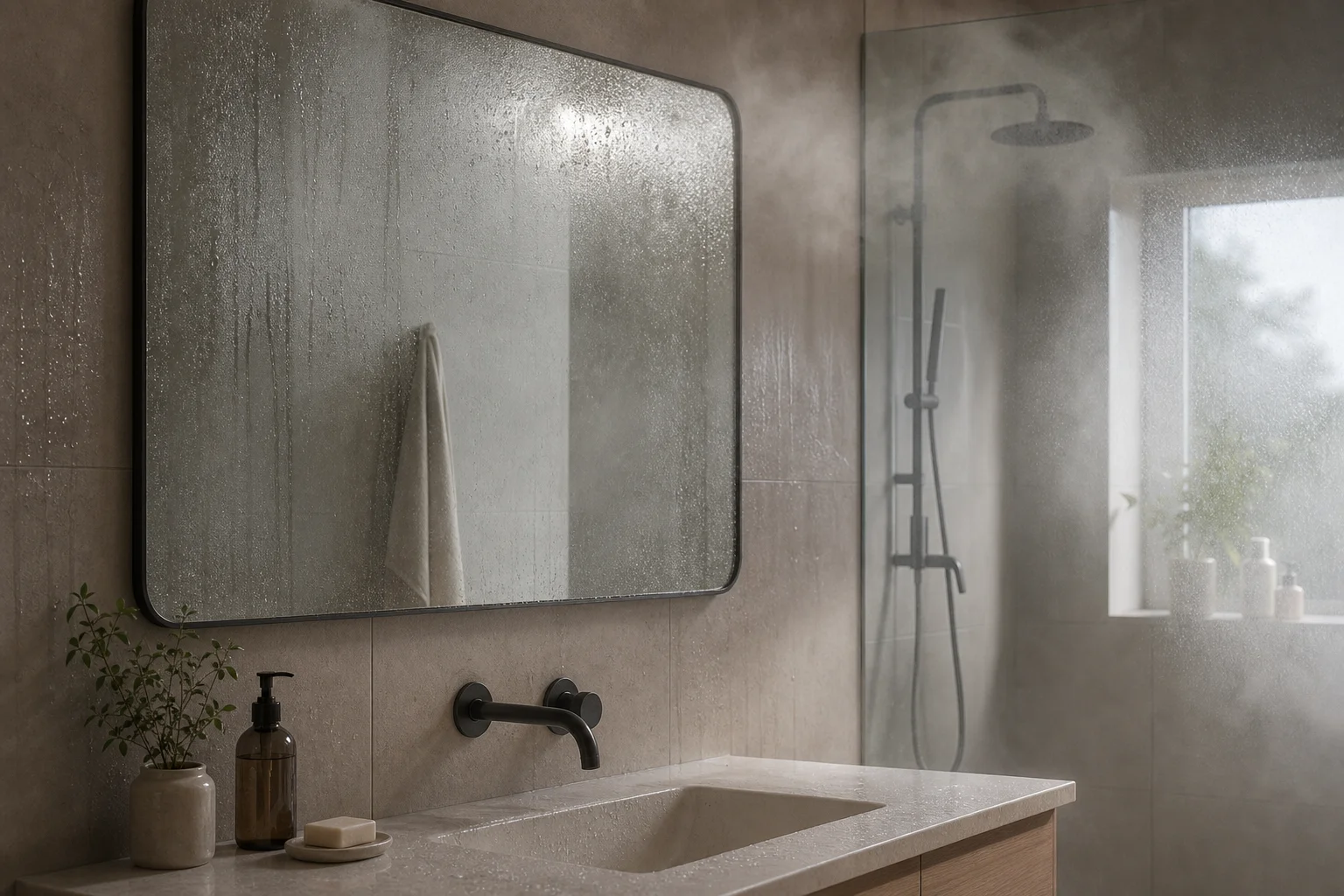
First, the fan must operate when needed. Many bathrooms receive ample natural light, leading users to shower without turning on the lights. If the fan is wired only to the light switch, it will not run. A humidistat that activates the fan based on humidity levels offers a more reliable solution. Additionally, noise can be a barrier to operation. A noisy fan running at night may be turned off by household members, defeating its purpose entirely. Selecting a fan with a quiet mark rating addresses this concern and encourages consistent use.
How Duct Design Affects Performance
The fan itself is only one component of a ventilation system. Duct length, duct type, bends, and outlet design all significantly influence actual air flow. This is where many installations fail.
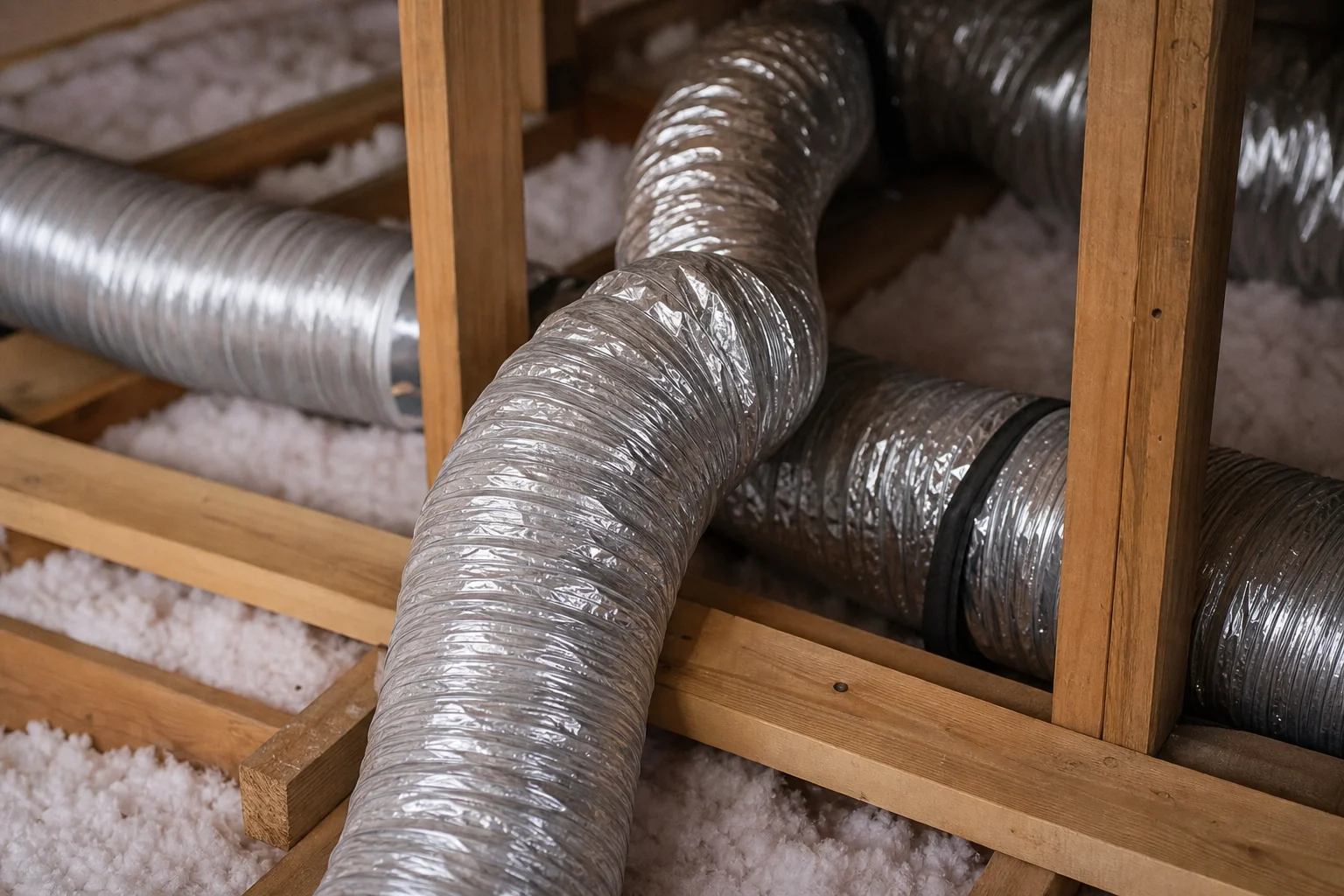
A decorative fan, for example, often requires a 90-degree turn at the front to accommodate its aesthetic design. This adds resistance to air flow. When duct length increases and bends are introduced, the performance gap between a budget fan and a premium model becomes dramatic. In a short installation with minimal bends, all fans may perform adequately. But in a typical ceiling-mounted bathroom installation with longer ducts and a 90-degree bend, budget and decorative fans see air flow drop significantly, while a premium fan continues to deliver useful performance.
Flexible ducting presents another common pitfall. If not fully extended or if compressed, it drastically reduces performance. A 90-degree bend in ducting is equivalent to 16 metres of straight duct in terms of resistance. Adding flexible ducting with tight bends compounds this effect. If flexible ducting must be used, keep it as short as possible, avoid unnecessary bends, and ensure it is fully extended and supported to prevent moisture buildup.
Reading Fan Performance Curves
On paper, fans often appear to offer comparable performance. The key to understanding real-world differences lies in the fan curve, typically found on the manufacturer’s data sheet.
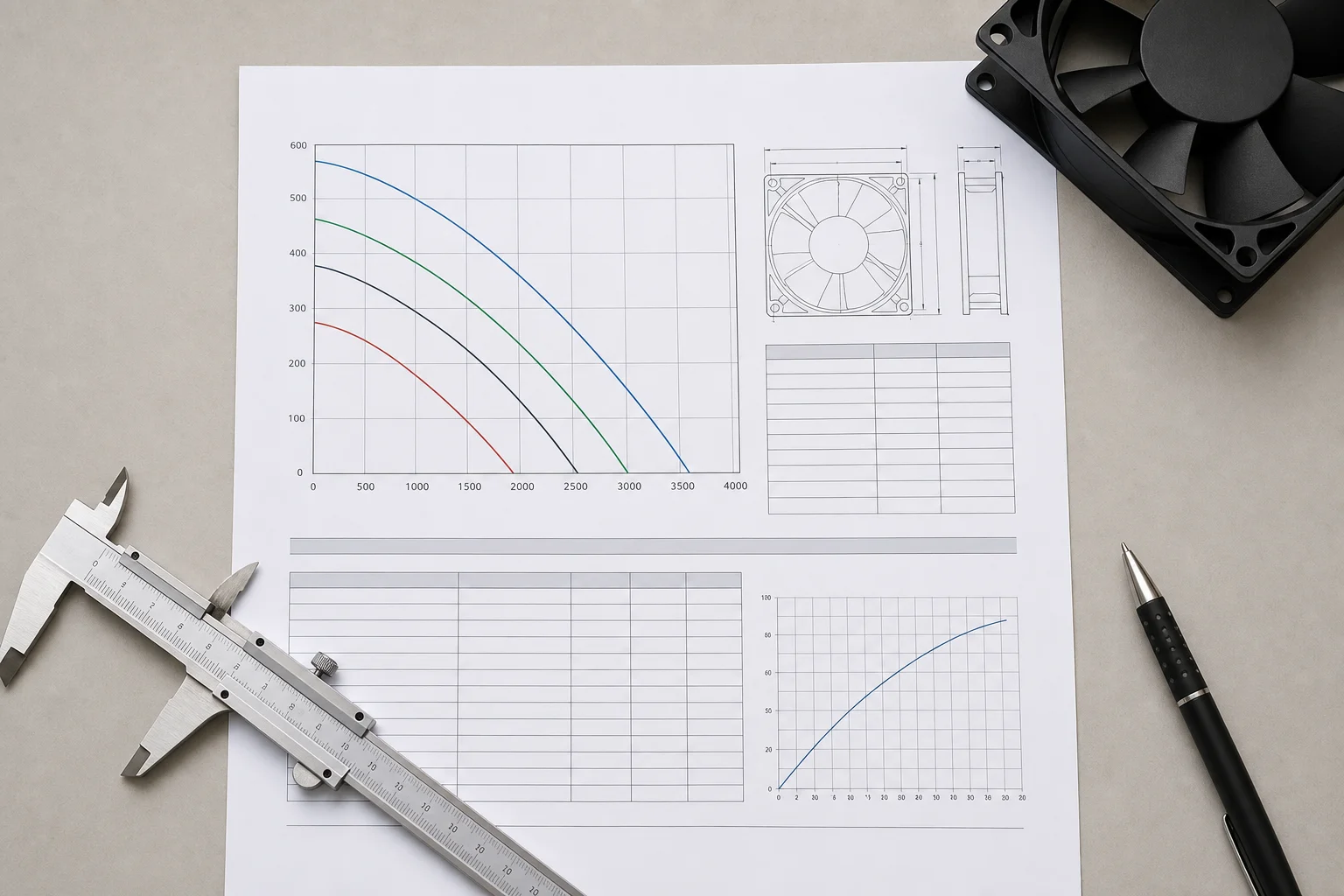
A fan curve plots air flow (measured in cubic metres per hour or litres per second) against static pressure (measured in pascals). Static pressure represents the resistance the fan faces from duct length, bends, filters, and other obstructions. A low-cost fan may achieve good air flow under zero resistance, but its curve drops steeply as pressure increases. A premium fan maintains useful air flow even at higher static pressures.
For example, at 20 pascals of static pressure, a budget fan may deliver zero air flow, while a premium fan continues to move around 70 cubic metres per hour. This difference is invisible on a basic specification sheet but critical in real installations. Calculating the exact static pressure of your duct system is complex, so contacting the fan manufacturer for design assistance is advisable. Many manufacturers, such as Envirovent, offer software tools and design services to help determine the right fan for your specific installation.
Best Practices for Duct Installation
Minimising resistance in the ducting system is essential for effective ventilation. Review the data sheets provided by ducting manufacturers to understand how pressure drop correlates with duct length and air flow speed. Note that 90-degree bends and terminal covers introduce significant pressure drops.
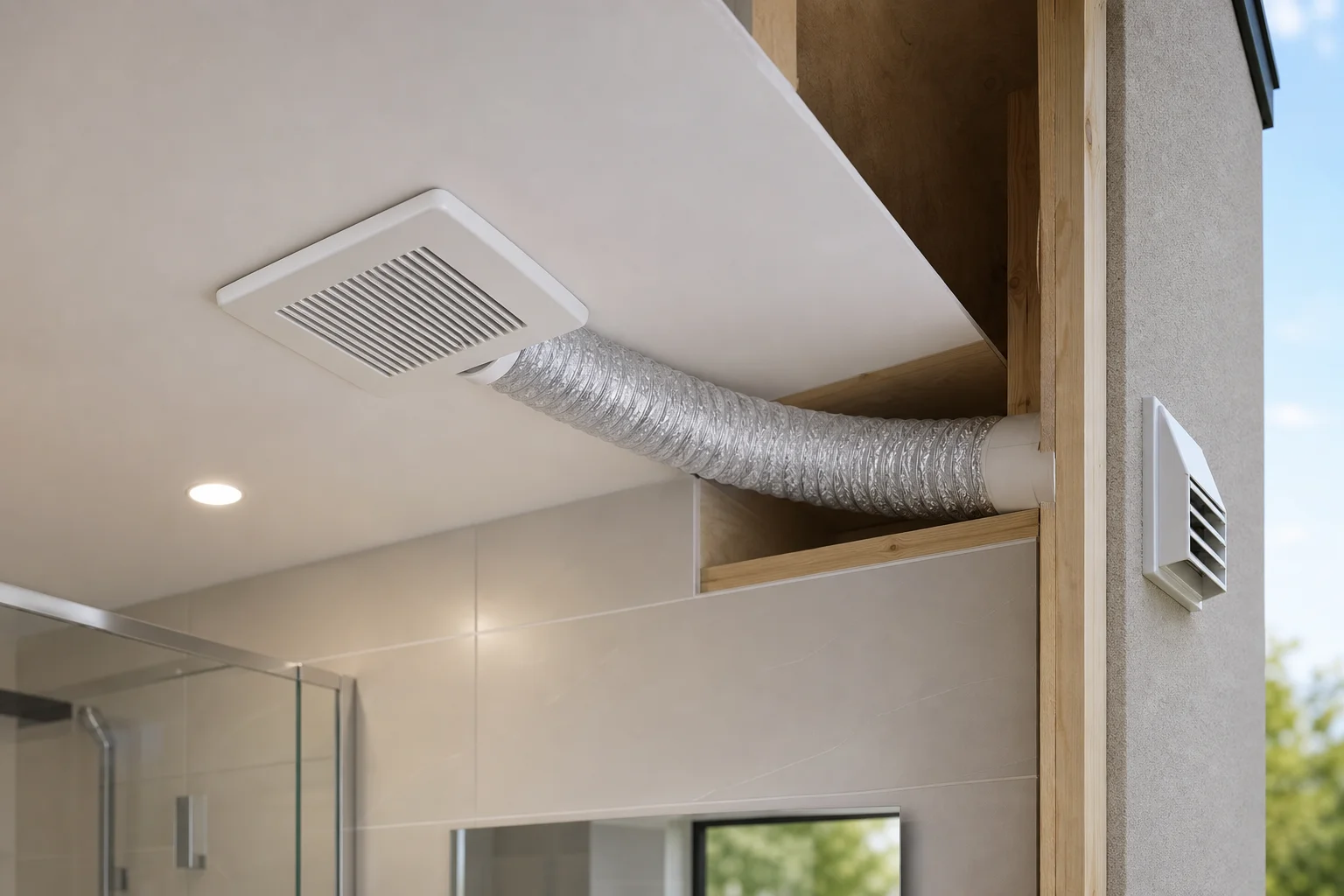
The latest building regulations place restrictions on flexible ducting use. If you choose to use it, ensure it is fully extended, adequately supported, and kept as short as possible. Avoid unnecessary bends and compression. For kitchens and utility rooms requiring higher ventilation rates, larger duct sizes and larger fans are necessary to minimise excessive noise and air resistance. Envirovent offers the Silent range in 125 mm and 150 mm sizes, designed for whisper-quiet operation with multiple control options including manual pull cords, adjustable timers, and humidity sensors.
Conclusion
Selecting the right extractor fan requires looking beyond price and basic specifications. Evaluate the fan curve, design your duct system to minimise resistance, and ensure the fan will operate reliably through proper controls. A premium fan paired with thoughtful duct design will outperform a budget option in a complex installation, delivering the moisture control and air quality your bathroom needs.
Product link
View more details for Envirovent Silent 100
This product is mentioned in the review. Check the specifications, options, and compatibility before buying.
View more details for Envirovent Silent 100