Snowboard Gear
How Long Do Snowboards Last? Six Boards After 20 to 250 Days
Six snowboards ridden from 20 to 250 days, with a clear look at what wears out first, what survives, and how long a deck can realistically last.
Introduction
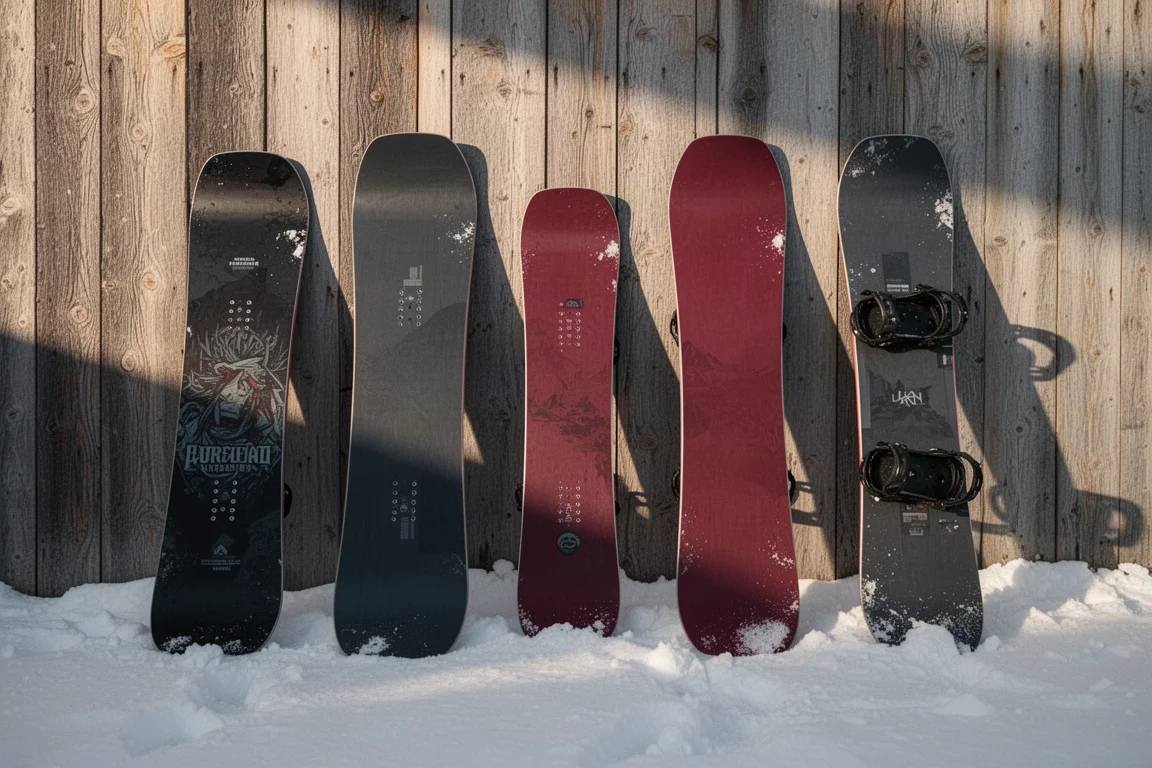
Snowboards rarely die in a single dramatic moment. After a full season of hard riding, most decks still look intact, yet they feel different: the camber has flattened, the torsional flex has softened, and the edge hold that made the board fun on day one has quietly disappeared. The six boards below have each been ridden hard, from roughly 20 days to well over 200, and together they show what actually wears out first, what survives far better than expected, and how long a typical rider can realistically keep a deck in rotation.
How to Tell When a Snowboard Is Worn Out
The fastest check is also the simplest. Lay the board flat on a hard surface and push down along its length to see what the camber profile is doing. If it is a traditional camber board, watch how much rebound it has: a deck that pushes back hard is still healthy, while one that flattens out under light pressure is usually on its way out. On a board with multiple camber zones, expect the rear zone to have broken in more than the front, so a slightly lower rear camber height is normal, but a rear zone that has gone nearly flat is a clear sign of fatigue.
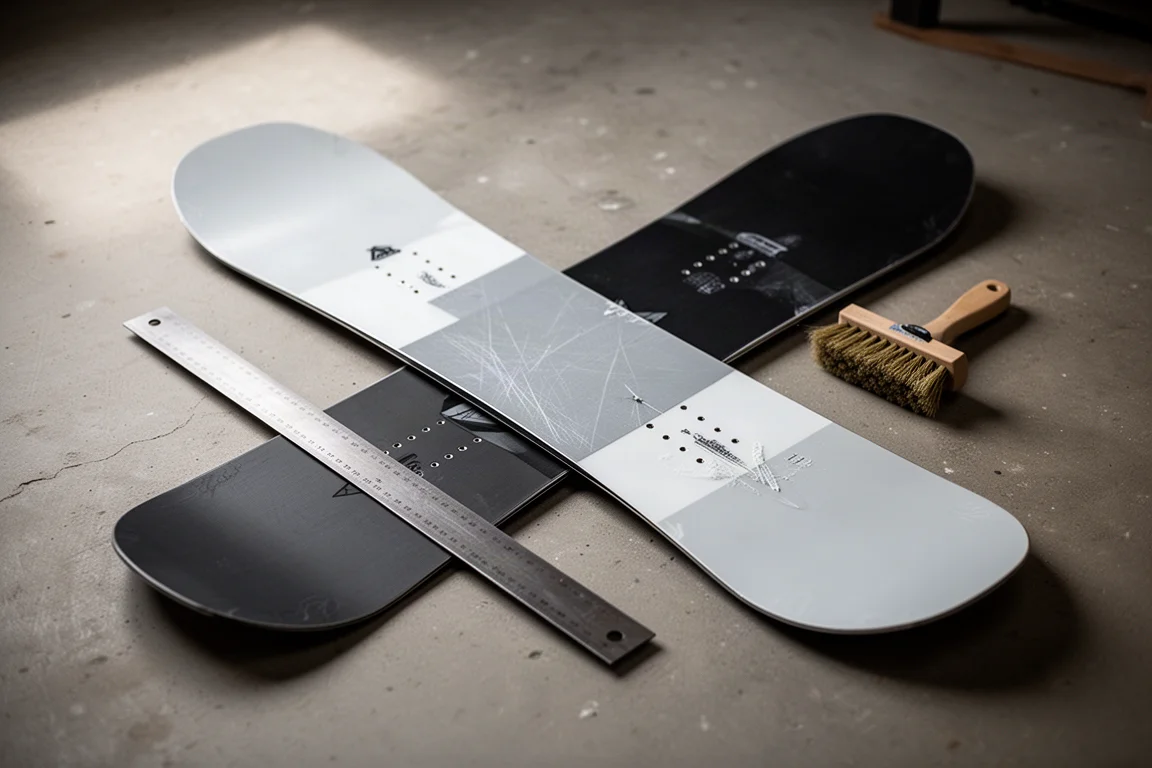
Flat-to-rocker and rocker profiles are easier to read visually. Look at the rise in the tip and tail: if the rocker curve looks more exaggerated than when the board was new, the core is still breaking in, and if that rise has visibly reduced, the board is breaking down. A deck that also feels vague or squirrely at speed is telling you the same thing.
Then walk the edges and sidewalls. Check for small cracks, sections that have been pushed in or recessed, and any separation between the edge and the sidewall. Top sheet damage such as binding rash and cosmetic chips is normal and rarely worth worrying about. On the base, count how many times you have needed p-tex fills and how many stone grinds the board has had. If it has never been stone ground, a shop tune that fills the surface damage and adds fresh structure will usually bring a tired base back.
Telos Mike Ranquet: Still Solid After 70 to 75 Days
Roughly 70 to 75 days. That is all the time this all-mountain freestyle deck needed to lose its camber entirely, and the result is a board that feels far older than its day count suggests. The shape itself remains genuinely useful: it works in the park, cruises groomers, handles a bit of powder, and can hold its own in light freeride terrain.
Everything around the core has held up well. The urethane sidewalls resisted blowouts even after rock hits, the top sheet still looks good, and the base needs only a couple of small p-tex fills plus a stone grind. There is a single small ding in the nose, and it is cosmetic. The lesson here is straightforward: a board can lose its ride quality long before it looks beaten up.
Marhar Lumberjack: The Durable Freeride Build
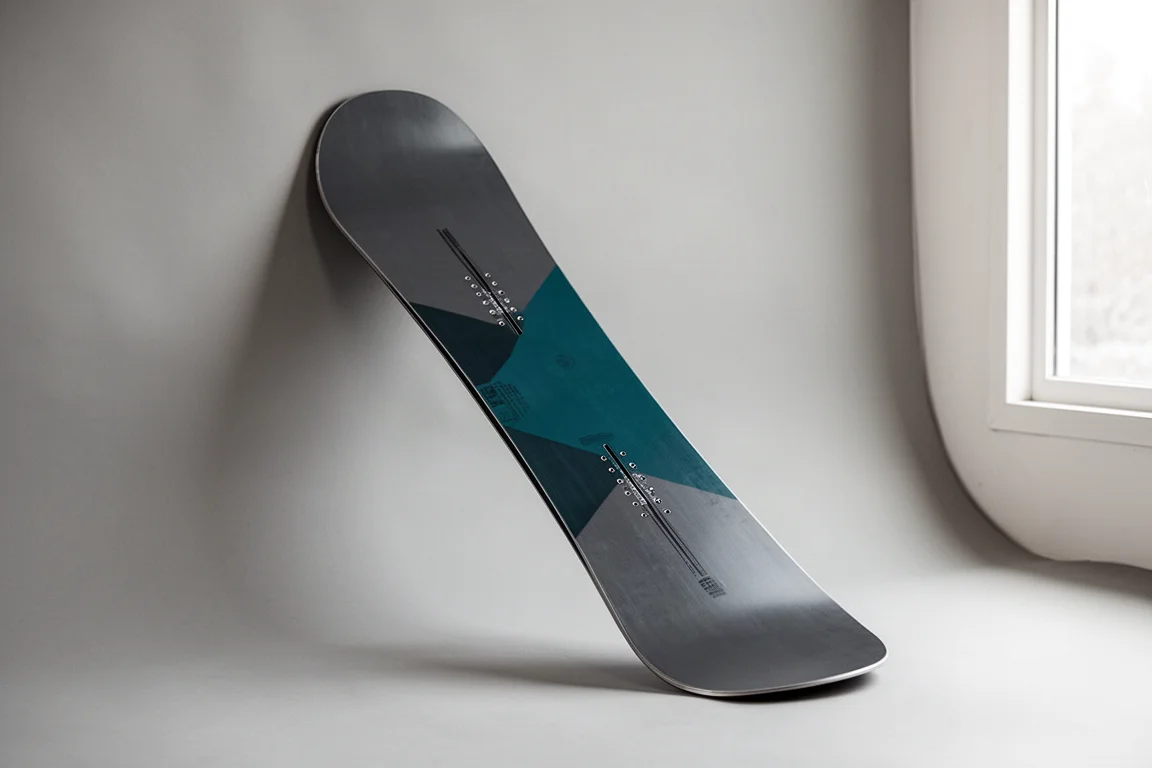
This second Lumberjack has around 25 to 30 days on it, most of that from a couple of short seasons, and it remains in excellent shape. There is a small chip in the top sheet just outside the front binding and some binding rash, but the base is immaculate and the board has not gone soft or lifeless.
The durability story behind this model is unusual. An earlier Lumberjack with roughly 200 days on it was sitting on the front porch of a house when a gas explosion threw it clear of the building. It came away with glass embedded in the nose and two marks on the base, and after a tune it is still being ridden today. At the current rate of use, this deck should stay in rotation for another three to five years.
K2 Cool Bean: 250 Days and Retired
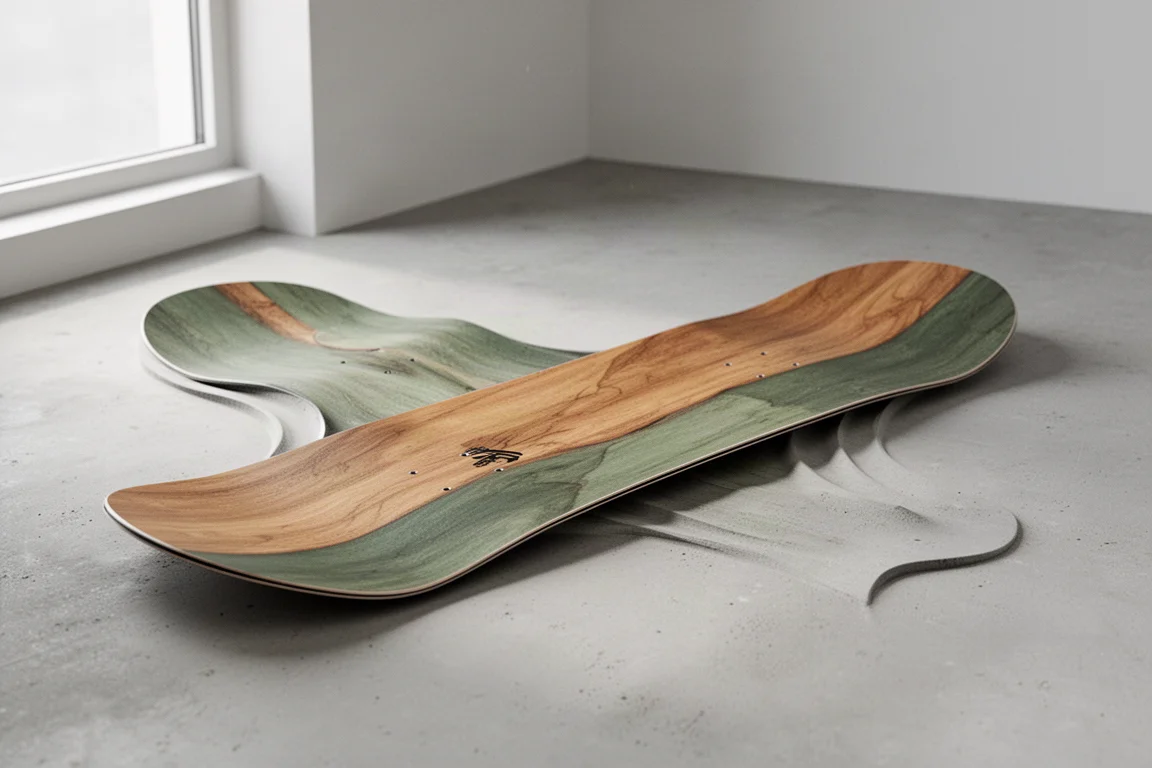
This is the highest-mileage board in the group, with close to 200 to 250 days on it, and it is finally being retired. The tail has a small chip, the clear coat shows stress cracks, and a short section of sidewall on the tail has de-laminated after the board was dropped on a paved parking lot and landed on a pebble. A few top sheet sections are lifting, and the base has a couple of areas that could use p-tex.
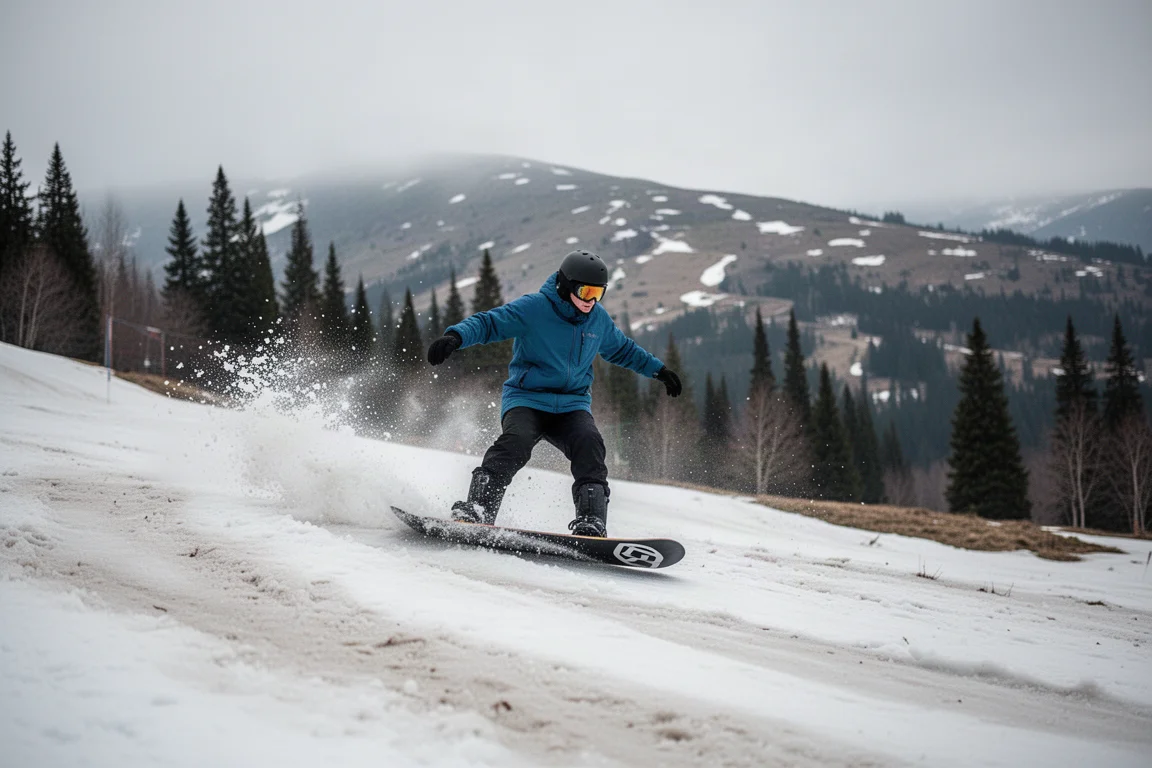
None of that is what ends its working life. The torsional flex has gone very soft, which removes the precision it once had. Even so, the sidewalls held up immaculately, and the board remains fun as a softer party deck for spring and pre-season laps thanks to a more butterable nose. Most owners will never approach this day count: a rider using one board casually could keep a Cool Bean for a decade. K2 no longer produces the model, with the Special Effects taking its place.
Telos Backslash 148: Camber Lost, Base Still Strong
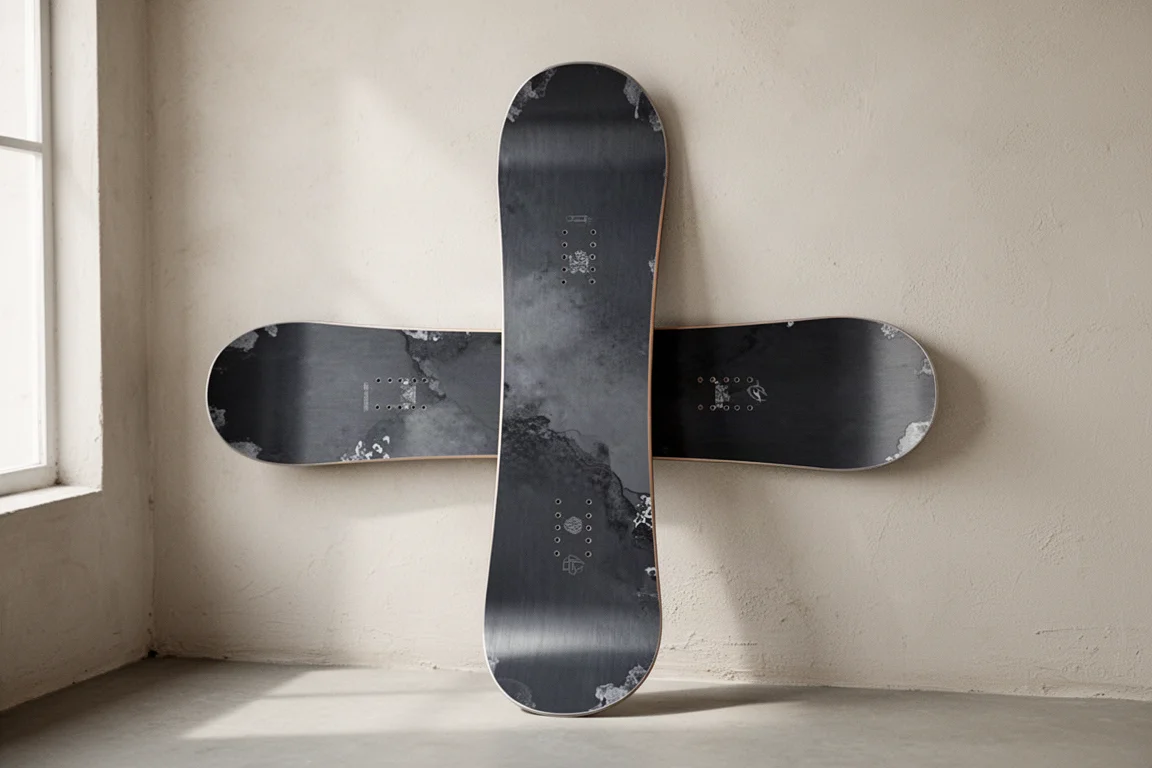
This 148 has the second-highest day count in the group at roughly 100 to 130 days, and its rear camber zone has gone almost completely flat. The snap and rebound that defined the board when it was new are gone, and it now rides squirrely and no longer holds an edge the way it used to.
Cosmetically there is a nose mark left by a screw pressing into it while it sat in a stack of boards, plus top sheet scratches, a section of top sheet peeling near the sidewall after what looks like a lift line impact, and tail wear from trees and rocks. The base has one gouge and a couple of spots that need filling, but it is otherwise strong, with surface scuffs only. The edges stayed intact and the die cut did not pop. A good tune would make the base look close to new, though the camber profile cannot be restored. It remains usable as a relaxed party board.
Rome Party Mod: A Park Board Built to Be Run Into the Ground
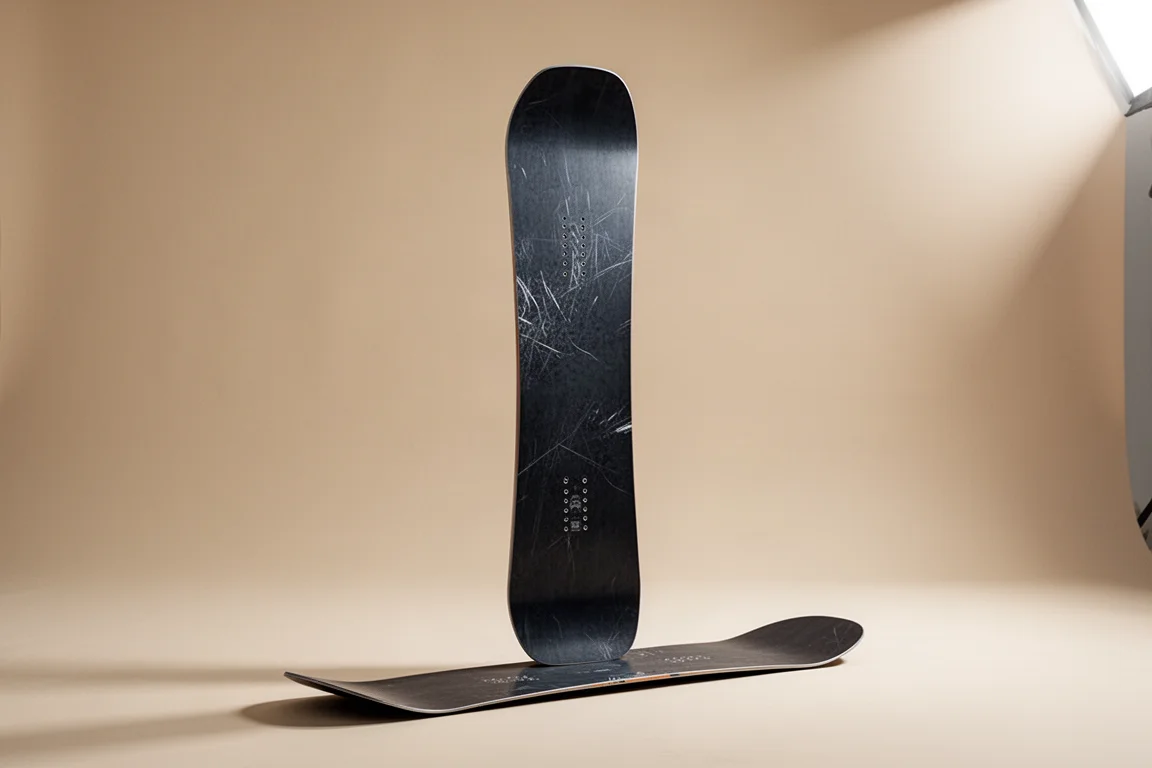
Bought in a 153 as a soft, butterable jib board, this one has 20 to 30 days on it and already carries real damage. On its first day out, a rock just below a cat track cut through to the core, and the fill is starting to pull again, which likely means a base weld is needed. A later run into a stump left a dent. There is also a small chip in the top sheet under the front binding.
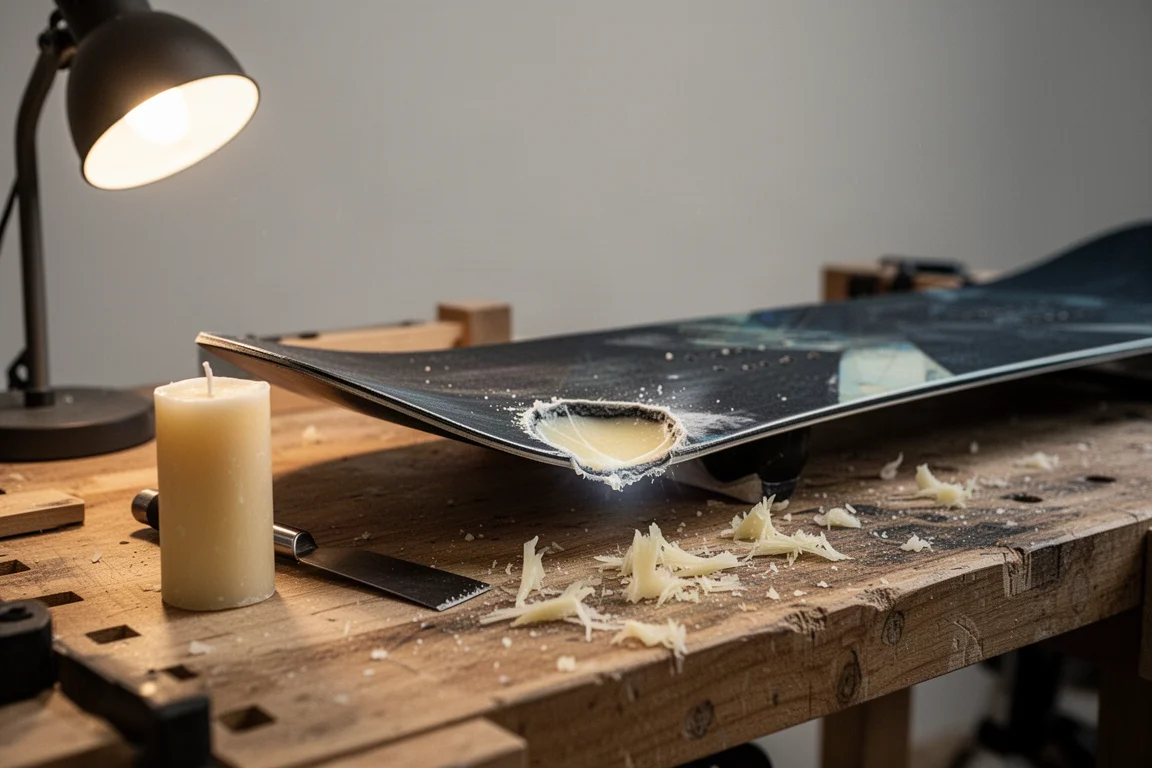
None of that matters much for its intended job. It still has its pop, the edges are still solid, and the damage is not noticeable while riding. The plan is to ride it until it is finished, and another 30 to 40 days would be a good return. For park riders who want a board they are not afraid to abuse, this is a sensible choice.
View more details for Rome Party Mod
Endeavor Archetype 158: The Powder Board Still Going Strong
This is the powder board of choice in the group, and with only 20 to 25 days on it, it still looks and rides like a newer deck. There is one micro scratch on the base that could take a small p-tex fill, plus a surface scratch running almost the full length of the base that follows the grain and does not affect performance. A tiny chip on the sidewall likely came from a lift line impact. Camber and pop are still strong.
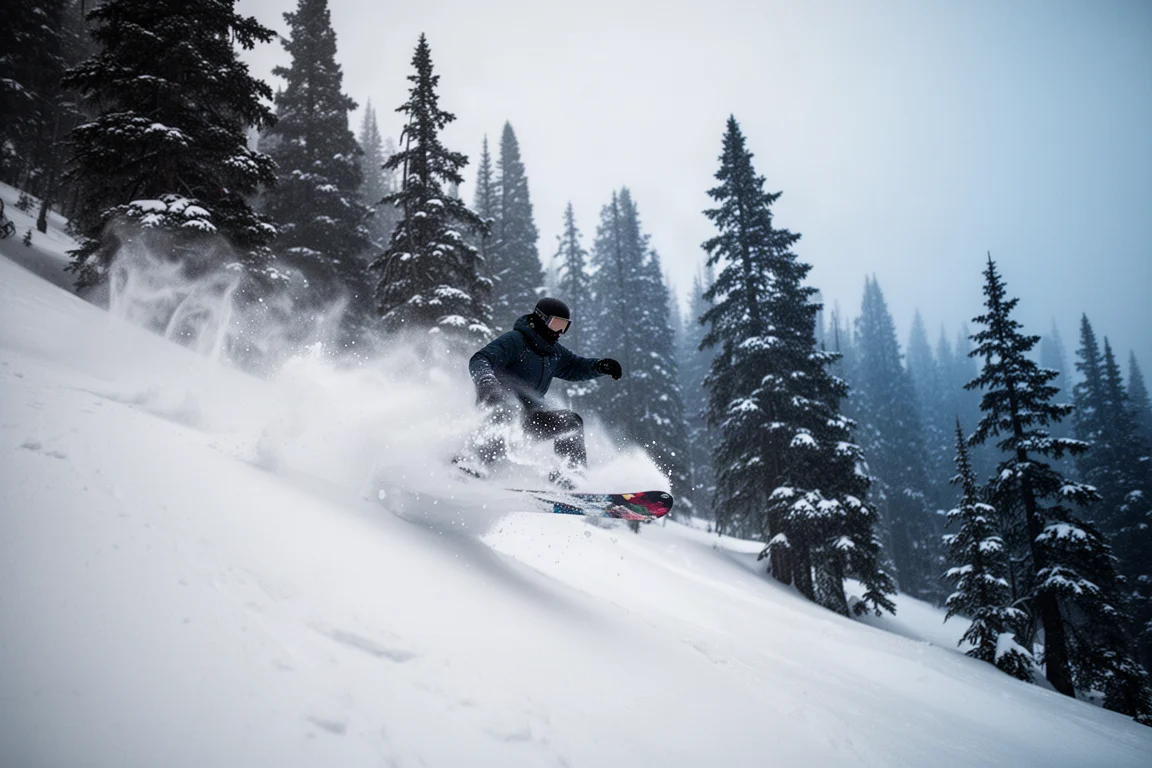
The expectation is another 75 to 100 days before it is considered worn out, which puts it several seasons away from replacement. An earlier Archetype was ridden far harder and, after a tune, is still in use by another rider at a skill level it suits well.
Overall Buying Advice
Snowboards can comfortably last 100 days or more when they are looked after and rotated. A rider who owns one board and rides it every day of a full season should expect it to feel worn out by the end. Riders who keep several boards and switch between them for conditions will get multiple seasons out of each deck. Condition matters more than raw day count in some ways: cosmetic top sheet damage is normal, while flattened camber, softened torsion, and failing edge hold are the signals that a board is done.
Practical care makes a difference. Fill base damage with p-tex before it spreads, and book a stone grind with fresh structure if the base has never been resurfaced. Check camber and sidewalls at the start of each season rather than waiting for a board to feel unpredictable at speed.
Conclusion
Of the six boards here, only a couple genuinely need replacing this season. The K2 Cool Bean and the Telos Backslash have both gone soft after 100 to 250 days and will move into relaxed party-board duty, while the Telos Mike Ranquet lost its camber well before the 100 day mark despite looking fine. The Marhar Lumberjack, Rome Party Mod, and Endeavor Archetype still have plenty of life left, and the Archetype in particular looks set for several more seasons. The takeaway for most riders is reassuring: buy a board that suits your riding, maintain the base, and it will likely serve you for years rather than a single season.
Further reading
Related Reviews
Snowboard Gear
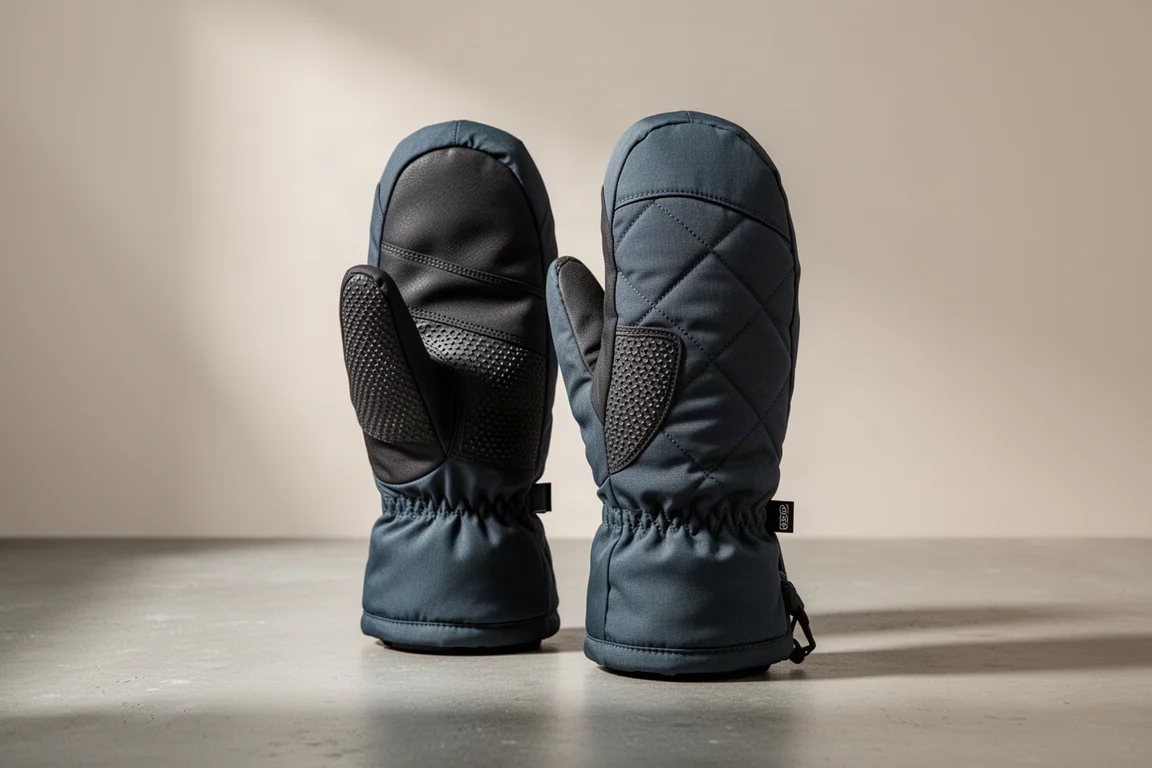
686 Smarty Gauntlet Mitt Review: A Warm, Waterproof Snowboard Mitten With Smart Extras
A GoreTex snowboard mitten rated for -20 to 20°F, with a wrist strap, grippy palm, ventilation zipper, and an included base layer glove liner.
Snowboard Gear
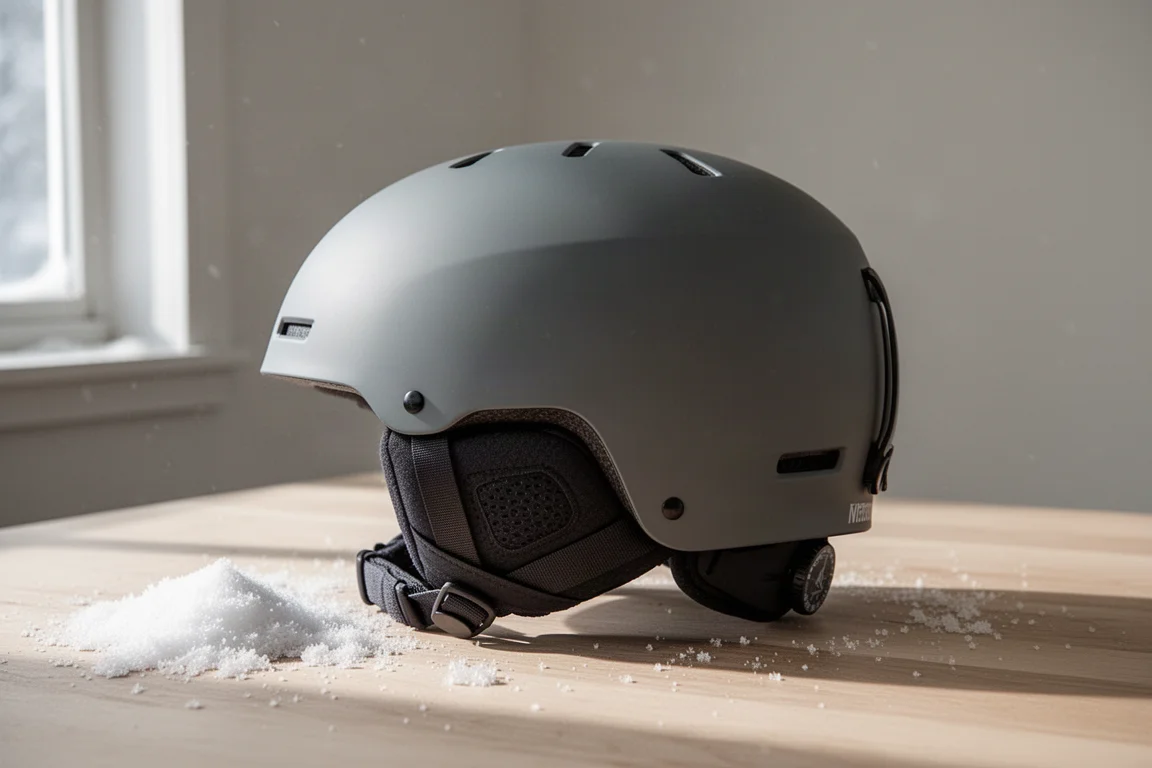
Anon Logan Snowboard Helmet Review: A Helmet That Earns Its Place
After a hard crash on a powder day, the Anon Logan proved its worth. Here is what makes this helmet a smart first purchase for snowboarders.
Snowboard Gear
Best Snowboard Deals This Month: Accessories, Goggles, Boots, and Boards Worth a Look
October brings deep discounts across snowboard accessories, goggles, boots, and boards, with highlights from Stance, Anon, Union, Capita, Burton, and more.