Kitchen Knives
Honesuki vs Deba: Can a Fish Knife Handle Chicken Butchery?
A head-to-head look at the chicken-focused honesuki and the fish-focused Saji Deba, including how the heavier deba performed breaking down a whole chicken.
Introduction
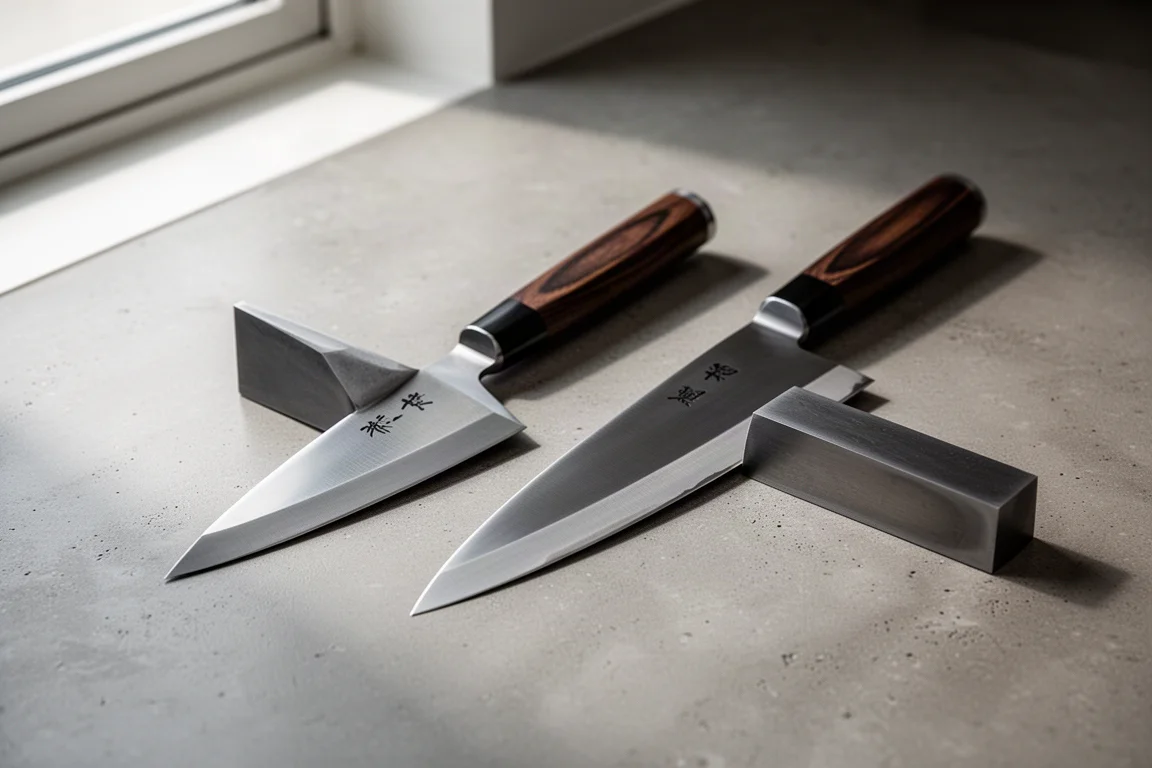
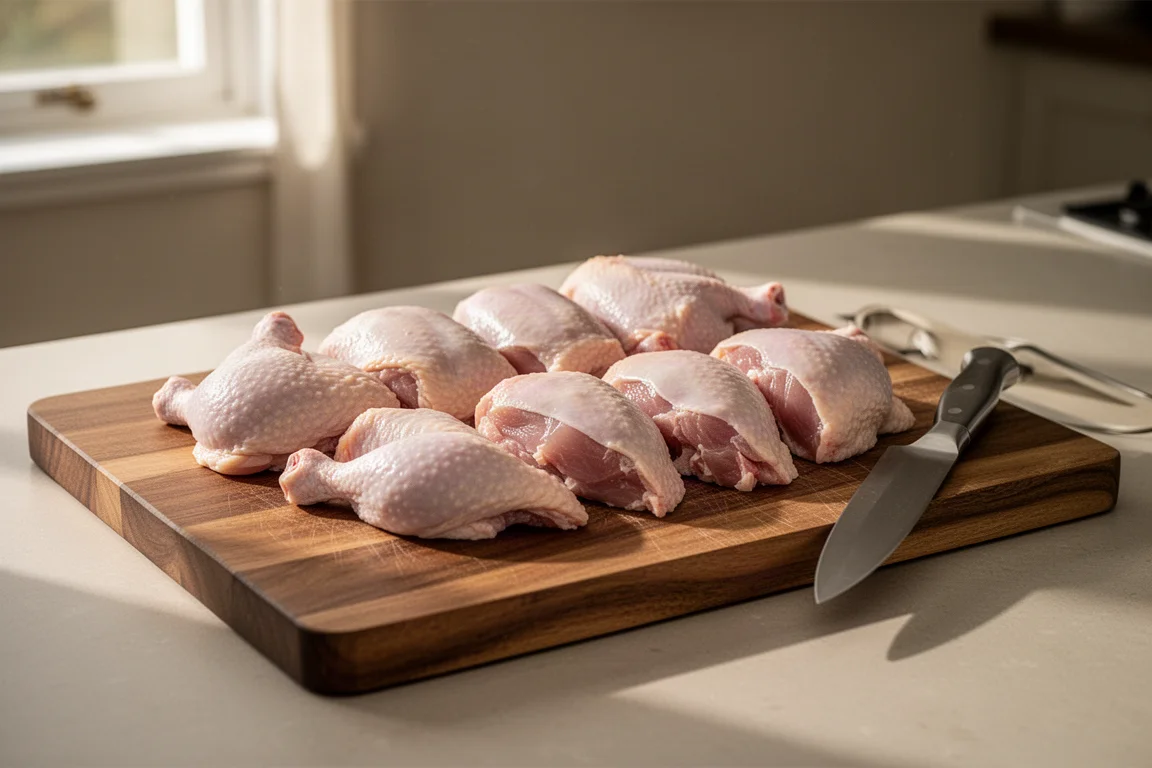
The honesuki is a knife built for chicken butchery, and the deba is built for fish butchery. On paper they should not compete, yet the two overlap in one surprising way: both can break down a whole bird. This head-to-head compares a Saji Deba against a honesuki, both cutting through the same task, to see whether the fish knife really deserves a place in poultry work.
The test was simple. The honesuki handled the first chicken, the deba the second, and the results were judged on feel in hand, ease of cutting through joints and cartilage, and whether either knife offered a clear advantage.
Two Knives, Two Jobs
Lengthwise, the two are nearly identical. The Saji Deba runs 165 millimeters, while the honesuki sits at roughly 160 millimeters, close enough that reach is not a deciding factor.
The real differences show up in the spine and geometry. The Saji Deba carries a much thicker spine because it is designed to be pushed through bones with good technique, for example when severing a fish head with the last 20 percent of the heel, fist pressed on top of the spine and pushing straight down rather than chopping. The honesuki also has a thicker spine than a typical petty, gyuto, or santoku, but it is not recommended for going through bone. Instead, it is meant to work artfully between bone and through cartilage.
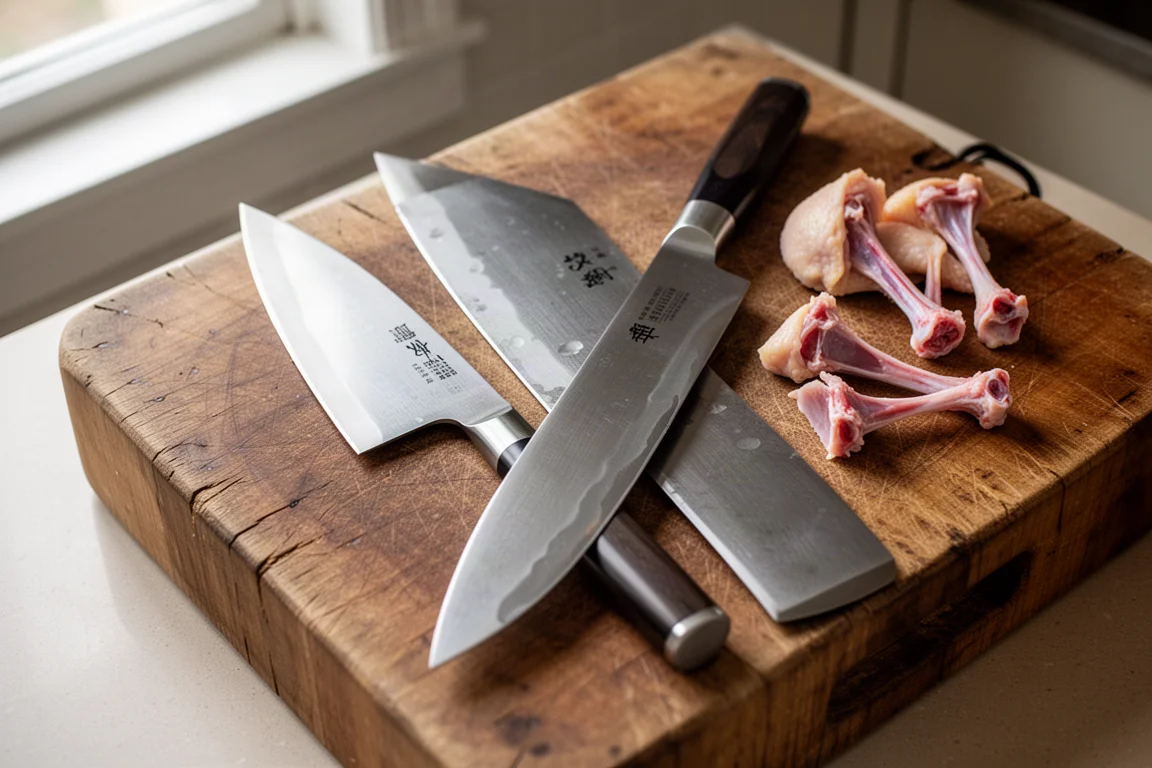
Geometry separates them further. The honesuki is shaped like a right-angle triangle with a pronounced tip that enables precision work the deba simply cannot match.
The Heavier Blade Surprises
The honesuki performed exactly as it always does. It is noticeably lighter, feels nimble, and after years of use it feels like an extension of the hand. For anyone who butchers a chicken only a few times a year, starting with the more familiar knife makes sense.
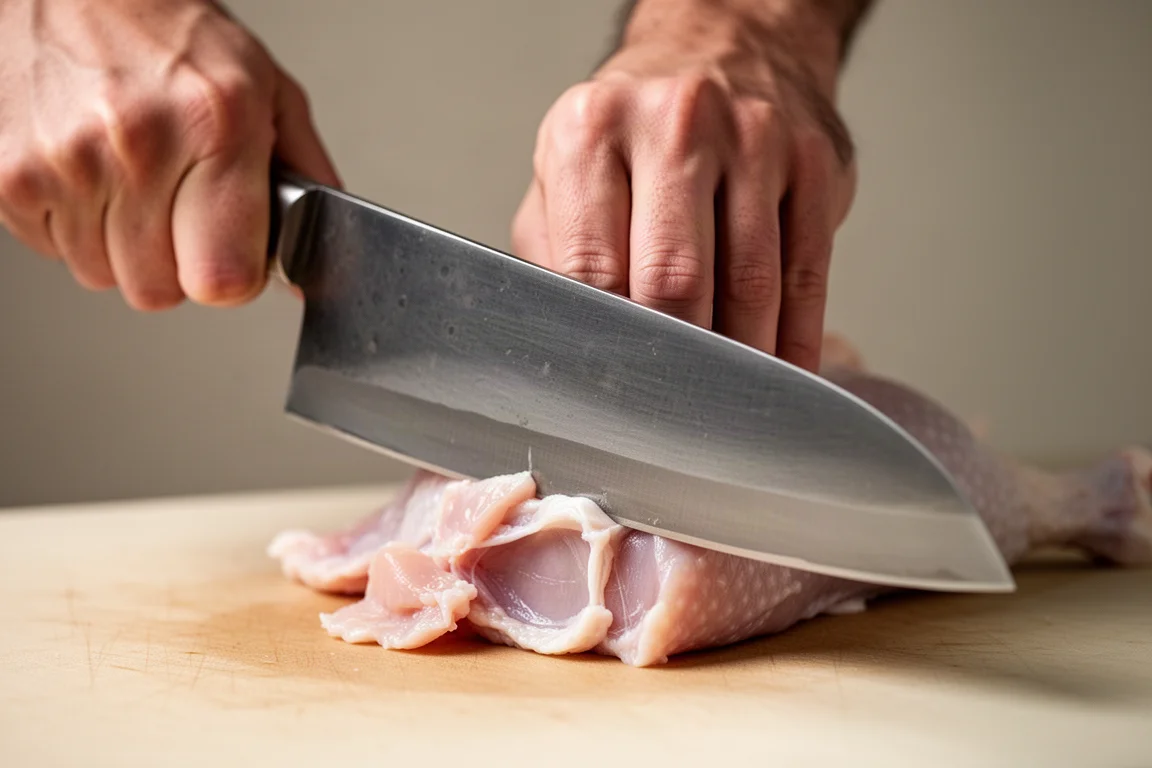
The deba was the surprise. Expectations were low going in, partly because it rarely gets used for fish in a landlocked city with limited access to quality fresh fish. Instead, its weight turned out to be an asset on chicken. It made quicker cuts through cartilage and offered more ease when working between joints. A knife that was nearly sold now has renewed purpose.
Where the Honesuki Still Wins
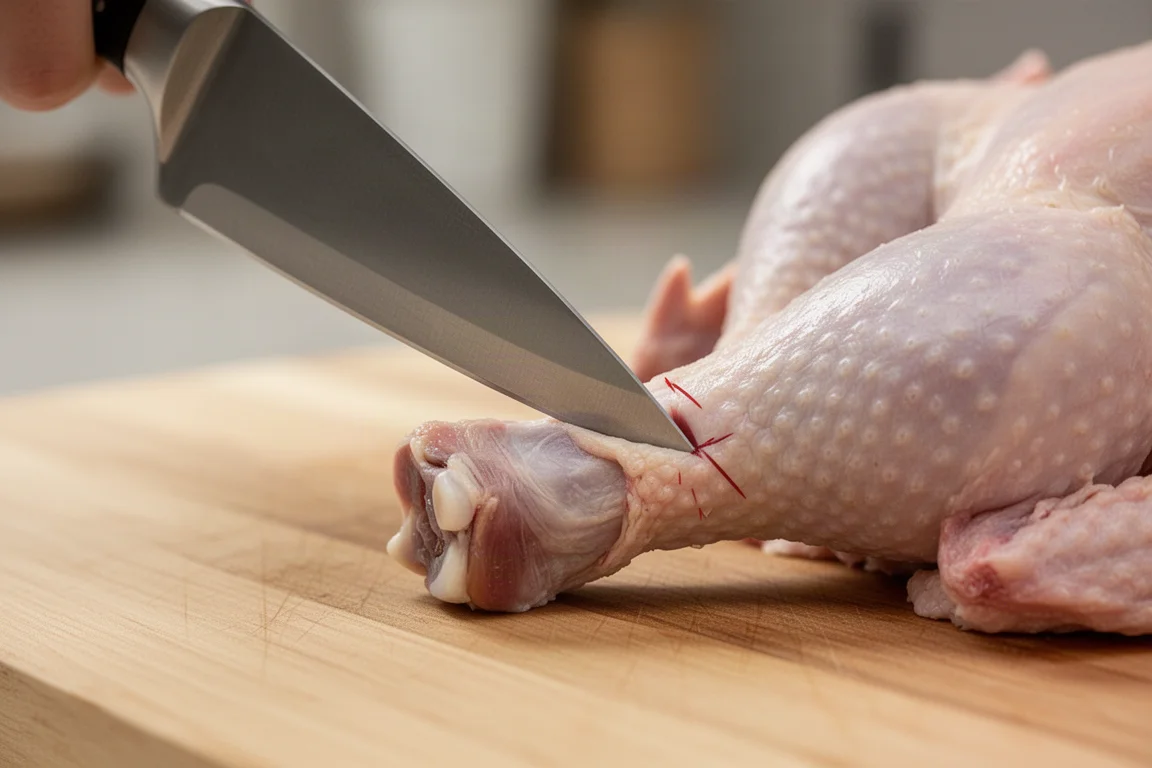
Precision is where the deba shows its limits. As a single-bevel tool, it is precision-focused, but that precision only rewards correct technique. If an incision lands a few millimeters off the cartilage and onto the bone, the deba will bite straight into bone instead of sliding between joints. When placed correctly between joints, the honesuki still nearly outshines it.
The honesuki’s k-tip also makes small pre-incisions easier, which helps work around the chicken methodically, something the deba’s geometry cannot replicate.
Which One Should You Choose?
There is no clear winner here, and it is largely a question of personal choice. The honesuki remains the more natural fit for chicken, particularly for its tip work and lighter feel. The deba, despite being designed for fish, proved to be a genuinely capable chicken butchery knife, and its weight brings real benefits through cartilage and joints.
For someone who does both fish and poultry work, alternating between the two knives is a practical approach. It highlights the limitations of each while letting each do what it does best.
Conclusion
The honesuki stays the default choice for chicken butchery, especially for its nimble feel and precise k-tip. But the Saji Deba earned a surprising second role: heavier, slower to forgive misplaced cuts, yet remarkably effective through cartilage and joints. If your knife drawer holds both, this comparison suggests using each where it shines, and, if you are curious, letting the deba try the bird.
Product link
View more details for Saji Deba
This product is mentioned in the review. Check the specifications, options, and compatibility before buying.
View more details for Saji DebaFurther reading
Related Reviews

Kitchen Knives
Best Chef's Knives 2026: 27 Popular Options Tested and Ranked
A comprehensive review of 27 chef's knives ranging from $18 to $380, with honest assessments of handle comfort, blade balance, and real-world performance.

Kitchen Knives
Best Chef's Knives Under $75: Two Tested Recommendations
Two practical 8-inch chef's knives that balance sharpness, comfort, and durability without premium pricing.

Kitchen Knives
Best Chef's Knives 2026: 27 Options Tested and Ranked
A comprehensive review of 27 chef's knives ranging from $18 to $380, with honest assessments of handle design, balance, blade profile, and real-world performance.