Running Gear
Hoka Rocket X2, Coros Pace Pro and Garmin Forerunner 265: A Paris 10K Test
Four pieces of running gear put to the test on a twisty, wet, cobbled city centre 10K in Paris: Hoka's carbon racer, two mid-range AMOLED sports watches, and a premium Garmin carrying a chest strap.
Introduction
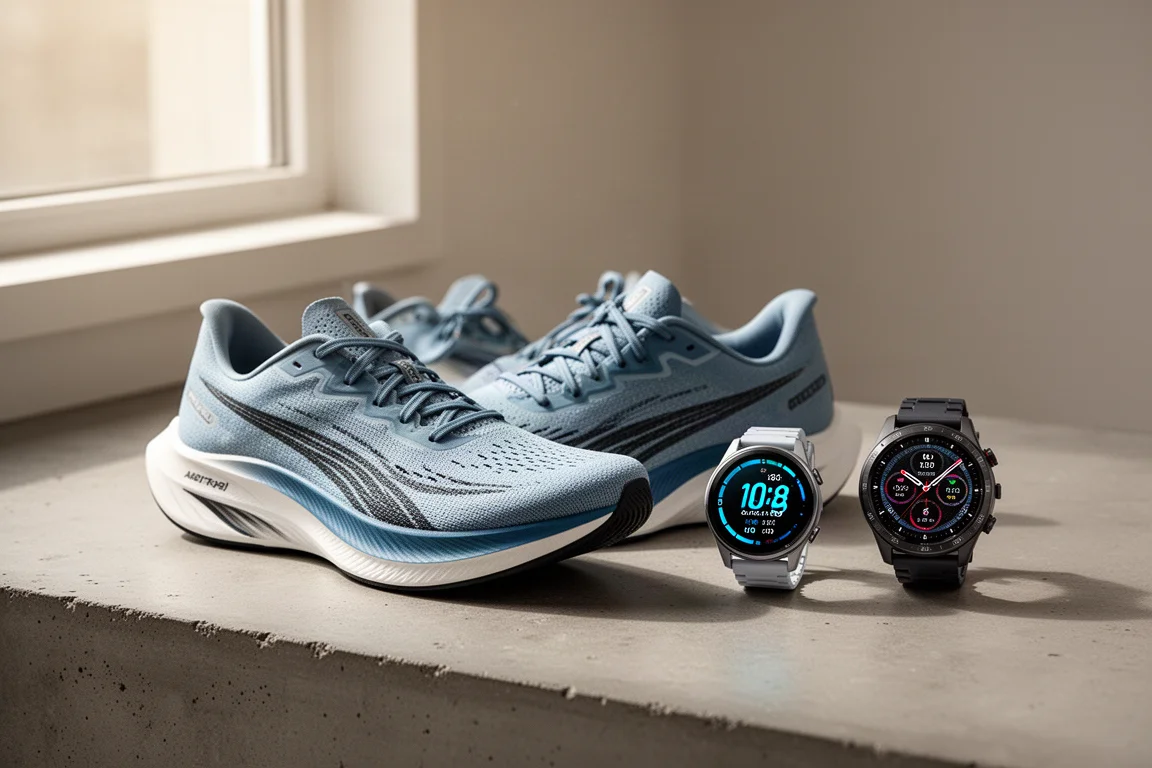
Race day is the best lab for running gear. A twisty city centre 10K in Paris, run in wet conditions over cobblestones, put one carbon racing shoe and three sports watches through exactly the kind of test a spec sheet never reveals. Here is how the Hoka Rocket X2, Coros Pace Pro, Garmin Forerunner 265 and Garmin Forerunner 965 held up, with a clear verdict on which one suits which runner.
The Test: A Wet, Twisty Paris 10K
The course wound through the most central parts of Paris, full of corners with a long home straight, and heavy rain left the first half slick with cobbles. The runner went into the race on tired legs during a heavy marathon training block, with no time expectations, and still finished with a negative split, around 32:25 on the watch, roughly 16:15 at halfway and just over 16 minutes for the second half, crossing the line 11th overall. It counted as the second fastest 10K on record, and a real confidence boost two weeks out from the Valencia Marathon.
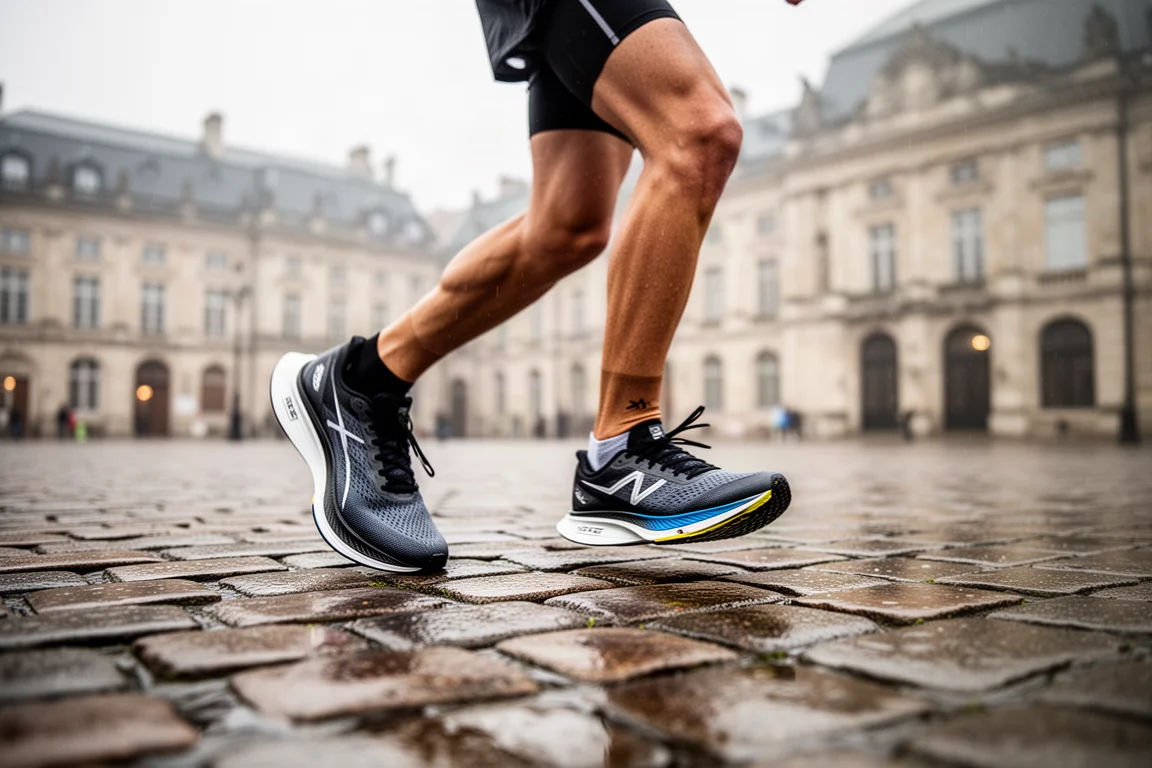
The conditions mattered for the gear verdicts. Slippery cobbles punish a super shoe’s outsole, and dense buildings with twisting streets are the harshest possible GPS environment for a running watch. Both challenges showed up on the day.
Hoka Rocket X2: The Fastest Shoe in Hoka’s Range
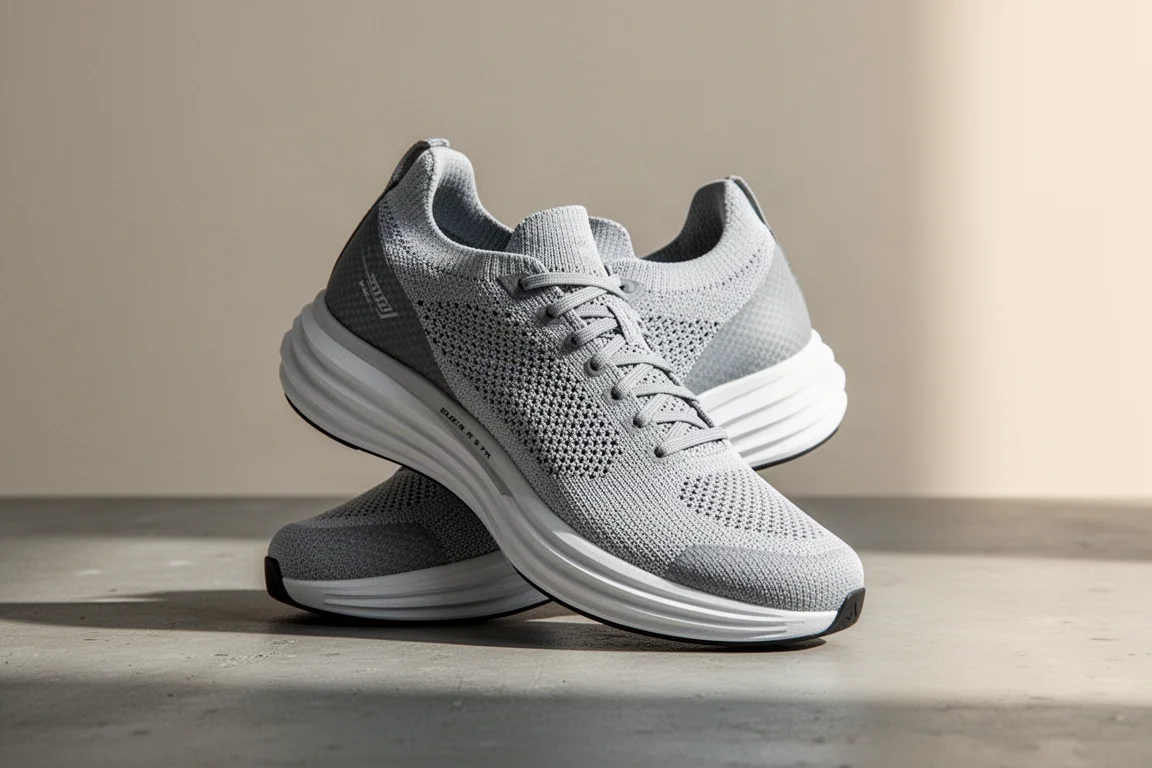
The Rocket X2 has quietly become a shoe worth coming back to. It is light, fast and racy, with a firmer, more responsive feel rather than the bouncy ride some rivals offer. On race day the performance was hard to argue with: everything felt in good working order, and the pace held up beautifully over the second half.
The main trade-off is grip. On wet cobbles the Rocket X2 is not the best at holding its footing, and the runner had to be careful in the first half, even with a naturally short stride. Some competitors do better on that kind of surface. There is also the question of the Cielo X1, which offers more bounce but is a bigger, heavier shoe. For a high-cadence runner who prefers fast turnover over bounce, the Rocket X2 is the more appealing pick, especially over a 10K, and it is the faster shoe in Hoka’s lineup for that kind of runner.
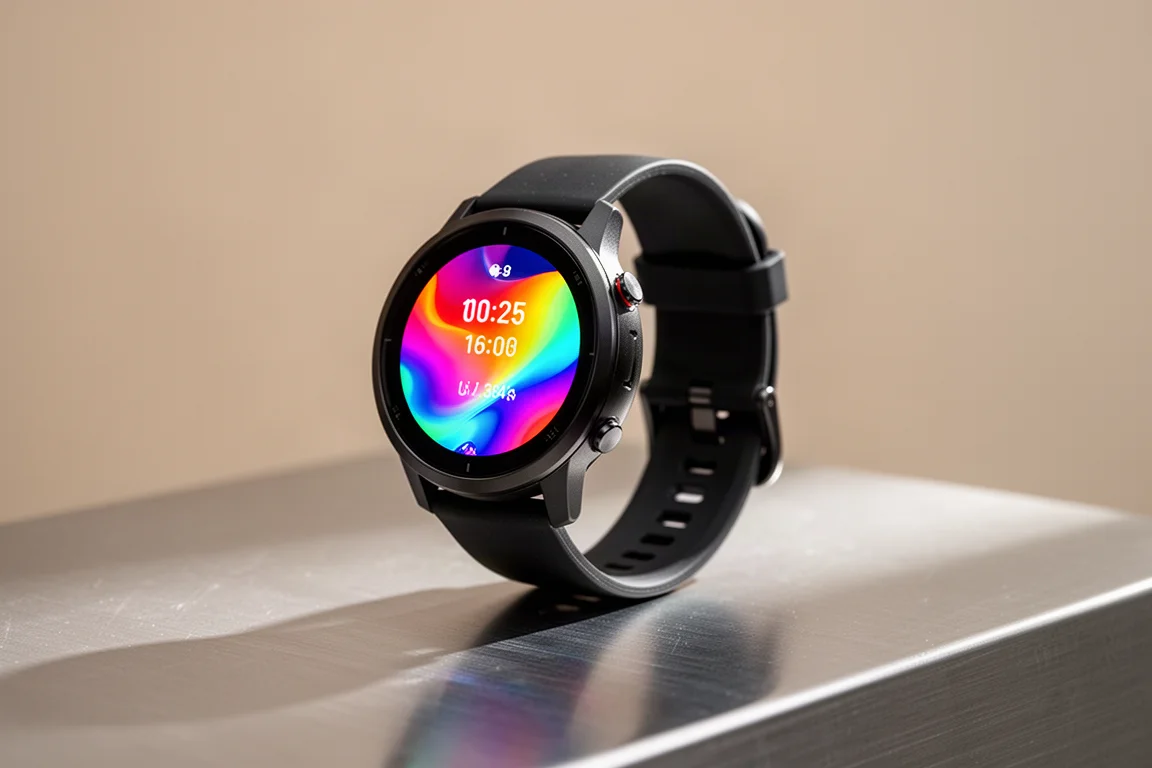
Coros Pace Pro: The Accuracy and Battery Winner
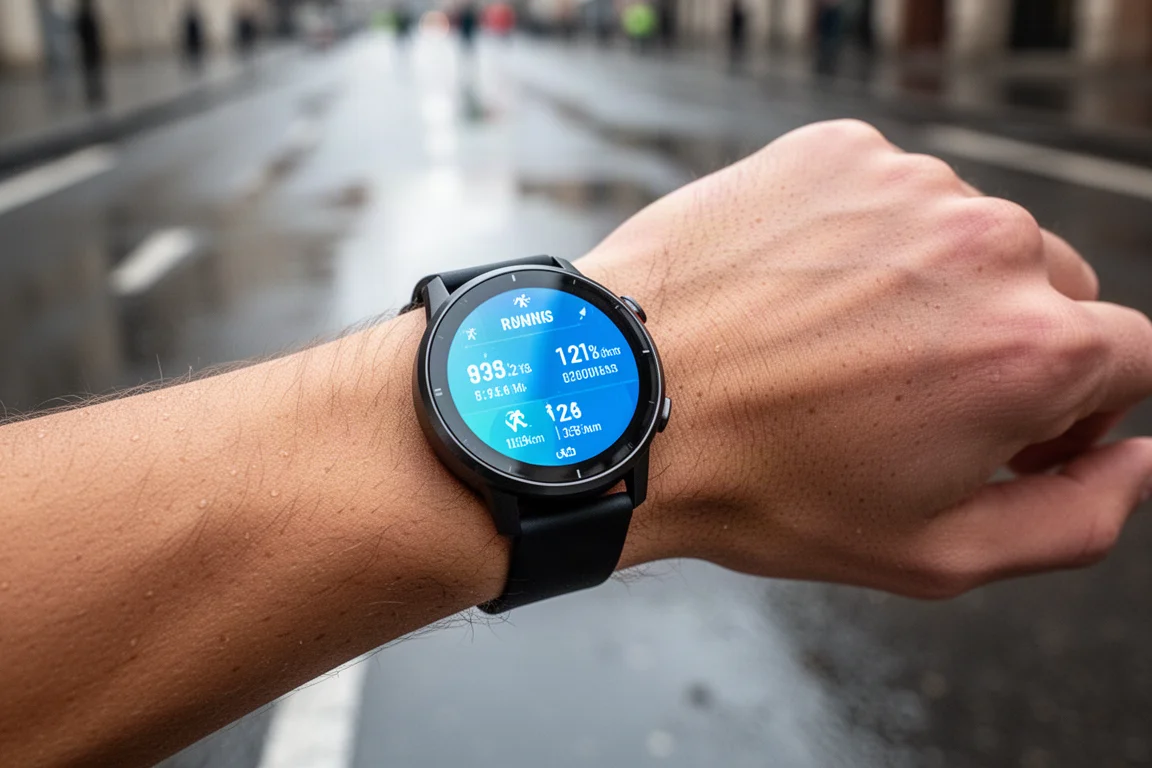
The Pace Pro went head to head with the Garmin Forerunner 265 in what is the big mid-range AMOLED battle, and it came out ahead on the two metrics that matter most on race day. On GPS, the Coros tracked closer to the real distance, ending roughly 100 metres closer over the 10K, and its lap alerts lined up nearer the actual kilometre markers throughout the race. That makes it the more trustworthy watch for pacing, which is a genuine win.
Heart rate tracking was close between the two watches, both roughly ballpark against a chest strap, with some early and late jumps in the cold conditions, though the Pace Pro was slightly more dialled in through the middle of the race. It also carries full onboard maps, something the Forerunner 265 does not offer, and that proved genuinely useful navigating a first long run through Paris. Battery life sealed the weekend: fully charged on Thursday afternoon, after three runs including the race it still sat at 58 percent, while the Garmin had dropped to 29 percent.
Garmin Forerunner 265: The Mid-Range Name to Beat
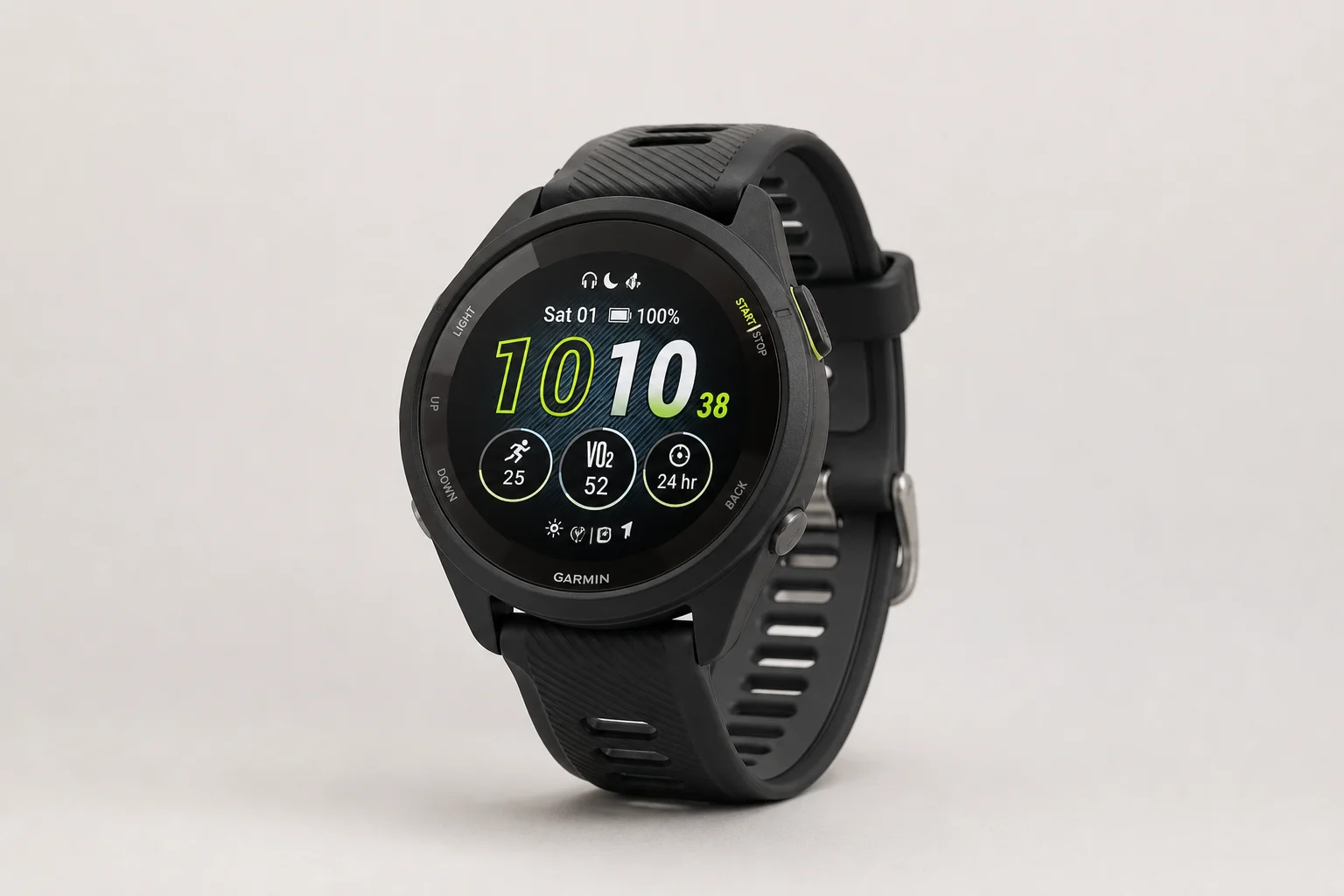
The Forerunner 265 is the biggest name in the mid-range watch field, and it did not embarrass itself. GPS traces looked remarkably similar to the Coros for most of the race, with both watches dialing in on long straight stretches and both wobbling on tighter city corners. Its optical heart rate drifted low for much of the race, while the Coros jumped high at the start and finish, so neither was perfect but both were usable.
Where the 265 holds its ground is in everything beyond raw accuracy. Garmin’s feature set in the mid-range remains a real advantage, and that is the honest framing: the Pace Pro wins accuracy and battery on a weekend like this, but the 265 has its own strengths that a deeper comparison would need to unpack. If battery anxiety is your top concern, though, it is worth knowing that a half marathon on the watch started to raise charging questions, while the Coros sailed on.
Garmin Forerunner 965: The Premium Reference
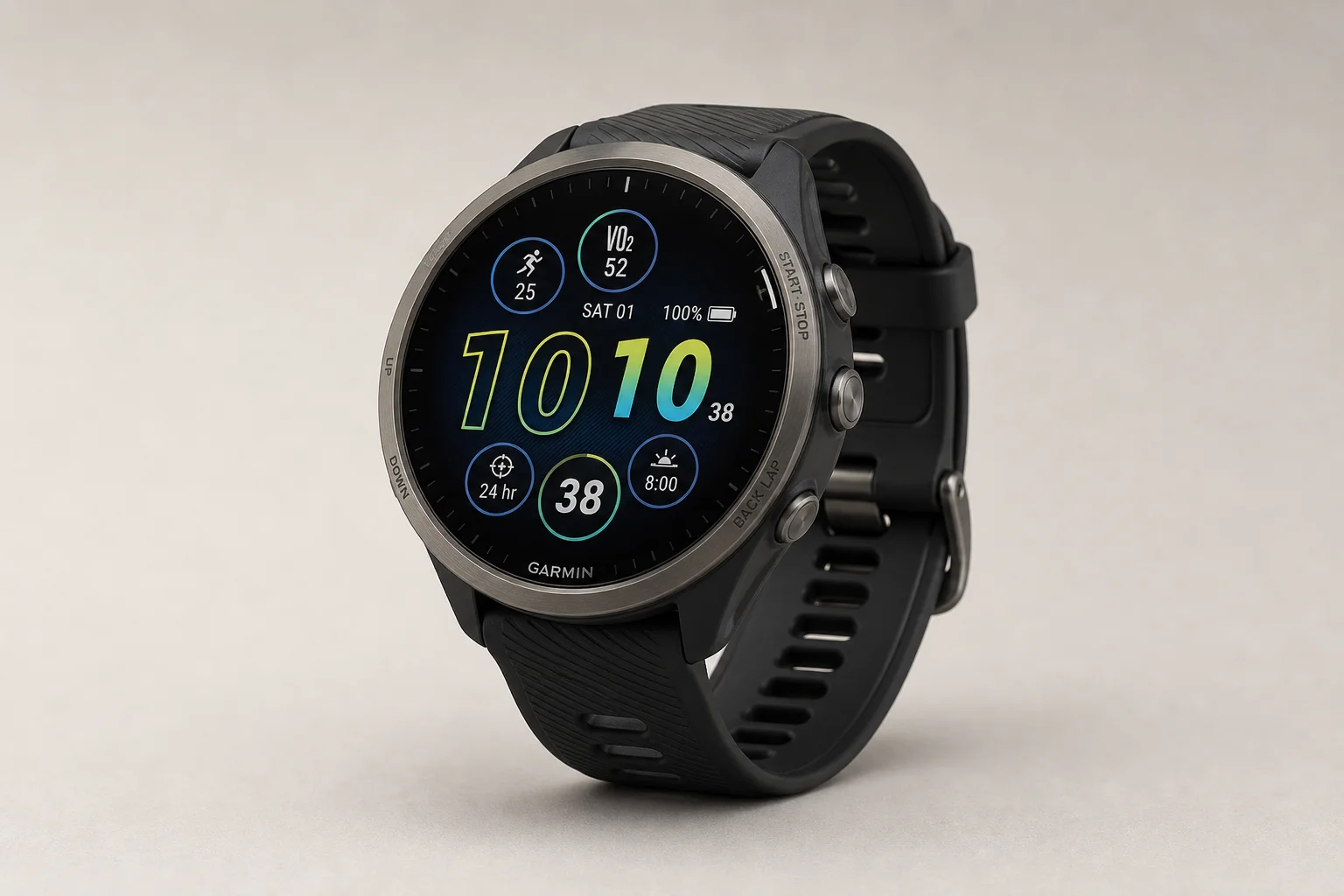
The Forerunner 965 did not race on the wrist. Instead it rode in a pocket, paired with a Polar Veran chest strap heart rate monitor, acting as the reference point against which both wrist watches were judged. That role matters: a chest strap gives the nice, steady heart rate progression that optical sensors struggle to match in cold conditions, and it is the setup any accuracy-focused runner should consider.
As a premium AMOLED option in Garmin’s range, it represents the tier above the 265, and its presence here underlines the point about the current mid-range class: the accuracy you get from the top-end watches is now available further down the price ladder, so the choice increasingly comes down to whether you want the extra features, more rugged designs or onboard maps.
Maps, Navigation and the Mid-Range Class
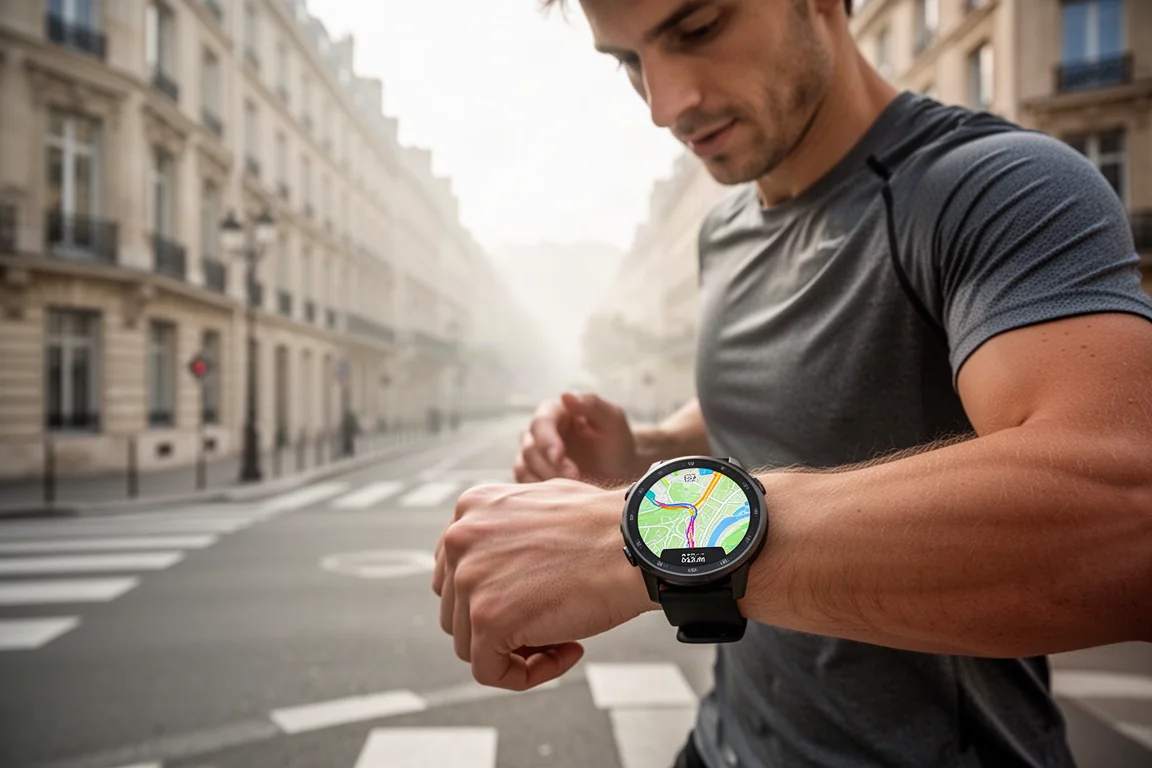
One quiet standout from the weekend was navigation. On a first long run in an unfamiliar city, the Pace Pro’s onboard maps were a genuine plus, especially since the Garmin Forerunner 265 does not offer maps at all. The mid-range band of watches, which also includes the Suunto Race and Polar Vantage G3, has become the most interesting tier in the market: you now get accuracy close to flagship watches, and the decision hinges on which extras you value.
Battery Life Over a Race Weekend
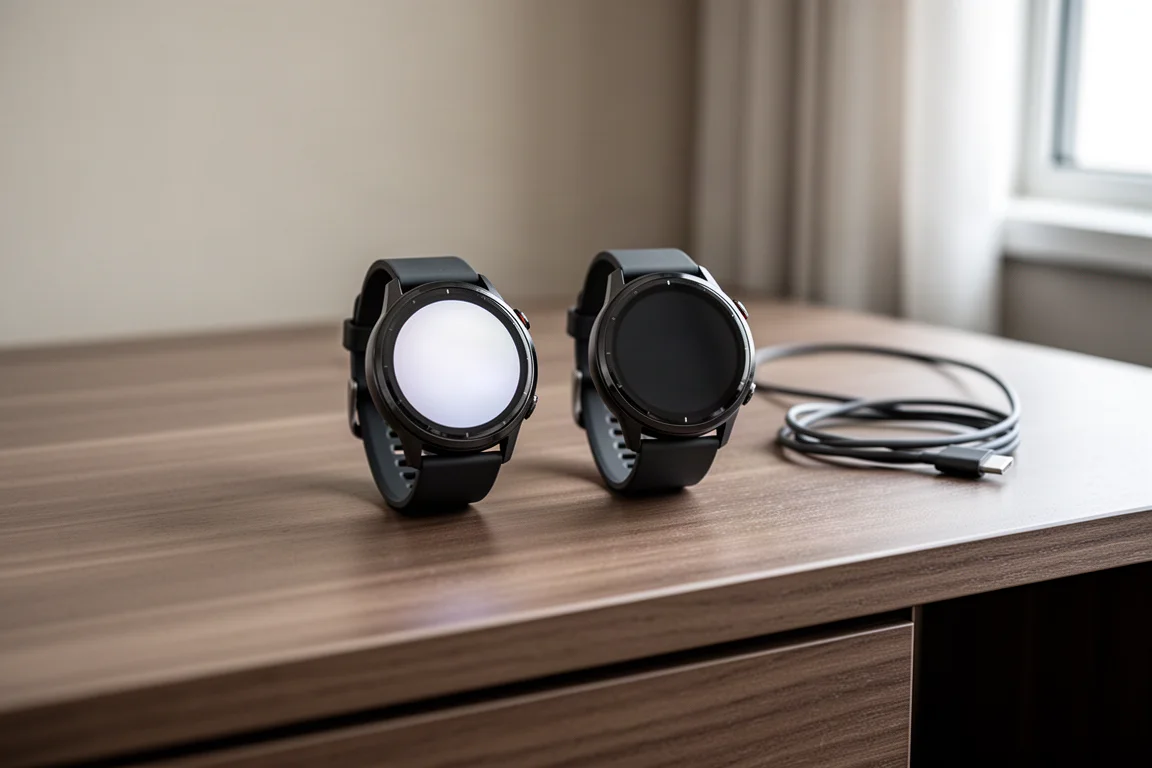
Both AMOLED watches lasted the full weekend away without a charger, but the margin was large. The Pace Pro finished the trip at 58 percent battery after a long run plus a second run and the 10K race, while the Forerunner 265 dropped to 29 percent over the same period. For a weekend away with lots of running and no charger in the bag, the Coros clearly has the edge.
Buying Advice
If you want a carbon-plated racer and prefer a light, firm, turnover-friendly ride over a big bouncy one, the Rocket X2 is the stronger Hoka pick, just mind it on wet cobbles. Between the watches, the Pace Pro wins on GPS accuracy, pacing reliability, battery life and maps, making it the pick for runners who race by the numbers. The Forerunner 265 remains the name to beat for its broader feature set, and the Forerunner 965 suits runners who want Garmin’s premium tier or a pocketable reference unit paired with a chest strap.
Conclusion
A wet, twisty Paris 10K separated these four products neatly. The Hoka Rocket X2 delivered race-ready speed with a grip caveat, the Coros Pace Pro took the accuracy and battery honours in the mid-range watch battle, the Garmin Forerunner 265 kept its feature-set crown, and the Forerunner 965 paired with a chest strap showed why a reference heart rate setup still beats wrist optics in the cold. Choose by priority: speed, accuracy, features or premium polish.
Further reading
Related Reviews

Running Gear
Best Running Caps 2026: Nine Tested Options for Summer and Winter
A comprehensive guide to nine running caps tested across different conditions, from lightweight summer options to waterproof winter choices.

Running Gear
Best Running Caps: A Guide to Summer and Winter Options
A comprehensive review of nine running caps for different conditions, styles, and preferences, from lightweight summer options to waterproof winter choices.
Running Gear
Best Running Gear 2026: Five Picks That Earn Their Place
Five running upgrades covering heart rate, audio, fuelling, carrying and weather protection, with the trade-offs worth knowing before you buy.