Planners
Hobonichi Weeks Review: A Month With the Wallet-Size Planner Everyone Talks About
After a month of side-by-side testing, here is how the Hobonichi Weeks holds up as a single planner for planning, tracking, and journaling.
Introduction
The Hobonichi Weeks has a near-legendary status in the planner community, so testing one for a full month was long overdue. The setup for this test was simple: run the Weeks alongside a Sterling Ink Common Planner for a month, writing down identical information in both, to see how it would perform as a sole planner for planning, memory keeping, habit and health tracking, and occasional journaling.
The verdict is genuinely mixed, and interestingly so. This is a planner that does several things very well and a few things in a way that will frustrate heavier writers. Here is how it all broke down.
What the Hobonichi Weeks Actually Is
The Weeks is a slim, wallet-size weekly planner from Hobonichi that sits between an A5 and a B6 in feel. It is roughly an inch narrower than a B6 planner, only slightly taller, and significantly thinner. Hobonichi markets it as a wallet-size planner, and the narrow, compact form factor is clearly the core idea.
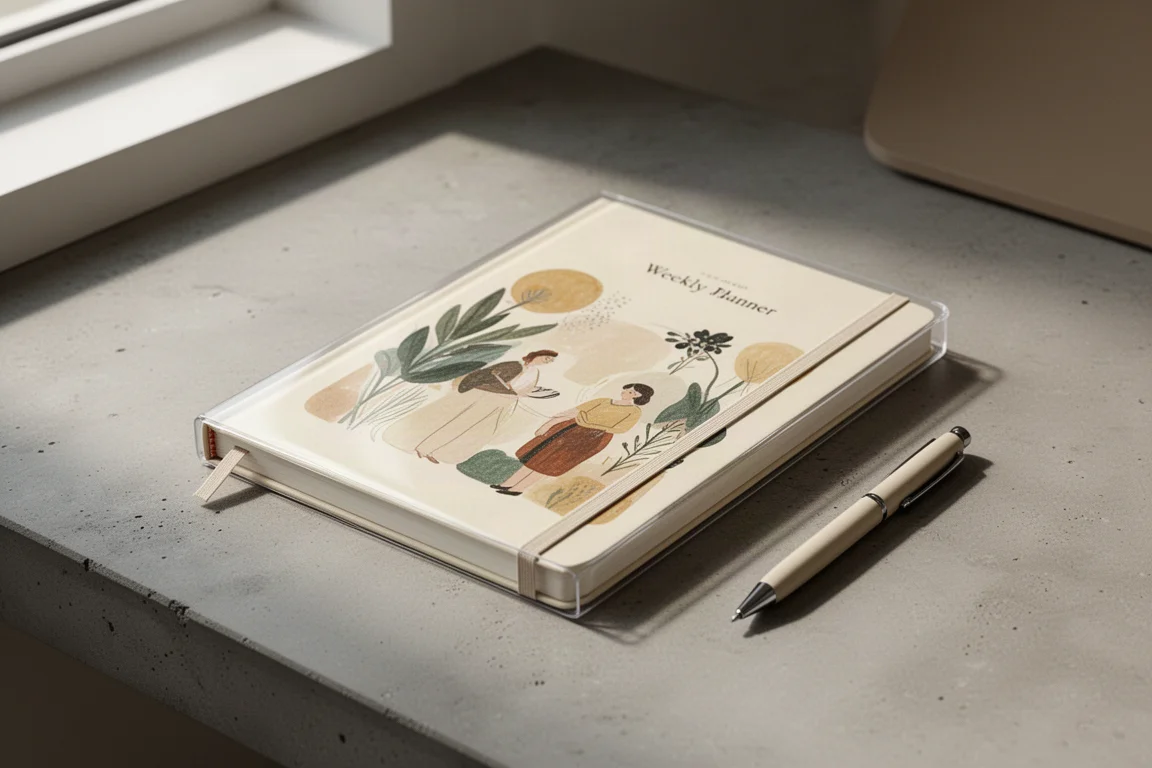
Covers are a big part of the appeal. They typically come as hard covers in solid colors, artist-designed patterns, or pop culture designs, and there are soft-cover versions called Sneaker Weeks with a flexible, sneaker-like material. The test unit features an artist design on the hard cover with a clear protective cover on top, a signature Hobonichi “cover on cover” approach that shields the artwork underneath.
There is also the Weeks Mega, which triples the number of blank notes pages in the back. The standard Weeks carries around 69 numbered blank graph pages, while the Mega offers close to 300. Language matters too: the Weeks comes in Japanese and English editions, and the Japanese edition tested here remains perfectly usable for non-Japanese speakers, though the back info pages and the weekly quotes stay in Japanese on that version.
Inside the Weeks: Spreads and Layout
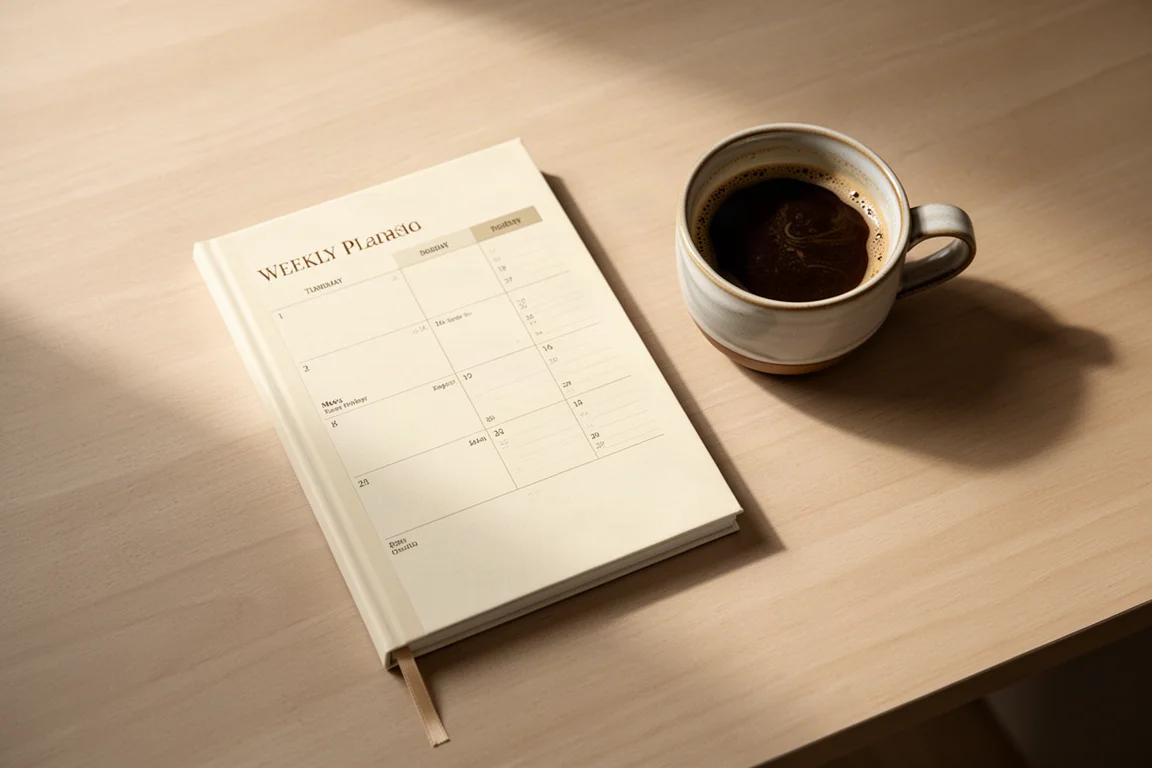
The paper is a cream or off-white Tomoe River paper, slightly tinted compared to the brighter white of the A6 Hobonichi Hon. The softer tint is easier on the eyes than stark white, and anyone familiar with Leuchtturm 1917 paper will recognize the feel.
The structure runs as follows:
- A front calendar spread with the current year on the left, plus smaller calendars for the previous and following year, and Japanese holidays noted
- A vertical yearly log with Saturdays in gray and Sundays and Japanese holidays in red
- Sixteen monthly calendars: twelve for the current year, December of the previous year for early starters, and January through March of the following year for forward planning, each with a sidebar, a large bottom margin, and four small boxes for events or tasks
- Weekly spreads starting from the last week of November, so the planner can begin a month early
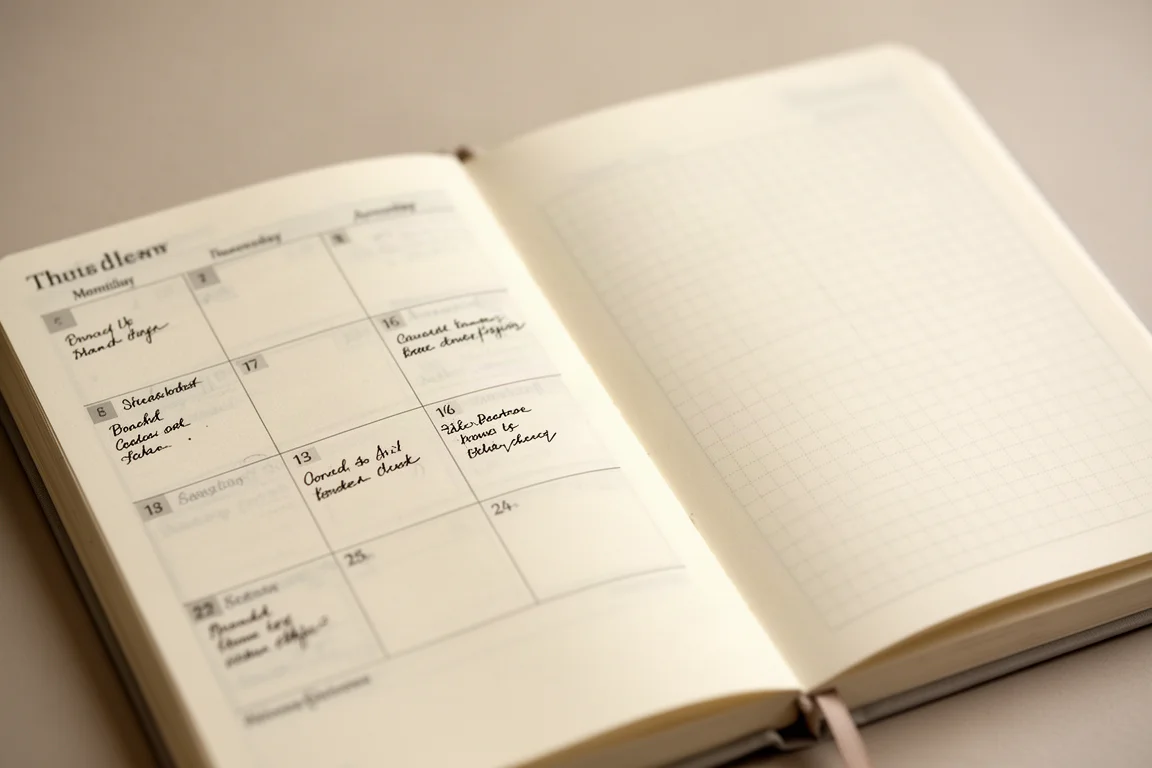
The weekly spread itself has daily boxes for Monday through Sunday, each showing the date, day of the week, and a moon phase, with week numbers included. The bottom carries Japanese quotes and a mini monthly calendar. The right page is a blank graph page for extending daily notes, to-do lists, trackers, or journaling. Tiny tick marks along each box allow you to divide events and tasks, and a darker “secret line” offers another way to section off the page.
The 69 numbered blank graph pages in the back work as a built-in notebook for brain dumps or journaling, and the numbering makes it possible to build a table of contents. The very back holds assorted info pages, which differ in tone: measuring guides, doodles to copy, and other bits that some will find charming and others will never open.
Strengths After a Month of Use
The size is the first thing worth praising. Despite being taller than the comparison planner, the narrowness makes it feel compact, it slips easily into a purse or bag, and it stays lightweight while still packing a substantial number of pages and spread types.
Cover variety is another clear win. The range runs from minimalist solid colors to abstract and artistic designs, which makes personalizing the planner genuinely easy. The cream Tomoe River paper is a pleasure to use, and this was a first full year with that paper type in any planner, which is saying something.
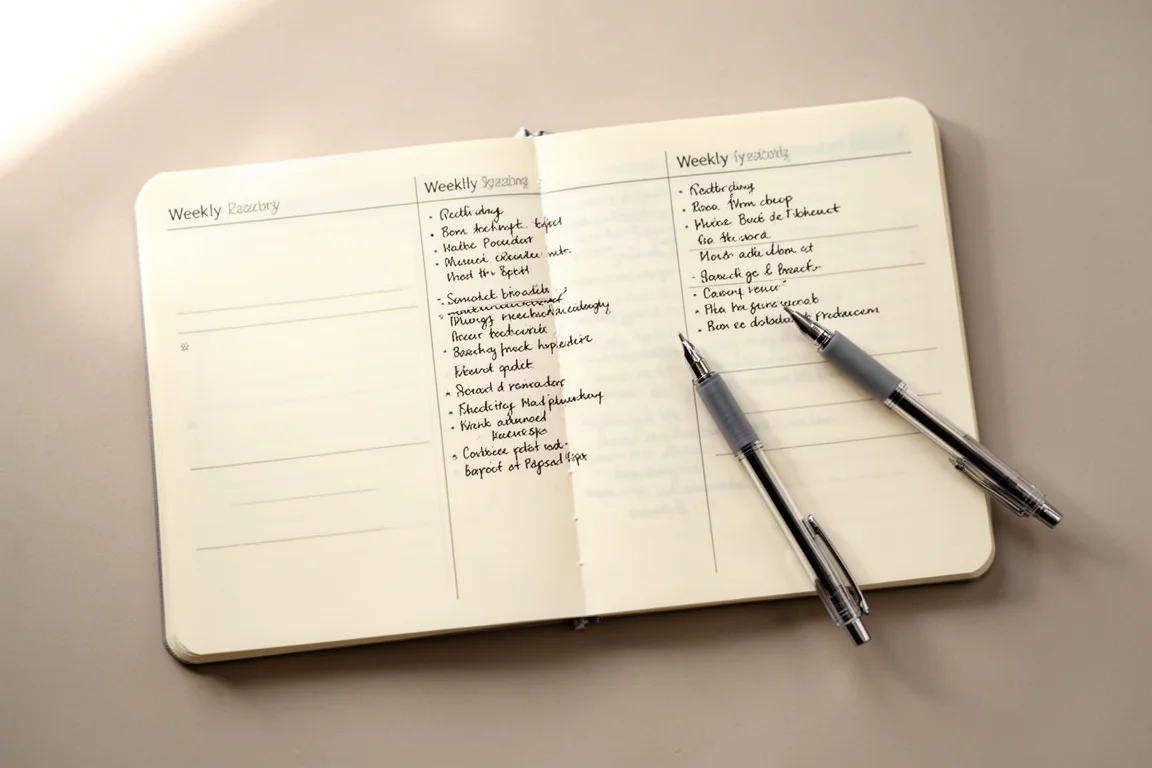
The monthly calendars are spacious, with room in the sidebar and bottom margin for notes or brain dumping. The weekly spreads earn their reputation for flexibility: the blank graph page pairs with the weekly section and can be reorganized at any point in the year. During the test month, layouts shifted constantly: a daily doodle column one week, a pet log the next, then task lists stretched onto the graph page, a gratitude log, and even experiments with the secret line as a divider. Nothing has to stay fixed.
The blank graph pages in the back are equally valuable, functioning like a spare notebook tucked inside the planner. And one detail many reviews call a con deserves defense: the quotes and mini calendar at the bottom of the weekly spread. That lower strip of the page is uncomfortable to write in anyway, so filling it with a quote and a calendar reference is smart use of awkward space, and having a mini calendar on the weekly spread means checking a future date without flipping to the monthly section.
Weaknesses to Weigh Carefully
The vertical yearly log is the biggest functional problem. The boxes are very small and narrow, and even with small handwriting, fitting anything in was a struggle. Multiple entries per day are effectively impossible, so the page really only works for one short item per day, such as a workout and a weight figure.
The colored weekends and holidays also divide opinion. Saturdays in gray, Sundays and Japanese holidays in red, both on the yearly log and the monthly spreads. It is not a dealbreaker, but the random highlighting reads as noise rather than information.
The blank graph page, ironically, can be hard to fill. The flexibility is real, but finding a purpose for that much open grid space week after week takes experimentation. The daily boxes themselves are small too: anyone who logs every detail of a day will run out of room unless they expand onto the graph page, and unlike a vertical timeline layout, entries here are not chronological.
Two smaller gripes: the graph page sits on the right rather than the left, which works against a left-to-right reading habit of scanning to-dos first, and the secret line creates a cramped, narrow strip that fits only a word or two per line. Finally, the info pages in the back tend to go unopened. More numbered blank pages and fewer novelty pages would be the preferred trade.
Buying Advice: Who Should and Should Not Buy It
The Hobonichi Weeks is best understood as a quick-and-simple planner that refuses to overcomplicate planning. It is beginner-friendly, bare-bones, and requires no learning curve beyond deciding how to use each spread. For jotting down quick to-dos and being done with it, it is an excellent fit.
For heavy writers, the weekly spread space will feel constraining. Anyone who needs to capture everything, or who prefers a vertical chronological timeline, will likely chafe against the small daily boxes. The comparison with a Sterling Ink Common Planner was revealing here: as a long-time horizontal layout fan, this reviewer had no complaints about the Weeks format until switching to a vertical layout, after which going back felt restrictive. Personal preference genuinely decides this one.
It also matters whether the trade-offs bother you. If small boxes and colored weekends are fine in exchange for a slim, lightweight, highly personalizable planner with a spare notebook built in, the Weeks delivers on its promise.
Conclusion
After a month of side-by-side testing, the Hobonichi Weeks earns real respect as a compact, flexible, well-designed planner that excels at light-to-moderate planning. The Tomoe River paper, cover variety, flexible weekly spreads, and built-in blank notebook are genuine strengths. The cramped yearly log and limited daily writing space are equally real limitations for heavy writers.
As of now, the Weeks did not win a spot as the next year’s sole planner, but the year is not over and minds can change. For anyone new to planning, or anyone wanting a purse-friendly companion planner, it remains one of the strongest options in its size class.
Product link
View more details for Hobonichi Weeks
This product is mentioned in the review. Check the specifications, options, and compatibility before buying.
View more details for Hobonichi WeeksFurther reading
Related Reviews
Planners
KOKUYO Jibun Techo 2027 Lineup: Which Planner Fits Your Style?
A full walkthrough of the KOKUYO Jibun Techo lineup, from the beginner-friendly First Kit to the daily DAYs Diary and the 2027 artist collaboration cover.
Planners
Best 2026 Planners: 11 Formats to Organize Your Year
From vertical hourly trackers to minimalist daily pages, a guide to 11 planner lines worth considering for 2026.
Planners
Hobonichi Techo 2026: Which Format Is Right for You?
A practical guide to the 2026 Hobonichi Techo lineup, from the A6 Original and A5 Cousin to the Weeks, Day-Free, and 5-Year Techo, plus standout covers and accessories.