Power Tools
HiKOKI RA18DA vs Makita AS001G: Compact Blower Showdown
Two tiny, surprisingly capable blowers face off on power, attachments, weight, and clever trigger tricks to help you pick the right one for your platform.
Introduction
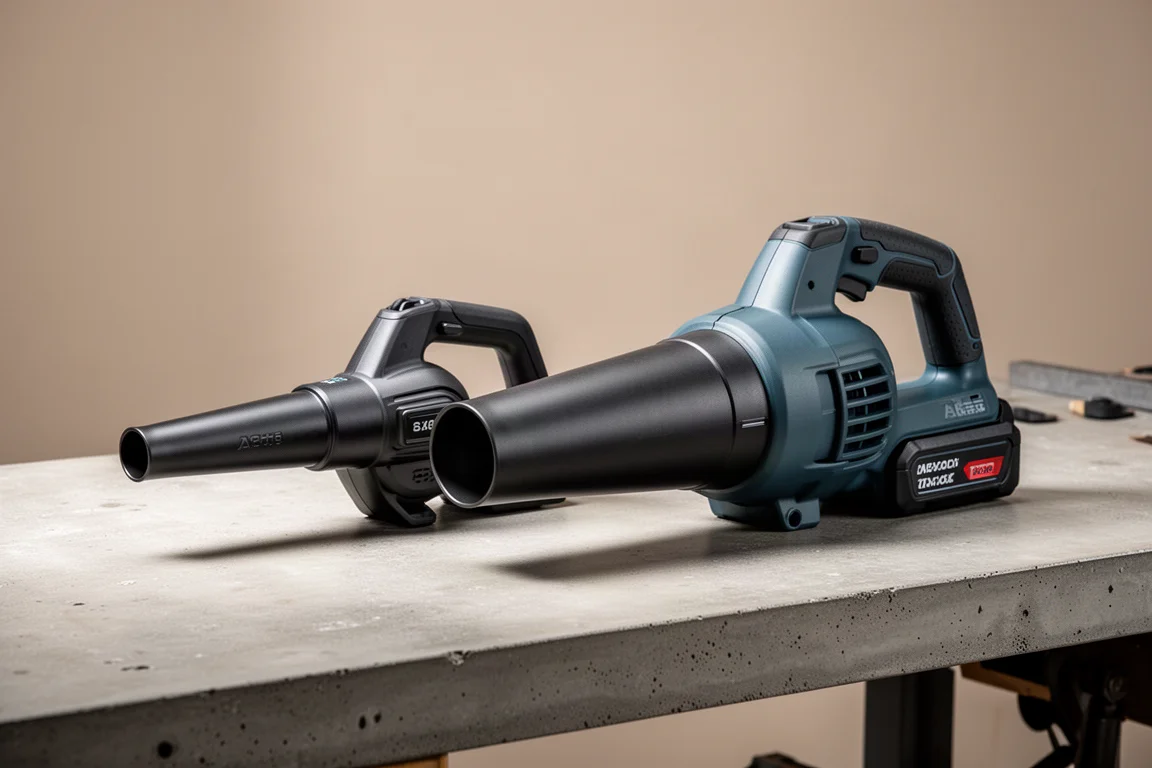
Compact hand blowers have quietly become one of the most useful little tools on the bench, and two of the most interesting options right now are the HiKOKI RA18DA and the Makita AS001G (sold as the GSA01 in the United States). Both are tiny, brushless, and far more capable than their size suggests, but they take noticeably different approaches. We put them head to head on design, attachments, blowing power, and weight to see which one deserves a spot in your kit.
First Impressions: Size and Handling
The first difference is obvious the moment you pick them up. The Makita is a much more substantial tool, while the HiKOKI is a genuinely tiny, featherweight blower. The air intakes at the rear are also quite different in design, which hints at how differently these two tools are built.
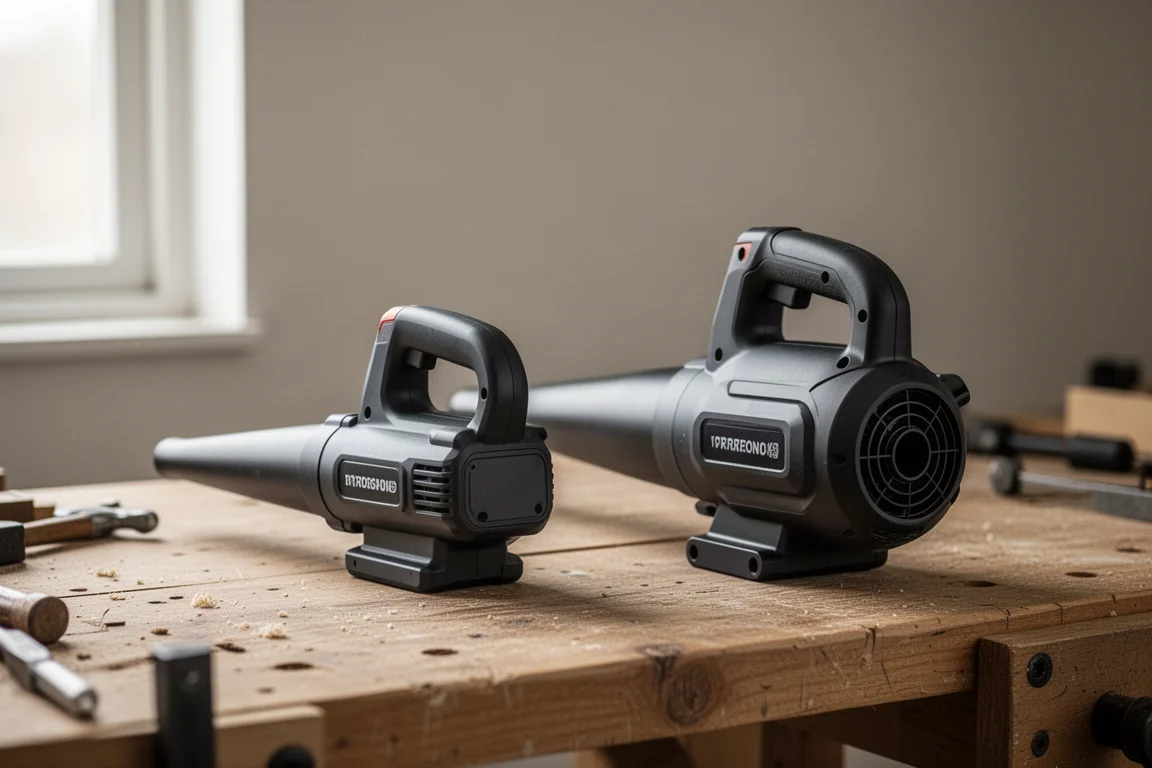
In terms of controls, the HiKOKI keeps things minimal: a single variable speed trigger that switches the tool on and off, and that is all. The Makita adds a trigger lock, a trigger hold button that keeps the blower running without holding the trigger, and four different speed modes. Both tools have a light on the front, a single LED on the HiKOKI and a double LED on the Makita, and both accept belt clips on either side. The Makita also has a small loop for a lanyard.
Both blowers run brushless motors with variable speed triggers, so the real differences show up in the details and in how they actually blow.
Attachments: Where the Makita Pulls Ahead
The Makita comes standard with five nozzles in most countries: three basic blower nozzles in increasing sizes, an inflator nozzle for beach balls and similar inflatables, and a wide rubber nozzle for blowing over a large area. On top of that, there is a longer list of optional accessories, including a very thin nozzle for fine work like blowing out a keyboard, a HEPA filter, inflating and deflating attachments, and a flexible hose that clips onto the back of the tool so you can suck air out of vacuum seal bags, pool toys, and inflatables. There are even nozzles designed for blowing out anchor holes when working with concrete, a genuinely practical reason to choose the Makita.
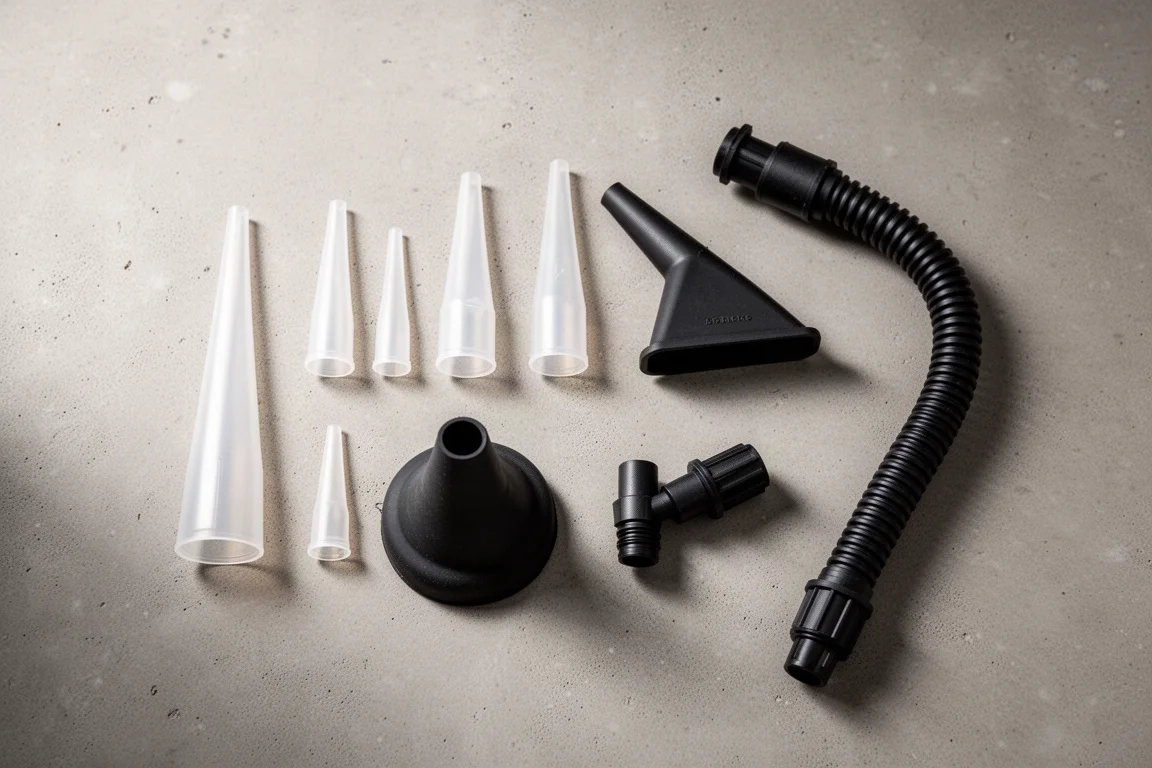
The HiKOKI ships with only three attachments: a standard dust blower nozzle, an inflator nozzle, and one that clips onto the back for deflating, with a metal mesh filter and a larger clip-on filter for suction work. As far as we can tell, those are the only attachments available. There are no optional extras at this stage, and the tool’s design would make larger attachments harder to support. One neat trick: the main nozzle stores on a small plastic nib at the bottom of the tool, locking in place so it does not get knocked off in transit. Only the front nozzle stores this way, though.
Clever Trigger Tricks
Neither tool makes you hold the trigger the whole time, but they get there differently. On the Makita, you press a side button and the trigger, and the blower keeps running until you release it. It is a straightforward lock-on system with fewer places for dust to work its way in, which is arguably better for longevity.
The HiKOKI hides its lock-on behind a double tap. Give the trigger two light taps and the blower locks on at a low speed; two firm taps and it locks on at full power. It is a nifty system with no extra button to snag, and it took a moment to discover, but it works well once you know it is there.
Blowing Performance
In practical tests, including inflating an inflatable kayak and a head-to-head tug of war with a small carriage on a track, the Makita consistently showed just a little more power. It blows a bit further and a bit stronger, though not by a huge margin. The Makita also takes slightly longer to wind up to speed, whereas the HiKOKI ramps up quickly.
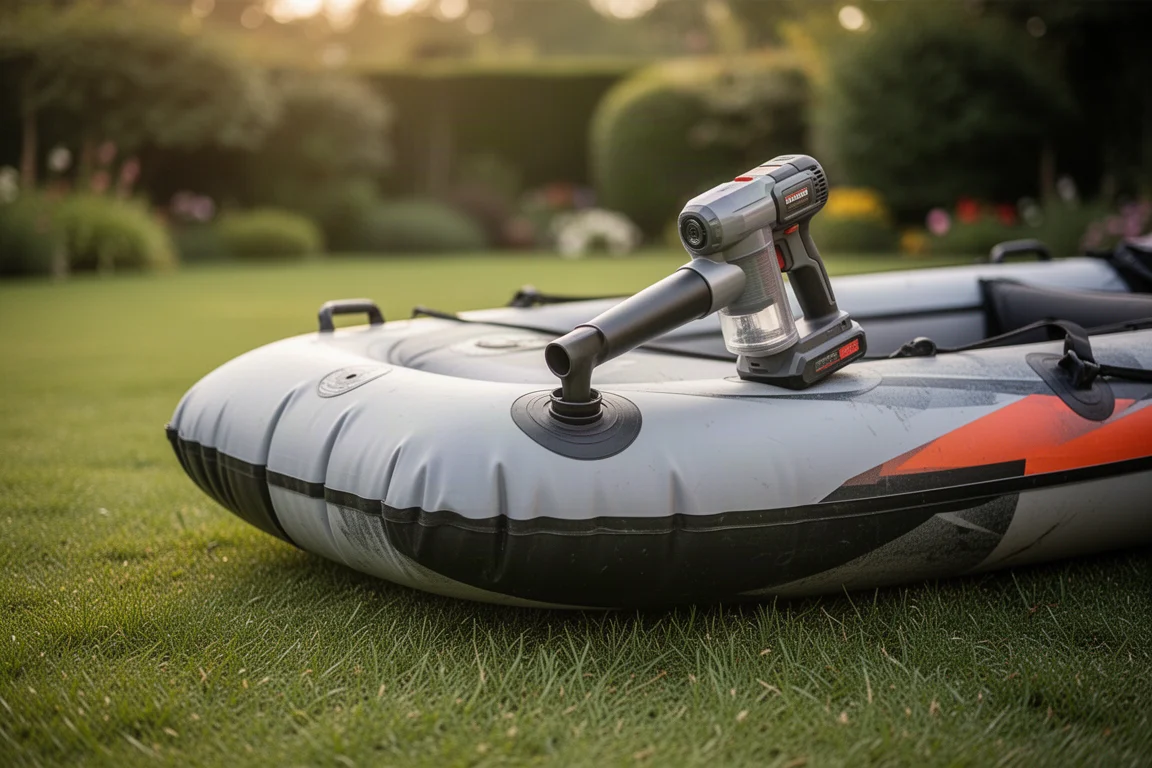
One eye-catching spec on the HiKOKI is its 89,000 RPM motor. For a tool this small, the amount of air it moves is genuinely impressive, and for plain blowing tasks there is absolutely nothing wrong with it.
Weight: The HiKOKI Wins Hands Down
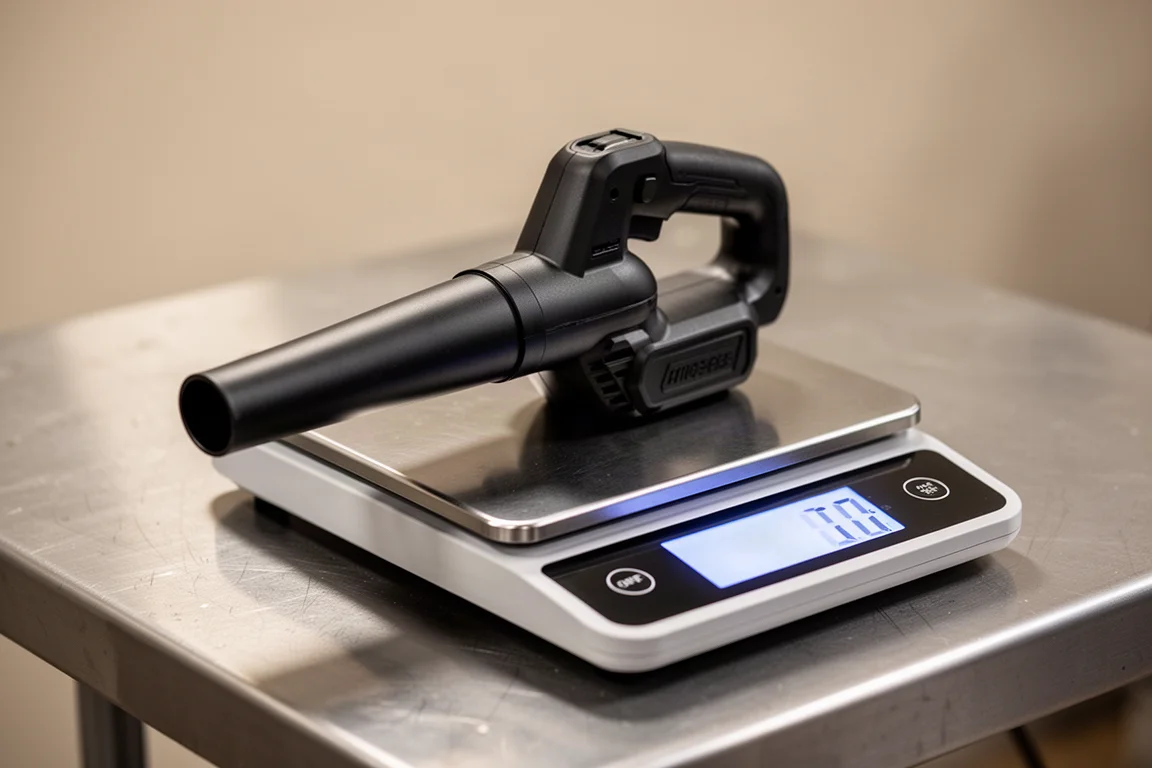
Here the HiKOKI is in a league of its own. The bare tool without battery or attachments weighs just 417 grams, which is barely over a pound. Even the full boxed weight with accessories, manual, and clips, no battery, comes in at 590 grams. The Makita, while still light for a blower at 850 grams, cannot match it. If minimal weight is your priority, the HiKOKI takes this round comfortably.
Which One Should You Buy?
It depends entirely on what you need and which battery platform you already own. If you just want a plain, super-light blower, the HiKOKI is a very good buy. If you want the extra versatility of inflating attachments, vacuum bag extraction, keyboard-blowing nozzles, and concrete anchor hole cleaning, the Makita’s accessory ecosystem makes it the more complete tool.
Price matters too. In Japan, where the HiKOKI RA18DA is currently available, the Makita costs close to double the HiKOKI’s price, which makes the HiKOKI excellent value. Note that the HiKOKI appears to be available in Japan only at the moment, and the Makita 40V tool will naturally appeal to anyone already on the Makita 40V platform, just as the HiKOKI will appeal to users with HiKOKI 18V MultiVolt batteries. Sticking with your platform is almost always the right move for a tool this size.
Conclusion
Both of these tiny blowers are impressive for their size. The HiKOKI RA18DA wins on weight, value, and that clever double-tap lock-on, while the Makita AS001G offers a touch more blowing power, richer controls, and a far deeper accessory lineup. Pick the one that matches your battery platform and how much versatility you actually need.
Product link
View more details for HiKOKI RA18DA
This product is mentioned in the review. Check the specifications, options, and compatibility before buying.
View more details for HiKOKI RA18DAFurther reading
Related Reviews
Power Tools
Best 1-Inch Pistol Impact Wrenches: Three Heavy-Duty Options Compared
We compare three 1-inch pistol impact wrenches, from a budget-friendly Harbor Freight model to a premium Caterpillar unit, to help you choose the right one.
Power Tools
Best 3/4-Inch Impact Wrenches 2026: Five Contenders Compared
We compare five 3/4-inch impact wrenches across price and performance, from a budget Amazon option to Snap-on's most powerful model yet.
Power Tools
Best Budget Cordless Tools 2026: Walmart Finds That Punch Above Their Price
We tested five cordless tools from Walmart, including a high-torque impact wrench that trades blows with Milwaukee and a $35 duster that outperforms its price class.