Power Tools
HiKOKI NR1890 DBCL 18V Framing Nailer Review: A Year of First-Fix Work Without a Single Jam
After a year of real projects, this fully electric 18V framing nailer has proven powerful, consistent, and jam-free, though weight and price are worth thinking about first.
Introduction
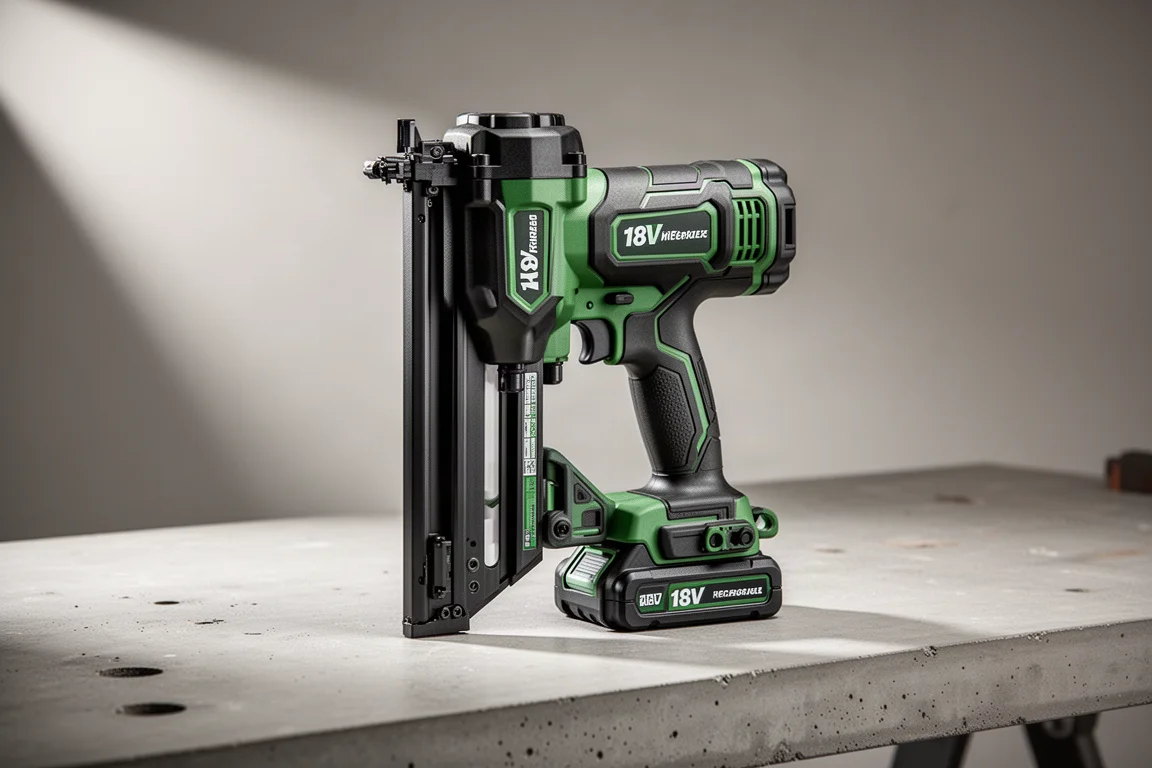
The HiKOKI NR1890 DBCL 18V first fix framing nailer (HiKOKI was formerly known as Hitachi in many parts of the world) has now been part of the workshop for a full year of real projects. This is the tool you reach for when you need to drive big, chunky fixings into structural timber, and after extended use it has delivered exactly what a framing nailer should: plenty of power, consistent depth, and not a single jam or misfire.
What First Fix Actually Means
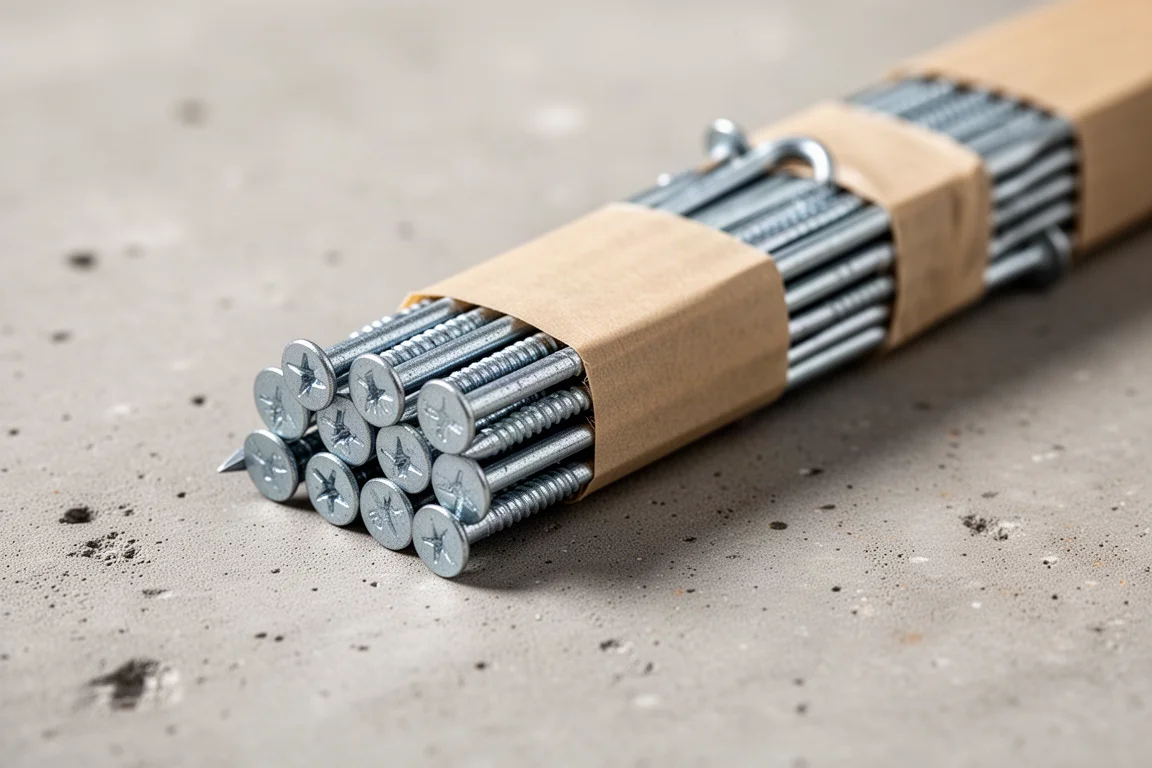
If you have never heard the terms before, first fix is the structural stage of a build: the frames, studs, and large timbers like 4x2s, 3x2s, and 2x8s. Second fix comes later, once the building is watertight and plastered, when thinner brad nailers are used for skirting and architrave with almost invisible nails. The NR1890 is firmly a first fix tool, and it takes collated nails held together with paper tape, angled to feed into the magazine. The heads are small enough to sit slightly off-centre so they can run along the strip, and the tested pair happened to be galvanized ring shank nails bought for outdoor work.
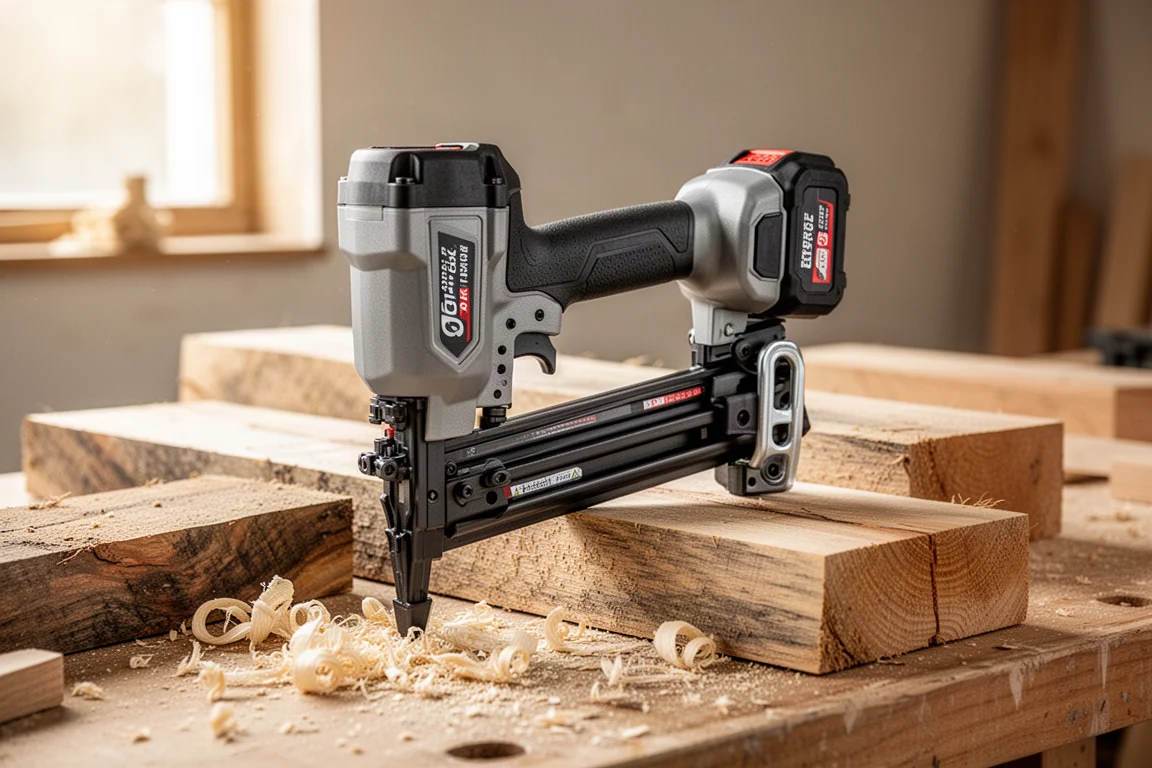
It accepts nails from 50mm (2 inch) up to 90mm (about 3.5 inches). If you need anything smaller than that, a second fix nailer is the better fit.
Fully Electric, No Gas
This is an 18V cordless machine with no gas canisters at all. That matters for two reasons. Gas nailers cost more to run because you keep buying fuel cells, and in colder weather they can lose performance. HiKOKI used to make a gas version but the electric route is clearly the way things have gone.
Inside, a cylinder and piston are charged by the motor after each shot, an air sprung system that leaves the tool ready to fire the next nail the moment you pull the trigger. Nothing happens unless the nose is depressed and the tool is switched on, and there is a further safety layer: if the nose is depressed but nothing is fired within a couple of seconds, the trigger will not respond, which protects against resting the tool against your leg by mistake.
Loading, Safety, and Firing Modes
Loading is straightforward: nails slide in from the back of the magazine, and a catch pulls back to push the strip to the end. Eye protection is non-negotiable with any nailer, and honestly this is the one tool in the shop where it should be mandatory.
The control panel at the base holds an on/off switch and a button to switch between single fire and bump fire. Bump fire mode fires every time the nose is depressed with your finger already on the trigger, which speeds up repetitive work. One genuinely useful capability is speed of fixing: you can hold a piece of timber in exactly the right position with your free hand and fix it the instant it lines up, something that is simply not possible with a hammer and nails.
Depth Adjustment That Actually Repeats
The depth adjustment is a small ring around the nose, and it is impressively sensitive. A couple of turns takes the nail from flush to below the surface, and once set for a given timber, the tool repeats the same depth shot after shot. That consistency has been one of the standout characteristics across a year of use, and it carried over into real projects.
Real-World Use: Green Wall and Fence Projects
Two projects showed what this tool can do. Building the frame for a green wall on a garage, it sped up fixing battens to the main frame and kept the firing depth consistent throughout. Putting up a fence in the summer, it both accelerated the job and took a lot of the physical effort out of attaching boards to the rails.
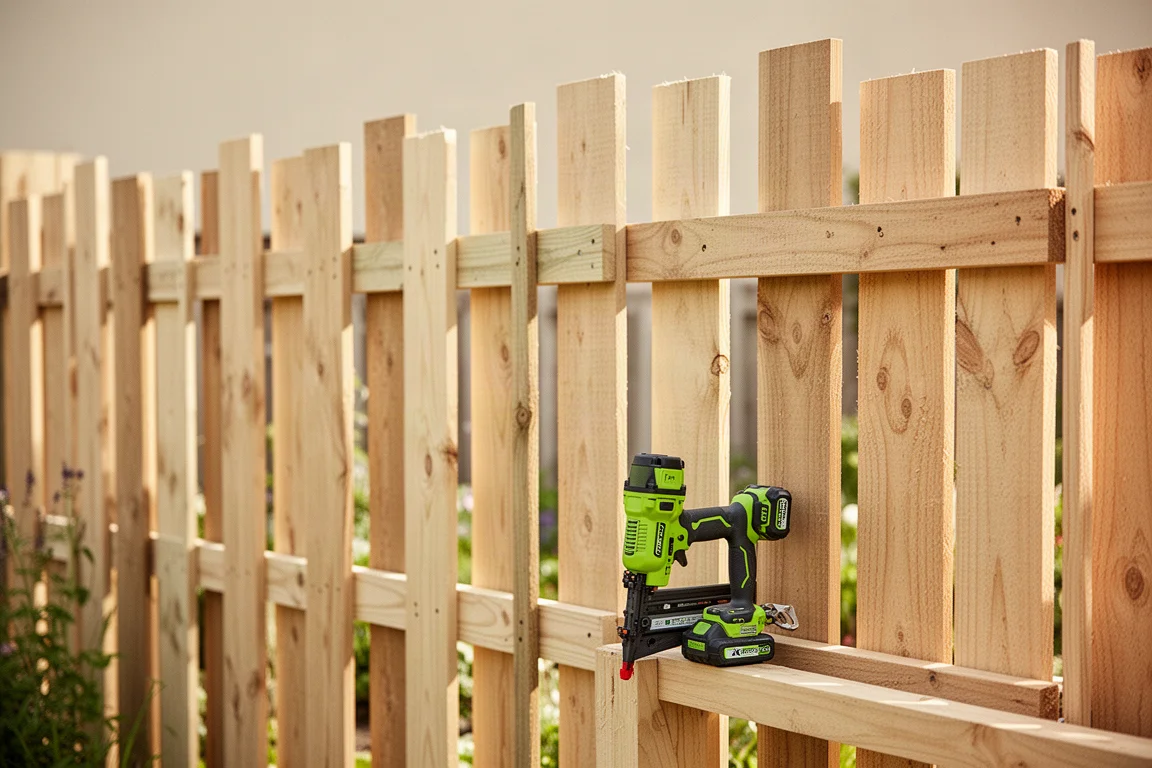
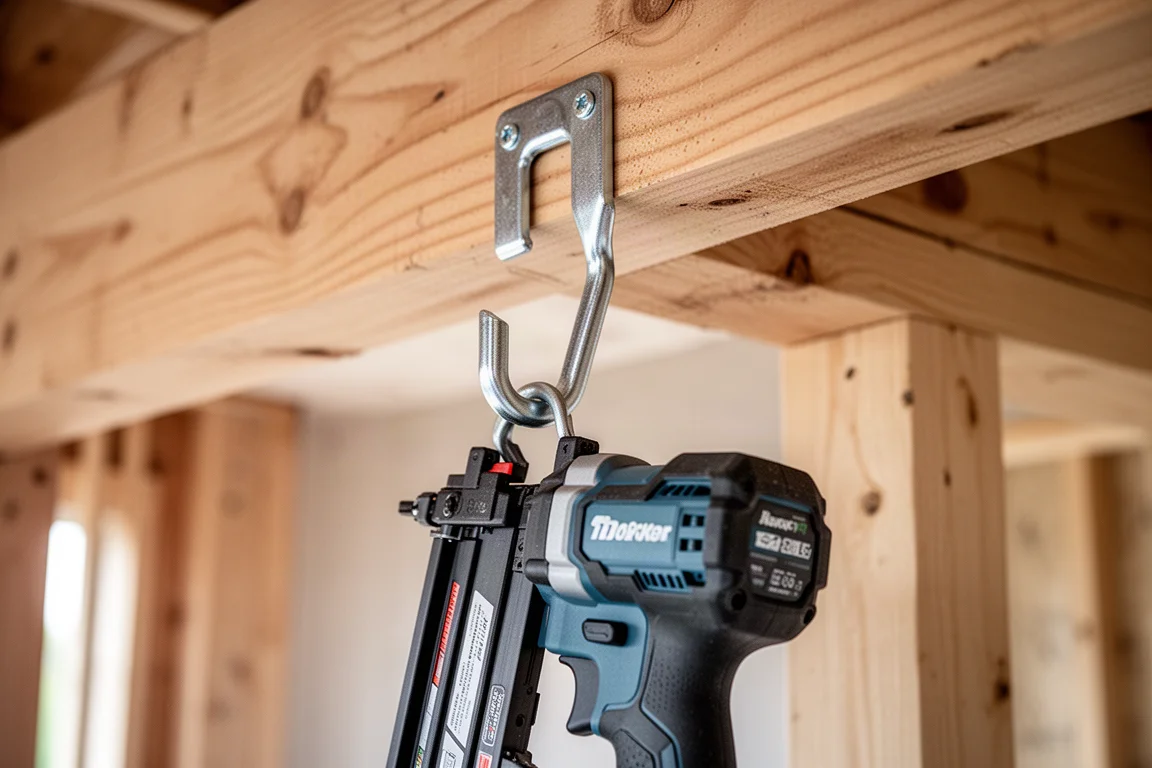
The rafter hook at the back, initially expected to go unused, ended up being relied on constantly. It lets you hang the tool close by between shots so it is always within easy reach.
Should You Buy It
Bare (without battery) the tool sells for around 300, and around 400 with a battery, charger, and possibly a second battery. It is not a cheap tool, and it makes most sense if you have a big project ahead, such as a summerhouse, an extension, or a large shed, or you are serious about framing work.
Pros and Cons
The main drawbacks are weight and price. With the battery fitted it is around 4.5kg, so it is not something you want to hold all day. And at roughly 300 bare or 400 with batteries and charger, it is an investment rather than an impulse buy.
On the positive side, it is genuinely easy to use, the depth control is consistent and accurate, there have been no jams or misfires in a year, and being fully electric means no gas to worry about: just charge the batteries like you would for a drill and go. The verdict after a year is simple: go ahead and buy it. It does exactly what a framing nailer should do, with plenty of power and a fine depth adjustment to get nails sitting just right.
Conclusion
The HiKOKI NR1890 DBCL is a well-rounded first fix framing nailer that has proven itself over a year of real work with zero jams, zero misfires, and consistently accurate depth. If you have a large framing project on the horizon, it earns its place in the workshop.
Product link
View more details for HiKOKI NR1890 DBCL 18V Framing Nailer
This product is mentioned in the review. Check the specifications, options, and compatibility before buying.
View more details for HiKOKI NR1890 DBCL 18V Framing NailerFurther reading
Related Reviews

Power Tools
Best 1-Inch Pistol Impact Wrenches: Three Heavy-Duty Options Compared
We compare three 1-inch pistol impact wrenches, from a budget-friendly Harbor Freight model to a premium Caterpillar unit, to help you choose the right one.

Power Tools
Best 3/4-Inch Impact Wrenches 2026: Five Contenders Compared
We compare five 3/4-inch impact wrenches across price and performance, from a budget Amazon option to Snap-on's most powerful model yet.

Power Tools
Best Budget Cordless Tools 2026: Walmart Finds That Punch Above Their Price
We tested five cordless tools from Walmart, including a high-torque impact wrench that trades blows with Milwaukee and a $35 duster that outperforms its price class.