Power Tools
HiKOKI NC1840DA Concrete Nailer Review: A Battery Tool That Drives Nails Through Concrete and Steel
The HiKOKI NC1840DA is an 18V concrete nailer that fires nails through concrete, timber, and even mild steel. Here is what it does well, where it struggles, and who it suits.
Introduction
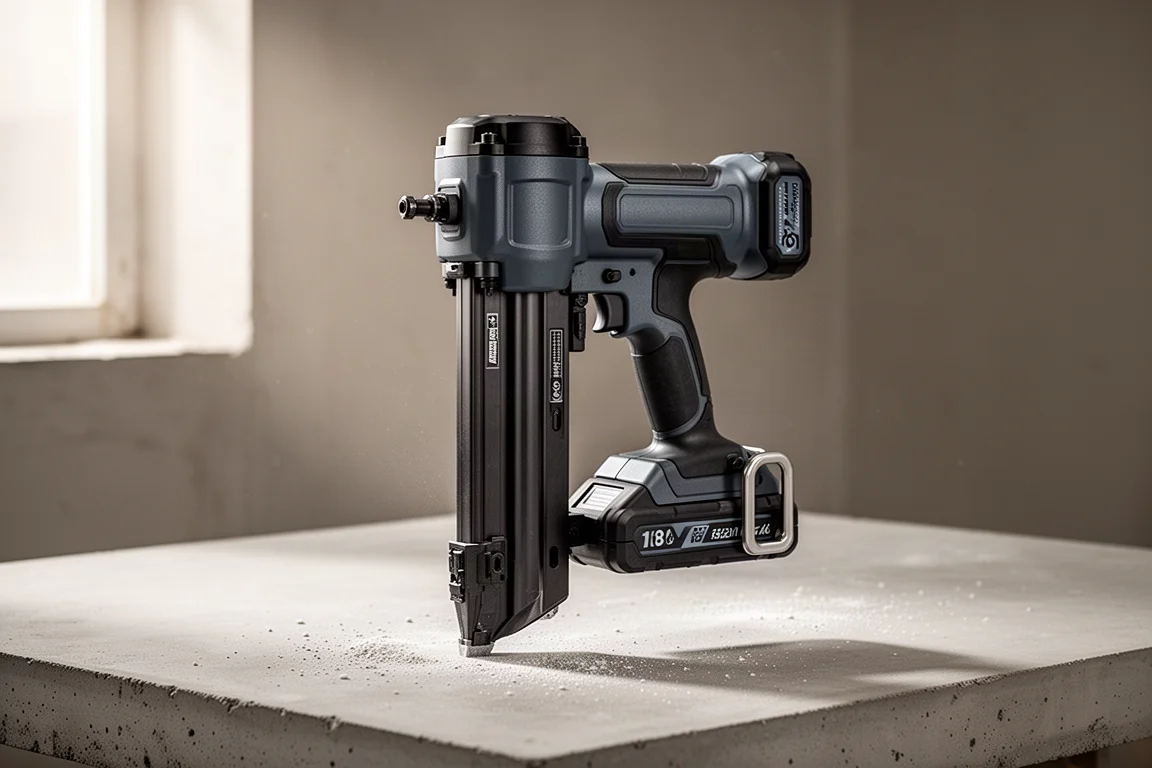
Most cordless nailers are built for wood. The HiKOKI NC1840DA is not. This is a concrete nailer, an 18V battery tool designed to drive nails into concrete, through timber into concrete, through steel into concrete, and even into steel itself. In North America it is sold as Metabo HPT, with the same model number, while the rest of the world gets the HiKOKI badge. Same tool, different name.
It looks the part, and after putting it through concrete, uni strut, mild steel sheet, and timber, it is clear this is one of the more impressive battery tools to arrive recently. Anyone who still believes battery nailers lack power should see what this thing does to 5 mm steel plate.
Nails and Compatibility
The NC1840DA takes nails from 15 mm to 40 mm long, with a head diameter between 5.7 and 6.6 mm and a shaft diameter between 2.6 and 3 mm. The nails arrive collated with plastic, similar to a framing nailer, so loading is familiar once you line the plastic strip up with the slightly more convoluted groove.
Good news for long-term ownership: the nails are not proprietary. Ramset nails work, Ecko nails work, and HiKOKI will eventually offer their own branded nails as well. That takes a lot of the risk out of buying into the system.
On an 18V 5.0Ah battery, HiKOKI claims around 620 nails. The tool is 18V only, though it ran on a multi-volt pack during use, so it shares batteries with the rest of the platform.
Loading and Magazine Design
Loading follows the framing-nailer pattern: slide the strip in, pull the magazine back, release, and let it lock the nails forward. Once a battery is on, you are ready to fire.
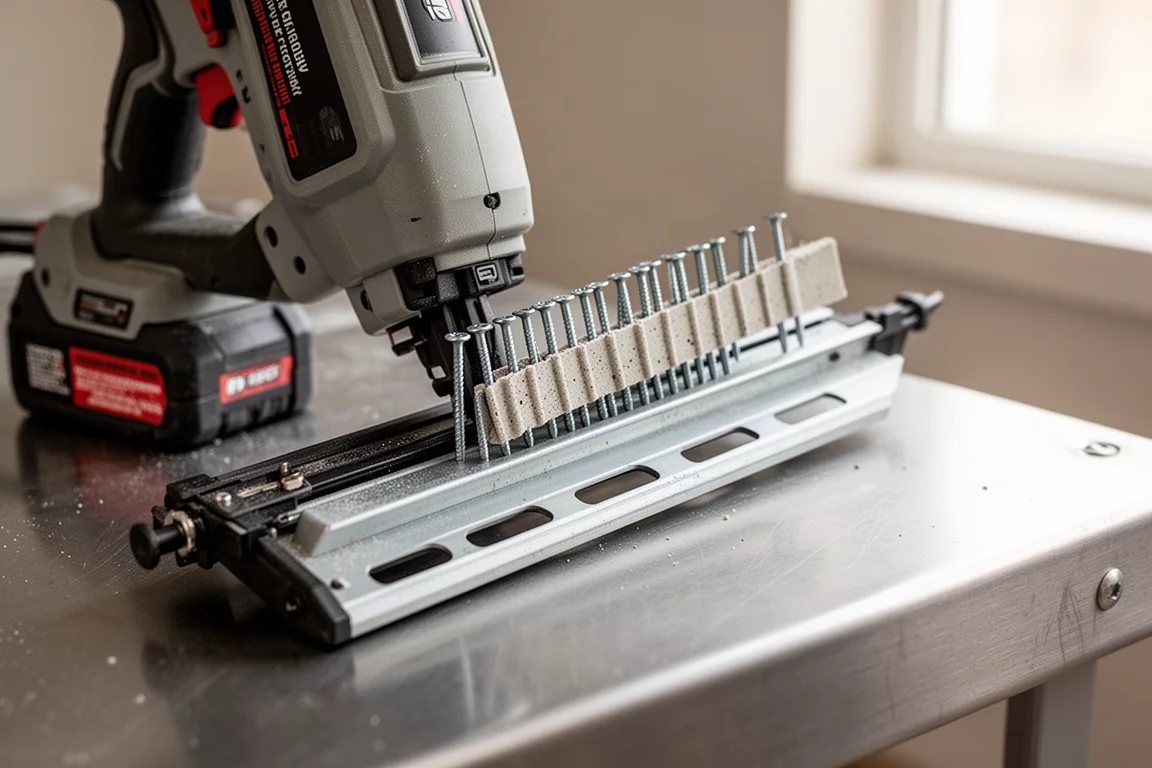
The magazine itself is fully removable, which is a genuinely useful touch. This tool generates a lot of debris, since the plastic collation breaks off and galvanizing flakes from the nails, so being able to pull the magazine out and blow the channel clean makes real sense. The nose section also comes off easily, which raises an interesting question about whether HiKOKI planned interchangeable nose assemblies for other nail types. Nothing like that is confirmed, but the design leaves the door open.
Firing Performance: Concrete, Timber, and Steel
Firing straight into bare concrete works, but it chips the surface and leaves nails sitting proud unless you are careful, and you would not normally nail into bare concrete anyway. Through a 12 mm timber board into concrete, nails set close to flush with full depth engaged.
The impressive part is metal. Through uni strut into concrete, the tool drove nails without any drama. Through 2.5 mm mild steel, nails went through no bother at all. Even 5 mm mild steel plate, roughly 3/16 of an inch, gave way to a battery-powered nailer, which is a genuinely remarkable result.
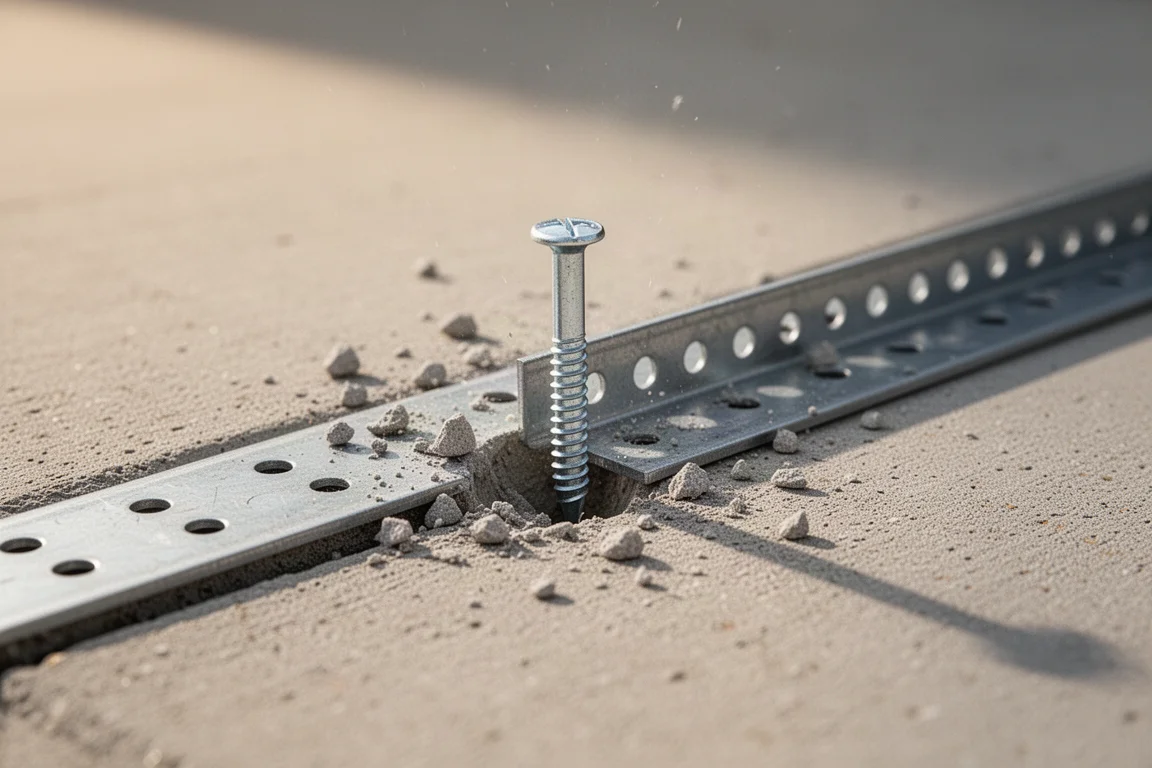
There is one clear limitation: galvanized cinch steel. The NC1840DA consistently struggled with cinch-coated steel, failing to punch through it reliably, while mild steel of similar thickness was no problem. It was not tested against stainless steel, so treat that as unknown territory too.
Noise is significant. Readings peaked at 88 dB through timber, 94.3 dB through uni strut into concrete, 97.5 dB through the 5 mm plate, and a very loud 113.2 dB firing into hipylon foam. Hearing protection is not optional with this tool.
Depth Adjustment and Handling
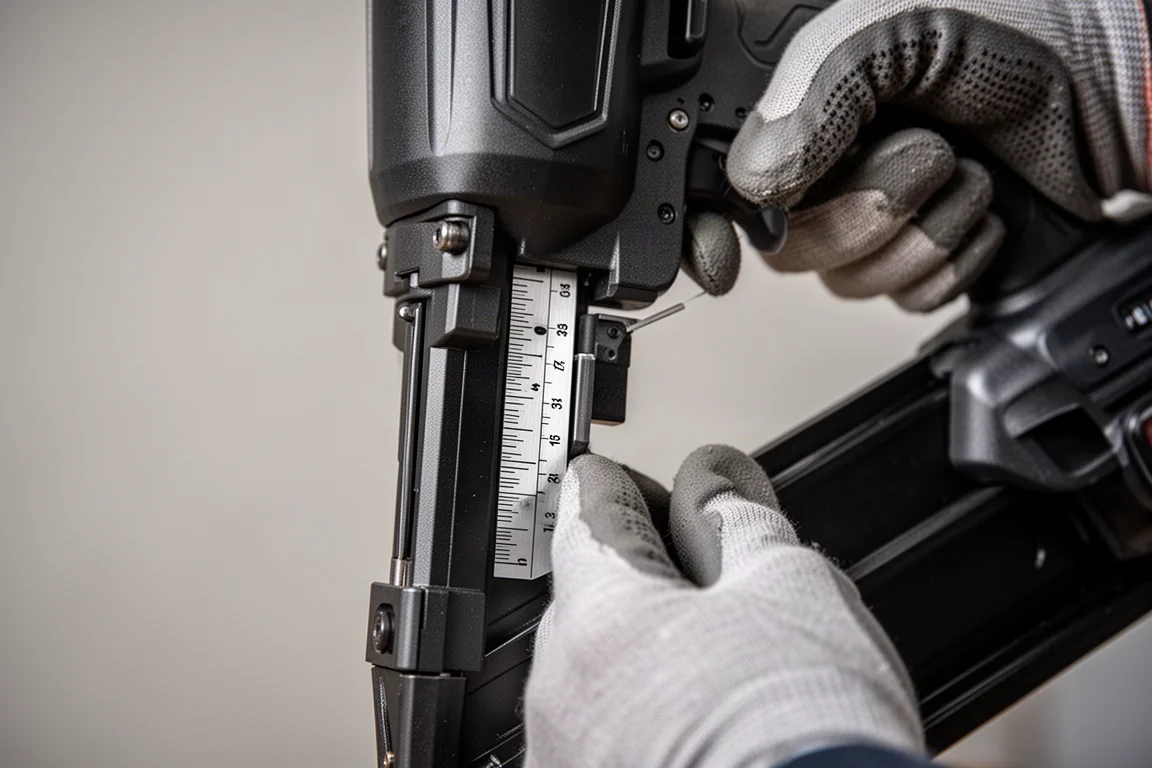
Instead of the fiddly dials found on many nailers, depth is set with a sliding foot on the front of the nose. One end leaves the nail proud, the other sinks it as deep as possible, and the mechanism is easy to work even with gloves on. The only gripe is visibility: the markings could be easier to read.
The firing pin is notably hefty. Rather than a thin flat strip like most nailers, it is solid and round, which suits the abuse of concrete work. The nail channel is fully enclosed and cylindrical, so a nail that fails to penetrate cannot deflect at a weird angle, bend, and jam or fly back at the user. A rear foot keeps the tool square to the surface, and a rubber guard at the bottom of the nose helps keep concrete dust out of the magazine.
Firing mode is single fire only, at a rate of two nails per second. HiKOKI nail guns also include a physical trigger lock, an extra safety feature not all nailers offer.
Things to Consider Before Buying
The tool is new to the market and not yet available everywhere, so check local availability before planning a job around it. It is single-fire only, which is fine for concrete work but worth knowing if you were hoping for bump-fire speed.
The 40 mm nail limit is the main practical constraint. Longer fasteners, say 75 mm nails for attaching a bottom plate through timber into concrete, would open up framing-style applications, but that is not possible with this generation of the tool.
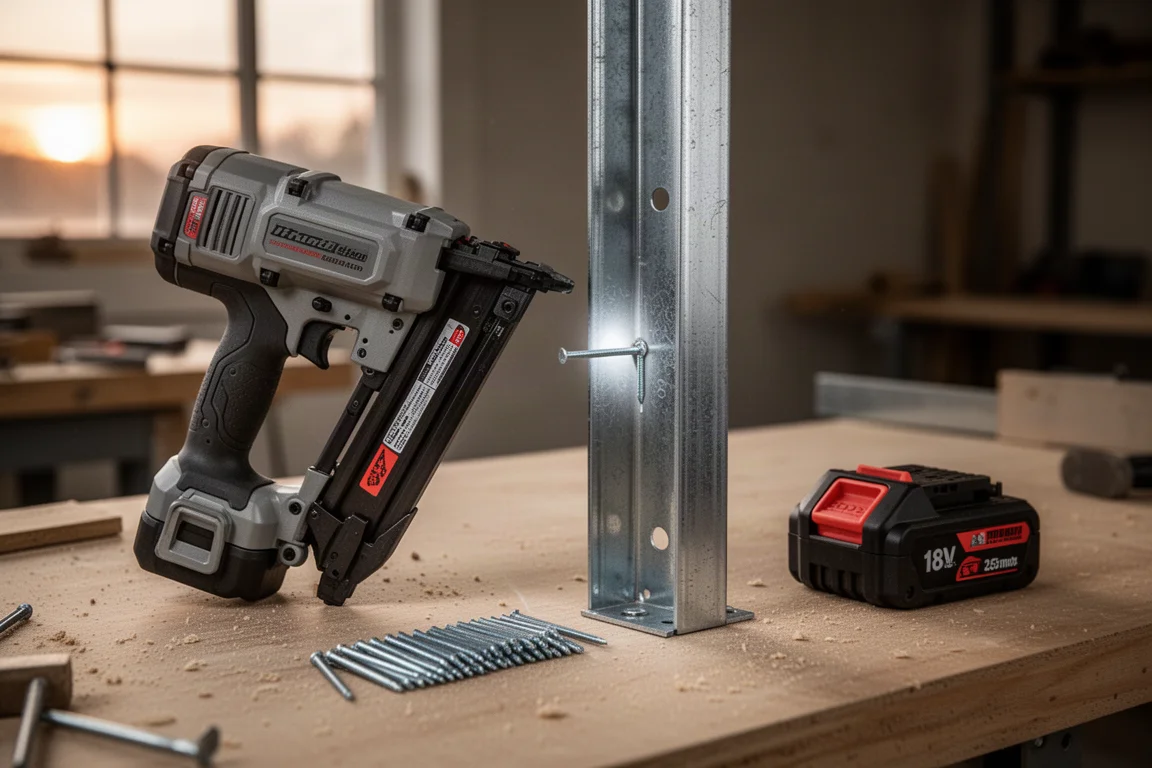
Weight feels fair for what it does, and it is an 18V tool, so it stays lighter than a gas-and-battery setup. The belt hook can be mounted on either side, and a work light under the nose flashes an out-of-nails warning when the magazine empties and the tool locks out.
Buying Advice
If your work involves fastening to concrete, steel framing, or strutting, this tool removes the compressor, the powder-actuated paperwork anxiety, and most of the noise of older solutions, though ear muffs are still essential. It suits anyone attaching timber to steel studs, fixing struts to slabs, or doing occasional concrete work without wanting a dedicated gas tool.
If you only ever fire into wood, a standard cordless framing or brad nailer is the better and cheaper choice. And if your fastening regularly involves galvanized cinch steel, test one in person first, because that is where the NC1840DA shows its limits.
Conclusion
The HiKOKI NC1840DA makes a strong case that battery nailers have come a long way. Driving a nail through 5 mm mild steel with a tool that runs on an 18V battery is proof enough of that. It has a clever removable magazine, an enclosed and safe nose design, easy depth control, and non-proprietary nails. Its struggles with cinch steel and its 40 mm nail ceiling are the honest caveats. For concrete and steel-attachment work, it is a genuinely exciting tool.
Product link
View more details for HiKOKI NC1840DA Concrete Nailer
This product is mentioned in the review. Check the specifications, options, and compatibility before buying.
View more details for HiKOKI NC1840DA Concrete NailerFurther reading
Related Reviews
Power Tools
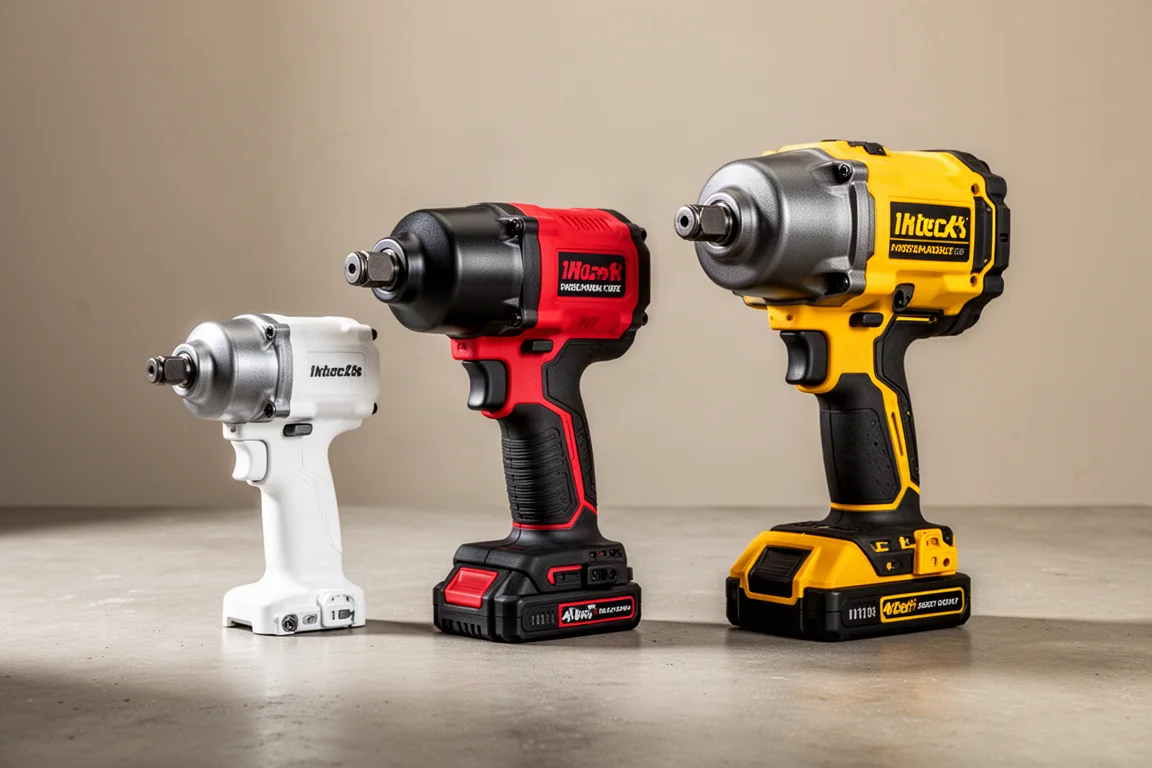
Best 1-Inch Pistol Impact Wrenches: Three Heavy-Duty Options Compared
We compare three 1-inch pistol impact wrenches, from a budget-friendly Harbor Freight model to a premium Caterpillar unit, to help you choose the right one.
Power Tools
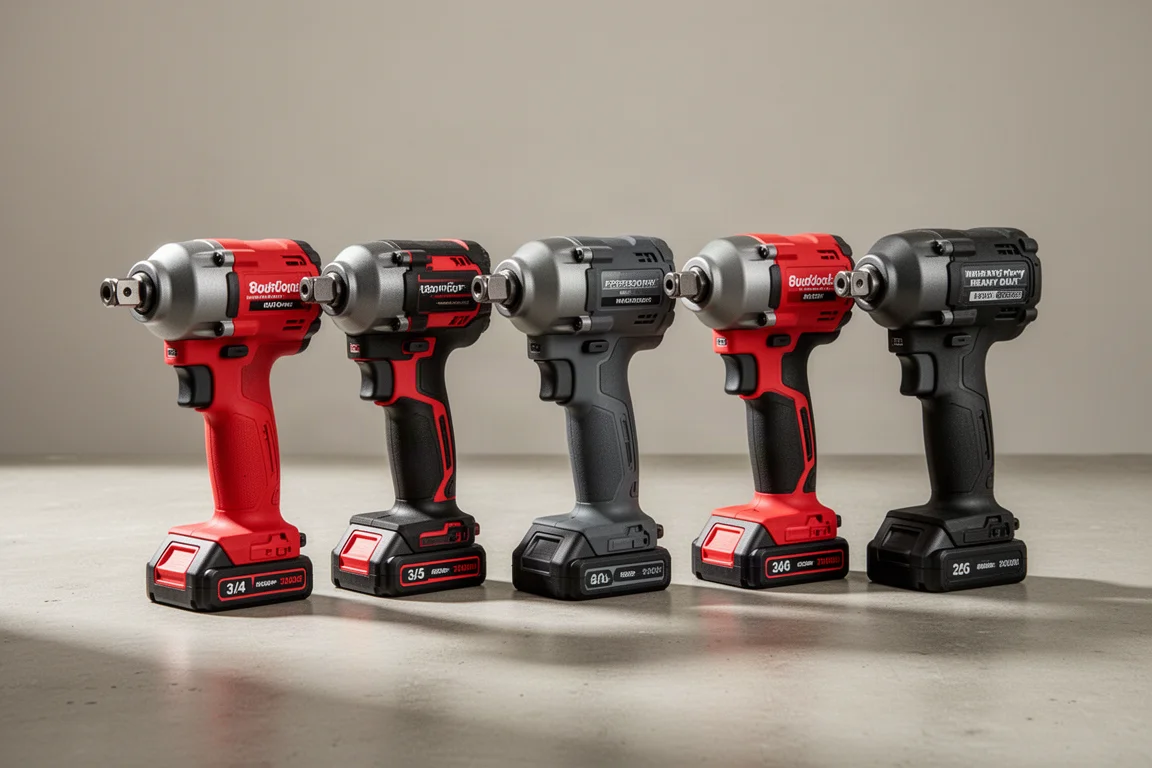
Best 3/4-Inch Impact Wrenches 2026: Five Contenders Compared
We compare five 3/4-inch impact wrenches across price and performance, from a budget Amazon option to Snap-on's most powerful model yet.
Power Tools
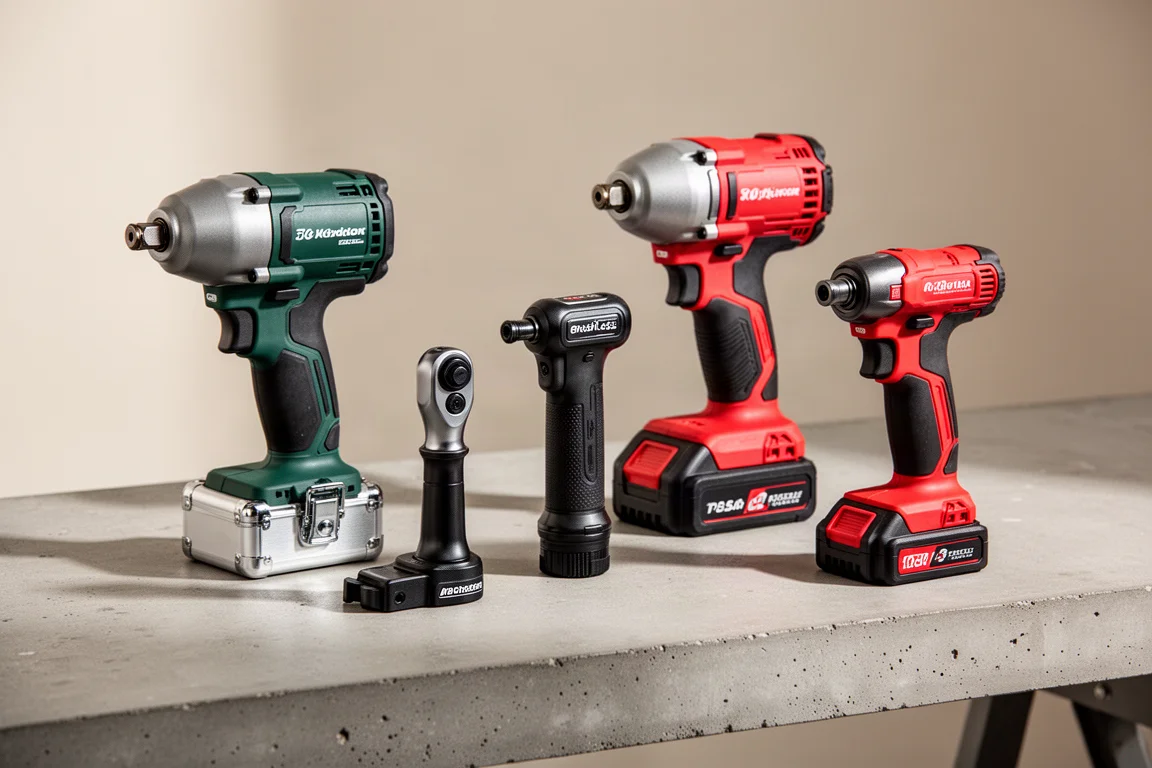
Best Budget Cordless Tools 2026: Walmart Finds That Punch Above Their Price
We tested five cordless tools from Walmart, including a high-torque impact wrench that trades blows with Milwaukee and a $35 duster that outperforms its price class.