Power Tools
Hikoki 36V Routers Compared: Trim Router, Plunge Router, and the 18V Alternative
Three Hikoki cordless routers put through real cutting tests to find out whether the 36V trim router earns its place over the 18V version, and where the plunge router fits.
Introduction
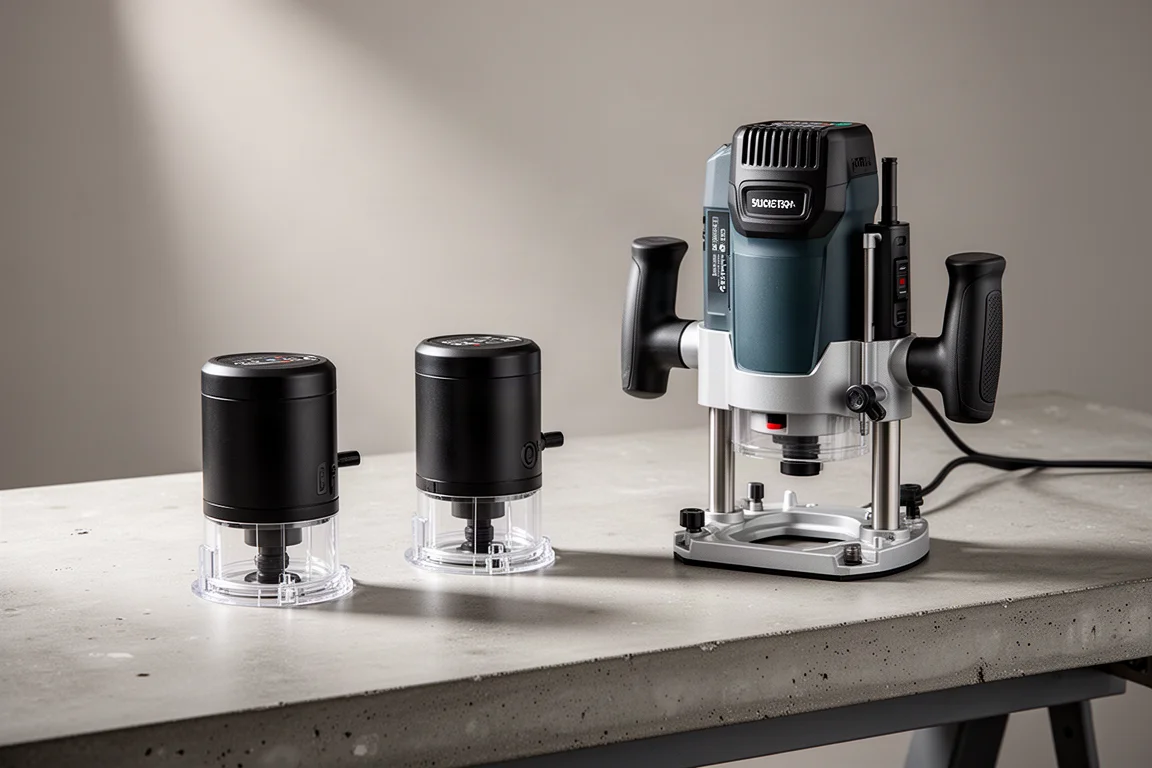
Hikoki has done something unusual in the cordless router world: it released both an 18V and a 36V version of the same compact trim router, plus a 36V half-inch plunge router. The 36V trim router (the M3608DA) is currently only sold in Japan, which means most of the world has to import it if they want to find out whether a bigger battery platform actually makes a small palm router meaningfully better.
That question matters because 18V trim routers tend to be slightly underpowered. Even the strongest of the usual suspects, the DeWalt 18V, brings more grunt but at the cost of a bulkier body. So does the 36V trimmer close the gap without losing the compact handling that makes palm routers appealing? After running all three tools through a series of demanding cutting tests, the short answer is: yes, and in more situations than expected.
What Is in the Box
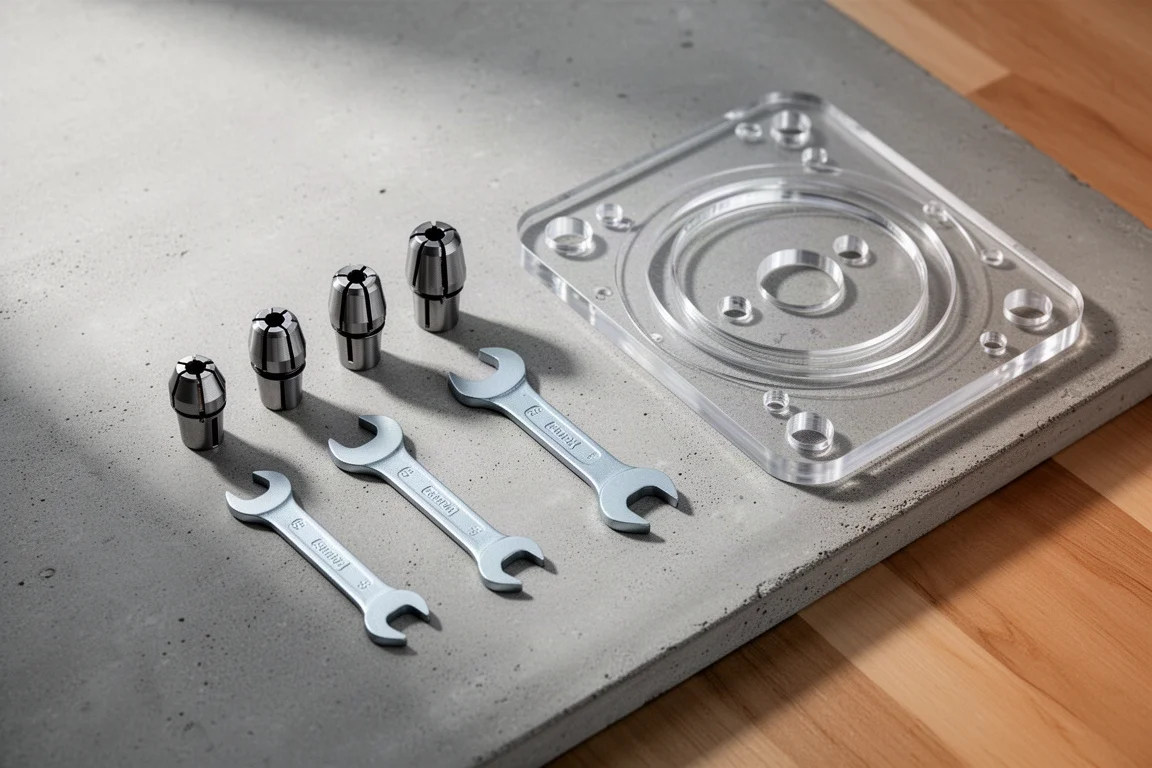
The 36V trim router (M3608DA) ships as a skin only. Included are the dust port attachment, a long-handled wrench, a template bush guide, an 8 mm collet, a 6 mm collet, and the necessary thumb screws. Notably absent are a roller guide and a straight guide, which are typically included with routers and which beginners will genuinely need. The 18V version, at least in some markets, does come with a straight guide.
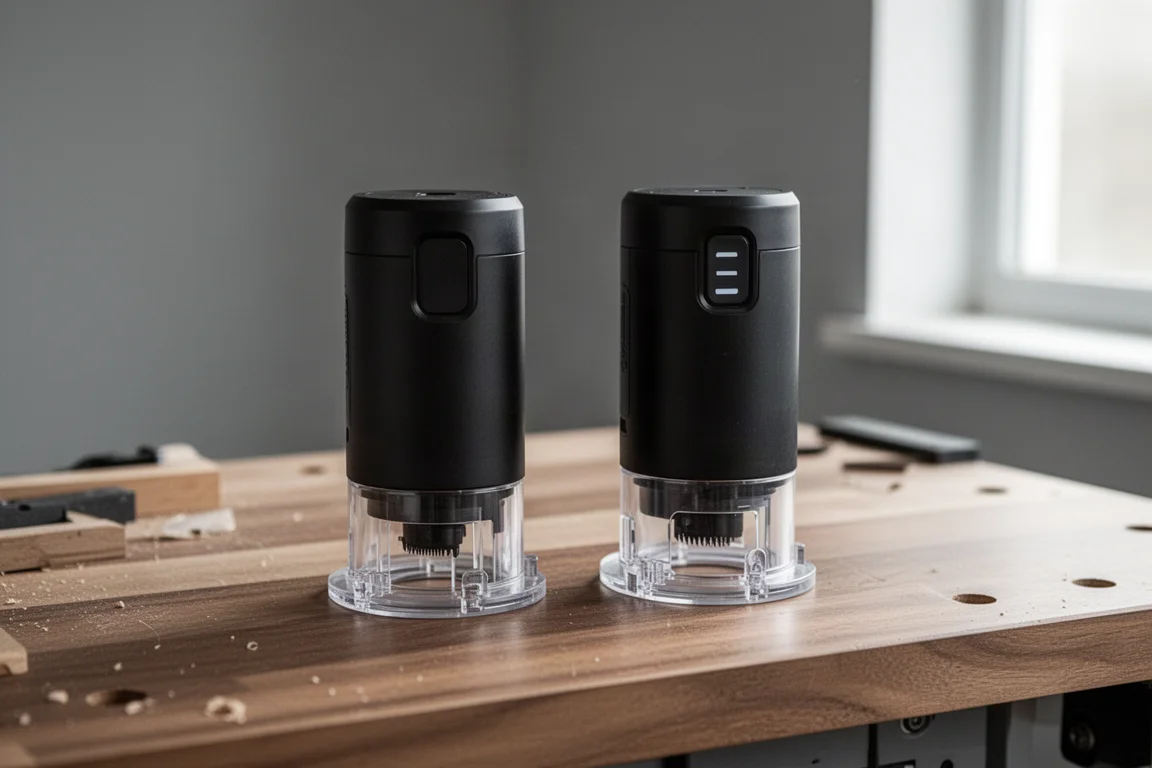
Both trim routers are remarkably similar in size and feel. Without a battery, the 18V weighs about 1.16 kg and the 36V about 1.18 kg, a difference of 20 grams you will never notice in hand. Both run settings between 10 and 30,000 RPM, power on and off via a trigger on the opposite side from the power switch, automatically shut off after a short idle period, and include an LED light. On the 36V there is no fuel gauge on the tool itself because MultiVolt batteries carry their own gauge; the 18V has an on-tool battery indicator instead.
How They Cut: Real-World Tests
The practical differences only show up when the tools are pushed. On light work such as rounding over edges or cutting a bevel, the two trim routers behave almost identically. The moment you start removing more material per pass, the 36V pulls ahead.
In a shiplap test on pine with a heavy 1/4-inch bit, the 18V stalled repeatedly even at a deliberately gentle pace, while the 36V, though not dramatically quicker, kept running without stalling. In a more punishing test using a 32 mm bottom-clearing bit set to a depth of about 12.5 mm with no dust extraction, all three tools struggled, but the ordering was clear: the plunge router handled it best, the 36V trim router did substantially better than the 18V, and the 18V could only manage the cut on higher speeds and gave up entirely as the cut deepened.
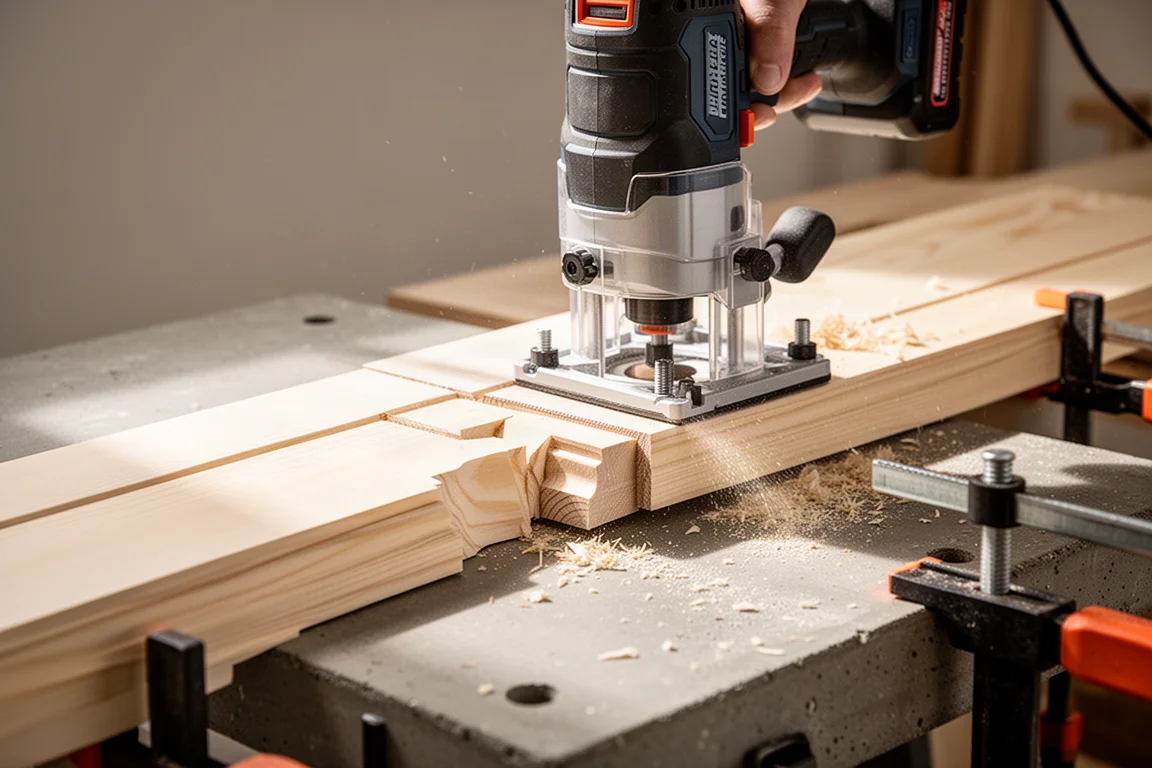
The key insight is that the 36V tools can sustain higher torque at lower speeds. That is what keeps them from cutting out on deep or heavy passes, and it is the single biggest argument for the 36V trimmer over its 18V sibling.
Collets and Accessories: Read the Fine Print
This is the most confusing part of the range, and worth slow reading before you buy. Collet markings vary by market and do not always match what is actually in the box.
The Japanese 36V trim router comes with 6 mm and 8 mm collets only; there is no 1/4-inch collet, and since 1/4 inch is 6.35 mm, a 6 mm collet will not hold a 1/4-inch bit securely. The 18V version in some markets ships with a 1/4-inch and an 8 mm collet, and in others only a 1/4-inch. The 36V plunge router is marked 12 mm and 1/2 inch but actually includes a 1/2-inch and a 1/4-inch collet, not a 12 mm one. If you buy the 36V trimmer from Japan and use 1/4-inch shank bits, plan on sourcing a 1/4-inch collet separately.
Hikoki M3608DA 36V Trim Router
The M3608DA is the tool this whole comparison exists for. Physically it is the same size, shape, and weight as the 18V trimmer, with the same speed range and the same controls. What the 36V platform buys you is torque headroom: fewer stalls on demanding cuts, better performance at lower speed settings, and a clear margin over the 18V whenever material removal gets serious.
If you already own MultiVolt batteries and want one small router that covers as much ground as possible, this is the trim router to pick. The only real caveats are availability (you will likely need to import it from Japan), the collet situation described above, and the missing straight and roller guides. Note that in the United States the equivalent range is sold under the Metabo HPT name rather than Hikoki.
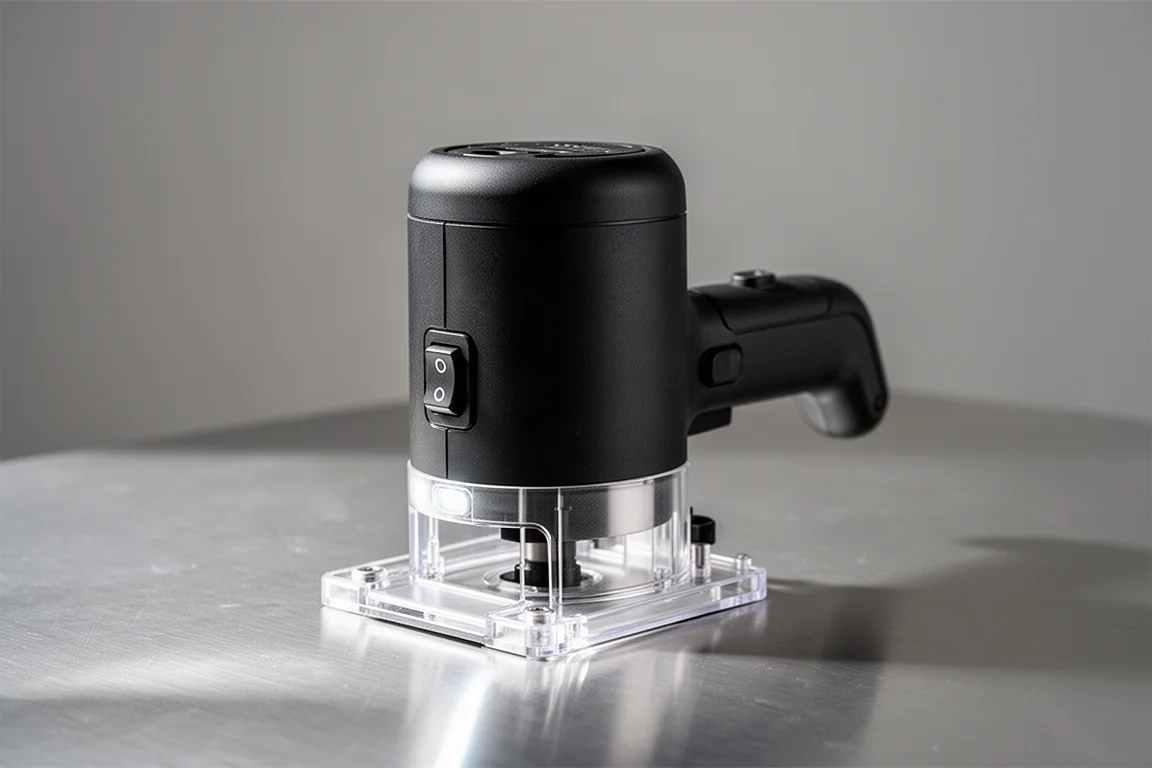
Hikoki 18V Trim Router
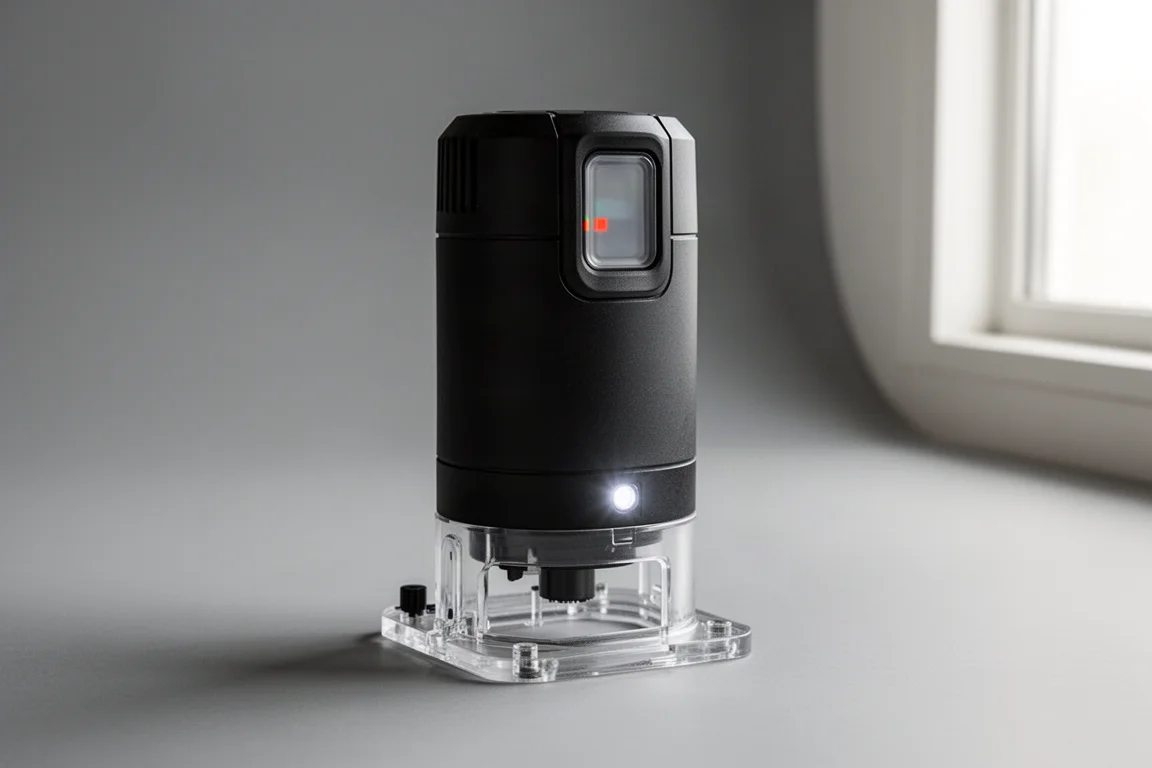
The 18V version is not a bad tool. It shares the body, weight, speed range, trigger, auto shut-off, and LED of its 36V sibling, and for light tasks such as rounding over, beveling, and edge trimming, the two are very, very similar. If your whole tool collection is 18V batteries, buying the 18V trimmer is the obvious and sensible choice, and it has the advantage of coming with a straight guide and a 1/4-inch collet depending on your market.
The problem is simple: the 36V does everything the 18V does, and when cuts get deeper or heavier it is significantly better while remaining just as easy to handle. On a purely practical level, once the 36V exists, the case for owning the 18V trimmer rests almost entirely on battery platform loyalty.
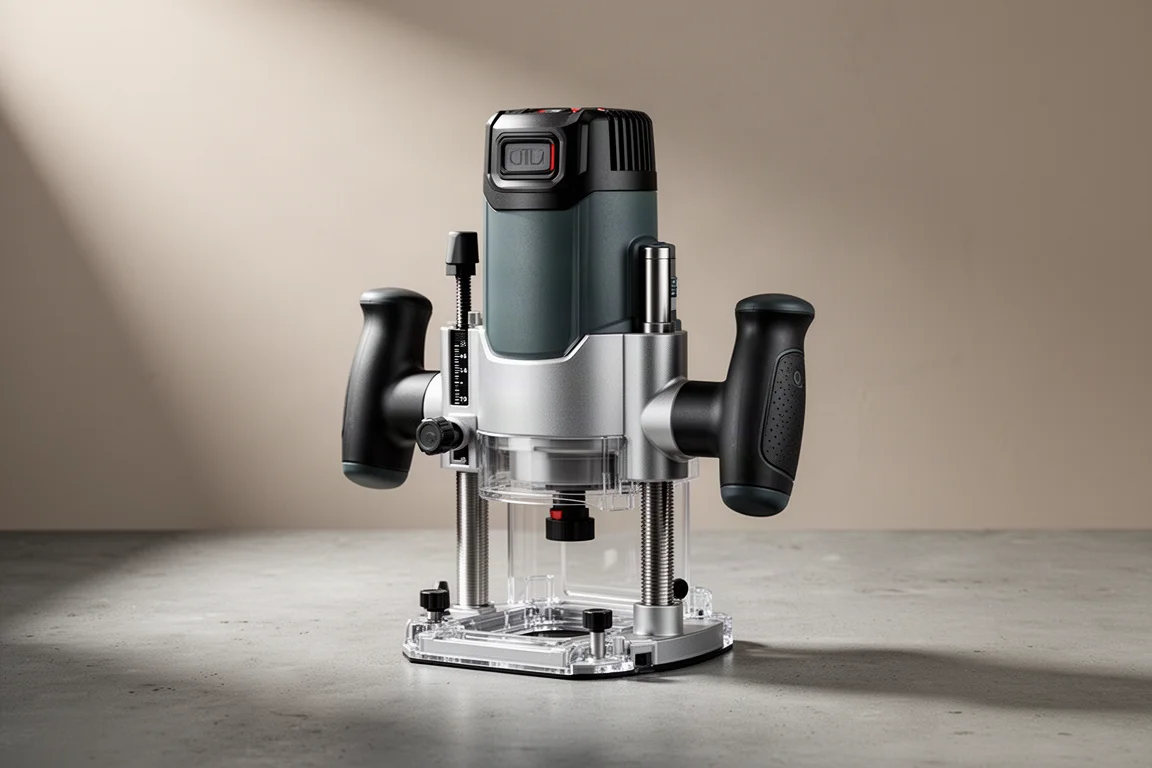
Hikoki M3612DA Plunge Router: The Do-It-All Option
The 36V half-inch plunge router is the heavyweight of the group and the one that survived the torture test best. With its larger base it feels steadier in the cut, the two grips give better control, and it simply does not stall as easily as either trim router. It also carries a plunger-style body that takes up more space, so it is less convenient for quick one-handed work and for getting into tight spots, which is exactly where a palm router earns its keep.
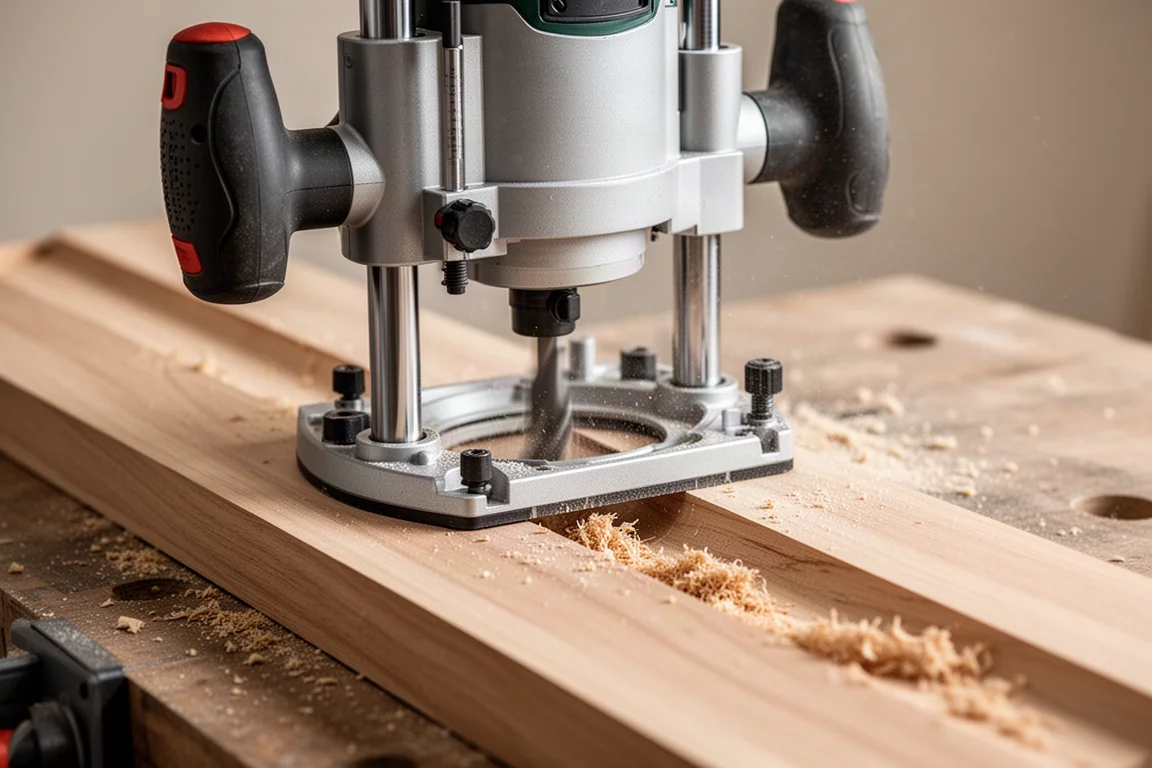
It is also worth noting that when run with larger cutters, the 18V trim router actually drained batteries faster than the 36V tools, because it had to work harder for the same cut. Bigger batteries on less strained tools can go further than you might expect, even though precise runtime figures are impossible to state given how many variables are involved: battery capacity, timber species, cut depth, cutter condition, and cutter tooth count all change the answer.
Which One Should You Buy?
If you want a single router to do everything, the M3612DA plunge router is the pick. It has the power, the base stability, and the collet options to cover the widest range of work.
If you route often and value the quick, one-handed convenience of a palm router, the 36V trim router is the way to go. It handles small work just like the 18V, but pulls clearly ahead on anything demanding, and for owners of MultiVolt batteries it is the strongest small-router choice in this line-up. Just budget for a 1/4-inch collet if your bits need one.
If your battery fleet is entirely 18V, the 18V trimmer still makes sense, and for gentle edge work you will not feel shortchanged. But given how close these tools are in every other respect, buying the 18V when the 36V is an option is hard to justify. As for owning both a trim router and a plunge router: if you do a lot of routing, yes, one of each is genuinely worth it. You do not need both trim routers, though.
Conclusion
The Hikoki 36V range answers the question most cordless router users have been quietly asking: can a compact palm router have real torque without becoming bulky? The M3608DA proves it can, holding a clear power advantage over its 18V twin while keeping the same size, weight, and handling. The M3612DA plunge router remains the best all-rounder for heavy or varied work, and the 18V trimmer is only worth choosing if 18V batteries are what you already own. Pick by battery platform and workload, check the collets before ordering, and any of these three will serve you well.
Further reading
Related Reviews
Power Tools
Best 1-Inch Pistol Impact Wrenches: Three Heavy-Duty Options Compared
We compare three 1-inch pistol impact wrenches, from a budget-friendly Harbor Freight model to a premium Caterpillar unit, to help you choose the right one.
Power Tools
Best 3/4-Inch Impact Wrenches 2026: Five Contenders Compared
We compare five 3/4-inch impact wrenches across price and performance, from a budget Amazon option to Snap-on's most powerful model yet.
Power Tools
Best Budget Cordless Tools 2026: Walmart Finds That Punch Above Their Price
We tested five cordless tools from Walmart, including a high-torque impact wrench that trades blows with Milwaukee and a $35 duster that outperforms its price class.