Hiking Gear
Hiking Gear Roundup: Practical Picks for Day Hikes and Beyond
A practical hiking gear roundup covering footwear, socks, daypacks, trekking poles, water treatment, satellite communication, lighting, and a light rain shell, with clear notes on what each piece does well.
Introduction
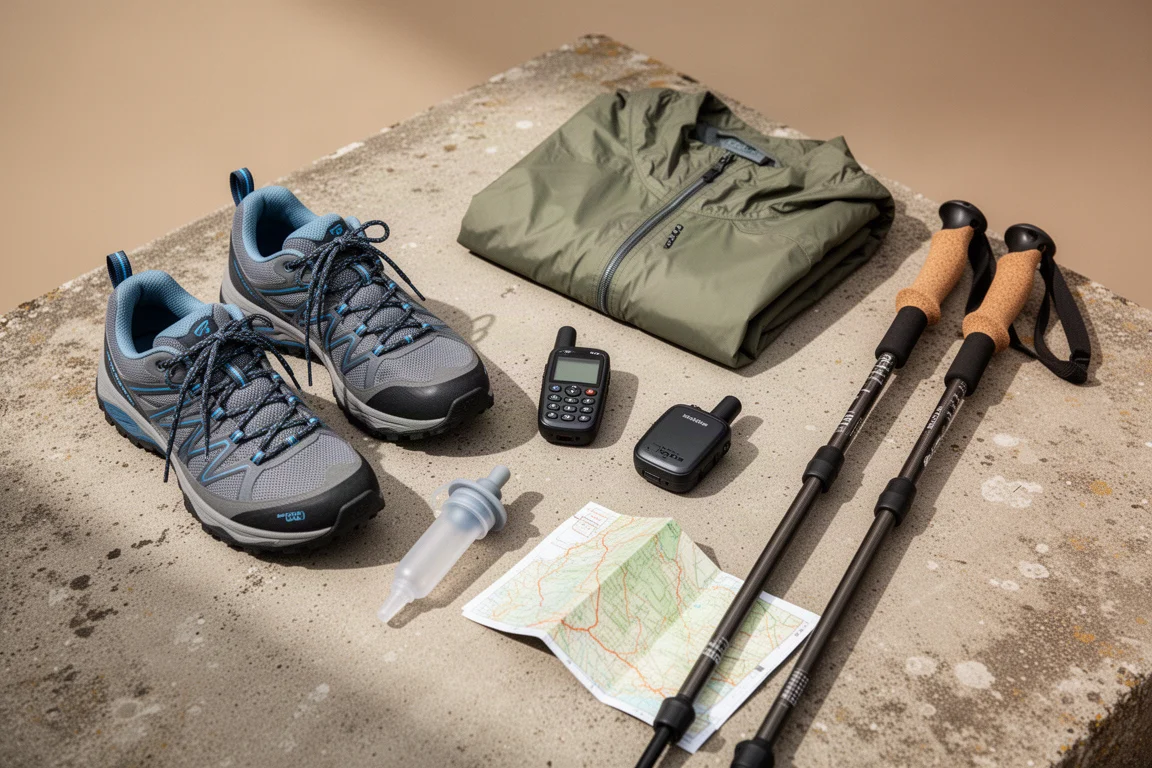
A hiking kit does not have to be complicated. What matters is that every piece earns its place, whether that means keeping your feet comfortable over long miles, carrying water without soaking your back, or giving you a way to call for help where there is no signal. The gear below has been used across humid forest trails, exposed desert routes, and sustained mountain climbs, and each entry focuses on what the item actually does well and where it asks for a little care.
This roundup covers the pieces that make the biggest day to day difference, from footwear and packs through to water treatment, communication, and light.
What Earns a Place in a Day Hiking Kit
The picks here follow a simple set of priorities. Footwear needs a shape that lets the foot move naturally and materials that dry quickly. A daypack should carry a modest load comfortably without adding structure you will never use. Water treatment should be easy enough that you actually use it. And the small electronics need to be light, reliable, and simple to recharge.
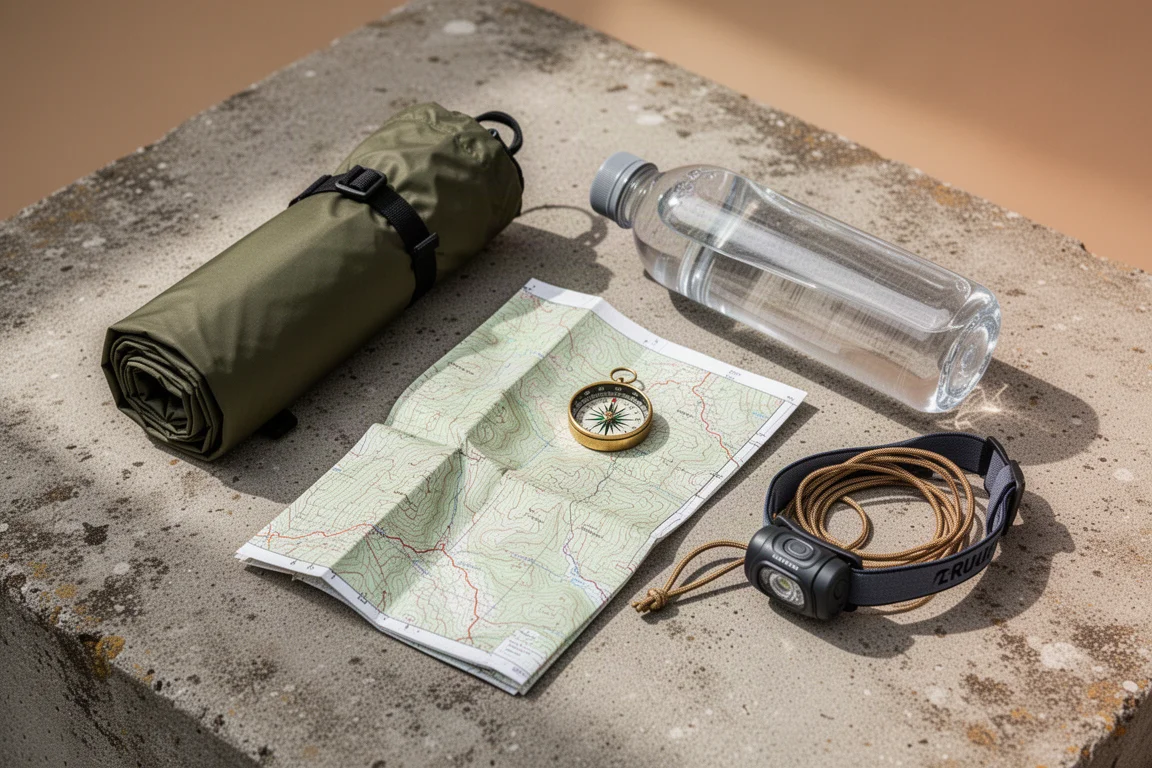
Weight, ventilation, and drying speed come up again and again because they decide how a long day feels. A piece of gear that stays comfortable in heat and dries overnight is worth more than one with extra features that never get used.
Topo Athletic Pursuit 2: A Comfortable All-Rounder for Long Days
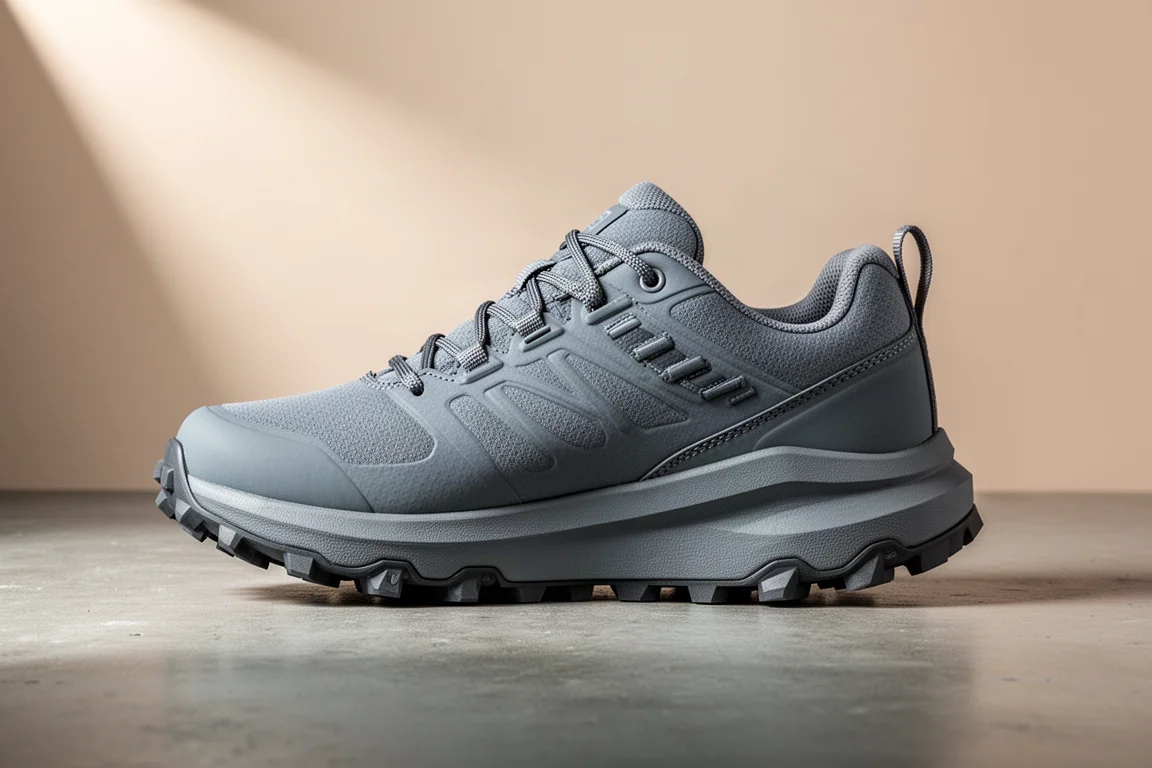
The Pursuit 2 is a zero drop shoe with a wide toe box, which lets the foot spread out and move naturally on uneven ground. That combination has become a baseline for comfortable trail footwear, and it is the reason this model works well over long distances.
The stack height sits between two well known references: higher than the Altra Lone Peak but lower than the Hoka Speedgoat. The second version uses a new foam that feels soft and cushioned underfoot. There is no rock plate, and the taller stack height does much of that job instead.
The uppers dry quickly, and the updated insole dries quickly as well, which matters on humid days and after stream crossings. After plenty of miles, durability has held up without complaint, which makes this a strong all rounder for anyone who wants one shoe to cover most hikes.
Darn Tough Socks: Quiet, Long-Lasting Foot Comfort
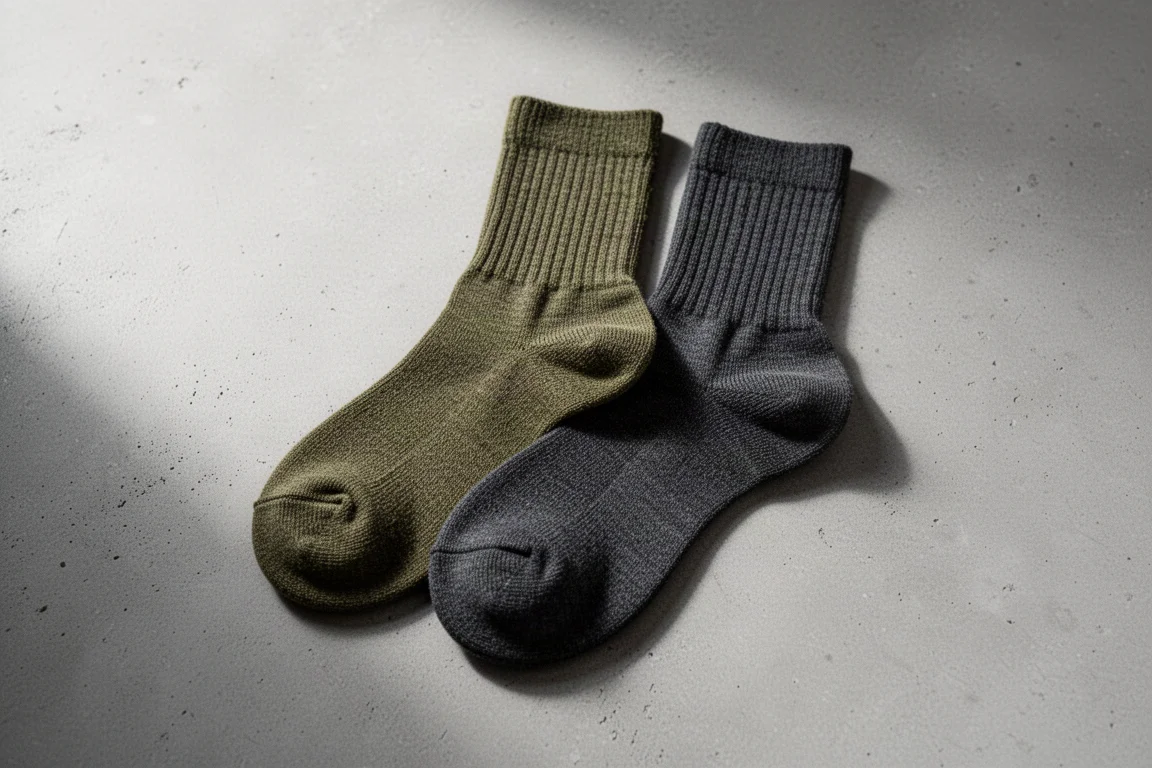
Merino wool socks do much of the work in keeping feet dry. This pair wicks moisture away and pairs well with a breathable, wide toe box trail runner. Some pairs have stayed in rotation for over ten years, which says a great deal about how they hold up.
The combination of a moisture wicking sock and a wide, breathable shoe means feet dry out quickly and blisters rarely become a problem. No powder and no toe socks are needed to get that result.
Osprey Hikelite 26: A Light Daypack With Real Ventilation
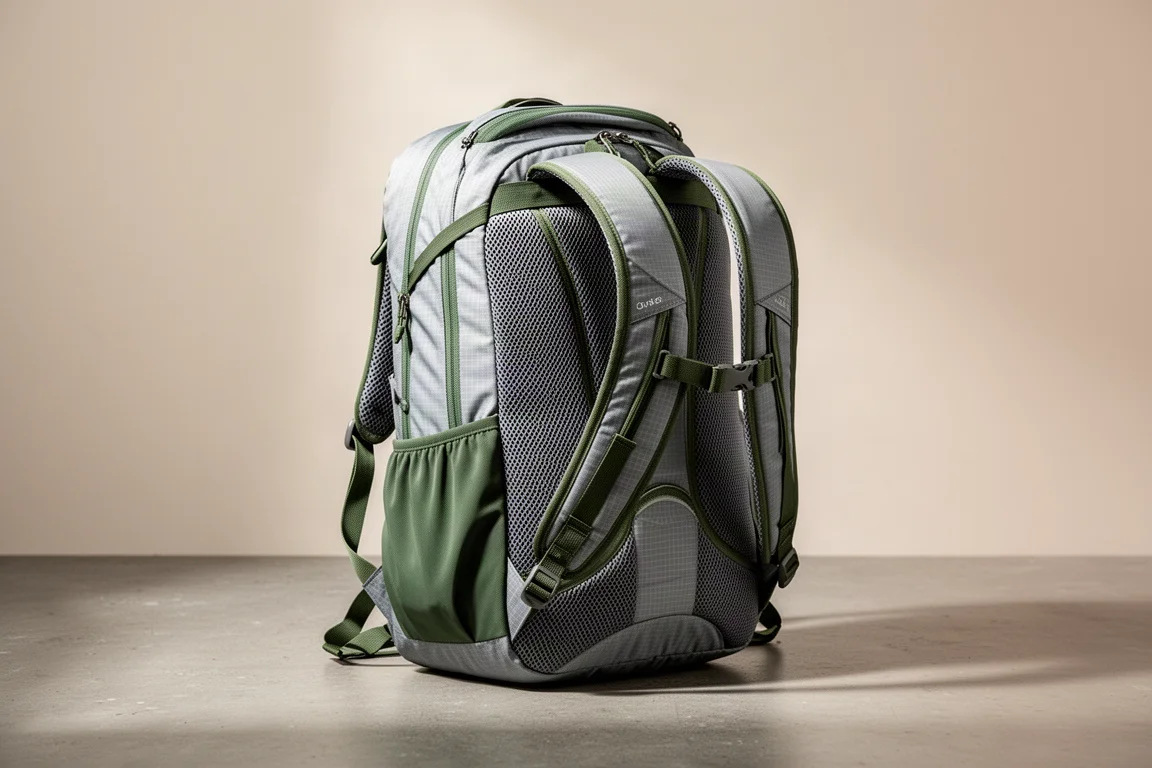
The Hikelite 26 was redesigned recently, and the changes are mostly about comfort. The pack is a little wider, the shoulder straps carry more padding, and the whole thing weighs roughly one pound ten ounces. It also sits below many comparable daypacks on price.
Storage is straightforward. A top pocket includes a lanyard for keys and a wallet, the main compartment holds 26 liters, and a stretch pocket on the outside takes a shell or rain jacket. The deep side pockets hold a one liter bottle securely, or they can carry trekking poles.
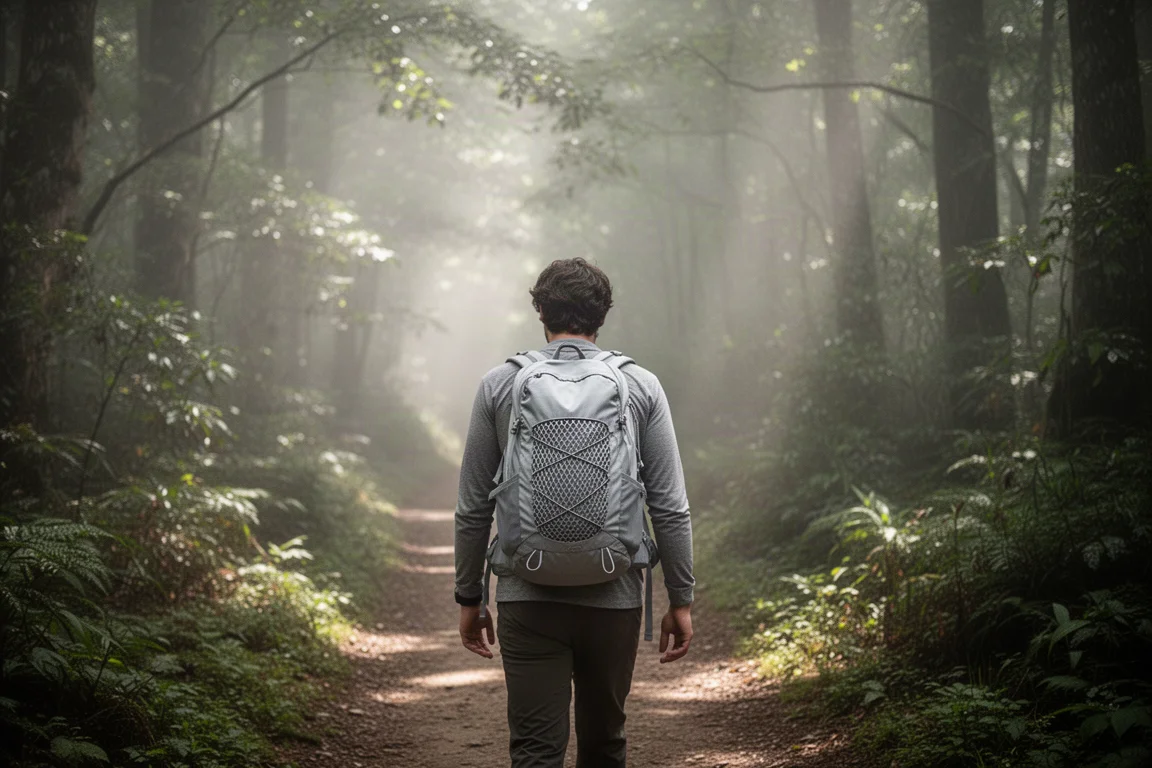
The standout feature is the ventilated back panel. Air moves between the pack and your back, and the same structure acts as a light frame to help balance the load. On sweaty climbs the back stays dry rather than turning into a puddle, which is a meaningful difference on warm days.
The hip belt can be removed on the 26 liter version, which makes sense for a day pack that never carries enough weight to need load transfer to the hips. Combined with the padded straps and the ventilated frame, it carries a light load easily. The fabric is water resistant rather than waterproof, so a pack liner or a few sealable bags handle real rain.
Black Diamond Alpine Carbon Cork: Sturdy Support on Steep Ground
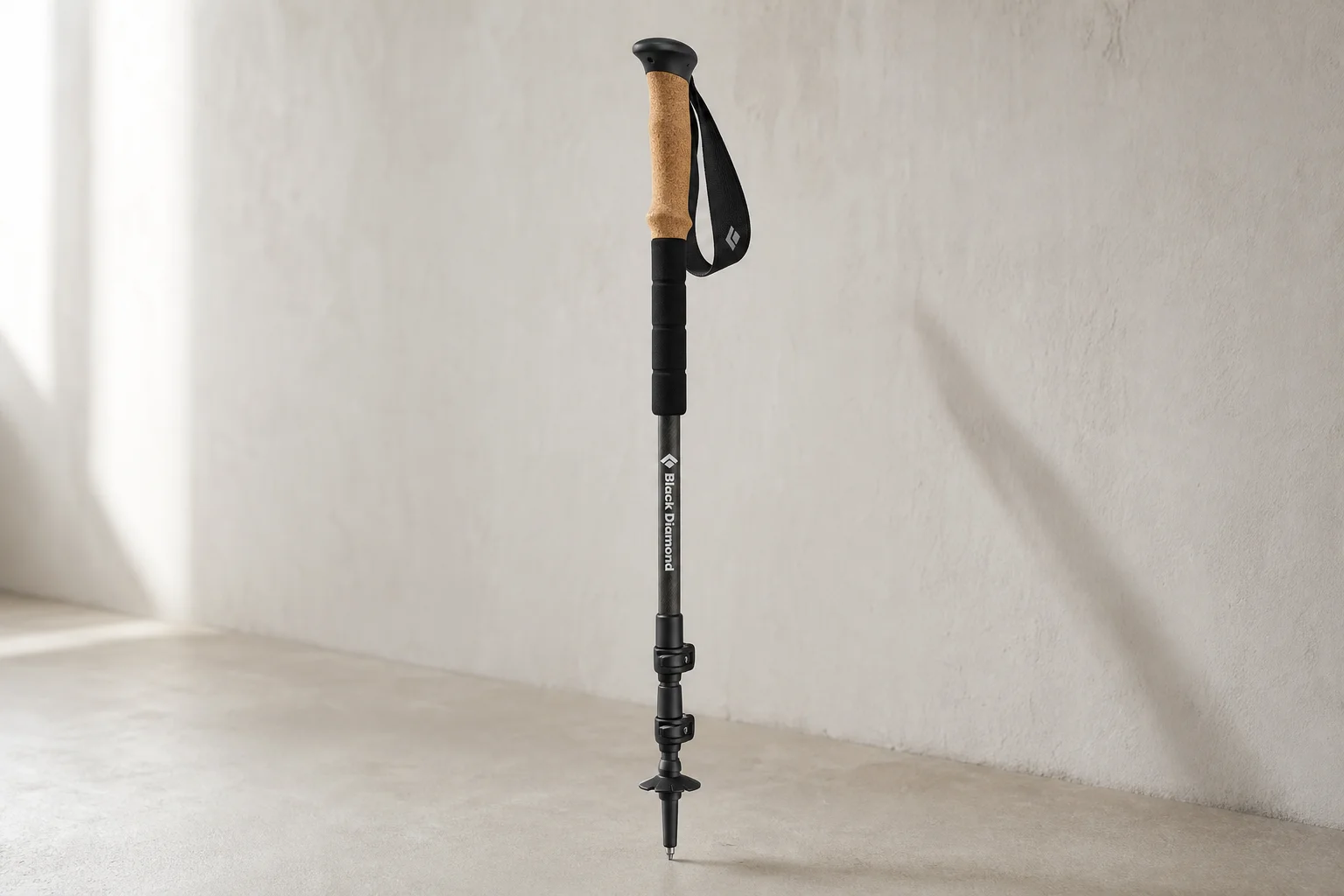
These poles use carbon fiber, so they stay light while still feeling sturdy under load. The standard clamping mechanism is quick to adjust and holds well. The cork grips are the detail that stands out: they stay secure when hands get sweaty, which is more than can be said for foam alternatives.
A lighter, non-adjustable carbon option from the same brand suits hikers who only want poles occasionally for stream crossings or steep descents. Those fold down small and store easily in a side pocket, but they must be sized correctly before purchase because there is no length adjustment.
Sawyer Squeeze: Straightforward Water Treatment
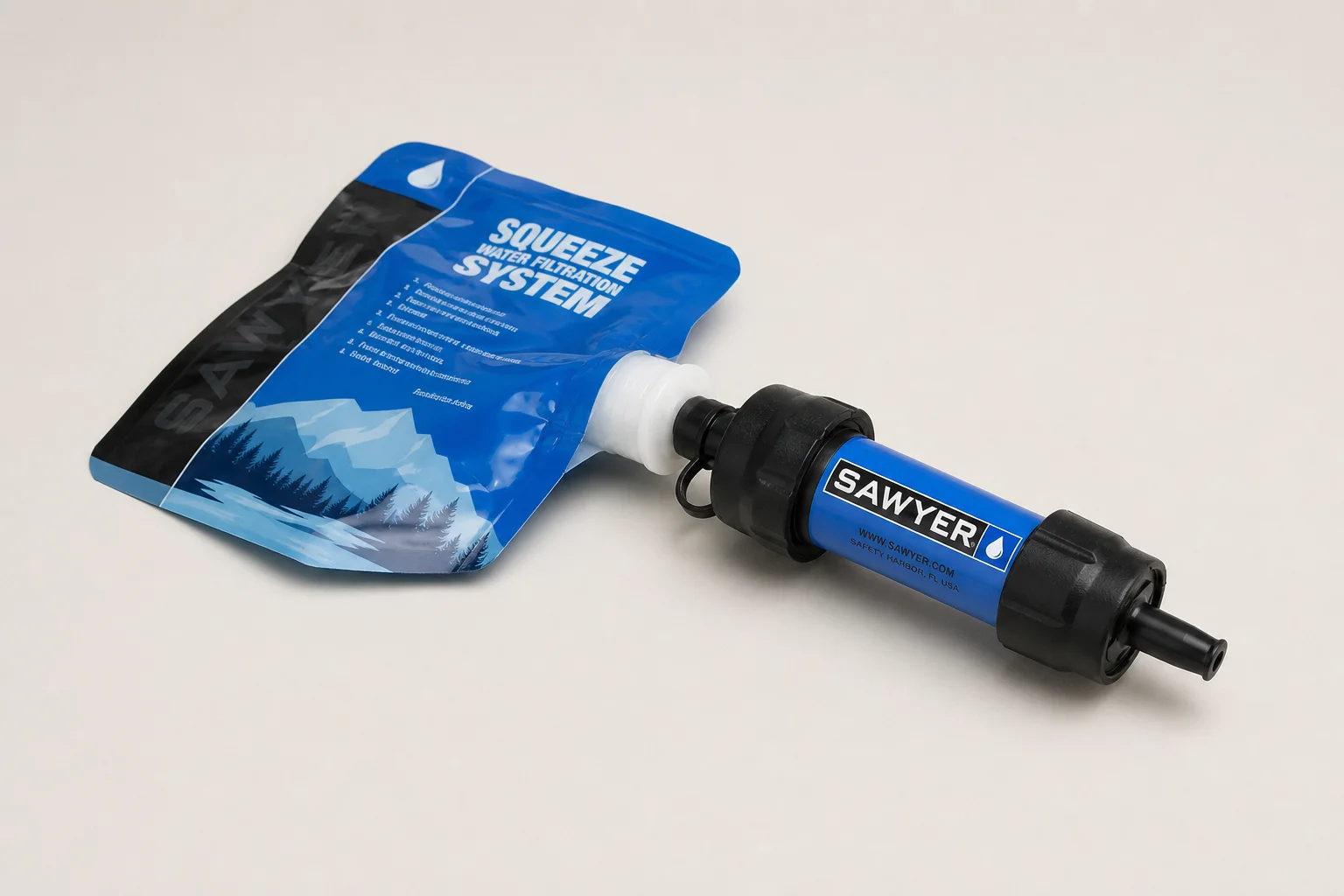
The Sawyer Squeeze is a simple squeeze filter that works well with minimal fuss. It screws directly onto a one liter bottle, which means the same bottle can hold dirty water and then deliver filtered water without any extra container. An occasional unit can underperform, but the design itself is about as uncomplicated as water treatment gets.
For bottles, a one liter still water bottle from any convenience store works well: durable, light, and cheap to replace. A sport cap from a smaller bottle fits the same threads and makes drinking easier on the move.
When a bladder makes more sense, a three liter reservoir with a fold top is easy to fill thanks to a built in handle, and it includes an on off valve. The valve is the weak point, so treat it gently and consider carrying a spare. Reservoirs like this are inexpensive enough that a backup is a reasonable precaution.
Garmin inReach Mini 2: Compact Satellite Communication
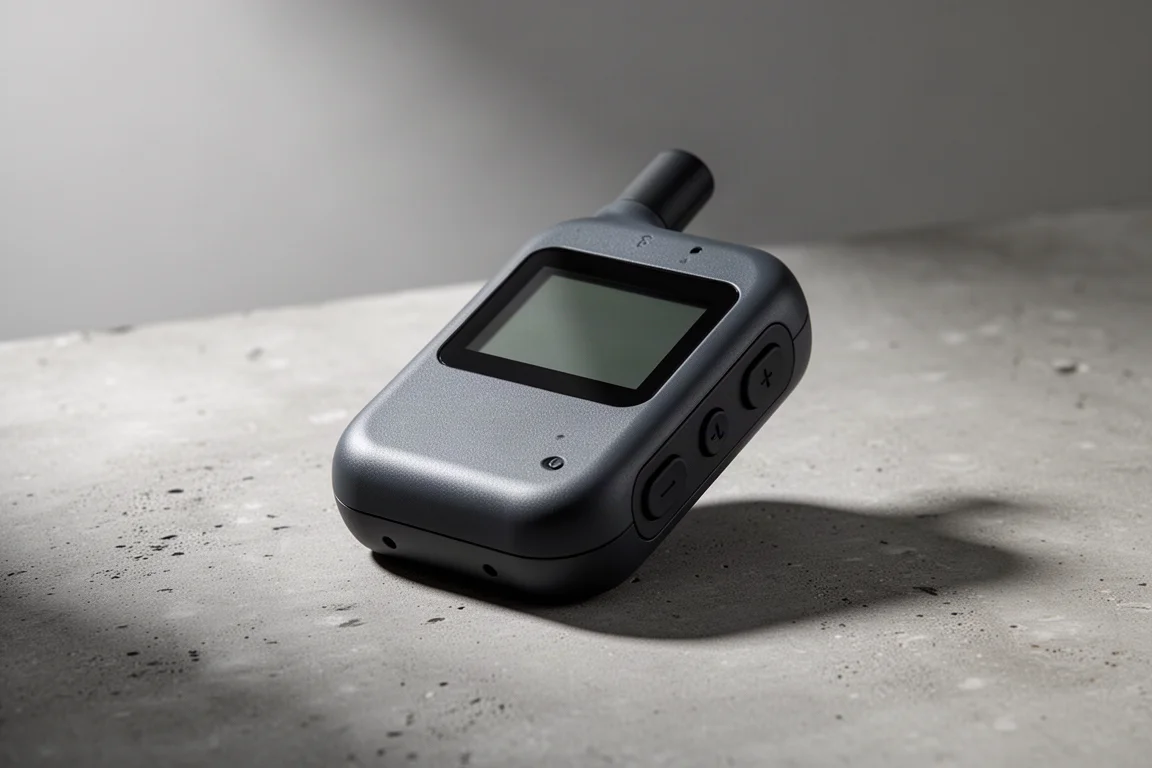
A satellite communicator is the one piece of electronics worth carrying even on a short hike. The inReach Mini 2 balances battery life with backup navigation functions, and it can handle nearly everything you would need if your main navigation device fails.
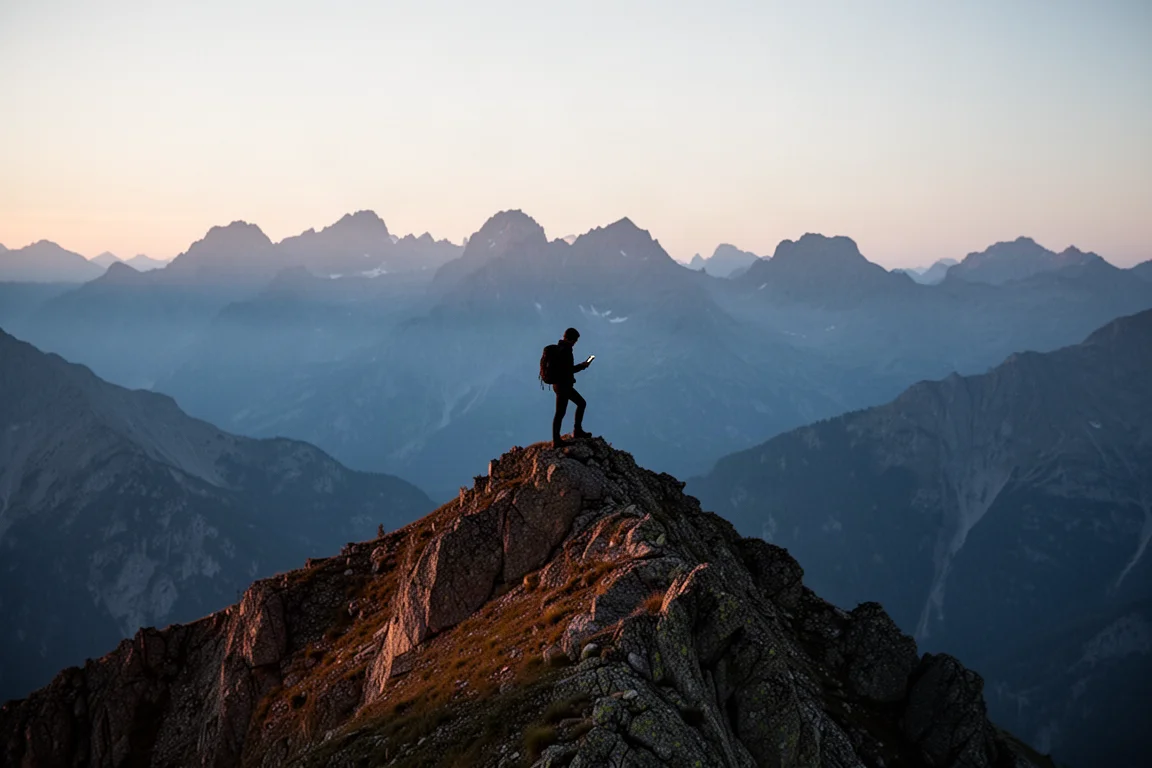
An unlimited tracking subscription turns the device into a breadcrumb trail. Leave tracking on and anyone responding to an emergency can see exactly where you are. For more demanding trips, a handheld GPS unit with onboard topographic maps and satellite messaging on a larger screen is the more capable tool, and its physical buttons work better than a touchscreen when conditions turn bad.
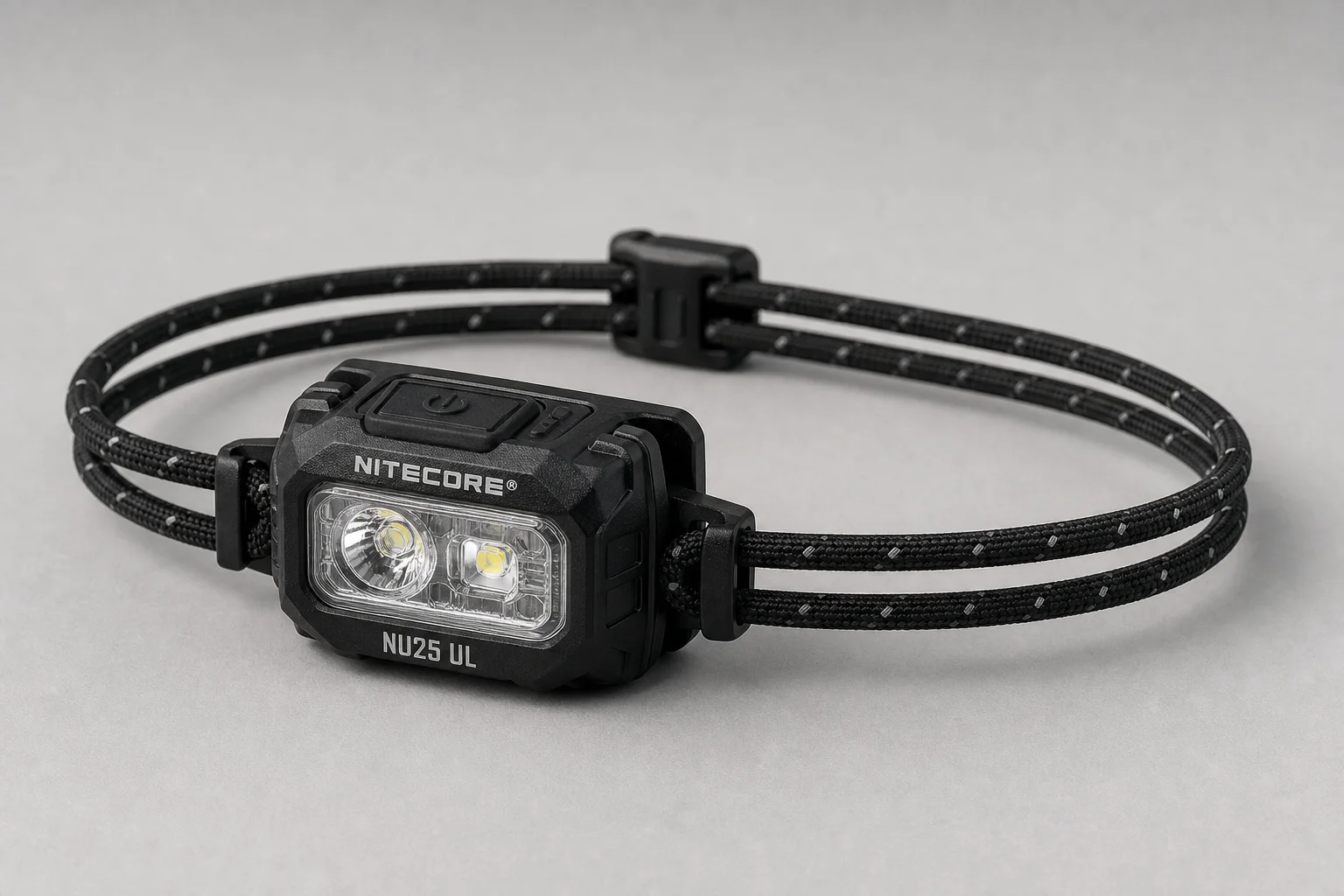
Nitecore NU25 UL: A Lightweight Headlamp That Charges Over USB-C
The NU25 UL keeps things minimal. A bungee strap replaces a padded headband, and there are few extra modes to scroll through. The important detail is USB-C charging, which means one cable and one power bank can top up nearly every device on a trip.
The low weight is genuine rather than a marketing claim, and the lamp is comfortable enough to forget you are wearing it. For most three season hiking, that simplicity is the point.
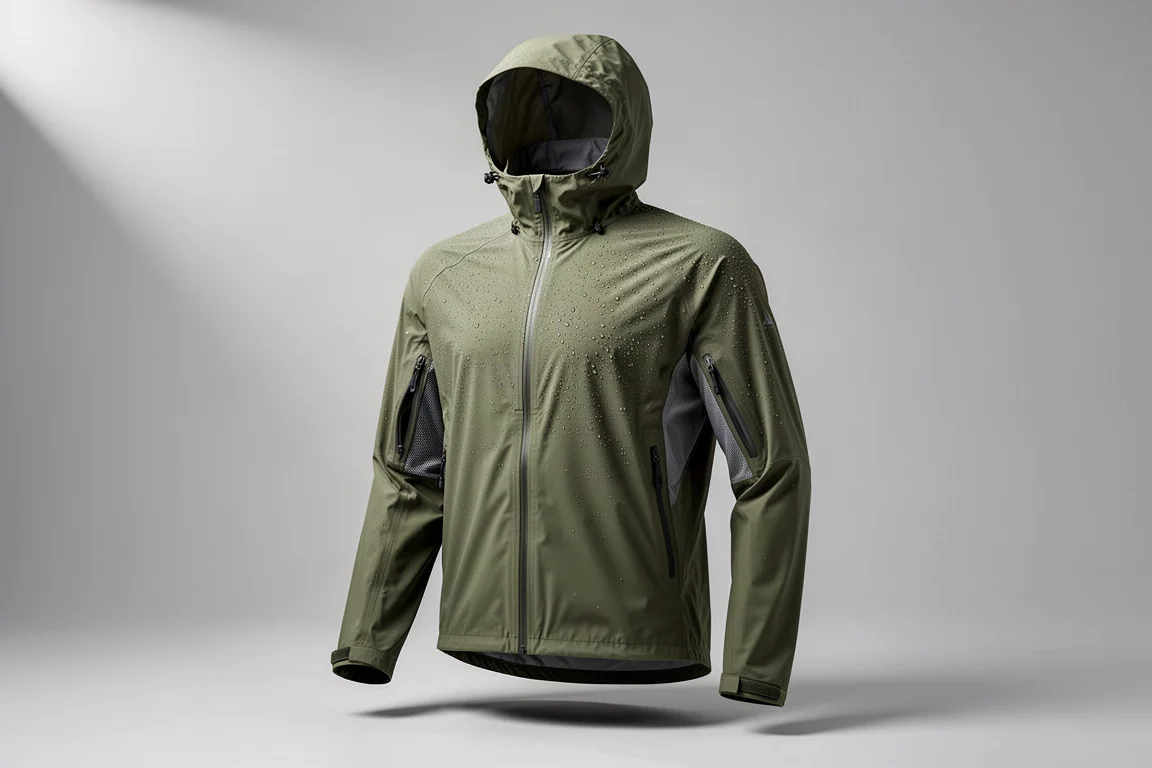
Enlightened Equipment Visp: A Light Shell for Weather Changes
A light rain jacket earns its place because it also works as a windbreaker. This one packs down small and adds very little weight, which makes it easy to keep in the pack regardless of the forecast.
It also pairs well with a simple layering system: a lightweight base layer for warm days, a warmer merino option for cool ones, and an insulated layer for cold mornings. Building around a single light shell keeps the whole setup flexible without adding much bulk.
Smaller Items That Round Out the Kit
- Navigation backups: a paper map for the area, a compass, and a sealable bag to keep both dry.
- Nutrition: salted nuts or trail mix, dense nut and seed bars, larger multi serving meals, and naturally sweetened energy gels for a quick boost. A small packet of electrolytes is worth carrying in case salt intake falls behind.
- Emergency essentials: an emergency bivvy, a rechargeable lighter with a built in flashlight, twine, a small roll of duct tape, a signal whistle, water purification tablets, and a compact knife.
- A radar reflector attached to the pack adds another way to be located.
- Insect protection: a natural repellent as a first line, stronger repellent packets for bad conditions, a tick removal tool, permethrin spray for clothing, and a head net for peak season.
- A small medical kit built around cuts, sprains, and blisters: alcohol prep pads, tweezers, antibiotic cream, stretchy adhesive tape, sterile gauze pads, merino wool bandages, an ankle wrap, and a few wrapped tablets including aspirin, an allergy medication, and ibuprofen.
- Warmth and sun: a merino beanie, convertible pants, flip back mittens with waterproof over mittens, a visor, and shatterproof sunglasses.
Buying Advice: Match the Gear to the Trip
The right kit depends on where you are going and how much water you need to carry. Short hikes of around eight miles or less with reliable water sources call for the lightest setup: a small ventilated daypack, one or two bottles, and a filter. Desert routes and longer days change the math, because carrying four liters of water along with camera gear pushes you toward a larger pack with a proper frame and padded straps.
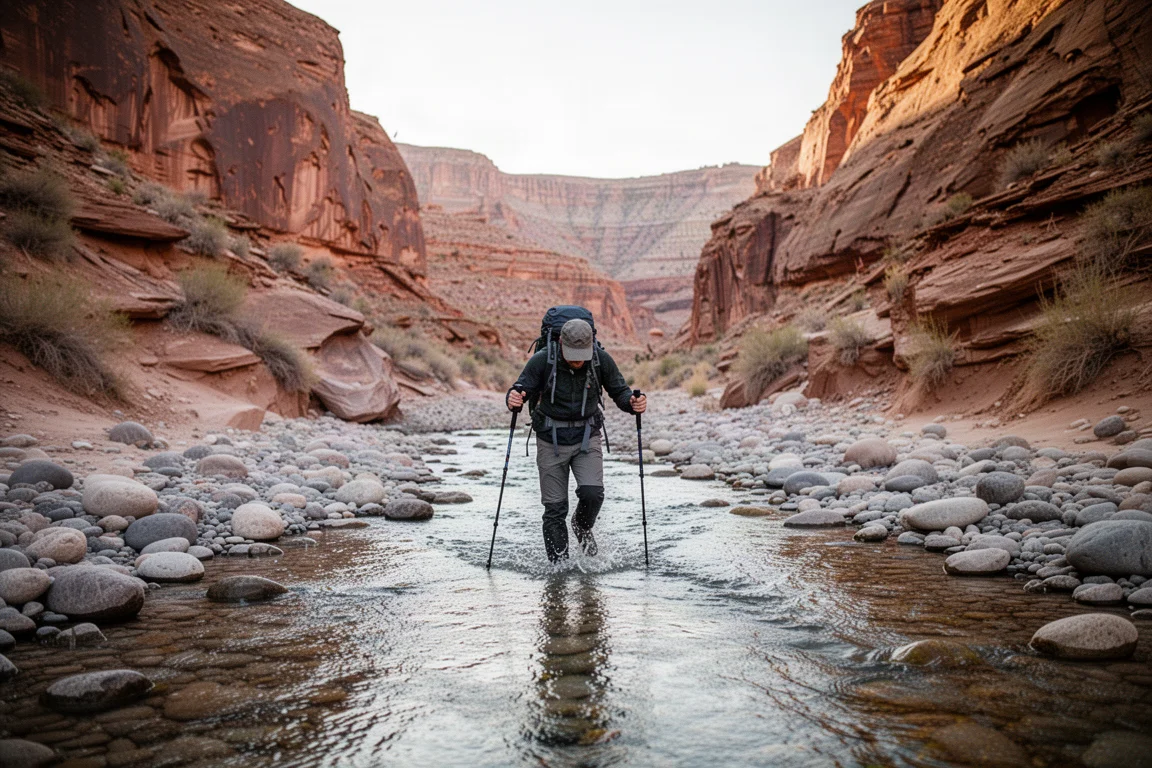
Terrain matters just as much. Steep descents and stream crossings justify trekking poles even if you rarely use them, and a waist pack that carries two bottles is a good option when you want nothing on your back at all. Remote routes with no signal justify a satellite communicator plus a paper map as a backup.
Whatever the trip, a fast drying shoe and a moisture wicking sock remove most of the foot problems that cut a hike short. Buy the pieces that solve a problem you actually have. A lighter pack beats a heavier one you never fully load, and a simple filter beats an elaborate system you leave at home.
Conclusion
The strongest hiking kit is the one that stays comfortable and simple. A wide fitting, quick drying trail shoe paired with merino wool socks handles the miles. A light, well ventilated daypack carries what you need without adding bulk you will not use. A squeeze filter and a couple of bottles cover hydration, a satellite communicator covers the worst case, and a small headlamp plus a light shell cover the hours when conditions shift.
Start with the pieces that match your terrain and your water needs, then add the small essentials that keep a day from turning into an emergency. Everything here earns its weight, and none of it asks for much in return.
Further reading
Related Reviews
Hiking Gear
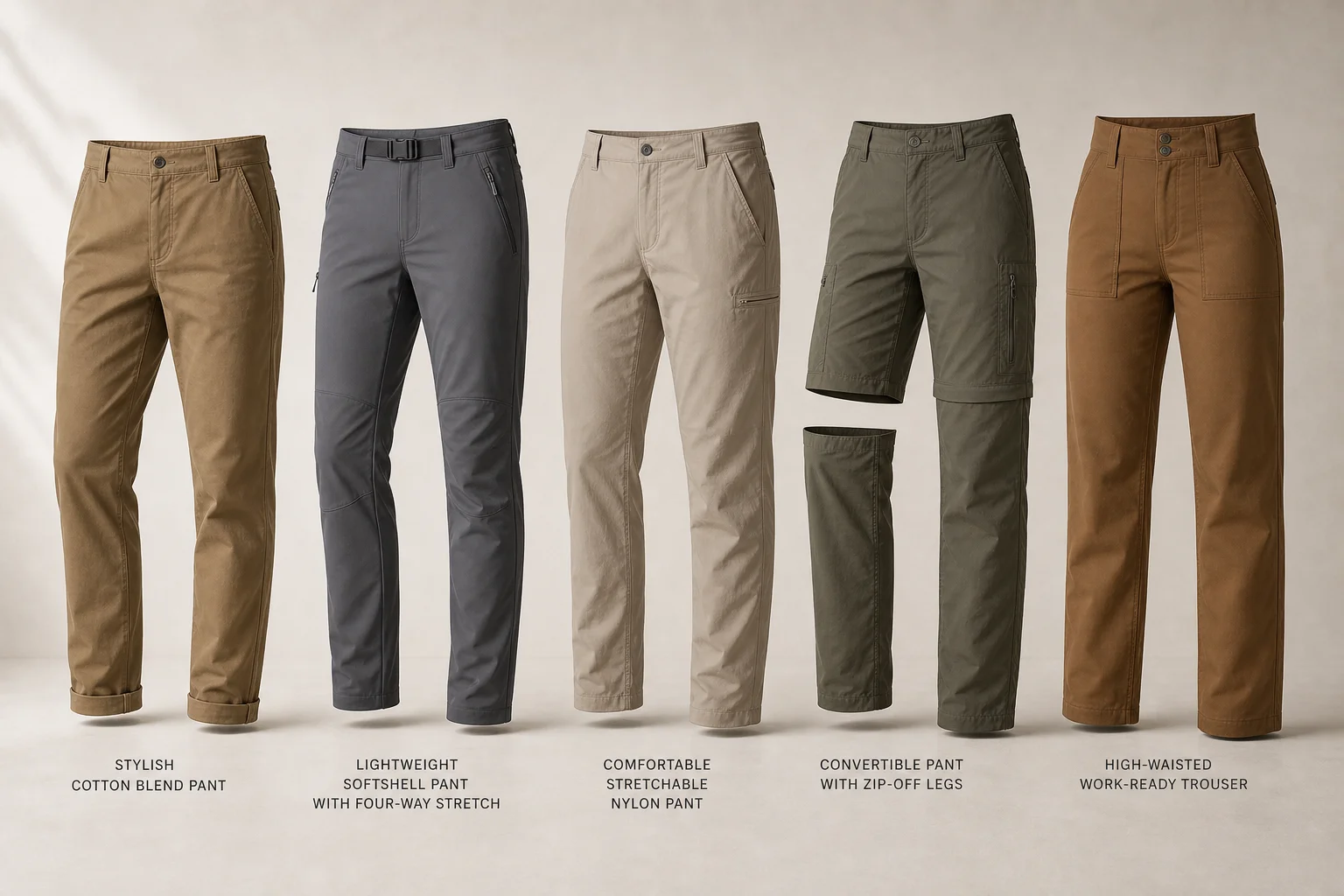
Best Hiking Pants on Amazon: Five Practical Options for Different Needs
A practical review of five hiking pants with clear strengths and trade-offs, from lightweight convertible styles to durable work-ready trousers.
Hiking Gear
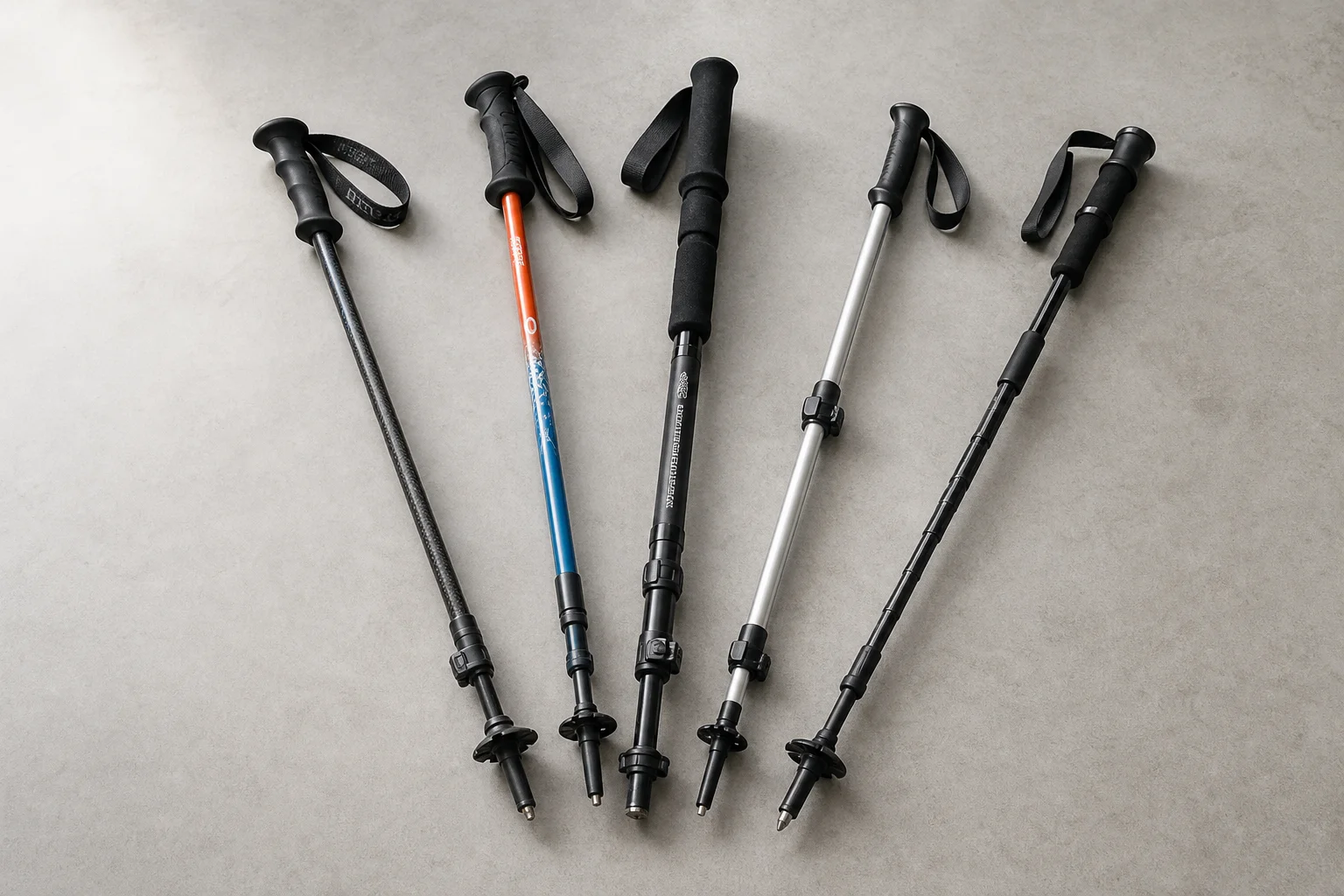
Best Hiking Poles 2026: Five Options for Different Trail Needs
A practical review of five hiking poles, from lightweight carbon designs to versatile all-terrain options, with clear strengths and trade-offs for each.
Hiking Gear
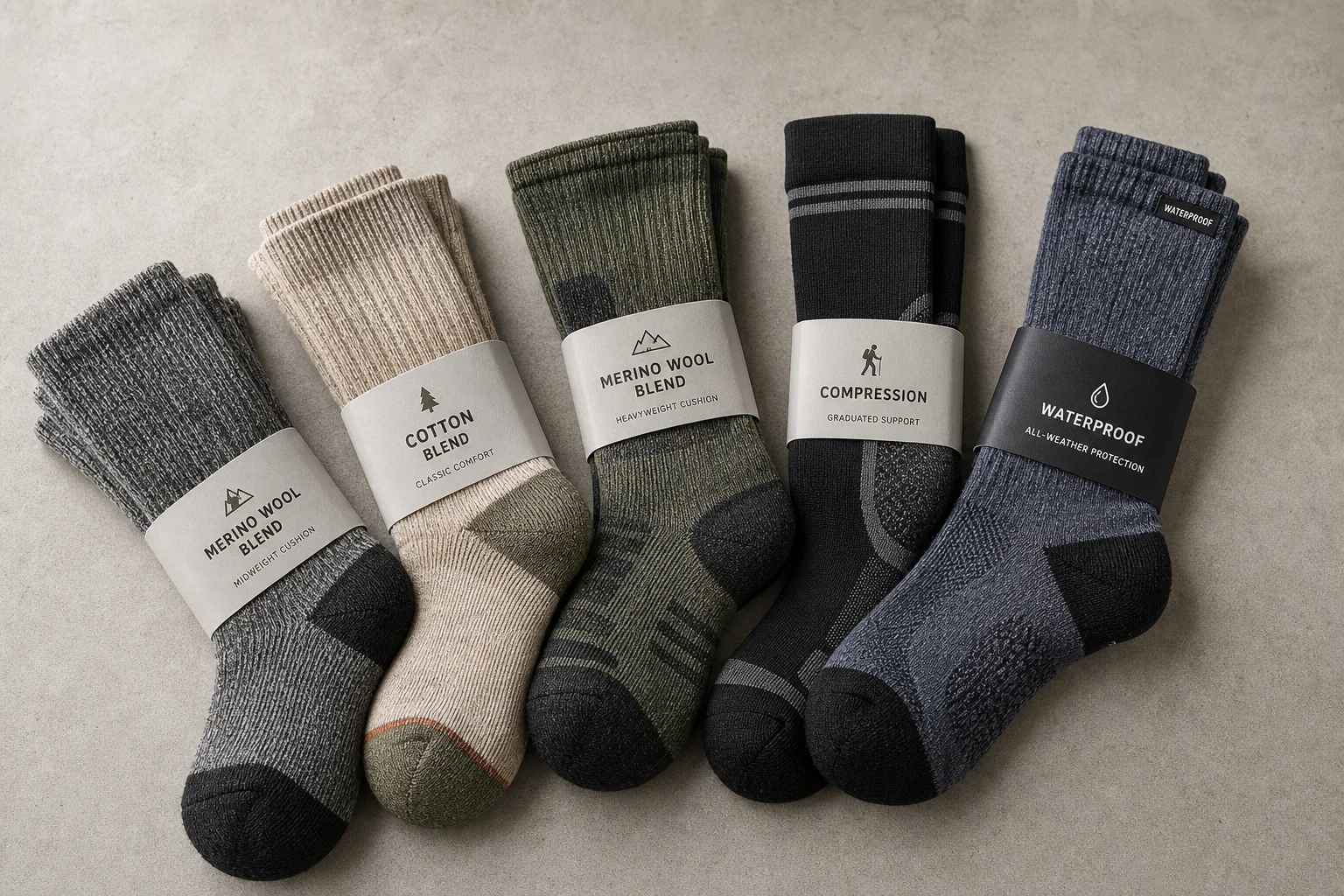
Best Hiking Socks 2026: Five Top Choices for Different Trail Needs
A practical roundup of five hiking socks, from lightweight merino options to heavy-duty compression styles, with clear guidance on which suits your outdoor activity.