EDC Knives
Herman Knives Sting Full Dress Review: The Most Detailed Pocket Knife We've Handled
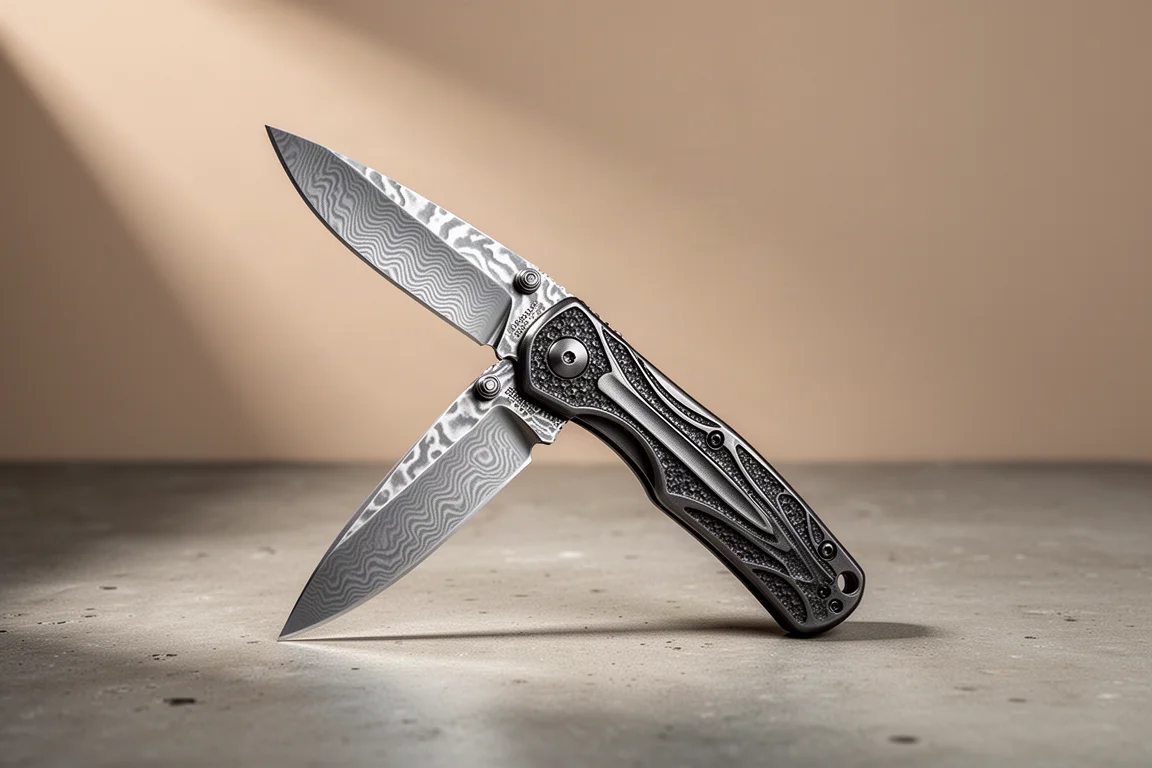
A full dress Herman Sting with Damis steel Vinland blade, Tamascus scales, and in-house custom machining at a level few makers reach.
Introduction
Some knives you handle and immediately move on from. Others change how you look at an entire category. The Herman Knives Sting in its full dress configuration is firmly in the second camp. From the maker’s shop in Poland, this knife feels less like a tool you pull from a drawer and more like sitting in a sports car or handling a luxury watch: responsive, refined, and intentional in a way you feel before you can explain it.
First Impressions
Out of the box, the full dress Sting is the kind of knife that leaves you briefly speechless. The overall length is 7.76 inches with a 3.27-inch blade made from Damis steel in the Vinland pattern, essentially the ripple pattern across the blade, finished with a mirror polish. The scales, clip, and backspacer are made from Tamascus, and the knife runs on ceramic bearings custom made in-house by Herman Knives.
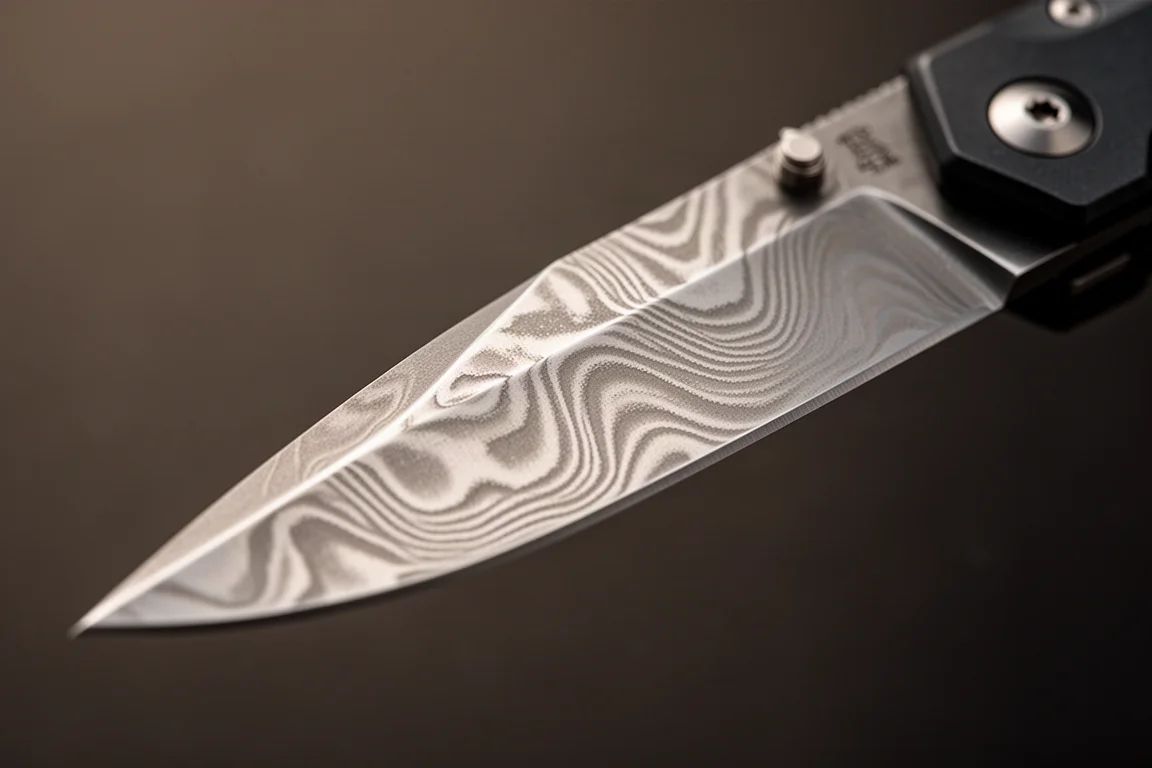
The pivot hardware is equally serious: a custom seven-pedal pivot system with a phosphor bronze bushing, a ceramic detent, and a tungsten carbide lock insert and stop pin. It is razor shaving sharp out of the box, so this is still very much a working tool, just one built to an unusually high standard.
The Maker Behind the Knife
Part of what makes the Sting compelling is the story behind it. Bartek Herman did not set out to make knives at all. He originally wanted to design luxury yachts, but with few opportunities in early 2000s Poland, he pivoted and became a chemical engineer. He was a builder from the start: at 12 years old he built a crossbow out of a car suspension spring, and at 16 he found a piece of steel in his parents’ basement and made his first knife. It turned out awful, and he hated it, but it sparked the passion that became his career.
After teaching himself through knife forums, tutorials, and Bob Terzuola’s book The Tactical Folding Knife, he was selling knives to friends by age 23. He has now been a full-time knife maker for 12 years. Everything from his shop is done in-house: EDM machine parts, custom pivots, hardened M390 washers. The operation has grown, but the catalog shows a maker not chasing trends, building knives he would want to carry while challenging himself at every step.
The Unboxing Experience
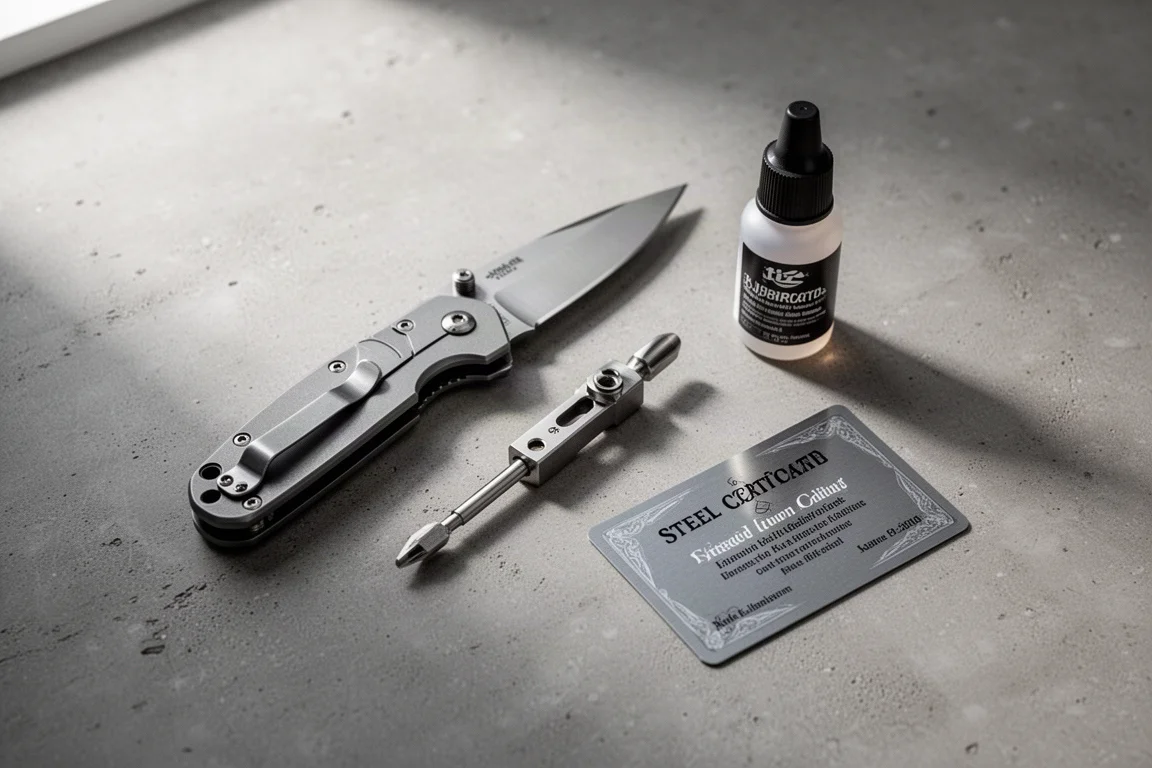
Herman’s presentation matches the knife. The box features a small steel card screwed in at the top, a quality latch that lets the box open fully, and a certificate of authenticity made from a steel card. The foam padding has the Sting lasered into it.
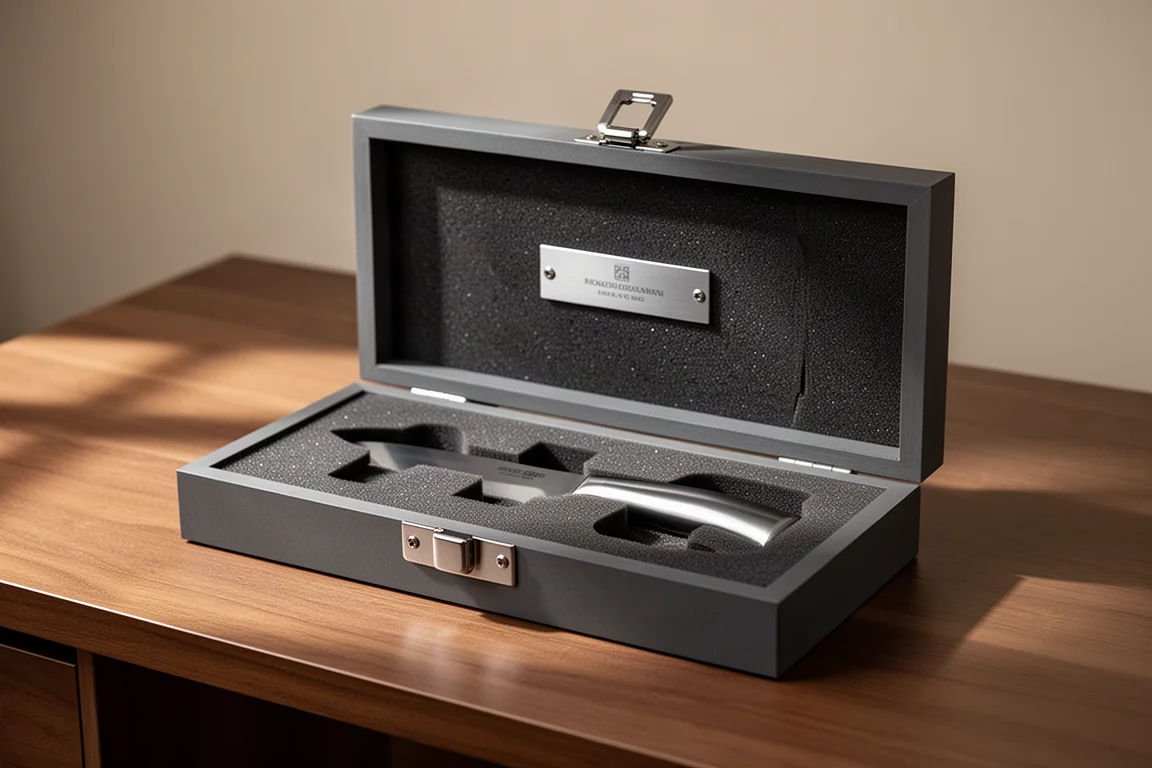
Inside, the foam insert holds a custom pivot tool and custom lubricant for maintaining the knife. The included card makes the maker’s position clear: he does not want you taking this knife apart. If debris gets inside, the guidance is to run it through water, dry it thoroughly, and apply the supplied lubricant. All the tools you would need for disassembly are included, but this is an intricate knife best left assembled.
Machining Detail: Where the Sting Earns Its Reputation
The reason this knife is so hard to describe is simply how much is going on. The liner lock has very fine milling. The showside scale has a recessed cutout, and inside that cutout there is more milling. The pivots are mirror polished. Sting is engraved on the showside scale, and the backspacer carries a “Proudly Made in Poland” mark facing you when the knife is open.
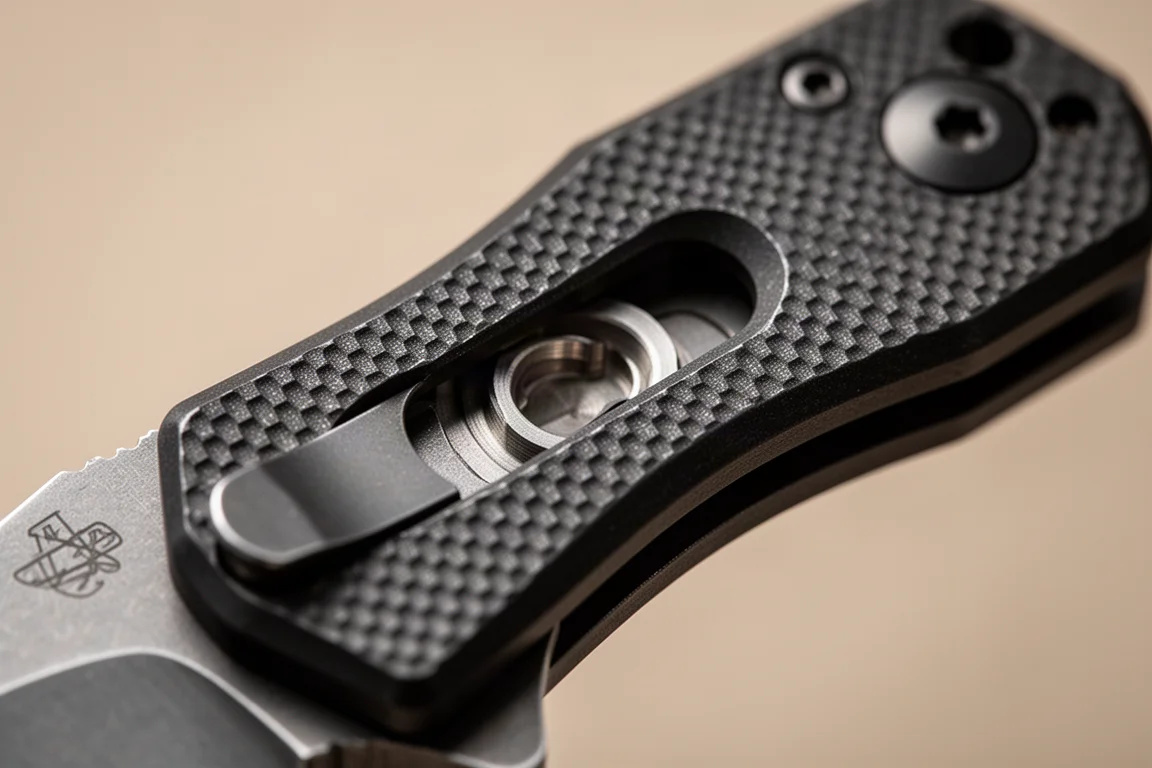
Every time you pick it up, you notice something new. What impressed us most, though, is that this level of detail is not reserved for the full dress version. A standard Sting with an M390 blade and milled titanium scales carries the same treatment: textured liner lock interface, the same showside milling, and the same engraved Sting 2021 marking. Roughly $750 to $900 knives receive the same obsessive attention as one approaching $3,000, and the actions sound remarkably close.
Things to Consider Before Buying
This full dress Sting sits at almost $3,000, and that is not casual money. This is not a knife you throw in a toolbox or bury in a drawer. It has reached collector status, closer to an heirloom piece. The materials are genuinely high-end and luxurious, and the knife is a showcase of how far machining has come in knife making, a piece that still cuts but is equally meant to be admired.
You are not simply paying for a pocket knife. Good knives exist at every price today, from a $10 basic folder to excellent $300 to $500 knives with impressive materials and finishes. The premium here buys the story, the materials, and a level of machining detail most of the market does not approach.
Buying Advice: Who This Knife Is Really For
If the full dress Sting is out of reach, the same beautiful details and performance exist lower in Herman’s catalog, with knives in the $700 to $900 range that are just as good where it counts. The Sting series, the Dragonfly, and the Ishtar are all part of that lineup.
If you are just starting your knife journey, you do not need a knife at this price. Work through budget knives, learn what you actually value in a folder, and let your own taste guide the upgrades. Sometimes expensive knives disappoint and affordable ones surprise you. For collectors, though, a full dress Sting is exactly the kind of piece that justifies the reach.
Conclusion
The Herman Knives Sting full dress is one of the most obsessively crafted pocket knives available, pairing a Damis steel Vinland blade, Tamascus scales, and in-house ceramic bearings with machining detail you keep discovering the longer you look. It is expensive enough to be a collector’s piece, but the same craftsmanship extends across the Herman range, which makes the brand worth watching whether you are shopping at $800 or $3,000.
Product link
View more details for Herman Knives Sting (Full Dress)
This product is mentioned in the review. Check the specifications, options, and compatibility before buying.
View more details for Herman Knives Sting (Full Dress)Further reading
Related Reviews
EDC Knives
Spyderco Techno 3 Review: A Beautiful Design Held Back by Factory Issues
The Spyderco Techno 3 is a stunningly designed titanium frame lock knife, but weak detent and quality control issues from the Italian factory make it a hard recommendation.
EDC Knives
Blade Show 2023 Picks: Three EDC Knives That Stood Out
From QSP's button lock Swordfish to Demko's MagnaCut fixed blade, these are the knives that made the strongest impression this year.
EDC Knives
Daily Carry Company Mag Blade Review: A Beautiful Knife I Struggle to Recommend
The Mag Blade pairs polished M390 steel with grade 5 titanium and an innovative magnetic butterfly hinge, but daily practicality falls short of the $199 price.