Power Tools
Hercules vs Milwaukee Flagship Hammer Drills: Head-to-Head Performance and Value
We put Hercules' flagship hammer drill up against Milwaukee's in demanding wood-boring and hole saw tests to see where the value pick holds up and where Milwaukee pulls ahead.
Introduction
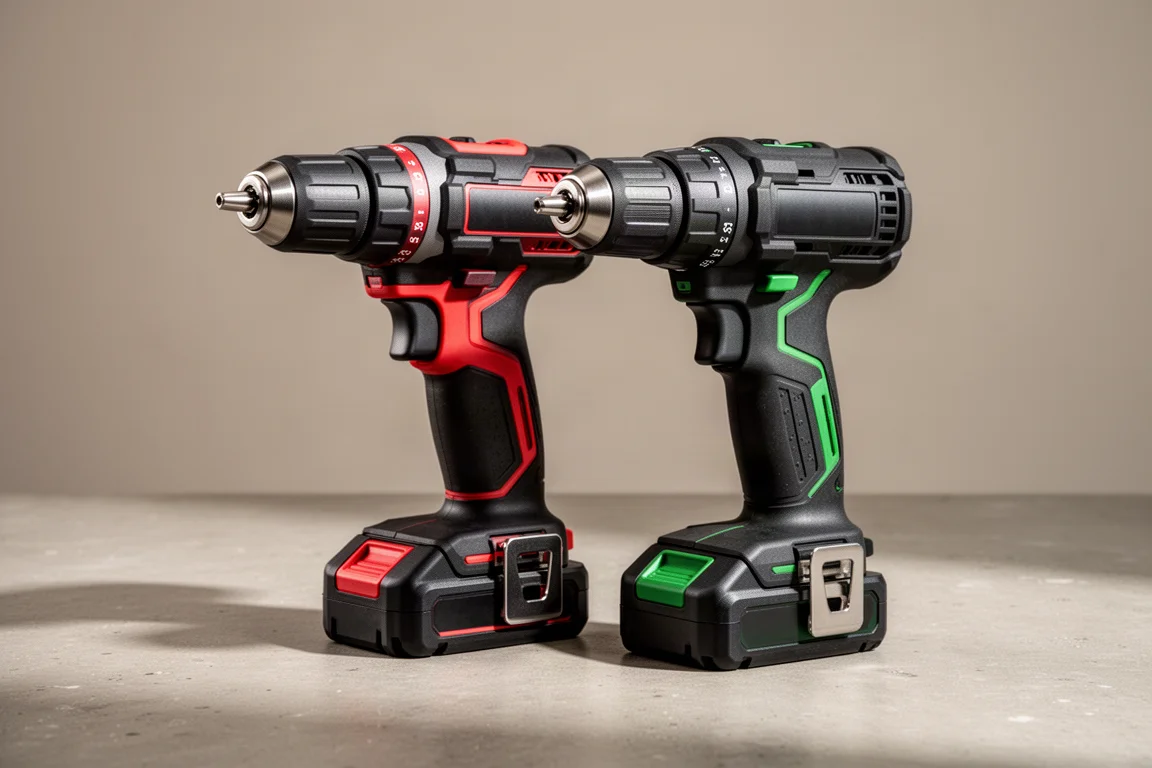
Flagship hammer drills are a common ask in head-to-head testing, and few matchups are requested more often than Hercules versus Milwaukee. Hercules, sold through Harbor Freight, has built a reputation on aggressive value, while Milwaukee’s flagship drill is a frequent choice for professionals who lean on their tools every day.
We ran both drills through four demanding wood-boring tests: 1-inch self-feed paddle bits, 1.5-inch self-feed roughing bits, 2-inch self-feed hole saws, and finally the maximum rated 2-9/16-inch hole saw. Both tools have brushless motors, nearly identical dimensions, and similar ergonomics, so the differences come down to raw speed, heat management, and price.
Test 1: 1-Inch Self-Feed Paddle Bits
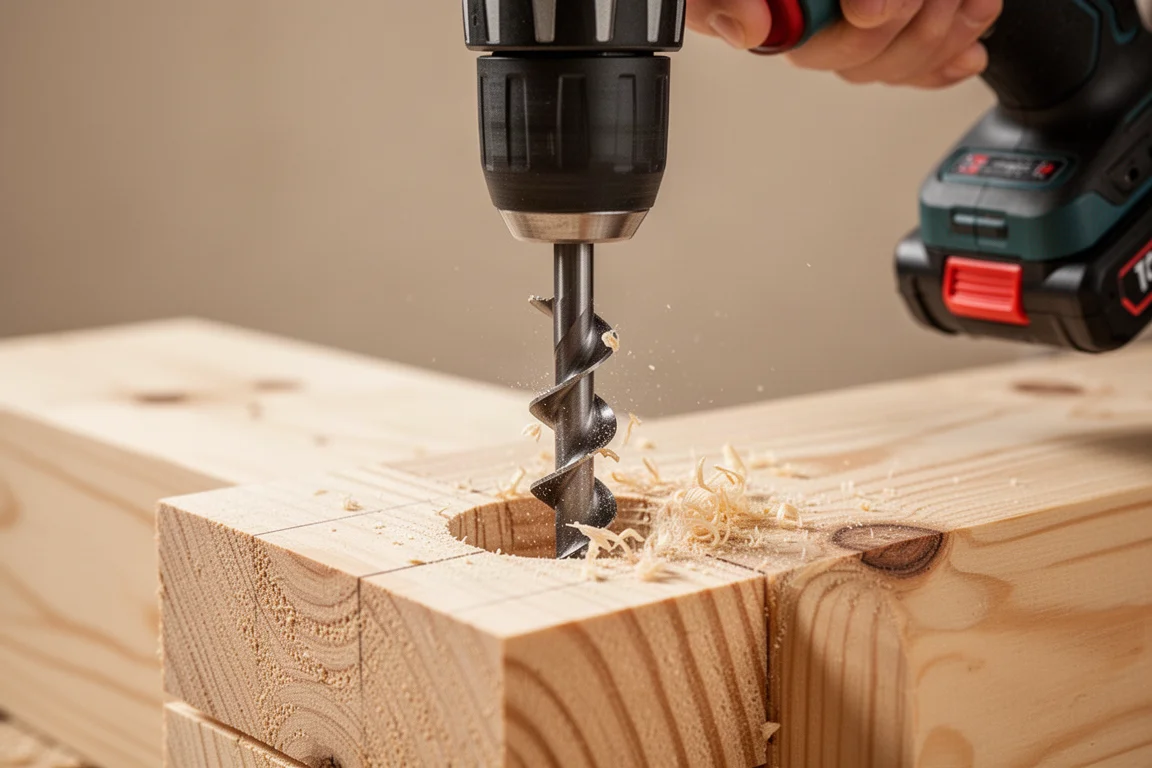
The first test used 1-inch self-feed paddle bits with three holes drilled per tool at speed two. On one run, the Hercules appeared to have its hammer mechanism engage slightly while in drill mode, an anomaly that happened only once but does raise a small build quality question.
Despite that oddity, the performance gap was clear: the Milwaukee completed its holes noticeably faster. The self-feed screw tip pulls the bit into the material, so excessive pressure is not required with either tool, and even while pulling up slightly, the bits kept cutting. The Hercules still performed well and delivered solid power, but the Milwaukee was simply quicker through the same material.
Test 2: 1.5-Inch Self-Feed Roughing Bits
The second test stepped up to 1.5-inch self-feed roughing bits, which are aggressive cutters with screw tips. This is a tougher ask, and both testers could feel the tools working harder, with more torque and some heat buildup in the bits.
Again, Milwaukee moved through the material faster. Even while letting the bit do the cutting, the Milwaukee had moved on to its second hole before the Hercules finished its first. The Hercules still completed the job without complaint, but the speed difference grew more obvious as the workload increased.
Test 3: 2-Inch Self-Feed Hole Saws
Hole saws are among the most demanding tasks for a hammer drill, and many flagship tools list a recommended maximum size. For the Milwaukee, the recommended maximum is 2-9/16 inches.
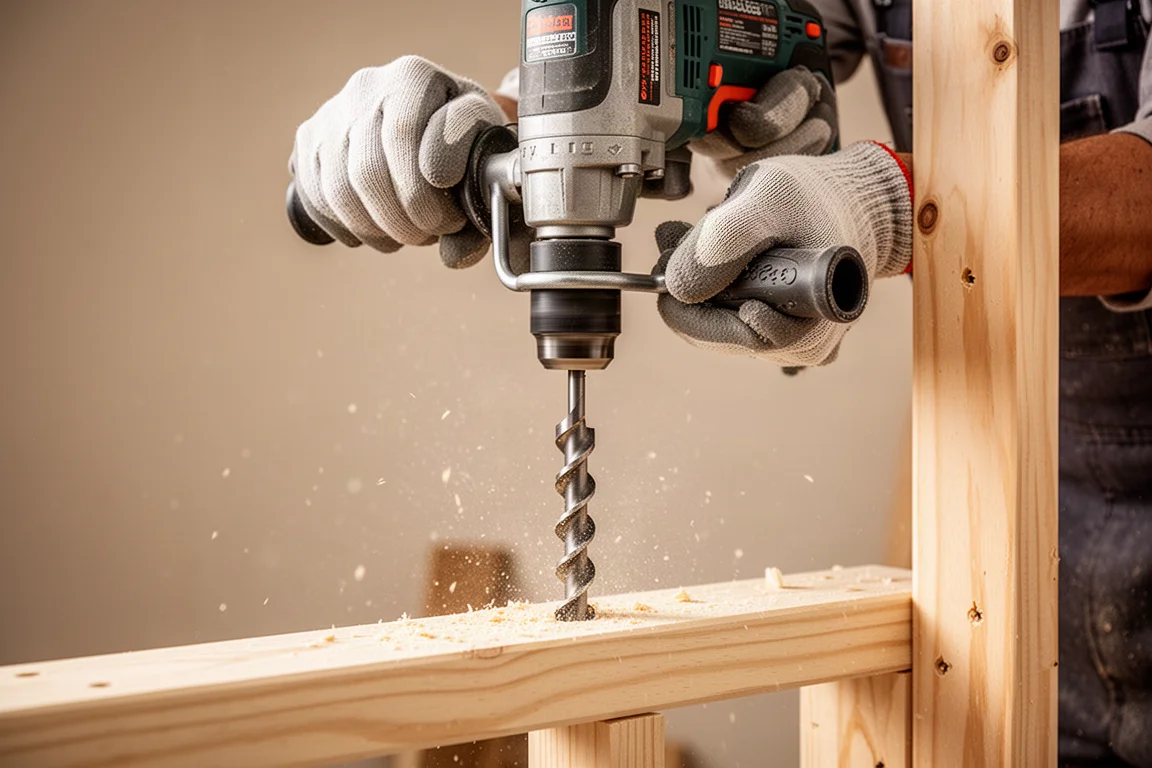
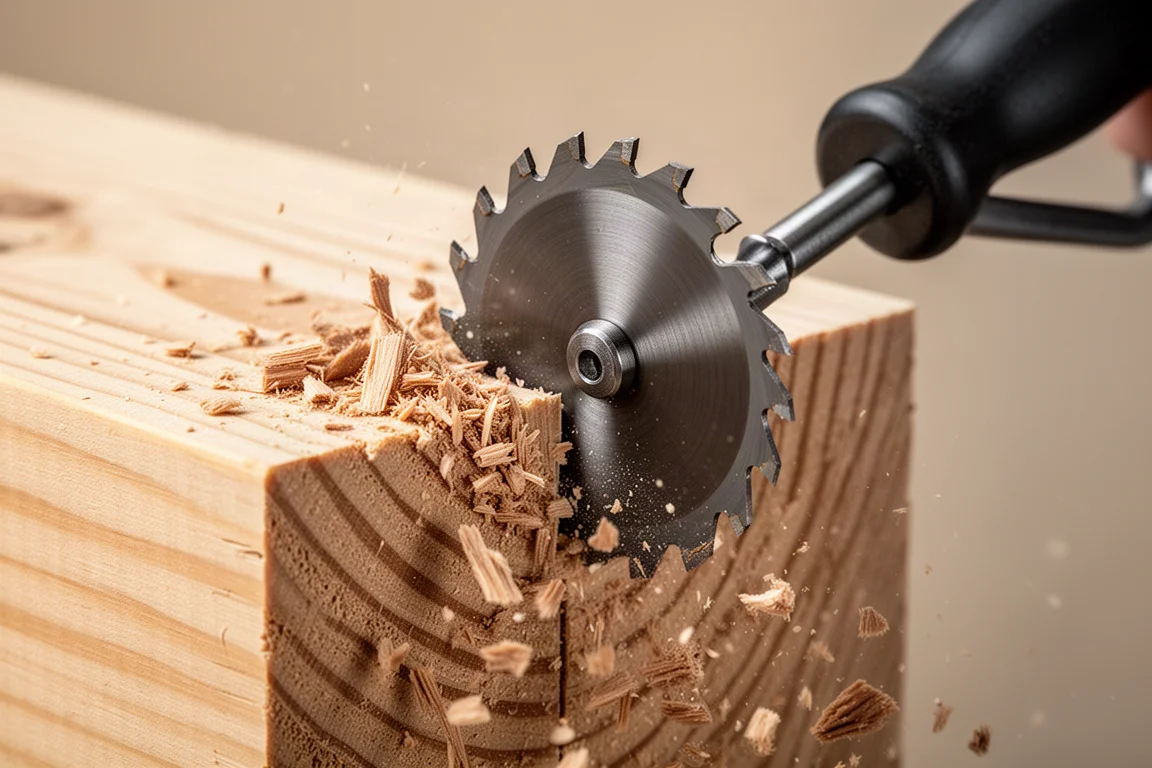
With 2-inch self-feed hole saws at speed two, both drills got the job done, but both ran warm. The self-feed action only works until the bit breaks through, after which the operator has to feed manually. After each cut, the chucks and hole saws were noticeably warm to the touch, too hot to comfortably grab immediately.
The takeaway here matched the earlier tests: the Hercules absolutely can do hard work, just not as fast, and it runs a bit warmer doing it. Battery life was not a concern for either tool, with both testers still showing three or four bars at this stage.
Test 4: The Maximum Rated 2-9/16-Inch Hole Saw
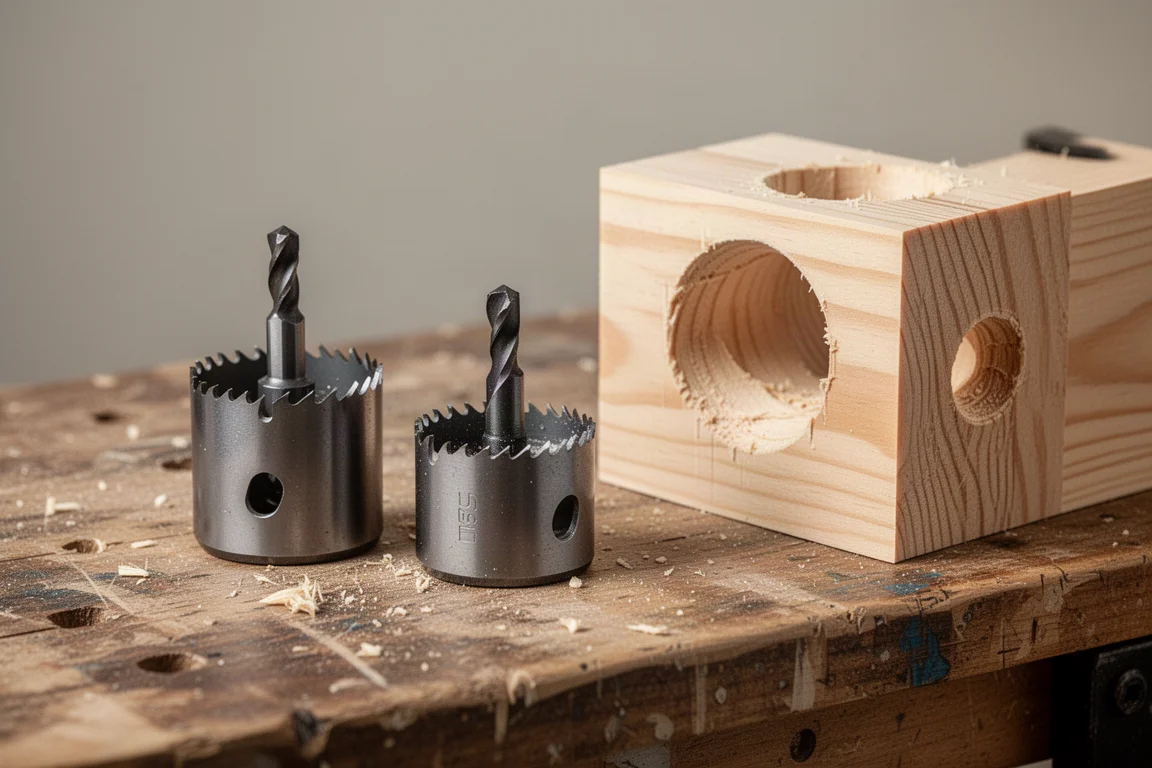
The final test used a 2-9/16-inch carbide tooth hole saw, the size both tools are rated for. These bits remove big chunks of material, and side handles are strongly recommended since the tool can twist away if you are not holding on firmly.
During the Hercules run, the tool hit an overload shutdown and timed out before finishing. The Milwaukee made it through, though it was a close call, and the operator eased off slightly to avoid a similar overload. With equal pressure, the two would likely finish within a second of each other on this cut, but the Hercules hitting overload under a rated maximum load is worth noting.
Which One Should You Buy?
The argument for the Hercules is straightforward: it completed every task we threw at it, it is lightweight, fairly compact, and ergonomically it holds up well with good rubber overmolding, textured grips, and large channels that help channel away sweat or debris. Side by side, the two drills are nearly the same size.
The bigger difference is price. The Hercules flagship hammer drill costs $79 as a bare tool, while the Milwaukee flagship is $199 as a bare tool, more than double. For a homeowner with a workshop who needs a capable hammer drill for occasional projects, the Hercules is a genuinely good buy, especially since it uses a Jacobs all-metal chuck.
For professionals or anyone who needs hard work done quickly, Milwaukee takes the win. It was faster in every test, handled the heaviest hole saw without a shutdown, and consistently delivered more speed even when letting the bit do the cutting. If your livelihood depends on finishing holes faster, the extra money buys real time back.
Conclusion
In this head-to-head, the Milwaukee flagship hammer drill is the clear performance winner, finishing faster across paddle bits, roughing bits, and hole saws and avoiding the overload shutdown the Hercules hit on the largest cut. The Hercules, however, is a legitimate value pick at $79 bare tool, capable of tough work with strong ergonomics and an all-metal Jacobs chuck. Choose the Hercules for occasional home workshop use, and choose the Milwaukee if speed and reliability under heavy daily load matter most.
Product link
View more details for Hercules Flagship Hammer Drill
This product is mentioned in the review. Check the specifications, options, and compatibility before buying.
View more details for Hercules Flagship Hammer DrillFurther reading
Related Reviews
Power Tools
Best 1-Inch Pistol Impact Wrenches: Three Heavy-Duty Options Compared
We compare three 1-inch pistol impact wrenches, from a budget-friendly Harbor Freight model to a premium Caterpillar unit, to help you choose the right one.
Power Tools
Best 3/4-Inch Impact Wrenches 2026: Five Contenders Compared
We compare five 3/4-inch impact wrenches across price and performance, from a budget Amazon option to Snap-on's most powerful model yet.
Power Tools
Best Budget Cordless Tools 2026: Walmart Finds That Punch Above Their Price
We tested five cordless tools from Walmart, including a high-torque impact wrench that trades blows with Milwaukee and a $35 duster that outperforms its price class.