Woodworking Tools
Hercules 12.5" Benchtop Planer Review: A Three-Blade Lunchbox Planer Worth a Close Look
Harbor Freight's new three-blade Hercules benchtop planer brings a steel chassis, headlock, and tool-less dust collection at a $400 launch price. Here's how it performs and how it compares.
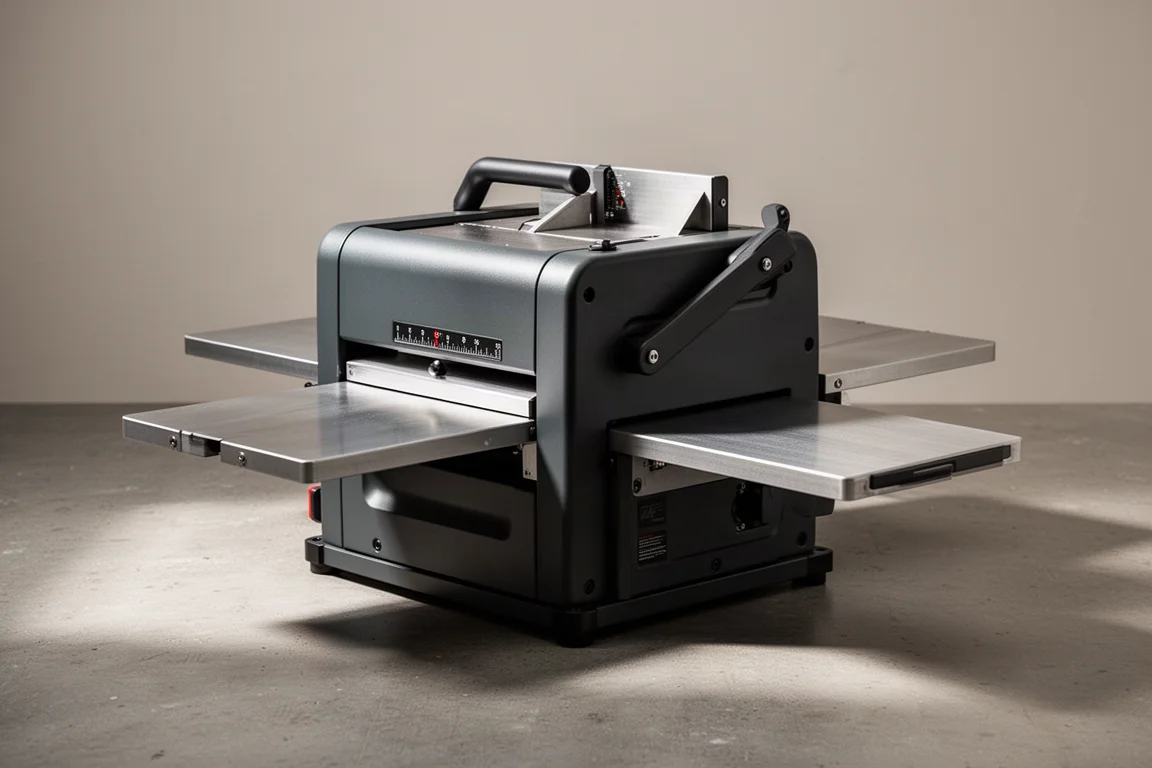
Introduction
Harbor Freight has been expanding its “good, better, best” tool platforms, and the Hercules 12.5” Benchtop Planer is the latest addition. Following the popular two-blade Bauer planer, this new Hercules brings three blades to the lunchbox planer format. Priced at $400 at launch, it aims squarely at the established names in this category. After a full teardown of the design and some real cutting on hardwood, here is what stands out, for better and worse.
Design and Build Quality
This is a classic lunchbox-style planer: the side tables fold up on either end for portability and fold down to give you infeed and outfeed work surfaces. The motor head sits in the middle, with accessible brushes, a power safety stop, and a headlock lever that locks the cutter head in place before height adjustments. That headlock is one of the features that genuinely helps reduce snipe, a common frustration with planers of this style.
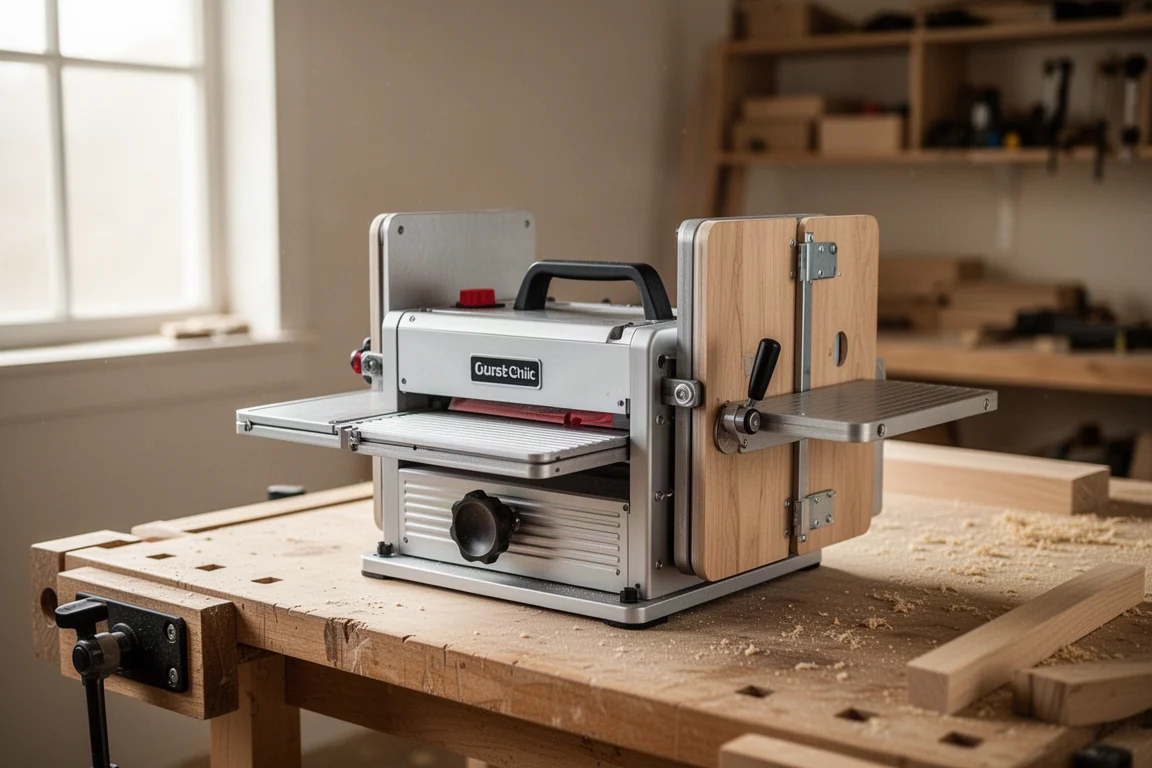
The standout detail is the fully integrated steel top. Less expensive planers typically use a single post running across the frame, but here the entire top is steel, not aluminum, with a steel chassis, steel rods, and a steel base. Everything on this machine feels extremely well built. There are also carrying handles with plastic moldings, a cord wrap, and a folding crank handle that gets out of the way when you need it to.
Depth control includes a planing depth gauge with a ball-bearing indicator that shows exactly how much material you are removing, plus an automatic depth stop that can be set to zero, a quarter, half, or three-quarter inch. The crank advances at roughly 1/8 inch per turn, and the recommended maximum cut is 1/8 inch per pass.
Cutting Performance
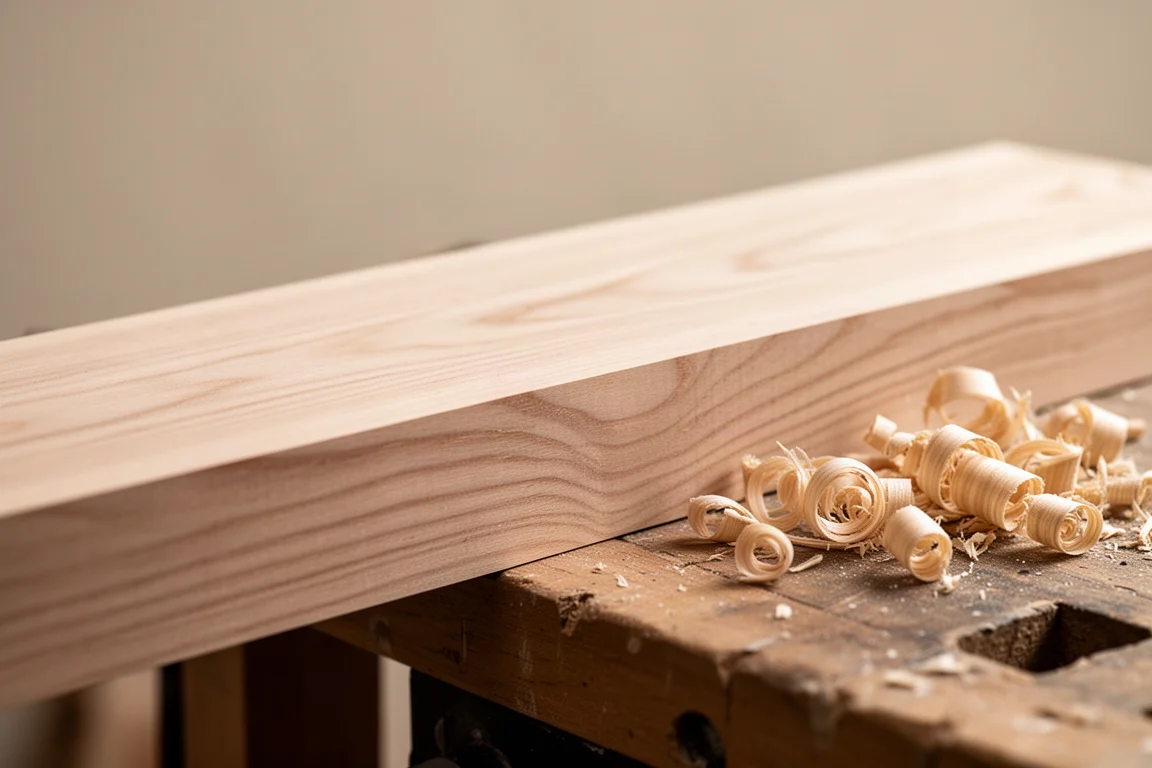
On hardwood, the planer produced a clean, even surface, and the result was easy to inspect thanks to the flat work table. Snipe was technically present, as it is with almost every lunchbox planer, but it was very hard to detect, even on camera. The headlock feature plus standard tricks, like feeding a sacrificial board behind your workpiece, keep it well under control.
The stated specs from the sticker on the machine: a 12.5-inch portable thickness planer running at 9,700 RPM, a maximum cutting depth of 1/8 inch, a maximum stock thickness of six inches, and a maximum cutting width of 12.5 inches.
Dust Collection and Maintenance
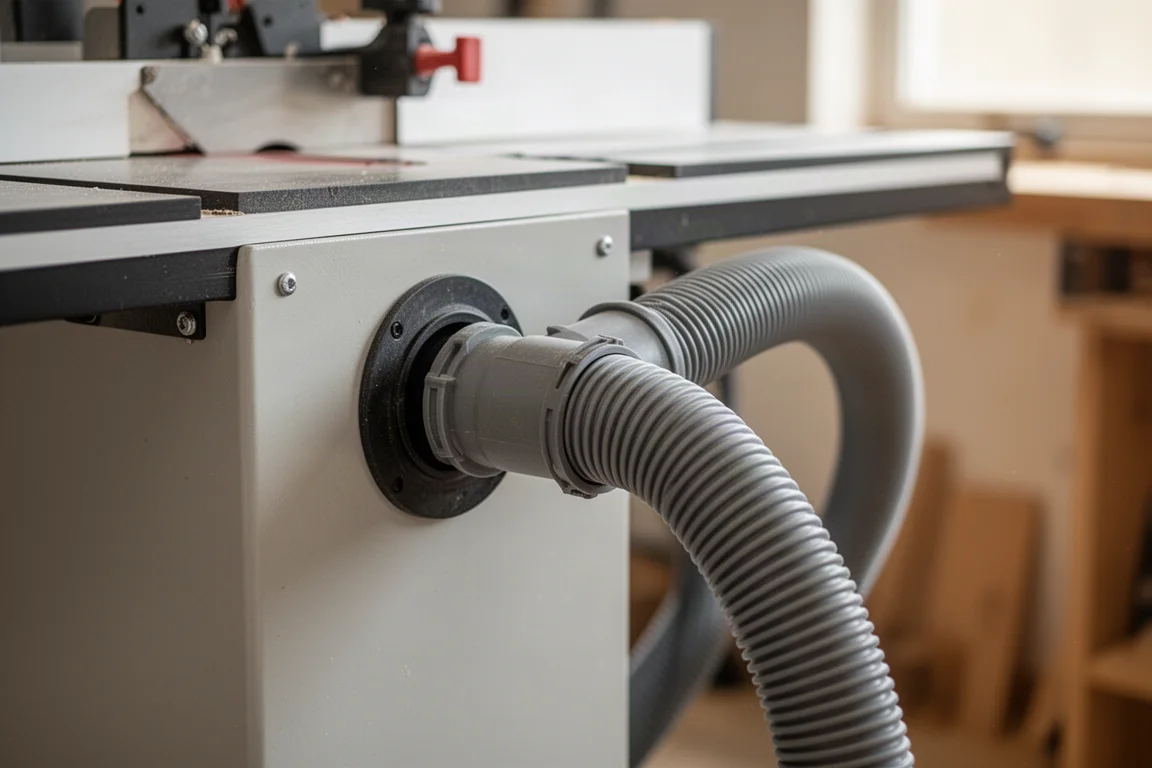
Dust collection is tool-less, which is a genuine convenience. The port accepts a standard shop vac or a larger dust collection system, and the fittings attach and tighten by hand with a washer seal. No tools required, which means you are far more likely to actually keep it hooked up.
Blade access is well thought out too. The included blade removal tool has a magnetic side, so you can lift the knives out without putting your fingers anywhere near the cutting edge. There is also a lock release that lets you rotate the blade for servicing. One small annoyance: the included tool does not remove the blade cover, which requires a T25 screwdriver you will need to supply yourself.
One design trade-off worth knowing: the dust collector must be removed, including screws underneath, before the machine folds back into lunchbox mode. If you leave it installed, the unit will not fold up. On the plus side, the dust port itself is not reversible, so it routes one direction only. Neither issue is a dealbreaker, but both are worth knowing before you buy.
Hercules vs DeWalt DW734: Price and Warranty
The obvious comparison is the DeWalt DW734. The two machines share a lot of design DNA: similar form factor, a locking bar feature, an integrated steel top, similar bolt patterns, and even a nearly identical knife removal tool. This is clearly not a copy of Makita; the DeWalt is the machine it is going after, and that is not a bad thing, because the DW734 is a heck of a planer.
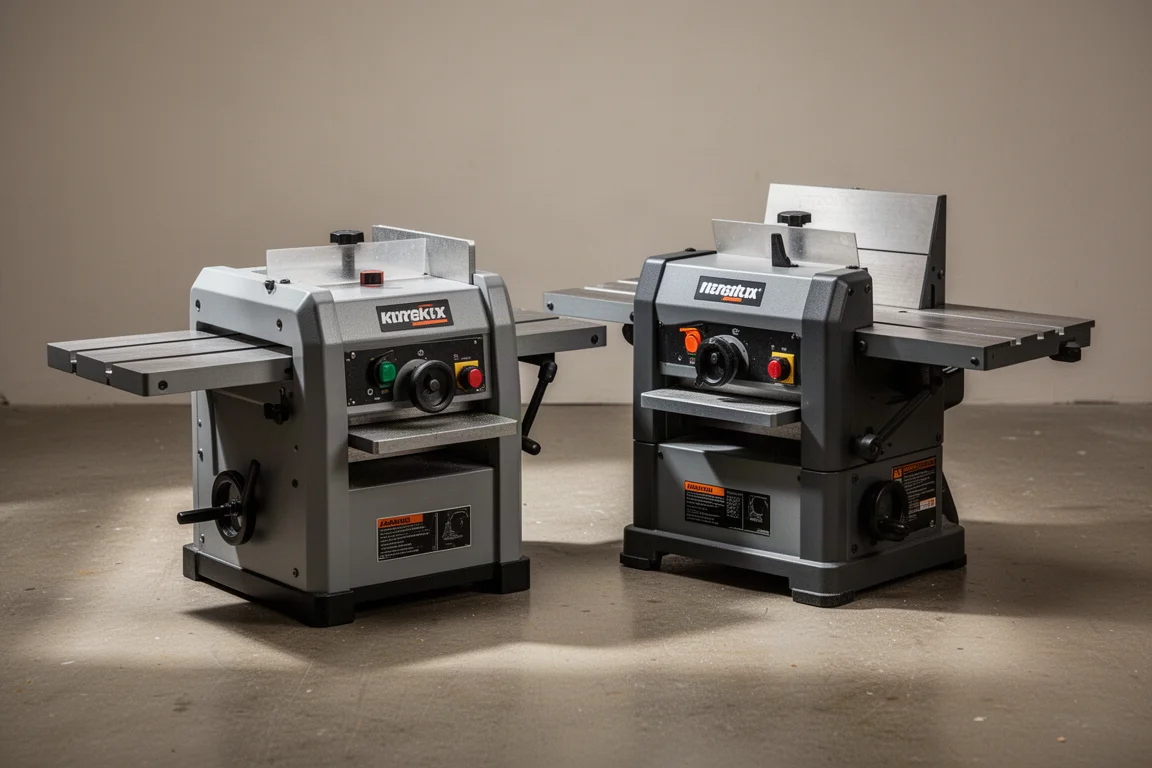
At launch, the Hercules lists at $400. The DW734 was seen around $490 on sale, and it typically sells for $450 to $550 elsewhere. The warranty picture differs in an interesting way: the DeWalt includes a three-year warranty, while the Hercules carries the standard 90-day warranty, with a two-year extended plan available for about $90. That brings the two machines to roughly the same out-the-door price. The practical difference is service: with the Hercules you take it back to the store, while the DeWalt requires a trip to a DeWalt service center, which may or may not be convenient.
If Harbor Freight drops one of its occasional 20 percent off coupons with no exclusions, the Hercules could fall to around $320 for a three-blade machine, which would make it very hard to beat at that price.
Buying Advice
If you want a well-built three-blade lunchbox planer and can live with the 90-day base warranty, the Hercules at $400 is a strong value, especially if a coupon brings it lower. If a long warranty and an established service network matter more to you, the DeWalt DW734 remains the safe choice, particularly when it is on sale near the Hercules price. Either way, plan on removing the dust collection hardware if you intend to fold the machine up regularly, and budget a T25 screwdriver for blade cover removal.
Conclusion
The Hercules 12.5” Benchtop Planer is a quality machine that left a genuinely strong impression: solid steel construction, a useful headlock, tool-less dust collection, and snipe that was barely noticeable in real use. At $400 it is priced sensibly for a three-blade planer, and with the usual Harbor Freight coupon cycles, it could become an even better deal over time.
Product link
View more details for Hercules 12.5" Benchtop Planer
This product is mentioned in the review. Check the specifications, options, and compatibility before buying.
View more details for Hercules 12.5" Benchtop PlanerFurther reading
Related Reviews

Woodworking Tools
123 Blocks and the Hardware Kit That Fixes Their Biggest Flaw
A practical look at 123 blocks, the hardware kit that solves their most common design flaw, and a sharpening station worth considering.

Woodworking Tools
Cool Tools for Woodworking: Seven Upgrades That Earn Their Place in the Shop
A practical roundup of seven woodworking tools and accessories that improve accuracy, safety, and everyday shop efficiency.

Woodworking Tools
Debuke Clamps Review: A Family-Made Aluminum Bar Clamp Worth Knowing
Debuke Clamps are lightweight aluminum bar clamps made by a small Iowa family business. Here is why they stand out from the many knockoffs on the market.