Skis
Head Kore 97 Review: A Lightweight All-Mountain Ski With Real Precision
The Head Kore 97 pairs a Karuba wood core with two carbon sheets for a light, stiff, versatile ride. Here is what it does well, and who it suits.
Introduction
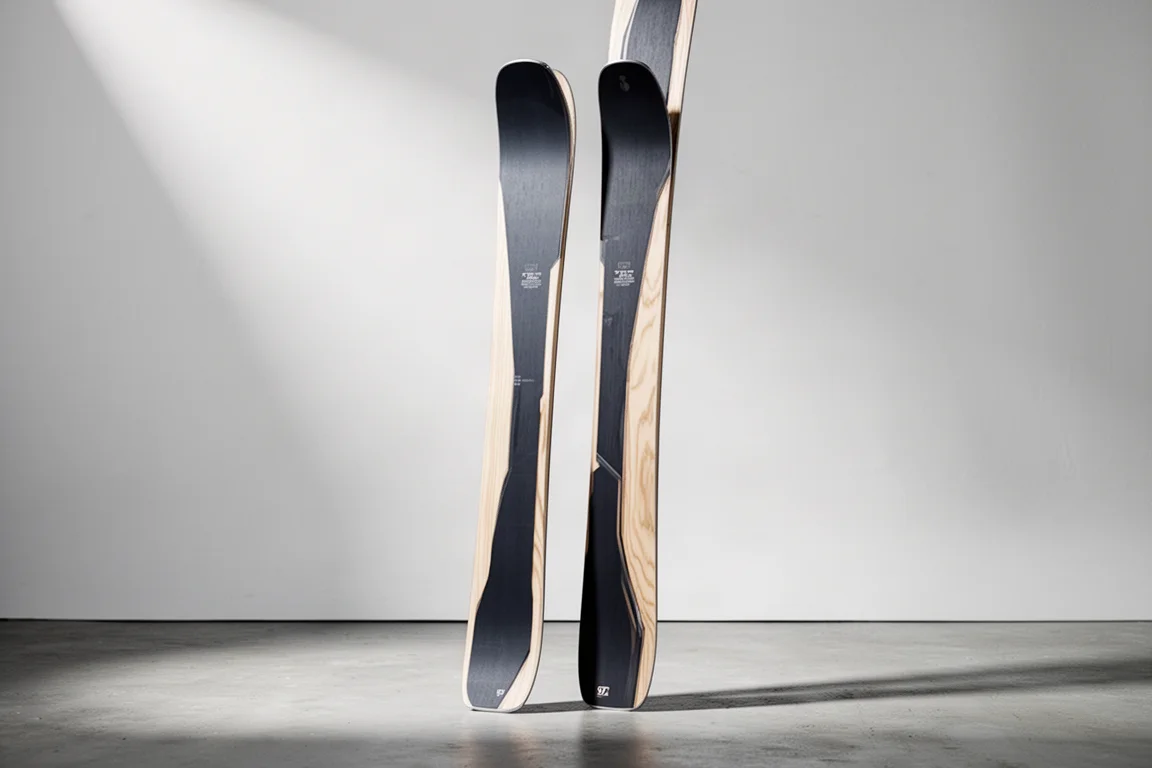
The Head Kore 97 is a mid-fat all-mountain ski that sits right at the edge of the freeride category. At 97 mm underfoot it stays wide enough to handle softer snow and narrow enough to carve with genuine precision on groomed terrain, which makes it a strong candidate for skiers who would rather own one versatile ski than build a quiver.
What sets this ski apart is its construction. A lightweight Karuba wood core is paired with two sheets of carbon, one laid flat along the bottom and one curved across the top. The curved sheet does most of the heavy lifting when it comes to flex, because bending carbon into a three-dimensional shape adds stiffness. The result is a consistent, stiff flex from tip to tail. Structurally, the model returns unchanged this season with only a graphic update, so skiers who already trust this build get more of the same.
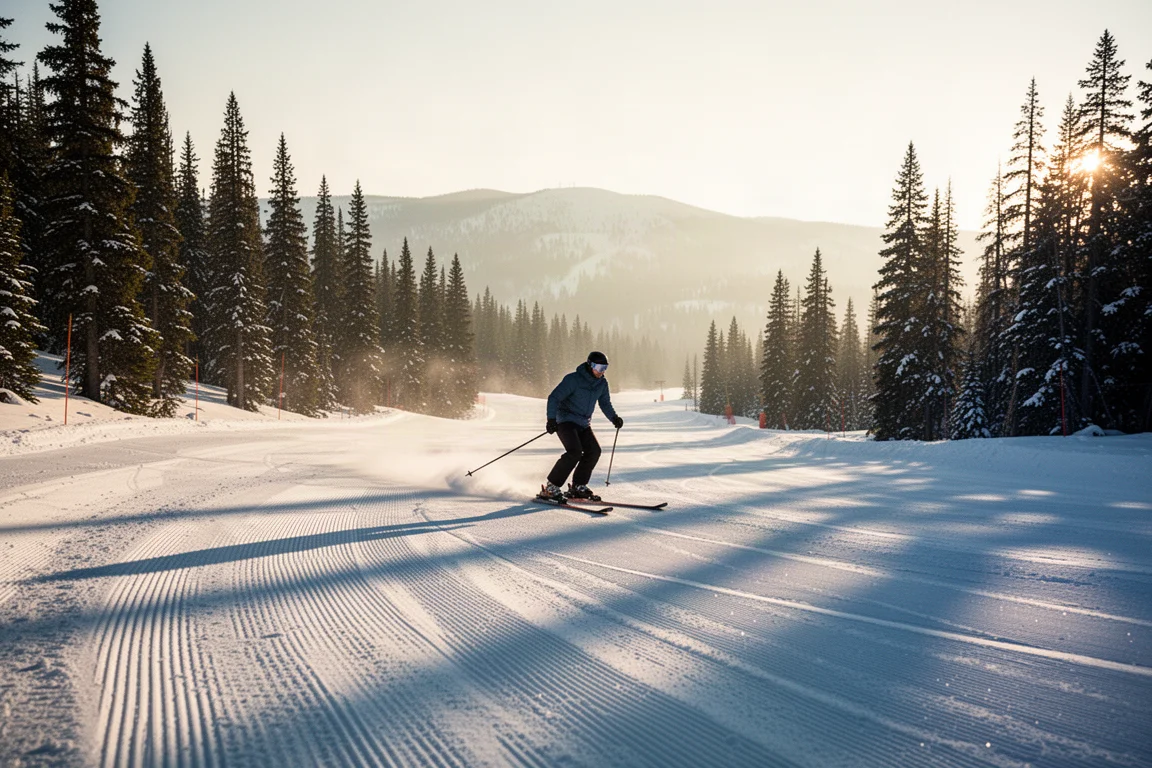
That continuity matters in a category where plenty of skis are redesigned every year. The Kore 97 keeps the blend of low weight and high performance that makes it distinctive, and it stays a rare build in that respect.
Who the Head Kore 97 Is For
This is not a ski that flatters a passive style. The carbon construction rewards input, and you need a reasonable amount of technique and some power behind you to get the ski up on edge and bend it through the arc of a turn. Skiers who can drive a ski will get a great deal back from the lightweight build.
The flip side is that riders who cannot flex it may find the Kore 97 feels cumbersome at high edge angles. If you prefer a shallower edge angle, quicker turns, and a flatter ski, it is genuinely fun: mobile, agile, and very comfortable in bumps and trees. Skiers who want to lay it over into a deep carved turn need either a solid skill set or some weight to make the ski flex and access the full sidecut.
Main Strengths: Lightweight Build and All-Mountain Versatility
At 1,611 g in the 170 cm length, the Kore 97 is light for what it does. That low weight translates directly into mobility, agility, and maneuverability that heavier skis simply cannot match, particularly when you are making rapid adjustments in tight terrain.
The 170 cm length carries a 15.3 m turn radius, which puts it close to a wider frontside ski in terms of arc. It is a short, mid-range carving shape, and it rewards skiers who can keep pace with the energy and zest of the carbon layup.
Damping layers and a structural top sheet keep the carbon from feeling harsh. Carbon left unattended can ping, but the Kore 97 stays quiet and composed, and it feels like a heavier, more upscale ski than its measured weight suggests.
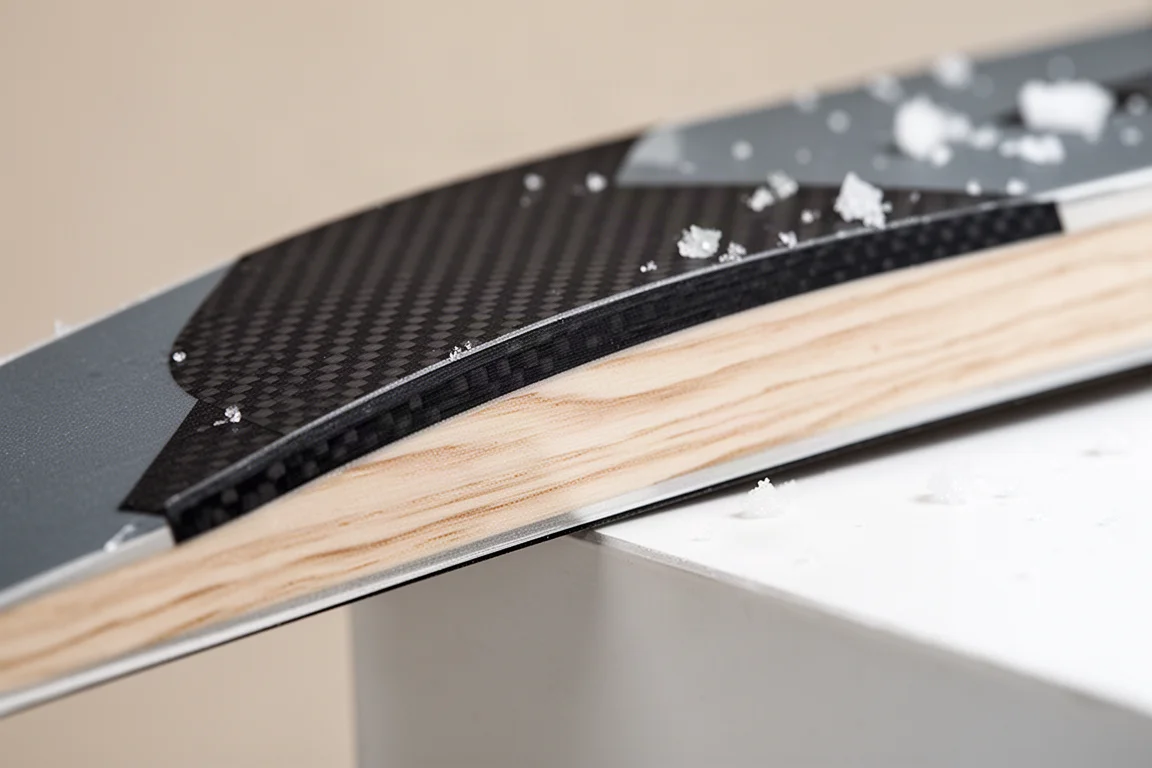
Versatility is the other half of the story. The 97 mm waist runs slightly flatter camber than the narrower skis in the line, which makes it easier to maneuver once the snow softens. It also carries a slightly longer rocker profile, and the taper is brought in just enough to keep the shovel floaty. The tail is fairly round with a modest amount of tail rocker, which shortens the effective edge and helps produce those shorter arcs.
Balanced Shape for Softer Snow
Wider models in the line step up to 103 mm and change more noticeably in rocker and taper, which suits pure flotation better. That is not what a 97 mm ski is for. You are not chasing waist-deep days here, so you do not need outrageous rocker and taper, only enough to make soft snow interesting without taking away from on-trail performance. What the Kore 97 delivers instead is balance: it moves naturally and intuitively between snow types and terrain choices.
Things to Consider Before Buying
The Kore 97 asks something of its owner. It performs at its best with a skier who can bend it, and it can feel awkward at aggressive edge angles for lighter or less experienced riders. That is a real trade-off rather than a minor footnote.
There is also a limit to how much float the shape provides. The ski is designed to shift comfortably between conditions rather than to excel in the deepest snow, and the wider Kore models exist for exactly that reason. If your season is defined by powder days, the 97 mm waist is a compromise.
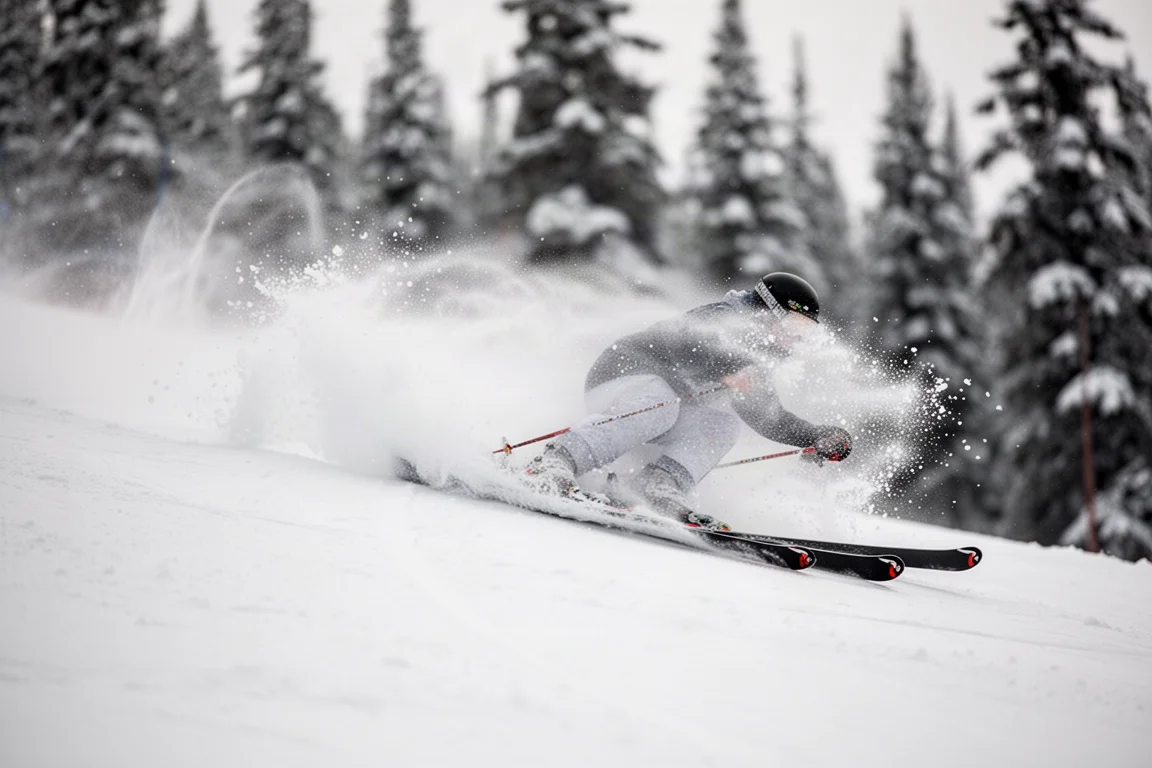
It is also worth weighing what you give up. A lightweight ski is easier to move around, but it will not feel as planted as a heavier build in chopped or tracked snow. Riders who value that damp, heavy feel above all else may prefer a different design.
How the Kore 97 Fits in the Wider Kore Line
The construction carries across the family, which is useful context when you are deciding on width. As the Kore skis move out to 103 mm, the rocker and taper change, but the core and carbon layup remain the same approach. That means the character of the ski stays familiar as you move up in width, and the main decision is how much float you actually need versus how much on-trail precision you want to keep.
For most skiers who split their time between groomed runs, bumps, trees, and softer snow, the 97 sits in a sensible middle. It carves like a much narrower ski while still handling the softer side of an average season.
Buying Advice
Choose the Head Kore 97 if you want one ski that can carve groomers with the shape of a narrower model and still stay manageable when the snow softens. It suits skiers with solid technique who enjoy a lively, precise ski and are willing to work for the turn.
Look elsewhere, or step up to a wider model in the line, if you spend most of your days in deep snow, or if you want a ski that does the bending for you. Matching the ski to your ability and your typical conditions matters more here than it does with a more forgiving build.
If you already know you like the Kore construction, the unchanged design makes this an easy decision. If you are coming from a heavier all-mountain ski, be honest about how much power you can put into the ski, and expect a short adjustment period while you learn to work with the carbon flex rather than against it.
Conclusion
The Head Kore 97 remains a rare build that blends low weight with genuine high performance. It is agile and precise in quick turns and tight terrain, it carves with a shape closer to a narrower ski, and it handles softer snow well enough to serve as a true all-mountain option.
The trade-off is technique. Give it input and it responds; leave it flat and unchallenged and you will never see what it can do. For the right skier, that is a fair exchange.
Product link
View more details for Head Kore 97
This product is mentioned in the review. Check the specifications, options, and compatibility before buying.
View more details for Head Kore 97Further reading
Related Reviews
Skis
Armada Anti Matter 82 W Review: A Light, Approachable All-Mountain Carver
Armada's Anti Matter 82 W pairs a lightweight Karuba and carbon build with an easygoing all-mountain shape, aimed at intermediates through lighter-footed advanced skiers.
Skis
Armada Anti Matter 88W Review: A Light, Playful 88mm All-Mountain Ski Plus Two Alternatives
The Armada Anti Matter 88W returns unchanged in spirit from its Reliance 88C days, and it remains one of the most versatile 88mm skis around. We also look at the Nordica Santa Ana 87 and Anti Matter 92 W as alternatives.
Skis
Armada ARV 100 vs Atomic Bent 100: Which 100mm Freestyle Ski Should You Buy?
Two of the best all-mountain freestyle skis of the season compared: one leans playful and park-ready, the other holds up better everywhere else.