Skis
Head Kore 105 Review: A Lightweight Freeride Ski With Real Muscle
A closer look at the Head Kore 105, a wide carbon ski that pairs low weight with the damp, planted feel usually reserved for metal.
Introduction
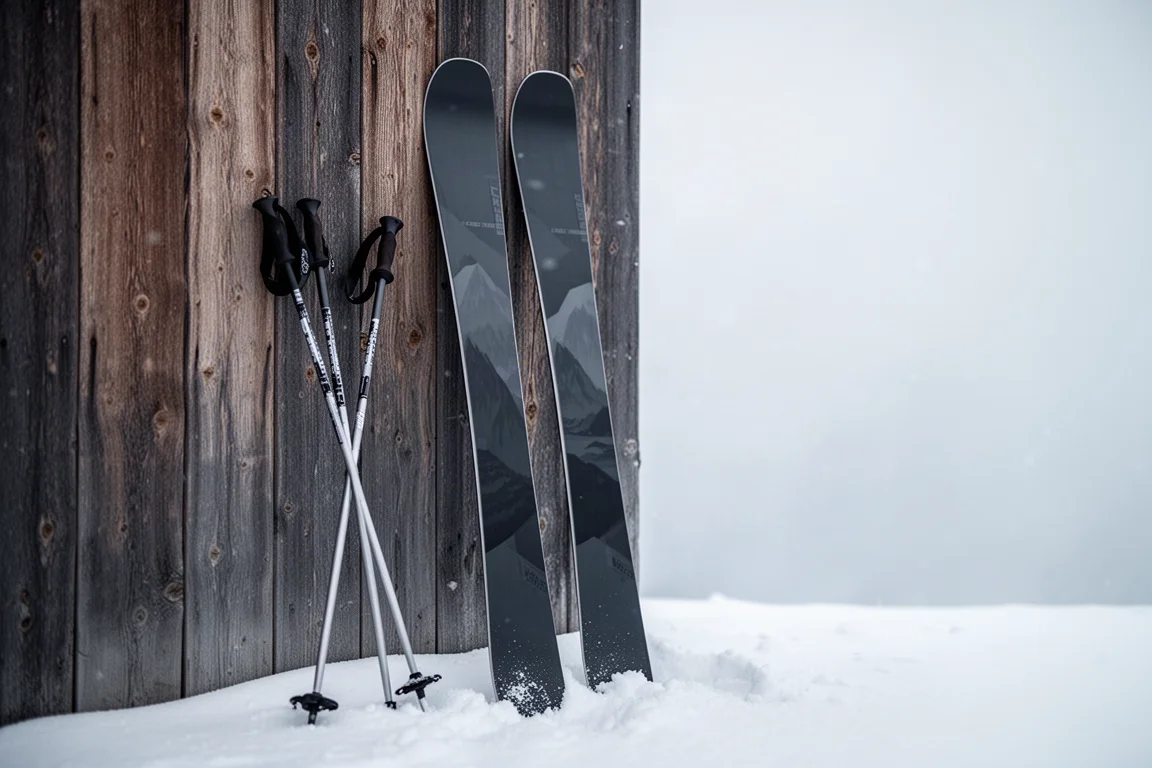
The Head Kore 105 is the wider, freeride-leaning member of the Kore family, and it returns structurally unchanged apart from a refreshed graphic package. That continuity is good news for anyone who already likes what this platform does, because it keeps the ski’s character intact: a 105 mm waist, a genuinely stiff flex, and a weight that stays surprisingly low for the amount of performance on offer.
The appeal is straightforward. This is a ski that pairs a broad platform underfoot with carbon-driven energy, and it does so without the mass that normally comes attached to that much power.
Who the Head Kore 105 Is For
The Kore 105 is aimed squarely at advanced and expert skiers. The carbon build gives the ski real energy and rebound, but that energy only pays off when the skier can bend the ski, load the sidecut, and drive it through the middle of the turn. Skiers with a solid technical base tend to get the most out of it.
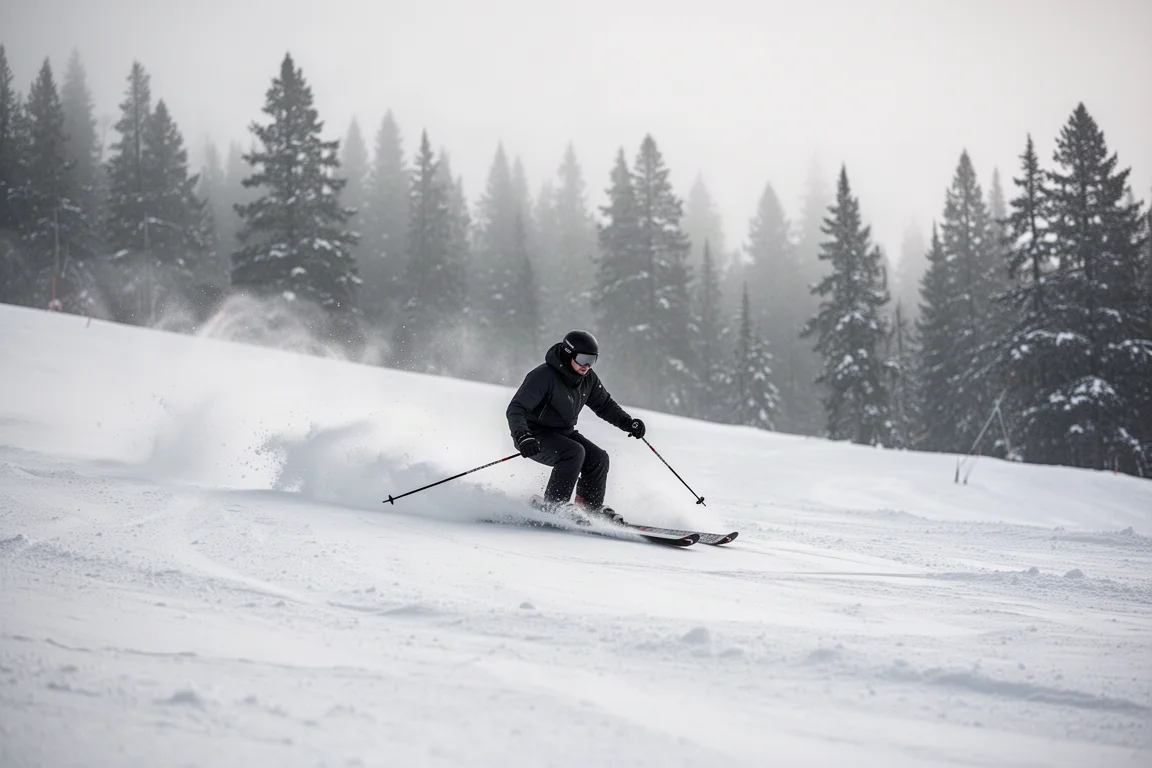
It is also a convincing option for larger, more aggressive skiers. Even though the ski is light, the stiffness and the damped feel let it hold up to hard charging, so a heavier skier does not have to accept extra weight in order to access that level of performance.
Main Strengths
What separates the Kore 105 from most skis at this width is the way it combines stiffness, damping, and low weight in a single package. Those three attributes rarely line up this cleanly.
Carbon Construction and Metal-Free Damping
The build starts with a wood core wrapped by two sheets of carbon, one above and one below. The top carbon layer is curved, which adds an extra dimension of stiffness, making the Kore 105 one of the stiffer skis available at this width.
The result is a ski that mimics the dampness and power usually delivered by metal, but at a far lower weight. The stated figure is 1,836 grams, and the performance feels as though it belongs to a heavier ski without ever feeling heavy on the feet.
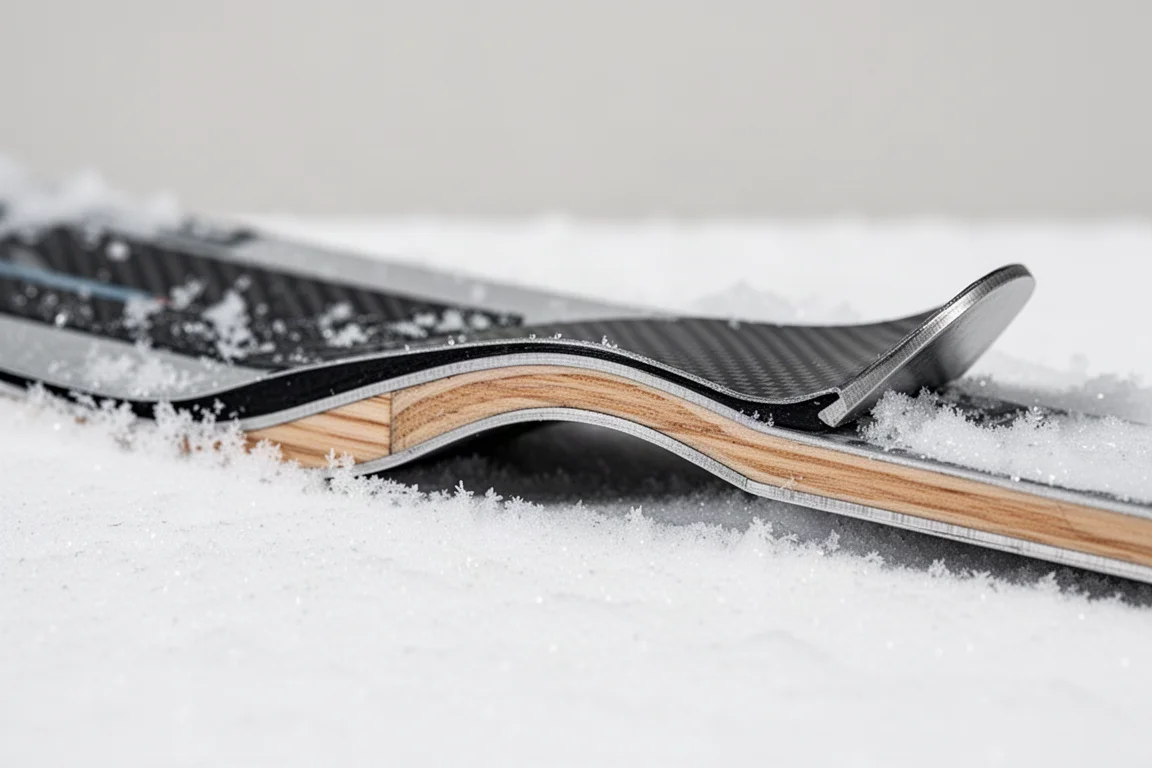
That carbon also produces a distinctive energy out of the tail. The ski releases a turn with a snap that puts it on a different wavelength from most of its contemporaries, and it gives the Kore 105 a lively, planted feel that is rare in a lightweight package.
Shape, Rocker, and Turn Radius
The Kore 105 keeps camber underfoot and adds longer tip and tail rocker than the narrower Kore models, though the profile stays measured rather than extreme. The 184 cm length carries a 17.8 meter turn radius.
The shaping is where this ski differentiates itself. The widest point of the ski is brought well down toward the middle, which gives the shovel a genuinely floaty personality and starts the sidecut lower on the body. The payoff is a shorter effective edge and a ski that stays maneuverable in mid-range turns. Tail rocker is modest on purpose, since a more dramatic tail would cost the ski its strong carving performance.
Terrain and Conditions Where It Shines
This is a ski built for softer snow and for terrain that rewards mobility. Soft groomers, crud, chop, trees, and packed powder are all comfortably within its range, and it is at its most rewarding on a deep, consistent, soft surface where the wider platform underfoot and the stiffness of the carbon can work together.
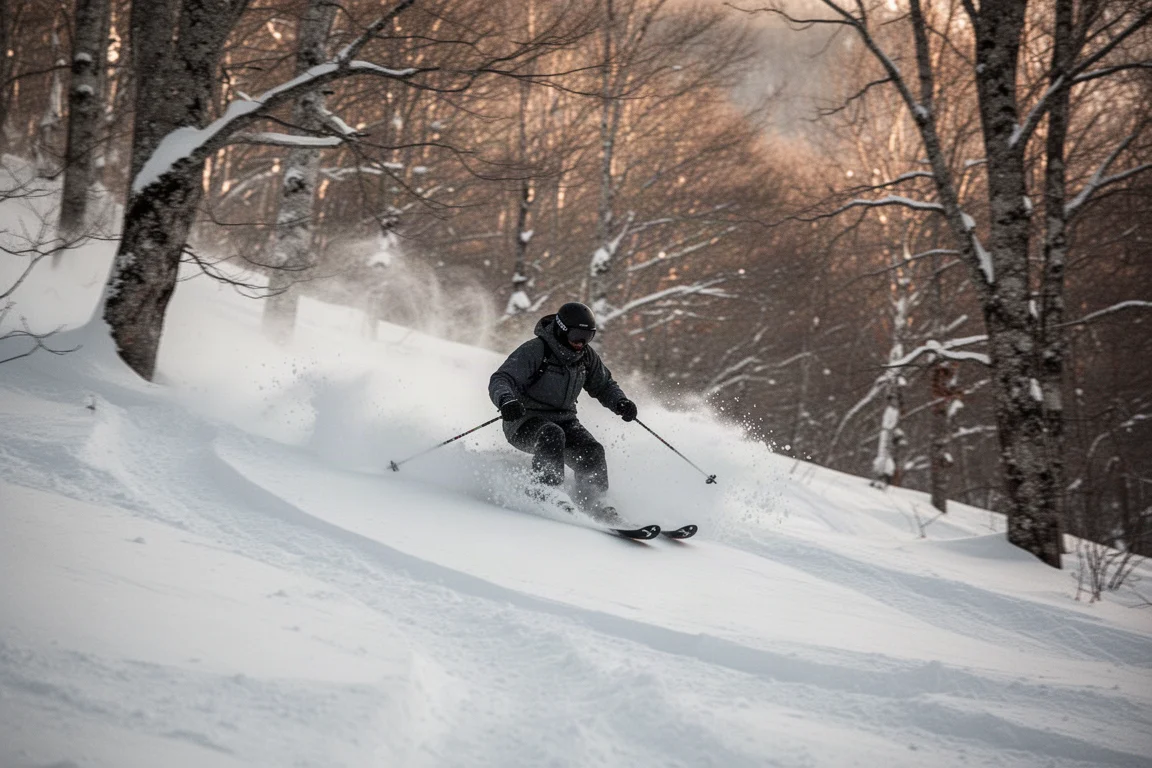
On that kind of surface the ski finally flexes fully, and the energy of the carbon becomes something you can feel rather than something you have to work for. In broken snow, crud, and chop, the same construction smooths out inconsistencies in a way that usually takes metal to achieve, which is the core benefit here.
It also rewards a centered stance. Skiers who get into the middle of the ski and find its hinge point unlock the full carve, and the taper and shortened effective edge make mid-range turns feel easy rather than forced.
Things to Consider Before Buying
The stiffness that makes the Kore 105 special also narrows its audience. A skier who cannot bend the ski will not access the rebound and energy that define it, so this is not a forgiving choice for lighter or less assertive skiers.
Tail rocker is deliberately restrained compared with other 105 mm skis, so anyone chasing maximum surf and a loose, pivoty feel in deep snow will find more dramatic options elsewhere. The trade-off is intentional: less tail rocker means better carving performance.
Finally, the low weight cuts both ways. A lighter ski carries less mass to bulldoze through variable snow, and while the carbon damping goes a long way toward closing that gap, it is worth understanding before you commit.
Buying Advice
The right question is not whether the Kore 105 is good, but whether your skiing matches it. If you are an advanced or expert skier who spends most of your time in softer snow, wants a light setup, and enjoys a ski that gives back energy when you load it, this is one of the better-balanced options at this width.
If your priority is a dedicated deep-snow tool with a loose, surfy personality, look toward skis with more aggressive rocker profiles. And if you mostly ski firm, hardpack conditions, the narrower all-mountain models in the same line are the more sensible starting point, while the wider 111 is there for skiers who want more of everything.
Conclusion
The Head Kore 105 earns its place by solving a specific problem well. It delivers the dampness and power that skiers usually associate with metal, and it does it at a weight that keeps the ski quick and easy on the feet. The catch is that it asks for skill in return, since the carbon only gives back what a capable skier puts into it. For advanced and expert skiers who live in soft snow and want a light ski that still holds up to aggressive skiing, that exchange is a good one.
Product link
View more details for Head Kore 105
This product is mentioned in the review. Check the specifications, options, and compatibility before buying.
View more details for Head Kore 105Further reading
Related Reviews
Skis
Armada Anti Matter 82 W Review: A Light, Approachable All-Mountain Carver
Armada's Anti Matter 82 W pairs a lightweight Karuba and carbon build with an easygoing all-mountain shape, aimed at intermediates through lighter-footed advanced skiers.
Skis
Armada Anti Matter 88W Review: A Light, Playful 88mm All-Mountain Ski Plus Two Alternatives
The Armada Anti Matter 88W returns unchanged in spirit from its Reliance 88C days, and it remains one of the most versatile 88mm skis around. We also look at the Nordica Santa Ana 87 and Anti Matter 92 W as alternatives.
Skis
Armada ARV 100 vs Atomic Bent 100: Which 100mm Freestyle Ski Should You Buy?
Two of the best all-mountain freestyle skis of the season compared: one leans playful and park-ready, the other holds up better everywhere else.