Kitchen Knives
Hattori San Knife Lines Compared: R2 Damascus, Aogami Super Kurouchi, and Nashiji Shirogami
Three knife series from an emerging Japanese smith, tested on onions, sweet potatoes, peppers, and ginger. Here is how they differ and which one fits your kitchen.
Introduction
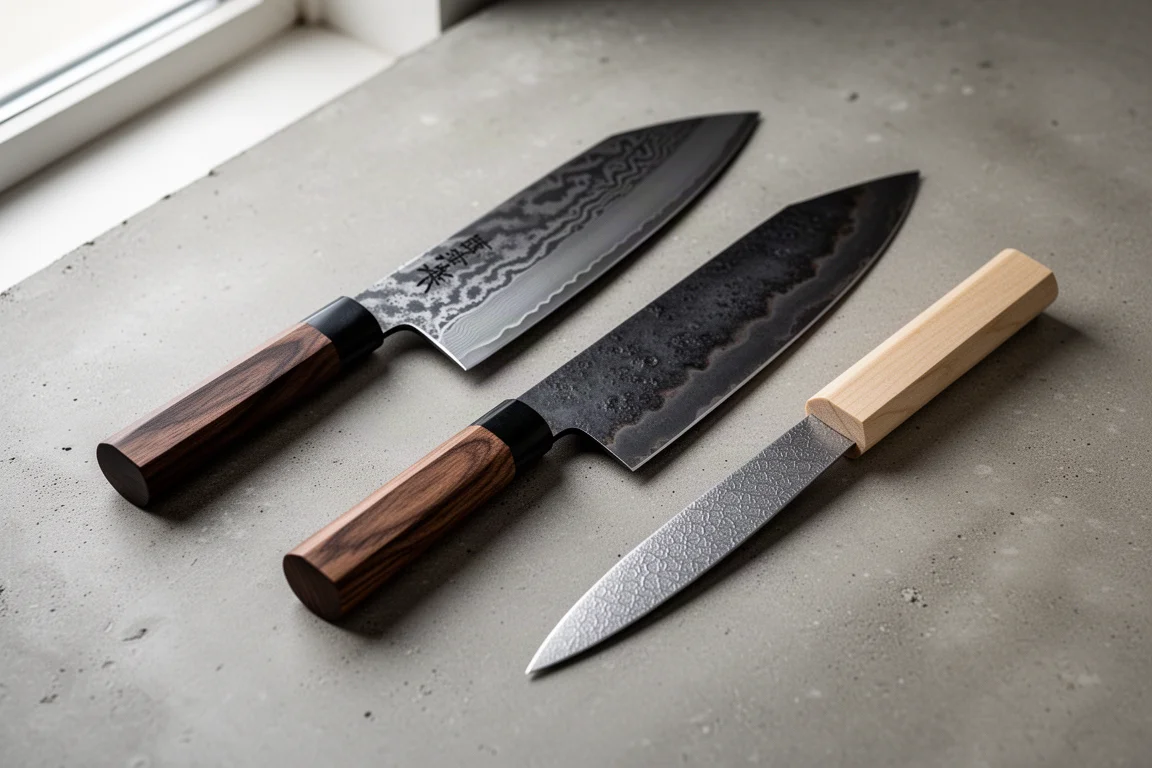
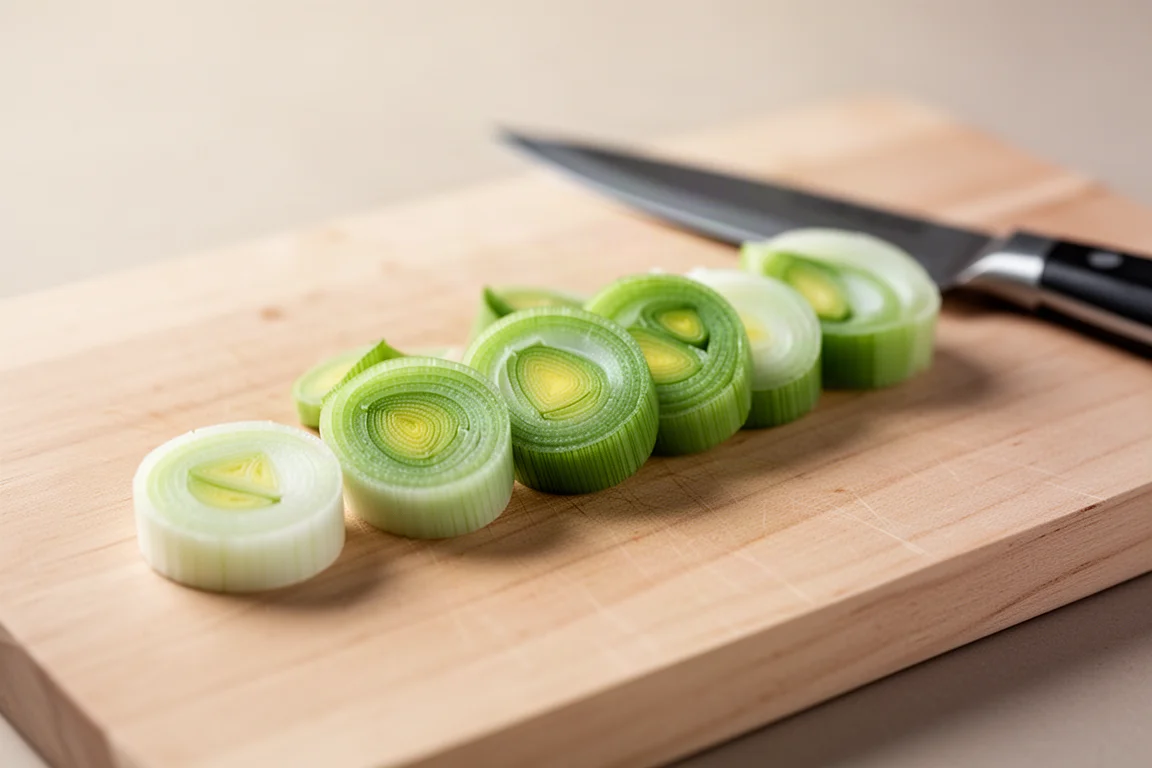
When a single smith offers three distinct knife lines, the natural question is whether they actually perform differently or just look different. Hattori San currently makes three series: an R2 Damascus line, an Aogami Super Kurouchi line, and a Nashiji Shirogami line. We put all three to work on everyday tasks, from onion dice and bell peppers to sweet potatoes, scallions, and a ginger and garlic brunoise, to see where each one earns its place.
The short version: all three lines perform at a remarkably similar, very high level, and the choice between them comes down mostly to steel preference, finish, and handle style.
R2 Damascus Series: The Bunka That Stood Out
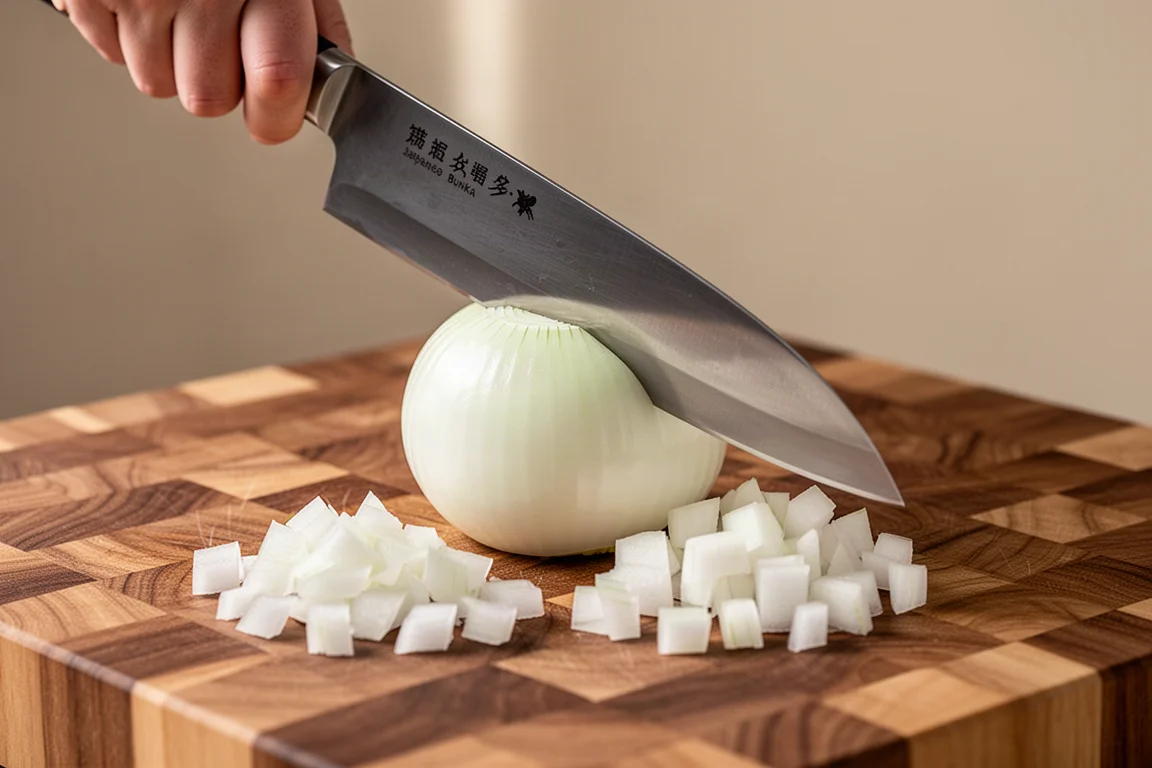
The R2 Damascus bunka was the first knife up, and it made an immediate impression. The defining trait across Hattori San’s work is blade height, and this bunka has a lot of it right near the tip. Where many bunkas taper away with a more gradual angle, this one keeps generous height where your knuckles and fingers sit during onion work, which makes aggressive dicing feel safer and more comfortable.
Out of the box, with no stropping beforehand, it flew through bell peppers skin side up without issue. Stickage was minimal: if anything clings, it releases easily rather than suctioning onto the blade. The profile has a small flat spot with a fairly swept tip, so it handles pull cuts, push cuts, and rock chopping equally well, making it a genuine all-rounder for mixed cutting styles.
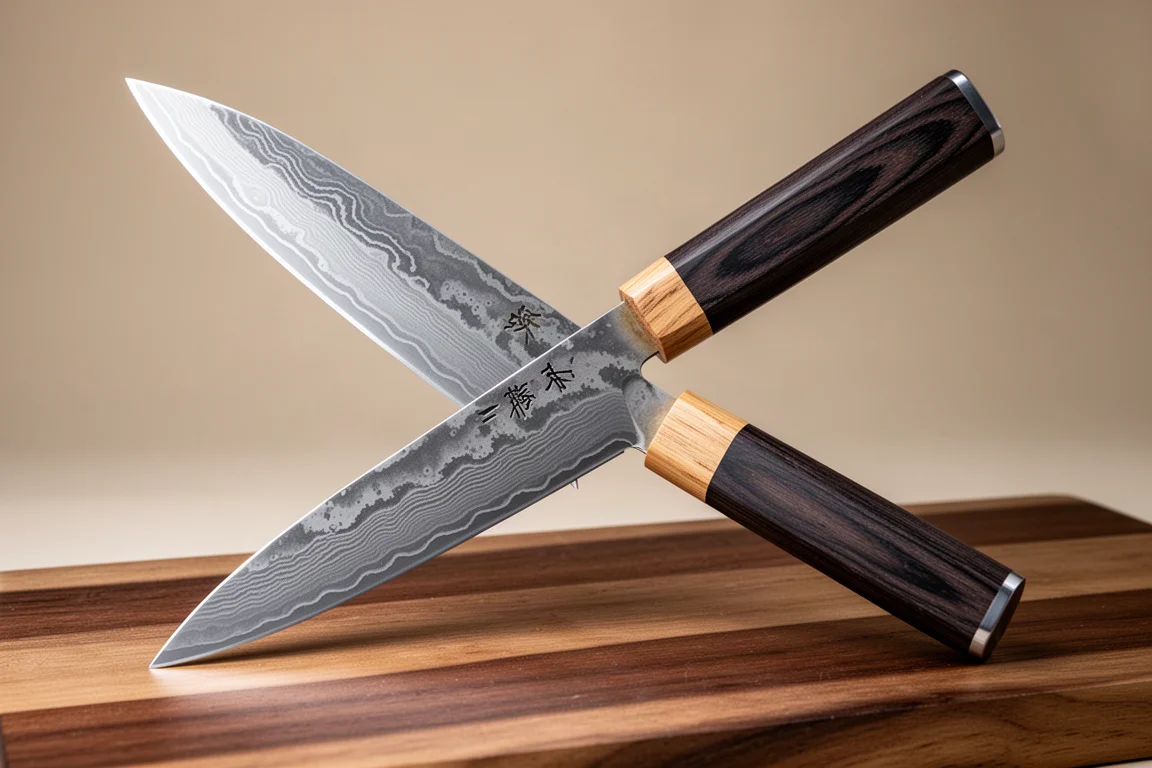
The handles deserve their own mention. They are chunkier than a typical Japanese handle, which fills the hand nicely if you have larger hands or simply prefer a more substantial grip. The wenge handle with a walnut ferrule also looks genuinely handsome on the block.
Aogami Super Kurouchi Series: Edge Retention and Geometry
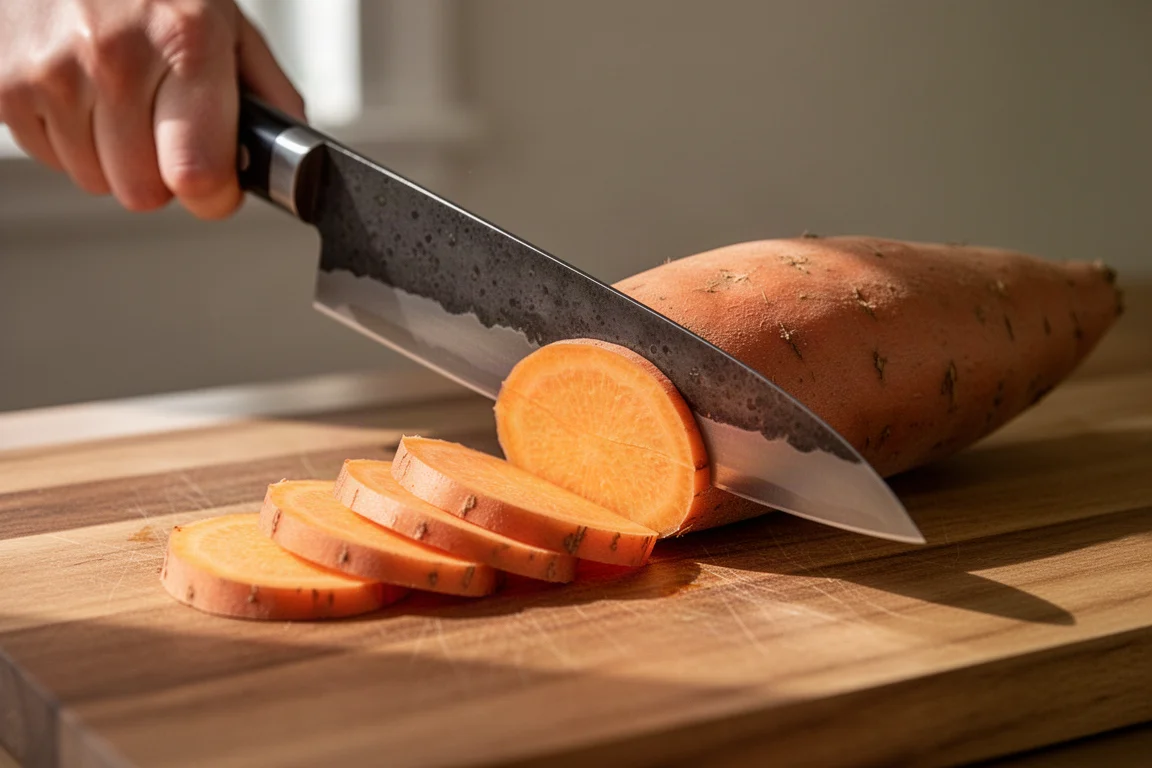
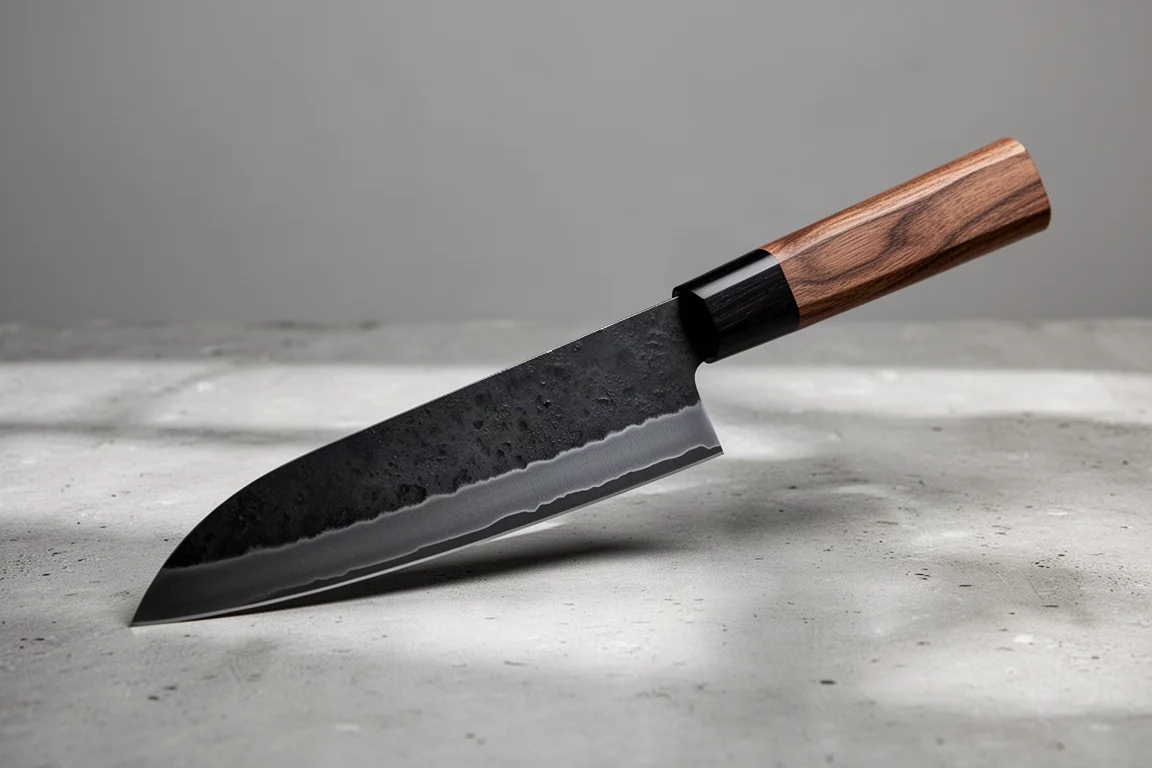
The Aogami Super Kurouchi gyuto we tested had already been used heavily and had not been sharpened or touched up, and it still powered through sweet potatoes with almost no sticking. That is a strong sign of real-world edge retention. A quick touch on a strop or stones would bring it right back to peak.
One of the biggest arguments for this smith’s work is consistency: whether you choose Aogami Super, Shirogami, or R2, the blade geometry carries across the lines. Both the Shirogami and Aogami series are stainless clad, with attractive visible clad lines and exposed core steel. There is plenty of core steel in the grind, and although the profile is not super flat, it feels flatter in use than it looks, especially with the up-and-down push-pull chopping motion.
On the 215mm gyuto (measured cutting edge; often listed elsewhere as 210mm), onion dicing was smooth and controlled, and the tip remains easy to work with even on a longer blade. Rock chopping scallions into thin bias cuts felt excellent, and bell peppers went through as well as or better than with the bunka. If you find a 210 too short and a 240 too long, this size sits right in the sweet spot. The walnut and ebony ferrule handle rounds out a knife that looks as good as it cuts.
Nashiji Shirogami Series: A Petty With Surprising Range
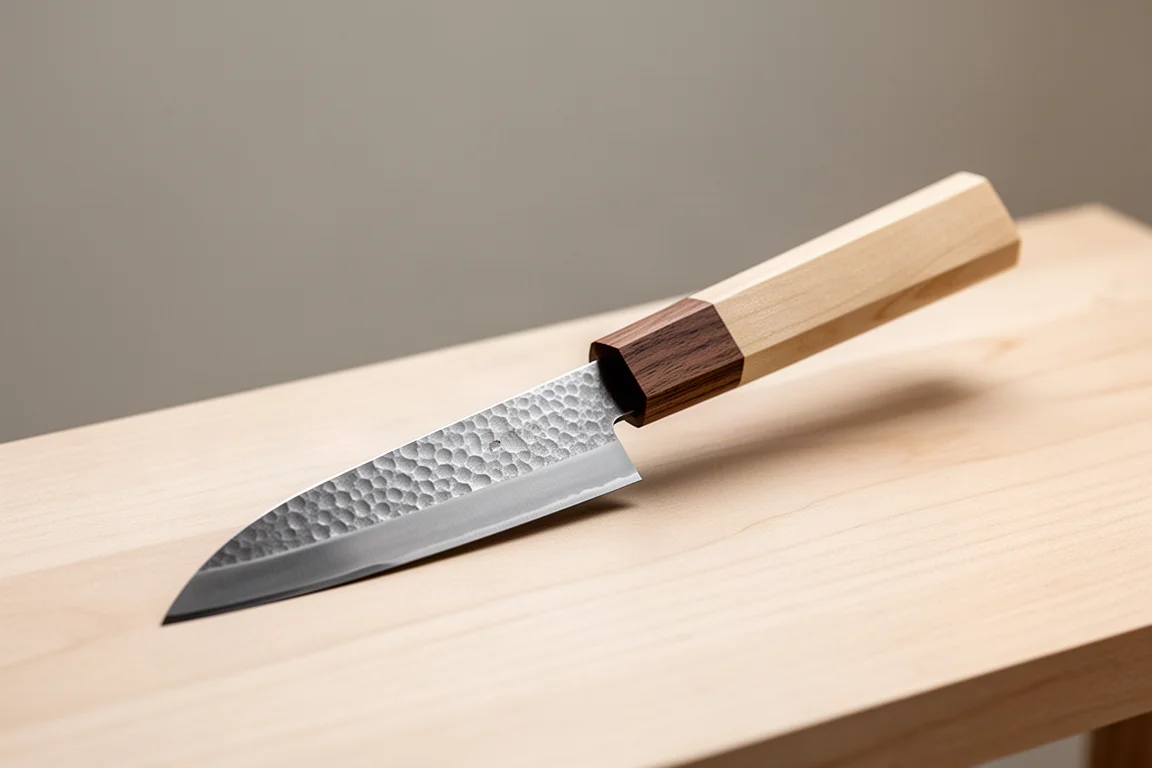
The Shirogami line with nashiji finish uses maple and walnut handles, and the petty knife in this series behaves almost like a mini bunka. It has a surprisingly tall blade, the same slightly chunky handle philosophy, and a K-tip. Stainless cladding also makes it easier to maintain than a fully iron-clad blade would be.
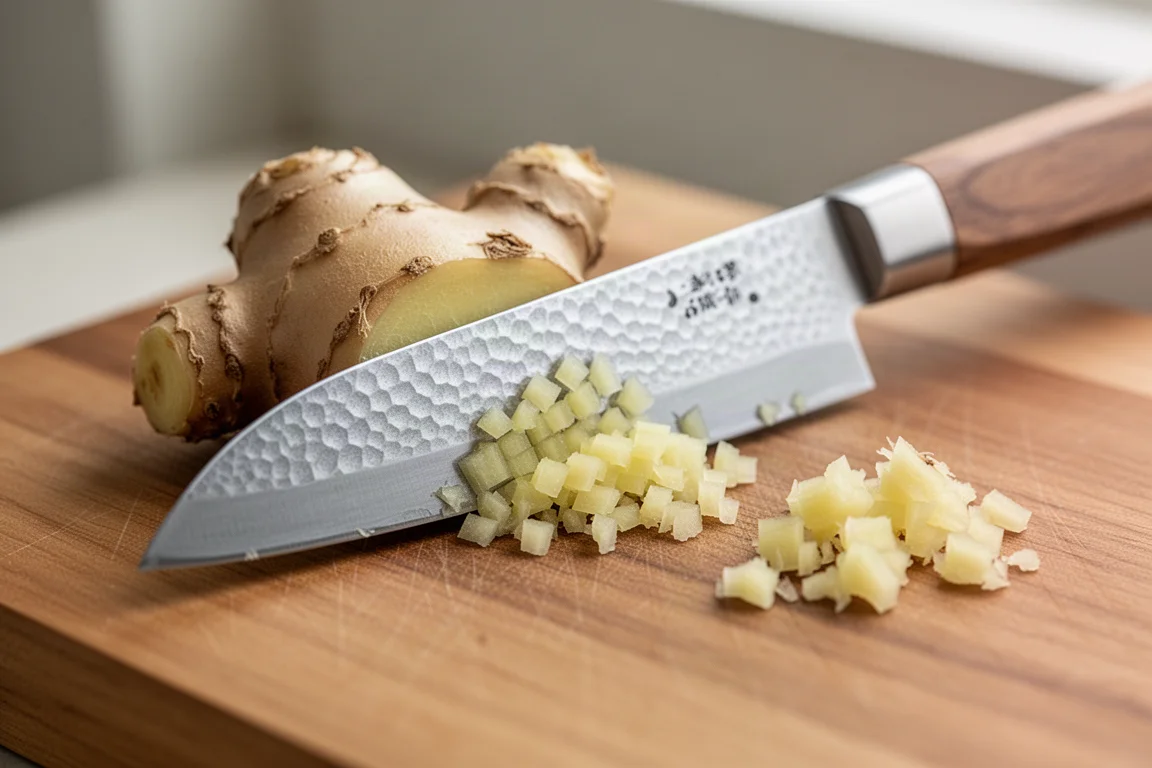
In testing, it brunoised ginger without trouble, which is impressive for what is normally a fibrous ingredient, and handled garlic skin without stalling. The blade height was enough to keep knuckles off the board during light rocking cuts, at least for average-sized hands, and it pushed cut cleanly as well. The tip is a little sweepier than ideal for fine detail work, but that curve would suit poultry butchery or silver skin removal on a tenderloin. If you want a small knife that punches above its size, this is a compelling pick.
What All Three Lines Share
Across all three series, the fundamentals are the same, and they are firmly in the laser category: thin at the spine, thin behind the edge, a gradual transition from edge to spine, and high bevels. That geometry is why hard ingredients like sweet potatoes and carrots feel so manageable. The bunka offers generous height for comfortable onion work, the gyuto balances push and rock chopping beautifully, and the petty handles more than its size suggests.
The main differences are aesthetic and material: the R2 Damascus line pairs a stainless powder steel core with a striking layered finish and a wenge and walnut handle, the Aogami Super Kurouchi brings excellent edge retention with a black forged finish and walnut and ebony handle, and the Nashiji Shirogami offers a lighter, rustic look with maple and walnut and easier maintenance thanks to stainless cladding.
Buying Advice
If you want one knife that does nearly everything and looks striking on the magnetic rack, the R2 Damascus bunka is the standout. If edge retention and a larger gyuto are your priority, the Aogami Super Kurouchi in 215mm is the workhorse pick. If you want a nimble small knife with character and easier care, the Nashiji Shirogami petty earns its spot.
Conclusion
Hattori San is still in the early years of working under his own name, and all three lines already deliver the kind of geometry, fit, and finish that experienced cooks notice immediately. Whichever series you choose, you are getting the same tall, thin, laser-style grind, chunky comfortable handles, and very sharp edges straight out of the box. That consistency is rare from a young smith, and it makes any of these knives an easy recommendation.
Further reading
Related Reviews

Kitchen Knives
Best Chef's Knives 2026: 27 Popular Options Tested and Ranked
A comprehensive review of 27 chef's knives ranging from $18 to $380, with honest assessments of handle comfort, blade balance, and real-world performance.

Kitchen Knives
Best Chef's Knives Under $75: Two Tested Recommendations
Two practical 8-inch chef's knives that balance sharpness, comfort, and durability without premium pricing.

Kitchen Knives
Best Chef's Knives 2026: 27 Options Tested and Ranked
A comprehensive review of 27 chef's knives ranging from $18 to $380, with honest assessments of handle design, balance, blade profile, and real-world performance.