Kitchen Knives
Hatsukoro Kuruchi 210mm Gyuto Review: A Flat, Workhorse-Ready First Japanese Knife
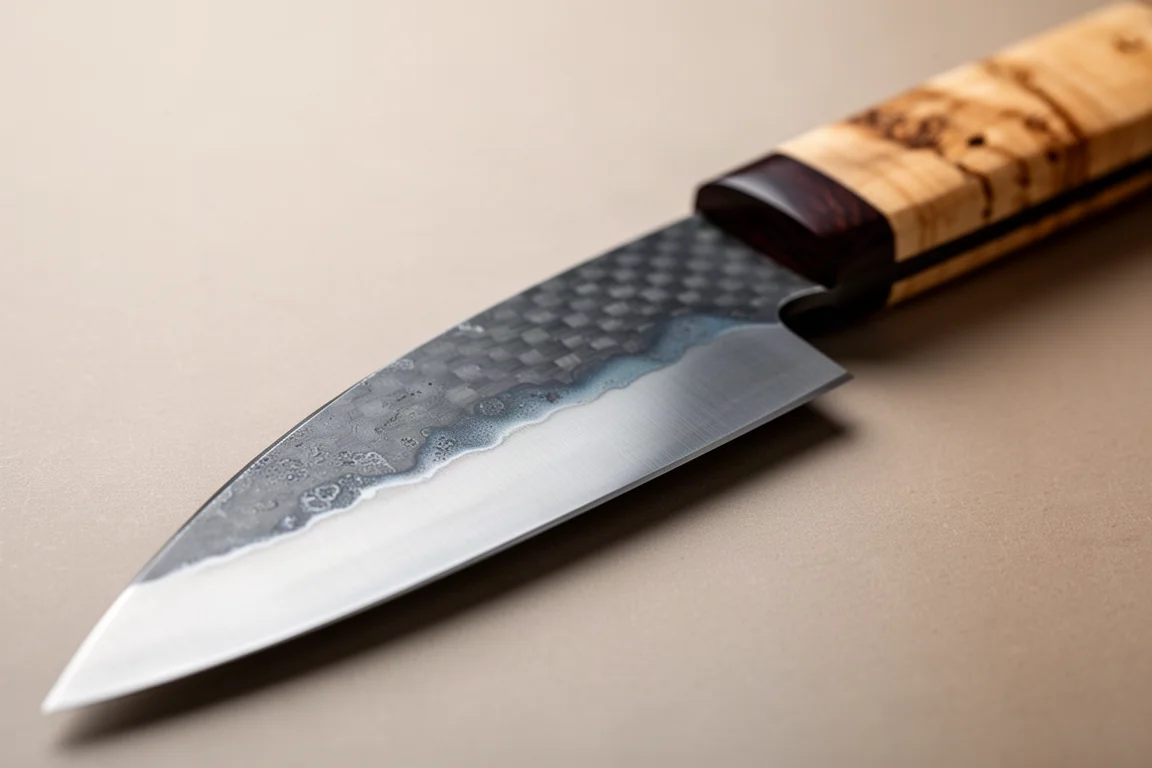
Aogami #2 core with kuruchi finish, a thick stabilized birch handle, and a very flat profile make this 210mm gyuto a strong entry-level pick with a few trade-offs to know first.
Introduction
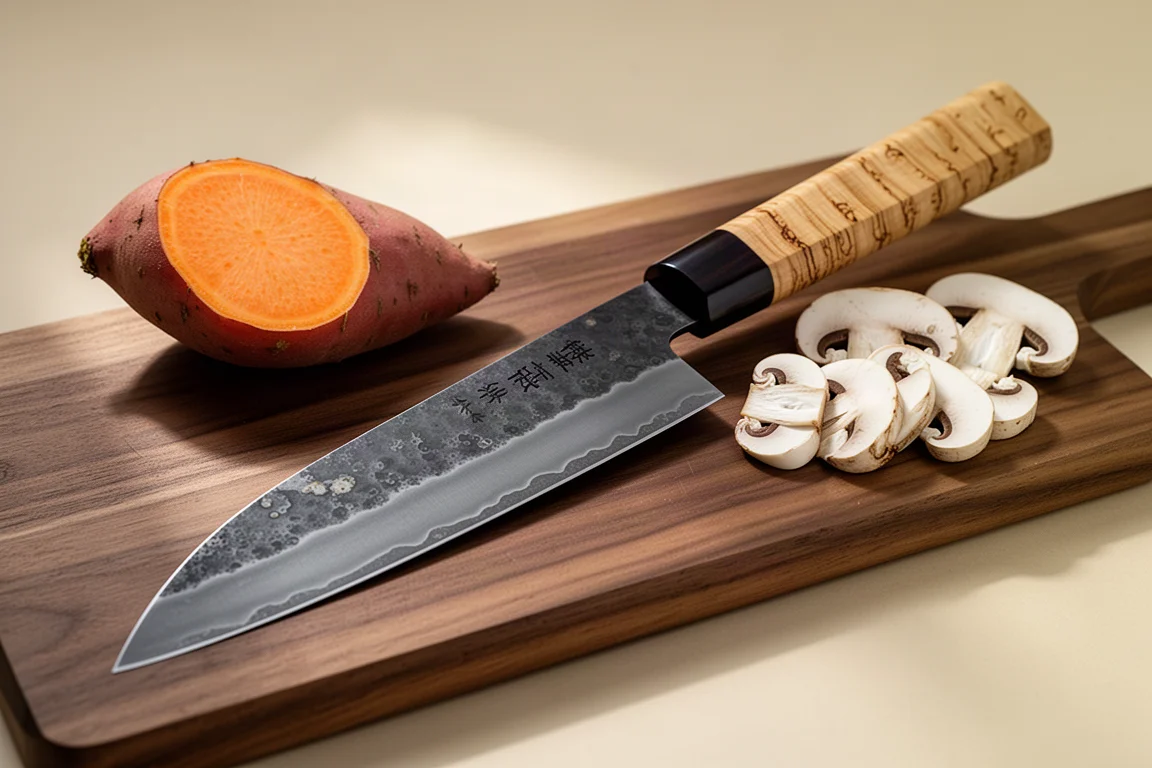
The Hatsukoro Kuruchi 210mm gyuto has quickly become one of the more interesting entry-level Japanese knives to land in recent memory. It is built around an Aogami #2 (Blue Paper #2) core with iron cladding and a kuruchi finish, paired with a thick stabilized birch handle over a G10 liner. It performs well above what its approachable price suggests, and it earns a place as a genuinely strong first Japanese knife, provided you understand what a carbon steel blade asks of you.
First Impressions and Handle Comfort
The first thing most people notice is the handle. These handles are thick and chunky, and the stabilized birch with a G10 liner feels substantial in the hand. If you have larger hands or you have always wished your knife filled your grip a little more, this one is right up your alley. Even with average-sized hands, the extra girth lets your hand stay more open, so you do not feel like you have to squeeze the knife as hard.
The spine and choil are not the most nicely sanded and rounded of any knife we have handled, but the knife still feels comfortable during extended prep. The balance point sits almost exactly where you would want it, which is impressive given how often chunky handles pull the balance back into the grip. Here it does not.
Blade Profile and Cutting Style
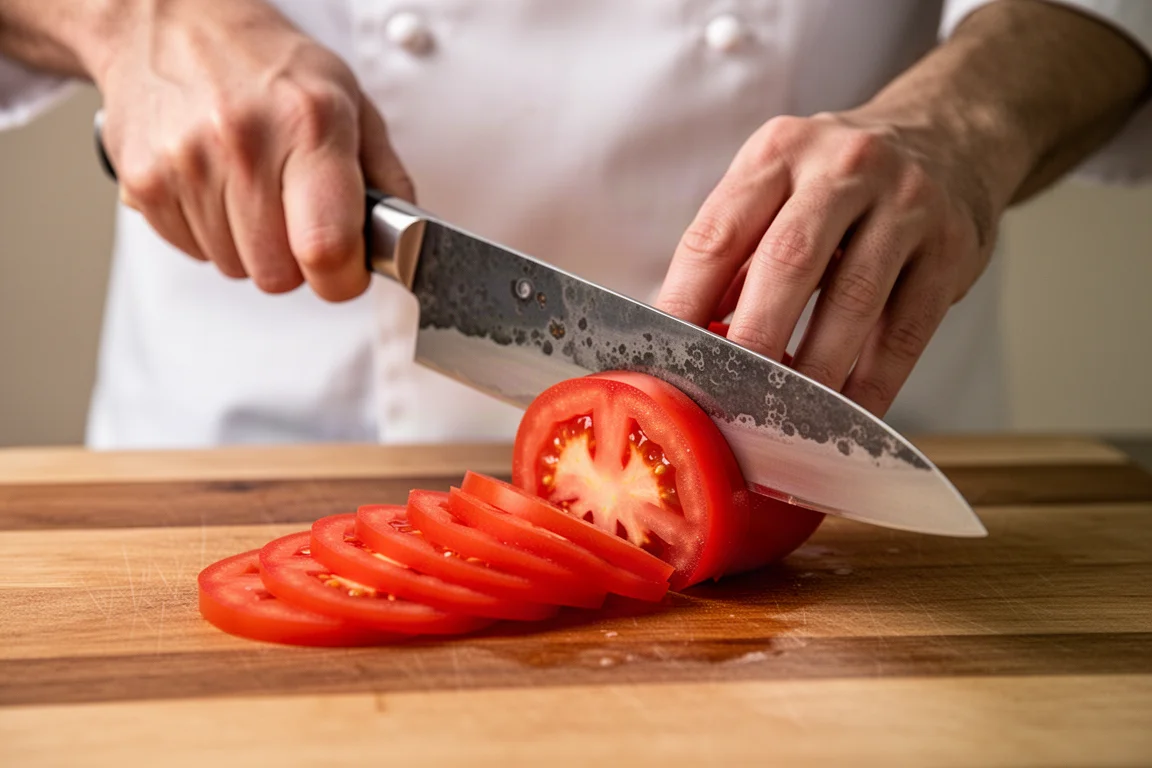
This is a notably flat knife. The profile runs nearly straight with a little curvature toward the tip, which makes it excellent for push-cutting and pull-cutting. You can use an up-and-down chop at almost any point on the blade without producing those little stuck-together bits of food.
If you do a lot of rock chopping, though, be aware that the flatness works against you. The heel sits down into the cutting board more than you might want, and the knife almost feels too flat for that motion. It is still absolutely usable for rocking, and if you have sharpening skills, you could round the belly off slightly. But most people who own a Japanese knife for a while gravitate toward push-cutting anyway, and for that style this profile is excellent.
Sweet Potato and the Wedge Test
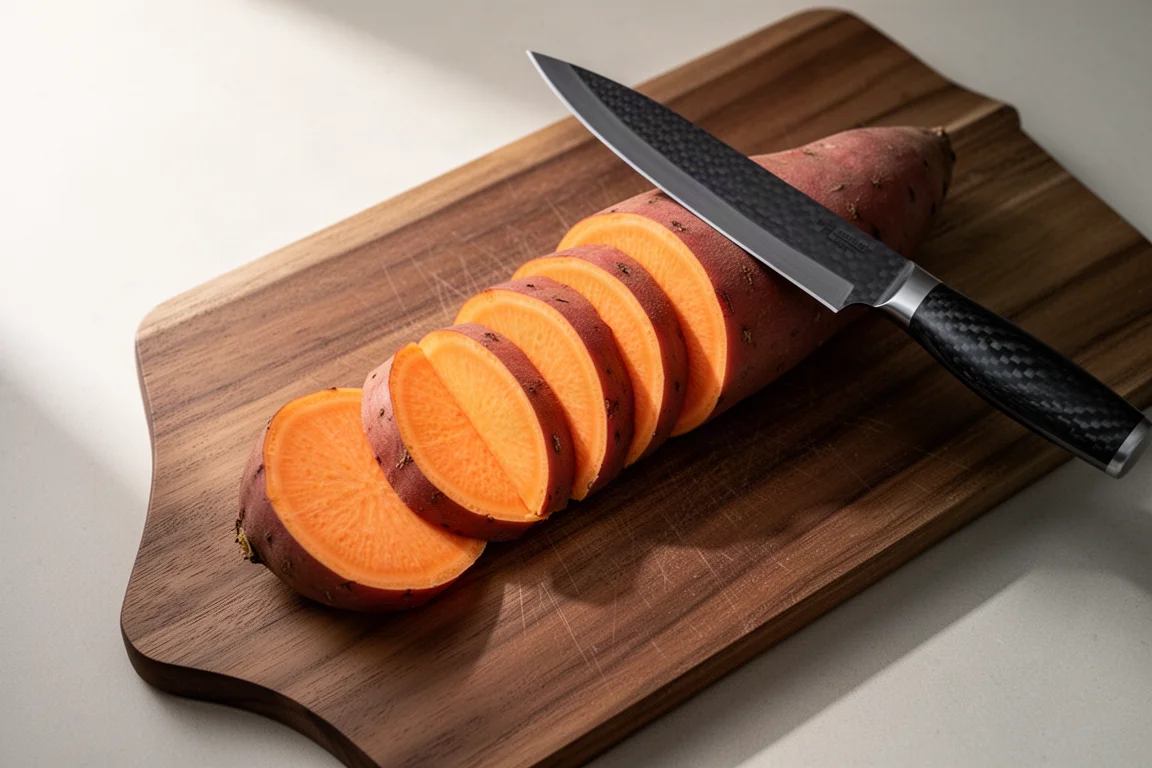
Knives from the Tosa region, which this one strongly resembles even though the exact origin is not confirmed, can sometimes run wedgy and sticky in dense vegetables. This one does neither. Cutting through a thick sweet potato required real effort from lesser knives, but this gyuto flew through with no wedging and no stuck-together bits, even on a long full-depth cut.
Thin slices confirmed the same story. Rather than being sticky, the knife released slices cleanly, which is the kind of performance you would normally expect from a knife well above this price. The blade geometry sits in a smart middle ground: not the thinnest behind the edge, but by no means thick.
Onion Test: The Ultimate Challenge
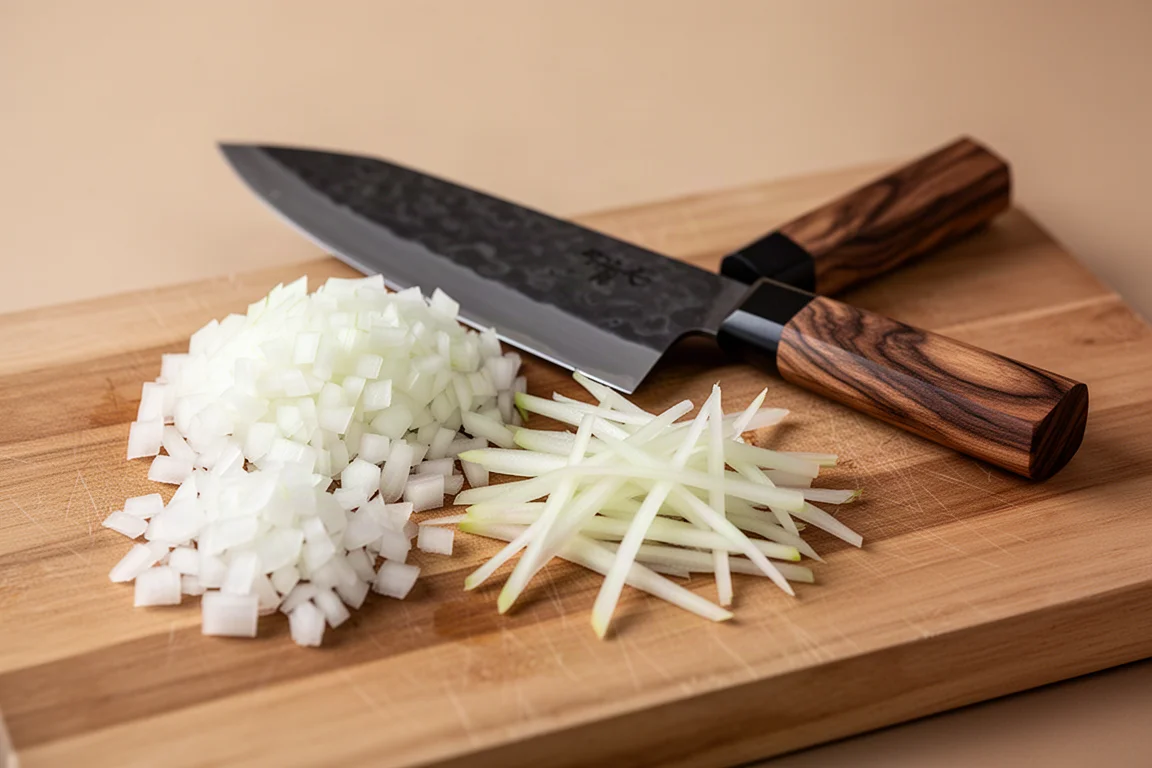
Onions are, in our view, the ultimate test for a kitchen knife, and this one lived up to the hype. The out-of-box edge, which had only been stropped lightly before testing with no sharpening on stones, sailed through onion dicing and finished with a julienne cut that was clean and consistent.
Tomatoes, mushrooms, and celery all reinforced the same impression. The out-of-box edge felt fantastic right away, and the overall cutting performance consistently exceeded expectations. For around $200, the performance here is very hard to beat.
Maintenance and Rust Care
This is carbon steel, so maintenance matters. Wipe the blade down and keep it dry and clean after use, because it will rust if left wet. The good news is that the patina forms nicely and the steel has not proven overly reactive in use. If you accept a little routine care, the reward is an edge that behaves like this.
Buying Advice
If you want a flat, workhorse-style gyuto that excels at push-cutting and does not break the bank, this is an easy recommendation. The chunky handle suits bigger hands but remains comfortable for average hands too. If rock chopping is your primary technique, either plan to adjust your cutting style or be prepared to modify the profile slightly. As a first Japanese knife, this one makes a lot of sense.
Conclusion
The Hatsukoro Kuruchi 210mm gyuto combines Aogami #2 performance, a comfortable chunky stabilized birch handle, excellent geometry, and an approachable price into one of the better entry-level packages available. It rewards the push-cutting style most Japanese knife owners eventually adopt, and with basic carbon steel care, it will keep earning its spot on the board.
Product link
View more details for Hatsukoro Kuruchi 210mm Gyuto
This product is mentioned in the review. Check the specifications, options, and compatibility before buying.
View more details for Hatsukoro Kuruchi 210mm GyutoFurther reading
Related Reviews

Kitchen Knives
Best Chef's Knives 2026: 27 Popular Options Tested and Ranked
A comprehensive review of 27 chef's knives ranging from $18 to $380, with honest assessments of handle comfort, blade balance, and real-world performance.

Kitchen Knives
Best Chef's Knives Under $75: Two Tested Recommendations
Two practical 8-inch chef's knives that balance sharpness, comfort, and durability without premium pricing.

Kitchen Knives
Best Chef's Knives 2026: 27 Options Tested and Ranked
A comprehensive review of 27 chef's knives ranging from $18 to $380, with honest assessments of handle design, balance, blade profile, and real-world performance.