Kitchen Knives
Hatsukokoro Santan Cleavers: 170mm vs 190mm Blue Steel Review
Two blue carbon steel Santan cleavers with iron cladding, tested on peppers, sweet potatoes, and fine knife work. Here is which size suits your cutting style.
Introduction
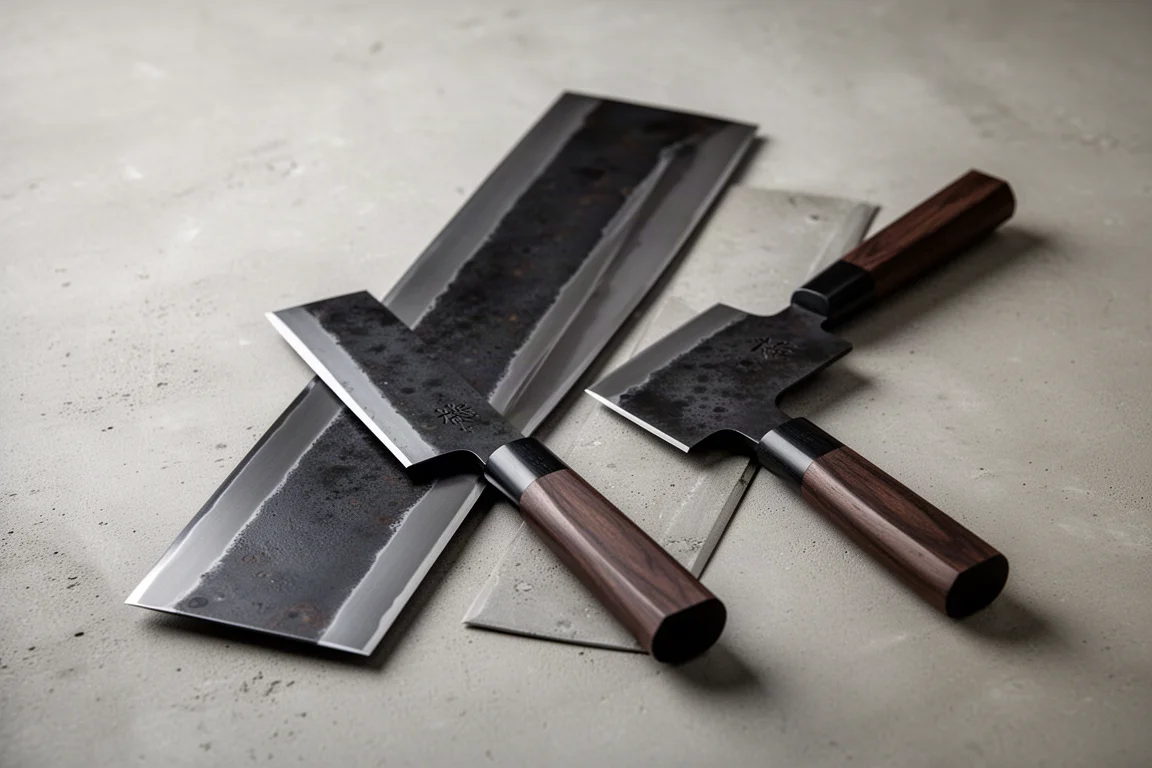
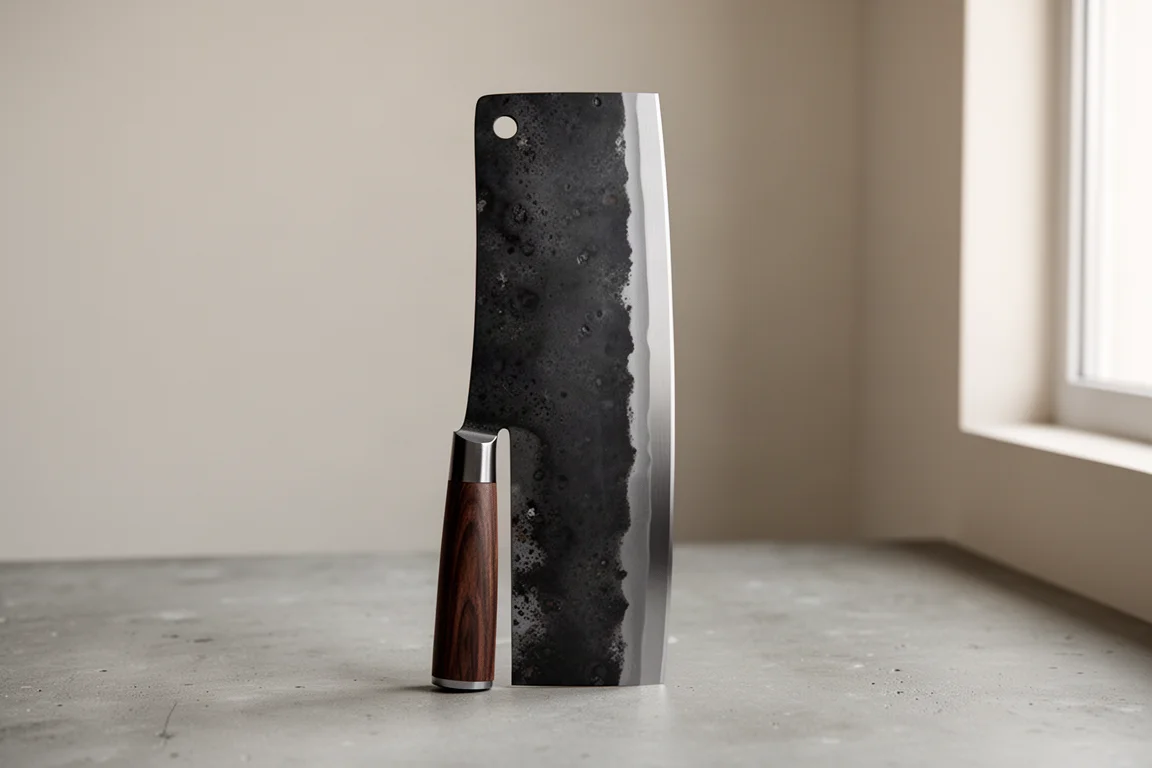
The Hatsukokoro Santan series cleavers are made from blue carbon steel with iron cladding, and they arrived with a more uniform kurouchi finish than the white steel versions of the same series, which carry a more rustic nashiji and kurouchi look. Two sizes are available: a 170mm version and a 190mm version. Both were put through their paces on bell peppers, sweet potatoes, and fine knife work to see what each blade does best.
First Impressions: Design and Finish
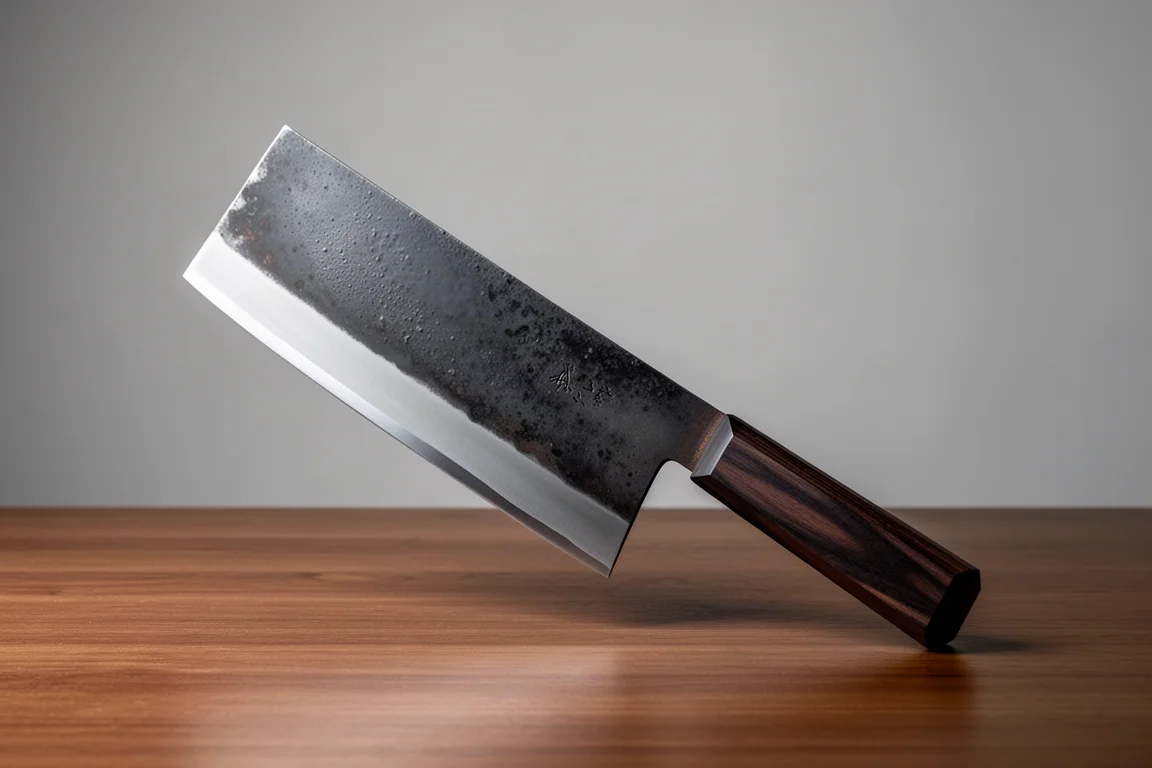
If you are familiar with cleaver shapes, you know there are heavy-duty cleaving cleavers and then there are thinner Chinese-style vegetable slicing cleavers. These sit somewhere in between. The spines are actually quite thick, but the blades taper down nicely behind the edge, which gives each knife a robust, sturdy feel without turning it into a brick.
The tall blade is another highlight. There is plenty of travel for your fingers, and the blade is not overly sticky when food clings to it. One small quirk: the handle creates a slight gap if you use the spine to scrape food across the board, though it still works well as a scrape-and-scoop tool.
Edge Geometry and Cutting Feel
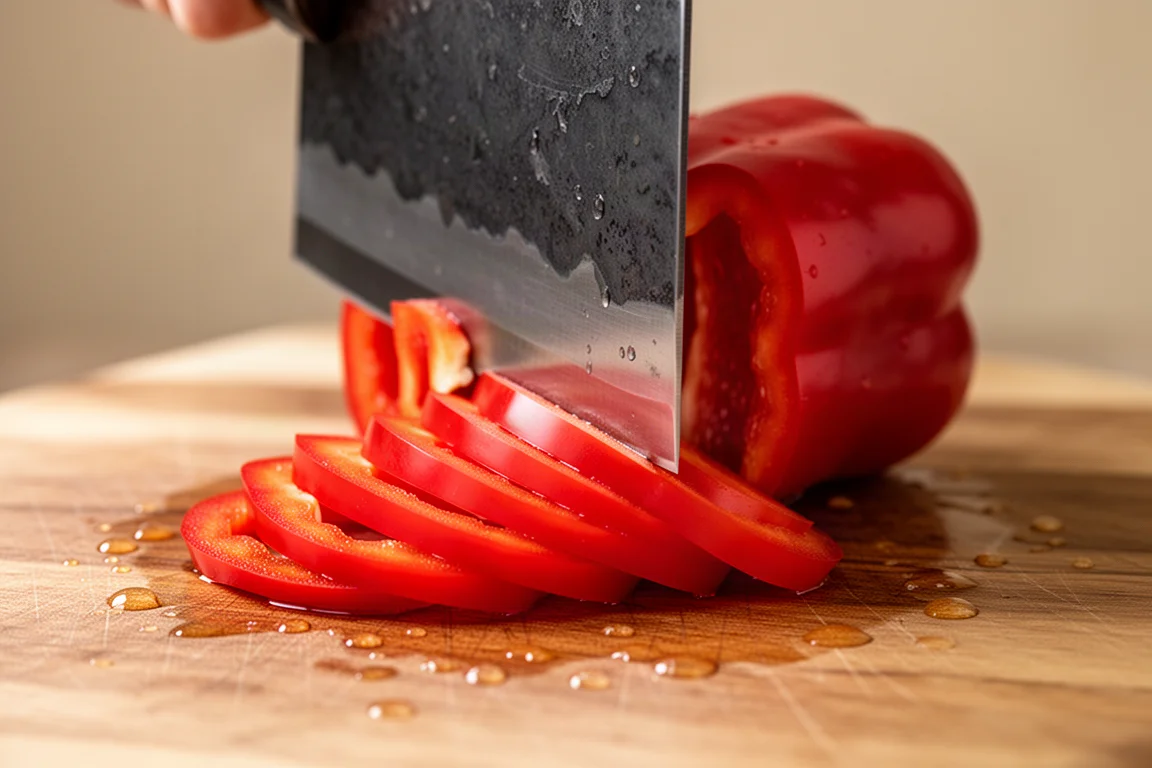
The bell pepper test is a good way to judge out-of-box edge quality, and both cleavers passed with no issues whatsoever through the delicate skin. On the sweet potato, the 190mm generally shows slightly better edge geometry, as longer, taller blades tend to do. That said, the 170mm is no slouch, and the difference comes down to technique as much as the blade.
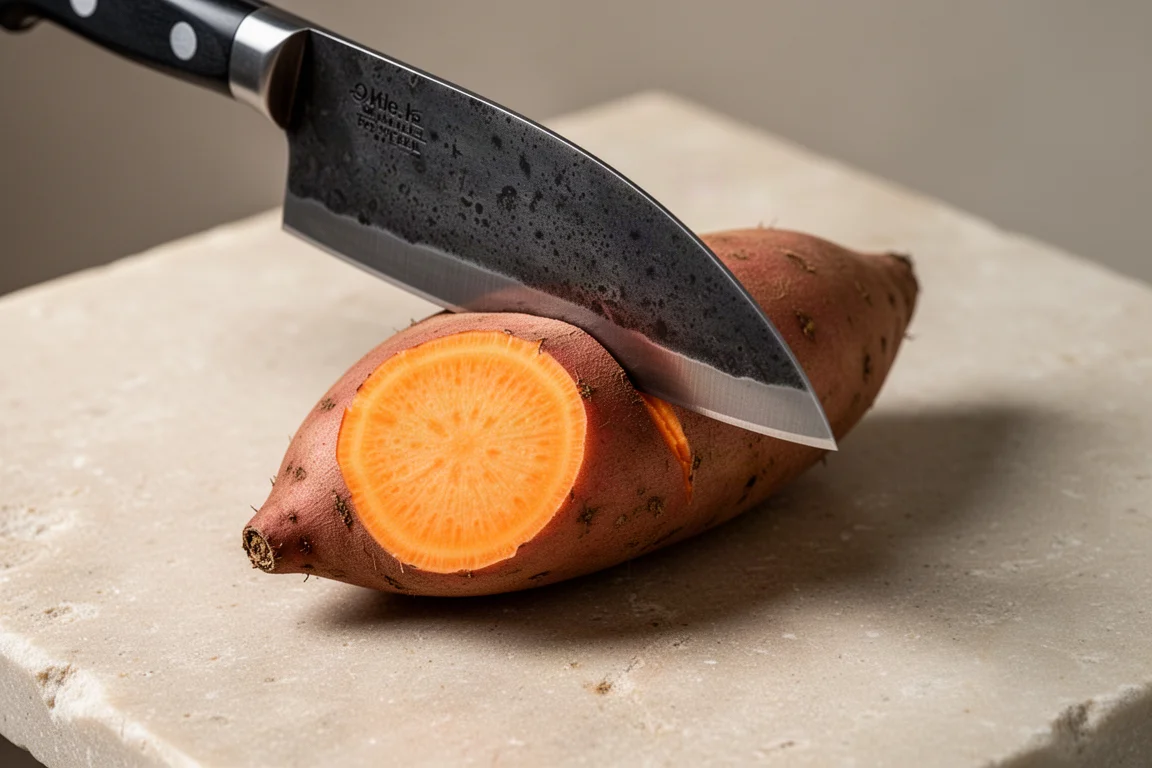
Rock chopping deserves a mention. Getting the blade stack much higher feels a little uncomfortable, and pushing motions are more natural at that height. These are not the greatest rock-chopping cleavers, but rocking is not really what they are designed for anyway. What they do brilliantly is roll through ingredients quickly, scoop everything up, and spread it across the board.
The Steel: Blue Carbon with Iron Cladding
Blue steel, specifically Aogami Super, is a favorite steel type for a reason: it strikes a great balance between edge retention, durability, and rust resistance, while remaining very easy to sharpen. Aogami number two is very close behind. Anyone who generally prefers carbon steel over stainless will find these cleavers squarely in their comfort zone.
Fine Knife Work: Ginger and Scallions
The real-world test was a ginger scallion condiment: very finely minced ginger and garlic cooked down with scallions, finished with sesame oil in a neutral oil like peanut. It is fantastic on roasted chicken and fish, and it also pairs beautifully with thick noodles and pork belly.
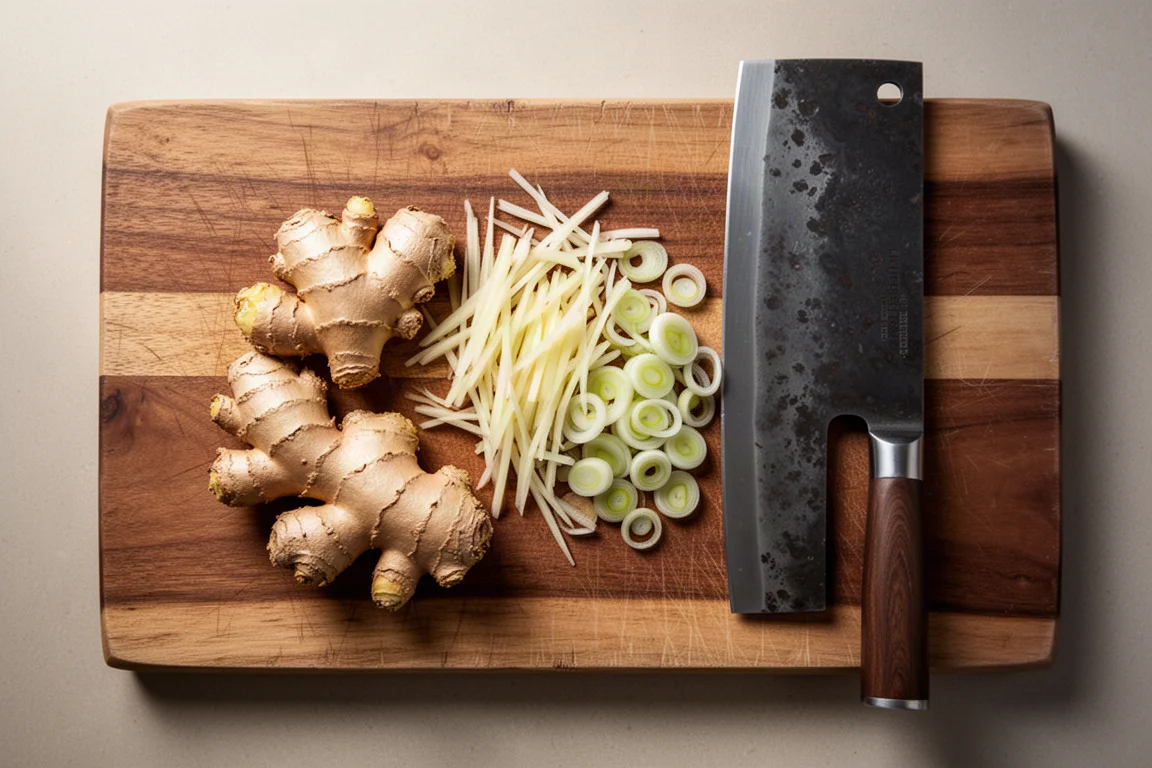
Julienning ginger on the 190mm produced nice, fine, even work, and scallion dice rolled through easily on both sizes. The 170mm revealed a little more belly than the 190mm, which is quite flat. For anyone who wants to mix rocking motion with up-and-down chopping, the 170mm is the easier blade to live with.
Which Size Should You Buy?
The choice comes down to cutting style. The 170mm has more belly and handles rocking motion better, which also makes it slightly friendlier for anyone still building confidence with cleavers. The 190mm is flatter and better suited to a push-and-pull chopping motion, with a touch more edge geometry thanks to its taller blade.
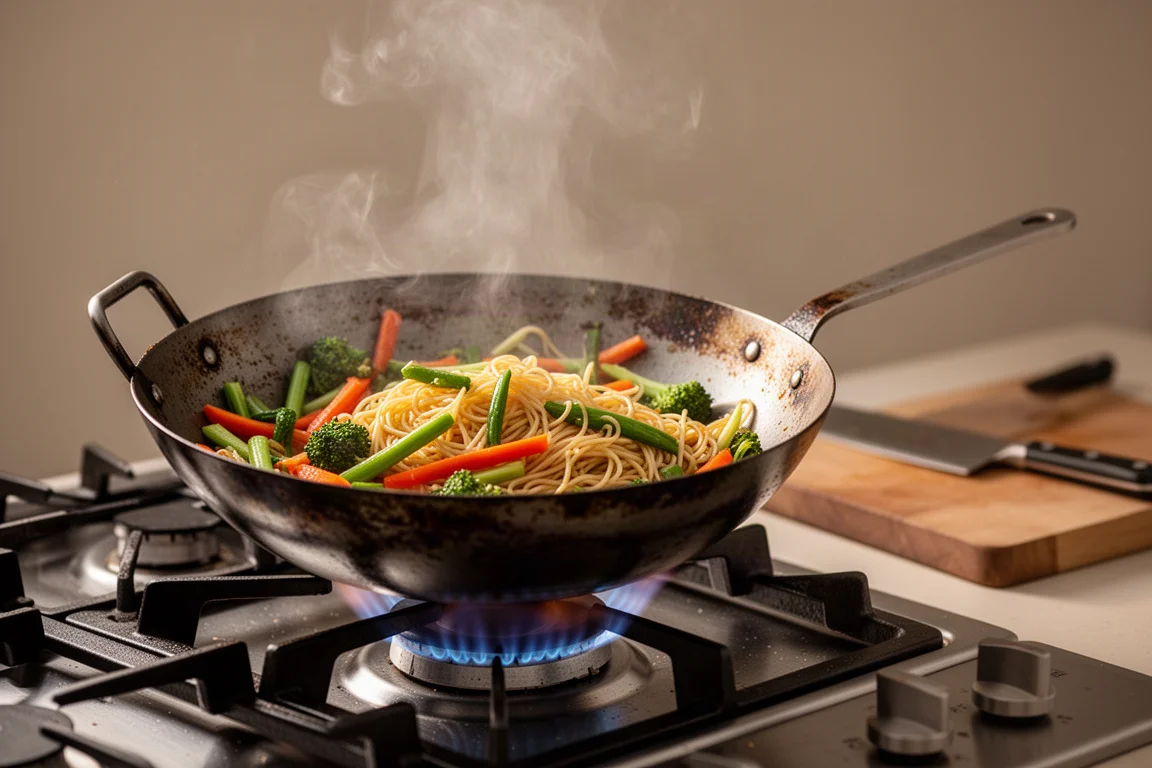
Both blades earned their keep during weeks of home stir-fries, and neither struggled with any task they were given. For a first serious cleaver, either size is a rewarding pick as long as you match it to how you actually cut.
Conclusion
The Hatsukokoro Santan cleavers combine a sturdy spine, a nicely tapered edge, and a well-loved blue carbon steel into a shape that handles vegetables, fine knife work, and everyday kitchen duty with ease. Pick the 170mm if you want a touch of belly and easier rocking, or the 190mm if you prefer a flatter blade for push cutting and slightly better edge geometry. Either way, these are easy cleavers to enjoy using every day.
Further reading
Related Reviews

Kitchen Knives
Best Chef's Knives 2026: 27 Popular Options Tested and Ranked
A comprehensive review of 27 chef's knives ranging from $18 to $380, with honest assessments of handle comfort, blade balance, and real-world performance.

Kitchen Knives
Best Chef's Knives Under $75: Two Tested Recommendations
Two practical 8-inch chef's knives that balance sharpness, comfort, and durability without premium pricing.

Kitchen Knives
Best Chef's Knives 2026: 27 Options Tested and Ranked
A comprehensive review of 27 chef's knives ranging from $18 to $380, with honest assessments of handle design, balance, blade profile, and real-world performance.