Kitchen Knives
Hatsukokoro Kumokage and Ginnyo: Two Japanese Knife Lines Worth a Look
A look at two striking Hatsukokoro knife series: the Aogami #2 Kumokage workhorses and the stainless Ginnyo line in Ginsan steel.
Introduction
Hatsukokoro has been showing up everywhere in knife discussions lately, and it is easy to see why: the brand works with talented blacksmiths and turns out genuinely beautiful knives at accessible prices. Two of its current lines make a particularly interesting comparison, because they sit on opposite sides of the steel debate.
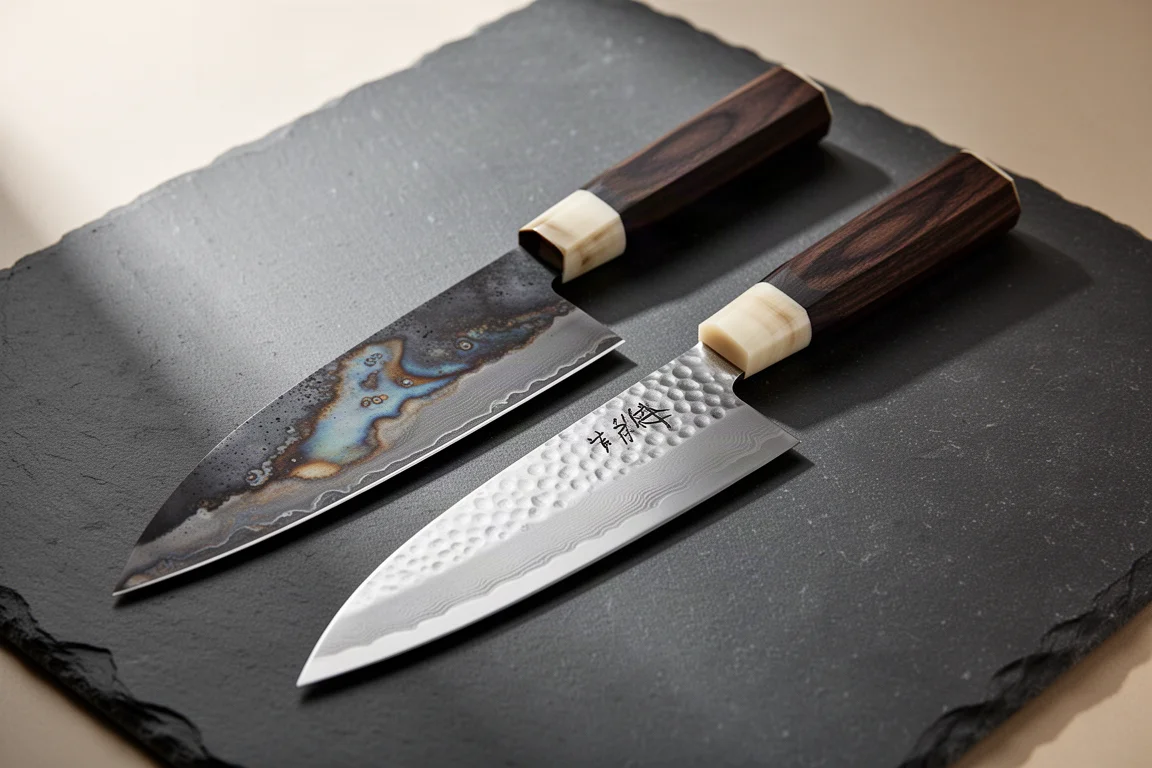
The Kumokage series is forged in Aogami #2 (Blue Paper #2) with iron cladding, meaning it is a carbon steel knife that will develop a patina and needs to be kept dry. The Ginnyo series uses Ginsan, also known as Silver #3, a stainless steel often described as the closest to carbon steel in feel, meaning it is very easy to sharpen while still resisting rust. Both come in around 61-62 on the Rockwell scale, with the Kumokage reaching 61-63.
Hatsukokoro Kumokage: Aogami #2 Workhorses
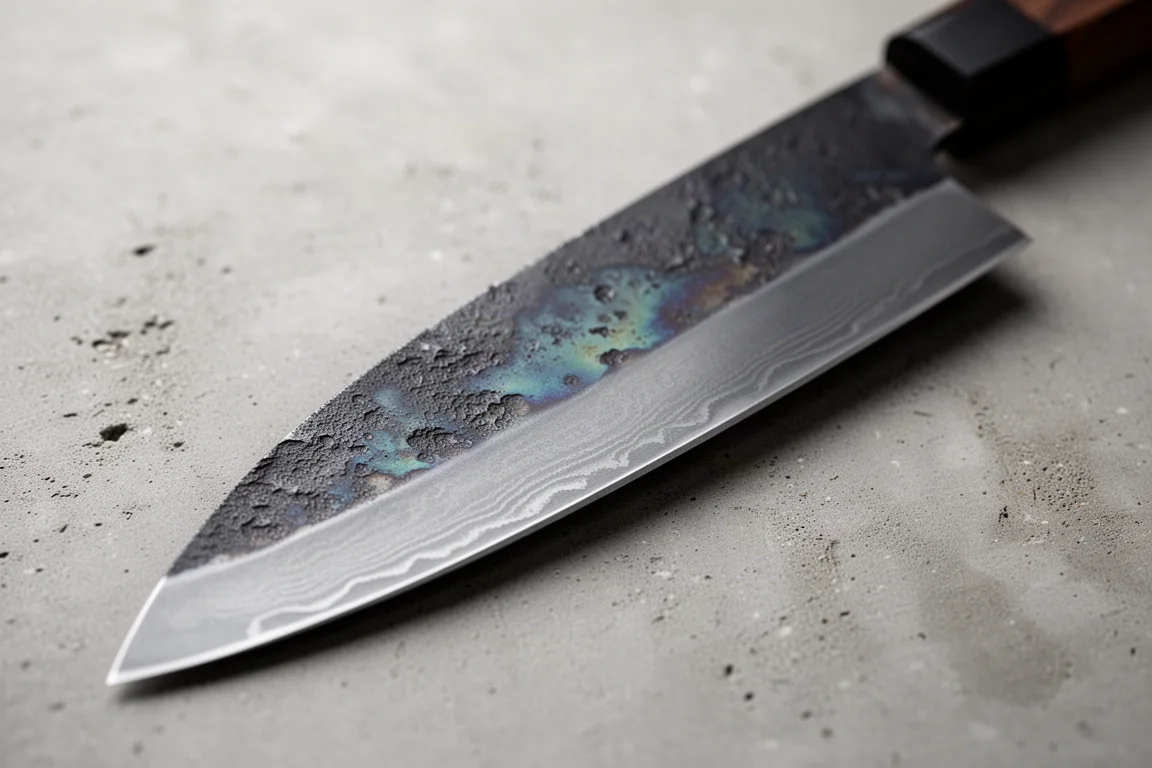
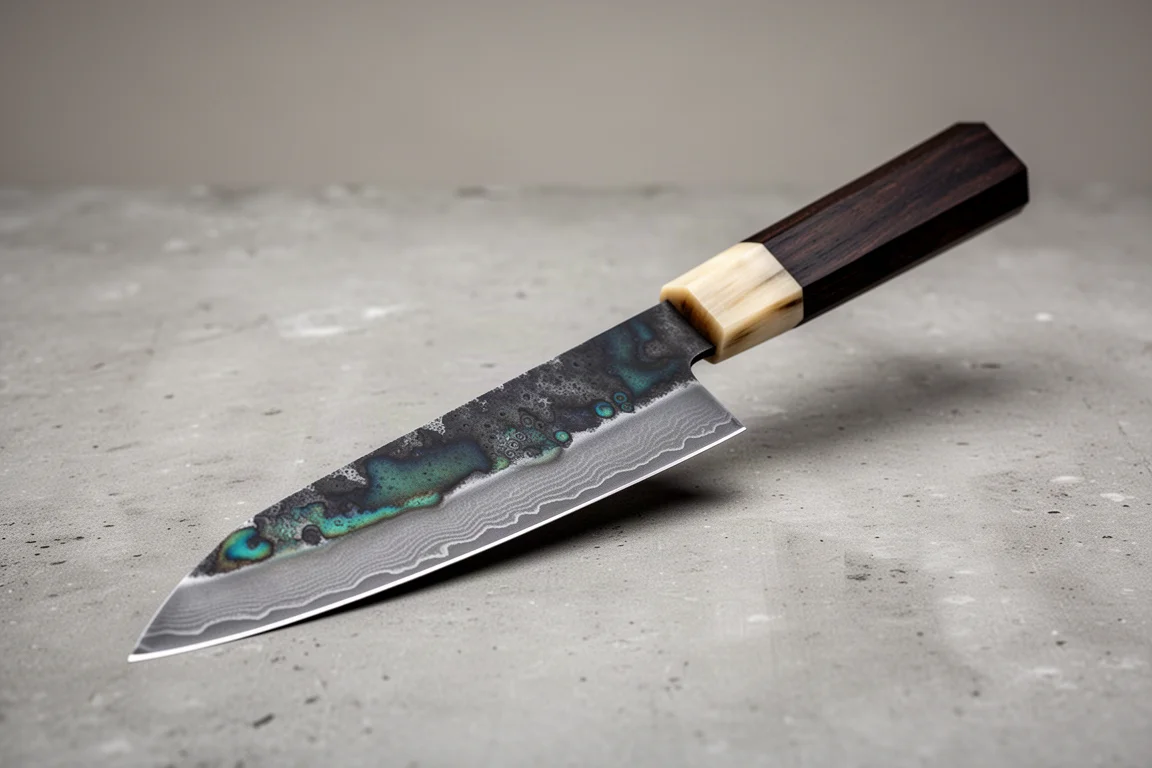
The Kumokage knives are forged by Kajiwara-san, who works out of the Tosa region. They feature a striking oil-slick kurouchi finish with blue and greenish hues, plus a damascus pattern on the bevel, and they arrive with a forced patina already applied. That patina is a real practical benefit: it saves you the first cautious weeks of rust-watching that a fresh carbon blade usually demands, and it makes for a great-looking knife out of the box.
Compared with some of the same blacksmith’s earlier knives, these run slightly thicker at the spine and feel more like workhorses. They are a bit heavier and noticeably more robust, so you do not have to worry about chipping nearly as much, while still cutting with a really nice feel. Fit and finish impressed us across the board: the handle-to-tang insertion is about as clean as we have seen, and every knife we checked was dead straight. Given the mid-to-lower pricing tier, they stack up with much more expensive knives in both fit, finish, and performance.
Shape and Handle Options
The Kumokage lineup covers a lot of ground. There is a 150mm petty, a 180mm santoku with a little extra blade height, a 180mm bunka with the much-loved reverse tanto (k-tip), and 210mm and 240mm gyuto options. All of them share the same gorgeous handles: octagonal wenge with buffalo horn ferrules, ambidextrous and suitable for both right- and left-handed users.
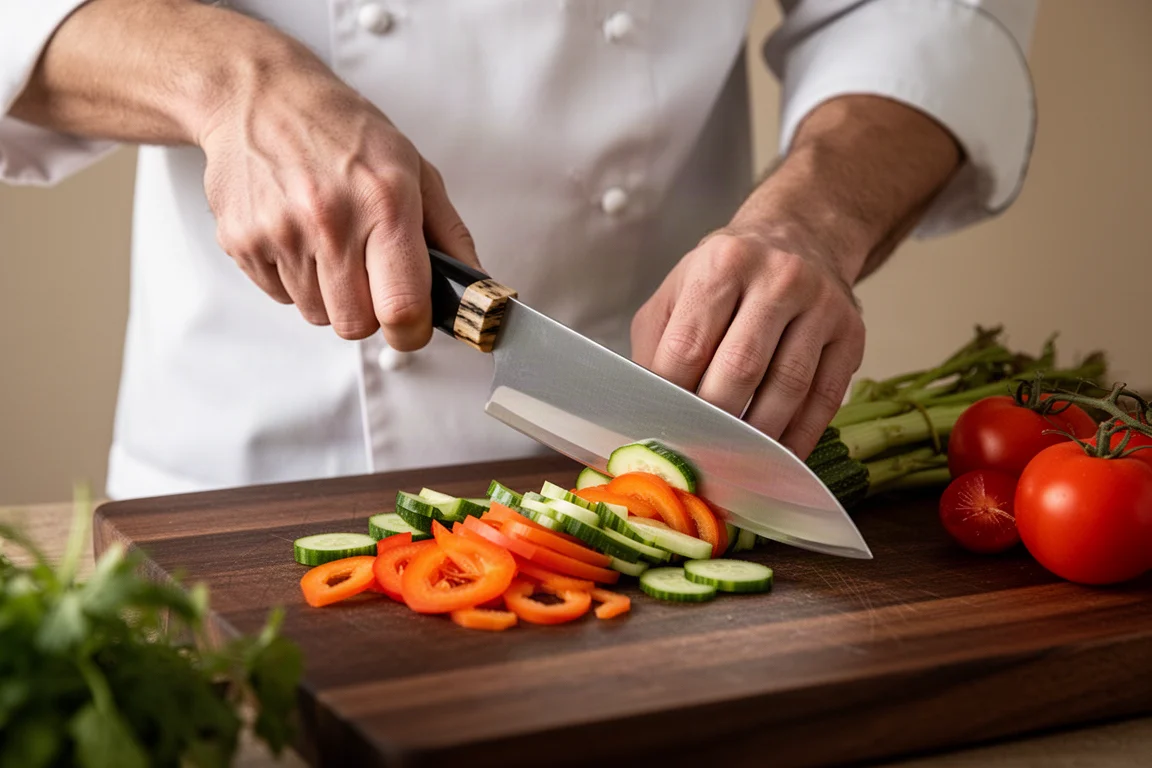
If you want a classic all-rounder, the santoku is the safe pick; if you like a tip that lets you work in corners and do finer detail cuts, the bunka’s k-tip is hard to beat.
Hatsukokoro Ginnyo: Stainless Performance in Ginsan
The Ginnyo series is forged by Yoshihiro Yamaji, a younger smith who has been getting a lot of well-earned attention. These are all double-beveled knives in Ginsan stainless steel, which sharpens very easily, resists rust well, and holds a decent edge. They run around 61-62 on the Rockwell scale.
One of the standout traits here is the edge geometry: a really beautiful convex grind that makes chipping much less of a concern. If you want something a little more forgiving and robust, this is a strong argument for the Ginnyo line. The finish work is also lovely, with a subtle tsuchime (hammered) texture on the blade body and hand-struck kanji where you can see the smith’s individual hammer marks.
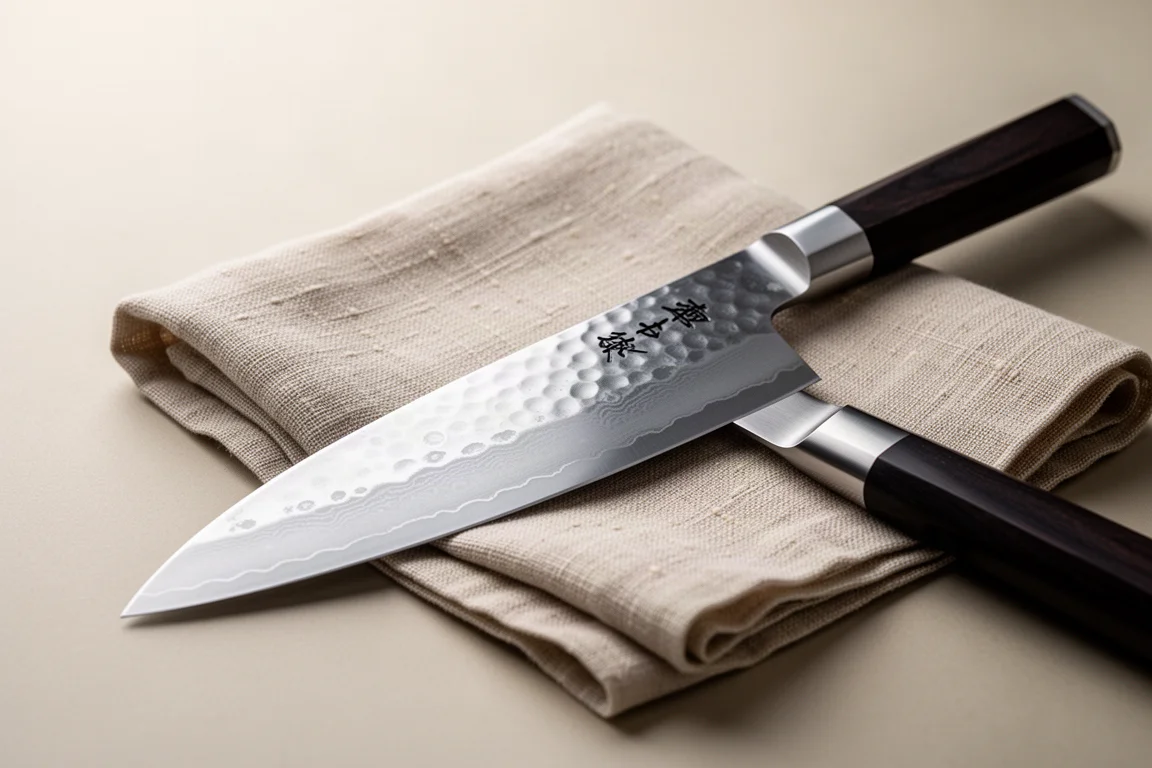
Fit and finish are again excellent: near-perfect tang-to-handle insertion on every piece, a nicely sanded choil and spine for comfort, and a slightly chunkier handle that suits larger hands. The same wenge and buffalo horn octagonal handles carry over, along with a beautiful damascus cladding.
Shape and Handle Options in the Ginnyo Line
The highlight of the range is the 150mm petty, which is almost like a small gyuto: it has a sweeping profile and generous blade height, making it a great halfway option between a chef’s knife and a petty. Beyond that, you get a 180mm santoku plus 210mm and 240mm gyuto options, so the line scales from prep knife to full chef’s knife.
Which Series Should You Choose?
If you love the character of carbon steel, do not mind wiping your blade dry after use, and want a robust workhorse with an oil-slick finish, the Kumokage in Aogami #2 is the one to reach for. The pre-applied patina makes the maintenance learning curve much gentler than with most carbon knives.
If you want carbon-steel-like sharpening feel without rust worries, the Ginnyo in Ginsan is the better fit, especially with its convex edge geometry that resists chipping. Either way, both series deliver fit and finish that punches well above their price bracket.
Conclusion
Hatsukokoro has put together two genuinely appealing lines: the Kumokage for carbon steel fans who want a tough, patina-ready workhorse, and the Ginnyo for anyone who wants easy sharpening and rust resistance without giving up performance. With more Hatsukokoro knives, including single-beveled work, expected to arrive soon, now is a good time to get familiar with the brand.
Further reading
Related Reviews

Kitchen Knives
Best Chef's Knives 2026: 27 Popular Options Tested and Ranked
A comprehensive review of 27 chef's knives ranging from $18 to $380, with honest assessments of handle comfort, blade balance, and real-world performance.

Kitchen Knives
Best Chef's Knives Under $75: Two Tested Recommendations
Two practical 8-inch chef's knives that balance sharpness, comfort, and durability without premium pricing.

Kitchen Knives
Best Chef's Knives 2026: 27 Options Tested and Ranked
A comprehensive review of 27 chef's knives ranging from $18 to $380, with honest assessments of handle design, balance, blade profile, and real-world performance.