Power Tools
Hart vs. Makita Cordless Random Orbital Sanders: Which One Fits Your Workshop?
A side-by-side look at two cordless random orbital sanders, covering weight, size, grip, speed settings, and where each one makes the most sense.
Introduction
Random orbital sanders are one of those tools that quietly earn their place in any workshop. They handle everything from stripping old furniture to smoothing joints before a final finish, and a good cordless model removes the hassle of dragging cords around the bench.
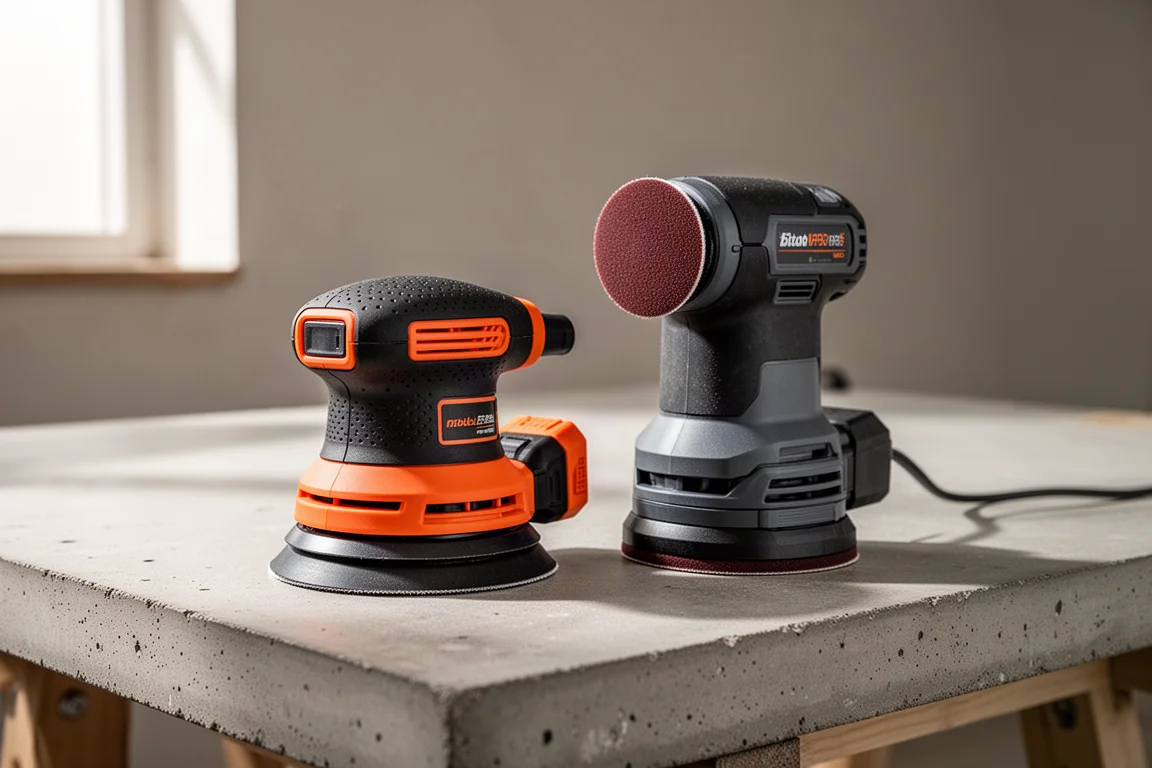
We recently spent time comparing two cordless random orbital sanders side by side: the Hart cordless random orbital sander, a budget-friendly option aimed at serious DIYers, and the Makita cordless random orbital sander, a professional-grade tool costing roughly twice as much. The results were more interesting than we expected, especially for anyone who does not need a pro-tier tool.
Why Compare These Two Sanders?
The price gap is the first thing worth noting. The Hart typically sells in the range of around forty to sixty dollars depending on when you catch a sale, while the Makita sits right around twice that, roughly the $120 mark. That kind of difference naturally raises a question: does the Makita deliver twice the experience?
Both sanders are aimed at slightly different buyers. Hart markets its sander toward serious DIYers, and that positioning feels accurate. The Makita, on the other hand, belongs in the professional lineup alongside brands like DeWalt and Milwaukee. For anyone refinishing furniture or handling weekend projects, the practical differences matter more than the label on the box.
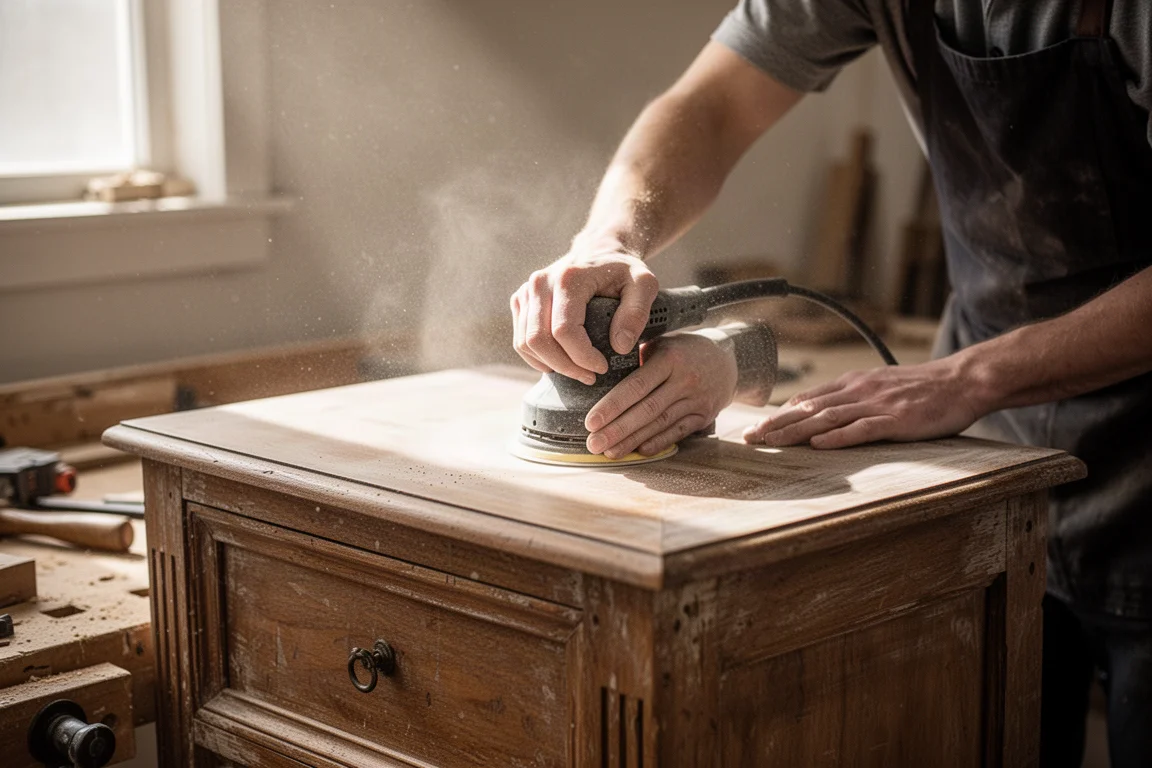
Furniture refinishing is exactly the kind of project where both of these sanders shine, and it is also where small ergonomic details start to matter over long sessions.
Grip and Handling: The Biggest Everyday Difference
Online feedback about the Makita sander tends to mention two recurring points: modest power and an awkward grip. On the grip issue, there is real merit to the complaint. The Makita does not offer an obvious, comfortable way to position your hand, and it takes a little trial and error to find a hold that feels secure.
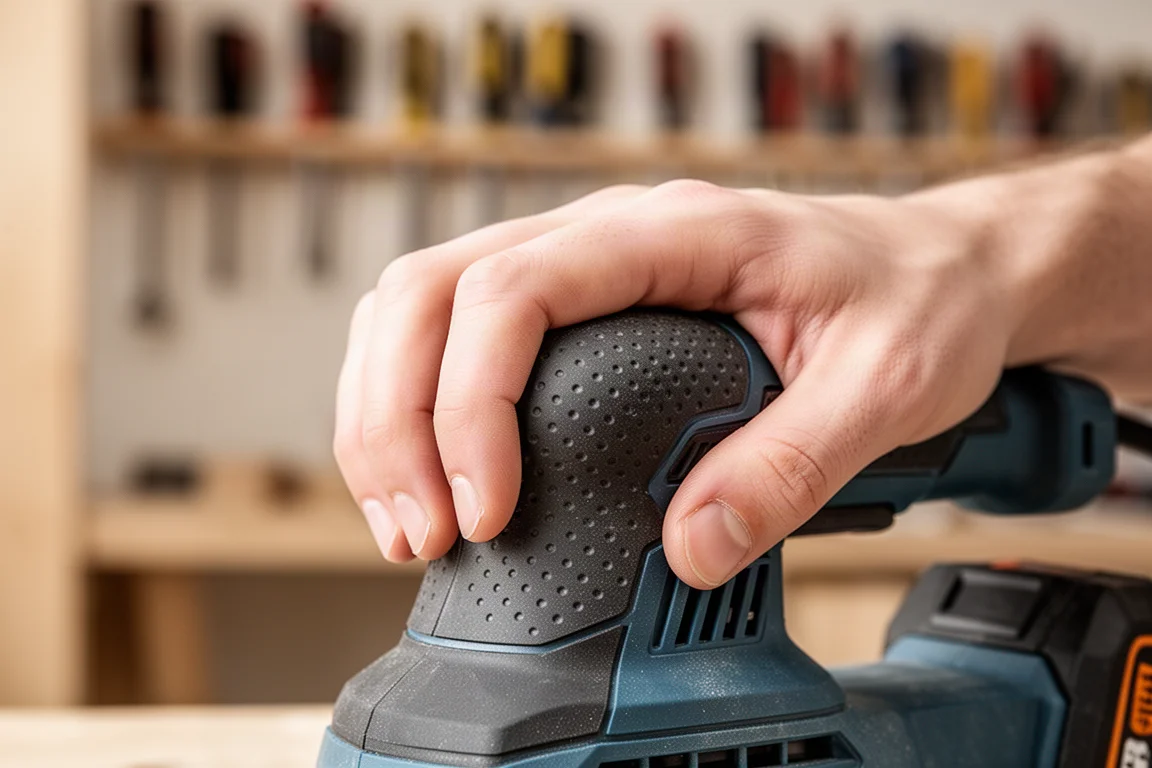
The Hart takes a different approach with a rubberized grip that is very easy to hold and simple controls that stay out of the way. When testing both sanders with smaller hands, the Hart came out clearly ahead. The shorter body and more natural grip made it the preferred tool for extended use, described simply as a far better sander when it comes to actually holding and using it.
Weight and Size Compared
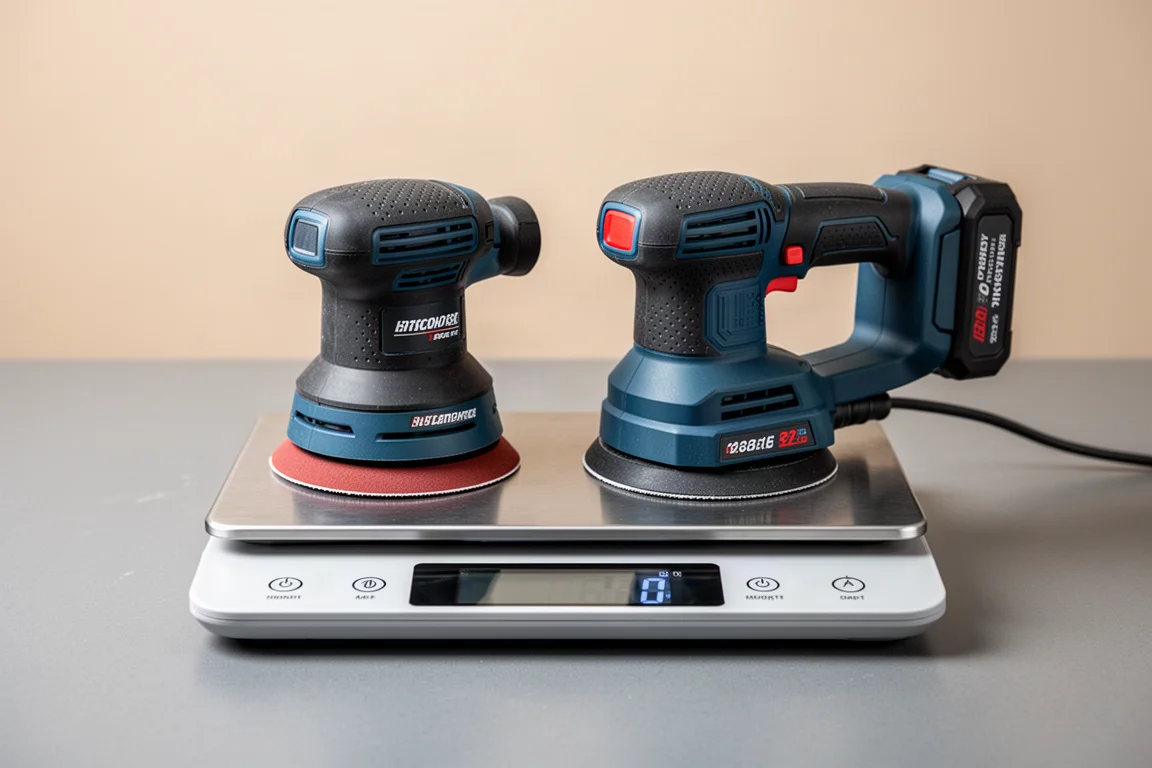
Weight and size were measured directly, with both sanders stripped down to the bare tool: no sanding pad, no dust bag, no battery. Here is how they stacked up.
| Sanders (bare tool) | Weight |
|---|---|
| Makita | 2 lb 5.1 oz |
| Hart | 2 lb 3.6 oz |
The Hart came out about 1.5 ounces lighter, and a lighter sander makes a genuine difference during long sanding sessions. Height matters too. The Makita stands a little over six inches tall, while the Hart sits right around five inches, almost a full inch shorter. That shorter profile is a meaningful advantage for anyone with smaller hands, and it made the Hart noticeably easier for some testers to control.
Noise and Speed Settings
Running both sanders side by side with the smallest batteries available, the noise levels sound remarkably similar. There is very little difference between the two in day-to-day use.
The speed story is where they part ways slightly. The Makita offers three speed settings, though in practice it spends most of its time at top speed; the lower settings only come into play for finer sanding work. The Hart runs a single speed. If you rarely touch the speed dial anyway, that difference shrinks fast, and both tools behave almost identically in real projects.
One Drawback Worth Knowing About the Hart
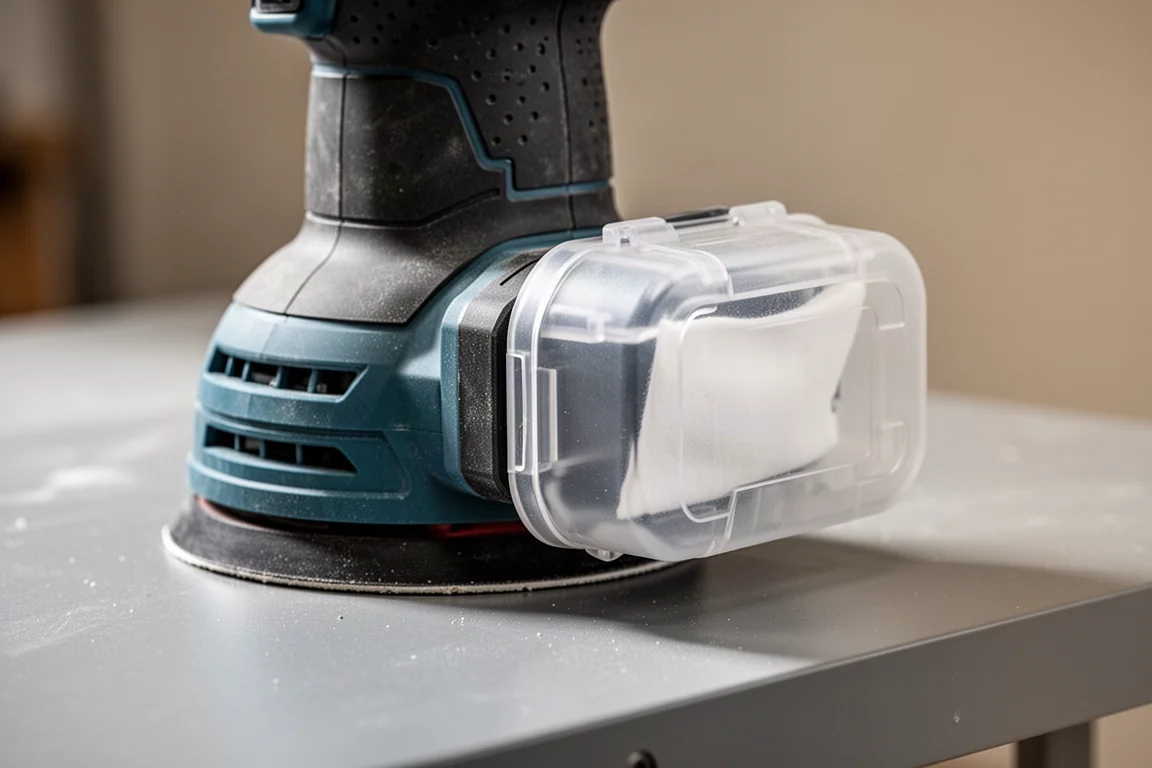
The Hart has one design detail worth flagging before you buy. The dust exhaust on the Makita sits right off the back of the tool as a small, tidy tube that generally stays out of your way. The Hart uses a larger configuration with a dust cover that slides on, and it hangs well off the back of the sander.
That bulk is noticeable in tight spaces. Working close to a wall or inside a corner, the protruding dust cover can get in the way before the body of the sander does. It is the main complaint about an otherwise well-rounded tool, but it is worth considering if your projects involve a lot of confined-space work.
Buying Advice
If you are a DIY user who wants a good random orbital sander without paying for a professional model, the Hart is a fantastic option. It is lighter than most professional sanders, features a comfortable rubberized grip, keeps its controls simple, and typically costs well under the price of the Makita. Hart is a brand from TTI, a company with a solid reputation behind it, which adds some confidence to the value proposition.
The Makita still makes sense for buyers who want a professional-tier tool and might benefit from multiple speed settings, but the grip design and higher price mean it is not automatically the better choice for everyone.
Conclusion
Both of these cordless random orbital sanders sound and perform similarly in everyday use. The Hart wins on weight, size, grip comfort, and price, with the bulky dust cover as its main drawback. The Makita adds three speed settings and a more compact dust outlet but asks for roughly double the money and has a grip that many users find awkward. For most DIYers and furniture-refinishing projects, the Hart represents the smarter buy, while the Makita remains the pick for those committed to a professional lineup.
Product link
View more details for Hart Cordless Random Orbital Sander
This product is mentioned in the review. Check the specifications, options, and compatibility before buying.
View more details for Hart Cordless Random Orbital SanderFurther reading
Related Reviews
Power Tools
Best 1-Inch Pistol Impact Wrenches: Three Heavy-Duty Options Compared
We compare three 1-inch pistol impact wrenches, from a budget-friendly Harbor Freight model to a premium Caterpillar unit, to help you choose the right one.
Power Tools
Best 3/4-Inch Impact Wrenches 2026: Five Contenders Compared
We compare five 3/4-inch impact wrenches across price and performance, from a budget Amazon option to Snap-on's most powerful model yet.
Power Tools
Best Budget Cordless Tools 2026: Walmart Finds That Punch Above Their Price
We tested five cordless tools from Walmart, including a high-torque impact wrench that trades blows with Milwaukee and a $35 duster that outperforms its price class.