Kitchen Knives
Harayuki Zampa Review: A Kiritsuke-Style Knife That Does Almost Everything
The Harayuki Zampa delivers gyuto-level all-round performance with the striking k-tip look, but it rewards a specific cutting style.
Introduction
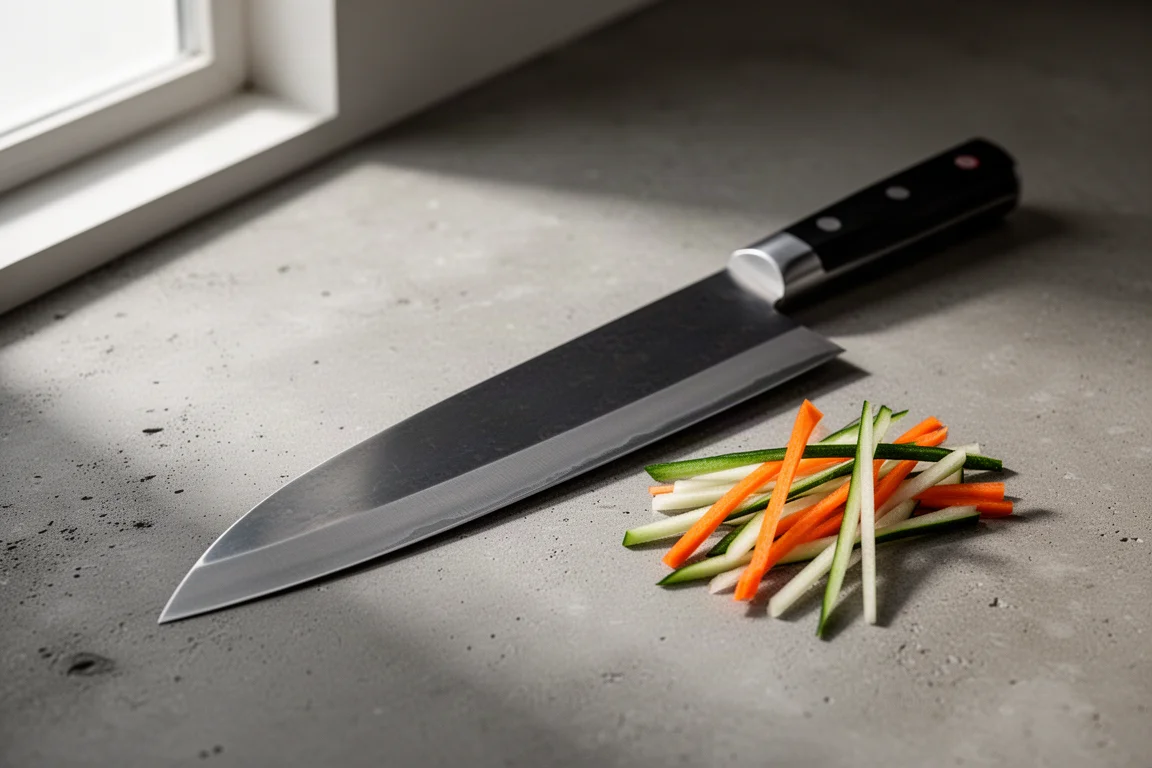
If you have spent any time around Japanese kitchen knives, you have probably noticed the kiritsuke: the knife with that striking, angled reverse tip that looks like it belongs on a display stand. It tends to inspire strong reactions. Some people love it, some people are intimidated by it, and most people are not quite sure how it differs from a gyuto, the Japanese take on the European chef’s knife.
This review focuses on one specific kiritsuke-style option, the Harayuki Zampa, and on what you should know before choosing between a kiritsuke and a gyuto in the first place.
Gyuto vs Kiritsuke: What Actually Differs
A gyuto is designed after the European chef’s knife: double bevelled, all-purpose, and the single most versatile knife you can own. It handles push cuts, pull cuts, and chopping comfortably, and if you could only pick one knife for everything, this would be it.
The kiritsuke looks almost identical in size and height, but with one obvious difference: the tip. Visually, it is dramatic. Functionally, though, the two knives cut largely the same things, and the real differences are subtle.
Kiritsuke knives stem from single-bevel designs. Picture a yanagiba and an usuba combined: single bevel, long profile for smooth slicing, and a very straight edge. Traditional Japanese cutting styles rely on that pin-straight edge for turning and rotating cuts. The modern kiritsuke-style knives most people buy, however, including this style, are double bevelled just like a gyuto, so they cut straight and can handle wider items that single-bevel knives cannot.
How the Harayuki Zampa Performs on the Board
The straight edge is where the kiritsuke character shows up in daily use. When you slide the knife backwards, you get a lot of edge contact on the board, which makes pull cuts smooth and accurate. The Harayuki Zampa is not a lightweight knife either, and that extra mass adds power that helps with pull cutting, especially through dense food.
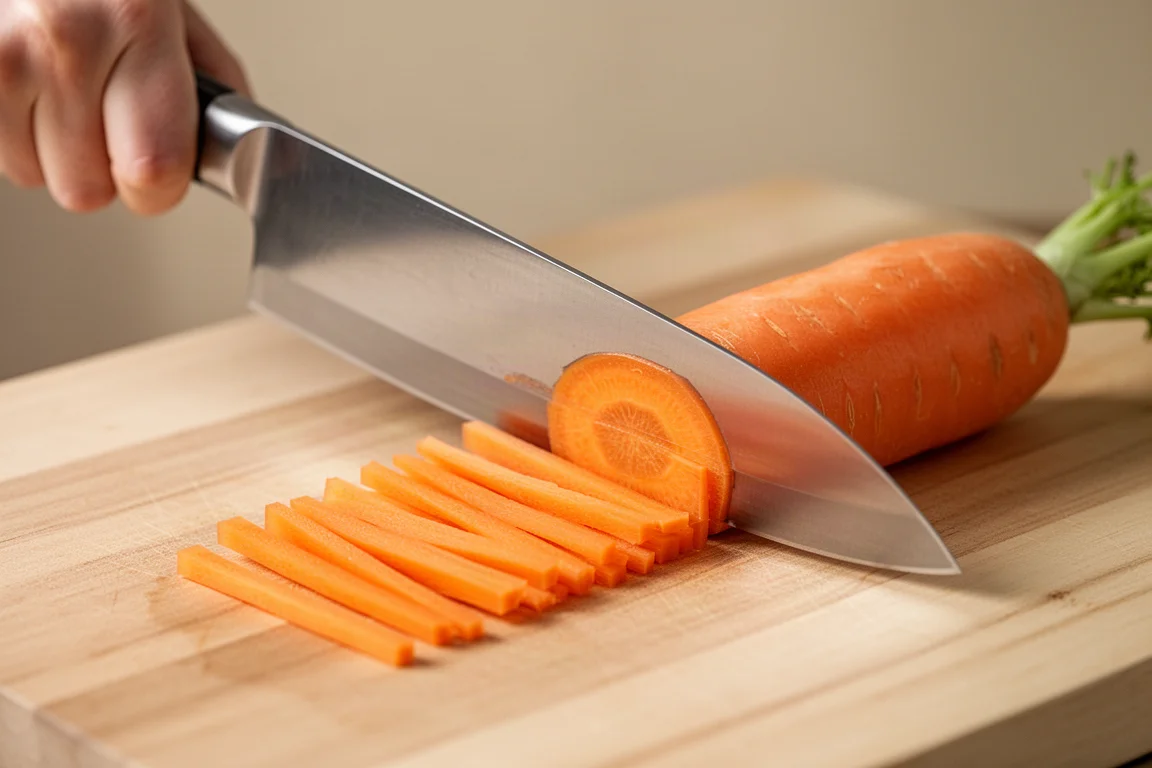
For julienne work, this knife was genuinely impressive: super smooth, super thin, and consistently clean through stacks of carrot. It simply drifts through the cut.
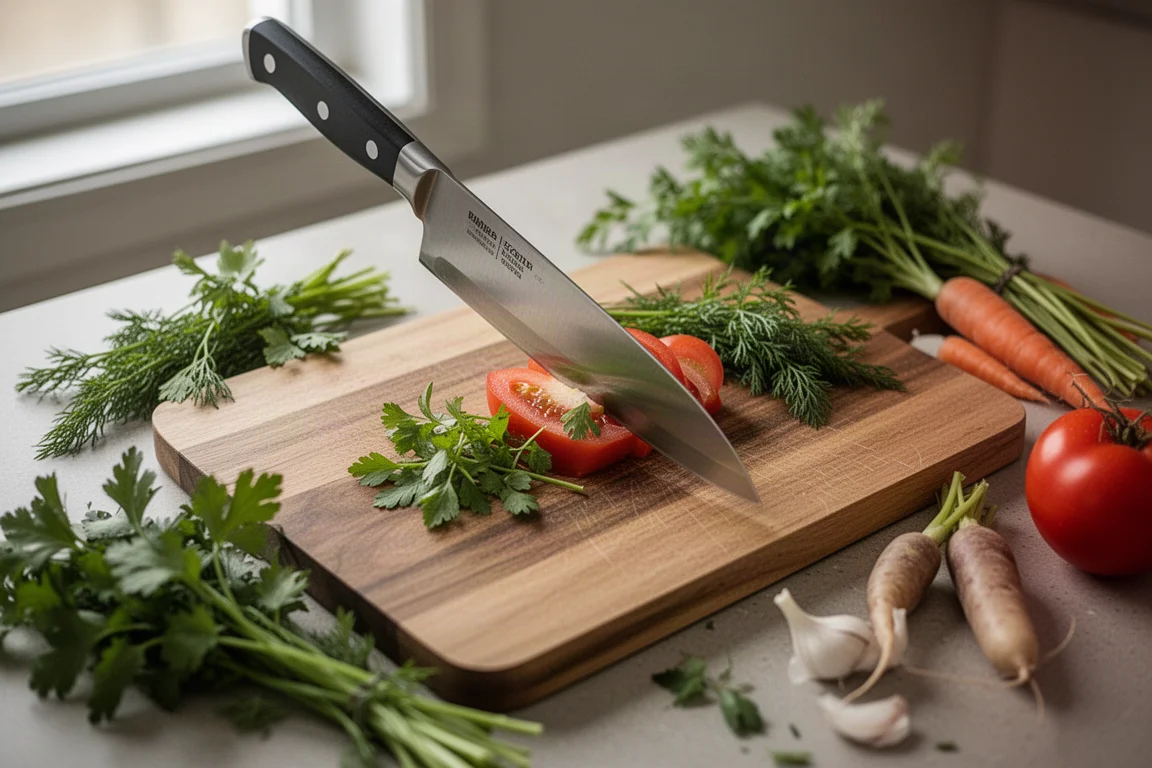
Push cutting takes a little adjustment. Because the edge is so straight, a very sharp blade can bite into the board all at once, almost like hitting the brakes, and it interrupts a fast, flowing rhythm. The trick is to keep the knife nearly parallel to the cutting surface and pick it up and put it down deliberately rather than rocking it forward.
That leads to the one real caution: the tip. If you get into a heavy rocking motion, the fine tip can sink into the board, and this teeny little tip can break off surprisingly easily. Fixing that means re-profiling the edge. If your style leans heavily on rolling, rocking cuts, a traditional curved gyuto edge is honestly the safer match.
Things to Know Before Buying
If you love the look but want gyuto behavior, there is a middle path: the k-tip style. Take a gyuto, cut the rounded front off, raise the tip slightly, and you get a knife that rocks and rolls like a gyuto while carrying much lower risk of snapping the tip into the board. It is effectively a hybrid of the two designs, and many people who say “kiritsuke” actually mean exactly this.
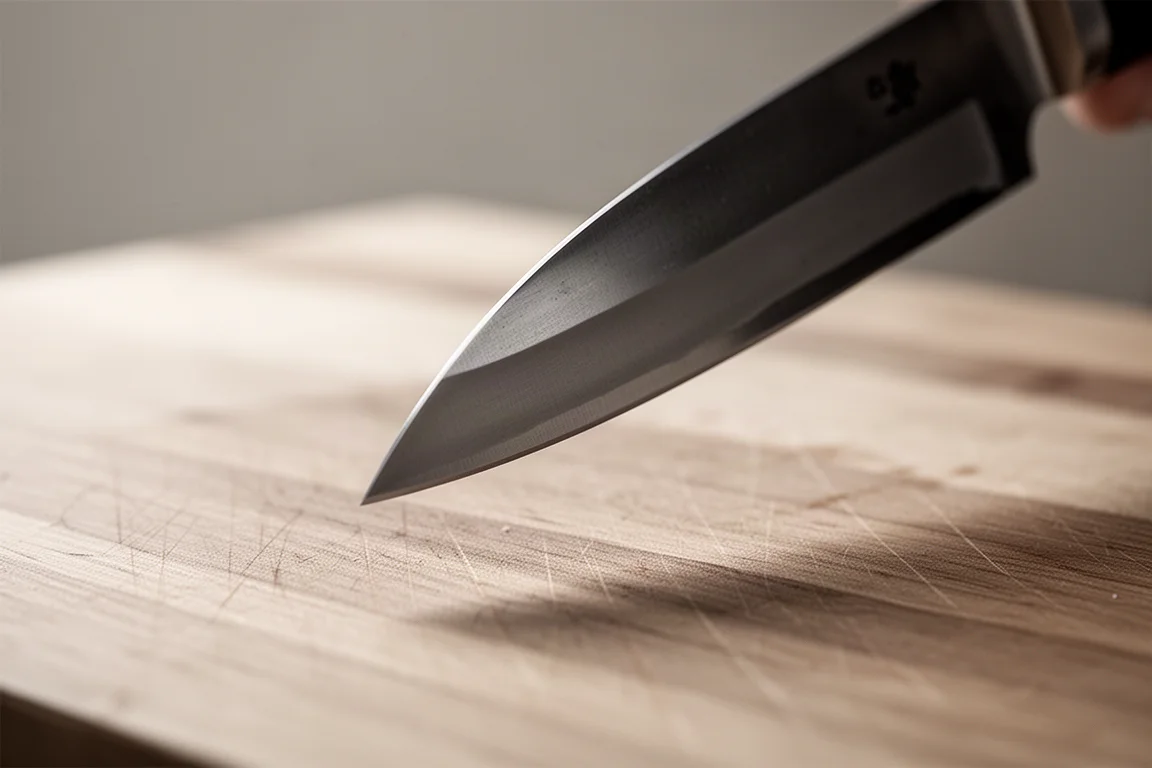
Terminology can get confusing here. Kiritsuke-style tips now appear across many shapes, from chef’s knives to petty knives to slicers. So if you are shopping, be clear about what you want: a traditional-style kiritsuke with the straight edge, or a k-tip gyuto with a good curve on the edge that you can rock with.
Buying Advice
Choose a gyuto if your cutting style involves fast rocking and rolling motions. The curved edge follows that rhythm naturally and keeps you from dabbing the tip into the board. It remains the one knife that does practically everything.
Choose the Harayuki Zampa if you prefer push cuts and pull cuts, value a knife with attitude, and want that slightly thinner, wicked-looking tip. Functionally the tip does not change much, but the presence is undeniable, and for pull-cutting and julienne work it was genuinely exceptional.
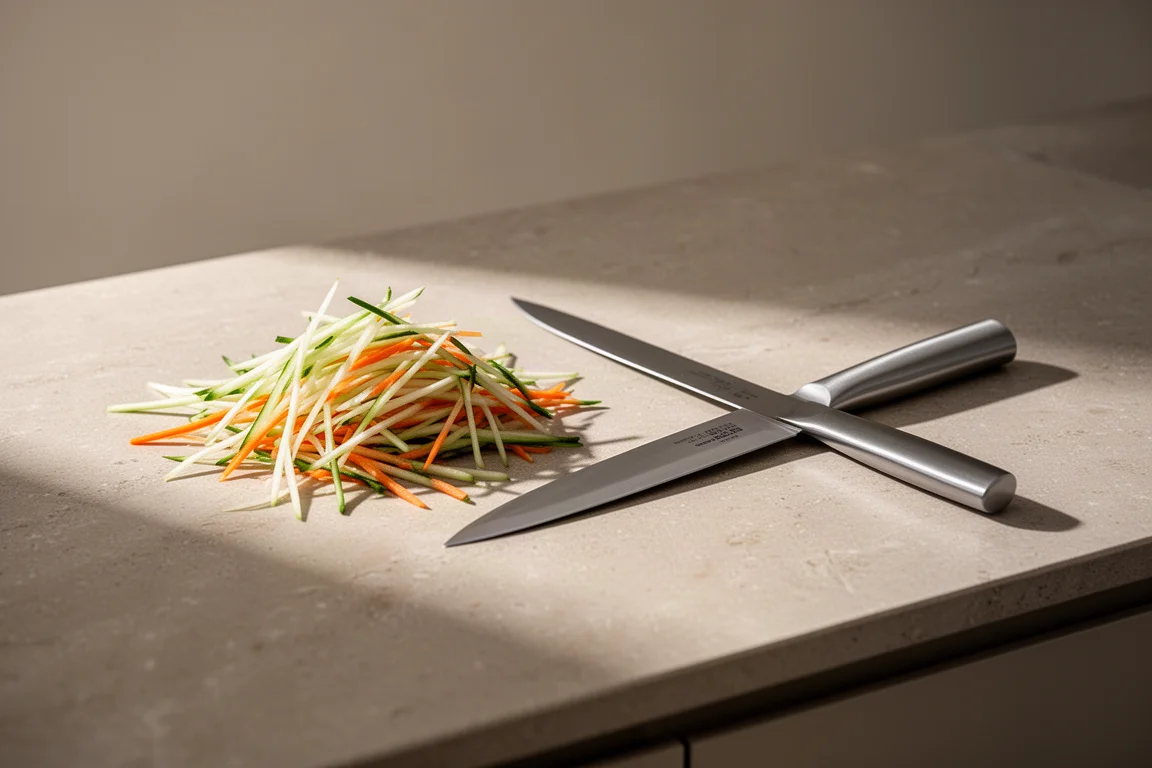
There are no hard rules here. You want to rock, pull, or chop? Do whatever suits you. Gyutos do it all, kiritsukes can too, and a k-tip hybrid splits the difference. If you fall in love with the look and adapt your technique, a knife like the Zampa will reward you.
Conclusion
The Harayuki Zampa stands out as a kiritsuke-style knife that is smooth, thin, and quietly capable across a huge range of kitchen tasks. It asks for slightly more deliberate technique around the board, especially to protect that fine tip, but it pays you back with beautiful pull cuts, effortless julienne, and a look that no ordinary gyuto can match. For cooks drawn to the k-tip aesthetic who are willing to work with a straighter edge, it is a very easy recommendation.
Product link
View more details for Harayuki Zampa
This product is mentioned in the review. Check the specifications, options, and compatibility before buying.
View more details for Harayuki ZampaFurther reading
Related Reviews

Kitchen Knives
Best Chef's Knives 2026: 27 Popular Options Tested and Ranked
A comprehensive review of 27 chef's knives ranging from $18 to $380, with honest assessments of handle comfort, blade balance, and real-world performance.

Kitchen Knives
Best Chef's Knives Under $75: Two Tested Recommendations
Two practical 8-inch chef's knives that balance sharpness, comfort, and durability without premium pricing.

Kitchen Knives
Best Chef's Knives 2026: 27 Options Tested and Ranked
A comprehensive review of 27 chef's knives ranging from $18 to $380, with honest assessments of handle design, balance, blade profile, and real-world performance.