Smart Home & Outdoors
Haiku Box Review: A Smart Bird Listener for Your Yard
We set up the Haiku Box outdoors to see how well it identifies birds by sound, what it gets right, where it misses, and whether it is worth adding to your yard.
Introduction
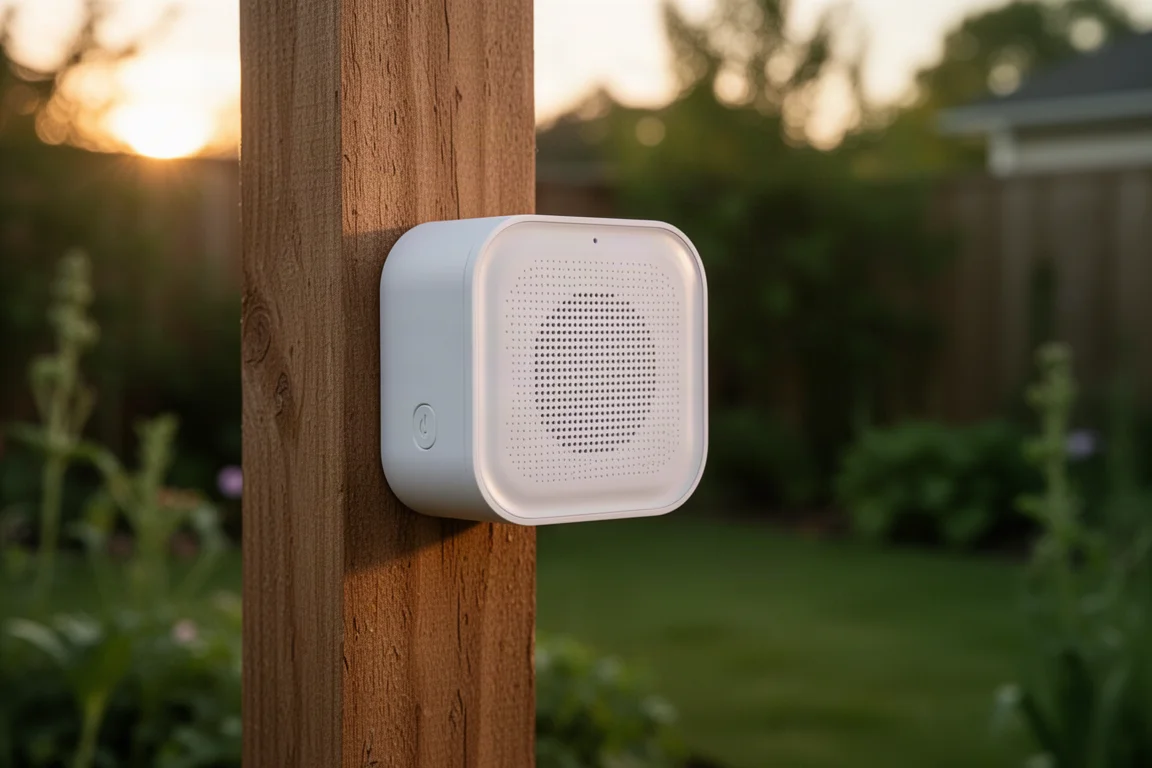
The Haiku Box is a small outdoor device you set up in your yard, plug into an outlet, and leave running. It listens around the clock, identifies birds by their calls and songs using BirdNET sound recognition technology, and sends notifications with the recordings straight to your phone. If you already know Merlin’s bird ID by sound, this works on a similar principle, except it runs passively in your yard all day and night.
We spent several days with the unit to see what it catches, how accurate it is, and whether the experience holds up for a serious backyard birder.
Unboxing and First Impressions
The packaging is quirky and charming, and the unboxing includes a quick start guide plus printed details about the service. The company partners with the Cornell Lab of Ornithology, so the data your box collects can contribute to real bird science, which is a nice touch. You can opt out of sharing that data in settings if you prefer.
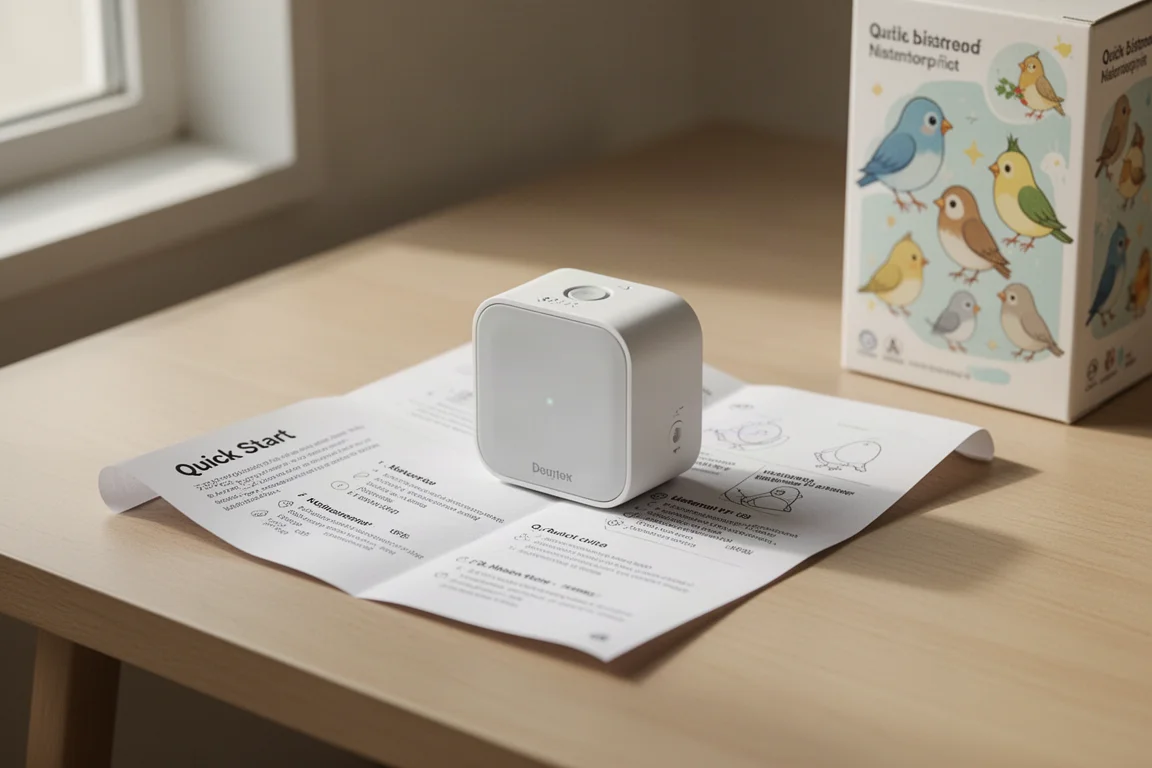
The box itself is very light. You plug it in, connect it to Wi-Fi, and it is essentially ready to go. Setup involves two apps: a Haiku Box Connect app for pairing the device over Bluetooth and Wi-Fi, and the main app for alerts and recordings. The main app holds a strong 4.9 rating, and the interface is clean, with a sensitivity control, volume settings, and a calendar view you can browse through.
Membership matters here. The box ships with a basic membership that includes a three-week trial, and there are annual and prepaid multi-year options available. A one-year limited warranty is included.
Setup and Mounting
The guidance is sensible: choose a spot near an outlet with strong Wi-Fi, keep the outlet protected from rain, tie up loose cords, hang or place the box upright away from puddles, and avoid noisy locations. One small gripe: the housing appears to have a spot to screw it in, but no screws are included, so plan to mount it on a board, hang it, or supply your own fasteners.
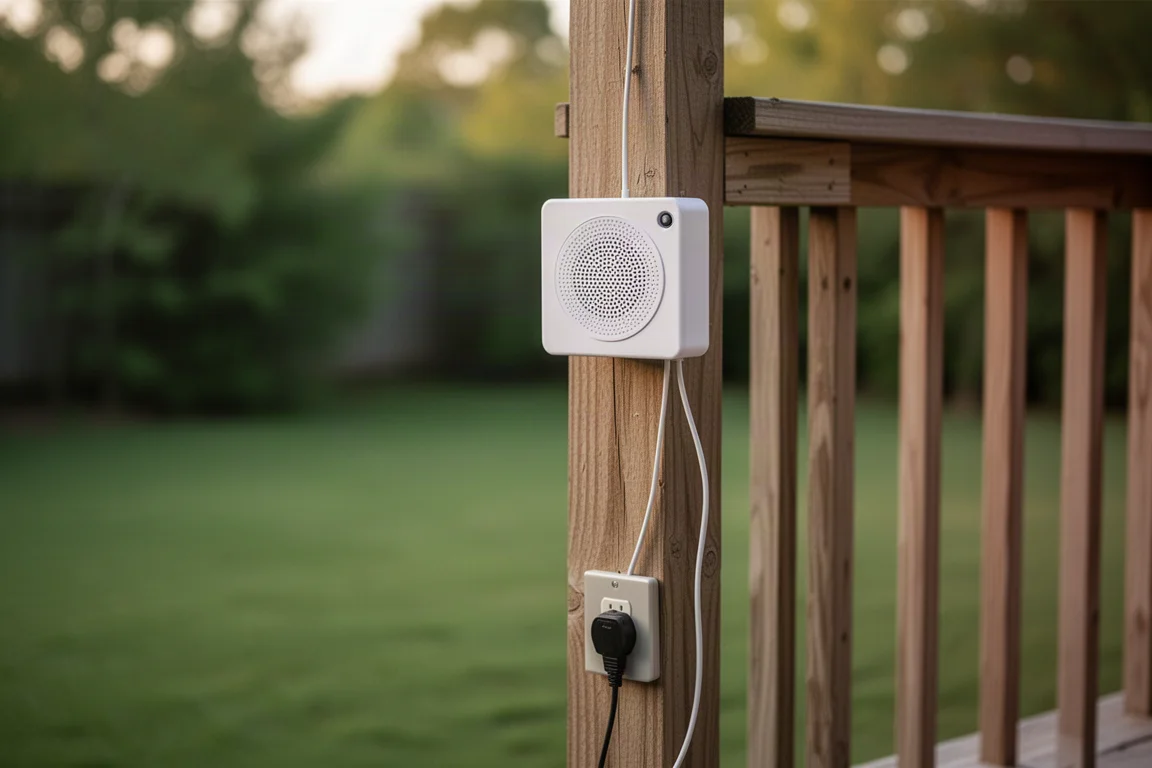
Our test setup was intentionally temporary: an extension cord and a nail in the deck just outside the back door. Even so, the box was producing results by the next morning, with hundreds of recordings loaded and notifications already arriving. Fair warning, it is enthusiastic about alerting you, so you may want to tune notifications if it becomes too much.
How It Performs Day to Day
The core experience works. On our first overnight run it logged hundreds of recordings, and the top species were all birds genuinely present in the yard: European starling, house sparrow, goldfinch, grackle, junco, house finch, and northern cardinal. Playing back the recordings and comparing them to what we know is in the yard, many IDs checked out. American robin, mourning dove, house finch, and American goldfinch were reliably correct.
It also surfaced genuinely exciting finds. Northern flicker showed up repeatedly, a bird we rarely see in the yard. A tufted titmouse recording came through crystal clear on a bird we had never observed there. Canada goose, cedar waxwing, and a legitimate sandhill crane all appeared in the logs, some of which we would never have known were around.
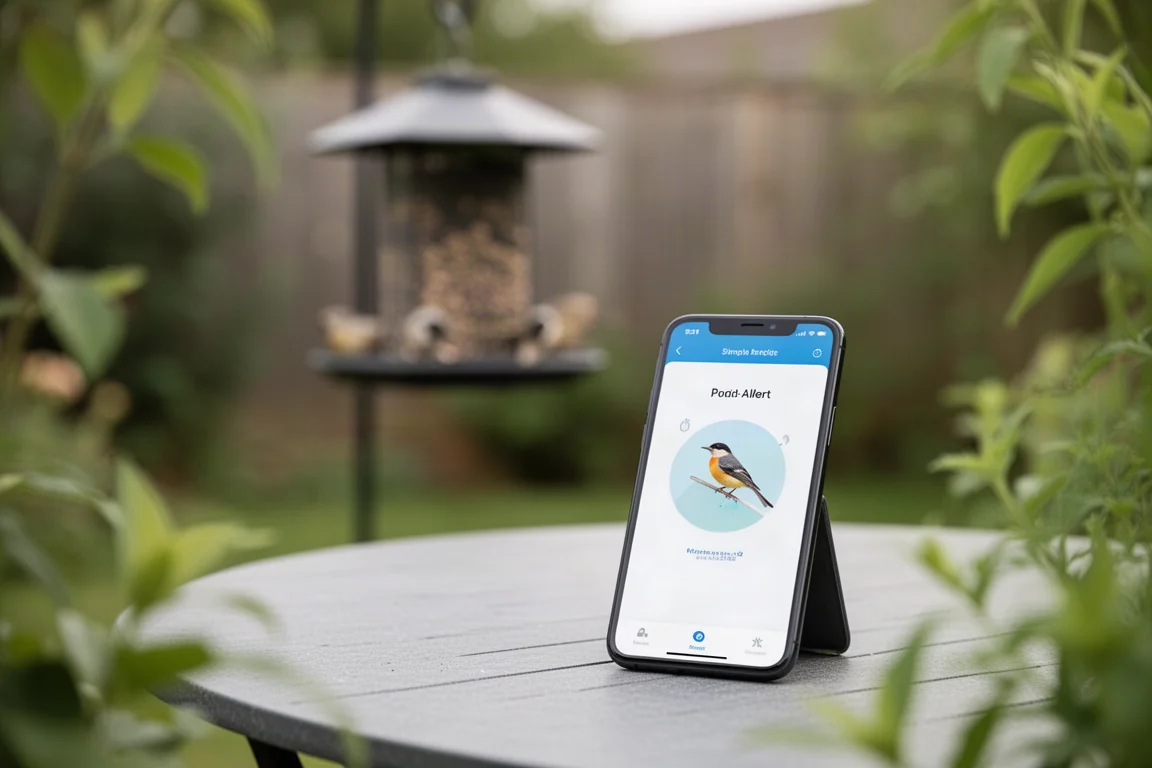
Accuracy is the catch, though. The confidence filter (low, medium, high) is a display filter, not a recording filter, and even at high confidence we saw consistent misidentifications. Carolina wren appeared constantly despite none being in the yard, cardinals were sometimes labeled as Carolina wrens, and trills confused it, with junco trills being read as pine warbler. An osprey appeared that clearly was not an osprey, and a great horned owl calling audibly at night went completely undetected. When we played three test vocalizations near the box, it caught two of the three.
Things to Consider Before Buying
The best way to use this device is as a curious companion, not an authority. Because every detection includes the actual recording, you can judge for yourself, but a working knowledge of bird songs and calls goes a long way. Without it, you might believe you have purple martins and pine warblers when you do not. Pair the alerts with what you actually observe in the yard, and treat the recordings as evidence rather than verdicts.

Privacy is handled reasonably well. The map shows other Haiku Boxes and their species lists, but you can hide your unit from the map and stop sharing data with Cornell at any time. If you test the device with played-back calls, as we did, turning off data sharing is worth doing so artificial detections do not pollute the science dataset.
Buying Advice
If you love birds and enjoy the idea of discovering which species pass through your yard unseen, the Haiku Box delivers real moments of delight: a tufted titmouse you never spotted, flickers overhead, a crane flying through. The recording playback, spectrograms, calls-per-hour charts, and calendar views make it genuinely fun to dig into.
If you expect near-perfect identification, temper that expectation. BirdNET is impressive, and the company clearly hopes to keep tightening the ID accuracy, but Merlin-style precision is not consistently there yet. Buy it as a backyard bird-discovery tool that rewards a bit of your own expertise, not as a set-and-forget species census.
Conclusion
The Haiku Box is easy to set up, fun to use, and genuinely capable of surprising you with what visits your yard. Its identification has quirks and false positives, but the included recordings let you verify everything yourself. For bird enthusiasts willing to do a little listening of their own, it is a worthwhile and charming addition to the backyard.
Product link
View more details for Haiku Box
This product is mentioned in the review. Check the specifications, options, and compatibility before buying.
View more details for Haiku BoxFurther reading
Related Reviews
Smart Home & Outdoors
TTNature Smart Bird Feeder Review: An Affordable Smart Feeder That Delivers
A wood-built smart bird feeder with camera, app notifications, and a price that undercuts most of the competition. Here's what two weeks of real use revealed.
Smart Home & Outdoors
Netview Bird 5 1080p Smart Bird Feeder Cam Review: Close-Up Bird Watching With Caveats
A solar-powered smart feeder camera with live streaming, motion alerts, AI bird ID, and a squirrel-scaring alarm, with a few practical quirks to plan around.

Smart Home & Outdoors
Netvue Birdfy Smart Bird Feeders Compared: Classic Pro Perch vs New Bamboo
Two smart bird feeders from Netvue Birdfy, including the first wooden smart feeder we have seen from a well-known brand. Here is how they differ and which one fits your garden.