Kitchen Knives
Gyuto vs Chef's Knife: 4 Kitchen Knives Worth Comparing Before You Buy
A side-by-side look at how Japanese gyutos and Western chef's knives differ in steel, geometry, and daily use, with four knives that cover both styles.
Introduction
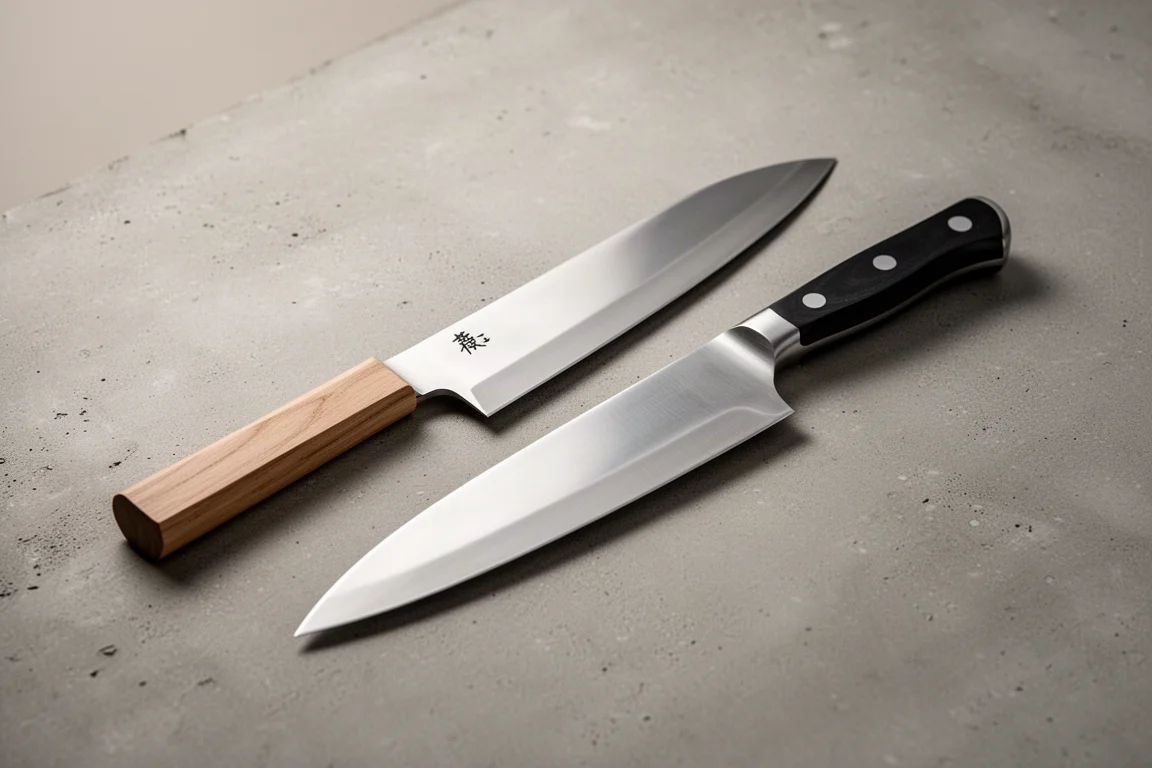
A gyuto and a Western chef’s knife essentially do the same jobs, yet they behave very differently in hand. The differences come down to steel, craftsmanship, blade geometry, and edge shape, and those differences determine which knife belongs in your kitchen. Here is how the two styles compare, and four knives that represent each side well.
Steel: The Foundation of Every Difference
The first big difference between Western and Japanese knives is the steel. German and other Western knives tend to use softer steel, which is more durable and easier for makers to work with, but it does not hold an edge as long and cannot get as sharp. Japanese knives use much harder steel, which takes a sharper edge, holds that edge, and stays sharp a lot longer.
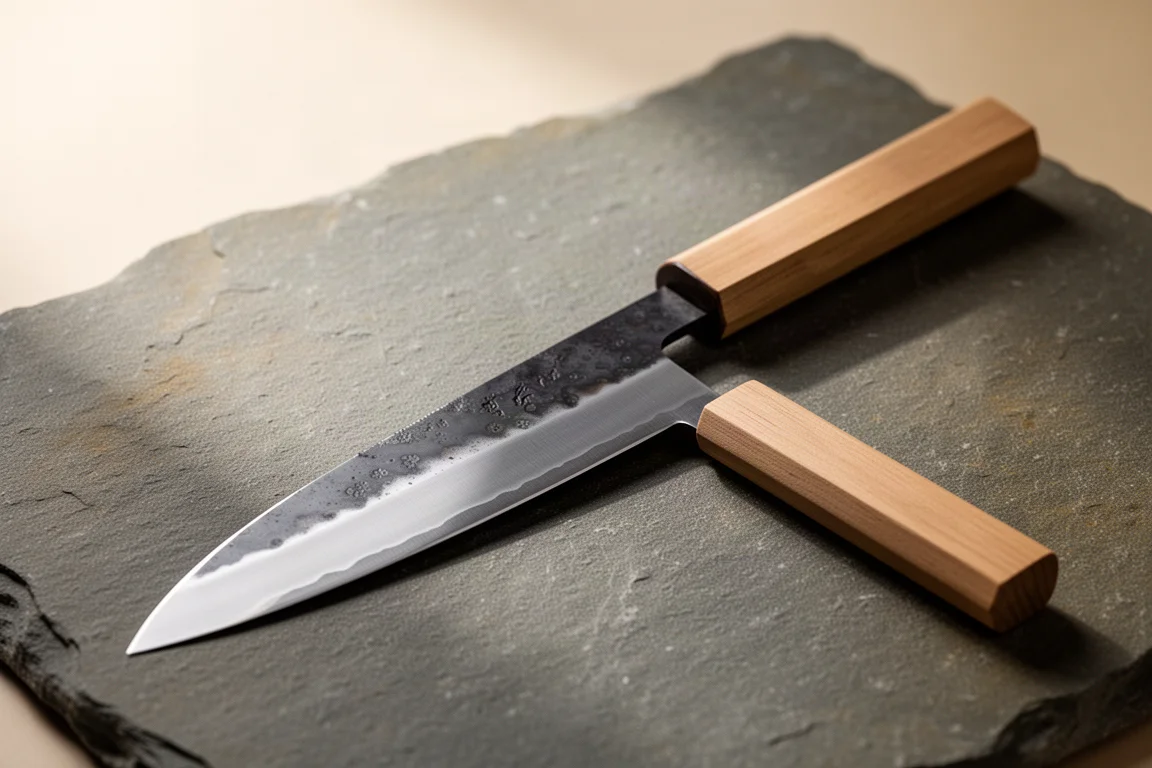
Construction differs too. Many production knives are stamped out, sharpened, and fitted with a handle, while some Japanese knives are made by hand. The Moritaka Ishime 240mm Gyuto, for example, comes from a blacksmithing family with a history stretching back over 700 years across 31 generations, and that heritage shows in the craftsmanship.
Cutting Performance: Potato and Tomato Tests
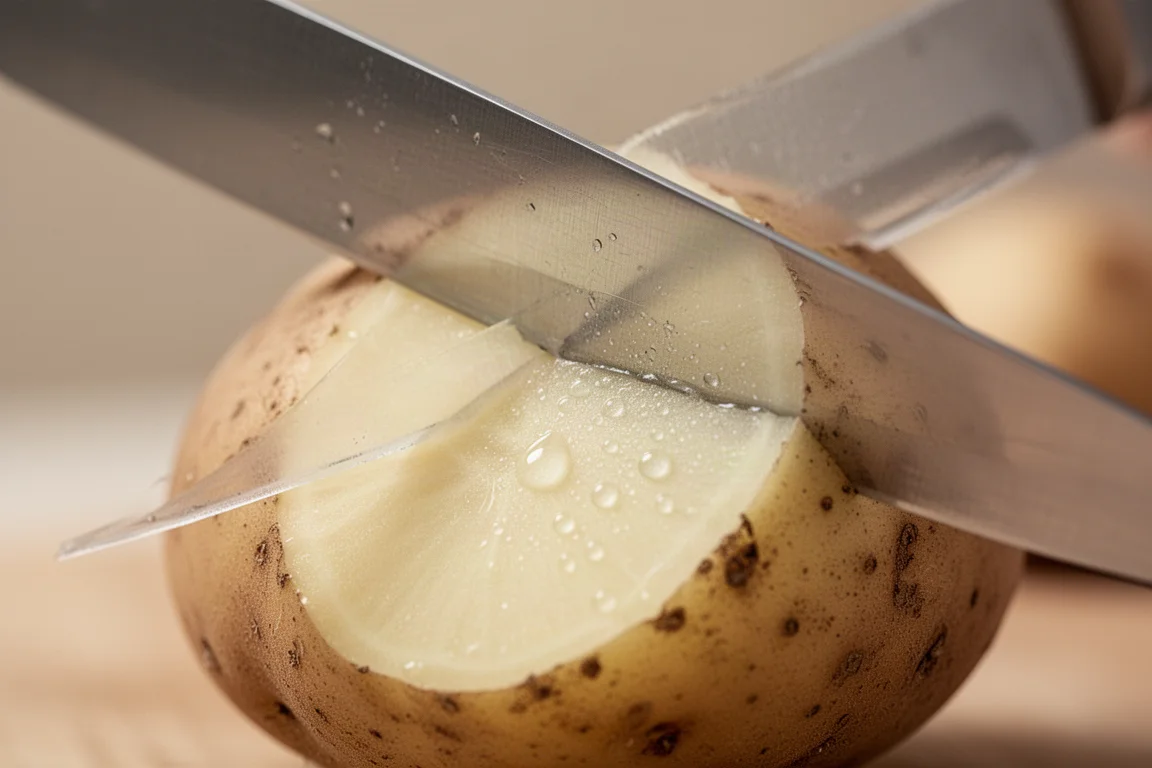
On a dense vegetable like a potato, the thinner Japanese blade glides through with a smooth, glassy finish, while a freshly sharpened Western knife still tends to split and break through a little more, especially on thicker cuts. Both cuts are fine when the knives are equally sharp, but the thinner knife is cleaner.
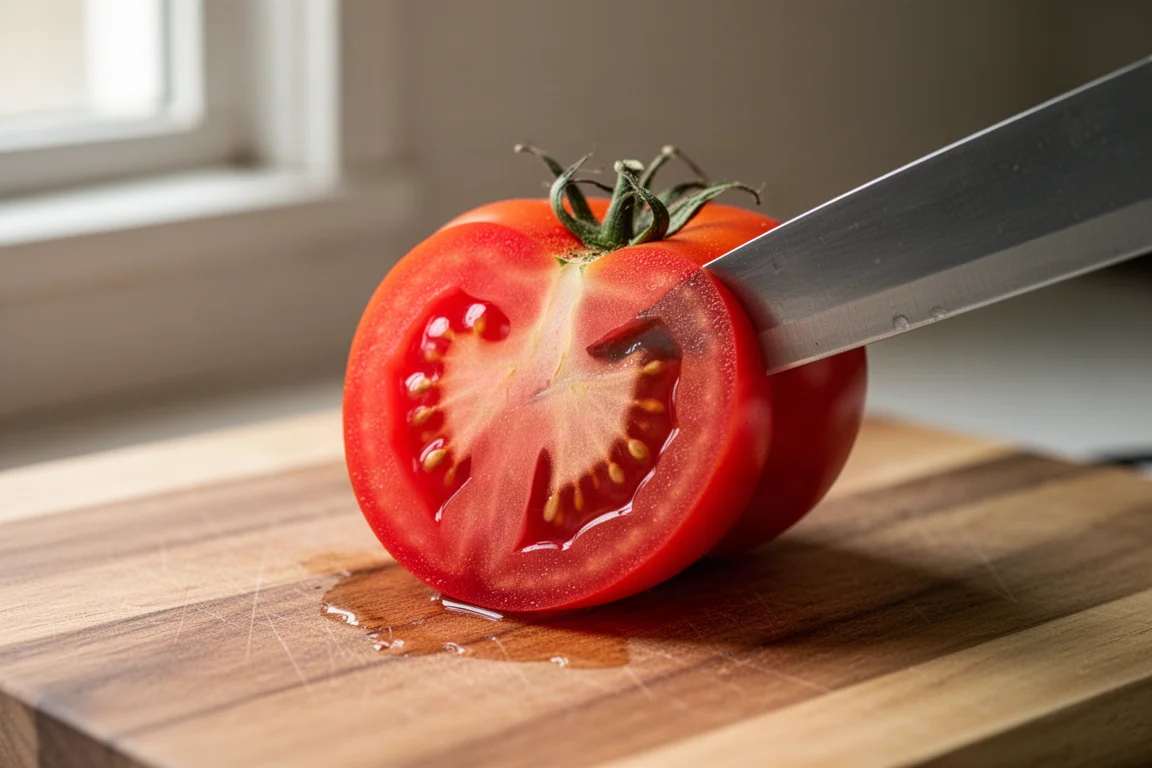
On a tomato with tough skin, a dull knife usually fails, which is why many people fall back on serrated blades. Technique matters as much as sharpness: pushing straight down crushes soft food and squeezes out the juices, even with a razor-sharp edge. Sliding the blade produces far cleaner cuts and keeps your knife sharper for longer, no matter which style you own.
Knife Geometry: Thickness and the Primary Bevel
Measured side by side, the differences become obvious. The Western knife in this comparison has a spine roughly 3.7mm thick at the heel, about 50 percent thicker than the 2.6mm spine of the Japanese knife. A centimetre back from the edge they are close, at about 1.7mm versus 1.5mm, but half a centimetre from the edge the Japanese knife tapers to roughly 0.8mm against about 1.3mm.
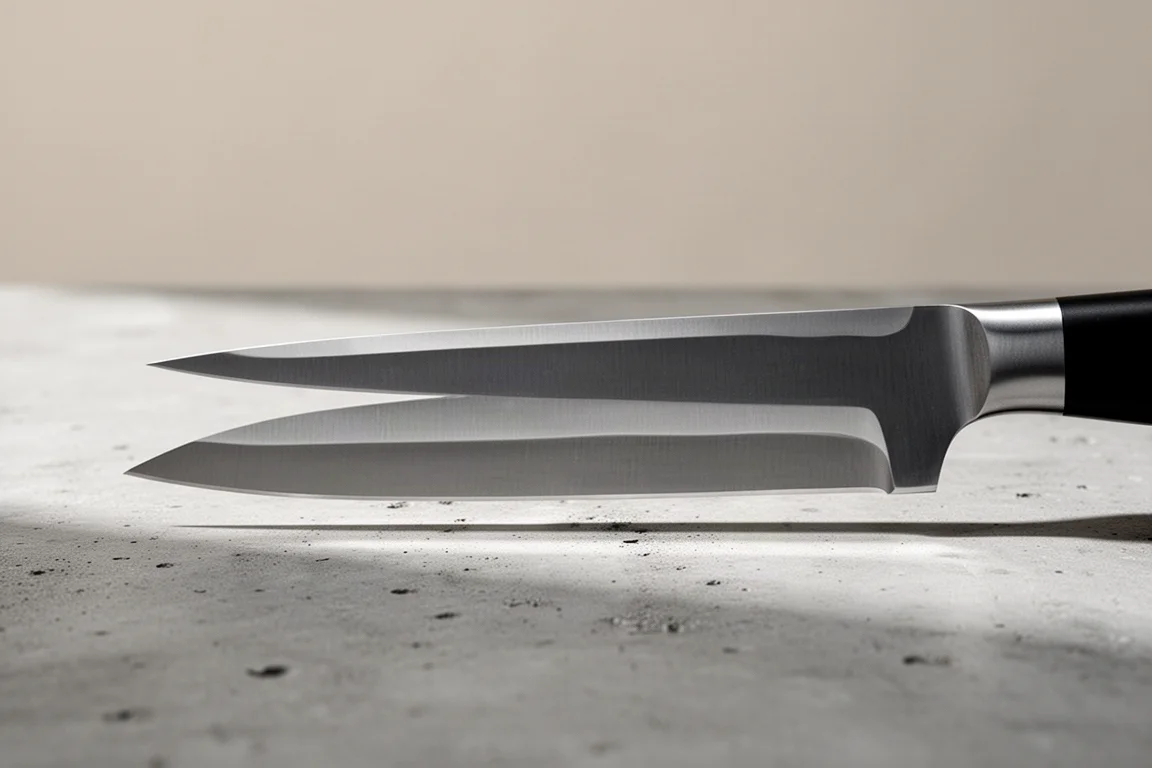
Many Japanese knives also have a primary bevel: a visible band where the blade is ground down to a consistent thickness before tapering sharply to the edge. This lets you sharpen on the bevel and keep the blade as thin as the day you bought it. Western knives usually lack a defined primary bevel, so repeated sharpening can slowly make the edge area thicker and blunter in feel over time.
Edge Shape: The Real Chef’s Knife vs Gyuto Difference
A Western chef’s knife has a tight curve up near the tip, which suits a rocking, tip-on-the-board cutting style. Gyutos have a much more gradual, subtle curve along the edge, which favours sliding cuts: you lift the blade only as high as the food you are cutting, which is safer, more precise, and easier on your arm.
That said, the extra curve has its moments. Smashing and rocking through a clove of garlic, or mincing something tough like rosemary, is easier and safer with a thicker, more curved Western blade. A very thin Japanese knife can get dinged up on rosemary, and setting it down the wrong way on a garlic clove risks bending the blade.
Everyday Use: Which Knife Fits Your Kitchen
Thicker Western blades also carry more weight, often with more mass in a riveted handle. Balance is personal preference, though: a Japanese wa handle is lightweight wood with little steel through it, so the knife balances forward and tends to fall through food on its own. Neither style is objectively better.
For a first serious kitchen knife, a gyuto is a strong recommendation. A 240mm gyuto suits larger hands and restaurant work, while 210mm is a comfortable length for most home cooks; a santoku works if you want something smaller. Add a tougher knife later for the rough jobs like butternut squash or the occasional chicken bone, and both knives will cover you.
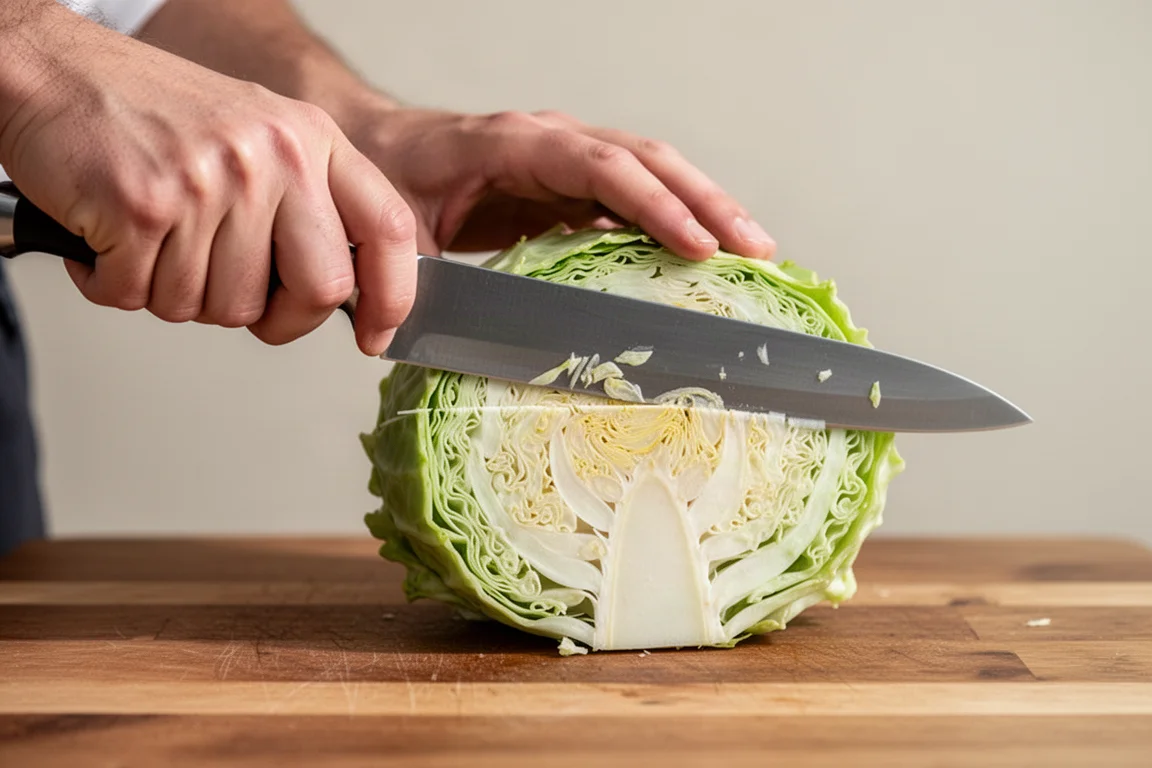
Best Handmade Gyuto: Moritaka Ishime 240mm Gyuto
The Moritaka Ishime 240mm Gyuto is a handmade Japanese knife from a blacksmithing family whose skills have been passed down through 31 generations over more than 700 years. It is the kind of knife that glides through vegetables and boneless meat like a laser, holds its sharp edge for a year and a half to two years of home use between sharpenings, and rewards careful handling with extraordinary performance.
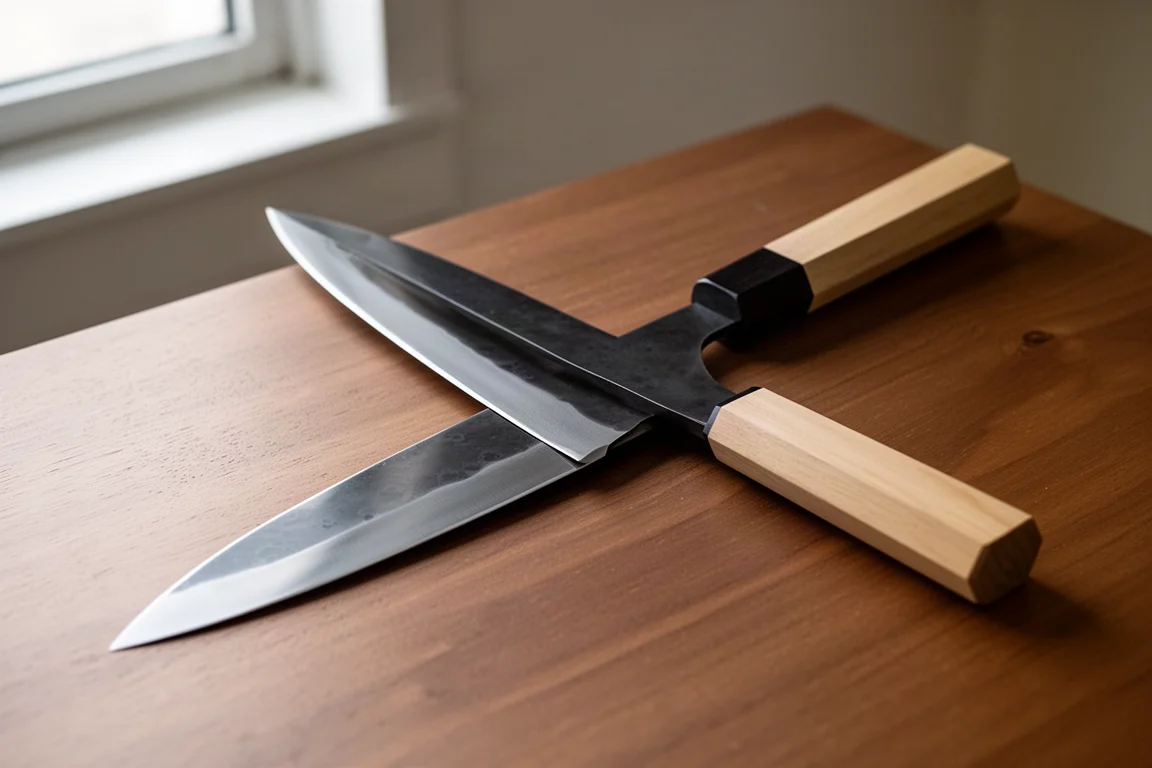
Best Durable Western Option: Henckels 6-inch Chef’s Knife
The Henckels 6-inch Chef’s Knife is a classic Western workhorse with softer steel that shrugs off tough jobs: frozen food, bones, prying, and scraping across the board. Expect to sharpen it roughly once a month with regular home use, but it will not chip the way a hard Japanese blade can. It is the rough, rugged 4x4 to the gyuto’s Ferrari.
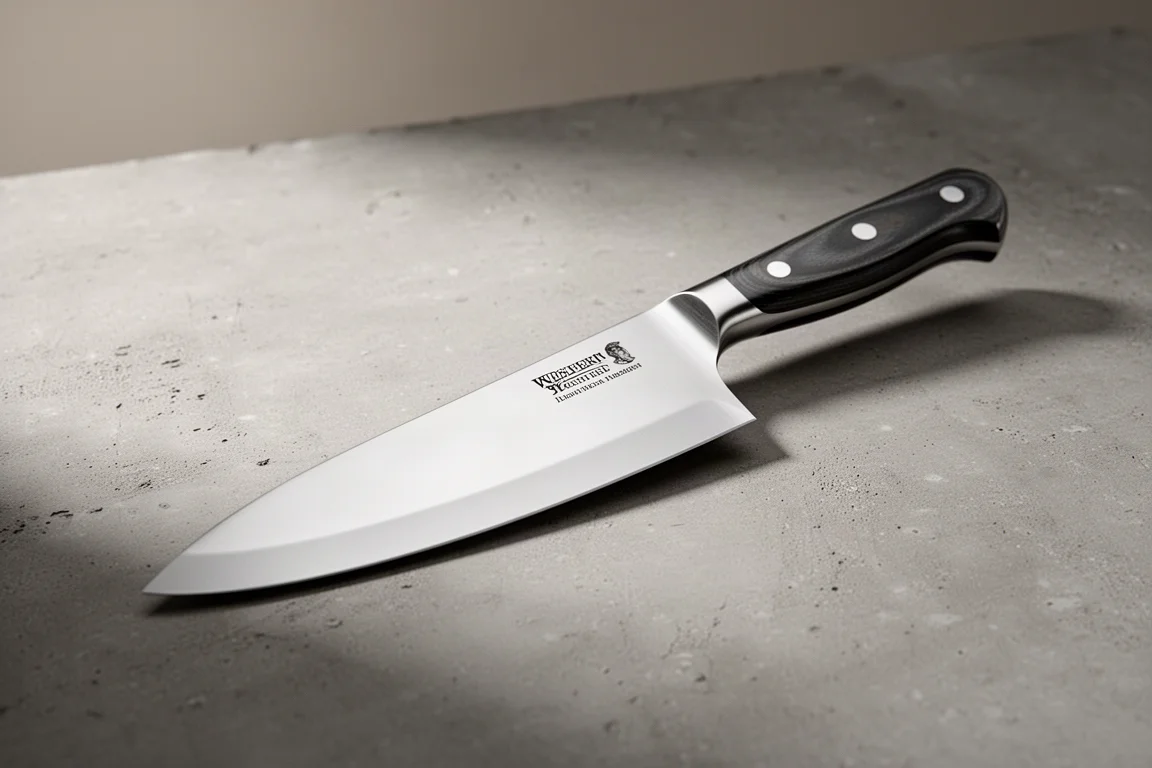
Best Tougher Japanese Alternative: Tojiro
If you like Japanese performance but want something that takes a bit more of a beating, a less hard Japanese knife from Tojiro is a sensible middle ground. You give up some of the extreme edge sharpness and retention of very hard steel, but you gain forgiveness when your cutting technique is not yet perfect or your tasks are rougher than average.
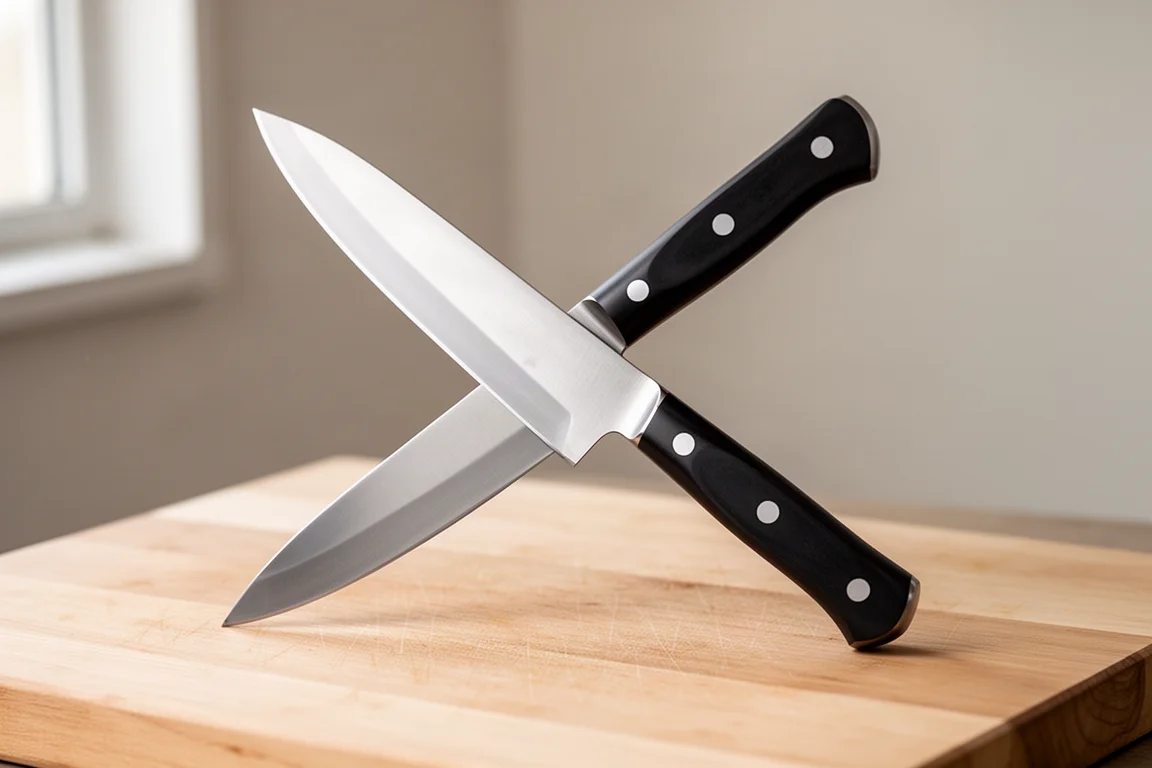
Best Forgiving All-Rounder: Tojiro Hagane
Tojiro Hagane knives follow the same idea: Japanese craftsmanship in a steel that is a little less hard, so the blade handles tougher day-to-day jobs without chipping. For cooks moving into Japanese knives who are worried about fragility, this is a reassuring entry point before stepping up to more delicate, harder blades.
Buying Advice
If you are just starting your kitchen knife collection, get a quality gyuto first; it will handle nearly everything in your kitchen. Then add a tougher Western knife, or a less hard Japanese option like Tojiro or Tojiro Hagane, for the occasional heavy jobs. And whichever knife you pick, remember to slide the blade rather than pushing straight down: technique will do as much for your cuts as the steel.
Conclusion
A gyuto and a chef’s knife do the same jobs but feel completely different in hand. Hard, thin, hand-forged Japanese steel delivers silky cuts and long edge life, while softer Western steel offers durability for rough work. Most kitchens are best served by owning one of each, and the four knives above give you a clear starting point for either side.
Further reading
Related Reviews

Kitchen Knives
Best Chef's Knives 2026: 27 Popular Options Tested and Ranked
A comprehensive review of 27 chef's knives ranging from $18 to $380, with honest assessments of handle comfort, blade balance, and real-world performance.

Kitchen Knives
Best Chef's Knives Under $75: Two Tested Recommendations
Two practical 8-inch chef's knives that balance sharpness, comfort, and durability without premium pricing.

Kitchen Knives
Best Chef's Knives 2026: 27 Options Tested and Ranked
A comprehensive review of 27 chef's knives ranging from $18 to $380, with honest assessments of handle design, balance, blade profile, and real-world performance.