Smartwatches
Google Pixel Watch 4 Review: A Refined All-Rounder with a Satellite Surprise
Google's latest smartwatch brings a brighter curved display, longer battery life, user-replaceable batteries, and first-of-its-kind two-way satellite SOS, though sports features still lag behind rivals.
Introduction
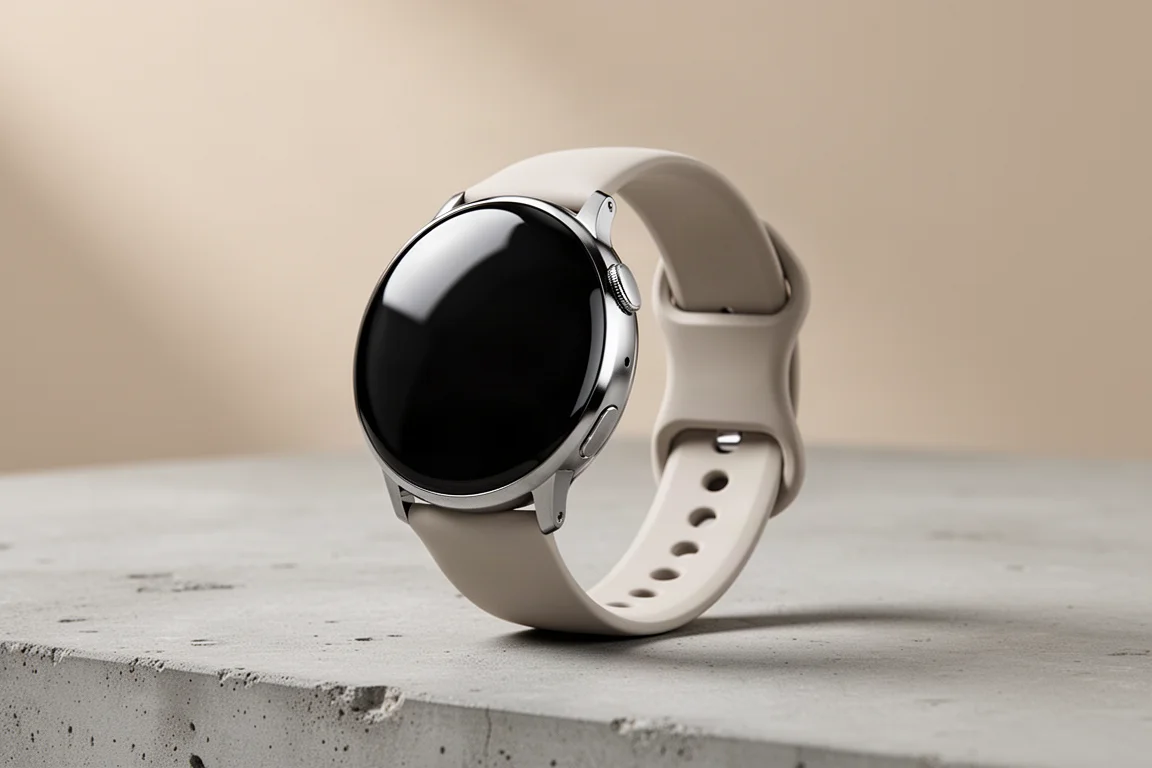
The Pixel Watch 4 arrives with a familiar round design, but underneath it is one of the more interesting smartwatch releases of the year. After weeks of testing across running, cycling, and even a bit of swimming, the picture is clear: this is a very polished, very capable Wear OS watch with a couple of genuine firsts, balanced by a few gaps that leave you wondering what Google is thinking.
Display, Haptics, and Speaker Upgrades
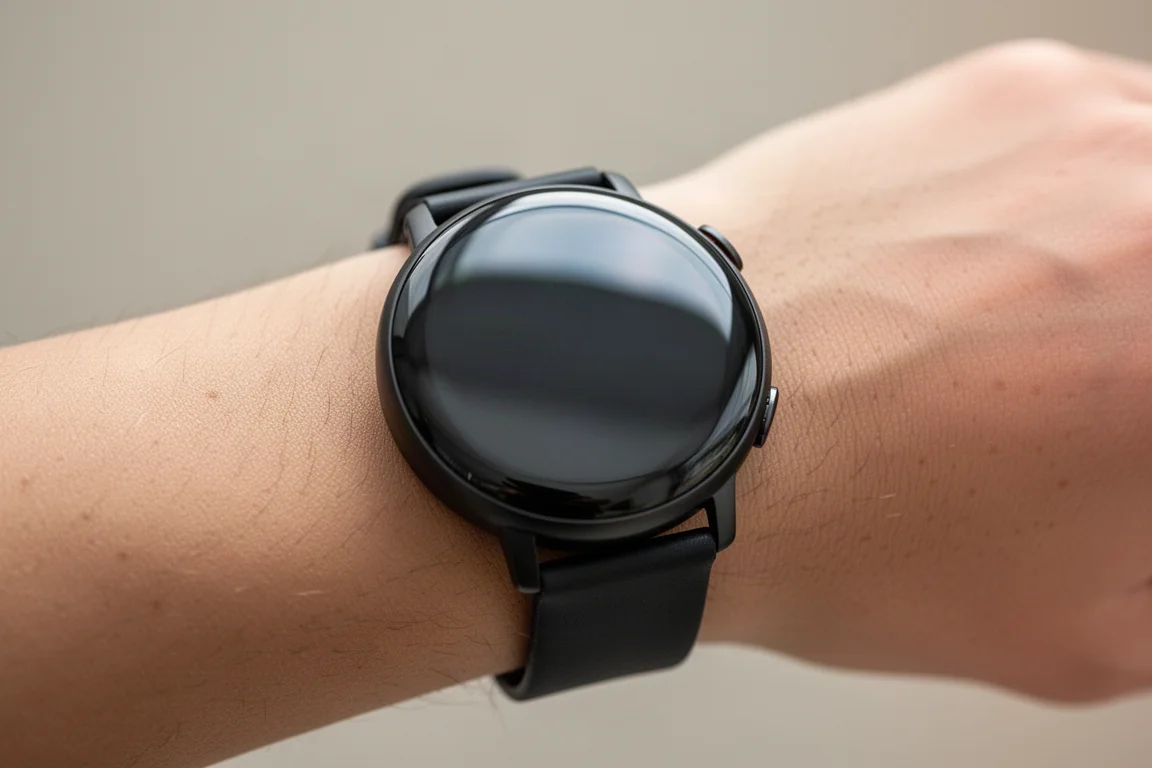
The display is the headline hardware change. It is now 50% brighter at 3,000 nits, 10% bigger, and has 16% smaller bezels. Large bezels have been the long-running complaint about the Pixel Watch line, and while they are still present, they are less noticeable than before. The screen itself is also now curved, rather than just the top cover, though side by side with the previous model is about the only way you would ever spot the difference.
Elsewhere, the haptic motor is 15% stronger, though it is not something you would notice in daily use. The speaker has been retuned rather than made louder, with the voice frequency range emphasized so the Gemini AI assistant comes through more clearly.
Performance and Battery Life
An updated dual-chip architecture is claimed to be 25% faster while saving 50% power. In day-to-day use the speed difference is hard to perceive, but the battery savings are not. Google claims roughly 25% longer battery life than before, and in testing the 45mm version comfortably delivered two full days of use.
One oddity: Google publishes no GPS battery claim at all, which is unusual in this market. Real-world testing across countless longer activities puts it at roughly 14 to 15 hours of GPS on a full charge, which is solid for most endurance use.
Charging Dock: Faster, but Proprietary
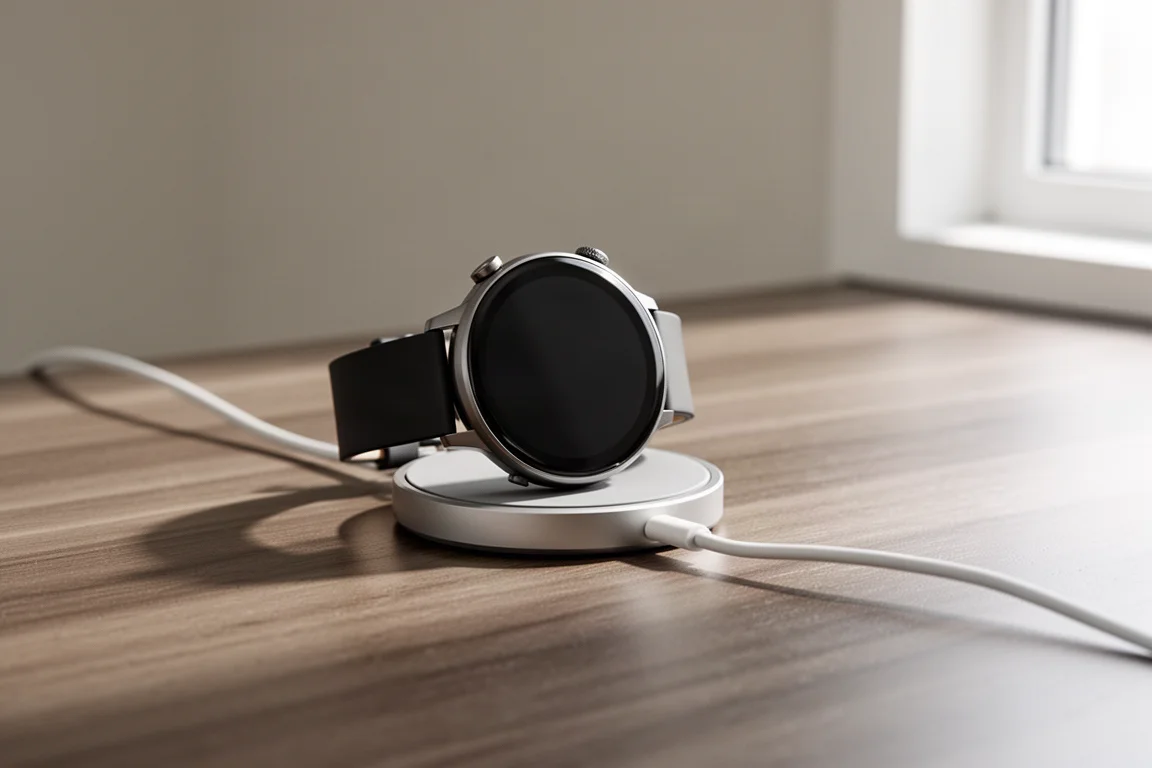
Yet again there is a new charging dock, and it is significantly faster than before. It is magnetic and holds the watch securely, even if you swing it around. The catch is that the cable is permanently attached to the dock, so you cannot simply plug in your own USB-C cable when traveling. Google’s reasoning is that poor-quality USB-C cables may not deliver fast charging, which is fair, and certified third-party docks are already available through the Made for Google program that let you supply your own cable.
A User-Replaceable Battery, First in Class
Arguably the most important change on this watch is battery serviceability. Using an inexpensive T2 Torx screwdriver, you can remove the band, undo the screws on both sides, and replace the battery yourself, supplied by Google. This is driven by upcoming EU regulation requiring user-replaceable batteries, and Google is the first smartwatch maker to comply. The regulations also require Google to price the replacement battery reasonably, so there is no scenario where a battery swap costs as much as a new watch. Replacement batteries are not on sale yet, and this is designed for degraded batteries down the road, not casual swapping.
Satellite Connectivity: A First for Smartwatches
Google is the first company to announce two-way satellite connectivity on a smartwatch. Beyond the GPS reception watches have always had, this means the watch can send messages to a satellite when you are outside cellular range, enabling emergency SOS requests deep in the mountains. The watch first tries your phone or LTE connection, then escalates to satellite SOS, walks you through pointing at the satellite, gathers incident details into a single message, and connects.
There are requirements to know about. You need the LTE hardware version of the watch, though you never need to activate an LTE plan. Coverage today is essentially US-only, though Google says the existing hardware will support expansion beyond the US. The satellite link is provided through Skylo, a middleman service connecting to geostationary satellites, which guarantees coverage over an area but means terrain like a mountain ridge can block the view. Connecting takes roughly 30 to 60 seconds.
Emergency requests are handled by Garmin Response, the same center that has managed Garmin inReach incidents for around 15 years, handling hundreds of thousands of incidents and coordinating responders in roughly 200 languages. This is mature infrastructure, not a beta experiment.
The caveat: shortly after Google’s announcement, Garmin announced satellite messaging and location tracking on its watches, and Apple followed with the same on the Apple Watch Ultra 3. Google currently offers only the emergency piece of that puzzle. Google says the hardware is fully capable of messaging and location tracking and views this as the starting point, but would not commit to a rollout timeline.

Sleep, Skin Temperature, and Gemini
The skin temperature sensor has been upgraded and sleep stage and phase detection accuracy is claimed to have improved. Neither is really testable in a rigorous way, but sleep and wake time detection was consistently good in testing.
Gemini is now built in as the AI assistant, accessible by raising your wrist or through the Gemini app. For general questions it delivers detailed, accurate answers. Where it falls short is sports and fitness: ask why your readiness score was low and it gives a generic answer, and questions about your fitness stats simply open the Fitbit app instead of answering in chat. Google says this integration is on the agenda, with a revamped Fitbit app that has Gemini baked into its core rolling out over the coming months.
Sports Features: A Year of Subtle Steps
New this year is bike mirroring, letting you stream your stats from the watch to a phone mounted on your handlebars. It is limited to a single data page with no Google Maps integration, which is baffling given Google owns the entire mapping space. It is aimed at commuting and around-town riding rather than long sports rides.

Dual-frequency GPS is the bigger sports hardware addition, and it is generally the holy grail for accuracy in difficult environments. Downtown testing among tall buildings, trail running near cliffs, and mountain switchback cycling all worked well. But there were also some real failures, particularly one descent at 40 to 50 km/h where the watch showed a speed of zero. Google pulled logs and found the watch was going to sleep by design during cycling and walking activities, failing to activate some GPS constellations. The bug appears to be more of an issue in Europe than the US, and a fix seems likely.
Heart rate accuracy, by contrast, was spot on across intervals, runs, and cycling, indoors and out. The bigger gap is data page customization: you get just one customizable data page with a handful of fields, and taking a lap requires swiping right and tapping a button mid-interval. After years of adding serious sport features, these core sport fundamentals are now clearly behind the competition.
Pricing and Buying Advice
Pricing is unchanged from last year: $349 for the smaller model and $399 for the larger, with $100 added for LTE hardware. Remember that LTE hardware is the only route to satellite SOS, even if you never activate an LTE plan. Holding prices flat while competitors raise theirs is a genuine point in Google’s favor.
Buy this watch if you want the best holistic Wear OS experience on Android, value two-day battery life, or want satellite emergency SOS in the US. Think twice if advanced sports customization is your priority, or if you want satellite messaging and location sharing today rather than someday.
Conclusion
The Pixel Watch 4 is arguably the best all-around Wear OS watch available, with excellent polish, good battery life, a bright curved display, and a genuinely useful satellite safety feature built on proven infrastructure. What it lacks is excitement and sports depth. The design has drawn the same feedback for four years, and there is still no larger, statement-style option for those who want one. The fundamentals are strong, but Google needs to bring more ambition to both the hardware lineup and the sport experience if it wants this watch to keep pace.
Product link
View more details for Google Pixel Watch 4
This product is mentioned in the review. Check the specifications, options, and compatibility before buying.
View more details for Google Pixel Watch 4Further reading
Related Reviews
Smartwatches
Best Budget Smartwatches 2026: Five Affordable Options That Actually Work
Five budget smartwatches tested for real daily use. From entry-level options to premium features at fraction of the cost, here's what actually delivers.
Smartwatches
Best Smartwatches on AliExpress 2026: Five Practical Options for Different Needs
Five smartwatches with strong customer feedback and competitive pricing, each suited to different priorities: premium design, battery life, outdoor durability, advanced health tracking, and sports versatility.
Smartwatches
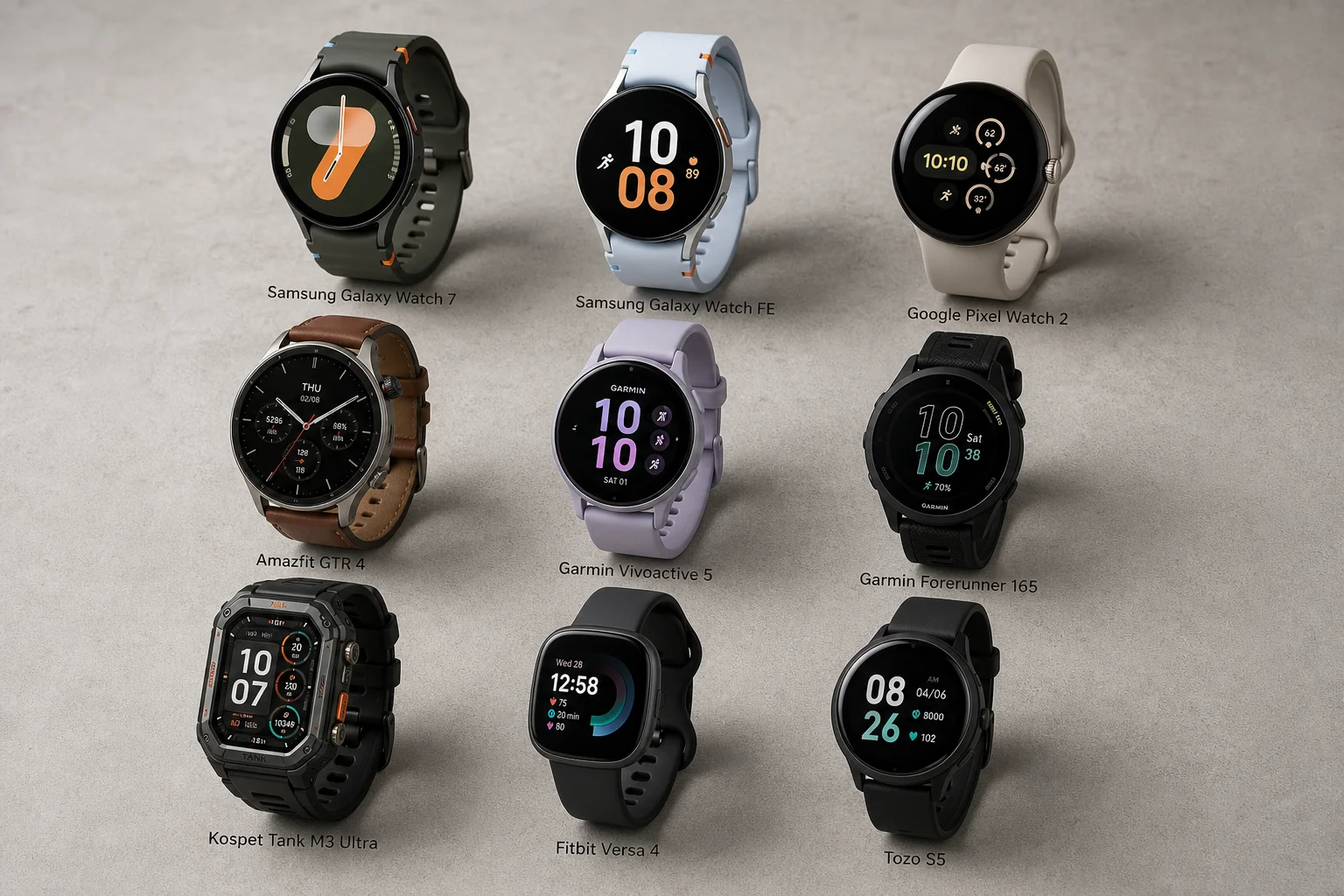
Best Smartwatches Under $300: 9 Practical Options for Every Need
A curated selection of nine smartwatches under $300, each excelling in health tracking, durability, battery life, or fitness features. Find the right match for your lifestyle.