Camping Stoves
Go Out Springhill Force Alcohol Stove Review: A Complicated Take on a Simple Design
A close look at a 9.8 oz alcohol stove with three gasifier pipes and telescoping legs, including real boil-test results, fuel use, and who it genuinely suits.

Introduction
The Go Out Springhill Force alcohol stove is one of the more unusual alcohol stoves you can buy. Instead of the flat, perforated burner that most alcohol stoves use, this one surrounds a central fuel chamber with three vertical gasifier pipes and sits on three telescoping legs that fold out of the body. The result looks more like a piece of engineering coursework than a camp cooker.
In the box you get the stove itself, a flame extinguisher cap, a keychain with a ring for attaching the stove to a pack, an instruction sheet, a velvet storage bag, and a lens-style cleaning cloth. The stove arrives inside a hard storage case with a plastic sealing ring around the lid rather than a screw thread, so opening it is a slightly odd experience: you peel the ring away and the lid releases.
The stove is built from 304 stainless steel, a 204 stainless steel, and copper. It weighs 9.8 oz, which is reasonable for a burner that includes its own stand.
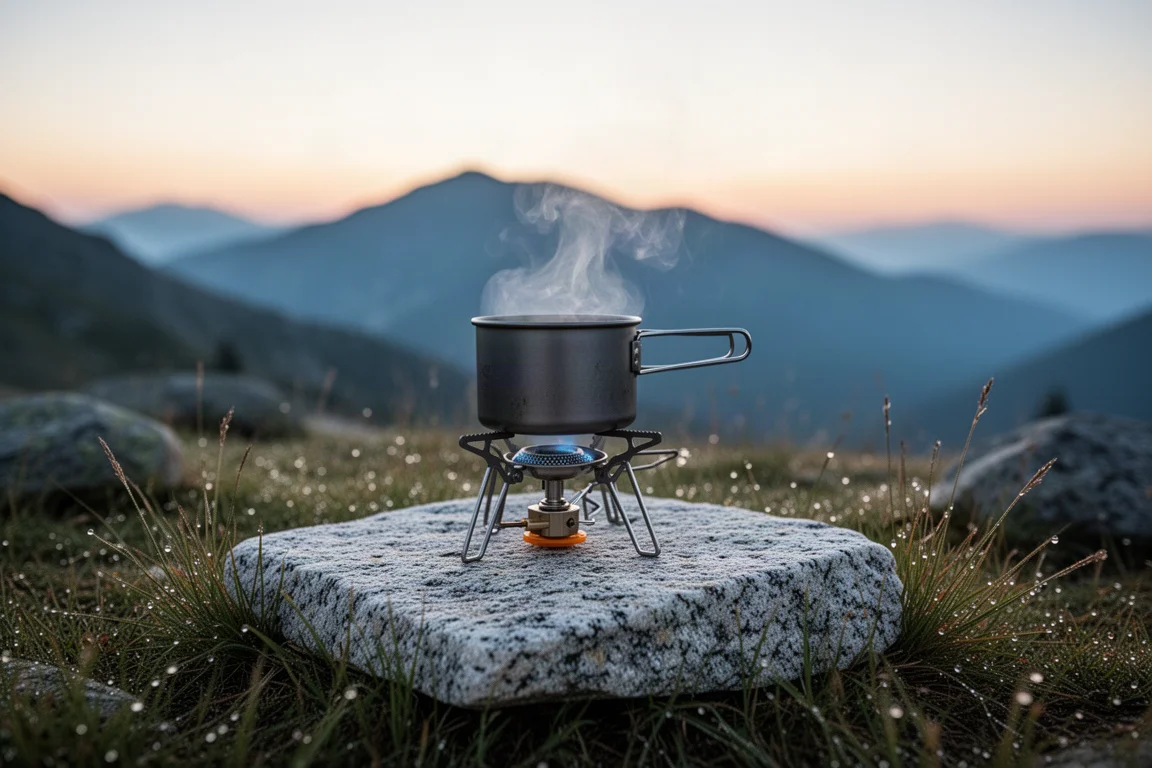
At around $36, the Force is priced well above what most alcohol stoves cost. That price buys a lot of design, and the question worth answering is whether the design earns its keep in the field.
Who this product is for
This stove suits campers who cook with small to medium pots and cups and who want a compact, mechanically interesting alcohol burner. The company claims a 33 lb load limit, which is a surprising figure for a stove this small, but the burner surface itself is modest, so wide pots and larger cook sets are not a good match.
The keychain ring suggests the manufacturer expects buyers to clip the stove to the outside of a backpack, which fits the compact form factor.
Because it is an alcohol stove, it shares the general character of the category. Alcohol stoves are simple, lightweight, and dependable in cold conditions, but they have low heat output and they are fuel inefficient. Anyone new to alcohol stoves should understand those trade-offs before choosing a design this elaborate.
Main strengths
The three gasifier pipes are the centrepiece of the design. Once they reach temperature they help hold a consistent level of heat output, which is the same principle used by other gasifier-style alcohol stoves.
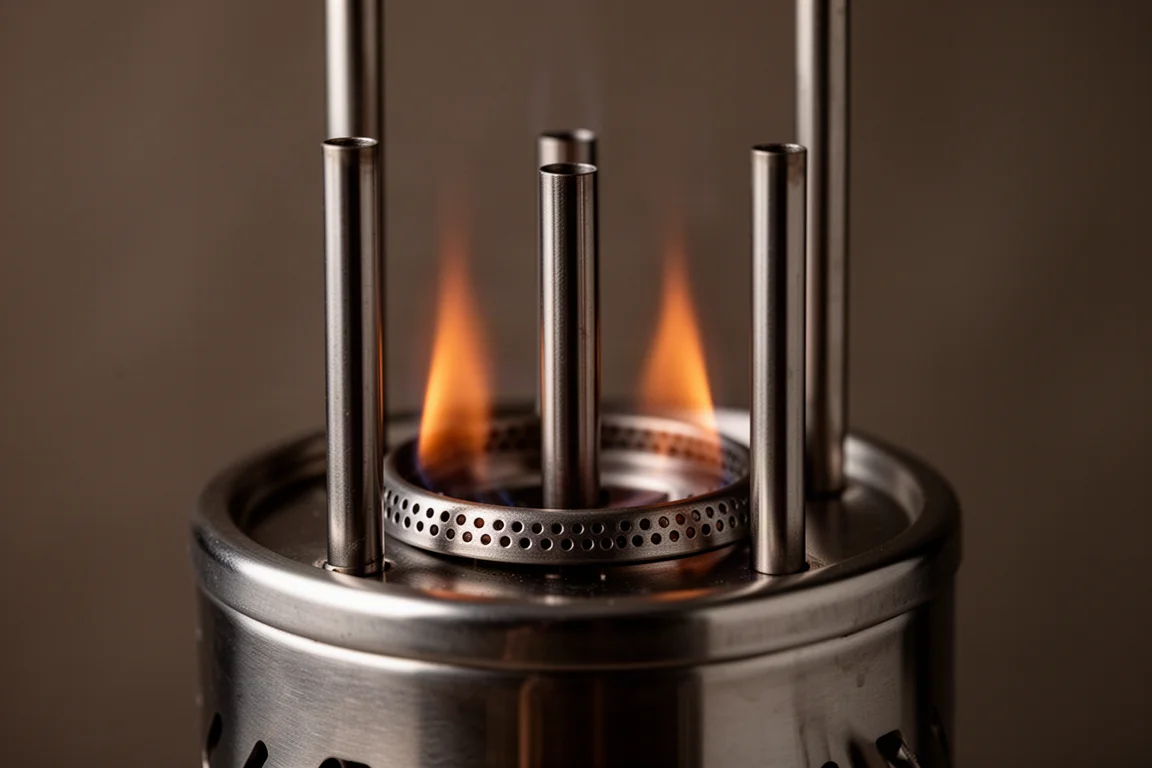
The telescoping legs are the other headline feature. They fold out of the body to lift the burner clear of the ground, which is a tidy way to combine a stand and a burner in a single piece. Build quality is good overall, most edges have been smoothed out, and the combination of stainless steel and copper gives the stove a solid feel for its size.
The accessory package is more generous than most. The hard storage case, velvet bag, cleaning cloth, flame extinguisher cap, and keychain all arrive in the box, which softens the relatively high price.
Things to consider before buying
There is no windshielding at all. In breezy conditions the stove needs something to block the wind, and on an exposed ridge you would need to carry a separate windscreen. In practice, a person standing in front of the stove was enough to keep the flame steady, which tells you how much the surrounding air affects it.
The entire stove gets very hot during use, including the legs and the base. That makes it a fire risk on dry grass or leaves, and it also means the stove takes a long time to cool down before it can be packed away.
Several screws were already working loose when the stove arrived, with one visibly protruding. Tightening them is straightforward, but it points to a design with a lot of fasteners: there are screws around the body and more around the top. Some edges are smoothed, while others are slightly sharp.
Filling the stove accurately is harder than it should be. A metal plate covers the top of the fuel chamber, so there is no easy way to see how much fuel has been poured in.
The burn time claim also did not hold up. The company claims that 47 ml of fuel will run for 27 minutes. With the chamber filled up to the top plate, the stove ran for roughly 15 minutes.
Real-world performance and fuel use
In a boil test with two cups of water, the stove reached a rolling boil in 9 minutes and 44 seconds, with someone blocking the wind throughout. That is slow in absolute terms, although slowness is a normal characteristic of alcohol stoves. Design is the biggest factor in how an alcohol stove performs, and some designs manage better.
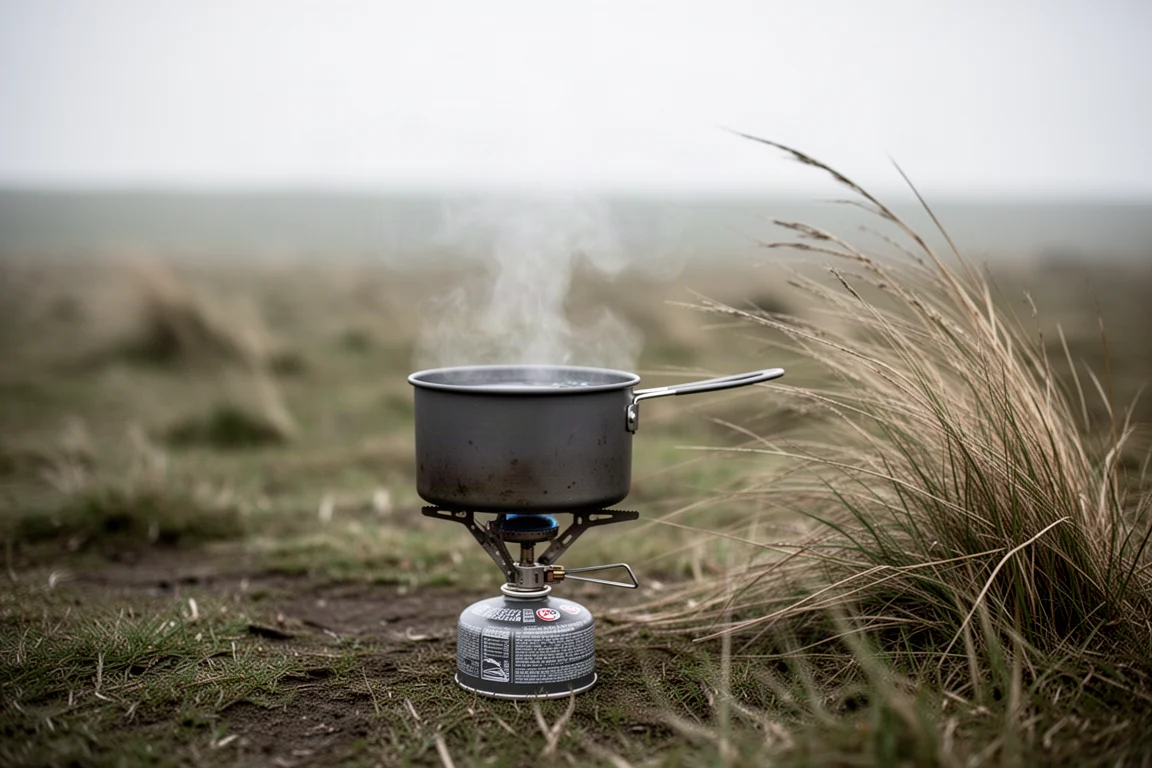
The gasifier pipes have nine holes in total, whereas a conventional alcohol stove releases flame through many holes around its entire circumference. Fewer flame jets means less heat spread around the base of the pot, which explains the modest performance.
Small to medium pots and cups work best with this stove. Anything large will not work well because the burner is simply too small, even with the claimed 33 lb load limit.
Where this stove makes sense
This stove makes sense for someone who genuinely likes the folding-leg concept and wants a compact, self-contained alcohol burner for short trips with small pots, and who is willing to carry a windscreen and check the screws before each outing.
It makes less sense for anyone who wants the simplest possible alcohol stove. The whole appeal of an alcohol stove is that it is simple and easy to live with, and this one adds a lot of parts and fasteners without a clear performance gain to show for them.
Buying advice
At around $36, the Force is expensive for an alcohol stove, and the performance is mid rather than remarkable. The design is complicated rather than better, and the loose screws suggest the extra complexity has a real cost in reliability. If your priority is boiling water reliably, a simpler alcohol stove paired with a windscreen is the more sensible purchase.
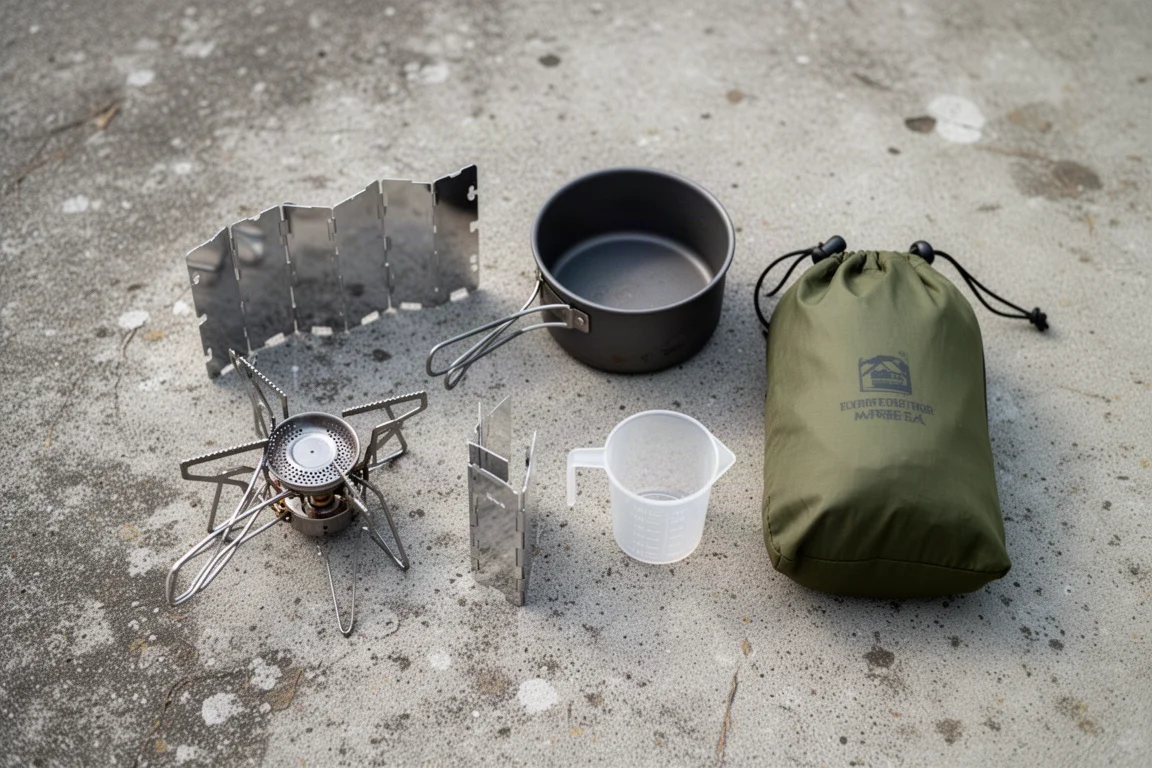
If you do decide to buy it, plan around its limitations. Add a windscreen, keep a small multi-tool handy for the screws, stick to small or medium pots, and use the stove on bare ground or a rock rather than on dry vegetation. Give it time to cool before packing it away.
Conclusion
The Go Out Springhill Force is the most unusual alcohol stove in its class, with gasifier pipes, telescoping legs, and a construction mix of stainless steel and copper. It is well made for the most part, and the accessory set is generous.
The trade-offs are harder to overlook. There is no wind protection, the body and legs get very hot, the screws arrive loose, the fuel chamber is awkward to fill, and the claimed burn time is optimistic. For $36, that is a lot of complexity to accept in a category where simplicity is the main advantage.
Product link
View more details for Go Out Springhill Force Alcohol Stove
This product is mentioned in the review. Check the specifications, options, and compatibility before buying.
View more details for Go Out Springhill Force Alcohol StoveFurther reading
Related Reviews
Camping Stoves
BCB Fire Dragon Mini Cooker Review: A Tiny Folding Stove With Real Trade-Offs
A palm-sized, fuel-flexible folding stove that heats water well enough, but brings flame control, stability, and fuel cost questions worth understanding first.
Camping Stoves
Boundless Voyage Titanium Alcohol and Wood Stove Review: Ultralight Cooking, Two Ways
A titanium alcohol and wood burning stove kit that weighs 4.5 oz complete, boils two cups of water in about 10 minutes, and costs $36.
Camping Stoves
BRS 32 Dual Burner Stove Review: A Folding Two-Burner That Packs Down Flat
A detailed look at the BRS 32, a slim folding dual burner camping stove that expands into a stable cooking platform for around $60.