Snowboard Reviews
GNU Turbo Gremlin Review: A More Nimble, More Powerful Take on the Gremlin
GNU's less volume-shifted Gremlin pairs a C3 camber profile with extra carbon for a responsive, hard-charging directional ride that still stays quick edge to edge.
Introduction
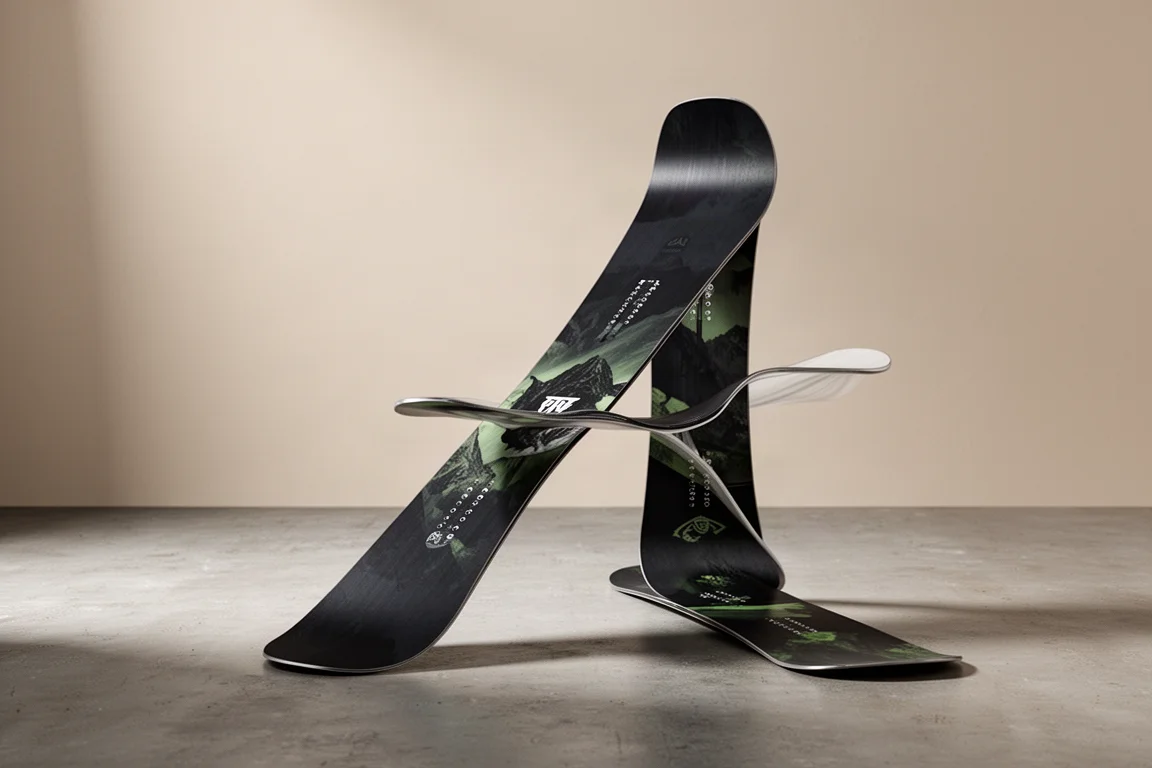
The GNU Turbo Gremlin sits in the lineup as the less volume-shifted version of the Gremlin, aimed at riders who wanted more power out of the original without giving up its nimble character. GNU describes it as a slimmed-down Gremlin with more carbon in the construction, and the riding experience backs that up: quicker edge to edge, stronger out of turns, and still genuinely fun.
This review covers how it rides across spring conditions, who it suits, and a few things to weigh up before buying.
How the C3 Camber Profile Rides
The Turbo Gremlin uses GNU’s C3 camber profile: flat camber with a slight dip between the feet. On snow it feels like a more broken-in traditional cambered ride. You still get plenty of load, pop, snap, and drive, but initiating the board is a little easier than a full camber deck. Combined with the carbon layup, it behaves like a board you have ridden for 100 days, yet when you load up that camber and roll back on the tail, everything stays predictable.
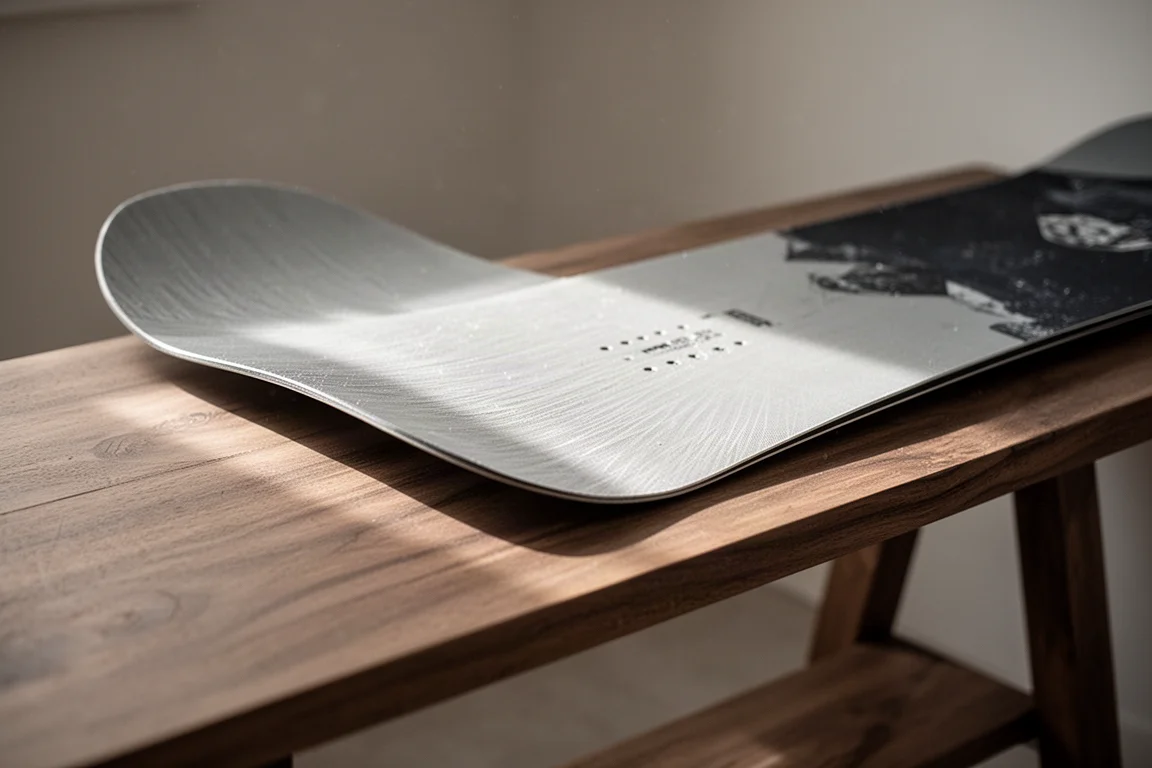
Flex-wise, this is an incremental jump in stiffness over the regular Gremlin. It is not a plank, but it sits past middle of the road. The shape is directional, with a softer nose progressively stiffening toward the tail. Torsional flex is very responsive: when you engage the board, it wants to spring right back. Foot steering is easy but responsive, so you need to stay aware of your inputs.
Carving and Edge Performance
This is what the board is built for. It is nimble edge to edge, rolls smoothly toe to heel, and the Magne-Traction edges give real grip underfoot, especially on ice. Short, tight, quick carves are easy, and the camber plus carbon response springs you back into the next turn so you can roll heel to toe as fast as you like.

For bigger, more aggressive carves, you can sit in the center of the board right where the C3 dip is, push off the tail, and drive power out of the turn. That lets you disengage the front foot and drive from the back through the tail, producing a genuine slingshot effect out of a turn. Once you are sitting on edge, the board holds: it does not kick out, and there are no limitations at either speed. If anything, speed makes it more nimble and more precise.
Stability in Chop and at Speed
Stability is a real strength. The board pushes through chop and chunder with ease and stays on top of everything. At speed on a groomer, whatever chatter develops in the nose does not resonate underfoot. The only moment that stood out during testing was rolling into shaded sections with frozen chunks, which produced an all-bearing effect underfoot, and even that was manageable given how the board is built.
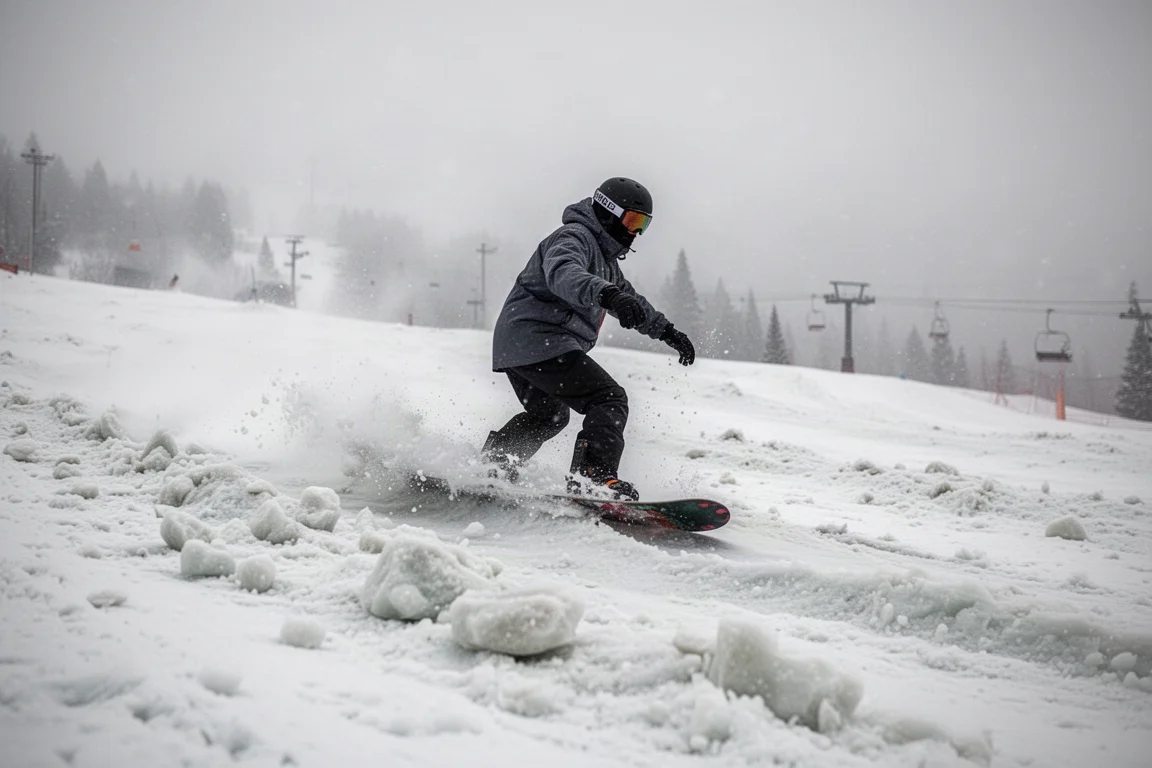
Speed is the board’s friend in general. Where it does fight you is in nose presses and tail presses. The nose has a small sweet spot and you have to leverage your weight well out over it, so popping a 180 into a nose press means pushing hard and feeling resistance. Tail presses turn into a high-speed wheelie where you sit outside your back binding and the board fights you the whole way. These are not really what this board is made for.
Pop, Snap and Playfulness
Loading the camber and rolling back on the tail produces a huge amount of snap. You can send rollers and launch side hits with ease, land, and immediately drive hard into the next turn and pop off the next feature. If you already know how to load a board, you will get along with it just fine.

One detail worth highlighting: this board arrived with a structured base, which is a rarity for Mervin-made boards. The glide was noticeably excellent, and it is a spec that more boards at this price point should include.
Sizing and Who It Fits
The Turbo Gremlin is available in 155, 158, and 161. Even though GNU made it narrower than the regular Gremlin, it still borders on a mid-wide to wide rider’s board. If you have smaller feet and wanted more power out of the Gremlin, this narrower platform gets you on edge more easily while adding carbon for extra power. GNU recommends riding it at your normal size. A 155 held up well in testing, though the next size up would likely be the optimal middle ground for a mid-weight rider, and the 161 promises serious raw power out of a turn.
Buying Advice
The Turbo Gremlin is essentially a more nimble, more powerful Gremlin. If you like everything about the regular Gremlin but want quicker edge transitions and more output from your turns, it makes a compelling case. Boards with a comparable character include the United Shapes Transmission, the Capita Sidewinder, and the Nidecker Smoke. On the binding side, the Bent Metal Transfer, Rome Katana Pro Asym Wrap, and Salomon Quantum are natural pairings.
If you shop online, using the link on this page supports the site. If you head to your local shop instead, that support goes a long way too.
Conclusion
The GNU Turbo Gremlin impressed across the board: a lot of power, a lot of snap, still nimble, still fun. It is a strong pick for riders with smaller feet who want more from the Gremlin platform, and for anyone who values carving precision and high-speed stability over jib-style pressability. Speed is your friend on this one, and it rewards riders who know how to load a cambered deck.
Product link
View more details for GNU Turbo Gremlin
This product is mentioned in the review. Check the specifications, options, and compatibility before buying.
View more details for GNU Turbo GremlinFurther reading
Related Reviews
Snowboard Reviews
Arbor Element Rocker vs Camber: One Shape, Two Ride Personalities
A practical look at the Arbor Element all-mountain twin in both System Rocker and Camber profiles, covering Grip Tech edge hold, sustainability, sizing, and who each version suits.
Snowboard Reviews
Battalion Whatever 157 Review: A Forgiving Directional Twin With Real Freestyle Potential
A soft-flexing directional twin aimed at riders who want a playful, forgiving all-mountain board that refuses to catch an edge.
Snowboard Reviews
Capita Ultrafear Camber Review: A Consistent Park Board for Freestyle Riders
A practical look at the Capita Ultrafear Camber, its Resort V1 profile, flex character, jib and jump behaviour, and who it genuinely suits.